Tag: Premjeet Sodhi

  • Wavemaker rejigs leadership to boost growth

    By Our Staff


    Wavemaker media agency, part of GroupM, announced a series of key strategic changes to its leadership team to boost growth.

     

    Premjeet Sodhi
    Premjeet Sodhi

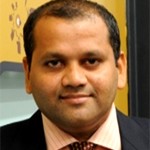
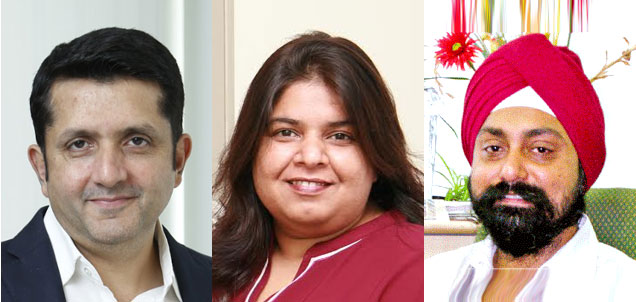
    Chief Strategy Officer Premjeet Sodhi will soon be taking on the role of Global Head of Measurement & Analytics. In his new role, Sodhi will be part of Wavemaker’s Global Consultancy team which supports clients in adopting future-proofed marketing practices to advance transformative growth, protecting outcomes in the near-term, and creating disproportionate advantage in the long-term. He will report into Anna Hickey, Global Consultancy Lead and will be based out of New York. A media veteran with over 25 years of rich experience, Sodhi joined Wavemaker in 2020 as Chief Growth Officer before taking on the role of Chief Strategy Officer.

     

    Mansi Datta
    Mansi Datta

    Taking on the baton from Sodhi, Mansi Datta will transition into Chief Strategy Officer. Datta, a proficient leader has been heading North and East region operations at Wavemaker since 2020. She joined Wavemaker as General Manager in 2015. During her stint, Datta has built great client partnerships, bolstered agency operations, and built an incredible team.

     

    Shekhar
    Shekhar Banerjee

    Meanwhile, Shekhar Banerjee, Chief Client Officer & Office Head – West, will be taking on the additional responsibility of managing North and East for Wavemaker India. Banerjee joined Wavemaker in 2018 to lead operations for the West region and has built an incredibly strong business.


    Speaking on these leadership changes, Ajay Gupte, CEO – South Asia, Wavemaker said: “It makes me extremely happy and satisfied to see our leaders stepping into larger & diverse roles within the ecosystem. I firmly believe, Wavemaker provides a vast stimulating platform for our people to grow. With these changes, I am confident we will make a massive difference to our clients and people. I wish Premjeet, Mansi and Shekhar all the best in their new roles and I am confident we will continue to create more positive disruptions in the industry”.


    In their new roles, Datta and Banerjee will report into Ajay.
     

  • Kishan Kumar, Premjeet Sodhi, Vishal Jacob & Sandeep Pandey get new roles at Wavemaker

    By A Correspondent


    Wavemaker India has announced changes in the executive leadership roles. Kishan Kumar MS is elevated and has taken on a larger role as Chief Growth Officer, Wavemaker India.  Along with his new mandate, Kumar continues to lead Wavemaker South businesses across Bengaluru, Chennai, Kerala and Hyderabad.


    Premjeet Sodhi transitions into Chief Strategy Officer, Wavemaker India from his earlier profile of Chief Growth Officer. Sodhi joined Wavemaker in April this year after a 2-year stint with Mindshare Fulcrum as agency head.


    Vishal Jacob returns to Wavemaker India as Chief Digital Officer after close to two years with GroupM as Principal Consultant – Change Planning & Transformation.


    Meanwhile, Sandeep Pandey, who leads product and strategy has been elevated as Global Head of Analytics where he will be driving Wavemaker’s global practice on analytics.


    Commenting on these changes, Ajay Gupte, CEO – South Asia, Wavemaker said: “This has been an extraordinary year that has challenged us in many ways. These changes are designed to enhance our position and enable us to drive continuous growth for our clients, teams and other stakeholders. I am excited about these changes and look forward to create some positive disruptions in the near future”.


    Kumar, Sodhi and Jacob will report into Gupte in their new roles.


  • Mindshare upgrades top deck


    By A Correspondent


    Mindshare has announced an organisational restructuring exercise that mirrors the agency’s ambition to become collaborative in client success and navigate their marketing agenda with intelligence and agility.


    Amin Lakhani has been elevated and has taken on a larger role as President, Client Leadership, Mindshare India. In his new role, Amin is responsible to further strengthen client relationships and drive client growth in a cross media market. He will manage core client capabilities across all offices in the country. During his 14 years at GroupM and Mindshare, Amin has grown from strength to strength and will continue to be a key growth contributor in the new role.


    Anita Kotwani, Leader, Mindshare West has been promoted to Senior Vice President, New Business responsible for new business development across the market. In addition to this, she will also drive horizontality, and work closely with the larger marketing ecosystem.


    Meanwhile, Premjeet Sodhi will join Mindshare South Asia as Senior Vice President, Mindshare Fulcrum, South Asia, and will lead Team Fulcrum across South Asia. Sodhi has been with IPG Mediabrands for a while and has last been Chief Operating Officer at Initiative/ BPN where he handles strategy and new business development for the company. He manages clients such as Amazon, Reckitt, Gionee, Kraft Heinz, Infoedge and Bajaj Auto. Sodhi takes charge effective March 2018.


    Speaking on the elevations and appointment, Prasanth Kumar, CEO, Mindshare South Asia said: “As we enter 2018, we are accelerating ‘transformation’ which is true to our DNA. We are clear on our strategic priorities, strengthening our connections with a growing universe of clients, consumers, brands and partners in the marketing ecosystem. To be able to do so, we now have the leadership and structure within our organization to continue our path to greater success, and our renewed focus on creating a disruptive Mindshare with Speed, Provocation, Teamwork.”


  • India@Cannes: Leo Burnett, Cheil lead race for Media Lions


    By A Correspondent


    The biggest year by far in terms of the number of entries sent,Indiamanaged to line up an unprecedented 130 entries in Media Lions 2012 compared to 103 entries that it had sent last year. But this number is distant from what the other countries have nominated from their shores:USA- 411,Germany- 272,Brazil- 252 andAustralia- 138. A total of 3,247 entries have been sent from 74 countries compared to 2,895 entries last year – an increase of 12 per cent.


    Having widened its scope with the sheer number of entries,Indiashould look at gaining more than 2 wins in this category, a figure which it achieved last year. But whether it will cross 8 metals, which it did in 2009, will be something to be seen at the awards function which will be held on Tuesday evening.


    Instituted in 1999 to honour excellence in media strategy, planning and execution and give key players in the media industry an annual meeting point, the jury will be looking not just for brilliant ideas, but moreover, ideas that work. RepresentingIndiaat the Media Lions Jury is Premjeet Sodhi, Chief Operating Officer, Lintas Media Group.


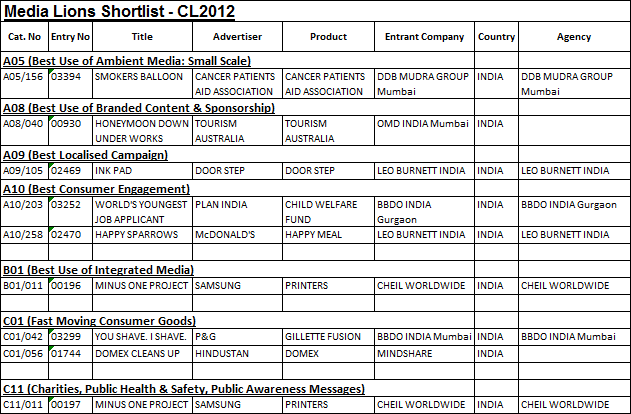
    Leo Burnett Mumbai leads the tally with two shortlists including ‘Ink Pad’ forDoorStepSchoolunder the Best Localised Campaign and ‘Happy Sparrows’ for McDonald’s under Best Consumer Engagement. Also having two shortlists is Cheil Worldwide for ‘Minus One Project’ for Samsung under the Best Use of Integrated Media. The entry is also nominated under the Charities, Public Health & Safety, Public Awareness Messages category. The other entries include DDB Mudra’s ‘Smokers Balloon’ for CPAA in the Best Use of Ambient Media and OMD India’s ‘Honeymoon Down Under Works Wonders’ for TourismAustraliain the Best Use of Branded Content & Sponsorship.


  • Need to monetize radio-social media connect (+Vdo)

    By Robin Thomas (Videos: Insiyah Rangwala)


    Social media has, more or less, become a necessity for every organization today because the consumers are out there and no brand can afford to not be interacting with them. Moreover, social media can also help  brands know their consumers’ thoughts, behaviour, likes and dislikes. It also allows brands to have a two-way communication with their consumers, and thus provides high level of interaction and engagement. And it is not just brands but other media like radio stations which are coming out with innovative ways to connect with their listeners through social media.


    At the sidelines of the India Radio Forum (IRF) 2012 industry veterans from the advertising fraternity discussed the importance of social media for radio.


    Mr Premjeet Sodhi, COO, Lintas Media Group said: “Social media is certainly important for not only the radio industry today, but also for every other medium. In the long run we will see more integration taking place between social media and radio.”


    Mr Raj Nayak, CEO, Colors- Viacom 18 explained: “Social media is growing by the day. Today almost 65 per cent of the people in India are below the age of 35 and 50 per cent are below 25 years of age. I believe this is the fastest growing medium, therefore, it is a very important medium and those that have not got onto social media, must get on before it is too late.”


    Mr Suman Srivastava, Founder and Innovation Artist, Marketing Unplugged said: “Social media is important for radio at two levels. One is to connect with the listeners and therefore, get much larger engagement which might even result in an increase in the reach. On the other hand, it is a fantastic medium for radio channels to build their own brands as well as the brands of their advertisers. In the future, I believe, we will see a lot more advertisers using radio and social media together along with, perhaps, ground activations to create events which could have a multiplier effect for those advertisers.”


    Speaking on the need for radio to partner with clients, Mr Vinay Bhatia, Customer Care Associate and Senior VP- Marketing, Shoppers Stop said: “The real big partnership for radio and their clients is in the digital space. Digital and radio have to come together and ally in such a way that they deliver joint value to the client, and I don’t think any of this is happening today. Radio is an out of home medium and we are increasingly seeing out of home consumption for digital. I think these two medium can go very well together and brands like ours which have large Facebook pages need content, we need engagement and I think radio channels that provide us that.”


    Mr Harshad Jain, Business Head – Radio and Entertainment, HT Media said: “Radio is a medium which is free of cost, it is the cheapest form of entertainment in the country, and if there are issues that can be interlinked with social media, it could call for a good integration. Having said that, it is still early days because radio as a medium still has to catch up big time before it starts integrating with social media.”


    While there are calls for integration between radio and social media, the radio industry must also find ways to monetize the radio-social media connect. Mr Sodhi pointed out that while social media can make radio activations richer, it is vital for radio stations to find newer ways to monetize this activation.


    Agreeing with Mr Sodhi, Mr Raj Nayak said that no business will work if there is no monetization. He added: “One of the biggest disservice broadcasters have done is that they have not woken up to the digital media.”


    So while radio and social media will see more integration in the long run, there is also another school of thought that believes that radio is still at a nascent stage and has a long way to go before it can get into integration with social media. However, monetization is the key for survival of any business and radio stations must find ways to monetize its social media activations.


  • LMG wins Henkel India media buying duties

    By A Correspondent


    In a multi-agency pitch for the newly acquired portfolio of Henkel, Jyothy Laboratories Ltd has awarded the media buying responsibility of Henkel brands to Lintas Media Group. Mudra Max will handle the Planning mandate.


    The media buying for Jyothy Laboratories is handled by Lintas Media Group and therefore, in a reiteration of their faith in LMG, they have awarded the Henkel business to them as well. Put together, the account is estimated to be around Rs150 crores. The other agencies invited for the pitch were OMD and Mudra.


    K. Raghavendra – General Manager Marketing, Jyothy Laboratories confirmed that the media buying AOR  for Jyothy Laboratories Limited and Henkel will be handled by Lintas Media Group and the Planning mandate has been given to Mudra Max.


    Suresh Balakrishna of LMG said: “We are extremely delighted to have won the Henkel business. We have constantly delivered on the Jyothy Laboratries brands and therefore, this new win not only encourages us, but also spurs us on to deliver better business solutions to our clients at optimal costs.”


    The business pitch was led by the newly-elevated COO, Mr Premjeet Sodhi. “The science that we bring to the process of buying, negotiation, optimization and evaluation, with the help of some of our unique proprietary tools, has made our product truly cutting-edge. We are happy that Jyothy Laboratories has recognized this and this win will ensure that we continuously strive to deliver a better media product to our clients, year after year,” he said.


  • LMG announces key elevations in Mumbai, Kolkata & Kochi

    Mahesh Motwani

    By A Correspondent


    The process of restructuring at Lintas Media Group (LMG) continues. Mr Suresh Balakrishna, CEO of the proposed agency under the LMG fold, has announced a few elevations in a communiqué released to the media.


    While, Mr Premjeet Sodhi, has taken charge as COO of LMG (as reported first by MxMIndia), on the back of strong new business wins and a healthy growth in Kolkata, Mr Mahesh Motwani has been promoted to Executive Vice President of the Kolkata office and will develop new markets as well. Mr Patrick Gomes has been elevated to head of the agency’s Mumbai business. With fourteen years experience, Mr Gomes has been with LMG for 1.5 years, heading prestigious financial accounts and the Bajaj Group. He was previously with Starcom, Mediacom,TME and Madison.


    Patrick Gomes

    Meanwhile, eight-year LMG veteran, Dhirendra Singh has been promoted to Head of Planning for the Mumbai Office. He has been overseeing planning for accounts like UBI, Jyothy Laboratories, Bombay Dyeing etc and now takes on a larger responsibility for the entire office.


    Vidya Nandakumar

    Ms Vidya Nandakumar has returned to the agency earlier this month as Head of the Kochi office and has taken charge of the Manappuram and other businesses. She has come in from Madison, Bengaluru and has more than 12 years of experience in the industry, handling businesses like Britannia Industries Ltd, ITC Ltd, Hewlett Packard and Muthoot Finance.

  • Suresh Balakrishna to join LMG, Premjeet Sodhi likely to replace NP Sathyamurthy (who is joining Mudra)

    By A Correspondent


    Senior mediaperson and former chief operating officer of Mail Today, Suresh Balakrishnan is getting back to the Lintas Media Group fold. He is likely to be CEO of one of the agency’s arms and will report to LMG chairperson Lynn de Souza.


    Confirming the news to MxMIndia, Mr Balakrishnan said he’s looking forward to returning to LMG after a gap of nearly a decade.


    In his 25-plus year career, Mr Balakrishnan started his career in publishing with The Times of India group and spent a fair amount of media agency business at Initiative Media. After he quit Mail Today last year, he took a sabbatical and taught media management at the Symbiosis Institute of Mass Communications amongst others.


    Meanwhile, as reported by MxMIndia on December 15, N P Sathyamurthy is moving to Mudra. He is likely to be replaced by Premjeet Sodhi who is currently with LMG as president, The Collaborative. Yesterday, LMG also announced the elevation of Deputy CEO Sudha Natrajan to CEO of Lintas Initiative Media.


    Image courtesy: Stratagem Media


  • Much ado over 3D?

    By Akash Raha

    Even as High Definition (HD) television channels are entering the Indian market, blogs and social networks are already abuzz with talk of 3D channels coming soon, and how that will revolutionize the entire TV-viewing experience. MxMIndia took a closer look at these claims, to find out whether such a time is actually anywhere close at hand.

    According to Ms Anamika Mehta, COO, Lodestar UM, “India is already an underleveraged and fragmented market and such innovations will definitely add to the monetary burden.  Indian consumers are yet to fully embrace HD, and 3D in that context is still years away. While some manufacturers have launched 3D products, we still do not have ample content. 3D content would mean significant investment in content cost and advertisers and viewers alike are unlikely to pay in the short run for the experience. Secondly, perhaps barring live sports there isn’t any genre that could see demand for 3D broadcasting. The other genre could be movies in theatres for an experience… Lastly, you need high quality content which lends to 3D viewing and strapped for budgets, very few production houses will bite.”

    But all said and done, the success of Mr James Cameron’s film Avatar in Indian theatres is enough proof that when you offer visually appealing content in 3D, people will flock to see it. Even so, such a number still remains way short of expectations for a market such as India to actually implement a 3D plan. If media analysts are to be believed, making 3D content for television is a very difficult job and the cost is too high to bear. Even today, many media houses use age-old technology for programming and non-35 mm cameras.

    Interestingly, in the US a $14-billion, eight-year deal by ESPN with the National Football League (NFL) includes international rights and distribution of 3D content. This is despite the earlier reports that they might give up on 3D technology altogether. Several other broadcasting plans, internationally, for 3D broadcast of live baseball and basketball games are also on the anvil. MxMIndia’s efforts to reach ESPN-Star in India for their take on the issue failed to elicit any response.

    Mr Dinesh Vyas, Business Head, MEC said that any talks of 3D technology coming into India in the current scheme of things is certainly a gimmick. He said, “HD and 3D televisions are already available in the market, but people are still apprehensive about it, especially, 3D. People get headaches when they see 3D content for extended periods. Such a technology is not going to take off any time soon in India. The Indian market is not very receptive to technology and it takes a long time to appropriate it… Cost of technology too is very high – and currently no advertiser will be interested in it, which implies that even media owners will have to drop any major 3D plan. However, there will always be small news here and there about 3D which might get everyone excited.”

    So is it a good idea for affluent Indians and the upcoming middle class to splash out on 3D television – which is touted as the technology of tomorrow? The answer is a plain simple – no. Or at least, not yet… After all, what use is a large sprawling 3D television in your living room without any 3D content to support it with? That is excluding a handful of 3D movie DVDs and Blu-Ray discs.

    However, not all media planners are pessimistic towards the technology and some still see hope, however dim, for it. Mr Premjeet Sodhi, President, The Collaborative, Lintas Media Group, said, “High value, premium or luxury goods and services are not new to the India market and like any other such goods and services the 3D TV sector is also amenable to adoption and success. However, I don’t think I am qualified to comment on which consumer technology will be successfully adopted. Whether 3D TV will be adopted and when and whether it will be a viable business is something for the custodians of these businesses to dwell upon and work towards. But, as and when the penetration of the technology reaches a critical mass, I am sure the media and advertising services will equip themselves to support the technology.”

    There may well be a time in future when 3D channels and television will be in vogue, but apparently that time is not near. If analysts are to be believed, it will be a long while before demand meets technological advancements. However, India still remains an unpredictable market. It is the same country which discarded pager technology and yet usurped the mobile. To write off 3D technology’s viability in India could be presumptuous.