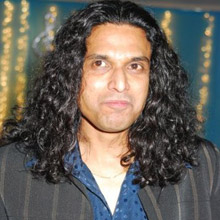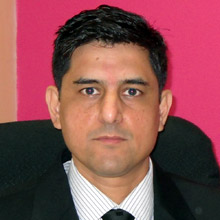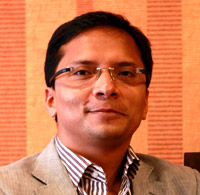
Tag: Prashant Panday

  • Life’s Lessons | Prashant Panday: Be intellectually honest

    By Prashant Panday


    Such pieces tend to be nostalgic. They may even feel cheesy to some. But they are always written straight from the heart. And they are always truthful.


    I like to think of two defining moments in my life. One that made me a better human being; the other a better professional.


    There was this time when I was in school in Ahmedabad. As many people may know, households in Gujarat store foodgrains for the year. Come the wheat season and the whole family gets down to cleaning, oil-polishing and storing the grains into big aluminium or steel drums. I distinctly remember one such year when after helping clean the wheat, I was relaxing. An old lady helper was storing the grains into the large drums. Given her age and the condition of her back, she was finding it difficult to bend down, lift the heavy load and dump it into the drum. Instinctively, I relieved her of that responsibility and took over. Now this is something I think any normal human should do. I really didn’t think much of it. But what was destiny-defining for me was when my mom applauded my action and told everyone how proud she was of me. That impression that was created in my mind – the purposeful encouragement to the softer aspects of one’s personality – was permanent. Today, I come across numerous situations – in personal and business life – when I am guided by that same lesson. Help the needy. Help those who are already under centuries of burden. Don’t be too demanding. Be a little kind. It goes a long way. An adjunct of this lesson is the need to be intellectually honest in dealings with others. That is what makes leaders, leaders.


    The other defining moment made me a better professional. And this I say unabashedly (it’s a little cheesy to praise one’s boss!) about my previous mentor and boss Mr Parigi (just called APP in Mirchi). My job in Mirchi was the first one I did in a “horizontal” capacity – a general manager of sorts. Before this, I had largely been a marketing and sales guy. My people skills were rough to say the least! My vanity in the field of Marketing was profound and my disdain for people who couldn’t be intellectually savvy was huge. Not surprising then that in my first year at Mirchi, I rubbed several people up the wrong way! APP helped me chisel off my rough edges; become more sensitive to people issues. He rejected my hypothesis that being pushy with goals necessitated being pushy with people. He also spotted a certain ability of mine to absorb new things very quickly (quick learner). I know I have a high degree of intellectual curiosity, but APP’s endorsement of that furthered it. My team knows my determination; the determination that unless I am satisfied, I will keep asking questions; keep probing. Sometimes, people feel I am too aggressive, but this aggression helps get to the right answers.


    Like I said, some of this may sound cheesy. But then, it’s the real truth! (therealtruth is the name of my blog on politics. It appears on blogs.timesofindia.indiatimes.com)


    Life’s Lessons is a part of MxMIndia’s ‘Personally Speaking’ series which appears every Friday.


  • The Half-Year That Was


    By A Correspondent


    It’s July 2 today, and the first six months of the year have passed. While the slowdown has impacted spends in a major way, most of the 182 days from Jan to June have been eventful. On the positive side: new television channels, new agencies – media and creative, consolidation, people and account movements, government issues, digitization, awards… the list could go on. And on the negative: a channel being shut, pink slips, pay cuts, appraisals deferred, digitization delayed… the list could go on here too.


    We have already embarked on the second half of the year, but as we do that, here’s a quick look at how industry captains review the half-year. We present you the half-yearly review in two parts… the first today and the second mid-week… on Wednesday.


    As you would gather, there is much gloom in the industry, though no despair. Not yet.


    ADSPENDS:


    Nagesh Alai, President, Advertising Agencies Association of India (AAAI) & Executive Director, India Operations, Draftfcb Ulka Group

    Nagesh Alai

    If I were to summarize the indications of the economy, then one has seen softness beginning last November and December leading to a situation of downturn. The macro-economic indications like rupee falling, impact in production and fall in demands have also reflected in the consumer behaviour in a negative way. The last quarter of 2011-12 (Jan-March) has seen a fall in GDP to 5.3 per cent. All this have impacted the manufactures as well as service providers, with the mood being that of postponing a decision. While some would have thought that the situation would not impact FMCG, but that one has seen a resistance from that sector too.


    So in terms of advertising, the impact being in terms of ad outlays and remuneration; while the latter has been up for constant negotiation and any further would only impact the quality of service being provided, it’s the latter that is being hit now. I think this year one would see a growth of maximum 10-12 per cent as compared to 14-15 per cent in the past. While print and TV still comprise 80 per cent of the spends, but advertisers are looking at newer mediums, where the spends is not high and get better mileage for monies being spent.


    I personally believe that even if government were to take corrective measures, one will only begin to see the recovery by mid-2013. The mood can be aptly summarized as being that of cautious approach.


    PRINT:


    Narendra Kumar Alambara, COO, Thanthi Group

    Narendra Kumar Alambara

    In terms of the regional publications, I would say that the past six months have been good and bad. If one looks at readership and circulation, the regional dailies have seen an increase vis-à-vis the English language publications. However, there is a need to be bold and unconventional when it comes to regional publications, both by those selling this space and advertisers themselves. In today’s time when every paisa has to be accounted for in terms of returns, I think regional publications would have been an excellent answer to have targeted reach because of the value they provides for the money and reach.


    However, we have failed to do that. Today when most media houses are not restricted to being uni-dimensional and have different platforms for advertisers be it television, print, digital and even regional newspapers and channels under their umbrella; I think the solution lies in integrating various offerings, including the regional to get a better value and growth.


    Krishna Prasad, Editor-Outlook

    It’s difficult to put a number as yet on the kind of growth that has been witnessed, but you will always see print being challenged by television and other mediums. As far as the past six months are concerned, I would say the growth of print has been at par. By this I mean that even though most advertisers have huge monies, they are shying away from advertising with this medium. This is somewhat similar to what was observed during 2008, where companies didn’t have any reason to opt for cost-cutting, but were up for it. Many advertisers are seeing this downturn as a reason to go easy with their spending and not be too extravagant.


    Most newspapers today, especially in Delhi like Delhi Times, Hindustan Times and others appear chunky in their appearance, which gives you a sense that all is well but that may not necessarily be the case. Most of them are actually going slow with their spending and are trying to play it safe. I expect things to look better from October onwards – around the festival period. So largely, the growth of media will be dominated by how the economy transforms itself; it’s not operating in a vacuum. That’s the best case scenario.


    But the worst case scenario is that it may take a little bit longer for things to get better; perhaps with the elections coming up soon, with the country seeing a new Finance Minister and the markets going topsy-turvy, the print industry may still take some time to stabilise itself.


    RADIO:

     

    Prashant Panday

    Prashant Panday, CEO, Radio Mirchi

    The radio industry has been hit just as hard as any other segment. Maybe a little less than print and a little more than TV. The economic slow-down and the policy freeze has made advertisers a little wary. They are not exactly cutting spends, but they are demanding more from broadcasters. A broadcaster can either cut prices or offer more for the same. In some sectors, the advertising cut has been more severe like telecom, real estate and so on. But there are other segments that have done better – like core retail, and even auto.


    Given the economic conditions, and the lack of new frequencies, radio has done as well as it possible can.

     

    Rabe T Iyer

    Rabe T Iyer, Business Head, BIG FM

    The last financial year was alright, but the last three months have been pretty flat. The reason for that is because categories like BSFI, Auto and some of the campaigns of the usual summer categories were a bit slow. Nevertheless, we expect the next three to six months to be a good run. This is because people ultimately want to keep their goods moving, and hence the next three to six months are going to be good. The last three months were flat for the industry because the dollar exchange hit the sentiments and some categories which were expected to fire up in the month of May-June have taken some more time, mainly because of the overall economy conditions and the sentiments attached to it, and also because of the fluctuating dollar prices. This has directly impacted the ad spends, not just on radio, but across the portfolio on media brands.

     

    Ashit Kukian

    Ashit Kukian, COO, Radio City

    The last six months has been very good for the radio industry. One of the reasons I would say is because the core advertising categories in radio namely: Telecom, FMCG, and Entertainment channels to name a few, had increased their advertising spends on radio.


    DIGITAL:


    Chhaya Balachandran Aiyer, CEO and MD, BCWebWise

    Chhaya Balachandran Aiyer

    More and more brands are getting ready to seriously look at digital media and those who have been using it already, are increasing their spends. Digital is expected to deliver more cost-effectively. Amazingly, even production charges of films are expected to be cheaper, if they are being produced by digital agencies. It would help if brands which see real value in digital and see it delivering, also realize that results won’t come if they tighten their purse strings so much. Fortunately, there are a few clients who have realized the quality v/s quantity value and are waking up to the real digital age and extending their budgets.



    Rajiv Hiranandani

    Rajiv Hiranandani, Co-founder and Executive Director, Altruist, Mobile2win

    I think the mobile industry has underperformed in last six months, as per the overall outlook was supposed to be, in terms of number of handsets sold and amount of value-added services (VAS) consumed. Mobile industry has seen its slowest growth, and this has been also because of the negative outlook in the economy. Some of the reasons have been people waiting for better handsets models, the overall mood of economy not being good, and mobile VAS seeing a lot of restrictions in terms of TRAI guidelines.


    OOH:


    Noomi Mehta, Chairman and Managing Director, Selvel One Group

    Noomi Mehta

    The last six months have not been good for the out-of-home (OOH) industry. The month of June, however, has seen a significant improvement, which is perhaps because the IPL campaigns in the months of April and May have fructified. Otherwise, I believe, the industry figures have been down. The markets, by and large, seem to be in a depressed state, along with the economy. Going forward, one of the basic steps needed to improve the industry’s performance is the need for a common currency for measurement. OOH is part and parcel of the country’s economy, and hence it will also be subject to the same pressures as the economy.


    Image: Rafiq

     

  • Jobs Not OK Please!


    By Johnson Napier


    If you’re among those contemplating switching jobs given growth constraints at your current place of work or just the sheer temptation to move on to a job more thrilling, you better think twice. Going by the reactions drawn from the Indian media and entertainment marketplace and from consultancy firms dealing with manpower issues, companies are in no mood to go on a recruitment drive, unless of course, there is a dire need for the same.


    With 2012 starting off on a sluggish note and with the crisis making a fresh comeback, the growth forecast for the media and entertainment sector is being questioned unabatedly by all and sundry: will media will touch the 12% ballpark growth figure that was estimated for year 2012. This in turn will dictate whether there are enough opportunities for brands and clients to go talent hunting or whether they’ll have to make-do with internal makeshift arrangements to handle extra responsibilities.


    But the prevailing sentiments definitely don’t appear inspiring on the jobs front, be it for clients looking to source great talent at the senior level or for those wanting to explore opportunities beyond their current realm. Explaining the current sentiment in the marketplace, Abha Kapoor, Executive Director, K&J Search Consultants that specialises in placement services for media executives reckons that after 2008-09, the M&E sector has become a lot more conservative in terms of both headcount and pricing. She observed, “The trend being observed currently is that mid-level people are being involved to do high-level jobs. There is also lack of funds coming in from P/E, venture capitalist firms into the sector. For example, our firm K&J is used to working for three start-ups simultaneously including mid- to CEO level. We’ve always had a television start-up, a radio start-up, an internet start-up but that’s because the money was coming into the sector. Right now that is not the case.”


    According to Ms Kapoor, this trend has led to a shift in paradigm. “First there was lot of chasing that was done for talent, and salaries too were high, but right now there is lot of talent that is available but the headcount is not that high,” she reasons. According to her, there are no new jobs being created and there are also not enough replacement requirements.


    Agreeing with Ms Kapoor’s observations is Pankaj Raj, Managing Partner, Search Value, a firm specialising in placement services for senior media execs. “Earlier, people were not willing to accommodate new talent due to financial constraints but right now they are saying, do not go overboard with the hiring; do so only if extremely critical or make-do with internal replacements only,” he said. “So the current trends suggest internal movements as the in-thing and also, salaries are not being hiked to the levels that it was done earlier.”


    Reasoning the recurrence of the slump, Sarabjit Sachar, Founder and CEO of Aspirations said, “My reading is that it is a consolidation phase; it’s not going to go away easily. If you assess the media in the recent past, there were several takeovers that took effect like that of Nai Dunia being taken over by Jagran Group etc. This led to many senior people looking out for options at other places. Many organisations felt that they could either absorb them or give them roles as per the necessity. But what happens in a takeover is that the roles are not that enriching. Secondly, there is a lot of realignment that is taking place where the whole organisation’s business is being realigned into certain other businesses or products. Here the trend is that they want to retain the same resource and not hire anybody from outside. Thirdly, it is also about consolidation where most units are facing shutdown due to larger plans by parent groups. So while the falling value of rupee, hike in petrol prices etc have played some role more than that it is solely about consolidation.”


    According to Mr Sachar, it is due to consolidation that there is a shortage of senior positions in organisations. “Due to this, senior executives will find themselves in two situations, one is where the role is not enriching and therefore they would want to leave, or they would not be left with a choice and therefore would leave the organisation.” According to the response that his firm has been eliciting, there has been a big drop in senior positions within organisations. “There are a lot of candidates at the top level who are not able to shift jobs due to lack of decent availability. I think the figure is somewhat in the range of 30-40 per cent. Even amongst the media companies, what they would’ve hired at the top level is down by 25-30 per cent this year.”


    Industry in caution mode

    On the strains being felt across domains, Mr Raj opined: “Sector-wise if analysed, radio isn’t hiring anyone right now, print is on a business-as-usual kind of hiring while television is almost zero. That said, digital is the best performing of the lot and is seeing hiring taking place in full swing. Overall the mood is of caution and being sensible.”


    Providing an insight on the trend being felt in the broadcast space, Yannick Colaco, COO, Nimbus said, “From what I understand, the MIB has recently issued licences for new channels and more channels means more jobs. Also, with the digitization drive in full swing that should act as a boost for the industry as it will increase monetization abilities of all broadcasters. All these factors will lead the industry to its next phase of explosive growth. Today, everything is a function of demand. If you have more number of channels coming up it will only have a more positive impact on the overall growth of the industry.”


    Throwing light on the trend at his organisation, Colaco said, “There are specific functions in the company for which we are hiring people. For example, World Series Hockey that was taken up by us was a new project and we went ahead and hired a whole bunch of people for the job. So as business grows, we will obviously need more talent. The thing is that when you have explosive double digit growth one year and when you move to single-digit growth in the next, it is considered to be a bad thing. So even if the growth is not what was expected from the medium, it is still a good single digit growth and that is what should be considered by the industry.”


    The status at the Discovery Network is also not gloomy. Said Discovery Network, Rahul Johri, Senior Vice President and General Manager (South Asia): “Discovery continues to expand its business in India. We have a robust portfolio of eight distinct brands satisfying curiosity of millions in India. We recently announced our foray in the kids genre with the launch of Discovery Kids that offers entertainment embedded with learning. Discovery is committed to the Indian market and will continue to invest here.”


    Jaisurya Das, COO, Sakal Media Group expressed concern with the current situation as he said that the print sector was indeed experiencing rough weather. This had to do with the rise in oil prices, fall in value of the rupee and global uncertainty. But that didn’t have to do anything with his organisation which has been recruiting people as and when the need arises. But things are not that rosy for the sector, going by what Alok Sanwal, Project Head & Editor, iNext had to say. He said: “From what I have heard it is not an extremely upbeat mood where recruitment is concerned. As far as new recruitment drives are concerned, they would be faced with a challenge but then again I haven’t come across organisations that’re on retrenchment mode or anything like that. So the jobs scenario too is on a cautious and alert note, so to speak.”


    The tide is not as bad for media agencies, it seems. Lara Balsara, Managing Director, Madison Media said that they were recruiting people for replacements and new positions because they had won some new businesses. Similarly, Sujay Ghosh, Senior Vice President, DDBMudra South said, “We are still recruiting as per our plan, because we don’t see any major dip in our revenues. Also, our involvements with clients have gone up significantly, so we can’t afford not to hire. But I have heard that in some industries, hiring freeze has started.”


    A similar sentiment was felt by radio players like Red FM who prefer to see an upside to the whole issue. B Surender, Senior Vice President and National Sales Head, Red FM seemed confident as he said: “The job scenario is still very good within the radio industry and it is not facing any extreme situation. In fact, radio tends to retain quite a lot of talent and it is handling the current situation quite well compared to other mediums and thus is better prepared to handle the slowdown than any other medium.” Echoing his thoughts, Prashant Panday, CEO, Radio Mirchi said: “At Mirchi, we continue to attract the best in the industry. We recruit our senior management cadre from FMCG, telecom, durables, auto and allied industries. We have no problems in hiring excellent quality talent…”


    So while caution is the name of the game, recruitment will be an exercise that the industry will engage only if essential. Those seeking an exponential growth in salaries and designations in the shortest possible timeframe may have to hold on to their wishes, unless, of course they bring exceptional value to a company. For the others, it is about waiting for the right moment to take the leap.


    With inputs by Robin Thomas


  • Sriram Kilambi quits Radio Mirchi, GG Jayanta is new national marketing head

    By Robin Thomas and Shubhangi Mehta


    Sriram Kilambi who was the National Marketing Head for Radio Mirchi has called it a day. GG Jayanta Regional Marketing Head – South Radio Mirchi will be the new National Marketing Head. Prashant Panday, CEO, Radio Mirchi, confirmed the news to MxM India.


    GG Jayanta was the business head of Andra Pradesh for three years and Regional Marketing Head- South, Radio Mirchi and hence handled two roles simultaneously for Mirchi.


    Mr Kilambi will be serving his notice period till March end. It is being speculated that he might be moving to UTV.


    In May 2011, Sriram Kilambi, who was the Senior Vice-President and Cluster Head, ENIL Mumbai, had been promoted as Marketing Head for Radio Mirchi.


    Mr Kilambi has spent more than 12 years across FMCG and media sectors in various roles like sales, marketing, and customer management, and had started his career with Coca-Cola India in 1999. In 2006, he joined ENIL as Vice-President and Cluster Head, East, where he successfully ran the Kolkata station and launched the Patna centre.


  • FM players expect boom in small-town India


    By Robin Thomas


    Radio has come a long way since the transistor era. Today, listeners have multiple access to FM radio through mobile phones, in-car listenership, particularly during drive time, restaurants, coffee shops and public transport to name a few, an FM radio phenomenon that’s peculiar to urban India.


    In addition to this, FM stations are said to earn huge chunk of their advertising revenues from the metros. But all this could change with the soon-to-be-launched Phase 3 that will witness the addition of 839 FM stations in nearly 300 new cities having a population of one lakh and above. This is expected to further increase the reach of private FM stations across the country, which, in turn, will lead to a spike in the advertising share of the medium.


    While the metros are saturated with radio players and with advertisers looking for options to widen their nets, industry observers are of the view that the next phase of growth in FM radio will come from the tier 2 and tier 3 cities. This phenomenon, they say, will explode in a big way once Phase 3 becomes a reality.


    But before one proceeds to identify how lucrative these markets could turn out to be, it would be ideal to verify the effectiveness that radio stations at these small cities and towns display and whether they carry a certain edge over the other sought-after mediums, television and print, in these markets?


    MxMIndia spoke to various industry players, including media agencies, to find out their views on the effectiveness of FM radio in Tier 2 and Tier 3 cities.


    Most industry players are of the view that time spent on radio in small towns and cities is much more than in metros like Mumbai and Delhi. Besides, most of the non-metros are said to face a lot of power cuts, hence more time is spent on listening to radio, which becomes an alternative source of entertainment and information.


    “Radio is extremely effective in Tier 2 and 3 cities. In the smaller towns, the share of radio is higher than what it is in the bigger towns. In some markets, the share of radio is as high as 20 per cent of the print market. This is a reflection of the effectiveness of radio” said Prashant Panday, CEO, Radio Mirchi.


    With such effectiveness in the smaller towns and cities, most big advertisers these days are shifting their focus beyond metros, particularly towards the rural markets. Radio is believed to play an effective and constructive role in delivering better ROIs (Return on Investment) for brands in these markets, particularly as other mediums are either too expensive or do not provide good reach.


    “Since the level of activity in these markets is lower than in metros, people have more time to spend with themselves. This is where radio fills the gap. An increase in number of FM-enabled handsets has further increased the consumption of radio,” pointed out Harrish M Bhatia, CEO, MY FM.


    “Radio measurement surveys conducted by RAM have proved that the average time spent listening to radio per day is 244 minutes in Nagpur and 206 minutes in Jaipur as compared to 127 minutes in Mumbai and 124 minutes in Delhi (Source: RAM Sweeps 1.0),” he added.


    According to Narendra Kumar Alambara, Vice President, Starcom Mediavest Group, Chennai, both retail and national brands will gain by using radio in the smaller markets. While retail will be able to gauge the efficacy of the medium in the market, national brands will be able to tap into these markets with more focus. “Radio is as good as any medium in smaller towns. Given the smaller geographies and the relative newness of FM in these markets, it has that edge, but ultimately the medium has to transcend from being just an entertainment/information media into being a medium that can deliver results for the brand.”


    While national advertisers are increasingly flocking to the tier 2 and tier 3 markets, local advertisers such as retail outlets, education institutes, real estate, auto outlets and others are also said to be increasingly advertising on radio. While metros may bring a significant chunk of revenues for larger FM stations, it is learnt that the advertising revenues from tier 2 and tier 3 markets are growing significantly year on year.


    The challenges, too, are many for FM radio in these growth markets. The challenges relate to filling up the entire available inventory. Local businesses are not strong enough to fill it up. So radio stations have to rely heavily on business from national clients. Apart from this, for some stations there is the constant battle to keep profitability intact.


    R Venkata Subramanian, Senior Director-Investments, MPG India noted: “The is no strong local media in many of these tier 2 and 3 cities, and this is where radio has the potential to be a highly effective and reach building medium. The challenges, however, include the emotional connect with the RJs and how effective the FM station actually is. There is a need for better radio commercials. One other challenge for the radio industry in these markets is the lack of a good credible measurement system, which will measure the effectiveness of radio commercials and listenership.”


    But a Big FM spokesperson countered: “The radio, as a medium, enjoys much higher visibility and it is the only medium that people can relate to as it is customized to those markets and hence it will have a much better appeal.”


    Nowadays, a lot of advertisers use television and print as a lead reach medium whereas radio is used as an amplifying medium. Industry observers are of the view that after Phase III expansion, radio is likely to be seen by advertisers and marketers as a reach medium, especially for the national advertisers. As a result more advertisers are likely to use radio-led advertisements instead of using it just a complementary advertisement medium.


    But Mr Alambara is of the opinion that most FM station in the markets have not been able to create and sustain a distinct local identity while maintaining their overall brand persona. “Media brands work best when they can relate to, and bond with, the local populace seamlessly,” he said.


    But the real magic of FM radio, its reach, effectiveness in metros, mini metros and rural markets is likely to be seen only after the launch of FM Phase III. As of now, the cities which do not have private FM radio are eagerly waiting to experience the medium.


    Big story image from Clipart, Microsoft Word


  • [MxM Radio] Prashant Panday on Mirchi in A’Dhabi, what’s wrong in Delhi & how radio ads aren’t rip-offs from TV

    By Robin Thomas


    Prashant Panday has been with Radio Mirchi right from its inception. He has several achievements to his credits including the phase II roll-out of the company radio stations, and now expanding the FM station to the UAE in association with the Abu Dhabi Media Company. Radio Mirchi is available in 32 markets across India and boasts of commanding a market share of 42 per cent in terms of revenue. Radio Mirchi is a listed radio company and claims to lead in listenership in 25 markets out of the 32 markets.


    In conversation with MxMIndia, Mr Panday, who is Executive Director and CEO, Entertainment Network (India) Ltd (ENIL), spoke at length about Radio Mirchi’s foray into the UAE. He also shared his views on why FM listenership is on the decline and why he disagrees with the RAM numbers.


    Q: How would you rate the year 2011 for Radio Mirchi? Are you satisfied with the growth numbers that have been thrown up?

    No one can say that 2011 was a great year! The first quarter (Jan-March 2011) was of course fantastic, but the next three quarters (April – December) have been very muted for most media companies. For Mirchi, we had a terrific first quarter, decent 2nd and 3rd quarters and a not-too-exciting 4th quarter!


    Q: You have recently moved into the UAE – what are the listenership trends in the market there?

    The UAE is an extremely important country from an Indian radio station’s perspective. It’s very rich, and its people are much sought after by advertisers. It’s a heterogeneous mix, with many people from South India, UP/Bihar and of course, all over India. Most of the radio listenership in the UAE is in cars. Since many people travel between Abu Dhabi and Dubai on a regular basis, there are long drive times and long radio listenership hours. Our research and our initial response data indicates that Mirchi is a much sought after brand in the UAE.


    Q: Can you throw some more light on the proposed UAE venture – content, RJ mix, language of songs, etc?

    Our associate in the UAE is a well-respected and large media group, whose business includes TV broadcast, newspapers and radio stations. Radio Mirchi in the UAE is similar to Radio Mirchi in Delhi or Mumbai or any of the other Hindi markets. We are largely a contemporary Hindi music station, with a show dedicated to 1990s music in the afternoon and one dedicated to retro music (1960s-80s) in the night just as in India. The RJs are brilliant! They are from India but they are smart enough to adjust to a new country. In any case we want to create a nostalgic feel about being back home in India, and hence we chose India-based RJs to be the voice of Mirchi in the UAE.


    Q: What does the launch of an international FM station mean for Radio Mirchi? Is the business model going to be advertising-led or otherwise?

    The business model will vary from country to country depending on the regulations of the country; the opportunity there; and the timing. In the UAE, we have a brand licensing agreement with the Abu Dhabi Media Company (ADMC). We provide all programming insights as well as proprietary Mirchi content (not music). We also provide guidance in revenue generation, in which we are particularly good. I cannot share details of the financial agreement with ADM – suffice it to say that it is a win-win deal for both ENIL and ADMC.


    Q: Mirchi had no competition in Delhi for a long time, but now the competition has become tough. What went wrong? Did the programming strategies backfire? Because everything seemed to have gone well until there were few changes in programming…

    Nothing has gone wrong. The RAM research in Delhi (alone) is flawed. In reality, Fever is the #4 or #5 station in that market. Just check IRS and you will know what I mean. The RAM fieldwork in Delhi has probably been compromised. Not only IRS, we have at least three other research data points – all of which show that Fever is a #4 or #5 brand. We normally do not question any research data – but in the case of Delhi, the error is humongous. Mirchi is by far the leader in Delhi followed by Radio City, Red FM and Big FM. Fever is not even 40 percent of Mirchi in Delhi by IRS.


    Q: IRS results too for a while have been highlighting a decline in listenership. Do you agree? What reasons do you attribute to this decline?

    Well, there are two factors here. One is that there has been no growth in the number of radio stations for 4-5 years now while in the same time, there has been a surge in the number of TV channels and newspaper editions. So radio is losing out competitively against these two mediums. Secondly, I do feel that IRS may be perhaps under-reporting the reach of all the radio stations. At least, that’s what a comparison of RAM and IRS indicates. While RAM indicates that there are 1.4 crore-odd listeners in Delhi, IRS indicates a figure around 30 percent of this. How can this happen?


    Q: Does FM radio lack good creatives or radio commercials? Most of them we hear are a rip-off from television… Do you agree?

    This is absolutely wrong. These days, radio creatives are part of a larger campaign plan. Hence all creatives – radio, TV, print – reflect the same basic theme. You may think they are similar because you start with TV and then say radio sounds similar. If you started with radio, you would find TV ads to be a copy! In reality, radio is now integrated into the overall creatives and hence each medium builds uniquely on the same theme.


    Q: On a lighter note, what is a typical day like for Mr Prashant Panday, Executive Director and CEO, Entertainment Network (India) Limited?

    Making sure my team works really really hard and I spend time writing my blog, or sampling new music, or running in the gym or watching a film or sampling good food at new restaurants or answering queries from inquisitive journos like you!


  • The Anchor: 5 reasons online radio will grow in India

    By Prashant Panday


    #1 Variety in Music Programming

    As internet radio grows it will offer much more variety in music programming. The internet is the future of everything, and radio happens to be part of it. Radio is currently hamstrung by the music royalty license issue, but we hope that it will get sorted out soon. Once that happens, all Indian radio stations will be available online.


    #2 No Geographical Boundaries

    Geographical boundaries that exist today will be demolished. What will happen is that a listener in Mumbai will be able to hear a Delhi radio station and vice- versa, or a New York station in Mumbai etc.


    #3 Higher Interactivity

    There will be far higher interactivity. For example, if I like a song, I will be able to download it instantaneously. In fact, download speed will further increase as 4G services will be available; and as broadband internet penetration increases, it will bring more users on board.


    #4 It Will be Wonderful for Artists

    As online radio grows strong it will help artists make a mark in the music industry merely on the back of great content; whereas today, a whole lot of marketing support is required.


    #5 New Challenges and New Opportunities

    For broadcasters it will bring new challenges because there will be much more competition, it will also offer new opportunities because then the whole world will be our oyster.


    Prashant Panday is CEO, Radio Mirchi.


  • FM radio: Waiting in the wings for how long?


    By Ritu Midha


    Television and print continue to be the mainstay of any media plan. The buzz around launch of new channels and publications (largely newspapers) is difficult to ignore. Digital media, too, has become a medium of ‘now’. Meanwhile, radio continues to struggle, with cost to operate being quite high while profitability is still an issue. Is it time, then, to ring the alarm bells? Is radio getting lost even before it has acquired a national footprint?


    Prashant Panday

    Radio: Today

    Prashant Panday, CEO, ENIL, emphasises: “There is no evidence of that yet, though if Phase III expansion gets delayed, this is bound to happen. The Indian media scenario has new brand launches happening all the time. Newspaper reports say that since August this year, the Ministry of I&B has given permission for 745 new TV channels – about half of which are news channels. Likewise, if you look at newspapers, there are editions opening across the country almost every month. It’s the same with outdoor sites and internet portals. In a scenario like this, if there is no addition in the number of radio channels, then the sector will get affected. That is one reason we are waiting for the 800 odd new radio licenses to be issued under Phase III. At present though, radio continues to grow, and its share continues to be just under 5 percent of total advertising spends.”


    Media planning and buying fraternity, in turn believes that radio as a medium is gaining popularity, and that is largely because of its content which touches a cord with the local consumers. Mohit Joshi, Managing Partner, MPG India, explains, “While there is not as much buzz about radio, I don’t think it is losing out. It has developed a unique role in the communication mix, which straddles ATL and BTL. Advertising support on the medium has been growing at 11 percent over the years.”


    Ashit Kukian

    Increase in FDI Limits: Low impact

    Media owners are of the view that increase in FDI in radio would not really impact the sector, unlike retail where the proposal for FDI in multi-brand retail has raised a storm. The common belief is that not many foreign players would be interested in the medium because of low profitability.


    Mr Panday says, “Remember, FDI only enters sectors where there is profitability and where the regulatory regime is favourable and stable. Today, most radio broadcasters are barely hitting EBITDA break-evens. This, after half the license period of ten years, is already over. I personally feel that the higher FDI/FII limit will help increase trading in listed radio stocks like ENIL and RBN, but apart from that, the impact might not be that high.


    Ashit Kukian, COO and President, Radio City, agrees, “The increase in FDI in radio sector from 20 to 26 percent is not really going to make any dramatic impact on the industry.”


    Vinish Joshi

    Slowdown: Whither goes Radio?

    While FM in India continues to struggle, impact of the slowdown, interestingly, on radio, as per the expert opinions might be the least, courtesy its local content. As per Mr Panday, with a slowdown in ad spends, the overall ad industry is unlikely to grow at more than 5-8 percent. His belief is that radio may grow slightly higher at 10-12 percent. “Almost all sectors are seeing a slowdown. We attributed the slowdown in the 1st quarter to the higher spends in the preceding 4th quarter on account of the cricket. However, the 2nd quarter also has been weak,” he says.


    Vinish Joshi, GM, Mediacom, too believes that radio might see a higher percentage growth than other media – largely due to its reach and content. He says, “Increasingly FM-enabled mobile phones are driving radio growth in India and phase III is expected to extend radio’s reach to 294 towns and 839 stations. If any medium stands to gain from this slowdown, it is radio, as during the periods of slowdown, marketing activities get more focused. The concern remains on accountability, as marketing will also be more accountable during this period and comprehensive measurement tool for Radio industry will be critical.”


     Mohit Joshi

    Measurement currency: A catch-22

    Indeed, the tighter times lead to a lot more stress on RoI, and measurement currency becomes very important. The radio players feel that there is need for a more robust radio measurement system. Mr Panday says: “The present system is a diary system which has many flaws. What we need is an electronic measurement system which accurately captures listenership. We also need more sample sizes to better capture the heterogeneous habits of our cities.”


    This sentiment of the media players is shared by media planning and buying fraternity. While, they agree that attempts being made to capture a larger listener base are commendable, they believe that it needs to broaden further.


    Mohit Joshi says, “Effort is already on for increasing the coverage of the network of the current Radio Measurement systems. Today, when we have radio stations across most of the key cities, the coverage also needs to mirror that growth. The better the data, the easier it would be to establish the role of Radio.”


    It would be interesting to find out how much is the fraternity ready to invest in improving the measurement system and currency. It is a known fact that research and measurement is cost-intensive. With RoI being an issue, most of them might find it difficult to make a major investment in anything.


    FM stations: Same, same – no different

    Radio, at the moment is suffering from me-too syndrome – which to a large extent can be attributed to investment constraints. There is definitely a need for differentiation – enter localised communication.


    Mr Kukian says, “Radio as a medium has the ability to create customized communication for pocketed audiences and impact millions of Indians due to its wide coverage and personal connect. This coupled with the medium’s innovation quotient gives it one up over other media in terms of fulfilling advertisers’ requirements.”


    Vinish Joshi shares a similar opinion, but he qualifies, “Inserting rapid-fire weather forecasts and traffic reports is just providing minimum local content. Local radio, by my definition, is the real interaction of radio personalities, announcers, the people on the air, with listeners both on and off the air. As long as radio maintains its local presence, something that other syndicated forms cannot provide, there will always be a need for its services.”


    Unfortunately local content on radio, largely restricted to traffic reports and contests, seems to be similar on all the stations. The reason for this, yet again, is operating costs and limited number of stations. The game might change once there are more radio stations post Phase III.


    Mr Panday states, “Very little content differentiation will happen unless more frequencies are released. Let’s take an example. Suppose only 10 TV channels were allowed by law. Which channels would exist then? My guess is that the 4-5 GECs would still exist, there would be 1-2 news channels and 2-3 other channels. The reason for so much content differentiation in TV is that there are so many channels. The second reason is that broadcasters are allowed to own and broadcast several channels, so that the cost of operating smaller format channels is reduced.”


    He continues, “In radio however, we suffer from restrictions on both the above mentioned requirements. There are only 7-8 channels in the major markets and broadcasters are allowed to operate only one channel per market. The Phase-III regulations are going to relax the second condition, but till the number of channels increases significantly, we cannot expect much content differentiation. And if the auctions happen the way they are planned – e-auctions for one frequency in Delhi and two in Mumbai – then the license fees will shoot up and niche formats will become unviable. The government needs to release more spectrum BEFORE auctions are conducted. We have even given them a formula to do this – just reduce the “separation” between two adjoining radio channels from the 800 kHz at present to 400 kHz.”


    If the separation between two adjoining channels is helved, the number of channels would double – broadcasters will be able to compete better with TV and print, the government will get more license fees through auctions. And it just might help in increasing FDI investments in the sector by raising the bar and the competition.


  • Phase III countdown: ‘Overbidding will kill stations’

    By Robin Thomas

    FM radio listenership has more or less remained stagnant for a while since the completion of FM phase II. The soon to be launched FM phase III may have therefore brought some respite to FM stations across India. For some phase III is an opportunity to expand their listenership reach to newer cities and towns, yet for others it becomes an opportunity to further consolidate their position within a particular state/region. If Multiple Frequencies are allowed, it will introduce different genres of FM radio within the same city, thus encouraging new listeners to tune in.

    The drawback however would be the marginal FDI increase in radio to 26 percent from the earlier 20 percent. This marginal increase in FDI will probably discourage investors from taking the full plunge into the phase III bidding process. News is not available in the best of forms too, as FM stations are allowed to source news only from All India Radio.


    Mr Prashant Panday
    Mr. Harshad Jain
    Mr Harrish M. Bhatia
    Mr Rana Barua

    Despite all these developments, FM stations face a whole lot of other challenges which may have a direct or indirect effect on their phase III plans. The Music Royalty issue still remains unresolved, as a result of which FM stations, particularly in small towns, have to pay higher royalty. With expansion there would also be an increase in operation costs, and employee or talent management could be another challenge. MxMIndia spoke to few FM players to find out their views on the challenges for FM stations in phase III.


    Mr Prashant Panday, CEO, Radio Mirchi explained, “If people overbid in Phase III, they are finished. Radio is not like TV. One has to be extremely cost-conscious. One has to keep his head down while doing the business of radio. Phase III has e-auctions. There is a very good chance of bids going haywire. This is what each bidding broadcaster has to keep in mind.”


    Mr Harshad Jain, Business Head, Fever FM observed, “Phase III will bring with it a set of inevitable challenges like rising costs to set up new stations, and getting new audiences while the radio industry on the whole is still grappling with current costs and investments.”


    Mr Harrish M Bhatia, CEO, MY FM said, “The most important is the Royalty Issue; till the time it is completely resolved, it is quite difficult for the radio industry to grow efficiently. The absence of an acceptable radio measurement tool is another challenge. Content restriction is a big restraint for the industry as we are not allowed to provide self-generated news content. The challenges faced by the radio industry in the cities and towns other than the six metros are more or less the same as above.  To overcome these, the industry as a whole needs to work in tandem.”


    One of the possible challenges that FM stations can no longer remain immune from is the global economic climate. The uncertainty hit the world economy just before the FM phase III rollout, which may have some impact in the bidding process. “India as an economy is still expected to show healthy growth rates despite global sluggishness and we believe Radio will see greater volumes in a downturn too. The key issue is the ability to take up prices that will be difficult to manage in a downturn,” explained Mr Jain of Fever FM.


    According to Mr Bhatia, “The global showdown is more of metro phenomenon, hence it has not impacted the tier 2 and tier 3 cities. In fact, the radio business growth, even for existing players, is expected from non-metro cities.”


    In an earlier interaction with MxMIndia, Mr Rana Barua, COO Red FM had said, “I believe we should be taking complete cognizance of the fact that there is definitely a slowdown. The clients, advertisers, everybody are extremely, extremely careful about the money they are investing in any form of media. Taking things for granted and creating business plans for next two or three years seems passé now.”


    Three schools of thought emerged from this interaction, one which believes that the economic slowdown is a metro phenomenon. The second line of thinking is that the despite the global slowdown, the radio industry will continue to grow. And the other believes that the industry must admit the fact that there is a slowdown and hence the industry must take a cautious approach especially during the phase III bidding process.

  • FDI’s 26% allowance: Are radio players happy?

    By Shubhangi Mehta


    The government has enhanced the foreign investment limit for FM radio to 26 percent from the earlier 20 percent.


    This change ensures conformity of the foreign investment limit with other similar activities in the Information and Broadcasting sector.


    Rana Barua

    Is the increase adequate or was there more that was expected?

    Mr Rana Barua, Chief Operating Officer at RED 93.5FM, put forth his views by stating,” it’s a positive sign for sure for the industry .

    Whether Red Fm is looking at upping the Astro stake, Mr Barua said, “We will try and look at that but this will all depend on internal decisions hence there is not much to be said on this as of now”.


    “It is a welcome change but we will be able to gauge its real value closer to the bidding date of phase3 when migration policy is clear.  While radio in india is possibly one of the highest CAGR media in the world, the global economic situation needs to be accounted for in order to ascertain foreign investment’ interest,” said Mr Vineet Singh Hukmani, MD, Radio One.


    Apurva Purohit


    On this Ms Apurva Purohit, CEO, Radio City 91.1 FM said,”The increase in FDI in Radio sector from 20 to 26 percent is not really going to make any dramatic impact on the industry. It is too less and even now not on par with other media like TV or DTH.”


    Prashant Panday


    Mr Prashant Panday,CEO,Radio

    Mirchi, remarked, “A higher FDI limit will help FIIs to trade more in radio stocks that are listed. Till now, the limit was 20 percent and when FIIs approached that number, they had to take special permission from RBI to buy more. Now that limit has been raised to 26 percent and that will help increase volumes on listed radio stocks.”


    Will this encourage more foreign players to invest in the market?

    On this Mr Panday said,” Whether it will have any impact on strategic investments from foreign companies in India or not remains to be seen. On the one hand, the radio sector in India offers tremendous growth opportunities. But on the other hand, the sector’s profitability has been in question for much of the last five years. Even going forward, if bidding in Phase-3 becomes unreasonable, profitability could be in serious jeopardy. Further, foreign ncompanies are themselves operating under uncertain conditions in their own markets. Whether they will be willing to invest in India at this point in time remains to be seen.Also, given the condition of the money markets in India right now, it is unlikely that fund raising will be very easy. Given all of this, I think FDI investments into the radio sector in India will be limited.


    Mr Barua on the same said,” I’m still not sure if the rise will encourage new players to enter the market. The rise is there but when it comes to analysing it, I have always encouraged a higher percentage. In my opinion this rise is not high enough and leaves us with a doubt if it will actually egg on more foreign players”.