Tag: Prasar Bharati

  • Trust is paramount, especially in the age of AI and deepfakes: Vempati

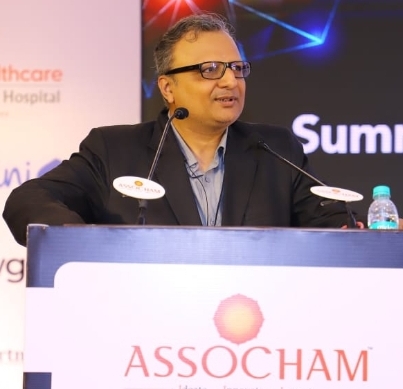
    “Trust is paramount, especially in the age of AI and deepfakes,” said Shashi Shekhar Vempati at the Branding and Marketing Summit, hosted by ASSOCHAM last week. The former CEO of Prasar Bharati spoke on the impact of artificial intelligence (AI) and automation on the marketing landscape. Vempati highlighted the critical significance of data privacy and ethical considerations amidst the proliferation of AI and deepfakes.

    “The future of marketing lies in embracing AI and automation while upholding the values of data privacy and ethical practices,” he said, adding: “Innovative technologies such as generative AI not only break language barriers but also offer invaluable insights for crafting exceptional customer experiences.”

    Reflecting on his tenure at Prasar Bharati, Vempati shared insights into the challenges faced during the Covid-19 pandemic, particularly in combating misinformation. “Our experience during the pandemic highlighted the critical role of media in dispelling misinformation and fostering trust.”

  • India@75: Doordarshan


    By Avik Chattopadhyay

     

    Avik ChattopadhyayWelcome to the third piece in the series on my thoughts about some of the country’s most enduring brands called “India@75”. The first two were on the journeys of ‘Democracy’ and ‘Indian National Congress’ as brands.


    The battle of Kurushetra in the Mahabharata, one of the world’s biggest epics, starts with the words “Sanjaya uvaacha…”. The style of the narration was unique in the format of Dhritarashtra’s advisor and charioteer Sanjaya giving him a ‘live telecast’ of each nanosecond of the 18-day battle. Sanjaya had the divine gift of being able to see and hear everything in person without being at the actual location of incident. He narrates each incident to the king including the killing of his hundred sons at the hands of Bhima without ever flinching. He also describes the entire “Bhoomandal” [universe /galactic system] and entire Bharatavarsha to Dhritarashtra to build the context of all that is to follow in the battle!


    Many equate the direct telecast of Sanjaya to the concept of television, just that it was described somewhere around 1000 BC.


    On September 15, 1959, Sanjaya was reborn as what later got to be called as ‘Doordarshan’. Or DD as the nation prefers to call it. Though not yet 75 years old, but since we attained Independence, it has been one Indian brand that has endured all these years and continues to serve its core purpose.


    From the days of Pratima Puri and Gopal Kaul reading out the short news bulletins, DD grew from a mere part of All India Radio with a five-minute news bulletin to a virtual tour de force in the 1980s. For my generation it was our “Sanjaya”!


    Stamps issued to commemorate the 60th anniversary of DD in 2019


    Since 1982 when colour transmission were launched it was our friend, philosopher and guide on all things proudly Indian while being our eye to the entire world. The 70s and 80s were creatively the best decades for India in terms of exploration and expression. While we were an economically backward nation, when it came to intellectual prowess we were at par with the best. Some of the best institutions of education, research and healthcare had been built. Some of the biggest infrastructure projects on this side of the world had been undertaken. The biggest democratic cooperative movements were here. The 50s and 60s had built the platform to allow creativity take flight, collectively as a nation.


    The country’s biggest cultural movements in terms of art, cinema, theatre, music, and scientific temper started then and what we admire today about our current situation is an outcome of the same. And there was nothing ‘political’ about it, for there was enough upheaval in that field too to add to the magical Samudramanthan that we experienced. And DD was right in the middle of it all, including us all in this journey. It demonstrated the ethos of our Constitution and the values of the democratic system that we had decided to live with.


    The twin principles of DD that made it such a brilliant vehicle of the new Indian ethos were, as I call them, “Door ka Darshan” and “Doordarshita”.


    Door ka Darshan

    Literally meaning viewing far away things, DD helped reduce the distance of knowledge through enjoyment for millions of us who aspired to be one with the rest of the country and the world.


    I was exposed to Fellini, Aravindan, Gopalakrishnan, Ray, Ghatak, Patwardhan, Kurosawa and many more on DD. I gorged tales of Tenali Rama along with Byomkesh Bakshi and Panchatantra. I waited for Spiderman as well as The Old Fox with equal eagerness. I saw movies of all possible languages with subtitles as they were nationally and globally acclaimed. I never learnt to differentiate on language, subject or provenance as I wanted to absorb it all.


    Doordarshita

    Literally meaning vision, DD was carefully crafted by the early leadership of the country as a vehicle that would unite the young nation and equip us with the knowledge and wide perspective to step into the global arena.


    DD was not seen merely as a tool for government propaganda, which all state-owned media platforms are across the world. it was seen as the Indian’s peep into the menagerie that is India and the world.


    A generation of evolved Indians, with a greater sense of empathy and enquiry was built by DD. We were exposed to Chandra Prakash Dwivedi’s ‘Chanakya’ as well as Shyam Benegal’s ‘Bharat Ek Khoj’. We were enthralled by ‘Yes Minister’ as well as ‘Kakkaji Kaheen’. The world was brought onto the screen for us. We watched, consumed, debated and crafted ourselves as evolved Indians with a worldview without even having a passport!


    The Great Indian Thali

    That is what DD was curated as. Right from ‘Krishi Darshan’ [the longest running television programme in the world], to ‘Chitrahaar’ to the Sunday afternoon National Award-winning film, DD had it all.


    It had something for everybody. The sports lover got all the key global events as highlights or direct telecasts. The curious got shows like Quest, Quiz Time and The World This Week. The culturally leaning got Surabhi and Mirza Ghalib. The religious-minded got Ramayan and Mahabharat. The comedy seeking got Yes Minister and Yeh Jo Hai Zindagi. The curious got Sherlock Holmes and Karamchand. The kids got He-Man and Malgudi Days.


    Nobody was left out in DD’s mission to bring the entire nation together. It was a symbol of our unity in diversity!


    Common Conversations

    The nation had similar subjects to deliberate upon. Everybody from Mumbai to Madhyamgram was on the same platform of exposure, entertainment, and knowledge. Every part of the country felt proud to have been amply represented and amplified to the rest of the nation. Indians got to know more about India.


    If an incident disturbed Assam, it disturbed Andhra too, and vice versa. When Adoor Gopalakrishnan received the Swarna Kamal nobody asked “Adoor who?”. When ‘Manthan’ was telecast, the entire nation new of a tiny place called Anand and a man named Kurien. The entire nation debated Salma Sultan’s red rose tucked behind her left ear. We all admired the new reading skills of Tejeshwar Singh. It was inclusive.


    Deliberate Deprivation

    With liberalisation in 1991 came commercialism and private enterprise. With private enterprise came the need to ‘protect and neglect’. To protect the fledgling private television channels, the government neglected DD. Like most government initiatives, this was relegated to being just a mouthpiece of the policy-makers and those in power.


    DD was deliberately deprived of funds to ensure the private channels took over. Equipment was not upgraded, technicians were not paid enough, producers were short-changed, studios were not upgraded, and new technology was not brought in.


    The best talent from DD went over to the private channels and termites had taken over in no time. Management after management had submitted plans of autonomy and revival but to no effect. It was to become a propaganda tool not too different from the likes in China and Russia. Viewership reduced year on year, creating a case of financial unviability and hence no serious infusion of funds.


    The treatment meted out to DD was similar to that towards Air India. To encourage private enterprise the government deprived the shining public enterprises who were qualitatively at par with the best in the world. The intensity of this move was almost to undo the ills of the ‘socialist’ past. And as if all that was public was sub-par.


    Division and Disunity

    DD today is once again symbolic of India today, divided and disunited. We have become more insular while posing as being more global. The broadness of our mind and ability to accept has constricted to all that makes us feel comfortable and ‘superior’.


    The quality of what is consumed today across the country is in direct correlation with the respect towards education and enquiry. The former is totally transactional while the latter is the exclusive domain of a few. Escapism has substituted inquisitiveness. Proliferation has led to dismemberment of issues of national interest and debate. We prefer to escape into a world of ‘reality’ shows and celebrity scandals rather than discuss issues like education and environment. And we don’t care a damn about diversity as we have media that restrict us to our own little worlds of wells.


    As a collective, we are back to being what we were in the early 1900s… some 500-odd kingdoms and principalities busy with ourselves lacking a common identity. Having brought ourselves to such a state over the last 75 years, can DD rise from its ashes and unite us again? While the policy-makers would have none of it and wish to retain it as a political mouthpiece, Prasar Bharati can surely take a long hard look at its child and give it a serious makeover.


    We did hear a statement from the Prasar Bharati CEO a few months back pointing to same, commenting it would be inspired by how the BBC has evolved. For that, one needs both intent and independence. Hope the ministry has the “doordarshita” for the same at the earliest. As we celebrate ‘Azaadi Ka Amrit Mahotsav” we would not like to see one of the country’s biggest brands be finally consigned to the flames. Sanjaya needs to be reborn…
     

  • DD Free Dish Latest Auction: Who wins, Who loses?


    By Indrani Sen


    DD Free Dish has come a long way since its launch in 2005. Last year during the pandemic while Prasar Bharati had an auction of 53 MPG2 slots in March, 2020, followed by various auctions for limited number of channels for limited periods, allowing the Broadcasters to experiment with the pros and cons of having more than one channel from their stable on DD Free Dish.

    This year finallym the 52nd DD Free Dish Auction was announced inviting applications from eligible channels across six buckets of TV channels for the period of one year beginning from April 1, 2021. Prasar Bharati announced the reserve price for MPEG-2 slots according to the below bucket/categories:

    Bucket A+(All Hindi GEC TV channels) – 15 Crore

    Bucket A(All Hindi Movie TV channels) – 12 Crore

    Bucket B(All Hindi Music channels, Hindi Sports channels, Bhojpuri GEC channels, Bhojpuri Movie channels and Hindi Teleshopping channels – 10 Crore

    Bucket CNews & Current affairs (Hindi / English / Punjabi) channels – 7 Crore

    Bucket D– All other remaining Genres/ Regional channels and Regional Teleshopping channels – 6 Crore

    Bucket R1– Devotional / Spiritual / Aayush channels – 3 Crore

    Any channel participating in the auction had to bid above the reserve price in that particular category.


    During the last week, there has been a lot of excitement in the TV industry over the 52nd DD Free Dish Auction. According to industry sources, there was keen competition among Broadcasters for getting the slots across all buckets. Particularly in the News & Current Affairs category, the news channels have ended up investing huge amounts to secure slots on the distribution platform of Prasar Bharati. The final round of auction took place on last Saturday and the final list has been released on March 1, 2021. The results declared shows that 10 players have won the slots in A+ category while 15 players have won the slots in A category as shown below. The results also shows clearly that DD Free Dish has become an essential component of the marketing strategy of all the major Broadcasters.

      Category A + Hindi GEC   Category A Hindi Movies  
    1 ABZY Cool 1 Wah Movies* 9 Maha Movies
    2 Azaad 2 ABZY Movies 10 Manoranjan TV
    3 Big Magic 3 B4U Kadak 11 Movie Plus
    4 Color Rishtey 4 B4U Movies 12 Rishtey Cineplex
    5 Dangaal 5 BDM 13 Sony Wah
    6 Shemaroo 6 Bflix Movies 14 Star Utsav Movies
    7 Sony Pal 7 Dhinchaak 15 Zee Anmol Cinema
    8 Star Utsav 8 Enterr10 Movies    
    9 The Q India * Expected to be relaunched as Dhinchaak 2
    10 Zee Anmol        

    Bucket B earlier used to be reserved for only Hindi Music, Sports, Teleshopping, etc. The inclusion of Bhojpuri channels in that bucket reflects growing viewership of Bhojpuri language beyond its linguistic territory. Of the 13 TV channels winning slots in this category, 7 are Bhojpuri channels. In bucket C, 12 News Channels have fought the auction and both buckets D and R1, have 5 applicants each. As per the information available the news channels winning slots in the auction are Aaj Tak, Aaj Tak Tej, ABP News, India TV, NDTV India, News18 India, News Nation, Republic TV Bharat, TV9 Bharatvarsh, Zee Hindustan and Zee News. The industry grapevine is saying that the news channels have ended up investing proportionately major chunk of their expected annual revenue in the DD Free Dish auction and couple of them may back out subsequently.


    As of now, Prasar Bharati has got INR 730 + crores from the sale of 57 MPG 2 slots on the DD Free Dish from the 52nd DD Free Dish Auction which shows a 23% increase over the last auction of INR 594.25 crore collected from the sales of 53 MPG2 slots in March, 2020. The Bucket A of Hindi Movies Collectively has got the highest collection at Rs 194.85 crore, but a Hindi news channel has come out as the single highest bidder at Rs 22.05 crore.

    .

    The total number of channels participating in the auction has crossed the number of 53 slots which were available for the auction. The senior officials of Prasar Bharati have been huddled together in meetings over last Friday and Saturday trying to decide which Doordarshan channels they should delete from the DD Free Dish offerings to allow all the private channels to come on board.


    It is not really fair for a Public Broadcaster to take such a step as the axe is bound to fall on some smaller Doordarshan Channels catering to small states. Prasar Bharati is yet to declare which Doordarshan channels have been taken out from DD Free Dish to accommodate the private channels. Last year, I wrote in this column about the silent coup by Prasar Bharati. I am an ardent supporter of the DD Free Dish strategy, however, Prasar Bharati should not promote this strategy at the cost of depriving smaller states from the viewing Doordarshan programmes in their own language on the DD Free Dish.


  • The Silent Coup by Prasar Bharati


    By Indrani Sen


    In February 2019, post TRAI’s NTO, big broadcasters had pulled out their Hindi mass entertainment channels from DD Free Dish which subsequently led to loss of viewership, weekly GRPs and ad revenue for those channels. The four big broadcasters, who submitted fresh bid invitation for vacant MPEG-2 slots by Prasar Bharati and won the e-auction held on June 2, 2020, must be sighing in relief now after getting five channels back on DD Free Dish. With effect from June 10, 2020, DD Dish TV subscribers would be able to view Star Utsav, Sony Pal, Zee Anmol, Colors Rishtey and Zee Anmol Cinema. It is definitely a win-win proposition for viewers as well as the channel owners in the post Covid-19 scenario.
     

    Considering that these channels were earlier earning on an average 100 times more that the average carriage fee of Rs 6 to 8 crore paid per annum to DD Free Dish and most of them lost 50% + of their ad revenue after pulling out from DD Free Dish, it is no wonder that they have all boarded back the DD Free Dish Band wagon at the first available opportunity. The five channels are in dire need of restoring their ad revenues in the post-Lockdown stage and cannot do without the viewership numbers which DD’s free-to-air platform promises to add. It is a silent coup by Prasar Bharati for making DD Free Dish an essential part for the survival and growth of these private channels.


    In most of the statistical analyses of subscribers of DTH providers, DD Free Dish is not included which makes the advertising and media Industry forget about its existence. While Doordarshan does not have the built in mechanism to measure the growth of DD Free Dish connections, estimates available from government sources as well as private consultancy firms unanimously agree that DD Free Dish is the leading DTH service provider in India.


    On June 23, 2019 at a programme to launch distribution of DD Free Dish TV set top boxes in Kashmir, Union Minister for Information and Broadcasting Prakash Javadekar claimed that (https://www.indiantelevision.com/dth/dth-operator/dd-free-dish-has-35-crore-subscribers-prakash-javadekar-190623) Doordarshan was the biggest DTH service provider in India with 3.5 crore (35 million) subscribers of DD Free Dish.  He further claimed that there are total 5.5 crore (55 million) DTH connections in India. The 2019 FICCI-EY report estimated 30 million subscribers for DD Free Dish and predicted that it would cross the 50 million mark in near future.


    It is evident from the activity related to DD Free Dish on various private e-commerce sites that their business is doing well. From the sale of DD Free Dish set-top boxes on Amazon (https://www.amazon.in/STC-DD-free-Dish-Set-Top/dp/B07FNKDGGC ) to installation of DD Free antenna on Indiamart (https://www.indiamart.com/proddetail/d-d-free-dish-antenna-installation-5874029873.html) to sale of remote  on Flipkart (https://www.flipkart.com/mase-remote-dd-free-dish-controller/p/itmfdcbspgtjqmgg) , e-commerce sites are doing brisk business due to the popularity of the DD Free Dish.


    DD Free Dish is available in Ku-Band on GSAT-15 (at 93.5°E). It has been upgraded from time to time. The number of channels available increased from 80 to 104 in 2019, of which 26 channels are reserved for Doordarshan. Currently 104 SDTV channels along with 40 radio channels of AIR are available to the subscribers. DD Free Dish has been the greatest contribution which Prasar Bharati has made to broadcasting in India since the satellite TV’s invasion from the sky and privatisation of TV channels. If the set top box for DD Free Dish can be made technically enabled to receive WiFi signals then a new vista of media consumption will open to the vast audiences belonging to  “Bharat”.


  • Meanwhile, Network18 strengthens ETV’s revenue team

    By A Correspondent


    Network18 has announced the elevation of key sales personnel. It has announced the appointment of Mukul Gupta and Tauquir Zaidi as National Sales Heads for ETV News HSM (Hindi Speaking Markets) channels and ETV News Language channels, respectively.


    Joy Chakraborthy

    Commenting on these appointments, Joy Chakraborthy, President – Revenue, TV18 & CEO Forbes India said, ‘We are very happy that Tauquir and Mukul have joined our ETV News Network, I welcome them. They bring vast and varied experience of media sales, which will strengthen an already good team.’


    Prior to joining Network18, Gupta was Head Sales – Special Initiatives at Zee News’s regional bouquet of channels. Before that he was head of corporate sales with ETV News. On the other hand, Zaidi was National Sales Head with Prasar Bharati – Doordarshan channels, Region Head with Times Now, NDTV Media and has spent more than six years in Star India.


    Both Mukul and Tauquir will be reporting to Sudip Roy, EVP and National Revenue Head, ETV News Network, Network18, who in turn reports to Chakraborthy.


  • ASCI sees 30% increase in complaints with introduction of WhatsApp contact

    By A Correspondent


    The Advertising Standards Council of India which had introduced a WhatsApp number (+91 77100 12345) to facilitate consumer reach has seen a significant rise in complaints received. (See Disclosure). According to ASCI, the consumer contact has almost doubled due to this new medium available to consumers to register their complaint. WhatsApp is now contributing to more than 12 per cent of the total advertisements complained against and deliberated upon by the Consumer Complaints Council. With the increased awareness levels, it has also had an incremental effect on the overall number of complaints received directly by other means such as Mobile App and Website. This has resulted in more than 30 per cent increase in the overall number of advertisements complained against. (Disclosure: MxMIndia Editor-in-Chief Pradyuman Maheshwari is a member of ASCI’s CCC).


    Speaking on this, ASCI chairman Benoy Roychowdhury, said: “We launched ASCI WhatsApp number with an objective to provide an “on-the-go” and easy “where-ever, when-ever” access for consumers to lodge complaints against objectionable advertisements and to increase ASCI’s reach across India trickling down to smaller towns. This initiative has, indeed, exceeded our expectations proving to be successful within three months of launch. Our WhatsApp number was welcomed not only by consumers but also taken note of, by the Ministry of Information and Broadcasting, Ministry of Road, Transport and Highways, Prasar Bharati, etc. It was called out as a proactive step to be emulated by other similar agencies. Indeed, we are happy and proud that ASCI is in the forefront of “Transforming India”, leveraging technology for consumer meaningful tools.”


  • Conf on managing media libraries & archives on Feb 4-5

    By A Correspondent


    The Association of Media Libraries & Archives (AMLA) has organised a National Conference (AMLANC 2013) on February 4-5, 2013 at the Convention Centre, JNU, New Delhi in association with Central Library, Jawaharlal Nehru University and UNESCO. The conference themed “Managing Media Libraries & Archives ” will be followed by a one-day training workshop on Capacity Building on “Digitization, Digital archiving and Digital video archiving in Media Libraries and Archives” on Feb 6.


    The conference aims to provide a professional platform to deliberate, discuss, examine and debate the various issues in managing all aspects of media libraries, across the various mass media segments such as print, TV, radio and online.


    According to Dr Ramesh Gaur, University Librarian, JNU and Chief Patron of AMLA, the conference is expected to be attended by over 200 librarians and other professionals associated with media libraries, national and institutional archives from across India. Various guests and speakers from media companies like The Times of India, The Hindu, DNA, ETV as well as UNESCO, Prasar Bharati and JNU will also be expressing their views on future of media libraries and archives in India.


    Details on the conference including registration form are available at www.amla.org.in.


  • Government concerned about TAM data: Ambika Soni

    By Vijaya Rathore


    The government has been concerned about the discrepancies in TAM Media Research’s TV viewership data for a while now, and has even questioned their methodology and transparency, Union information & broadcasting minister Ambika Soni said on Wednesday.


    In an exclusive interview to ET, Ms Soni said that she always had issues with the number of boxes put up by TAM, as it (such a small number) was not enough to gauge the mood of a diverse nation like India.  “I have asked questions about the methodology of TAM. I knew that they were not being transparent. When it came to the number of boxes, rural areas were not covered. Very populated states such as UP and Bihar were not covered.


    So, I felt that 7,000 boxes could hardly be indicative. How can you put boxes as conveniently as you want to and not cover more than half of the country?” the minister asked.


    Following NDTV’s lawsuit against Nielsen and Kantar Media – the co-owners of TAM Media Research – the I&B ministry has decided to support Prasar Bharati, the state broadcaster and the Directorate of Advertising and Visual Publicity (DAVP), the government’s media buying arm, to take legal action against TAM. Ms Soni said that the ministry is also open to support the broadcasters “provided they lodge a formal complaint with the government against TAM.”


    NDTV has filed a lawsuit against the companies in a New York court alleging TAM fudged TV viewership data to favour a few broadcasters for a bribe. Both NDTV and TAM have refused to comment on the issue.


    Concerned by the developments, broadcasters and advertisers are now asking TAM to stop publishing its data, and have been meeting the government on the issue.


    “Today everybody is talking about TAM… why didn’t we talk about it all this while? The issue was raised by the ministry and me several times in the past. I am glad that this issue is now coming out in the open, as this clearly shows that there is need for competition,” Ms Soni said.


    According to the minister, lack of transparency in TAM’s system does not only concern broadcasters, advertisers and media agencies, but also Prasar Bharati that operates Doordarshan and All India Radio.


    “Prasar Bharati is collecting facts and the figures and finally even they decide to put up a lawyer. We will have to allocate resources for which permissions have to be taken. If Prasar Bharati and DAVP feel that they have to take a legal action (against TAM), they will do so in consultation with the I&B ministry and the law ministry,” she said. In 2011-12, DAVP’s advertising spend was Rs 618 crore.


    Ms Soni said that there is a need to have an alternative to TAM, which is why Broadcast Audience Research Council (BARC) is underway: “We have had several meetings with the Indian Broadcasting Federation on BARC. I have had four meetings (from 2010-12).”


    Asked if she thought a tighter regulatory mechanism needs to be evolved to check such discrepancies in future, the minister said, “There have been  suggestions for setting up regulatory bodies for content, and to censor realty shows, but the government is against any strong regulatory mechanism and we are for self-regulation.”


    Source: The Economic Times

    Copyright © 2012, Bennett, Coleman & Co. Ltd. All Rights Reserved


  • AAAI, ISA to meet TAM on Aug 16 as MIB, Prasar Bharti mull probe

    By A Correspondent


    The ministry of information & broadcasting and Prasar Bharati will jointly investigate allegations of fudging of television viewership by TAM Media Research. The two have also sought an explanation from TAM on this issue.


    Prasar Bharati, which believes that the TAM data completely under-represents terrestrial and rural reach of Doordarshan – the state broadcaster, is holding consultation with the ministry and contemplating appropriate action against TAM, a senior government official, who asked not to be named, said.


    “It is high time transparency and fairness came into the system,” the Information & Broadcasting ministry official said. The ministry has written to TAM asking for an explanation. “Within this week, we are also sending out reference letters to TRAI, the telecom regulator, and Competition Commission of India,” the official added.


    The Prasar Bharati board has already given in-principle approval to collate facts, seek legal opinion and hold consultations with the ministry on the issue of misrepresentation and under-reporting of data for Doordarshan by TAM.


    “Prasar Bharati also feels that TAM data completely under-represents terrestrial and rural reach of Doordarshan. We always felt that this has caused immense losses to the state broadcaster,” said the person.


    TAM Media Research India’s chief executive officer, LV Krishnan, said he has no comments to offer on the issue.


    New Delhi Television Ltd (NDTV) has sued The Nielsen Company, a global research and information firm, and its partner Kantar Media Research in a New York court for tampering with TV viewership data to favour broadcasters who allegedly bribed executives in its Indian JV, TAM.


    NDTV has filed a suit in the New York State Supreme Court seeking damages of around $1.4 billion for negligence and fraud and hundreds of millions more for interference and breach of fiduciary duty. Advertisers and media agencies depend on TAM data-the only available measurement for TV viewership – to negotiate ad rates.


    Meanwhile, concerned by NDTV’s allegations on TAM, the Advertising Agencies Association of India (AAAI) has called for a meeting with TAM officials later this week. “We are meeting the TAM officials to get the facts rights and understand the issue in the right perspective,” said Arvind Sharma, president, AAAI. The Indian Society of Advertisers (ISA) would be attending the meeting, which has been scheduled for August 16, 2012.


    “Since advertising agencies are involved in media planning and buying, which is dependent on TAM ratings, we need to know if there is anything to be concerned about,” said Mr Sharma.


    Advertisers also say that it was time for media buying agencies to stop relying only on TAM. “Our media buying agencies depend on the ratings provided by TAM. The onus is on marketers to demand from the agencies basis at which they have been spending the advertisers’ money. There have been issues like TAM’s sample size, but over a period of time lethargy had set in,” said Salil Kapoor, chief operating officer, Dish TV.


    Source: The Economic Times

    Copyright © 2012, Bennett, Coleman & Co. Ltd. All Rights Reserved