
 If you looked at recent CMO surveys and panel discussions lately, artificial intelligence (AI) and influencer marketing are on top of the agenda. 81% of US marketers say that influencer marketers is an essential part of their social media strategy; 77% of Indian marketers are confident in their agency’s capability to effectively manage influencer campaigns[1]. At the same time, 81% marketers say that AI has had a positive impact on their work[2]; and over three quarters of Indian marketers (78%) say they are ready to embrace AI[3].
What happens when you combine the two? We get virtual influencers. Even though human influencers still vastly outnumber virtual influencers, the latter have caught the fancy of marketers and agencies and are becoming increasingly common.
52% of U.S. social media users already follow a virtual influencer, and that percentage is higher in India at 58%[4].
Global brands including Prada, Cartier, Disney, Puma, Nike, and Tiffany use virtual influencers to promote their products.
Lil Miquela is a pioneer in the virtual influencer space. Describing herself as a 19-year-old robot living in LA, she has 2.6 million followers on Instagram https://www.instagram.com/lilmiquela/?hl=en
and 3.5 million followers on TikTok https://www.tiktok.com/@lilmiquela?lang=en
Managed by creative agency Brud, she has featured in brand partnerships with Prada, Calvin Klein and BMW, earning a spot on TIME magazine list of 25 Most Influential People on the Internet.
 Fashion brand Myntra created the virtual influencer Maya, incorporated her into the studio section of the Myntra app, where she doles out fashion advice apart from advocating mental health, inclusivity and body positivity. ‘Based out of Bangalore, and a student’, she has a follower base of 178K already, and endorses brands like L’Oreal.
https://www.instagram.com/maya_unlimited/?hl=en
Kyra or Kyraonig was created by Himanshu Goel, launched in Jan 2022, and enjoys a following of 243000 on Instagram https://www.instagram.com/kyraonig/?hl=en.
She has has been prominent in the music and entertainment industries, endorsing various brands such as Amazon Prime Video, boat, MG, Titan EyeX and John Jacobs.
Within two years, it is expected that marketers will dedicate 30% of their celebrity and influencer marketing spends to virtual influencers[5].
What should they keep in mind, as they embrace this opportunity?
Virtual influencers give you control over content
Brands that want to get across a certain message or have a specific point to make through their influencer partnership have a higher level of control over content with virtual influencers. Being able to control what an influencer posts can be appealing to some brands with a very specific message to share.
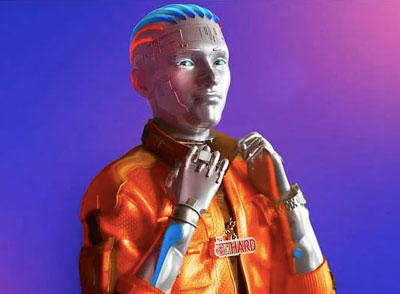
Youth entertainment channel MTV collaborated with DDB Mudra to develop India’s first virtual rapper ‘BotHard’ to draw attention to its property, MTV Hustle 2.0. The bot was brought to life with the GPT3 platform and was specially trained to find rhyme structures of popular rappers. This collaboration inspired the creation of over 350,000 rap videos, with the show racking up 2 billion views across social platforms. This represented a nine-fold growth over the previous season. By creating a virtual influencer in-house provided the brand with greater control, agility, intellectual property ownership, and brand differentiation.
Adaptability
Virtual influencers don’t age, can speak multiple languages and can be made to travel to any place. This level of adaptability and flexibility allows brands to potentially use one virtual influencer for campaigns in different regions instead of identifying and engaging different influencers in various markets.
British fashion house Ralph & Russo, successfully used a virtual influencer to launch its 2020–2021 couture collection. The company designed Hauli, a tall Black virtual model. Her name was derived from the Swahili words for strength and power.

The campaign featured her posing at the Taj Mahal, the Great Wall of China, and other wonders of the world, location where conducting a photo shoot with a human influencer would be difficult (and expensive). The combination of an African influencer and a global context contributed massively to the campaign’s success. The promotion achieved 19.4 million views worldwide, with the brand estimating the value of the media exposure at $65.1 million.
Brand safety and reputation
While virtual influencers may seem to be a safer bet than real-life influencers, they’re not completely immune to controversy.
Humans don’t fully understand how these systems work or make decisions, which poses a huge challenge for marketers and agencies. In the absence of clarity, is difficult for brands to predict how these virtual influencers might be accepted. Granted AI’s cool factor, marketers should be careful about diving in headfirst to avoid unfavourable PR.
Earlier this year, automaker Mahindra launched an AI-generated influencer named Ava, which was designed to showcase the team’s journey in the ABB FIA Formula E World Championship, and towards a more sustainable future for the planet. Mahindra’s team used GenAI tools like Midjourney and Leonardo AI to create its new ambassador, saying ‘Having Ava, an influencer that is strongly associated with us and documents our journey, but with a broader appeal to help promote our core values as an organisation, is a project we’re hugely excited about.’
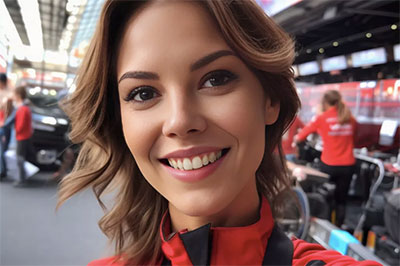 Eva’s Instagram account @avabeyondreality described itself as a “Sustainable Tech Queen & Racing Rebel Robot”, with the goal of fueling inclusion through AI innovation. It documented the virtual influencer’s life through 11 posts, the first of which dated back to 8 December 2023.
The launch of Eva was met with backlash from fans and media alike on social media. Many argued that the team should have hired a human ambassador rather than a virtual influencer. Devin Altieri, a PR consultant in motorsport, wrote on X: “Mahindra creating an AI team ambassador that is a woman instead of simply hiring one real, actual woman to fill that role is so incredibly messed up”. Alanis King, an auto journalist added: “I’m not an AI expert, but everything I see is about enormous energy use. Isn’t it weird to call this a ‘Sustainable Tech Champ’?”
Faced with such strongly negative response, particularly from experts, Mahindra abandoned the project and deleted Eva’s Instagram account.
Fuel fans and consumers’ desire for novelty.
With some brand ambassadors and influencers, some brands find value in stability and longevity. We know how Tiger Woods’s association with Nike lasted 27 years.
On social media era, on the other hand, many consumers crave something new and different, and find brands that rely on familiar celebrities as stale or uninteresting.
As they scroll social media quickly, it requires something unusual to make them pause.
Research shows that one reason consumers follow virtual influencers is that they are unexpected and previously unknown. Although betting on a virtual influencer may require a leap of faith, marketers should realize that human influencers may be perceived as overexposed or past their prime.
Traditional influencer marketing can be expensive, particularly when collaborating with celebrities or industry experts. On the other hand, virtual influencers are a cost-efficient and scalable option, requiring less time and resources. While the initial investment in creating a virtual influencer can be significant, the long-term benefits far surpass the costs.
Kunal Sinha is a senior strategy and foresights executive based in Jakarta, Indonesia. He is the author of several books including The Future of India’s Rural Markets and Raw – Pervasive Creativity in Asia. He writes for MxMIndia every other Monday. His views here are personal.
________
[1] https://www.ey.com/en_in/media-entertainment/how-influencer-marketing-is-impacting-brands-in-india
[2] https://sproutsocial.com/insights/index/
[3] https://www.campaignasia.com/article/47-marketers-in-india-believe-ai-will-make-them-more-productive-linkedin-report/491903
[4] Influencer Marketing Factory Report
[5] Gartner global forecast, 2024