Tag: Pops

  • ASCI refreshes ‘future-facing’ brand identity

    By Our Staff


    New ASCI logo
    The refreshed identity

    The Advertising Standards Council of India (ASCI) has unveiled a new brand identity to reflect, as its communique points out,  the “agenda of becoming future-facing and more inclusive”. The refresh comes close on the heels of new initiatives such as the guidelines for influencer marketing and online real money gaming and asci.social. Adds a communique: “ASCI has always been the conscience-keeper of the Indian advertising industry, and in this new phase, it aims to expand its offerings and services that will help advertisers balance creativity and responsibility.”

    Subhash Kamath
    Subhash Kamath

    Said Subhash Kamath, Chairman, ASCI: “ASCI has stepped into the next phase of challenges that impact the interests of consumers in new ways. With new-age challenges posed by the digital age, it is imperative for ASCI to take a leap into becoming a contemporary thought leader and add greater value to consumers, industry and all our stakeholders. The new logo represents this very interesting phase of ASCI’s journey, and the vibrant and optimistic outlook of responsible advertising. Our ideology and aim remain unchanged; however, we are now on the path to becoming a more dynamic and future facing organization.”

    KV 'Pops' Sridhar
    KV ‘Pops’ Sridhar

    Added KV Sridhar, Chief Creative Officer (Global), Nihilent Ltd, the company which designed the refreshed logo: “The colourful logo palette denotes the vibrancy of advertising and communication itself, as well as the diversity of ASCI’s stakeholders who have taken the oath to self-regulate and create ads with responsibility. The idea of creativity with responsibility is central to ASCI. The logo also reflects the dynamic nature of media platforms and the newer interesting ways in which communication is being created and consumed today. The elegant and inclusive font reflects an organization opening up to newer kinds of stakeholders, an organization that is collaborative and demonstrates leadership in bringing together the needs of different stakeholders. It signals that ASCI is gearing up towards this fast evolving and dynamic environment of consumers and advertising.

    Roger CB Pereira
    Roger CB Pereira

    Said marketing services veteran Roger C B Pereira, Founder Member, ASCI: The world today is remarkably different from when we started ASCI in 1985. However, what is noteworthy is that the twin principles of consumer protection and fostering creativity remain unchanged.


  • It’s here. It’s by Pops. And it’s HyperCollective


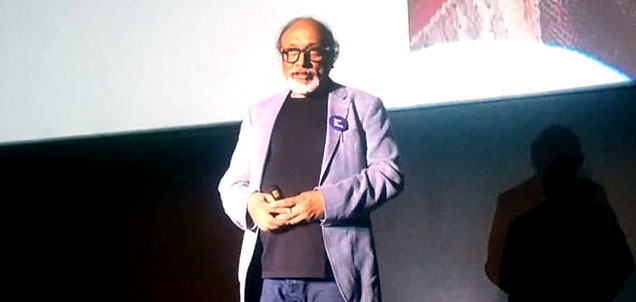
    Veteran adperson KV Sridhar aka Pops unveiled his all-new venture: a collaboration of independent communication-led agencies called HyperCollective.


    Pops believes that HyperCollective’s business model will be gamechanging and enable clients to forge a seamless connection between brand, technology and consumers. “The need of the hour is cocreation, collaboration with swiftness and agility,” he said, adding: “There is no single agency that excels in all four areas of content, communication, technology, and strategy. Through HyperCollective we have got on board some of the sharpest minds in these areas who have been pushing the envelope through their work. Our clients will have full access to all our collaborators at all times. As required, collaborators can be on-boarded in short span of time. Furthermore, we can add newer competencies in a blink of an eye. Collectively, we will orchestrate brand story seamlessly across platforms to cater to today’s always on world.”


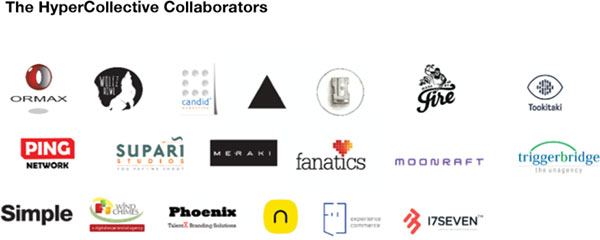
    Based in Mumbai, a strategic team at HyperCollective, helmed by Pops, will team up with its collaborators to offer services to brands, institutions, and government organisations. There are 21 collaborators on board, additionally, it has support of brand gurus, independent marketing consultants, media buying agency, PR agency, and celebrated filmmakers. Over the coming months, it aims to further strengthen the collective by onboarding collaborators offering niche, disruptive services. HyperCollective has been in ‘stealth mode’ for the past several months, working for iconic global brands and a handful of large Indian companies. Acting up on Nestle India’s vision, it has helped set up a Live Content Studio in the company’s HQ in Gurugram.


    Ormax Consultants

    Vispy Doctor, CMD, Ormax
    Rajeev Sharma, CEO, Ormax Rhodium
    Anand Bhatia, CEO, Ormax Money Pvt Ltd
    www.ormaxworld.com


    Wolfzhowl Strategic Instigations

    Kalyan Ram Challapalli, Founder & Chief Strategist
    www.wolfzhowl.wordpress.com


    Umbrella Design
    Bhupal Ramnatkar, Founder & Chairman

    www.umbrelladesign.in


    Sharpener  Hetal

    Ajmera, Co-Founder
    Bianca D’sa, Co-Founder
    www.sharpenerinc.com


    PING Digital Broadcast Pvt Ltd

    Govindraj Ethiraj, Founder
    Prashanto Das, Co-Founder


    Supari Studios

    Advait Gupt, Co- Founder

    Akshat Gupt, Co-Founder
    www.suparistudios.com


    Meraki VR Studio

    Sairam Sagiraju, Co-Founder

    Parth Choksi, Co-Founder
    Agam Garg, Co-Founder
    www.merakivr.com


    Fanatics Karl

    Gomes, Chief Fanatic at Fanatics
    www.fanatics.in


    Simple Creative Inc

    Sainath Saraban, Founder

    www.cargocollective.com/SainathSaraban


    Windchimes Communications Pvt Ltd

    Nimesh Shah, Head Maven

    www.windchimes.co.in


    Candid Marketing

    Atul S. Nath, Founder & Managing Director
    Amrita Kumar, Executive Director

    www.candidmarketing.com


    Phoenix TalentX Branding

    G.M. Singh, Co-founder

    hello@phoenixtalentxbranding.com


    NetBramha Studios

    Aashish Solanki, Principal Designer & Founder
    www.netbramha.com


    Experience Commerce

    Sandip Maiti, Co-Founder and CEO
    Rajeev Sreenivasa, Co-Founder
    www.experiencecommerce.com


    Made by Fire

    Vernon Dias, Founder and Managing Director
    www.madebyfire.com


    Moonraft Innovation Labs

    Somakumar Kolathur, Co-Founder & CEO
    www.moonraft.com


    17Seven

    Vimal Kutmutia, Founder & Strategist

    www.17seven.co


    Tookitaki

    Abhishek Chatterjee, CEO
    www.tookitaki.com


    triggerbridge, the un-agency

    S Yesudas, Managing Director & Co-founder
    Ajit Nair, Director & Co-founder
    Amit Tripathi, Director & Co-founder
    www.triggerbridge.com

  • Gunning for more ad awards, creativity loses plot

    By Ravi Balakrishnan


    A little over a decade ago, when the Abby awards were still the only show in town, the after party found Prasoon Joshi in a pensive mood. As team Ogilvy celebrated their ‘agency of the year’ win with a characteristic lack of subtlety – drums, horns, and people in black posing for interminable photoshoots – Mr Joshi, then early in his stint at Mc-Cann Erickson reasoned, “There are youngsters from many agencies who’ve won their first trophy tonight. But all of that is being forgotten in this obsession with who won most. We should celebrate the work and not the numbers.”


    Mr Joshi may have been among the first to voice this concern, but he’s far from the last. Several creative leaders in India are increasingly vocal about missing the forest of creativity for the trees of a final tally.


    Festivals like Cannes Lions have arguably made things worse, adding layers to the competition like Holding Company of the Year. WPP won for the fourth time running in 2014, which according to media reports led Interpublic to boast of its far better win to entry ratio. Closer home, Goafest officially scrapped ‘agency of the year’, ostensibly to make it more about the work and less about the numbers. It however resulted in a cottage industry where previously math-phobic creatives sliced and diced the numbers till they were left with a rank that satisfied them.


    Apart from no year being complete without some controversy, protest or conspiracy theory, the numbers game is tainting large parts of the industry.


    Remember all the worldwide chief creative officers who’ve lashed out against scams? Creative directors in their employ will tell you, off the record of course, that the scamming happens entirely with their approval, frequently on their insistence. Truth be told, it’s hard to say no when even a laggard that gets lucky and scores bronze adds one more to the total tally. It’s resulted in a business where scams are the worst thing to happen only so long as you get caught.


    The judging process too is compromised as long as tallies – official or unofficial – continue to be important. Says Bobby Pawar, chief creative officer, Publicis, “Judges may be more open to acknowledging how they feel about a piece of work when voting for it doesn’t make them losers. When you have younger people on the jury who haven’t won that much, it’s hard (for them) to be charitable.” In every award jury, if some industry folk are to be believed, there are people wondering “what’s in it for me?”


    With the role of tallies coming into question, the Gunn Report is perceived to be the biggest villain of the piece. Started in 1999 by former Leo Burnett adman Donald Gunn, it’s currently the largest, most authoritative source of league table on ad agencies. The 2013 edition considered 46 award shows – global, regional and national. While undoubtedly a definitive source of information on the varying creative fortunes of agencies, doing well in the Report has become an unhealthy obsession.


    Mr Pawar says sardonically, “It’s a great idea – for Donald Gunn. Or CEOs and creative guys looking to put notches on the belt. I don’t think it’s a good idea for work. Let’s not reduce creativity to accounting because that’s what these things do.” Adds a creative chief who wishes to remain anonymous, “I know the networks love Gunn but does the report motivate me to break the mould? Is it inspirational?


    Or just an impotent report card?” The latter has no place in an industry that’s playing it fast and loose, finding ideas from unlikely sources, some of whom are not agencies. The Gunn Report had not responded to our questions at the time of going to print.


    The alternative: Let the year be remembered not for who scored the maximum but for the best work. Irrespective of where it came from or what else the agencies who created those pieces won. In spite of being the top ranked Indian shop by Gunn this year, Mr Joshi, currently president – South Asia, McCann Worldgroup continues to have a purist perspective.


    “The creative world is more like a garden than a wrestling ring. We shouldn’t be trying to outshine each other but to complement each other. People will say ‘here comes Prasoon again with his poetry’, but I’ve said this since I was in school. Every child is unique but the moment you ask ‘kitne number aaye?’ you make him start thinking in those terms.”


    However, in spite of these pious and occasionally poetic sentiments, it’s unlikely that tallies are going anywhere. Because as KV Sridhar aka Pops, chief creative officer at SapientNitro points out Gunn and accounting are unnecessarily being pilloried. For one, the report is a lot more nuanced, measuring both the width as well as depth of wins.


    At worst, it represents a deeper malaise: “Gone are the days when creative people were obsessed with peer recognition. Awards are now more about business development. There’s nothing wrong (in wanting to win big) since this is how advertising agencies sell themselves. It’s both for the benefit of new marketers and to tell your existing clients ‘we’ve still got it.’”


    The obsession with tallies is less about creative oneupmanship. Says Mr Sridhar, “It’s the obsession of people like Martin Sorrell and Maurice Levy. It’s a global diktat to every agency since this is how a brand seeking to enter the country decides on who to start talking to. Every country head is measured by creative reputation as much as bottomline. If you deliver 21 per cent instead of 23 per cent you are sacked, but if you’ve got a creative reputation with 21 per cent, you get your bonus.”


    And so what it comes down to is this; when the agency man’s stuck at the wrong end of the barrel, even the most virtuous will start Gunning for more awards. Don’t blame the player, blame the game.


    Source:The Economic Times

    Copyright © 2014, Bennett, Coleman & Co. Ltd. All Rights Reserved

    Licensed to republish


  • TAPROOT! | Pops on the Rise & Rise of Aggie & Paddy


    By K V Sridhar


    Aggie:

    “Agnello Dias, I have always believed, is the Sachin Tendulkar of advertising industry. Aggie has the ability to camouflage himself with any brand, in any tone of voice, and in any style.”

    I have known Aggie for more than 20 years now. I have known him as a young boy who came into the advertising world in the year 1991-92 when I was in Lintas. I have seen him grow as a copywriter, I have seen him grow as a creative director, and I have seen him grow as a man. Agnello Dias, I have always believed, is the Sachin Tendulkar of advertising industry. Aggie has the ability to camouflage himself with any brand, in any tone of voice, and in any style. In fact, when Aggie was a young boy in the industry, he wrote some beautiful copy for Johnson and Johnson’s baby products. When we were in Lintas at that time, I remember asking him to write copy on Johnson’s baby gift pack. Initially I was wondering whether that little boy would be able to write anything on baby-related products, but he surprised us with a brilliant piece of work. It was since then we realized that this boy (Aggie) has got tremendous talent in him because it is not just the skills of copywriting alone that is required, but also observation skills. If you see all the successful creative people, they have all learnt so much from life… It is the people who have gone through a lot of hardship in life, and people with general interest in life, who make a great creative person.


    Aggie has come a long way. It may surprise you that Aggie’s first passion has always been football and not advertising. He came into advertising by default. Aggie not only has the talent of playing with words and expressions, but he also understands human behaviour exceptionally well. It is this combination that has made him a good copywriter.


    To the world Aggie is a very quiet person; however, I believe it is by choice rather than by default because he believes it is his work that must do all the talking. Probably he is the last copywriter or one of the quintessential copywriters in the country who knows how to put across a point of view and win that argument. A lot of copywriters today are clever one-line writers, but there is absolutely no one who can put across a point of view and win an argument. But Aggie was different; he wanted to win that argument, it did not matter where he wrote, whether it was for a newspaper or a woman’s product, he would argue for that point of view. Thus he was always of the opinion that hiding a little bit of his personality is always helpful.


    During his stint in Leo Burnett, I remember Aggie reluctantly accepting the post of ECD. In fact he never wanted to be an ECD because he never really enjoyed handling people, he never enjoyed designations, and he certainly did not enjoy the limelight as he always wanted to be the quiet guy.


    The biggest turning point in his career came after he joined JWT. It was only after joining JWT that he started becoming a little more of an extrovert, started becoming more visible, talking to people and expressing his viewpoint much more emphatically. Most importantly he started becoming a leader wherein he commanded the client’s respect by taking on a brand and transforming it. So, that work got him all the recognition and respect. The clients started respecting him even more for all the work he has done for the big brands like Pepsi, TOI etc. Thus, the relationship he has built and the respect he has earned in JWT is what made him a great creative leader.


    Paddy:

    “Paddy was never satisfied with crafting, he would always work and rework until and unless he achieved perfection. He always had that passion of going the extra mile to achieve perfection.”

    I’ve known Paddy for more than 14 years now. Paddy is passionate about cricket and commercial advertisement, he played cricket with Sachin Tendulkar in school. Paddy was never satisfied with crafting, he would always work and rework until and unless he achieved perfection. He always had that passion of going the extra mile to achieve perfection. So, despite his work being approved, he would sit through the night and polish it further and make it even better. Somewhere down the line I believe he always had this feeling about how much of his work as an ad director will be valued by the industry but, my advice to him has always been that, “You are a great creative guy, a great art director and not many are blessed with this kind of talent. Your greatness in fact comes from your talent, and what you do with your talent matters, and if you use your talent well, you will certainly achieve success.” His greatness therefore came from his art direction, from his simplistic ideas which were without much complication. Art directors are very simple-minded, unlike copywriters, because copywriters have to carry the entire world on their head, but art directors are much more simple. Thus it is his simplistic thinking and his crafting skills and that has become his path to glory. This is also the reason why he is one of the most successful and most respected art directors in the country today.


    Unlike Aggie who commanded respect from the popularity of his work and his ability to camouflage himself into anything whether it is about writing effortlessly a copy on baby products or even question the harmony between India and Pakistan, etc; Paddy on the other hand became popular by his craft and by his peers recognizing him, and when they both came together, it was a perfect combination. Both of them therefore complement each other. While one is the best copywriter of the country, the other is the best art director of the country and when the two come together they become a force to reckon with.


    Both Aggie and Paddy were never interested in designations unlike the younger generation of today. I feel a lot of copywriters today are ashamed of being copywriters, as they want to become creative directors, and they want to supervise somebody else’s work instead of their own work. The trend is similar with art directors too because they feel it is below their dignity to become an ad director or copywriter. Once a copywriter, you are a copywriter for life, if you are an art director, you are an art director for life because that is what becomes your identity.


    I hope they continue to remain the best Art Director and Copywriter and create many more campaigns.


    KV Sridhar aka Pops is the National Creative Director at Leo Burnett.


    As told to Robin Thomas


  • Ad Strat: McDonald’s Happy Price Menu

    KV Sridhar, NCD, Leo Burnett


    Name of the Campaign/Ad: Happy Price Menu

    The Brief: Since the launch of Happy Price Menu in 2004, McDonald’s & Leo Burnett have constantly endeavoured to go to consumers every year with a fresh way of communicating the already established Rs 25 affordability message. The outlined challenge for the 2012 campaign was to go beyond transactional/value communication and forge an emotional bond with customers.


    [youtube width=”400″ height=”200″]http://www.youtube.com/watch?v=iKCe0Za3lBA[/youtube]

    Research insights: While food is why people come to McDonald’s, it’s the moments one shares over that food that makes them come back.


    The thought process behind the creative: McDonald’s is all about simple easy enjoyment. The burger may cost a few rupees, but the conversations, the human connection one creates over that burger is priceless. And hence, the core thought – real happiness doesn’t cost a lot – interpreted through simple, everyday, innocent charming stories that bring a smile to your face.


    [youtube width=”400″ height=”200″]http://www.youtube.com/watch?v=22P9FCX2Ybg[/youtube]

    Media vehicles chosen: The campaign launches with a TV plan and in store merchandizing in the first phase and additional media like radio, outdoor etc will be added in subsequent phases.


    Key issues kept in mind while executing the ad: We needed to adhere to brand tone – fun, optimistic, welcoming and genuine. While we worked on compiling mushy priceless moments, we needed to take care that we weren’t being over the top or unreal. All McDonald’s communication must be stories that you can imagine happening around you.


    Does the treatment do justice to the brief? Simple execution, enjoyable stories and adorable performances – cliched as it may sound, the films touch an emotional chord and take the happy price menu beyond the basic value for Rs 25!


    [youtube width=”400″ height=”200″]http://www.youtube.com/watch?v=-sTqF1owZvI[/youtube]

    What according to you is the differentiating factor about the ad? From discovering love in an arranged marriage to realizing that you are more than just a driver to a bunch of school kids to a role reversal between a father and son, all such moments no one can put a price to. So we took these real slice of life situations and married them to the Happy Price Menu’s affordability to create this fresh campaign-emphasizing price yet talking of making moments that will last a lifetime.


    Market and client feedback: Rameet Arora, Senior Director McDonald’s, says, “The new McDonald’s campaign for the Happy Price Menu reflects the joy, optimism and happiness that epitomizes McDonald’s. The Happy Price Menu, with its deliciously affordable pricing and iconic products, opens the doors for everyone, young old; affluent, budget seeker; working adult, families. The campaign ropes together the brand, the food and the prices. In my opinion it isn’t just advertising for the budget menu, it’s advertising for McDonald’s the brand.” Within a week of the launch, McDonald’s has reported a significant rise in footfalls.


    The campaign got 8,000 hits on YouTube within 4 days of the launch. The films are also being circulated heavily on social media websites.


  • The Anchor: Pops on why advertising is still sexy

    By KV Sridhar (Pops)

    #1 Richer life experience.

    If you are passionate about life and want to live life the fullest, this profession allows you to do that. (I am writing this sitting in a plane to Colombo for a working weekend.)


    #2 Get paid for doing what you like.

    If you are curious about life, mine some insights to tell some stories, you’ll get paid handsomely.


    #3 Want to be an expert in 100 categories?

    Advertising helps you to learn about 100 categories in 10 years, no marketing job can offer that.


    #4 Around the world in no time.

    South of France as a trainee boy? Sounds great? Get your jumbo passport and get on board.


    #5 Do nothing.

    If you are a dreamer or want to relive your memories every day? Just gaze out of your window and narrate few experiences (that’s work for you) and you’ll be the next guru.


    #6 Be a celebrity.

    Imagine, if marketing is the glamorous part of business than advertising is the glamorous part of marketing. Got the logic? You’ll be seen in the papers more than Ratan Tata.


    KV Sridhar (Pops) is the National Creative Director at Leo Burnett.