By Hamsini Shivakumar & Prabhjot Singh Gambhir


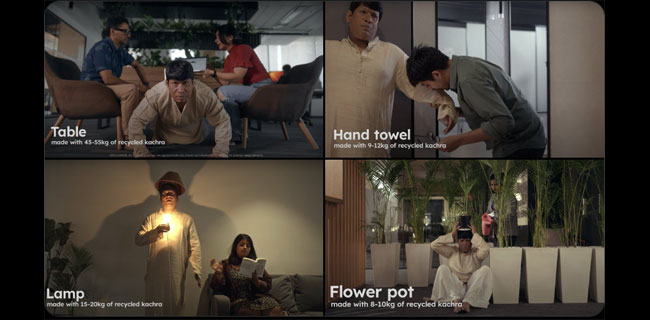
Zomato’s recent campaign aimed to raise awareness about recycling waste on World Environment Day. However, the use of the character ‘Kachra’ from the movie Lagaan inadvertently reinforced stereotypes and perpetuates the devaluation of people from a specific class. Although the brand intended to employ wordplay in the video, the end-result appears culturally out of sync. The humour in the video appears to be mocking the already marginalised rather than challenging those in positions of power. The video received a lot of backlash on social media, which eventually led to Zomato deleting the video itself from all platforms.
When faced with these social class divides, brands and their creative agencies are confronted with a unique challenge. Traditionally, marketing has approached class divisions as issues of affordability and accessibility for consumers. The solution typically involves offering products and services at various price points to cater to different segments of the market.
Think of shampoo sachets, and phone recharges priced at Rs 10. Market segmentation based on affordability addresses the problem of access, ensuring that every consumer can afford and desire products within their price range, whether at the lower end or luxury segment of the market.
However, addressing the social class divide as a brand in brand communication presents a distinct challenge, as it raises questions about portrayal and representation. It forces brands to examine their vantage point and ideological stance. If a brand aims to project itself as embracing progressive values, how should it navigate the complex issue of social class and class divides?
This is particularly relevant when it comes to the portrayal of domestic help and their treatment in advertising, especially for brands selling household cleaning products and related items. How should they depict domestic help? Should they merely reflect reality as it is, or should they encourage consumers to adopt more progressive behaviours?
To effectively navigate the intersection of brand communication and the social class divide, brands can draw valuable lessons from previous campaigns that approached similar subjects with sensitivity. Let’s take a look at some examples of how some brands have approached this issue in the past:
Ghadi Detergent:
In Indian popular culture, domestic help is often portrayed as solely responsible for the cleanliness and maintenance of households, perpetuating the notion that it is their sole duty while family members contribute little. Such stereotypes create a power imbalance between domestic help and the families they serve, with the latter holding all decision-making authority.
Ghadi Detergent’s campaign, #SaareMaelDhoDaalo, deviates from this stereotype. Instead, it encourages individuals to recognise the importance of every task, no matter how small, and to treat domestic help with respect. The campaign depicts a young boy with a callous attitude towards the work performed by the house help. To rectify his behaviour, his mother decides to teach him a lesson by having him clean the house under the false pretence that the house help is on leave. In the end, he learns to appreciate the domestic help’s contribution and even pays him extra to celebrate the festivities.
Women’s Day 2019 #YourSecondHome : An initiative by PregaNews
Similarly, PregaNews launched its Women’s Day 2019 campaign, #YourSecondHome, which highlights the importance of domestic helpers and their contributions to households.
The content begins with a woman scolding her domestic help and asking her not to perform her usual tasks. It appears that the domestic help’s job is at risk. However, as the narrative unfolds, we discover that the woman is actually reducing the workload of the domestic help due to her pregnancy and invites another domestic worker to assist. The campaign challenges initial perceptions by portraying the employer as caring and considerate, much like a family member would be.
The messaging of the campaign promotes progressive ideals, advocating for empathy towards domestic workers and providing them with benefits such as maternity leave or reduced workload during pregnancy, similar to practices in the organised sector. The brand, PregaNews, seamlessly integrates into the narrative of the ad.
Cadbury Dairy Milk – Driver
The work features a boss driving his driver to his child’s school so that he could attend the parent-teacher meeting. While the content is only 45 seconds long, it is quite impactful. We immediately get to understand the dynamics between the employee and the employer and how this is a routine activity. We understand how his boss is being kind and patient towards him and goes out of his way to help him.
The video shows how a small gesture of kindness towards one’s driver/staff can make a significant difference in their life. The brand integration of Cadbury Dairy Milk is also quite seamless, as it plays on the factor of the boss ‘being sweet’ and sweetness is associated with the chocolate in question.
Oswal Refined Soyabean oil
Oswal Refined Soyabean oil’s campaign portrays a positive image of domestic helpers by showcasing the relationship between the wife and her employee. While the husband is upset that the domestic help always leaves early to attend to her children, the wife, on the other hand, is accommodating as she knows that she works well and efficiently. One day, when the wife is out of the city, the maid bakes a cake for the husband and stays late at night just to celebrate his birthday so that he does not feel isolated on his special day.
The video emphasises that domestic help is not just the staff of the house, but a part of the family, and employers should be accommodating to their requirements.
However, while the ad’s story has a nice recall value, the brand takes a backseat here. The brand integration of Oswal is not quite as seamless because the story is not built around refined soybean oil. Even a slight mention of it in the narrative would’ve helped the brand integration.
Facebook | More Together – Pooja Didi
Facebook’s campaign, More Together – Pooja Didi, is a heart-warming portrayal of support staff. The content initiative can almost be categorised as a mini-short film, as it is about seven minutes long. It highlights the problem of unemployment during the pandemic and how the protagonist – Pooja, starts hiring people in large numbers to provide them with gainful employment solely out of her altruistic intentions.
However, when she cannot pay the salaries and bills to the people she does business with, she is in a state of crisis. That is when the hired staff of her sweet shop utilises the power of social media to narrate the story of Pooja’s altruistic actions, which end up attracting customers to the shop, thus enabling her to pay all her bills.
Conclusion
All the brands seem to take the high power distance between employers and domestic help for granted as a given in Indian society and thus mirror existing realities. They don’t show the possibility of a different future for domestic help (except the Cadbury ad to some extent) in which they can be empowered and assertive of their rights vis-a-vis their employers.
The convergence of brand communication and the social class divide poses both challenges and opportunities for brands. By being mindful of the implications of their messaging, brands can strive to create advertisements that promote empathy, understanding, and equality. Actively working to dismantle stereotypes and biases, brands can contribute to positive social change.
Hamsini Shivakumar is a long-time culture-watcher, semiotician, brand consultant and co-founder of Leapfrog Strategy as well as Semiofest, the global unconference for applied semiotics. Prabhjot Singh Gambhir has done his Masters in Film Studies and is passionate about stand-up comedy. He has now turned his observant eye to cultural discourse and its intersection with brands. The views expressed here are their own.