By Labonita Ghosh
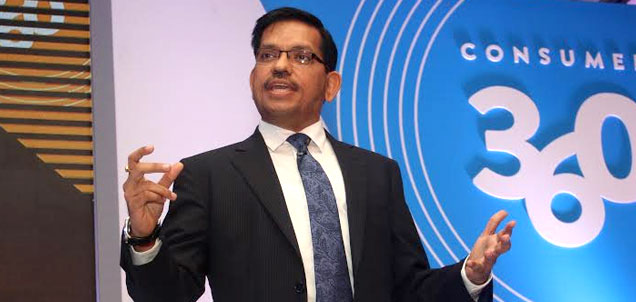
Madhav Mishra is a 19-year-old magazine seller on the streets of Mumbai. On Friday, he made it to a high-profile Nielsen Consumer 360 conference hosted by research and insights major Nielsen – via the opening speech by India region president Piyush Mathur. Reason: Mishra has done something remarkable in his work life. Just before he makes a sale, the secondary-school graduate takes a good look at the car his prospective buyer is travelling in, and pitches his product accordingly. If the occupant looks like a banker or corporate honcho, he pulls out the business publications; if she appears to be a homemaker, then it’s the society or lifestyle magazines. He has only a few seconds to make that call, but over the years, Mishra has perfected the art of creating successful outcomes for his business from years of learning.
“Just insights are not enough,†said Mathur, on the conference’s theme, ‘Create Outcomes’. “It gets better when these lead to actions, and the real difference comes when there are actual outcomes for our clients’ business.†Indeed, Nielsen no longer just hands over findings to clients. It has started doing a value-based exercise where it checks back with the client on what the company has done about the recommendations. “Increasingly, we are also collating the value of what outcome we’ve created for our client,†added Mathur.
| Voices from the panel discussion: |
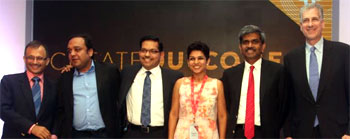
Sub-brands vs mother brand Harish Bhat, Member, Group Executive Council, Tata Sons You have to be careful that a mother brand does not become a grandmother brand. Mother brands have a tendency to age. And typically, the sub-brands that you launch, have to be aspirational for your current set of customers. So companies do a lot to keep their sub-brands young, sexy and aspirational but in meantime, the mother brand has aged. Marketers will have to keep this in mind. Only if your mother brand is young and edgy and aspirational, will the sub-brands under the mother ship, work.
Moving away from the mother brand Punit Goenka, MD & CEO, Zee Entertainment Today, in the analogue world, the consumer is used to accessing anywhere from 50 to 80 channels, which will grow to 200 or 500 channels, which means fragmentation of TV viewership was bound to happen. Newer viewership will be created, and not just on the TV screen but on various kinds of screens. Lastly, today’s young consumers say Zee is my mother and father’s channel, it’s not meant for me. So even the new-generation families were looking for new content. That’s why we decided to move away from the mother brand and embark on a host of new channels which were in no way linked to the mother brand. This also allows us to experiment with more edgy content that we can’t have on the mother brand
The power of digital John Lewis, President, Global Summer Goods, Nielsen All mediums have to be more addressable, more precise. The notion of a demographic group – that will increasingly no longer be the right construct [for measurement of impact]. It will be about people who are looking for a specific brand or service; for instance, those who are about to buy a car. It’s all becoming more precise. It already happens digitally, which is what makes digital so powerful. But it will soon happen with broadcast or any other medium. And any medium that cannot be more precise, will have problems.
Information and Innovation Kirthiga Reddy, MD, Facebook India We believe information equals innovation. The Facebook experience from more than five years ago was very different from the one today. When we started, we had a very static photo image because we thought people would only want to change these on special occasions, birthdays and such. But then we found that people were changing the photo several times a day. It became clear that people wanted to express through photographs what they were doing through the course of the day. It was that user interaction that led to us very quickly launching our photos product, which has become the largest photo-sharing site on the web. We believe in innovation coming from information.
Lessons for marketers D Shivakumar, Chairman & CEO, Pepsico India Very rarely in India have I seen a brand move up the ladder. It’s easier for it to come down. For example, if you start with the premium position, you can go down. But if you start with the bottom position, you will find you can never go up. There are some categories intrinsically that consumers don’t give you licence for. No hair care brand across the word has been able to go into skin care. But every skin care brand has gone into hair care. At the heart of all branding in India and most emerging markets, is aspiration and quality. Thanks to disruption in technology, consumers are willing to give brands a lot more latitude today than they did before. But if you’re not in your core area and going somewhere else, then you will have to up the value significantly.
|

Invited to showcase their outcomes-based initiatives at the meet, different corporates seemed to have divergent results and experiences. Jairam Sridharan, president, retail lending and payments at Axis Bank, spoke about the creation of the Asha home loan. Research had shown that while a large number of high-end properties was coming up in Mumbai, there weren’t enough takers for those. Instead, there was an overwhelming demand for low-cost housing mainly because consumers wanted to do away with rent and live in their own home. This made the bank create a new product called Asha, a home loans for buyers of low-cost housing.
What a constantly-evolving marketplace needs, however, is innovation outcomes. Sunita Bangard, President, Marketing at Idea Cellular realised the company needed to make its product stand out in a crowded and competitive market. In the early stages, in the debate about India vs Bharat, Idea decided to concentrate on the former (hence its initial, rural-setting ad campaigns). More recently, the cellco found it needed to stay relevant to its rapidly-changing customer base, so it launched the ‘No Ullu Banaoing’ and ‘IIN’ campaigns. “The insight we received was that information is power,†said Bangard. “Keeping the customer at the centre, you need to create innovation in the way you do work, not just in terms of products and services.â€

Innovation can sometimes mean swimming against the tide, as Srirup Mitra, head of the hair care category at Hindustan Unilever (HUL) found with the launch of TRESemme. He had to take several Big Leaps (of faith) by under-leveraging the HUL scale of product launches and deciding to unveil TRESemme in only seven centres across the country; eschew the traditional 30-second TV spot and go digital with YouTube, and even launch the shampoo during the Lakme Fashion Week. “Do what is right for the brand, but make sure you’re consistent in getting across to people in multiple ways,†said Mitra.

Sunil Kataria, business head, India and SAARC at Godrej Consumer Products, however, believes that marketing should not be at the centre of innovation but one of a bouquet of things (including R&D, design, packaging etc) that will lead to “whole brain thinking†about changing course in business in the interest of growth. This idea certainly helped when Godrej launched its Rich Crème hair colour in sachets instead of the older, glass bottles. The demand for the product skyrocketed so much that Kataria believes it turned into “teaching India a new way to colour hairâ€.

Every company has its own way of reading trends. At Marico, the Consumer Preference Score is sacrosanct; the success of a brand is calibrated against this, says Sameer Satpathy. The company operates on CPS metrics from each state and city, and this came particularly in handy when it launched its Nihar Shanti Amla hair oil. “It’s not about strategic coherence versus tactical flexibility, but both together,†said Satpathy.
Future Group, on the other hand, took customer preference to a whole new level when it revamped the very layout of its stores. As Devendra Chawla, group president, food and FMCG brands said, the stores became more focused on young customers; brought in a regional assortment in the food sections, since culinary preferences change quite significantly from place to place; and adopted a cross-category strategy through an adjacency of product placement. That is, placing mugs and ‘tea time’ snacks alongside tea and coffee. When research indicated that women shoppers spend 20 minutes out of their 30-minute shopping time browsing beauty and personal care products, the group decided to include one-stop beauty centres in its stores, for women.
Eventually one could argue that it all boils down to creating consumer demand. But there are certain rules of the game one needs to follow to do this successfully, said Harish Bhat, member, Group Executive Council at Tata Sons. “As a business companies have to be very clearly aligned to some of the big consumer trends that sweep the market from time to time. There are decades in which certain trends are very big, and any category can hitch itself to a big trend.†But that’s not enough. It’s also important for a brand to have its own lens with which to view and leverage this trend. It’s only when these work in tandem, can successful outcomes be created.
Earlier in the day, Harish Manwani, non-executive chairman Hindustan Unilever and former COO, Unilever, spoke about living and operating in a VUCA world – a volatile, uncertain complex and ambiguous place, that business has to strive to work and grow in. Garth Viegas, Global Insights Director, Tata Global Beverages, and Kartik Sharma, MD, Maxus, South Asia participated in a talk about marketing effectiveness and the art of effective advertising, while Ravi Desai, Divisional Marketing Manager, ITC Foods weighed in on consumerisation and how to engage with the ‘super consumer’. Several top Nielsen executives also participated in the conference, including Prashant Singh, Managing Director, Nielsen India Region, Senior Vice Presidents (Nielsen India) Roosevelt D’Souza and Adrian Terron, and Executive Directors Vijay Udasi, Dolly Jha and Nitya Bhalla.
| ‘Research important, but can also go wrong’ |
|
Companies and the agencies hire sometimes don’t even realise they’re trying to compare apples to oranges until it’s too late. But figuring out why the numbers don’t match and fixing it, has to be a collaborative process, Piyush Mathur, President (India Region) for Nielsen tells Labonita Ghosh
Given the rise of the services sector and some others like telecom, who are the biggest consumers of research? Traditionally, it is the FMCG companies have been big research spenders. But now telecom and financial services companies are also doing so. The requirement for most of them, going forward, will be how to marry their own data with external data, and how to put it all on one platform. You can go down to a very small geography, like a locality, and find what is relevant to consumers there. FMCG has been at the forefront, and now telecom is catching up
But there is a lot of scepticism in the corporate world about research and how findings can go badly wrong. Companies can’t do without agencies like yours, but they always whip research when things go wrong. Comes with the job or is this a case of sour grapes when business logic might be faulty? There are always possibilities of research going right and research going wrong. For instance, in retail audit, the number of outlets goes up every year by three to four per cent. But where does it go up, in which city and which channels – just to assess this is a nine-month exercise. We visit 14 lakh outlets and try to simply find this which channels are changing and whether the smaller outlet is becoming bigger. It takes nine months to collate this data and another three or four to insert that into our data. So by the time you finish, you’re already 12-14 months into it. That change has already happened and it’s no longer reflecting in your data. By the time you manage to incorporate the changed data, the market may have changed again. It is a challenging market. We work closely with clients and sometimes things don’t match. But we sit down with them and try to figure out why. A lot of times their products are sold through channels we don’t cover — sale to institutions or army canteens, for example. So we tell them to take these figures out and then compare like-to-like for a clearer picture.
Still, it’s about improving and figuring out better ways of doing research. We have a 40,000 panel for retail and there are nine million outlets. What we often wonder is, is there a way we can a million-outlet panel in future? Of course this is not cost viable. But if there was another way – for instance if we could get a small retailer to take an EPOS machine where he would simply swipe the barcode of products, we would get some data every three hours. Suddenly that would change the game. So we are piloting things like that.
We’ve teamed up with Facebook to see which consumers are going to which sites. That information is used in media planning. If I’m targeting housewives in the 30-35 age group, then I should be advertising on certain sites. So you tag that campaign to that site, and see who’s watching it. Through cookies you can also see the person’s profile is. Now my panel size becomes 118 million [the number of Facebook users in India], and that’s probably more than 50% of the country’s internet population. So chances are, I’m fairly accurate with this data.
But just Big Data or panels is not enough. Big Data will provide granularity, and panels will provide quality, and you need both together. We’re planning something called digital ad ratings. Any campaign that’s run on a digital platform — a website or a mobile app – will tell us who’s watched it, though in a privacy-compliant way. We’ll be able to get the reach and frequency of television, but in the digital space, in terms of ads being viewed. So now one can compare the digital metrics with the television metrics, and that will help the client decide where he should advertise and how much to spend.
Another reason for the scepticism about numbers is that consumers sometimes buy on impulse. And this is impossible to factor in, into findings. I agree with you. In fact even as a consumer you may not be able to articulate things that guide his or her choices. There might be things happening in your brain or your subconscious that even you are not aware of. This is what made us buy a company, three years ago, called Neuro Focus. They have created a process that goes deep into your brain as you’re watching certain stimulus – an ad or you’re looking at a product — and registers what are the things that appeal to you and what don’t. And this is the unfiltered response of a person, captured at a one-third of a second before the brain can even activate the filters. The capturing is done via an EEG (electroencephalogram that detects electrical activity in the brain). Sometimes even the consumer can’t figure out why certain things happen, but the behavior is there. We’ve taken the help of neurosciences to figure this out.
Because we’re constantly asking ourselves: can we get the real sense of the consumer without asking questions? Over the years, we’ve funded MIT and Berkley to invent new technology which is our IP. So, instead of hooking people up with a mass of wires, it’s a Bluetooth-enabled baseball cap with a camera which captures the brain waves, and you can see these on your phone. The data is then transmitted to our hub in Chennai and processed. We have invested in this process enough that it is now viable to even do large samples, although you don’t really need large samples in neuroscience vs traditional methods. You only need to pick samples based on some parameters – gender, people who are already loyal to your brand versus new users, age etc. Currently these are mobile rigs that we take from place to place for testing. We also have our own lab in Mumbai, and will soon open one in Delhi. This process, called the Nielsen Neuro, takes much less turnaround time for data collection than traditional research.
Do you sometimes feel marketers use research as a crutch to mask their own shortcomings? I wouldn’t say that about my clients. It’s a collaborative process. Sometimes they don’t get things right, and sometimes we don’t. Sometimes we figure out that we’re comparing apples with oranges. Sometimes we don’t even realise that we’re doing that, so then we deep-dive and try to figure out why the numbers don’t match.
|