By Sanjeev Kotnala
 Seeing the videos of a differently challenged or differently-abled people or person with a disability (no longer called disabled) performing tasks forces one to question the term disability and look at the possibilities. It not only puts one in awe of the potential and demonstrated capabilities but also makes one wonder how much one has been able to achieve in life. At times, it makes one wonder who is the one who is differently challenged.
Seeing the videos of persons with disability (no longer called disabled) performing tasks forces one to question the term disability and look at the possibilities. It not only puts one in awe of the potential and demonstrated capabilities but also makes one wonder how much one has been able to achieve in life. At times, it makes one wonder who is the one who is disabled.
YOUR JUDGEMENT MY DISABILITY
So, it strikes a chord when one sees the Future Generali campaign #DisabledByYourJudgement sensitising people to the disabled community. There is no reason for one not to appreciate the skills and talents of persons with disabilities and realise how we tend to discourage them with our judgements and reactions.
The film questions seeing every simple task, achievement, or action by persons with disabilities as magical and inspirational. Why can’t others see them as regular with the usual demands of life, emotions, relationships and things to do? Watch and then decide if it is not time to free disabled people from such perception.
HIRING A PERSON WITH A DISABILITY
My first direct interaction with a disabled person in the service industry happened at Lemon Tree Noida. He was a deaf-mute person from the housekeeping department. It took a moment for me to realise first the difficulty and then the ease with which he functioned. And then there was no difference. Still, a few corporates take that extra step in employing persons with disabilities. They hesitate and see it as charity or social obligation, which is wrong. The truth is that someone has to take the first step, and others can follow. This Hiring Chain film makes the point simple. May the tribe of corporates and businesses hiring disabled grow.
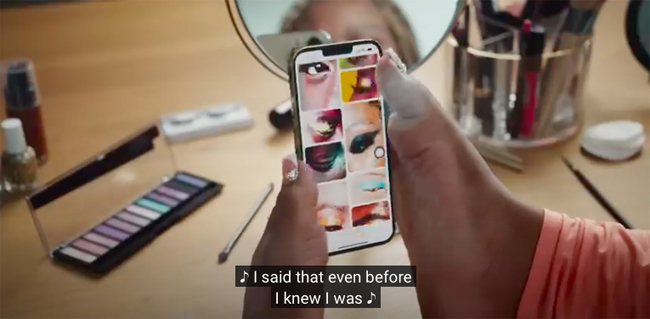
It is a question of mindset. A question of opening your mind and seeing persons with disability as an integral part of life and society. With the enhanced new technology, some of the challenges are being addressed. Brands are working towards more inclusiveness. Here is a film: Accessibility by Apple. The film shows how technology embedded in a simple standard device like the mobile phone can help persons with disability by enhancing accessibility.
Apple claims it takes on accessibility as a Human right. Hence, features like Door Detection, Sound Recognition, Voice Control, and more are designed to let the devices work in ways that work best for disabled people.
Apple accessibility is all about multiple solutions that help users with limited physical or motor abilities use your apps. Voice Control and Switch Control use the accessibility hierarchy to interact with elements within the app. The brand adds, Make Apple yours, make it big, make it clear, make it speak, make it listen, listen and make it simple. Here is more about Apple Accessibility and accessibility support, extending to even app development. Here are some of the innovative accessibility features.
NET-NET.
Disabled people are special, just like we are. Everyone needs one or the other in life to feel supported, respected, valued, and capable of better things. Needing support only makes us human beings. And that’s true, differently abled or people with disability.
We have branded these people earlier as handicapped and then as differently challenged, differently-abled, Divyang and Persons with disability. Every time making a minor adjustment based on the new term and implied empathy. The time has come when we are inclusive in the best possible way and no longer see them differently. However, they are willing to accept the cards life has dealt them and eager to work around it to the best of their abilities.
We can at least normalise our behaviour and reaction when we meet a person with a disability, interact with and see doing things we assume will be tough.
So, it will be nice and polite if one asks before offering help. It is wrong to assume that disabled people always require assistance leading their lives, and the first step is treating them as equals. It will be good to see the Corporates and the Government working on accessibility across Information & Communications, Employment, Transportation Standards, Public Spaces Design and Services.
MFPA
I regularly contribute to MFPA– Mouth and foot painting artists and get beautifully painted cards and envelopes. MFPA works with over 800 artists across more than 78 countries with the simple motto “Self-help, not Charity’. And I have found that most people with disability demonstrate- reflect this attitude in life. Do visit their https://imfpa.org/paywebsite and if interested buy some product.
ADD-ON
Maybe you would do good and watch this video. You Are More Disabled Than Me by Nick Vujicic and another one for Amrita institute for the differently abled.
An earlier version of this article had a few usages which are not considered kosher when one writes or talks about persons with disabilities. Like differently abled and differently challenged. We’ve made the corrections. As a publication which has been highlighting the need for using the right descriptors, our apologies. – Ed
 By Shruti Pushkarna