By Pradyuman Maheshwari
This is the season for awards. Awards for everything. In fact if award-givers have their way, they’ll soon have one for Best TV Editor in Koramangala, Udyog Vihar Phase V, Lower Parel, Park Street, Anna Salai, Banjara Hills…
Awards are big business. There’s serious money to be made there. Ask our friends in some of your other friendly publications and you’ll get the math.
But this is not to diss or poke fun at the others. It’s just to say how we are different.
Yes, it’s that day of the year when we announce the MxMIndia Mediaperson of the Year. Unlike other awards and presentations, this is done via MxMIndia, not through a physical/ phygital/ digital event. This ensures we aren’t dictated by the demands (and exigencies) of sponsors, and the constraints and budgets that we are put under thereby. So, it’s just an online announcement.
You know the winner from the headline and can always scroll down to read more, but suggest we get there steadily. Go pick up that chai or coffee or drink, and sit back and read. Enjoy the foreplay.
First, a quick look at how we are different from various other awards/title presentations:
It’s not based on a survey. It’s not based on any industry poll. It is based on a study conducted by us through the year. This makes the decision-making tougher, as we can’t pass the blame on to research. Or the collective view of the industry. Or of a jury. We take the credit and discredit.
Second, it’s an A&M industry study. Agreed CEOs of big clients are important, but we are looking at CMOs and not CEOs of well-marketed organisations. And we look at journalists, creative folk… almost every person in the A&M&E sector. We don’t look at politicians.
Third, we look at performance through the year, and do not base it on the highs of the last two quarters of a year which tend to influence any voting-based process at the yearend.
Fourth, it’s about performance in the year. The highs and highs achieved in this calendar year.
Fifth, we give you a clear reason why we have chosen the winner. And why we haven’t chosen some in our shortlist.
Sixth, we are as sincere and honest about the awards as one can get. A few years back there were suggestions that we should make it an on-ground event. But then that comes with its own set of issues (and compulsions). We even had one large media group expressing its interest six years back. But we think it could’ve influenced our decision-making.
Seventh, we do it with no intent of future favours. Revenues, we mean.
Eighth, we look at only positive developments. There was a fair amount of negativity and negative stuff happening, but we don’t touch that/them. It’s not the Newsmaker of the Year, it’s the Mediaperson of the Year….
So: the MxMIndia Mediaperson of the Year 2021 is an online presentation. It’s an accolade that’s for the truly well-deserving. And for the True Achiever of 2021 in the Indian Media, Advertising & Marketing arena.
With the backgrounders done, here’s how we went about our task.
We maintain an online notepad that records important developments of the year. We do it every month. It’s also a drill that ensures one can do recaps etc with ease. We review this every quarter. So March 31, June 30… etc. And we end on December 10.
We also asked our readers for their nominations, and we added these to arrive at a shortlist of five.
Ladies and Gentlemen, We have great pride in announcing that the 2021 MxMIndia Mediaperson of the Year Award is:
The Wire
So how did we arrive at our decision:
The Second Wave in March-June 2021 was horrible for all of us. Thankfully, advertising didn’t fall like last year. Newspapers were still circulating and the content engine on television didn’t exactly dry up.
So who were the people in our shortlist?
Sandeep Goyal: In advertising, there was a lot of business as usual stuff, but we thought Goyal’s acquisitio of Rediffusion was big. He’s an exceedingly prolific writer, and we really admire his energy and enthusiasm (he has Red Bull flowing through his veins!), but we aren’t sure if his strategy of bringing back the old warhorses to Rediff will help the cause. We hope it does, and if it does, look out for the announcement of the 2022 Mediaperson of the Year on December 16 next year.
Dainik Bhaskar. The campaign that the newspaper ran on the deaths given the Second Wave was huge. It required tremendous guts for a profit-making publication to execute an editorial offensive against the claims of the ruling BJP government. But it did, and the Bhaskar brothers – Sudhir, Girish and Pawan Agarwal, promoter-owners of Dainik Bhaskar – paid the price with some raids on its offices. So why hasn’t Dainik Bhaskar won the award? It’s a runner-up for sure, but we are looking at seeing more of the same in the run up to the all-important UP-UK elections next year.
OTT Platforms: It started with Netflix, Amazon Prime Video and Hotstar grabbing the honours, but we also have Sony Liv and Zee5 doing a fair bit. Voot too is emerging as a potent player and did some interesting stuff like Bigg Boss OTT and is now looking at being a significant player in live sports. There’s MX Player and Alt Balaji and some of the regional entities. Look out for the streaming sisters, if we can call them that, next year. Yes, Dec 16, 2022.
We didn’t discuss or consider Punit Goenka, though he has had a significant presence this year. Especially with the Zee-Sony deal and the boardroom battles that the Zee promoters have been dragged into. He seems to be emerging out of it as a winner, but all eyes on the closure of the deals. Next year will be crucial for the new entity, so yet another confirmed entry for our long list.
While consistent quality of work is something one expects from all media entities of some standing, The Wire has emerged as a clear winner given the series of exposes it carried as part of what’s been called the ‘Pegasus Project’. What’s noteworthy is that The Wire was chosen over various publications like The Indian Express which has been part of similar collaborative efforts in the past.
Here’s a Wikipedia reference on the Pegasus Project: In 2020, a list of over 50,000 phone numbers believed to belong to individuals identified as “people of interest” by clients of the Israeli cyberarms firm NSO Group was leaked to Amnesty International and Forbidden Stories, a media nonprofit organisation based in Paris, France. This information was passed along to 17 media organisations under the umbrella name “The Pegasus Project”. Over several months, over 80 journalists from The Guardian (United Kingdom), Le Monde and Radio France (France), Die Zeit, Süddeutsche Zeitung, WDR and NDR (Germany), The Washington Post and Frontline (United States), Haaretz (Israel), Aristegui Noticias and Proceso (Mexico), Knack and Le Soir (Belgium), The Wire (India), Daraj (Syria), Direkt36 (Hungary) and OCCRP investigated the spying abuses.
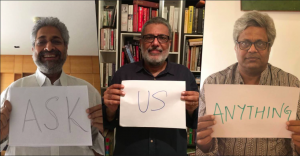
The Wire, founded in May 2015, has emerged as the go-to destination for news and current affairs, as our Consulting Editor Ranjona Banerji put it. It indeed has. It’s our default page for news and views concerning India. Yes, many/most of them don’t look kindly at the BJP government, but credible news entities almost always are that. Anti-Establishment, not for the sake of it and not necessarily of only the central government, but across all powers in office. It also has an interesting social and cultural component, even if it may (mercifully) shy away from the details of the Katrina Kaif-Vicky Kaushal shaadi.
The Wire was founded by senior journalists and editors Siddharth Varadarjan, Sidharth Bhatia and M K Venu. Its success shows the clear emergence of the digital media, and an indicator to the biggies in the business that you don’t need to be a legacy player to be a winner.
Our hearty congratulations to The Wire and we are certain the team will continue relentlessly in its pursuit of excellence in journalism. We of course hope it doesn’t have to do any more of such exposes. But that’s wishful thinking.
Once again: the 2021 MxMIndia Mediaperson of the Year: The Wire!

 There are seminal moments in history when journalism is called to account. The Pegasus Project is one of them.
 Since some of our journalist friends have followed the BJP government line that the Pegasus Project was revealed on the night of July 18, especially to derail the monsoon session of Parliament, let’s forget India for a moment, if that is possible, and concentrate on the 2018 murder of Saudi journalist and dissident Jamal Khashoggi and how Pegasus was used to spy on his family.