By Namrata Singh & Partha Sinha
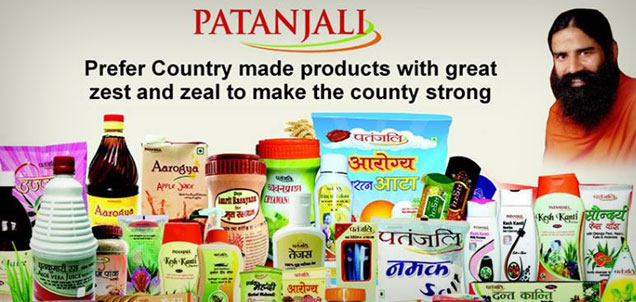
At Patanjali Ayurved’s manufacturing facility in Haridwar, there is brisk activity as cartons of freshly made products are being loaded onto trucks to be dispatched to stores across India. With the financial year nearing a close, an official pointed explained, all hands are on the deck to help the company achieve its targeted turnover of Rs 5,000 crore this fiscal.
For a manufacturing company set up about 10 years ago, achieving a Rs 5,000-crore turnover is not easy. However, for Patanjali Ayurved, which is breaking conventional marketing norms, sales are inching up month on month. Sources in the know believe Patanjali could have clocked monthly sales of around Rs 600-700 crore in January and February, which means Baba Ramdev’s baby could become a billion-dollar entity, with its annualised turnover expected to cross the Rs 7,000-crore mark before the end of fiscal 2017.
|
Brand Patanjali driving buzz on social media
By Anumeha Chaturvedi
Brand Patanjali generated around 15000 conversations on Twitter in the period between August 2015-January 2016, according to data compiled by social media analytics firm Blueocean Market Intelligence.
Chatter around Patanjali was largely around its competitiveness (60%) as an FMCG brand. Some discussions were also led by the indigenous nature (17%) of the brand, the quality of its products (13%) and its marketing strategy (10%).
In many instances, discussions/posts around the brand referred to Baba Ramdev thereby indicating that the brand is strongly associated with Baba Ramdev and he is a strong brand ambassador driving the brand’s image.
A lot of buzz was observed around Patanjali becoming a strong threat in terms of market share to rival MNCs such as Colgate, HUL, ITC and Emami, in the FMCG space.
Discussions touched upon Patanjali emerging as a strong player in the FMCG market; particularly its soaring sales graph gathered a lot of attention.Many consumers were seen commenting on how their products, particularly noodles and honey were not only cheaper but also better than those of other competitors. Few consumers went to the extent of expressing their wishlist of products such as sanitary napkins, fairness creams, that they expect in future from Patanjali. Top trending hashtags for the brand were Patanjali, Ramdev, and Babaramdev, according to Blueocean.
In terms of its marketing strategy, discussions centered around Patanjali’s tie-up with Future Group. This partnership was seen as a sound approach to further strengthen the brand’s foothold in the FMCG market through Future Group’s outlets such as Big Bazaar and Easyday.
Furthermore, efforts such as launching Patanjali Atta Noodles in the absence of Maggi noodles in the market, targeting market segments dominated by MNCs, direct marketing, seeking exclusive space at stores, were appreciated as compelling and strategic marketing moves
The brand’s marketing related update that it is focusing on advertising and has kept aside Rs 300 crore for advertising and promotion, also gathered some attention according to the research.
|
Which means, Patanjali could become the fifth largest FMCG company in the country, after Hindustan Unilever, ITC, Nestle India and Britannia Industries. This would bring it well ahead of traditional FMCG players like Dabur, Godrej Consumer Products and Marico.
In an exclusive interview at the company’s headquarters, Acharya Balkrishna, MD, Patanjali Ayurved, said in the current fiscal, as of early-March, the company’s turnover has already crossed Rs 4,500-crore and is cruising at a monthly rate of about Rs 500-550 crore. “Our target is to go be yond Rs 500 crore a month.Because we are also making plans for future expansion, we are moving in line with the target,“ he said.
“We may even reach Rs 600 crore a month mark -that will give us an annual turnover of approximately Rs 7,000 crore,” said Balkrishna.
Even at the current level of Rs 4,500-crore turnover, Patanjali has paced ahead of oral care leader Colgate-Palmolive (India), challenging it which its `Dant Kanti’ toothpaste.
Given that Patanjali has been grabbing eyeballs through its advertising, industry experts believe the company could soon even reach Rs 10,000 crore turnover, which would make it as big as ITC’s non-tobacco FMCG sales.But Balkrishna said that would take time. “We have to plan, right from procurement of raw materials to processing to manufacturing and marketing. We work on a single channel right from the farmer to the end consumer and that is the real reason why our quality and costs are under control. There are very few companies in the world which may be following such a system,” he said.
“We buy raw materials directly from the farmer. In other companies, raw material sourcing and marketing of products are done by different entities. So we don’t have sudden peaks and troughs in growth, we plan a steady growth. It’s not like a share market where one day there is growth and the other day a slump,” Balkrishna said.
The rural market is another area where FMCG biggies could face a tough challenge from Patanjali’s products, which are priced below regular brands because the company consciously operates on thin margins. “We are expanding our reach through tempos which can go deeper into rural markets. We will begin with 500-600 tempos and will gradually expand the network,” said Balkrishna.
Source:The Economic Times
Copyright © 2016, Bennett, Coleman & Co. Ltd. All Rights Reserved
Licensed to republish