Tag: Paritosh Joshi

  • Paritosh Joshi exits India TV

    By A Correspondent


    Paritosh Joshi

    Paritosh Joshi who joined India TV on November 2, 2015 as CEO has decided to part ways, according to a communique received from India TV.

    Said Ritu Dhawan, Managing Director: “Paritosh joined us in November, 2015 and while we hoped that this would be a long association, it has clearly proven taxing for him as he continues to commute between two metros. He has now chosen to return to his family in Mumbai. It was a pleasure having him on board and we wish him well with his future endeavours.”

    Added Joshi: “It was indeed a pleasure working with Brand India TV and, though, we could not continue for longer duration due to my personal obligations, I wish Brand India TV many more landmarks to achieve.”


  • Paritosh Joshi appointed CEO of India TV

    By A Correspondent


    India TV has announced the appointment of Paritosh Joshi as CEO. His last assignment was as CEO Star CJ Network. Paritosh has since been working on number of Industry initiatives including the BARC.


    Ritu Dhawan, Managing Director, India TV commented, “Paritosh has been part of India TV family for well over three years. It’s is a pleasure to welcome him home.”


    Paritosh Joshi

    Paritosh Joshi said, “I have been privileged to work alongside the terrific team here for several years and when Ritu asked me to take up this responsibility, it seemed like a natural next step.”


  • Soon Consumers will be Regulators…


    By Labonita Ghosh


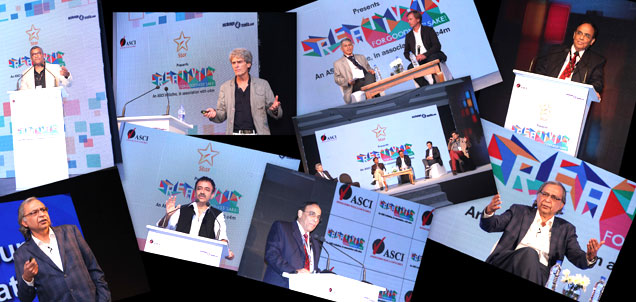
    A few years ago, global consumer goods giant Unilever found itself in a sticky situation. A new advertisement for its margarine Flora, had sparked a huge row. The ad showed a bullet going straight for a human heart made of china. The bullet, fashioned by the words “Uhh dad, I’m gay”, was followed by Flora’s tagline, “You need a strong heart today”. Amid largescale protests against the clearly homophobic nature of the ad, Unilever first distanced itself from the campaign, saying it had been produced by an agency in South Africa and had not been approved by the company. Then, as the protests refused to die down, the company pulled the campaign altogether. “The ad seemed to indicate that finding out your son was homosexual, was like taking a bullet to the heart. It was a very uncomfortable situation for us,” said Marc Mathieu, global SVP marketing for Unilever, who was in Mumbai last week, speaking at an event organised by the Advertising Standards Council of India (ASCI), on responsible advertising.


    ASCI has been pushing for self-regulation in the advertising world to ensure ethical and responsible handling of campaigns, and also for punitive measures against companies and agencies that put out misleading ads. Earlier in the week, the Department of Consumer Affairs announced it had set up a website called GAMA (Grievances Against Misleading Advertisements) and was partnering with ASCI to take action on the complaints filed online and penalise offenders. The prevalent idea, however, is that there may be no need for action if the industry decides for itself to toe the line.


    One oft-repeated grouse by the industry is that too many guidelines curb creativity. “The assumption often is that rules are a barrier to creativity,” said Shantanu Khosla. Managing director, P&G India at the event. “But we should not think of regulation as a constraint. It comes from the same source as my fundamental consumer insight, ie society. The people we serve, write the rules, and no one else.” Indeed, it is from these rules, added Khosla, that companies can also build leverage and trust for their brands with consumers.


    In fact, sometimes thinking out of the box can lead to some great advertising, felt John Hegarty, founder of BBH. He cited the example of how, since the socio-cultural conditions of various markets differ, there are some regulations that – literally — come with the territory. And trying to find (legitimate) ways around this, can often lead to innovative solutions. Like a hair care commercial that was prepared for the Malaysian market. “How do you advertise for women’s hair care product in a country where women wear headscarves and are not allowed to leave their head exposed?” Hegarty said. “The agency found a way around it.” The ad focuses on a comb instead, first with strands of hair on it, and later without, to show how the product could stop hair fall.


    Unilever’s Mathieu felt that understanding people is what unites the marketing and advertising agencies. “Insights into certain human truths are the most important thing,” he said. “So companies need to ask themselves what is the human truth that I can use for my campaign that will resonate with people?” Making campaigns more people-centric and creating more purposeful brands, will automatically yield ads that are less offensive and more acceptable to consumers.


    Experts, however, feel consumers themselves are the best regulators. “Self-regulation is our job, yours and mine, and not ASCI’s,” said Paritosh Joshi, head of media and communications consultancy unit Provocateur Advisory. “The more everyone believes they are a part of this, the more they will believe that enforcing truthfulness and honesty is a collective responsibility. Self-regulation is not about curtailing creativity, but about establishing a framework of rules that one might have for, say, golf or cricket or boxing. If you’re not allowed to punch below the belt, you’re not allowed to punch below the belt. There are good reasons for this, and we should all be aware of them.” When that awareness comes, there may not be a need for a watchdog at all.


    Sanjeeb Chaudhuri, CMO and global head of brand at Standard Chartered agreed. “Increasingly, the response of the consumer, will be driven by the consumer,” he says. “This consumer’s choice will, in turn, drive the choices that advertisers and agencies will have to make. They will find that they can’t go against the grain [of the consumer].”


    Santosh Desai, MD and CEO of Future Brands, saw things a tad differently. “I think the issue of self-regulation will only become more contentious till such time that business can see itself as an intrinsic part of society,” he said. “Considerations [about regulation] should not stem from things like the consumer becoming more empowered and taking to Twitter to complain. These will always be half-solutions. It will happen only when corporations begin to believe that they don’t have immunity from society.” Indeed, it should be impossible to separate the consumer from the business. “The business of business is people,” said Bobby Pawar, director and chief creative officer at Publicis Worldwide. “Just as products have consumer benefits, companies should too. They must also benefit society in some way. The thing to keep in mind is that if you are a person with a conscience, you should also try to develop one for your brand, and stay true to it at all times.” A tough ask, perhaps, but certainly doable.


  • Don’t reject new IRS, correct it: Amit Ray


    By A Correspondent


    Sometime in the afternoon today (Feb 3), the Indian Newspaper Society is meeting the top brass of the Media Research Users Council for a discussion on the new Indian Readers Suvey findings . On Friday, 18-odd publishers issued a joint statement. The basic message: “We, the leading newspapers of the country, condemn the newly published Indian Readership Survey (IRS 2013) in the strongest possible terms.  The survey is riddled with shocking anomalies, which defy logic and common sense. They also grossly contradict audited circulation figures (ABC), of long standing. We also strongly ask RSCI and MRUC, the conductors of the Indian Readership Survey, to withdraw the results of IRS Q4 2013 immediately and  as well as put a stop to all future editions of this survey, as their continued publication will cause irreparable injury to the reputation of established publications like ours.”


    According to the information available to MxMIndia, a senior INS officebearer wrote to the MRUC saying that members of the apex body of newspaper publishers will pull their subscriptions if the new IRS findings weren’t disbanded.”


    The print media ecosystem is divided on what should be done with the new IRS. While many publishers have damned the findings and pushing for it to be dumped in the scrapyard, there are a fair number of media agency professionals and advertisers who believe that the media research findings must be honoured.


    MxMIndia Comment: Post IRS, worries for broadcasters * When publishers hailed IRS * Likely outcome of INS-MRUC meeting

    By A Correspondent


    Guess who should be most worried after the IRS 2013 survey findings that were out last week? The entire broadcast ecosystem of course, especially the folks at BARC. While the monsieurs at tech vendor Mediametrie and the yet-unappointed panel manager may mouth a few ouis, nons or whatever, the knives and suparis will surely be out if there’s any dramatic changes from the present.


    Let’s look at a few hypothetical scenarios.

    Scenario 1: Sony is Hindi GEC #1, ratings of the #1 GECs drops 100 GRPs

    Scenario 2: India News turns #1. The current leaders fall by the wayside

    Scenario 3: In Tamil, Pudhu Yugam becomes GEC #1


    These are of course just scenarios, but if the results of the IRS 2013 out last week are an indicator, they aren’t impossible to happen. It’s going to be a change of methodology, a change of vendor (possibly not fully if TAM is selected as panel manager), a change of philosophy and an all-new Technical Committee ensuring the processes are followed and the system is robust. And above all: BARC with a chairman from the industry, a CEO and his secretariat and a techcom that has reps of a broadcaster, media agency and advertiser.


    The problem, as many industrypersons told us, is not the process, but in the final numbers. These are after all IRS survey. As in the case of BARC, even the IRS saw representatives of all stakeholders actively participating in the processes.


    In fact on the day the IRS was launched in Mumbai in March 2013, Peter Suresh, the much respect research head (Head-Strategy) at the Dainik Bhaskar told MxMIndia:  “The entire process is automated, and that is incredible. Attempt to report individually on a far larger number of geographical units is also very heartening. District cut too has increased - hence the data can be analyzed at a far more granular level. Bulk of action of late has been in rest of India, beyond six metros and hence granular cut is extremely important. Data slicing at a deeper level, and multiple ways of presenting it, make far more sense. Readership numbers are the cornerstones of most media marketing and sales strategies - and the finer they can be cut, the more robust they are. And, of course, these will help in delivering better stories to the marketers.”


    Dainik Bhaskar is one of the signatories of the statement issued on Friday against the IRS. Interestingly, a day after the IRS was released - on January 29, to be precise -several newspapers front-paged their successful showing in the readership study. These include some of the signatories to the statement.


    The meeting between the Indian Newspaper Society (INS) and the Media Research Users Council (MRUC) at 2/2.30pm today is most likely going to end in a stalemate. It may be remembered the RSCI was formed by the MRUC and INS-sponsored National Readership Studies Council to govern  the new IRS. So the buck is clearly in the RSCI court. For the INS to damn the IRS is tough because its members had endorsed the process.


    The MRUC is being represented by Chairman Ravi Rao, TechCom chaiman Paritosh Joshi and Director General Shaswati Saradar. At the time of writing, one is not aware of who will represent the INS. But Hormasji Cama, a former head of the INS and MRUC and now chairperson of the RSCI, is travelling, the decision will need to be finally taken by him.


    According to the grapevine, the MRUC/RSCI has already written to Nielsen, asking the research agency to clear a few doubts. It’s possible that the new IRS findings will be put under suspension for a few weeks until the clarifications come in and Mr Cama is back.


    MxMIndia spoke with veteran media professional and former chairman of the MRUC Technical Committee Amit Ray for his views and to suggest the way forward of the mess.


    1. Is there really any anomaly as it is being made out to be? And if yes, why has it happened?

    a. There appears to be a lack of experience in the current dispensation vis-à-vis readership research. Instead of letting go of the previous experienced professionals, MRUC and RSCI should have engaged them more significantly given that the task was assigned to the same research agency that had failed earlier. If you remember, AC Nielsen was the agency which did the NRS in the past.


    b. The questions that are now rightly being asked are: Was Nielsen the right agency? Does it have the requisite experience for newspaper readership study in India? Did we forget that NRS had failed thanks to the same agency?


    c. I strongly believe that publishers ought to have got their own experts to validate Nielsen’s methods and later the results. How can the publishers let a body like new MRUC decide about their future knowing fully well that the real pillar of the earlier IRS was the research agency and the techcom together?


    d. One of the reasons why the print media rejected the NRS and opted for MRUC’s IRS was the concept of ‘continuous research’. So why was this junked overnight? It is very likely that the current people will defend this by asking for more time. This time the publisher would do well to have their own team of experts with experience and not just blindly trust the experience (or the lack of it) of the current technical committee and the research agency.


    e. Everyone inside MRUC would’ve known about what has happened historically. Even MRUC had a problem in the past when circumstances forced MRUC to choose a new agency NFO. This was the around 2000/2001. If my memory serves me right the new Agency took almost 3 years to complete the research. May be the current office bearers were not aware of this


    2. What are the next steps? Scrap IRS?

    a. Rejecting the new IRS will be a regressive decision. Instead of rejecting it, we should look at correcting it. If we reject it, we will be starved of another 15-18 months of data which will be counter-productive to publishers.


    b. Call the people from the earlier MRUC technical committee especially those who took it to another level because of which the INS agreed to team up with the MRUC. May be a good idea to urge the veteran Roda Mehta who set up the IRS to intervene and suggest changes. I will be happy to help too and possibly pull in a few others.


    c. Ask AC Nielsen to allow a detailed audit of their actual work. Invite some of the senior folks at Hansa Research Group to come in as professionals – and not representing Hansa – to offer their advice. They are clearly best suited to find the soft spots where mistakes are committed so that we don’t repeat them


    3. Both RSCI and MRUC are part-sponsored by print publishers. The officebearers of both bodies have publisher representatives. So is it right for the INS to now play Big Brother to decisions taken by its own members?

    For the sake of the industry and the entire print media sector, it’s important that IRS 2013 is salvaged. As I stated earlier, publishers will suffer the most if it’s scrapped. Media studies like that of KPMG, PwC etc make sectoral assumptions and projections based on these. I believe the entire sector shouldn’t suffer because of the mistakes of some.


  • Key newspapers likely to contest IRS numbers in Court

    By A Correspondent


    Does it help having a stakeholder-led body supervise measurement exercises? Logically, it should, but often it could mean more problems.


    Paritosh Joshi

    Running the technical committee and the MRUC and RSCI is a thankless job, and as Paritosh Joshi, head of the MRUC and IRS techcom, told MxMIndia in an interview, “as a TechCom person, I have to do the best possible job of design and process management. The numbers are outcomes that distill the voice of respondents.”


    The problem is that a large number of the key newspapers are unhappy with the new set of readership figures. While the response was muted at the Mumbai launch of the new IRS, the murmurs got louder when the report was unveiled in Delhi on Wednesday.


    Sensing a negative outcome from the stockmarkets, a leading listed newspaper company even engaged investor analysts with data to point out what it consider as anomalies. As reported earlier, dna had also questioned the data by way of a front-page note.


    MxMIndia learns that a few leading dailies are planning to collectively and individual contest the IRS in Court. They are currently seeking legal opinion on the same.


    When alerted about this, a senior MRUC functionary told us that Court cases files by aggrieved members and newspaper groups after the publication of readership numbers is nothing new for the MRUC.


  • Jaldi 5 with Paritosh Joshi, IRS TechCom head: Await one more round before arriving at judgement

    The best way to get Paritosh Joshi to respond is to your mail is to write to him in Verdana, 10 points. We did exactly that, with a request to respond to our questions on the Indian Readership Survey (IRS). Mr Joshi is head of the MRUC’s technical committee as also a member of the core technical committee of BARC. With an eye for detail – in research methodology, numbers and words, the broadcast industry captain was heading to the capital for the Delhi leg of the IRS announcements when MxMIndia requested him for this quick Q&A:


    01. From RFP to the release yesterday, the new-look IRS has taken a while in making. The fact that it has been released indicates you are satisfied with it, but are you happy with the way the entire process has gone?

    Yes, I am. This edition was not easily constructed. A brand new JIC, RSCI had just been formed after years of inconclusive dialogue. The legacy study was discredited for suspect fieldwork and overburdened by ad hoc modules. Negotiating through all this history and delivering a completely overhauled study less than a year after the final release of the old edition has been very satisfying.


    02. It has surely thrown up some surprises with some sharp rises and exits from the top performers list for some? For instance, Hindustan forging ahead of Dainik Bhaskar, Mid-Day being among the Top 10 English dailies and dna exiting that list.

    I am of the view that as a TechCom person, I have to do the best possible job of design and process management. The numbers are outcomes that distill the voice of respondents. I will add that any audience measure only makes sense as a time series. I would humbly urge all stakeholders to let at least one more round be published before arriving at judgement.


    03. In fact, dna has put out a front-page note below the masthead questioning the data put out. While one is not questioning the credibility, integrity and intent of anyone, how can we explain such sharp variance from the last study findings?

    Our study release notes are at pains to explain the big changes not just in design and data gathering but even in key definitions. I might add that we jettisoned the old model precisely because it had been repeatedly questioned for ethics and methodology. If it is now being held up as a standard of evaluation for the new study, we need never have gone to all this effort.


    04. In terms of the data thrown up, there’s a fair bit beyond the hard numbers. Although it may not be your concern as technical committee head, but the true advantages of the new IRS study will be realized only if the data is employed optimally? Are subscribers being educated on how to use the data?

    Our curtain-raiser yesterday was very emphatic on this subject. There are mountains of data that IRS gathers and the only ones that get attention are the AIR numbers. The deep insights, though, lie in demographics, product linkage, media mix consumption patterns and so on. I don’t think RSCI or MRUC can really conduct training sessions for this but anyone who plays around with the data will readily find all this material.


    05. As a media practitioner, what according to you is the biggest takeaway from the new IRS?

    Our practices in the Audience Measurement Sciences are dated and in urgent need of overhaul. If we want the underlying media markets to grow, we cannot afford to ignore measurement.


    06. One last question:  chairing the technical committee at MRUC or being part of the core techcom at BARC is a thankless job. It’s like being secretary of your housing society. And there’s no money to be made either, at least officially. It’s obviously prestigious and satisfying, but wouldn’t you be rather doing something more fun. Potter around the house, play golf, write a book?

    The pottering and writing happens anyway (don’t play golf but I DO run). The joy of giving something back to the industry that has given me so much is a reward in and of itself but the ability to stay abreast of everything and connected with all the participants in the business is a huge cherry and icing on that confection.


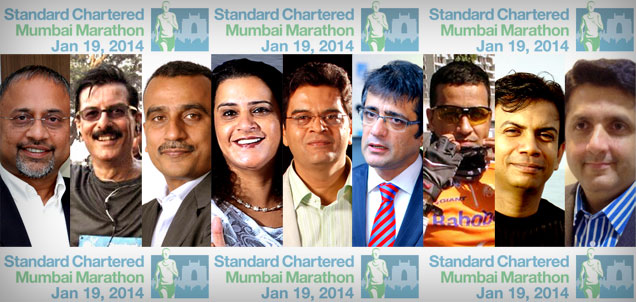
  • Marathon time for Mumbai’s media mavens


    By Shobhana Nair


    “I ran just once in my college when I saw a wild elephant,” says Ravi Rao, Leader, South Asia -Mindshare, “After that it’s going to be the Standard Chartered Mumbai Marathon that I will be running for!”


    Members of the advertising, media and marketing community are regulars at marathons held in various cities across the country. Especially the Standard Chartered Mumbai Marathon which sees them enter in reasonably large numbers. Sunday, January 19 promises to see an encore. Mr Rao may be debuting this time, but there are several others who’ve been running for some years now. For Sudhanshu Vats, Group CEO, Viacom 18, running has been a passion and he re-discovered it some 10 years back. Last year, Mr Vats did the full run in three hours, 59 minutes. Breaking his own record is not on the agenda but having a good run tops the list! “I think it is a great addiction and I am addicted to it. I would invite others to get addicted to it as well,” beams Mr Vats.


    It’s interesting to see many top captains for whom stress at work is never really a bother getting the heebie-jeebies. Well, almost. Says Times Television Network MD and CEO Sunil Lulla who is also a debutant: “I am completely stressed out right now and getting a lot of anxiety. I have no other expectations and want to have a good run, start well and finish well.”


    For many, running the Marathon is not just about fitness, but there’s a good cause as well.  S Yesudas, Managing Director, Indian Subcontinent, Vizeum has been offering support and commitment to two causes that are close to his heart. “An old age home and orphanage at Malad, Swagat Ashram Charitable Trust in Mumbai and the other is a tribal school, Vidya Vanam at Coimbatore. The person who manages Swagat Ashram, Brother Stanley stays in the same shelter with his family.  His children grew up with the orphans, eating the same food. These are men of God and they need support from other God-believers.”


    The training for the marathon begins way before the actual date and that really tests one’s power to achieve what is often the impossible. And there are some who believe it actually helps easing work stress. “The aim is to keep yourself fit, keep enjoying the run for a longer period of time. Once you do a long run during the weekend, it sets you right,” says Amin Lakhani, Leader – South Asia, Mindshare Fulcrum.


    “The marathon is a lot about challenging your mind over your body. The fact is that you will be running a long distance but how you keep yourself mentally focussed on the objective? You become more focussed in your personal and professional lives. It gives you an adrenaline rush when you reach that finish line,”reasons Simran Hoon, National Sales Head, Colors.


    There are many who participate not for the run, but the fun element. Paritosh Joshi, Principal, Provocateur Advisory admits that he is not a runner but loves to participate to soak in the atmosphere around him. “There are people who come on the streets to run and then there are those who are present just to encourage the runners. The spirit and the energy is what I like to soak in. In fact, I click pictures & tweet them. That’s how I enjoy it.” And not surprisingly, this is Paritosh Joshi’s ninthth consecutive “fun year” at the Marathon.


    Sanjay Tripathy, Senior Executive Vice President – Head Marketing, Products & Direct Channels at HDFC Life has another motivational reason to get up and run, “It is a competition with yourself rather than with anyone else. I think it is only the Mumbai Marathon that gives you a chance to run on the Sea Link and that should motivate you. Run just to feel how beautiful Mumbai looks in the morning!”


    If this hasn’t motivate you enough, then this should: veteran mediaperson Bharat Kapadia started running when he was 54 and still continues to do so in his 61st year. In fact, he accepts that if he can run, anybody can. So get hold of those sports shoes and run to experience the spirit of Mumbai this Sunday. Or simply do the run around your building, the road, the promenade or a jog track near you. And get set for 2015 edition of the Marathon.


  • Paritosh Joshi: Saluting Rosa Parks

    By Paritosh Joshi


    The American Civil Rights Movement of the ’50s that spilled over into the ’60s and in many ways continues to resonate in the US and around the world had an unlikely heroine. Rosa Parks, an African American woman boarded a bus on December 1, 1955 in Montgomery, Alabama. Buses had colour segregated seating but vacant seats were only available in the ‘Whites Only’ section. Rosa took a seat. A little later, the Whites section too got filled up. The driver asked Rosa to vacate her seat for a White passenger which she refused to do. In that moment of defiance, Rosa wrote her name in indelible ink into Civil Rights History.


    As we prepare to celebrate International Women’s Day today, it is instructive to ask what Civil Rights Indian Women have been able to wrest from the stubbornly patriarchal social order.


    The picture is still hideously ugly. While the indescribably brutal rape and murder of a physiotherapy student in Delhi late last year turned the spotlight on sexual violence, the incidence of such crimes in the Capital, and probably all across the country, has actually escalated since then. This should not come as a surprise. Gender violence has less to do with lust than with the fundamental power equations that define a society. A tipping point lies in the future, when a woman’s status in her home, family, community and society will no longer be subordinate to a man’s. The male gender, made insecure by this inevitability, will articulate its insecurity and impotence by ever more egregious violence.


    Do the media play any role, (other than sensationalising such crime and milking it for salacious value), in the gender equation?


    Have you read ‘Freakonomics’ by Steven Levitt, a UChicago economist and Stephen Dubner, a journalist at NYT? In the preface to the book, or its sequel, ‘SuperFreakonomics’ reference is made to an interesting study by academics from some Ivy League University about the impact of television on gender relations in North India. In essence, the study compared a whole range of women’s health and well-being variables between a village that had access to satellite television and a similar one that didn’t. The results shouldn’t surprise anyone. The television village handily won on everything from Infant Mortality, Sanitation, Infectious Disease incidence, Per Capita Income and even measures of women’s empowerment like their participation in gram panchayat work.


    Wait a minute. Haven’t we spent years labelling television content, and in particular, entertainment programming, reactionary, regressive, strengthening gender stereotypes and social inequalities and so on? How come this paradoxical result? My sense? There is no paradox here.


    Television began to make serious inroads into the average Indian home only after the arrival of cable TV on the cusp of the ’80s and ’90s. From the staid, some would say sclerotic, fare offered by Doordarshan over the previous three decades, the world of Cable & Satellite offered a welcome to a chaotic, colourful, boisterous world of news, information and entertainment that was free of sarkari fetters. Female characters started to move from decorative roles providing occasional aesthetic diversion to roles of meaty substance. To its credit, Doordarshan in those early days was no shrinking violet. To wit, Priya Tendulkar’s feisty Rajani in the eponymous serial and Kavita Choudhary’s defiant Kalyani in Udaan are still fresh in India’s memory. While these portrayals may have aspired to an ideal that still remains distant for most Indian women, a more interesting, even subversive change was to arrive a decade later.


    Smriti Irani as Tulsi in “Kyunki Saas Bhi Kabhi Bahu Thi” and Sakshi Tanvar as Parvati in “Kahaani Ghar Ghar Ki” managed simultaneously to become role models for a majority and objects of revulsion and contempt for a minority that saw them as embodiments of everything that was wrong with gender relations in India. I submit, with the greatest humility, that neither the majority nor the minority really “got it”. The characters perched on the uneasy intersection of social orthodoxy and economic liberalism. The joint family appeared, prima facie, to be alive and kicking. Closer examination revealed irreconcilable contradictions and deep fissures that threatened to blow the lid off the superficial camaraderie and gloss. And at the heart of this maelstrom, barely keeping things in a semblance of order, were our female protagonists. Docile, even subservient in their deportment, they revealed themselves as the very pillars of their ‘Khandan’ or ‘Parivar’. Even as the leading male characters were all shown to have feet of clay and the shifty ethics reminiscent of the Mahabharata’s Yudhishthira as a losing gambler. In a feat of scripting sorcery, (All Hail, Ekta!), the meek didn’t merely inherit the kingdom of Heaven, they won and fostered it right here on Earth.


    A generation of girls that was in junior school when KGGK and KSBKBT packed our living rooms has now graduated from college and entered the adult world. This is a generation that remembers the victories and discounts the obsequiousness. This is a generation that is unapologetically ambitious, singularly assertive and unabashed about its sexuality. A small town upbringing is no deterrent to her aspirations. She too cut her teeth on the same, new mythology that her metropolitan counterpart did. Today she uses Social Media to telling effect, building communities, establishing positions (that are occasionally battle lines) and expressing love, longing, exhilaration, frustration, loss, liberation with scant regard for political (or any other) correctness.


    And like it or not, that much reviled television has everything to do with who she is and how she got here.


    To this youthful, exuberant, unstoppable woman, India’s contemporary embodiment of the defiant, rebellious Rosa Parks, my warmest greetings on International Women’s Day.


    Paritosh Joshi has been a marketer, a mediaperson and a key officebearer on industry bodies. He is developing an independent media advisory practice. His column, Media Matrix, appears on MxMIndia, usually on Thursdays

     

  • Paritosh Joshi: When is a TV no longer a TV?

    By Paritosh Joshi


    The arrival of a new mobile device has triggered a dramatic transformation in the TV viewing experience at La Casa Joshi.


    What does a mobile device have to do with the television? In these technomorphing times, everything. The mobile device possesses a remarkable capability – it functions as a WiFi router (aka mobile WiFi hotspot). In the process, the wireless internet connectivity it accesses can be shared with up to as many as five other devices. This is what I did. I activated the smart television features of the set. It asked for type of connectivity. I indicated a preference for WiFi. It searched, and promptly found, the mobile device. I entered the passcode that enabled the connection and presto, I was off unlocking a side of my own television’s personality that I had known nothing at all about.


    Initial exploration, and I’ve only spent half an hour fooling around with this shiny new toy that popped out of a TV that had graced the wall for a good year before this moment of epiphany, reveals the following:


    1. The television has operating software that runs quietly in the background staying on top of whatever is going on. How do I know? Soon as I connected it all up, there was this little prompt – popup box and everything, that indicated that new software was available and sought my permission to download and install it. I agreed and the usual download bar started filling up left to right as it always does (but not on TVs, or at least not until now).

    2. Once the menus are up on the screen, there’s a whole frame with ‘Apps’ and when you navigate to it, you open a drop-down menu with a whole range of choices, “Humour & Comedy”, “Travel & Lifestyle”, “Food & Drinks”, “Action/Adventure”, “Science”, “Technology & Gadgets” and a few others. In each section there are a number of downloadable apps. “Travel” offers you TripAdvisor, “Food” brings up Epicurious, “Technology” decodes as “Engadget” and so on.

    3. In the midst of all this embarras de richesses I found an app called YouTube and in a flash, my TV world changes. For ever.


    In that moment, my content choice changed from the hundred-odd channels that the DTH service provides to the endless and continuously expanding Alladin’s Cave of audiovisual treasure that we all know and have come to love. Except, with a huge improvement. Called YouTube Leanback. Suddenly, I wasn’t at bustling content bazar with tantalising goodies tumbling out everywhere the eye turned to a tidy departmental store with everything assigned to tidy aisles, ready to be navigated. Wife searched for Adele and this is what we got on our TV screen. A huge playlist featuring that supremely talented, young British artist kicked in. Rolling in the Deep played. Moved out and made way for Skyfall (the latest Bond caper’s title song, surely you remember?). Then Someone Like You. And it just went on. YouTube was delivering us a ready to run Adele channel.


    On a whim, I did a search for Sivaji Ganesan and presto, the fondly remembered court sequence from Parasakthi, and dozens of other equally memorable moments from that great star’s oeuvre were ready to trip the light fantastic. The Beatles. Salil Chowdhury. Amjad Khan. The genie of the endless wishes was raring to please.


    A lot of televisions that are moving into consumer homes are now ‘smart’. They are designed to work not as passive devices that receive and render audiovisual streams but as intelligent entertainment appliances waiting to get connected to the internet. And once connected, they really come into their own. While the devices have reached, the connectivity may still be suspect, after all there aren’t that many homes that sport a WiFi network (although it is instructive to turn on a search for networks available in any somewhat genteel residential or office neighbourhood- smart youngsters routinely survive all their torrent streaming by stealing connectivity from their unwary co-residents who haven’t figured out WEP, WPA and such and couldn’t be bothered by little bumps in their data bills). All this is set to change.


    The arrival of LTE aka 4G is imminent and in a fell swoop, you go from struggling with 1 Mbps to smooth delivery of 100 Mbps. Now a typical Hollywood film blu-ray DVD runs to about 15 Gb or 15400 Mb. With the monster speeds that LTE should offer, that ought to download in somewhere between three and five minutes. For a full HD, Dolby Surround Audio experience. And out goes the WiFi router and all the paraphernalia around the home. What replaces it is a small dongle that will attach to the HDMI port of the television set. Like this one for instance. Or this one. Available now. For less than Rs. 2000.


    What will an LTE-enabled home that has fully unlocked the smart power of its new television do once the dongle is in its dock? Hard to say just yet, but this much is clear. The depth and fury of the change will dwarf all our previous notions of what ‘disruptive technology’ means to the entertainment business.


    Paritosh Joshi has been a marketer, a mediaperson and a key officebearer on industry bodies. He is developing an independent media advisory practice. His column, Media Matrix, appears on MxMIndia, usually on Thursdays



  • Paritosh Joshi: 49ers lost the XLVIIth (but I’ll get over it)

    By Paritosh Joshi


    Since my son moved to beautiful San Francisco, I have thrown my lot in with its sports fans. Back in October ’12, I exulted with them as they celebrated the SF Giants’ World Series victory, grabbing the World Series back after just a year’s gap. When, on February 3, 2013, the San Francisco 49ers squared off against Baltimore Ravens at the Mercedes Benz Superdome, New Orleans, in the finals of the National Football League, the Super Bowl, obviously I was rooting for them. What a game it was, with 49ers conceding a narrow 31-34 victory to the Ravens.


    But the real game was hardly the burly gladiators of the two teams engaged in organized mayhem in that Louisiana battleground. It was what happened during the advertising break, (and to be fair, the halftime show featuring Beyonce), that the 47th edition will be remembered for.


    Adult American males (TV time spent at nearly 3 hours) and females (2 hours and 30 minutes) are among the world’s most enthusiastic television viewers. While the emergence of Cable brought with it a huge growth in Pay TV, America’s Network operators: ABC, CBS, NBC and Fox; continue to depend primarily on advertising revenue. And the biggest stage for advertising, from sea to shining sea, is the most anticipated, most viewed television show every year; the Super Bowl.


    So you already knew all that. But you probably don’t know this: No one knows exactly how many people watched the event that night. It isn’t a state secret or anything, just that they haven’t finished watching it yet.


    Yes, the match was settled in the favour of the Ravens that evening itself but that isn’t all there is to measuring viewers, certainly not in the manner agreed between broadcasters and advertisers in the US. Both agree that many viewers postpone viewing from live play out to a later point for a wide variety of reasons impinging upon their viewing convenience and comfort. This has something, but not a whole lot, to do with the popularity of DVR devices. In fact, it goes all the way back to 1976 and the Victor Company of Japan (more popularly recognized by the abbreviated JVC – Japan Victor Corporation). In September ’76, JVC launched the VHS recorder and birthed a global entertainment revolution. A powerful feature that VHS recorders soon offered was their ability to be programmed to record one or more shows when they were unattended. If circumstances contrived to make you miss a show, you could now record it for later viewing. Without really meaning to, the VHS recorder marked a great watershed for television: the era of time-shifted viewing had arrived.


    While the initial impact on viewing habits was minuscule, VHS prices came down rapidly and soon a recorder graced every American living room. Even we in India weren’t unaffected. By the late 1970s, our great international trading entrepreneurs of the day – Mr H Mastan Mirza, Mr Sukur N Bakhia, Mr K Lala and Mr V Mudaliar come to mind – introduced India to the VHS revolution. This wide adoption was already starting to measurably impact viewing behaviour by the 1980s.


    BARB, the UK’s Broadcasters’ Audience Research Board was set up in 1981. Before its first decade was out, BARB turned its attention to time-shifted viewing and began to wire up VHS recorders in sample homes in addition to measuring on-schedule viewing.


    Brings me to an acronym that you would do well to learn now; you are going to be hearing it a lot. VOSDAL. Viewed On Same Day As Live. Self-explanatory really but here is the corollary. Measurement currencies now measure time-shifted viewing for seven days after the original show ran on the FPC (Fixed Point Chart). This is VOSDAL+7, the statistic now widely agreed to be fair measure of the total audience garnered by a show.


    Our own viewing behaviour has begun to change at an accelerating pace. DVRs, first introduced to the Indian consumer by Tata Sky in 2010 are now offered by all DTH operators and, with the mandatory rollout of Cable Digitalisation in the top four metropolises, by the major MSOs as well. Adoption cycles will be slow to kick in but prices will keep dropping driving penetration up.


    By the way, DVRs are by no means the only technology disrupting the viewing habit. The emergence of second, third and even fourth screens are metamorphosing viewing into a parenthetical “television” experience that shifts it both temporally and spatially.


    BARC – the Broadcast Audience Research Council will begin to take its first baby steps soon. While the easiest thing to do would be to continue along the trajectory already established by TAM, it should be clear to stakeholders on all sides that this would be suboptimal and, in the medium term, a significant handicap for the medium.


    It is imperative that BARC recognize the need for building a measurement framework that goes well beyond VOSDAL. It will take time to bring consensus around any VOSDAL+ position on the measurement currency but the time to get it started is now.


    In the meanwhile, I am betting that Super Bowl XLVII broke last year’s viewership record of 108.7 million viewers. Any takers?


    PS: Only when I started researching this piece did I discover that VHS stood for Video Home System. Did you know?


    Paritosh Joshi has been a marketer, a mediaperson and a key officebearer on industry bodies. He is developing an independent media advisory practice. His column, Media Matrix, appears on MxMIndia, usually on Thursdays


  • Paritosh Joshi: Heads, you win. Tails, I lose

    By Paritosh Joshi


    The IRS is in a strange situation. If there are sharp changes in any statistic, it is accused of unspecified mischief. If there are no changes, it is pilloried for being inaccurate.


    The criticisms usually come in these flavours.


    1 Sudden, big moves: Publications launch new editions or prune existing ones on a regular basis. While there is no decision required when an edition disappears, the IRS needs to have a consistent view on incorporating a new edition into the study. Publishers clamour for inclusion no sooner than the edition goes to market. IRS takes the view that as a continuously 4-quarters moving total, it needs a whole year worth of data before the edition can be reported. This is not necessarily bad for the publication either. Basic statistics demand that if the readers actually picked up in fieldwork are below the ‘Normality’ threshold, they cannot be reported. A year’s worth of fieldwork gives every serious participant i adequate time to promote their new offspring so that it shows up in the study. Conversely, editions may sometimes be launched only tactically to preempt a competitor and may disappear once the short term objective is delivered. They certainly don’t belong in the study. Big moves happen when such editions go past the 1-year Rubicon and get reported.


    2 Little or no change: This one usually stems from anecdotal observation. A publication may have mounted a particularly visible, or even successful marketing initiative leading to an apparently significant impact on its popularity. The IRS seems unimpressed when the next quarterly round emerges. Easy to explain. Let us assume that a particular saw as much as a 10% improvement in the brand’s performance vis-à-vis the preceding three quarters. If it had on an average, 100 readers in the previous three, it now has 110. This is what the maths would look like:

    (100 x ¾) + (110 x ¼) = 75 + 27.5 = 102.5

    In other words, the ‘smoothing’ effect of the Moving Annual Total reduces the large Δ of 10% to a small 2.5% perturbation in the final outcome.


    3 Change in the wrong direction: Related to the previous observation, anecdote suggests an increase/decrease while IRS shows a decrease/increase. This is hard to explain without having some sense of the apparent capriciousness of Probability and Statistics. A simple random sample of adequate size yields convergent estimates of population parameters. However, samples can occasionally produce estimates that may have a wide variance from the underlying population statistics. These samples aren’t wrong. They just happen to be the outliers fully compliant with laws of probability. Such a sample will reveal estimates that are counter-intuitive but that doesn’t make them incorrect. If you never spot a estimate that seems to be out of kilter, you should be more worried about the reliability and/or integrity of a sample-based exercise than if you do, every once in a while.


    4 Further analysis produces contradictions and conundrums: My response to this one? Don’t. The IRS reports only those numbers that pass the test of statistical propriety. When you start attempt to dice down whatever has been reported at minimal granularity, you are working with samples that fall below Normality and can no longer be used as consistent and convergent estimates of population behaviour. This, tragically, is practiced almost entirely in the breach by the alarmingly large number of strategists, planners and the like who appear to have no understanding of Statistics.


    In exactly three months, we shall have another IRS release and notwithstanding these meek entreaties, the same rotten tomatoes will be hurled at it again.


    Comes with the territory.


    Paritosh Joshi has been a marketer, a mediaperson and a key officebearer on industry bodies. He is developing an independent media advisory practice. His column, Media Matrix, appears on MxMIndia, usually on Thursdays


  • Paritosh Joshi: Ratings need reinventing

    By Paritosh Joshi


    A story on this site published in May 2012, “TAM to cross 10,000 Peoplemeter mark soon”, signalled TAM’s intention to substantially deepen its coverage as India’s television footprint continued relentless growth.


    It brought to mind a conversation I had with senior TAM personnel a few years ago where they explained to me the mammoth scale of the data processing task that tracking viewership involved. Here is a simplistic way of looking at it:

    1 2 3 4
    Homes Viewers (Age 4+) per home Average daily time spent (seconds) Unique data points (1. x 2. X 3.)
    10,000 4 14,400 576,000,000


    A single day’s dataset has very near 0.6 billion unique data points. Given that ratings are released weekly, the ratings tables that you read are compiled after compiling information from ~4 billion data points.


    Let us now throw in a comparison with another medium we are all familiar with: Facebook. In September 2012, Mark Zuckerberg announced Facebook’s acquiring its 1 billionth subscriber. Over a half of these are active in a given week and post at a steady rate of 3 updates a day. That’s 1.5 billion updates a day or 10.5 billion a week.


    In both cases we are talking about really large numbers. The difference is what happens next.


    TAM crunches all the 4 billion data points down to 1 second granularity viewership trends for each channel that it tracks. That gives you, say, 400 channels being tracked. Facebook, taking a radically different view, starts trying to triangulate what are the likes, dislikes, interests and affiliations of each one of 1 billion individuals.


    In the TAM view of the world, individuals are faceless, identity-less statistics who vote with their eyes for different channels and shows. In the Facebook view of the world, individuals are the very center of all analytical exercises helping the company offer individually tailored suggestions for everything from whom they should seek out to make friends with through what they ought to be buying.


    The difference is telling. The legacy medium places the content at the centre of the analysis plan, the new age one, the consumer. While the first plan crunches a large dataset down to a relatively compact tabulation, the second embraces the concept of ‘Big Data’ where datasets going into the Exabyte order of magnitude (an Exabyte is 1 billion gigabytes) are routine.


    Ratings have been around from times when mechanized data processing was in its infancy and the first task before any database manager was reducing and compressing voluminous data into a few large chunks that could then be subjected to analysis. In the specific case of television viewership, an easy was to construct a histogram that plotted the number of viewers against each channel and program. This histogram would then be projected up from the sample to the population to yield an estimate of the percentage of people who watched a particular program: the rating. Since this was the only way in which we had ever seen television viewership being tracked and reported we found nothing odd or inadequate about it. Even today, when digital media enable us to target individuals with very precisely defined characteristics, we still don’t challenge the rather coarse approach that ratings take.


    So here is a thought: It is time for television measurement to place the viewer at the centre of the measurement system.


    The advent of digitization in India’s television landscape throws up an interesting possibility. If a return path from subscriber to distribution platform is natively available, as it is in digital cable systems or is bolted on using various modes of internet access, as it is in DTH, it becomes possible to know continuously what channel the set top box is tuned to. Techniques like Data Fusion and Ascription (dealt with in a previous column that you can find here) make it possible to marry set top box data with respondent level Peoplemeter data thus magnifying it to large digitally connected populations, within defined levels of statistical error. It is now possible, provided we already have access to cable or DTH operators’ subscriber lists, to develop very good estimates of the viewership behaviours of individual consumers.


    In effect, we can tell, within defined levels of error, what an individual in a digital cable or DTH home consumes on television through the day. We now have a view that is viewer centred rather than channel/programme centred. This is where the ‘Big Data’ approach must come in. The massive datasets that are born of the union of Peoplemeter and Set Top Box data need Big Data tools to be managed sensibly. Mining the datasets using these tools can yield an unprecedented level of textured understanding and individually addressable propositions.


    And given that digital distribution platforms now have the ability to push messages and suggestions to the viewer, just like online media do, we can use such insights to deliver unique marketing messages, whether for broadcast content or for client brands.


    Come on then, BARC, put that viewer at the centre.


    Paritosh Joshi has been a marketer, a mediaperson and a key officebearer on industry bodies. He is developing an independent media advisory practice. His column, Media Matrix, appears on MxMIndia, usually on Thursdays