Tag: Paresh Nath

  • Assoc of Indian Magazines invited for pre-Budget meet

    By Our Staff


    Association of Indian Magazines (AIM) had been invited to participate in the Pre-Budget meeting for union budget 2022-23 by the Department of Revenue & Tax Research Unit, Ministry of Finance. The meeting was held on December 8, 2021, under the chairmanship of Smt. Pragya Sahay Saxena, Member (L&S), CBDT, Department of Revenue, Ministry of Finance, Government of India.


    AIM was represented by veteran mediaperson Paresh Nath from Delhi Press and Raj Mohan, Malayala Manorama, both former presidents. The AIM representatives highlighted the “debilitating impact that the pandemic has had on print media, and therefore the need for government support in lessening the tax and custom duty burden in publishing”. Further, AIM representatives requested a level playing field between magazines and newspapers in various government policies, in both expenditure and revenue, as there has been a long-standing concern that magazines are not getting the same benefits as daily papers, even though both come under definition of ‘newspapers’ under the PRB act.


    The key points of the memorandum are given below and the memorandum submitted to the ministry has been attached with the mail.


    A. Government ads in Magazines

    Given that as per IRS 2019, the total reach of magazines at 8.7 crores, is about 20% the total reach of Newspapers at 42.5 crores, DAVP should mandate that 15%–20% of the total DAVP ad spend to be spent on the magazine industry. At present it is not even 1%. This should also apply to all budgets allocated by the all-government ministries and departments, in both central and state governments.


    B. Input Tax Credit

    It was requested that for the purpose of GST, the government allows full Input Tax credit for both newspapers and magazines. Currently, publishers can only claim proportionate credit as circulation sale revenue is exempted, while advertising attracts 5%. Since newspapers and magazines are single products, it will be more equitable if the entire input tax is allowed for publishing of that single product. This will also be in line with Governments’ stated mission of minimising tax on information and knowledge.


    C. Customs Duty on Paper

    There is 5% Customs Duty on imported paper used by  newspapers and magazines. Domestic production of Standard Newsprint (SNP) is inadequate to meet the demand and Glazed Newsprint (GNP) and Light Weight Coated Paper (LWC) are not being manufactured indigenously at all. Therefore it was requested that these duties be completely withdrawn.


    D. GST of 12% on Light Weighted Coated (LWC) paper up to 70 gsm.

    At present, there is 5% GST on Standard Newsprint (SNP) and Glazed Newsprint (GNP), while 12% on Light Weight Coated paper (LWC). Magazine industry is largely using LWC while newspapers use SNP and GNP. Therefore in the interest of equity, it was requested that GST on LWC be withdrawn, or bring it at par with 5%.


    E. Exemption of GST on the Cover Paper

    Magazine covers are printed on a thicker paper so that magazines can be preserved for a longer period. AIM requests GST be exempt on thicker cover paper, on Actual User basis with RNI numbers, or at least GST be brought down to 5% on par with SNP and GNP.


    F. Clarity of Levying GST on Digital Magazines

    Newspapers, Magazines are exempted from GST under tariff item 4902. During the lockdown in Covid Pandemic when physical delivery of magazines were stopped, digital magazines were made available to readers. Therefore AIM requested that the government give a clarity on this that magazines/newspapers in print as well as on digital platforms will be exempted from GST.


    G. Tax Holiday

    Given the extremely adverse circumstances, AIM has urged the Finance Ministry to consider a general tax holiday for three years



  • Indian Magazine Industry needs to look beyond Print


    By Indrani Sen

    Last week I read the views expressed by Paresh Nath, Publisher, Delhi Press Group, that demonetisation, may have a long lasting impact on magazine circulation as consumers now consider it as a non-essential item. It is quite well known that once an item is removed from the list of monthly purchases of a household, then it is difficult for that item to find a reentry in that household. Mr Nath further noted that “they were disturbed at both ends during the months of November and December” due to drop in circulation as well as advertising revenue. Is demonetization going to have a long-term effect on the Indian magazine industry or is it going to be just a temporary phenomenon from which the magazine industry is going to recover soon? Nath commented that “Bringing back the customer’s reading habits will take some time”.

    PWC’s Global Entertainment & Media Outlook 2016-2000, albeit released before demonetisation hit India, predicted “Turning to magazines, the coming five years will see growing middle classes and economies drive consumer magazine revenues in developing markets, while developed economies wane. Total global magazine revenue — including consumer and trade — will likely be virtually flat through 2020, suffering a compound annual decline of 0.1%. But running counter to this trend, several emerging markets will exhibit healthy growth in total magazine revenue. Examples include India, with a 4.1% CAGR;…” http://www.pwc.com/gx/en/industries/entertainment-media/outlook/segment-insights/magazine-publishing.html. However, closer home, the FICCI-KPMG Media & entertainment Industry Report 2016 predicted a negative growth of -1.8% CAGR for Indian magazines for the period 2015-2000. The revenue contribution of magazines to total print industry which stood at 5.1% in 2015, is predicted to go down to 3.2% by 2020.

    Globally, the magazine industry has been going through a tough phase and India is no exception to that. The Indian Magazine industry was already in trouble before demonetization hit them. We have been witnessing over the last few year withdrawal of consumer magazine titles from the Indian market as they were considered to be unprofitable by the publishers.Newspapers supplementsand different genres of TV channels have been infringing on the content covered by magazines for some time. Recently, increased penetration of internet and adoption of the mobile have resulted in more Indians consuming news and specialized content on the web.

    Indian magazines have started exploring and distributing their content on the web and mobile platforms, but their efforts need to be stepped up through innovative marketing strategies and tie-ups.  There is probably a demand for high quality English magazines with specialized content at the upper end of the market, but consumer magazines in Hindi and regional languages catering to the middle class need to look beyond print for their survival.

    Last year, I read an interesting report http://www.foliomag.com/untold-story-magazine-media-winning/ of the American Magazine Media Conference (AMMC) held in New York in early February, 2016. The report said that the participants agreed that “It’s not a “magazine industry” anymore, it’s an industry of powerful brands that all have a print-magazine component. The print magazine is no longer the hub of the wheel, but it remains an important point of engagement with audiences and an ad vehicle that produces resilient revenue.”

    It was apparent from the report of the proceedings that print was not what the business growth of the American magazine publishers was about in 2015. The traditional hub-and-spoke business model with the magazine in the middle had evolved to a different wheel with the consumer at the hub and the magazine just one of the spoke, yet an essential spoke that completes the wheel. Digital marketing, social media marketing, data and marketing services, events, etc. have become the other spokes of the wheel apart from the traditional advertising and subscription revenue streams from the hard copy of the magazine.

    It is high time that the Indian magazine industry explores the opportunities beyond print for their survival in the post-demonetization era as well as their growth in future without depending on how long the consumers will take to revert to their old reading habits as consumers may decide to move forward without looking back.

    Indrani Sen is a veteran media agency and marketing services professional. She is currently an Independent Consultant and Adjunct Faculty, Media Management at Symbiosis Institute of Media & Communication, Pune. The views expressed here are her own.

  • Times aren’t good, but print media should not give up: Paresh Nath, Delhi Press


    By Ananya Saha


    Delhi Press has been on a growth path and much in the news lately: whether it was the acquisition of two-decade-old BS Motoring for an undisclosed amount or tie-up with US-based Highlights to launch two new children’s magazines. Delhi Press has been around since 1939, and has grown steadily from one magazine in 1940 to 35 titles in 2013. According to recent reports, Delhi Press is in talks to buy Man’s World and Rolling Stone magazine, though they prefer not to comment on this.

    MxMIndia interviewed Paresh Nath, Editor-in-Chief and Publisher of Delhi Press to know more.


    These are said to be tough times for the media, and magazines (in print) in particular. Why is Delhi Press then on an expansion spree (organic and inorganic)?

    Yes, times are not good for print media but one should not give up. We at Delhi Press think that the literacy rate is growing and with more money in pockets the will to purchase magazines is still there.

    If magazines seem to be in poorer state, it is because the cover prices of other print product, the daily newspapers, thanks to government advertising subsidy, are low. Magazines are, therefore, not able to distribute free and hence have lower readership. Otherwise interest in magazines will continue to be there and we hope it will grow with increase in literates.


    Delhi Press currently has 34 magazines under its fold. How are the magazines doing?

    Magazines are stable despite cover price increase. We think that the magazines are medium of choice and one has to make an effort to get one and that is why it is read and taken more seriously than other media. That is our strength. We have no plan to shut any magazine as of now.


    Delhi Press has had a rich past… right from the days it was set up pre-Independence, in 1939. How has it been since you’ve taken charge?

    Delhi Press had been steadily growing ever since inception. From one magazine in 1940 to 35 magazines now it had been a long and fulfilling journey and members of family and others have contributed to its growth.


    How has the magazine reader changed over the years?

    Like the society, the readers have also changed. Delhi Press has however been a step ahead. We had started opposing orthodox believes right from beginning and have even faced numerous cases because of our rational and modern approach. For us the change in readers has not been a shock as we had been urging him/her to change all the time. We welcome the change.


    Delhi Press already has two titles in its fold that are aimed at kids and young adolescents. Highlights Champ and Highlights Genies were also recently added. Would the magazines not compete with each other (more so, in terms of advertisers)?

    It is true that there will be some duplication and overlapping but Champak is in an Indian product and Highlights are foreign magazines. Those with more international outlook might prefer an International brand. In Champak, characters are Indian in Indian background but in Highlights these are more Western. We are sure that the two can survive simultaneously.


    For the titles that have regional as well as national language presence, which language is witnessing more growth?

    All languages are growing more or less uniformly. As far as our case is concerned we are doing better in Gujarati, Marathi, Kannada, Telugu and Bangla.


    The recent IRS does not show much promise when it comes to magazines. Grihshobha and Champak have shown degrowth as well. Are Indian magazines facing tough times?

    We do not have trust in the readership methodology. A Rs 3 publication is being equated with a Rs 30 or Rs 60 publication with no weight being given to the fact that the dailies are thrown around free all over while magazines cannot be as they do not get government money in the form of advertising. Not only that dailies that seem to have grown in recent years, actually grew because these entered into newer geographical territories. Methodology of readership survey is kept secret like nuclear technology. Yes as the magazines do not get government support, these find more difficult to fund money for promotion to retain and gain readers. There is pressure to improve paper and print quality in case of magazines while newspapers continue to be printed on the same newsprint. Indian magazines will continue to suffer as long as there is widespread discrimination.


    How is Delhi Press preparing itself for the online reader?

    Online readers have not started paying for content as yet and we do not know how to handle this. Content is king but kings do not come free and that seems to be the mantra of on line content. Now new technology is being developed where the content creator is making money and as soon as it is perfected we will jump into it.


    Tell us about the the strategy behind the BS Motoring acquisition?

    We did not have a lifestyle magazine in our group and this may be a good start.


    What are the changes that one would see in this magazine?

    Changes will happen but gradually and according to the need. The magazine as it is is well produced and Delhi Press will give it wider spread.


    Apart from acquiring, which categories is Delhi Press looking at to launch its own titles?

    We are likely to launch language editions of some of our magazines.


    When entering into new categories or new titles, what are the challenges that even an established player such as Delhi Press faces?

    Challenges are plenty. The advertising is now dispersed and pie has to be shared with dailies and electronic medium. It is not easy to convince the generation used to SMS and Facebook that the real reading is not from screen but from paper where you can pay more attention and do real serious thinking.


    How is Caravan doing? In terms of impact and mindspace it has picked up a fair bit… but we don’t see too many ads in it?

    We are very satisfied with the progress The Caravan has made. Its editorial team works very hard and has given a good challenge to established players. We miss some ads because of our editorial ethics that we will not promote alcohol, cigarette and pan masala at any cost. Ours is a highly independent group and has no industrial or political connections or financing. Commercial ads will take some time as the advertisers realise that this is no coffee-table magazine and that the reader returns to it again and again.


  • Highlights for Children & Delhi Press unveil new kids’ mags

    By A Correspondent


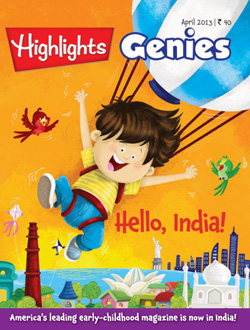
    North American children’s magazine publisher Highlights for Children and Delhi Press have collaborated to bring Highlights Champs and Highlights Genie magazines to India.


     

    Highlights Magazine (http://www.highlights.com/) uses stories, poems, and activities to engage children in early learning and helps them to develop a strong sense of curiosity, creativity, confidence, and caring. From its beginning in the 1940s, the magazine has celebrated children’s experiences in many different cultures and religions around the world.


    Highlights Champs is designed for children aged 6-12, and includes a mix of fiction, poetry, science, craft and readers’ contributions. It also features beloved content from Highlights magazine such as Hidden Pictures, the Timbertoes and Goofus and Gallant. Highlights Genies targets children aged 2-6 and uses stories, poems and activities to engage children in early learning and help them to develop a strong sense of curiosity, creativity, confidence and caring.


    “Parents in India place a high value on education and care deeply about helping their children develop strong learning skills at an early age. With a blend of Highlights’ exceptional content for children and Delhi Press’ unique understanding of the market, Highlights Champs and Highlights Genies will be ideally positioned to fulfill the needs of both parents and children,” said Paresh Nath, Editor-in-Chief and Publisher of Delhi Press.


    Highlights CEO Kent Johnson said, “When my great-grandparents started Highlights in 1946, one of the things they hoped to do in the pages of the magazine was celebrate children’s experiences in many different cultures around the world. I think they would be so pleased – and maybe astonished too – to see how far their ‘Fun with a Purpose’ magazine has travelled.”


    Highlights Champs and Highlights Genies will be available through subscriptions as well as in newsstands and books stories throughout India.


  • Could Indian mags go the Newsweek way?


    By Ananya Saha


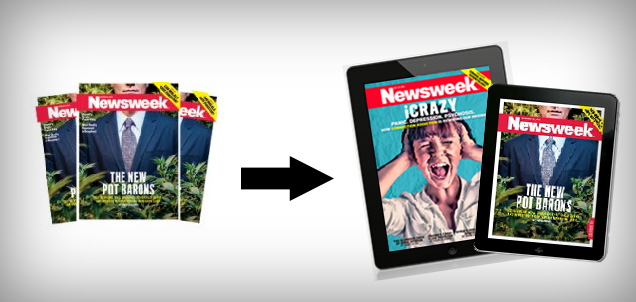
    Newsweek, founded nearly eight decades ago, is moving to a digital-only product from 2013. According to editor-in-chief Tina Brown, it cost $42 million a year to manufacture, print, distribute, and manage the circulation of Newsweek.


    Newsweek is in the best position to go completely digital due to their strong online presence through Daily Beast. But the news has sounded an alarm bell for print magazines all around the world. As news becomes a 24/7 affair and people prefer online access, the readership of news magazines is on decline the world over. It is no wonder then that magazines are reaffirming their presence in the online space too. With Kindle usage on the rise, e-magazines are creating waves.


    Tarun Rai

    Even as Indian print industry continues to see new launches, the readership is on the decline (though a minor slide), as recorded by recent IRS figures. “I am not very surprised at the decision. I believe the issue for Newsweek is the nature of the magazine it is. As a result, the relevance of a weekly ‘news digest’ has diminished. It is not a question of print or digital – it is a question of the nature of some magazines that may not be as relevant today. The same cannot be said for lifestyle and special interest magazines,” opined Tarun Rai, President of the Association of Indian Magazines and CEO, Worldwide Media.


    Suggesting that print media still has a bright future, Paresh Nath, Editor and Publisher, Delhi Press said, “It is more of a failure of a publisher than the sunset of an industry. Printed books and material will continue to be relevant as they were in the last several hundred years.” Agreeing that the digital market for Newsweek may have matured earlier than the publishers expected, Pradeep Gupta, chairman and managing director of CyberMedia, said, “In the market they are operating in, digital is growing very rapidly and therefore Newsweek has moved in that direction.”


    The predicament of the dawn of the digital era has been repeated often in the Indian context.


    “I am happy to say that magazines are already re-inventing themselves for the digital world. Abroad as well as in India. All our magazines are available in their digital versions. We are also aggressively developing various magazines’ apps and will be launching them soon. We see an opportunity in reaching a new younger audience through our digital initiatives,” said Mr Rai.


    Even while most magazines have moved towards digital and print versions simultaneously, the print version remains important for reaching the wider audience of readers and advertisers. Time magazine also has responded with their online version adaptable to any platform and any size, particularly for mobile reading. Varghese Chandy, Chief General Manager, Marketing Advertising Sales at Malayala Manorama said, “Reinventing needs to be done not only for news magazines, but every single product for its survival.”


    According to Anilkumar Sathiraju, AVP & Head, DDB MudraMax – Media, South, revenue will still come from print version since revenues from digital in India are still at a nascent stage, even though digital penetration is increasing rapidly. Going forward, he predicted that revenues will still be higher from offline magazines.


    Magazine have the most engaging format with the deepest touch points according to various international surveys. The growing numbers of tablets reassert the fact that this is the platform that gives the closest magazine-reading experience. Mr Chandy said, “However, monetizing the digital platform will be a greater challenge even for Newsweek.”


    While the industry believes that magazines should be ready for the digital era, Mr Nath holds an interesting view: “Magazines do not need to reinvent themselves due to the digital onslaught. Digital delivery of content is like delivering content in Times Square by shouting when hundreds of voices are simultaneously trying to convey the same or similar things. When crowds assembled in Tahrir Square, Cairo, it was thought that the digital media is a powerful weapon, as sentiments were whipped up not by newspapers but by digital media. What is the end result? Muslim Brotherhood that conveys thoughts through printed material ultimately got into power. Very little original content is created on digital media. It only copies and pastes and does so millions of times over. Magazines or print versions of newspapers do not know how to overcome the shouting match where noise and not seriousness is the basic currency. When the time of reckoning comes, people will have to go to the print version, and magazines and newspapers will remain relevant. Magazines have to find out how to outgrow the noise.”


    Delivery is still an issue – from readers visiting libraries in the past for content consumption, to wanting the content delivered to them. “Print brands have given up the will to fight and are trying to join the digital crowd that has weapons stolen from print itself. Yes, the world of delivery has changed, not consumption of content,” said Mr Nath.


    But with readers wanting immediate access to content, 24×7, digital is only going to grow. It is time that that magazines move faster towards the digital era, according to Mr. Sathiraju.


    The way forward

    “In India, spend on magazines continues to grow because of an increase in literacy, increase in disposal income and lower internet penetration. Therefore, Indian publishers are embracing digital formats. Print advertising is currently 10 times the digital advertising in India. Over the next five years, the penetration of digital will increase. And that is why CyberMedia has reoriented its strategy around creating of a media mesh,” predicted Mr Gupta.


    Mr Nath said that the question of digital versus print comes from the English-educated class in India. He said, “Long ago in India, content used to be created and consumed under the banyan tree. Now it is in front of a screen but the quality of this content is poor, one-way, where hundreds speak and no one listens. In India among the English educated there is a problem as this class cannot enjoy English content (is there any English Indian serials or English Indian movies or English Indian music?) whether in print or on digital media. This class keeps shouting that print is dying as it does not know how to ‘read’ in any language.”


    The view might hold true but the increased consumption of magazines on digital platforms cannot be ignored.


    “It’s anybody’s guess as to when the digital versions of magazines will become bigger than the printed ones. I firmly believe that the lifestyle and special-interest magazines space will continue to grow in both. It is the sunrise sector of Indian media. And both the print as well as the digital versions will grow, allowing our content to reach an even wider audience,” said Mr Rai.


    As Mr Chandy concluded, “The Indian print industry needs to be ready for the future. Currently online penetration is single-digit. This is likely to change in the near future, especially in the metros.” Thus, publishers need to be platform-agnostic and essentially become content managers. Their primary task will be to reach the audience through whichever platform is relevant.


  • Video Report: The ‘AdAsian’ experience


    [youtube width=”320″ height=”250″]http://www.youtube.com/watch?v=iaNsKVHeQpI[/youtube]

    By Shruti Pushkarna


    Whether it was Swami Sukhabodhananda’s inspiring words of wisdom, Joseph Tripodi’s ‘engaging’ presentation or Will Sansom’s ‘Contagious’ ideas, there was something for everyone to take home from the AdAsia 2011 conference that concluded yesterday in New Delhi.


    Were expectations met? Did this AdAsia wash away the Jaipur 2003 memories? Did the Dilli chaat and the manganiyas charm the foreign delegates enough? Could it have been better? For answers to all of the above and more, MxM India caught up with some AdAsia veterans as well as first-timers on the last day of the congress.


    It was an experience to remember for quite a few, especially for the strong line-up of speakers. While first-timer Anita Nayyar, CEO-India & South Asia, Havas Media, was impressed with the creative line-up of speakers and topics, for Alok Agarwal, COO, Cheil Worldwide, India, some great content came from the non-advertising lot. He said, “…the presentations made by the non-advertising people were far fresher in their thinking…”

    Looking at the line-up, a few turned up at the congress in the hope of interacting with the industry icons. But the format of the sessions didn’t leave too much room for interaction. Coming from Pakistan, Mehwish Rafi, Chief Strategy Officer, Adcom Pvt Ltd, had a different picture in mind before she attended the sessions. But nevertheless, the sheer association with the ‘AdAsia family’ as she calls it, made it a great experience for all the 90 delegates from Pakistan.

    AdAsia loyalist, Raymond So, CEO, Mastershub, also came with huge expectations which he admitted were almost met but for the cultural experience. Recalling his grand Jaipur experience, he said, “…Jaipur had given me an excellent experience, the cultural exposure was great…and this time because of the hotel arrangement, it wasn’t as impressive as the previous AdAsia.”

    Sonal Dabral, Creative Head Asia & Chairman Bates 141 India, like most others was impressed with the content coming out of AdAsia 2011 but sharing his experience from Cannes, he gave some interesting feedback on how the content could have been showcased better. Stressing on the keyword of the trade, ‘advertising’, he said, “…I don’t think the separate seminars that happened were properly advertised… if we are in the business of building expectations, of teasing people, to creating desire about a product, I think that should have been done for each of the seminars.”

    For Chris Thomas, Chairman and CEO of BBDO in Asia, Middle East & Africa, the biggest takeaway from the conference was the vibrancy in the industry in Asia. Referring to the great work and conversations shared through the three-day congress, he said, “…there is absolutely a passion for the work, there is a sense of creativity and new techniques to be applied, and I think Asia is demonstrating its vibrancy and its importance on the world stage, and particularly in India.”

    Paresh Nath, Owner, Delhi Press, admitted to have had a great time at AdAsia 2011 as well. He said that the conversations were not just about advertising but about “communication” which happens to be an integral part of publishing.