It was an innings that you witness only once in a blue moon. And it was played against arch rival Pakistan. We asked Dr Bhaskar Das a question on what the performance would mean for Virat Kohli’s brand endorsement quotient for the October 27 edition of Das ka Dum. Read on…
If you wish to access the archives, please go to the Das Ka Dum tab on the website’s top navigation bar.
Q. If you were a marketer, would you look at signing on Virat Kohli given his decidedly best possible performance the other day at the India-Pak match?
A. We need to first step back a little and pause to think if Virat Kohli played a scintillating innings for more brands to sign him for endorsement. I doubt. He is anyway endorsing 28-30 brands already. It’s not about another landmark innings. It’s about Virat who appeared as a normal human being and not just a run machine or brand endorser. His post-match interview showed his humane side and it’s not easy to admit one’s frailties in public and how he came out of it. That’s the biggest outcome, to my mind, of the Indo-Pakistan match. Virat has a few more years to contribute to the craftsmanship/ artistry of the game. Let him enjoy that and then only Indian cricket would be enriched and he would become an epitome of how legends leave their trail to make future cricketers inspired.
As we celebrate ‘Azadi ka Amrit Mahotsav’, so is Pakistan celebrating ‘Jashn-e-Azaadi’ to commemorate 75 years of its existence. The first is the cause while the latter is the effect!
Pakistan would not have happened but for the creation of India as an independent nation state in August 1947, so technically, while India can rightly claim this as her 75th year of independence, Pakistan technically can claim this her 75th year of creation. Therefore, our neighbours in the north by northwest should be celebrating their ‘Jashn-e-Wajood’.
This paradox itself is a demonstration of brand “Pakistan”. A brand made up of contrasts, paradoxes, and conflicting paradigms. Its very creation is due to the existence of another. Therefore, it’s very lifeline is dependant on the health of another.
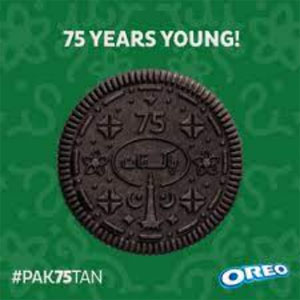
This is the typical image of the brand. It is a bit like a parasitic plant, living on the nutrients from another brand that is India. Maybe I sound too harsh, but that is the reality of brand Pakistan today. Almost all references to Pakistan are vis-à-vis India. Comparisons are natural to be drawn but they are of the nature of proving time and again that the brand has been one big mistake. I remember listening to a lecture by journalist M.J. Akbar in 2016 where he said that the current state of Pakistan actually proves that partition, though painful, was a correct step in India’s favour. And Pakistan has not done itself any favours over the last two decades to prove us wrong.
Can the 75th year of its existence give it the space to introspect? Is the Pakistan today the one that the elites of the Muslim League led by Syed Ahmed Khan had dreamt of in the early 1900s? Is this what Mohammad ‘Allama’ Iqbal visualised? Or for that matter even Jinnah? While the germination of the thought of a separate state for the Muslims in British India was a reactionary one, emanating out of fear of losing out rather than any positive vibes, being casually called a ‘rogue state’ and a ‘basket case’ could never have been the desired outcome.
And it is this fundamental principle of brand creation and building that decides where it finally ends up. A brand born out of negative emotions cannot last for long in a positive state of being. It is inflicted with complexes of various dimensions… neglect, inferiority, and lack of self-belief. The brand cannot stand on its own feet. And this exactly is the malaise of brand Pakistan.
Pakistan is one of the world’s richest cultural and civilisational regions. It is the one melting pot of Mehrgarh of the Neolithic Age, Indus Valley of the Bronze Age, the Greeks, the Seleucids, the Mauryans, the Kushans, the Guptas, the Umayyads, the Hindushahis, the Ghaznavids, the Sultans, the Mughals, the Durranis, the Sikhs and the British. It carries a historical legacy that would have seen it as one of the most socio-culturally thriving parts of the world. It could have created a model nation state based on plurality of cultures rather than the purity of faith it opted for. It has ended up choosing the turbulence of multiple cultures rather than their inherent richness. This is so typical of brands that somewhere neglect their roots and natural moorings and go for causes that are non-credible, transactional, and synthetic.
Pakistan is the land of the Nobel winning physicist Dr. Abdus Salam. It is the land of the pathbreaking ‘Ommaya Reservoir’ that transformed medical surgery. It is the land of Naveed Zaidi who developed the first plastic magnet. It is the land of the Farooq Alvi brothers who created the first computer virus (c)Brain! It is the land of Raza Kazim who has created the Sagar veena. It is the land of Mahbub-ul-Haq who created the ‘Human Development Index’! It is the land of Abdul Sattar Edhi who set up the world’s largest private fleet of ambulances.
Noor Zehra, daughter of Raza Kazim, playing the ‘Sagar Veena’
Pakistan is Faiz, Manto, Iqbal and Eliya. Pakistan is Imran Khan, Hassan Sardar, Jahangir Khan and Abdul Khaliq. Pakistan is Nusrat Sahab, Abida Parveen, Nazia Hasan and Strings. Pakistan is Sadiq Khan, Riz Ahmed, Ayesha Jalal and Zayn Malik.
Pakistan is well beyond the army, ISI, JeM, Masood Azhar, HuM and the Taliban. Pakistan is well beyond bombings, ethnic hatred, corruption, and fundamental terrorism. But the brand is a victim of such a narrative. Pakistan today is a pale picture of the vibrant Pakistan of the 1960s and 1970s. It stands before India today as a stark reminder of what we could become and should stay away from.
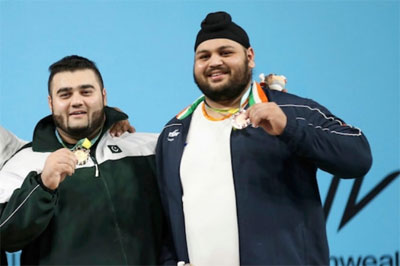
Nooh Butt and Gurdeep Singh in Birmingham
When Nooh Dastgir Butt dedicates his weightlifting gold in the just concluded Commonwealth Games to Mirabai Chanu and celebrates with his dear friend and Indian weightlifter Gurdeep Singh dancing to Siddhu Moosewala songs, it is a Pakistan that is counter to the popular narrative. When Arshad Nadeem throws his javelin beyond 90 metres and remembers his sparring competitor Neeraj Chopra in his moment of victory, it is against the narrative.
On 31st May this year, the Institute of Policy Studies in Islamabad and the Fatima Jinnah University in Rawalpindi organised a seminar titled ‘75 years of Pakistan: Constitution, Public Representation and Governance System’ where some of the sharpest minds reiterated the crucial role the revised constitution of 1973 plays in keeping powers in check and needs to get stronger by the day. To quote from the deliberations, “Martial laws have been imposed on the country a number of times, however, all of the initiators had to seek some form of public representation after some years. Ayub Khan had to resort to local democracy, Zia-ul-Haq had to conduct a referendum to provide the impression that he was a representative of the people, even Pervez Musharraf had to turn to local bodies elections and a referendum.”
In 1956, Pandit Nehru saw Abdul Khaliq run the 100 metres and called him ‘Parinda e Asia’.
In 1960, Ayub Khan saw Milkha Singh race against Khaliq and called him ‘The Flying Sikh’!
On the 75th anniversary of its existence, Pakistan has to take a strong hard look at what defines its very existence as a brand. It has to question its core purpose and promise to itself. It has to decide whether to remain the parasitic rafflesia flower or evolve into the the symbiotic orchid. And that will be done by its people and not the government, army or ulema.
The two brands of India and Pakistan are inseparable. How I wish the two nations were to together celebrate ‘Azaadi ka Amrit Jashn’. For each brand has a part of itself living in the other.
I conclude with the final lines from Piyush Mishra’s song ‘Husna’ written a decade ago…
“Aur rota hai raaton mein
Pakistan kya vaise hi
jaise Hindustan,
O Husna?”
[And does Pakistan shed tears every night just as India does, my love?”]
Jeevey jeevey Pakistan!
Jai Hind!!
(You could watch the song being performed by Piyush Mishra and Hitesh Sonik at Coke Studio MTV Season 2 on YouTube at https://www.youtube.com/watch?v=4zTFzMPWGLs)
Avik Chattopadhyay is a senior brand and business strategist and advisor based in Gurugram. He writes on MxMIndia every other Thursday. His views here are personal.
The last two weeks of September saw a fair bit of media coverage from the 76th session of the United Nations General Assembly (UNGA). Political gripes and handling of predominant world crises made headlines across countries.
News around India and Pakistan tends to invoke a gamut of reactions and a sea of emotions. Especially when it comes to the regional conflict surrounding Kashmir. Otherwise uninterested in the usual furor, a Pakistani diplomat’s address caught my attention.
The image of a woman fiercely defending her nation, reading from a Braille script at a global forum, challenged several stereotypes in one go.
To set the context, Saima Saleem struck back at her Indian counterpart, Sneha Dubey, after the latter made a fiery speech accusing Pakistan of playing the “victim of terrorism” while fostering terrorists in its backyard.
In response, the Pakistani delegate said that occupied Kashmir was not a “so-called integral part of India nor is it India’s internal matter”.
Beyond this cross-country (s)he-said-she-said, two young women stood out for their professional abilities. And the world watched. Bursting myths and contesting societal perceptions, there were a lot of ‘firsts’ at play.
Saima Saleem happens to be the first visually impaired civil servant of Pakistan. A speech was read out in Braille for the first time at the UNGA.
Both women won accolades from their country’s leadership, media and the average citizen. The focus of news reports was on the issue at hand, and not on any vulnerabilities, pertaining to gender or disability.
It was truly ‘person’ first. Something activists and disability advocates have been rooting for.
Although the language used by the media wasn’t completely disability-inclusive, but one is willing to forego that, on grounds of ignorance. So even though Saleem was addressed as ‘visually impaired diplomat’ and ‘first blind woman’, the narrative didn’t obsess with any sort of heroism. Yes, she was acknowledged as an inspiration to many, but mostly because of her knowledge and craft. Her blindness was merely a condition, something that became evident as she ran her fingers on the embossed dots.
Pakistan’s largest and oldest English newspaper, Dawn covered the story with no mention of Saima’s vision impairment except in the cited tweets applauding her.
Screengrab from Dawn.com
So, who’s Saima Saleem?
She is currently a counsellor with the Permanent Mission of Pakistan to the United Nations in New York. She has a degree in International Law with a specialisation in Human Rights Law from the Geneva Academy of International Humanitarian Law and Human Rights. She went to the Georgetown University, School of Foreign Service, in Washington DC on a Fulbright scholarship. She also has a master’s degree in English literature from the Kinnaird College for Women in Lahore.
Saima was diagnosed with Retinitis Pigmentosa, a degenerative eye disorder that resulted in complete sight loss when she was thirteen.
When she applied for Central Superior Services (CSS), she requested the Federal Public Service Commission (FPSC) to conduct a computer-based exam for her. But her request was rejected. Refusing to cave in, Saleem proceeded with her case quoting an ordinance that was passed in 2005 which stated that the government will facilitate candidates with visual impairment to take exams on computers. Her application was approved and she passed the competitive exam, only to face another roadblock. The FPSC didn’t allow candidates with blindness to apply for foreign service. Determined to become a diplomat, she managed to persuade the panel, thoroughly exhibiting her negotiation skills.
She joined the Foreign Service of Pakistan in 2009. A strong advocate of global peace and interfaith harmony, Saima describes herself as ‘a diplomat with insight, not sight’. Interestingly her brother, Yousaf Saleem became the first Pakistani jurist with vision impairment in 2018.
India also has its own share of bureaucrats (and professionals) who are persons with disabilities. Like Saima, they too have worked hard and pursued their passion to reach their current positions.
On several occasions in the past, I have emphasised on the need to erase stereotypes with consistent media representation of people who lead fulfilling and dignified lives despite disability. I must confess, the recent coverage reinstates my faith in the media.
Like I said there were many firsts here, one of them is the media getting the story somewhat right. Kudos to that!
Shruti Pushkarna is a former journalist who now works as a programmes and media specialist for the inclusion of persons with disabilities. Shruti writes for MxMIndia every other Thursday. Her views here are personal. You can reach her via Twitter at @shrutipushkarna
Compiled by Rafiq
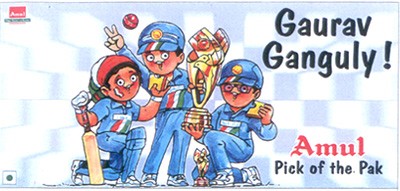
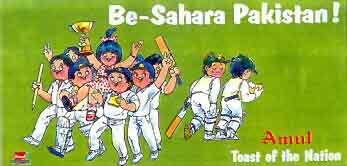
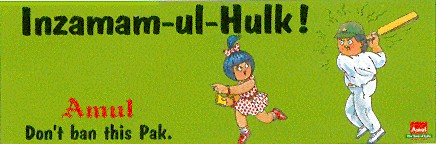
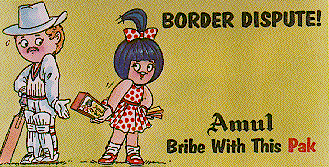
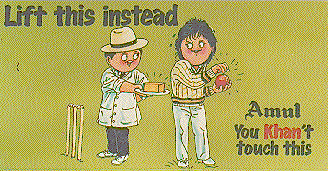
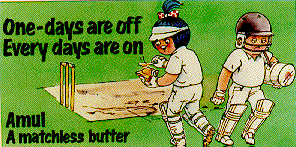
We are going to see an India-Pakistan cricket series after a while, and while the action will be on the field (and a fair bit off it), we bring you select Amul topical ads on Pakistan cricket.
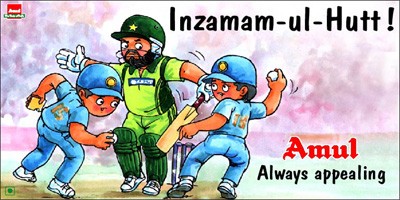
India Pakistan Cricket series revived after five years – July 12The recent Indian Premier League Cricket meet in which the Pakistan players were not bid for – Jan.'10Kudos to the victorious Pakistan Captain Inzamam-ul Haq in the one-day International Series against India – April'05
On Pakistan Captain Inzamam-ul Haq's dismissal for obstructing ball at a crucial stage of One-day International in Peshawar – February '06
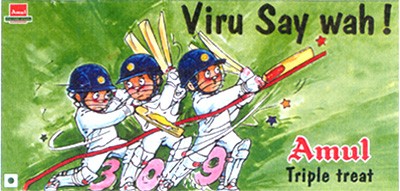
Virender Sehwag's memorable landmark of triple century against Pakistan in test match at Multan – April '04
Jubulitation on the victory over Pakistan in the one day series – March '04
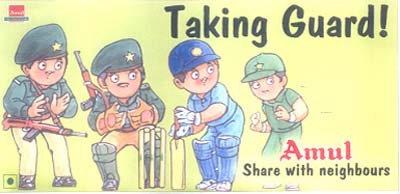
The two rivals India & Pakistan will soon be playing Cricket under security power after a long gap – February 2004
When Pakistan lost the Sahara Cup in cricket
When Pakistan batsman Inzamam-ul-Hulk attacked a spectator
When the Australians accused Pakistan of bribing their players to 'throw' the crucial third test on their infamous tour to Pakistan
When Pakistan Captain Imran Khan admitted stroking or manipulating the ball
The pitch was damaged when Pakistan was to play a series in India
So, as expected, the turmoil inPakistanstarted consuming our TV channels. The day started with a video of the exploitation of the Jarawa tribals of the Andamans, put up by an Observer reporter on the Guardian website. There was shock and horror all round, as you could hear someone egging the tribal women to dance. One of the benefits of TV is that you can easily generate outrage at such events and what was earlier acceptable is now seen as taboo. A growth of sorts, perhaps, through exposure because all too often our middle classes are least bothered about the plight of the underprivileged (o dear, do I sound like Katju?).
Unfortunately, though, there seems to be some confusion as to when this Jarawa video was shot and the reporter who got it has claimed protection of sources privilege. This may mean that the horror will die out as officials will do little as they don’t have enough to go on. Follow ups are the only answer, but one wonders.
The disgraceful episode of a Dalit woman being beaten and paraded naked in Maharashtra because her son ran off with an upper caste girl also got some TV time as did rats nibbling on a patient’s face in a Jaipur hospital. The more the “otherIndia” gets noticed, the smaller the divide will become, perhaps.
By the late evening, it wasPakistanwhich was top of the news, as one more military coup seemed imminent. Some channels ran direct feeds fromPakistanand it was fascinating to see that in spite of the difficult times, studio guests did not yell, scream, talk over each other and generally create a massive drama. How would we react under similar circumstances? Sigh.
The international channels did not on Wednesday evening concentrate onPakistan. Other things were happening like the Republican battle to choose a presidential candidate and, as usual,Europe’s economic woes.
* * *
The Darul demand for a visa ban on Salman Rushdie has got far more play on TV than in newspapers. Today’s Times of India has some Muslim scholars and activists asking for more tolerance from fellow Muslims. Meanwhile, Uma Bharti of the BJP was calling the proposed quota for Muslims within OBC reservations another “Partition”. Again newspapers paid her far less attention.
 It was an innings that you witness only once in a blue moon. And it was played against arch rival Pakistan. We asked Dr Bhaskar Das a question on what the performance would mean for Virat Kohli’s brand endorsement quotient for the October 27 edition of Das ka Dum. Read on…
 As we celebrate ‘Azadi ka Amrit Mahotsav’, so is Pakistan celebrating ‘Jashn-e-Azaadi’ to commemorate 75 years of its existence. The first is the cause while the latter is the effect!
 This is the typical image of the brand. It is a bit like a parasitic plant, living on the nutrients from another brand that is India. Maybe I sound too harsh, but that is the reality of brand Pakistan today. Almost all references to Pakistan are vis-à-vis India. Comparisons are natural to be drawn but they are of the nature of proving time and again that the brand has been one big mistake. I remember listening to a lecture by journalist M.J. Akbar in 2016 where he said that the current state of Pakistan actually proves that partition, though painful, was a correct step in India’s favour. And Pakistan has not done itself any favours over the last two decades to prove us wrong.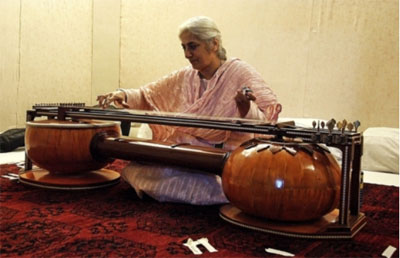
 By Shruti Pushkarna


 By Ranjona Banerji