Tag: Outdoor

  • The Anchor: 5 ways to keep audiences coming back to your channel

    By Amogh Dusad


    Extensive variety in offerings

    India remains largely a single TV market. Therefore, a channel should offer an array of genres and appeal to all members of the family. Variety also ensures that viewers find the channel fresh and vibrant.


    Extending beyond the TV screen

    Gone are the days when television channels just aired promos and expected to keep viewers glued. The need of the hour is to create brand extension programs. It is also important to be a part of local festivals and important historic days which make the viewers feel closer to the channel – for example Christmas or Independence Day


    Exclusive content – premieres

    In the age of hyper-competition, it is important to be the first and the only one to offer great content /movies. Television premieres make the viewers look forward to channel announcements and promotions along with making the channel an exciting destination.


    Enjoyable viewing experience

    Watching a channel must be enjoyable for it viewers, otherwise they will simply move onto another channel. Therefore, it is essential that the content is showcased in a viewer friendly style to enhance viewing experience.


    Engaging the viewer – starting conversations

    A channel has to interact with its viewers to keep them glued to the channel. A consumer today is constantly bombarded with one-way conversations through print, outdoor, radio, and television but how much of it really resonates in their mind! One must engage with the viewers and remain in constant dialogue with them. Digital is great medium to create conversations.


    Amogh Dusad is Programming Head, PIX


  • Budget shows the finger to digitization


    By A Correspondent


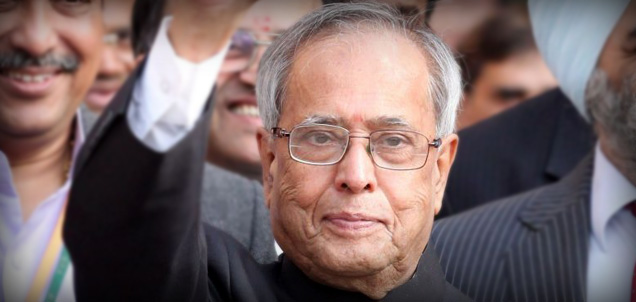
    In the end, one hopes that the angel is in the details. On Day 3 of the annual Frames jamboree put up by industry body FICCI, one hoped that Finance Minister Pranab Mukherjee will announce sops for digitization. The broad proposals didn’t. And for once, one hopes that rather than find the devil, there’s an angel hidden out there.


    Okay, there are some nice things in there. Like sops early stage funding from Venture Capital companies to media companies. But the IBF director-finance Naresh Chahal’s outrage was understandable. The government – and infobroad secretary Uday Varma re-iterated it – is firm on the June 30 deadline for the four metros. “If India has to grow, digitization will be a vital ingredient for its growth and thus it is important that we be technologically updated. Digitization is here to stay and we need to embrace this change.” While set-top boxes may not have found favour, LED and LCD television panels and parts of mobile phone memory cards have been looked at favourably by Mr Mukherjee.


    So while the FM hasn’t made life tough by adding taxes, the fact that he didn’t cut or even totally drop duties on set-top boxes was a huge dampner. Doubtless, the economically weaker sections in the four metros of Kolkata, Chennai, Mumbai and New Delhi will be forced to cough up monies if they want to catch non-terrestrial entertainment.


    Meanwhile, Mr Rakesh Jariwala, Partner & Tax Expert, Media and Entertainment at leading consulting firm Ernst & Young said:  “The key takeaway from the Union Budget 2012 for the Media and Entertainment Sector (‘M&E’) is the exemption to be provided from service tax on Copyrights in Cinematographic films with the introduction of the negative list concept under the service tax legislation.”


    The non-inclusion of advertising in television and print in the negative list for service tax is also a dampner given that the levy has been increase from 10 to 12 per cent. This means that there will be a tighter squeeze on adspend budgets. While advertising on big ticket shows will not suffer, the small monies spent on digital, outdoor, radio and other experimental/BTL activities may take a hit given the 2 per cent additional squeeze.


    And then there’s an increase in excise duty too which will increase the burden on M&E professionals and corporates and with the easing of Income Tax slabs not quite balancing the increase in expenses elsewhere.


    However, the film industry and entertainment event organisers may find some benefit with the recommendations.”The proposed negative list legislation seeks to specifically exclude admission to entertainment events and access to amusement facilities, thereby granting a much needed relief to the entertainment industry,” Mr Jariwalla added. “For film industry, it is proposed that service tax will not apply on transactions between producer to distributor, distributor to exhibitor (by exempting copyrights in cinematographic films) and between exhibitor to cinema goer (by including admission to entertainment events in negative list),” he said.


    For entrepreneurs just getting into media and entertainment who were cold-shouldered by venture cap companies given the restrictions, the easing up of restrictions on funding should be a welcome move.


    Please refer to Microsite on Budget 2012 for the following stories which were uploaded on Saturday, March 17:

    Budget 2012: Ernst & Young Analysis of Direct & Indirect Tax proposals in M&E

    Budget 2012: What it means for India Inc

    Budget 2012: Reactions from Stakeholders

    Budget 2012: Video reactions from trade

    Budget 2012: Entrepreneurs may find fund-raising easy with removal of restrictions for VCs

    Budget 2012: Ranjona Banerji on how TV Channels fared with their Budget specials

    Budget 2012 Anchor: 5 M&E ways in which the govt can make monies on the Budget


  • Jaypee Cement ‘Wall Moments’

    By A Correspondent


    [youtube width=”400″ height=”200″]http://www.youtube.com/watch?v=Xbo8rqEpkrQ[/youtube]

    Jaypee Cement ‘Wall Moments’


    Background

    Jaypee Group has always been in the forefront of nation building activities by creating world-class infrastructure and power projects that ensure economic prosperity and energy security ofIndia. Jaypee Group is the third largest cement producer in the country and produces cement under the brand name of Jaypee Cement.

    As one ofIndia’s leading cement brands, Jaypee Cement has played a significant role in various landmark projects developed by Jaypee Group across the country.

    It was the opportune time for the group to highlight the brand’s promise of ‘Andar se solid’ in an interesting, engaging and visually arresting manner to the consumers.


    Insight

    While we may not realize it, the wall enjoys a special place in our lives. We all have had our share of ‘wall moments’… be it a young girl, leaning against a wall, dreamily reading a love letter; a father measuring his child’s height on the wall; a young man putting up a Rocky poster on the wall and so on.


    The Execution

    While the TVC comprises of various engaging, nostalgic wall moments in all of our lives, the difference comes through in the execution – in the manner in which these sequences flow seamlessly from one through the other.


    Right from the start of the film where a man welcomes us into a home, the treatment resembles a journey where one is being guided through from one moment to another as we move through the home.


    The TVC is also being supported by Print and Outdoor, along with Cinema as well.


    “We knew we’d hit upon a strong, resonating idea with ‘wall moments’. It was then only a matter of crafting it. The brief was opened up to the office and people were asked to dig into their own lives and pen down their wall moments. We finally picked up the best from the pool,” said Vandana Katoch, Creative Director, DDB Mudra,Delhi.


    Credits

    Creative team:  Vandana Katoch, Vishal Singh, Joy Sengupta

    Account Management: Gopal Krishnan, Raghunath, Anusheel Chowdhury

    Senior Film Executive: Vineeta Misra

    Client: Jaypee Cement

    Director: Nico

    Production House: Coconut Films


    India’s largest integrated marketing communications and services network, the DDB Mudra Group’s customized and collaborative approach helps its clients build valuable and enduring brands. Our capabilities span Advertising, Media, Digital & Data marketing, Experiential marketing (Promotions, Events, Rural), Trade marketing, Youth marketing, Localization & Pre-Media services and Brand Strategy & Design consultancy.


    With over 1,100 employees and 36 offices, offering direct contact across 1,75,000 villages, 4000 towns, 3500 schools and nearly 7 million students, the DDB Mudra Group was India’s most awarded agency network at Cannes, Spikes and Abbys among others in 2011.


    The DDB Mudra Group’s clients include Aircel, Ashok Leyland, Asian Paints, BPCL,  Bank of Baroda, Baxter, Castrol, Cipla, Colgate, Dabur, Emirates, Emami, Federal Bank, Future Group, Gillette India, Godrej, Gulf Oil, HDFC Bank, HPCL, Hindustan Unilever, HP, HUL, ITC, Jaypee, Jyothy Labs., ICICI Prudential Mutual Funds, Idea cellular, Johnson & Johnson, LIC, Lavasa, L&T, McDonalds, MSD, Malayala Manorama, Mother Dairy, Nestle, Novartis, PepsiCo,  Peter England, Philips Healthcare, Reebok,  Rotomac, Sab Miller, Shell, Star India, Standard Chartered Bank, Tata Communications, Tourism Australia, TTK Prestige, UNICEF, Union Bank, United Spirits, Volkswagen, Western Union, Worldwide Media, Wipro, Wrigley and Zydus.


  • Everest creates campaign for SAB TV’s Movers and Shakers

    By A Correspondent


    Movers & Shakers, arguably the biggest talk show India has ever seen, is returning on SAB TV, albeit with a whole new contemporary look and feel, but with Shekhar Suman at helm.


    Everest Brand Solutions has created the communication campaign for Movers and Shakers, which is phased out in two parts.


    Phase 1 kicked off the debate of what Shekhar would do the second time around. The teasers had Shekhar attempting, and miserably failing, at things like a hunger strike, boxing and cooking. Shekhar’s skills as an actor were fully exploited in the teasers.


    Next SAB TV’s Facebook fan page took things forward by asking people to suggest what Shekhar could do. Shekhar responded to each suggestion with witty takes.


    The final reveal (phase 2) happened with the launch of the TVC. Print and outdoor media are being used to support the launch exercise.


    Overall, the exercise generated tremendous engagement with responses pouring in.


    The ad films were shot in Mumbai and Chrome Pictures was commissioned to handle the production.


    Team Everest: Pramod Sharma, Bappaditya Shaha, Sandeep Sastikar, Sharif Sheikh, Nikhil Kapoor, Harish Shetty, Pooja Balani, Rahul Jauhari.


    Client Team: Anooj Kapoor, Harjeet Chhabra, Naranayan R.


  • South African Tourism launches ‘Leave ordinary behind’ ad campaign

    By A Correspondent


    South African Tourism has kick-started its television, outdoor and cinema campaign in order to promote the destination inIndia. Post the launch of its cinema campaign recently, South African Tourism has now started the campaign on television and outdoor to popularise the destination among Indian travellers.


    The 20 and 30 seconds advertisement captures an Indian couple who share their mesmerizing experience of travelling toSouth Africa. The commercial captures the experience of adventure, nightlife, wildlife, luxury, wine route and beauty ofSouth Africa. With this advertisement, South African Tourism is reaching out to numerous travellers through various entertainment and news channels.


    Indian television has a lot of shows that have the potential to draw good viewership and South African Tourism is tapping this opportunity to draw more Indian tourists to the Rainbow Nation.


    Along with its television campaign, South African Tourism has also launched its outdoor campaign. Outdoor Advertising Professionals (OAP) has done the creatives and execution for the outdoor campaign. The upcoming campaign is spread across 16 types of media that comprises of 452 media units covering an outdoor space of approximately 1,90,000 sq ft across 22 markets. The various media chosen for the campaign are billboards, backlit walls, bus shelters, cantilevers, glass façades, flagpoles, gantries, glow cubes, king-long buses, metro signages, pole kiosks, subway panels, skywalks, standalones, malls and airport displays.


    Commenting on the campaigns, Hanneli Slabber, Country Manager, South African Tourism, said: “Given the fact that Indian television is one of the strongest consumer influencers, we wanted to leverage the medium with the launch of our television campaign. The commercial aims to demonstrateSouth Africa’s warmth and affability through the eyes of Indians who have experienced the country. They are real people telling their story in their own words and we hope that the Indian viewers can connect well with the ad. With these two campaigns we want to intrigue desire towards the destination and aid brand recall towardsSouth Africa. We are confident that the television, outdoor and cinema campaign will definitely tempt the Indian audience to consider a holiday inSouth Africa.”


    South Africahas grown to become one of the most popular destinations among Indian tourists. South African Tourism has witnessed an exceptional 29.9 per cent increase in Indian tourist arrivals between January-September 2011 in comparison to 2010.


  • Ajaz Memon: It’s a time for happy choosing

    It’s that time of the year again.  New “Kandeels” and crackers are bought.  Old lights left from last year are dug out.  Festivities abound in the season of the Festival of lights.  For the quarter of the year which is considered peak season for Out-of-Home, what does it mean for the Outdoor industry to be part of the over-the-top Promotions?
    While it is a truism that except for very select brands, Outdoor continues to be a support medium for Mainline media, it is also true that off-late Diwali is the time when outdoor comes into its own.  This is so because while most of mainline media are targeted at getting consumers to shop, the actual shopping is done when the potential customer gets out of home to a point of purchase. Thus the medium which targets the client closer to the sales point is outdoor.  Smart brand custodians have realized the power of this medium and are harnessing it specially during the festival season giving rise to the “peak season” phenomenon during Diwali.

    These last few months of the year are a good time to be in the Out-of-Home industry for reasons other than the ballooning sales and all-time high occupancy of Outdoor sites. It is a quintessentially Indian Festival.  Almost all corners of the country are lit up with every possible spectrum of colour. While most of these colours are seen at offices, residences and side streets, its Outdoor which lends colour to main streets and junctions, indeed it does so round-the year, but specially during the festivities when most outdoor options are lapped  up to cater to the burgeoning shopping crowd.

    While it is obvious that consumer durables lead the pack in Festival-specific advertising, other segments are not too far behind when it comes to inducing purchases on this propitious occasion right from jewellery to realty, everyone recognizes that this is the best time to make people buy your product. Auspicious-time-to-shop coupled with the financial windfall of a Diwali Bonus leads to a unique purchase inclination for majority of Indians. And the intelligent brands are there leading the pack, following their potential buyer right from the time he leaves his house till the time he reaches anywhere where there is a potential purchase to be made. This is achieved thanks to the phenomenal reach and variety of options that OOH accords the smart brand manager. Yes, it is indeed a good time to be a OOH Professional.

    However the picture is not rosy for all.  Out-of-Home inventory is growing at a phenomenal rate, unfortunately far higher than the growth rate of the industry itself.  While in the good old days there were literally waiting lists for decent OOH options, today the glut of new media has led to the quirky scenario that you actually have decent Outdoor options sometimes vacant on Diwali.  The festival season has become the great leveler for deciding an Outdoor options’ ultimate appeal. If your site is unsold even on Diwali, its time to rethink about your inventory or costing or both. Having said that, more options only lead to more choice for the advertising community, ultimately promoting  the very same consumerism culture which the brands are themselves promoting. So Happy Diwali and Happy Choosing to all.


    Ajaz Memon is Director, Network Media Solutions.

  • First on MxMIndia: Pioneer bags BEST tender

    By Nibha

    Pioneer Publicity has won the BEST (Brihanmumbai Electric Supply and Transport Undertaking) tender for advertising rights on single and double-decker buses. Established in 1873, BEST operates one of India’s largest fleet of buses.


    The company has won the rights for three years – 2011-14 – for about 4050 old buses in all.


    Confirming the same, Mr Sunil Vasudeva, said on the win, “We worked for BEST from 2002-2008,after that the business went to Bright Outdoors. Now, we have the business again with an account size of 85 crore.”


    Prior to this development, Bright Outdoor had owned the ad rights to the buses, but, as reported by MxMIndia, due to heavy losses it had withdrawn from the tender.

  • Largest OOH display leaves footprint in Delhi


    By A Correspondent

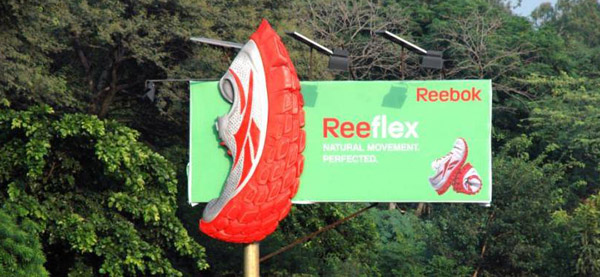
    BIG Street, the OOH initiative of Reliance Broadcast Network Limited, and Mudra Max have created the largest out-of-home display for Reebok on the façade of the Dhaula Kuan Airport Metro Station.

    Reebok, the leading producer of athletic shoes, apparel, and accessories, introduced a new range of running and training shoes called ‘ReeFlex’. A product of advance research, the shoes feature 76 independent ‘sensors’ on the bottom, planned in a way to adjust to all training surfaces. Throughout the stride of the wearer, these inbuilt sensors work together to promote the natural movement and flexibility. To promote such an innovative product, Reebok India partnered with BIG Street and Mudra Max to create an equally innovative OOH display.

    BIG Street, which holds the advertising rights to the display media in the Delhi Airport Metro Express stations, proposed the branding of the Dhaula Kuan Airport Metro Station’s façade – an enormous glass structure overlooking the busy NH8 stretch. Subsequent to the approval of the concept by Reebok, Mudra Max flawlessly completed the execution, branding the mid portion of the façade, a huge area of about 8,602 sq feet.

    Since the canvas itself was a building, high quality, international standard one-way contra vision from 3M was used, that was unobtrusive to the metro passengers inside the station but left an indelible impact on the motorists and pedestrians on the road.

    The branding has already created a huge buzz, with people reducing the speed of their vehicles to look at the giant display in awe. The impact of the communication has been compounded by the fact that the station is bang opposite a traffic light, ensuring a captive audience for a good two to five minutes.

    Commenting on the campaign, Mr Rabe Iyer, Executive Vice President, RBNL & Business Head BIG Street & BIG Live said, “BIG Street has time and again proved its ability to create eye-catching innovations for its clients. This cutting edge display for Reebok has firmly positioned BIG Street as a ‘thought leader’ in the Out-of-home space.”

    Mr Mandeep Malhotra, President, Mudra Max, OOH, said, “It has always been a pleasure to work on Reebok. The passion and desire to create innovative OOH by the team Reebok gives us the kicks to run around and deliver the best campaign after campaign.”

  • Innovation and OOH are synonymous: John Ellery

    Having studied to become a Chartered Surveyor, working in property management and sales, Mr John Ellery joined the outdoor contractor London and Provincial in 1968 and trained in all aspects of the outdoor medium from billposting to backlight development. L+P was at the forefront of the outdoor advertising industry at that time and led many industry initiatives.

    Specifically Mr Ellery was involved in the birth of the street furniture medium, developing acceptable designs and working with local authorities to integrate outdoor within modern town centre developments, and the street scene.

    From there on it was an upward progression as Mr Ellery went on to become Marketing Director of Smiths and Masons, Board Director of L+P Group and Adshel, Managing Director, Dennis Sullivan at Portland, and formed the International Division of Poster Publicity. He opened their offices worldwide, providing a global network with 18 offices outside the UK, producing over half of the groups annual billings of US$400 million. PP opened their 19th office, in Sydney, early in 2005.

    PP and WPP formed a joint company, with Portland, called Kinetic Worldwide, to continue to develop the outdoor specialist function globally. Since 2006 Mr Ellery ceased his connection with the company and is now an international OOH consultant.

    In an exclusive interview with Nibha, John Ellery shares his views on tackling the economic slowdown, global consolidation, work ethics, global OOH guidelines and much more.


    Q: Do you think that the current economic slowdown will give out-of-home advertising an edge over other media, across the globe?

    This will vary market by market. In the main I believe that OOH has many advantages over other media, but as several advertisers believe that OOH so often only accounts for a small percentage of total media spend, in difficult times, it is sometimes the first part of a media schedule to be cancelled. However with the right marketing and enthusiastic, well connected sales force, many outdoor owners can provide advertisers with some more reasonably priced advertising alternatives to their regular media choice. There is still an education job to be carried out on many advertisers. All sectors of media are suffering at this time, but from what I am seeing, a medium that can offer a specific and well targeted audience is enjoying a better sales ratio, than a medium that is broader in its audience appeal.


    Q: The current economic slowdown is affecting the OOH media owners’ businesses across the world; as a result a number of major advertisers are cutting back on their advertising spends. What according to you is the key to win back advertisers to the OOH arena?

    It must be a continuing effort to provide a well positioned OOH medium with top quality servicing and display performance. Of course this costs money, but we have such a public medium which is only as good as the last site that was seen. In the UK and US the number of outdoor sites displaying paper and glue displays is reducing quite dramatically. In the US it is proposed to have no further paper and glue sites by the end of this year. I know traditional panels in India are now almost all vinyl, but with “dry posting” recyclable materials are being used. Good qualitative research is playing a growing role in outdoor, and is important to be able to demonstrate “eyes on results”’ rather than simple opportunities to see.


    Q: What advice would you give to the Indian Outdoor fraternity, both in terms of marketing and pricing of their media’s so that they don’t face the heat of the global economic slowdown?

    Be realistic about the economic climate. It will help if the OOH business was to work in concert as a proper industry. I know that it is easy to say, and it is a difficult dream to realise, but OOH is one of the more minor media choices, and we should work together to demonstrate its strengths and advantages. Each individual company will want to maximise its share of any budget. That often leads to reducing price. Of course an advertiser wants to achieve good value for money, but OOH must hold its head up! We cannot be turned off, or ignored like TV and press. Both TV and press have seen dramatic reductions in their advertising income over recent years, due to a reducing audience. The Outdoor audience is generally increasing, and that should carry an equivalent increase in value. The growth in the online sector is generally to the detriment of TV and press, not OOH.


    Q: Is the OOH industry doing enough to foster new formats and has the global consolidation of media owners helped this?

    There have been a number of new formats over the recent years, and OOH is all about the position of the site and audience. I have seen several new formats fail because they have not reached the awareness of the client. All very traditional and simple. But we are seeing successful new formats – LED, plasma screens, mobile phones.  The current financial conditions are not really supportive of these sorts of formats, but we need to encourage advertisers to really appreciate the positives that these new formats provide.


    Q: Out of Home is in the spotlight more than ever for its variety and breadth of offering. What new OOH media types have impressed you and why?

    LED enables so many clients to present their advertisement in the key locations where the opportunities exist. However, the success of LED is very dependent upon the programming and creative expertise utilized. Similarly, the same applies to plasma screens. The escalator plasma panels on the London Underground have been well used by several advertisers. The angle of the escalators provide a truly great creative programming opportunity, which a number of advertisers have taken full advantage of, to provide a very memorable advertising campaign.  To see products jump from screen to screen in time with the movement of the escalator is very eye-catching and absorbing.


    Q: What role do you think innovation plays in OOH media? And in the recent past can you name any campaign which you could call really innovative?

    Innovation and OOH are synonymous, whether the innovation applies to the creativity of the artwork/programming, the location in relation to the audience, the timing of the event, or the combination of media used. However it must be said that many and indeed most OOH campaigns simply work because they advertise a product or brand in a simple and clear way on a campaign of well placed outdoor sites. It would be inappropriate, I think, to name one or two “really innovative” campaigns as there are, and have been, so many.


    Q: How does one justify the cost of innovations in terms of both the recall value and the rise in the market share especially when we in India, don’t have any posting technology at place, wherein one can justify the effectiveness of the OOH campaign?

    This is a difficult question to answer. The simple answer is that since its origins, many hundreds of years ago, OOH has been proven to work in many, many markets. Justification of “innovation” can be measured by research, and by sales and ROI. The research work that has been going on in our industry world-wide has been immense. The India market can benefit from it, and I do hope that it is at this moment. In Europe and the US we have been working on global guidelines for OOH research which I have encouraged the market to consider and accept, and I believe this is happening. Where you don’t have a particular technology in place I think you need to look at other markets and share their experiences to your advantage.


    Q: How do you rate the change in the Indian OOH industry, especially in the past 3-4 years? And according to you, what is it that will make OOH media more than just a “reminder” medium?

    One of the obvious changes, probably in more than the past 3-4 years, is the reduction of hand-painted, and the growth in “PVC” or “vinyl” on large scale panels. This has really improved the presentation and appearance of the medium in India. Also the growth in the Street Furniture sector, and the huge improvement in the Airport Advertising offerings, is helping the medium to become a force to be reckoned with. The “negative” that I have heard from a number of people on the buying side of the business is the clutter that appears in a number of locations in most of the cities in India. OOH is seen in conjunction with the environment, and this is a matter for improvement by all the players that are in the business.


    Q: According to you is accountability the factor that is keeping clients at a distance from OOH, when it comes to the Media Plan? And do you think that the clients are ready to experiment with realtime innovations and not just cutouts and neons?

    Accountability is extremely important in the OOH business. Lack of accountability has held the medium back in many markets around the world, over the years. It’s a difficult factor to achieve when there are many players in the business, and all very keen to maximise income. But without it, as you say, it will keep clients at bay. In a market with many landlords controlling site locations, who are only interested in their financial returns it is difficult to establish a trusting, level OOH business which is accountable. But overall it is the contractors that can bring accountability. They need to work together for the benefit of the OOH Industry, by establishing a code of conduct, that all will adhere to. The research programme that is currently ongoing will go a long way towards helping out. I am sure that clients are ready to experiment with real time innovations which will become more apparent as time moves on.


    Q: How important is building up relationships with Agencies, Advertisers and Associations? And what sort of difficulties have you faced in the recent times across the globe?

    Very important! I am not the first person to state that the most important relationship is with the client, and the agency. It’s more straightforward to tell clients and agencies about a TV commercial – time of transmission, and potential audience etc, than it is to explain the locations and potential audience of a group of outdoor sites. We are back to accountability and trust again. Explaining the way in which the message can be delivered directly to the target audience is all important. In some markets there have been questions asked when it appears that not all sites booked appear. Double bookings have also caused questions to be asked. If we do not play our business in a straight and honest way, then the future will not look good.


    Q: Your site mentions the steering board of a new group, responsible for providing global guidelines for OOH research. What is the current progress on this?

    FEPE – the “Federation of European Publicite Exteriure” was formed in 1959 by the legendary Jacques Dauphin. This year we celebrate FEPE’s 50th Birthday at the World congress in Sardinia 3-6 June (www.fepe.com). FEPE represents the European OOH industry, along with many other OOH countries who are members.  Back in November 2007 FEPE met with ESOMAR – the global media research body and agreed that global guidelines for OOH research should be produced. This would help agencies and clients to compare the OOH medium globally, to compare apples with apples. A number of bodies were invited to join, and in addition to FEPE, and ESOMAR. These are:

    EACA – The European Association of Communication Agencies

    Chairman of the Technical Committee – Neil Eddleston JCDecaux

    WFA – The world Federation of Advertisers

    OAAA – The Outdoor Advertising Association of America

    AAAA – The American Association of Advertising Agencies

    MRC – The Media Ratings Council

    CANA – The China Association of National Advertisers


    Q: What sort of challenges and opportunities do you see, when you look at a market like India?

    There is a notable improvement in the way OOH is handled and marketed in India. New developments into the street Furniture domain, the modern treatment of airport advertising concessions show how more aware operators have become.  Improved accountability always helps generate a greater trust in the medium. A closer and more trusting relationship between the site operators can also improve the way OOH is perceived.

    Clients do not wish to be associated with clutter, so a continued drive to improve the environmental landscape will be to the advantage of the OOH Industry.

    Support the research guidelines and generate “eyes-on” figures will create more credibility for the medium. So, continue the move towards standardisation of panel sizes and the investment in backlights, MUPIs etc. Move towards using recyclable print substrates, and improve awareness of green issues.