Tag: OPPO

  • Ranbir Kapoor features in new Oppo Reno 12 series

    Oppo India has launched the Reno12 Series featuring advanced AI capabilities. Actor and Oppo India Reno brand ambassador, Ranbir Kapoor, stars in a content series crafted by Famous Innovations.

    Said Karan Dua, Head of Product Marketing, Oppo India: “We are thrilled to launch the Oppo Reno12 Series in India, pushing innovation boundaries through Oppo AI with exquisite design. Famous Innovations’ creative expertise has vividly brought together the Oppo Reno12’s features and Ranbir Kapoor’s presence. Partnering with Kapoor, who is a symbol of versatility and is always giving his best works really well for us as his persona is in line with the Reno Series.”

    Added Sumit Chaurasia, Founding Partner and Creative Head – Delhi, Famous Innovations: “Behind the ad film was our aim to blend Oppo ‘s AI-technology seamlessly with Ranbir Kapoor’s presence. Positioning the OPPO Reno12’s AI as users’ best friend, we created a life-sized CGI Avatar to showcase its intelligence and user friendliness. Through their friendly banter, Ranbir Kapoor and Oppo AI bring alive how Oppo’s AI technology can tackle challenges during outdoor travel photography.”

  • PHD India wins Oppo mandate

    Oppo smartphone and accessories has appointed PHD India to lead its integrated media mandate, following a competitive multi-agency pitch.

    Said PHD India CEO, Monaz Todywalla: “We are thrilled to embark on this journey of growth with our new partner, OPPO. The brand is an innovator in its space and with PHD’s deep expertise in media, consumer strategies and advanced thinking – ‘Intelligence. Connected.’ – that combines data, technology, and human expertise collaboratively, we look forward to building a stronger affinity for Oppo India.”

  • OML Entertainment campaigns for Oppo

    By Our Staff


    OML Entertainment has unveiled a campaign #MadeToBeIconic in partnership with Oppo smartphones, presenting the Oppo Find N3 Flip. This collaboration brings together yesteryear star Zeenat Aman with actor Jhanvi Kapoor.


    Said Roycin D’souza – Vice President, OML Entertainment: “OML Entertainment carries a legacy of amalgamating star power with branded campaigns, enabling brands to capture the eye of a larger audience.  OPPO India a leading innovator in smart devices technology, and empowers users with cutting-edge technology and innovation. The #MadeToBeIconic campaign for Oppo’s #FindN3FlipPhone is an unparalleled and monumental endeavour. It marks the historic first by uniting brand ambassadors from two different generations in a single frame. The presence of Zeenat Aman and Jhahnvi Kapoor sharing the limelight, is nothing short of magical and iconic. This campaign carries an international allure and unveils Oppo’s new range with a timeless elegance that is nothing short of remarkable.”


  • Taproot & Oppo launch fresh digital campaign

    By Our Staff


    Taproot Dentsu has launched a new digital campaign for the Oppo F-series smartphone. The campaign, ‘What’s up with Varun?’, introduces the F19s, Oppo’s 4th model under the F19 series. The phone comes in a special edition colour (gold), to mark the festive season ahead.


    Said Titus Upputuru, Creative Head, Taproot Dentsu Gurgaon: “When you are creating work for the digital medium, you can do so much more than just a video. When we asked Varun to change his Instagram handle to Vroom Dhawan, he readily agreed. And then a whole lot of madness unleashed with the teaser video and the main reveal video where he donned so many roles with utmost seriousness. Oppo is a fun brand and we are happy to constantly do some whacked out stuff.”


  • Taproot Dentsu campaign for Oppo F-Series

    By Our Staff


    Taproot Dentsu, in association with Oppo, has launched a new campaign to commemorate the brand’s latest success in the F-series family. Smartphone brand Oppo F-series has hit the 10-million-user mark in a matter of five years since launch in 2016.


    Titled #10millionstories, the new campaign celebrates the milestone by featuring real stories of F-series users who showcase how they use their phones in their everyday lives.


    Said Titus Upputuru, Creative Head, Taproot Dentsu: “We all have that one member in the family who is so good at photography that she or he ends up being chased by everyone for a good photo. My niece happens to be one of them! Much to her dismay, everyone goes about chasing her for a great photo. But the thing is, she also loves taking photographs. We believe youngsters will empathise with Maria’s predicament who depends on her Oppo phone for great photos. The second story is the story of a ‘Bhullakad’. Because of their hectic lifestyles and hunger to pack in so much into their days, youngsters tend to be forgetful. That’s when Oppo’s fast charge comes in handy. We had fun shooting the campaigns. Who said testimonials have to be boring; because cameras can speak!”


  • AutumnGrey creates live sale for launch of Oppo Reno6 5G

    By our Staff


    Oppo smartphone and AutumnGrey hosted a Live Sale for Oppo Reno6 5G, a two-part shoppable livestream event.


    Said Anusha Shetty, Chairperson & Group CEO, Grey Group India: “Commerce in any form is the next milestone in Digital. Being on this journey with our clients is fulfilling at many levels. In this specific case, integrating storytelling with performance is the highlight where on one side we are able to continue to entertain and on the other side seamlessly demo the phone and sell. We are delighted to work with OPPO on this campaign., Credible names from the world of technology and content creation were brought on-board to ensure the Live Sale stayed high on entertainment quotient while delivering live product experiences, exclusive limited period offers and real-time giveaways.”


    Added Salil Shahane, Senior Creative Director at AutumnGrey Delhi, the digital agency for Oppo India: “As the differences between smartphones have continued growing smaller, it’s become important for consumers to see the device in action. The Live Sale was conceptualised with the aim of aligning tangible business benefit to a creative solution by pioneering a new format of social commerce, keeping audiences entertained while showcasing the products superiority in trusted hands.”


  • Oppo appoints Sumit Walia as Vice President, Product & Marketing

    By A Correspondent


    Sumit Walia

    Mobile major Oppo has appointed Sumit Walia as Vice President, Product and Marketing to further strengthen its product offering and establish a stronger connect with Indian consumers.  Wadhwa will spearhead the localisation efforts in Product & Marketing at Oppo India.


    Speaking on the appointment, Charles Wong, CEO, Oppo India and President, Oppo South Asia said, “In line with Oppo India’s localisation approach, we are happy to have Sumit Walia on-board with us. At Oppo, we are committed to bringing meaningful innovation to Indian consumers and Sumit will be working alongside our local R&D centre in Hyderabad to introduce not only cutting-edge technology but also new experiences customized for Indian consumers.  Sumit’s appointment comes at a critical juncture as we enter the sixth year of our operations in India & plan to expand our product offerings across all price points. India is one of our key markets, we believe that Sumit will play an instrumental role in strengthening our brand in the coming years. We extend a warm welcome and congratulate him on his new role.”


    Commenting on his new role, Walia added: “I am delighted to join the Oppo family especially when the brand is experiencing such a phenomenal transformation. The opportunity that lies ahead is incredibly exhilarating and I look forward to working with the team to take Oppo to new heights. Focusing on consumer engagement, the aim will be to bring localised insights across product and marketing portfolio to achieve our goal.”


  • Oppo revamps brand identity, launches Reno series in India

    By A Corrrespondent


    Smartphone-maker Oppo has introduced a new brand identity that focuses on “quality, craftsmanship and uniqueness in every detail”.


    Oppo has partnered with leading designer, Eddie Opara of Pentagram, New York to craft the new brand identity.. The imagery also includes a new color system and visual layout system, as well as marks the debut of a custom typeface, Oppo Sans.


    Notes a communique: “As a product series developed by Oppo for the global community, Reno will be available in all markets where Oppo operates. After receiving tremendous appreciation at the recent launches in China and Europe, Oppo Reno is all set to make its way to India.”


  • Banking on Cricket!


    By Ravi Teja Sharma


    The Chinese seem to have big designs for cricket even though they don’t have a national team for the sport. After Chinese mobile handset maker Vivo signed a two-year title sponsorship deal with Indian Premier League (IPL), replacing PepsiCo, its fierce competitor Oppo, which is part of the same parent company BBK Electronics, is close to signing a four-year, about $34 million (Rs 225 crore, approx) global partnership deal with the International Cricket Council (ICC).


    The only other time Oppo was involved with cricket was as the title sponsor for the 2014 edition of Champions League T20 tournament.


    Japanese car maker Nissan Motor Company had last month signed an eight-year, $10 million-a-year global partnership deal with the ICC, which was its first significant venture into cricket.


    The deal with Oppo is expected to be worth about $8.5 million a year for four years.


    In response to an email questionnaire, an ICC spokesman said: “We have no comments to make on this at this stage.” An email questionnaire sent to Oppo Mobiles did not elicit any response till the time of going to press.


    Several brands have in the past used cricket as a platform to build their presence over the years.


    Basabdatta Chowdhury, chief executive at Platinum Media, part of Madison Media Group, said that instead of going the discount route and fighting a price war, these Chinese companies are actually trying to build a brand through cricket, which is an investment.


    “When you are targeting male audiences, which is what 70 per cent of mobile audience still is, nothing works like cricket. They are investing in building the brand. It is very encouraging that Chinese are also investing in building brands,” Chowdhury said. When Samsung came to India, it invested in cricket in the late 1990s and early 2000s to build its brand that yielded rich dividends, she said.


    More recently, ecommerce platform Paytm bagged the title sponsorship rights of the Board of Control for Cricket in India (BCCI) till 2019 by committing to pay Rs 203 crore, or Rs 2.42 crore a match. Incidentally, Paytm, too, has a Chinese investor — Jack Ma’s Alibaba Group holds around 20 per cent in it.


    Brand consultant Harish Bijoor said Chinese brands today want to be relevant, original and innovate for the entire world at large. “Cricket is a game and sport that attracts the largest amount of eyeballs in India and in the Indian diaspora spread all across the world. It makes sense for Oppo and Vivo to dominate cricket — in the global game played in whites as well as in colours, and also in the IPL format,” he said.


    Both Oppo and Vivo are relatively new brands but are stepping up their presence in the country. Vivo had recently said it will spend Rs 100 crore a year on advertising and marketing to leverage the deal with IPL. This is over and above the Rs 150-160 crore that it is estimated to have committed for the two-year IPL deal with the BCCI.


    Other Chinese companies such as Baidu, Alibaba Group and Tencent Holdings are also keen on India and are looking at Indian startups to invest in.


    Source:The Economic Times

    Copyright © 2015, Bennett, Coleman & Co. Ltd. All Rights Reserved

    Licensed to republish

  • Chini-Chini Buy-Buy


    By Mukta Lad


    Years ago, Monty Python wrote a song that went on to become one of their greatest hits. Irreverent, tongue-in-cheek and heavy on political incorrectness, it was called I Like Chinese.


    If you choose not to let the racist bits affect you (They only come up to your knees?!), the rest of the song glorifies China’s contribution to the world – “There’s Maoism, Taoism, I Ching and chess…” they listed. But then, if Monty Python had written this song today, they would’ve definitely added more to that list, like China-made smartphones, for instance.


    If you told Indian buyers five years ago that high-end ‘Made in China’ phones would vie for a significant share in the Indian smartphone market, they would thank you for the good laugh. For long, phones from across the border meant just one thing – cheap rip-offs of Apple and Samsung, with low build quality and poor design. Not too many people aspiring to own the real iPhone would be seen with ‘China maal’!


    The Indian smartphone market: Highlights

    – 84 per cent year-on-year growth in Q2 (Source: IDC)

    – 71 per cent usage of feature phones, possibility of migration to smartphones provides immense potential (Source: IDC)

    – Market shares in India:- Samsung: 29 per cent; Micromax: 18 per cent; Chinese phones: >5 per cent (Source: IDC and CyberMedia Research)


    Then, homegrown companies like Micromax and Karbonn saw an opportunity, importing phones from China and marketing them under their brand in India, a strategy that worked wonders for them.


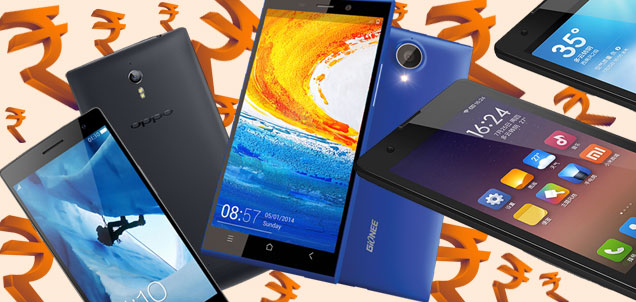
    Cut to 2014, to a time when China’s No 1 smartphone brand, Xiaomi, holds weekly sales for the Redmi 1s (while flash sales for the Mi3 are said to be back this festive season). Try not to blink, though;  it takes anything between 2.4 seconds to 5 seconds for Xiaomi’s phones to get sold out. Meanwhile, another Chinese brand, Gionee, has released a high-decibel campaign claiming a user upgrades to a Gionee every seven seconds.


    Not too far behind comes China-born OPPO Mobile, with 10 models ranging from the affordable to high-end. It even has Hrithik Roshan and Sonam Kapoor as brand ambassadors. As of August, these phones are estimated to have a market share of 5 per cent in the Indian smartphone segment.


    Not much compared to Samsung’s 29 per cent, but then again, six years ago, homegrown brand Micromax was just at 1 per cent, and is now perched at No 2 with a market share of 18 per cent in smartphones. With these numbers, it would seem naïve to write off China’s entry.


    So what is it about these phones that is helping Indians overcome their prejudices? Suman Srivastava, founder and innovation artist, Marketing Unplugged explains “Futurebrand, in its 2014 report, found that China ranks No 9 in the global list of the Best Country of Origin. Brands like Lenovo, Alibaba and maybe Xiaomi, are helping China improve,” he says.


    “Till about five years ago, Chinese companies sold cheap, poor quality phones in India. Despite being the manufacturing capital of the world, the bias against China-made phones obviously grew after one saw these products,” says Manu Kumar Jain, India head, Xiaomi. Arvind R Vohra, Gionee’s India head, adds, “It wasn’t long before Chinese brands realised they could enter the Indian market themselves, considering they had the manufacturing capability,” he says.


    But whether it’s Xiaomi, Gionee or OPPO, they all agree about three things – the power of a great product, innovation and competitive pricing. Forces strong enough to overcome any anti-Chinese sentiment. “The products themselves are the key to success,” says Tom Lu, CEO, OPPO Mobiles India. “Any user looking for a great device and an incredible experience will choose a product based on its features, specifications, looks and ROI.”


    Jain attributes Xiaomi’s success to the build quality, the chipset, the camera and the works. A phone is worth nothing if it doesn’t come with great hardware and software, he says. Affordability is and always has been the Indian buyers’ weakness. Here is where these brands believe they score over established names. “We are an aspirational brand, because of the way we price ourselves,” Vohra elaborates.


    “Our phones cost 10 per cent more than Indian-make phones in the same segment, but 40 per cent lesser than Samsung.” Jain believes that the Xiaomi Mi3, for instance, packs a punch at Rs 13,999. “We are selling a phone easily worth over Rs 40000 at such a low price. Buyers tend to forget their biases when they get value for money.”


    But how has the journey been for the Chinese-origin Lenovo, who forayed into smartphones recently? A brand known for PCs, laptops and tablets, it certainly didn’t have to introduce itself. But then, it couldn’t have been easy to get consumers to associate the name with smartphones, either.


    “We are a company with Chinese origins, but consider ourselves a global brand,” explains Lenovo’s Shailendra Katyal, director – home and small business (India & South Asia). “We have the advantage of a portfolio over price. It also helps that we aren’t an unknown, entry-level brand in the smartphone ecosystem.”


    Mr Katyal believes that consumers aren’t ignorant – they know that the origins of almost everything they purchase can be traced back to China. “Consumers now look for products that are of value to them.” Srivastava believes that cheap products never undermine strong brands, but only create a different market.


    For instance, Nokia did not lose out because of cheaper phones, but because of better technology from Samsung and Apple. Hence, Samsung won’t suffer as long as it keeps investing in both technology and brand. Established brands have another advantage – a nationwide distribution network.


    Brands like Xiaomi, for instance, retail exclusively on Flipkart, while OPPO Mobile is looking to build its offline retail network. But at the moment, the brand relies heavily on e-commerce portals. Most new companies cannot kick things off with a fully developed distribution system; it takes time, effort and huge spending power.


    For these companies, e-commerce portals are a boon. Customers today are open to buying electronics online, what with a cash-on-delivery option and portals like Flipkart and Amazon. Mr Jain has another good reason to embrace online retailing. “Tying up with distributors and retailers means having to hike the price of the product. We would rather save on that margin and pass it on to consumers.” That is also a reason Xiaomi chooses to have zero ad spends, depending only on word-of-mouth and organic social media for promotion.


    Mr Vohra surprisingly has a different point of view. “Online consumers add up to only 6 per cent of the consumer base. How does a brand reach the other 94 per cent without retailing offline? To me, exclusive online tie-ups are a lazy strategy.” He claims that there is close to zero brand recall in the interim period between sales. Srivastava sums this up neatly. “It is hardly surprising that e-commerce brands are willing to pay for valuable mobile desktop space. However, its value will fall as the space gets more crowded. Another method will then be needed to catch the eye of the consumer,” he says.


    Especially relevant considering Indians change their phones once every 1 to 1.5 years. Lu sees the potential in the consistent growth in the smartphone market, driven by enhanced consumer preference for smart devices and narrowing price differences.


    Meanwhile, Mr Vohra is eyeing the 70 per cent market that is yet to migrate from feature phones, as is everyone else, surely. Even if ‘may you live in interesting times’, is not as many believe an ancient Chinese curse or proverb, these are definitely interesting times for these brands to be living through. A chance to rewrite history and a level playing field where just about anyone can be king of the ring.


    How the giants are taking it

    Are the brands from across the border causing a dent in Samsung’s confidence and possibly in its market share? “Not at all,” says Rajiv Mishra, VP – media and spokesperson, Samsung India. “We are No 1 in India for a reason.” He owes the brand’s position at the top to the company’s India-specific focus on R&D, product development and a large consumer touchpoint network.” He admits to competition being great for the consumer, and provides Samsung an impetus to keep innovating.


    Nokia, too, seems unfazed by competition, with India being one of its top four markets for the Lumia series. Raghuvesh Sarup, director – marketing, Nokia India believes that Microsoft has the edge because of its consumer-centric approach with the Lumia.


    “We encourage people to do more and get more out of their devices. People spend on phones only because they want the experience of doing everything they need to in a single place.” End-to-end experiences are a Microsoft differentiator, Sarup believes, something that isn’t easy for the competition to accomplish with ease.


    Source:The Economic Times

    Copyright © 2014, Bennett, Coleman & Co. Ltd. All Rights Reserved

    Licensed to republish