Tag: OnePlus

  • OnePlus brings immersive 4DX ad with PVR Cinemas

    By Our Staff


    PVR Cinemas partners with OnePlus mobile technology brand to unveil its latest flagship smartphone the OnePlus 10T 5G through a specially developed multi-sensory commercial using 4-dimensional effects that would be screened in all PVR 4DX cinemas. This is India’s first immersive 4DX Ad made in partnership with PVR Cinemas using all the effects of 4DX for a higher brand recall among consumers. This unique media activity was conceptualised and created in partnership with Khushi Advertising. The ad will be released in PVR’s premium format of 4DX in its 19 audis located across 12 cities.


    Commenting on the announcement, Gautam Dutta, CEO, PVR Limited said: “PVR as a leader believes in redefining experiences and setting new benchmarks for both cinema goers as well as our advertising partners. The 4DX ad commercial introduced for the first time by PVR is a testimony to this vision. Advertising has evolved over the year with clients exploring new ways to reach their audiences. 4DX will offer clients and their agencies limitless scope to portray a great story of the brand and make content customized to this technology to create a lasting impact on the consumer’s mind.”


    On the sideline of the launch of its first 4DX ad in cinema, Saurabh Kapoor, Director of Category & Brand Management, OnePlus India, added: “At OnePlus, our community remains core to all our efforts. We wanted to offer our community with a unique, refreshing experience when they were to visit the cinemas. This led us to create the first of its kind 4DX cinema ad in India, in collaboration with our valuable partner, PVR Cinemas. Featuring our newly launched flagship device OnePlus 10T, the industry-first OnePlus 4DX cinema ad offers an enticing sensorial experience. And we are confident that our community of users and cinephiles will truly enjoy this unique viewing experience as a result of our fruitful partnership with PVR Cinemas.”


  • OnePlus TVC with Shahid Kapoor and Mira Rajput

    By Our Staff


    OnePlus has unveiled the ‘Better Together’ campaign with actor Shahid Kapoor and his wife Mira Rajput. The campaign was conceptualised by Utsav Gokhani, Manager – Content, Social Media and Online Community at OnePlus and created in partnership with Media Monks. The ad film was directed by Suraj Wanvari.


    Commenting on the campaign, Ishita Grover, Director – Marketing Communications, OnePlus India said: “At OnePlus India, our community is at the heart of all our efforts. As a brand, we are always invested towards delivering the best for our community. While we are excited to deliver the best of smart TV technology which offers unparalleled connected ecosystem experience, we also want our users to not miss out on the beautiful moments in life. And much of these might be best enjoyed in living those moments by truly bonding with our loved ones. With this thought, we launched the “Better Together” campaign. We wanted to provide our community with a delightful insight on defining quality moments in life by choosing to disconnect from their smart TVs for once, and thereby offer them a thought-provoking perspective to digital consumption. And we hope that our community will thoroughly enjoy this unique ad film and resonate with our campaign voice.”


    Added Saurabh Kapoor, Director of Brand and Category Management, OnePlus India: “Through the ‘Better Together’ campaign, our intent is to further strengthen the relationship with our community and help them make mindful choices in life. It is this very relationship that was the impetus behind OnePlus’ emergence as the fasting growing smart TV brand in India H1 2022 with a 123% YoY growth rate, and today, OnePlus is among the top 3 smart TV brands in the overall TV market in India in Q2 2022, as per the latest Counterpoint report. It is our community’s trust and support that has led to our success. And therefore, through campaign efforts like “Better Together”, we hope to also help our community derive a better quality of life with their loved ones”.


  • Qyou Media partners with OnePlus

    By Our Staff


    Qyou Media India has partnered with OnePlus, giving OnePlus TV users access to its IP channels – The Q, Q Marathi, The Q Kahaniyan and The Q Comedistaan.


    Commenting on amping up its digital footprint in India, Krishna Menon, Chief Operating Officer, QYOU Media India, said: “Connected TV platforms as a medium are witnessing an explosive growth in India. As a young entertainment brand, making digital-native content available for viewers on linear TV, provides us with an opportunity to open doors to millions of viewers and also give our content a place and platform of its own. We believe that as a disruptive and differentiated brand, expanding our digital footprints with major Connected TV platforms such as OnePlus TV will further bring us one step closer in becoming a holistic entertainment brand in India.”


    Added Navnit Nakra, OnePlus India CEO and Head of India region: “Providing a truly immersive and intelligent smart TV experience to our community, is the central focus of the OnePlus smart TV portfolio. We are thrilled to partner with QYOU Media, and this association will provide our community access to unique content curated by digital creators from across the region, further elevating the viewing experience for our users.”


  • Customer satisfaction dips for Indian brands


    By Our Staff


    Havas CX, the Havas Group’s global customer experience network, has launched the X Index Report 2022. The report indicates that trust, inclusivity, always being of service, and going above and beyond are now major factors in creating the most meaningful customer experience.


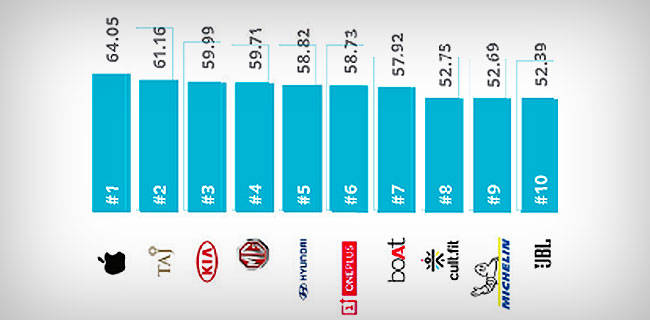
    According to the X Index India report parameters, the #1 brand is Apple followed by Taj Hotels, KIA, MG, Hyundai, OnePlus, Boat, Cult.fit, Michelin and JBL.


    Fifty leading brands across 13 categories including retail, fashion, financial services, automotive, entertainment, hospitality, beauty, health, and more were studied from India for the recent study. What’s interesting is that among the six countries also surveyed a year earlier, only India registered a lower overall score in 2021 compared with 2020. The higher scores in the other five markets (China, France, Portugal, UK, and the US) point to rising satisfaction with the customer experience. What this means is that while most geographies were able to leverage the new normal to cement their CX and deliver on consumers’ rising expectations, Indian brands were not as agile to keep up with the rising expectations. This makes it even more critical for Indian brands to now recognise that customer experience is synonymous with brand experience.


    For the second consecutive year, brand image has emerged as the strongest competitor to the X Index, representing 46% of India’s score. This hints at the fact that while ecosystems and the touchpoints were expanded during this new normal, brands also need to maintain continuous engagement to reinforce their image while also making it part of their CX.


    Despite heavy customer experience investments by brands, there’s still room for improvement with only a global average of 40% of consumers thinking the brands they interact with are “cantered on their needs as a customer.” This year’s research reveals that increased consumer expectations around trust, sustainability, and inclusivity are now impacting the evaluation of customer experience, with brands being assessed on the concrete actions they deliver to create a welcoming experience for all – shifting the traditional idea of customer experience to citizen experience.


    Said Prashant Tekwani, EVP & Business Head, Havas CX India & Havas Worldwide, West: “The pandemic has brought about a sea-change in consumer shopping behaviour. Brands now need to evolve their thinking from customer experience to citizen experience by making seamlessness and inclusivity their priority. According to the latest X Index report, India is the only country to register a lower overall score in 2021 in comparison to 2020. There is a gap that needs addressing for brands in India to score high in the CX journey. This shows how the understanding of the evolving expectation of the consumers is critical to maintaining the health of CX, growth and brand imagery. While meeting functional criteria around seamlessness, simplicity, and efficient customer service, brands must also go the extra mile to make a lasting impression in their customers’ minds.”


    Added Sumeer Mathur, National Strategy Head & Managing Partner, Havas Worldwide India: “Interestingly, out of all the parameters that we measure to arrive at a final score, the Brand image has emerged as the strongest contributor to the X Index, representing 46% of India’s score. This hints at the fact that while ecosystems and the touchpoints were expanded during this new normal, brands also need to maintain continuous engagement to reinforce their image while also making it part of their CX. Conversely, it could also mean that Indian brands are under leveraging other parameters and relying too heavily on the brand image alone to determine the customer experience.”


    The X Index identified four key principles to create a best-in-class citizen experience:


    Trust comes first: Brand trust is the most powerful denominator around the globe in the customer journey. Brands build trust by keeping their commitments to customers and being there in times of crisis. For example, brands that optimized their shopping experience during the COVID-19 pandemic saw better results; these optimizations included moving many traditionally in-person services online (consultations, etc.), and taking advantage of new platforms to integrate community building and social components. Brands also build trust with transparent business practices and by making commitments to social causes.


    Build an all-inclusive experience: For customer experience to become a citizen experience, brands must be inclusive. According to the X Index, consumers evaluate brands at every step of the journey, including the way they treat their frontline employees, foster inclusivity and break taboos in representation and marketing. Inclusivity also means enabling customers to participate in a community, with some brands introducing forums, clubs, and apps for customers to connect and interact with each other.


    Always be of service: Customer service is now defined by the speed of reaction to customer demands. It is one of the key discriminating factors. In addition, when it comes to staff and salespeople, consumers not only expect them to be efficient but also knowledgeable.


    Provide for the age of extra: When it comes to satisfying customers, going the extra mile is of paramount importance for brands. A key part of going above and beyond in making sure the experience feels extra personal.


  • Gaming to reach $3.9bn by 2025


    By Our Staff


    A report prepared by IAMAI in collaboration with OnePlus and RedSeer has estimated that the Indian gaming market is poised to reach USD 3.9 bn in value by 2025. The report also highlighted that 40% of the hardcore gamers pay for their games with an average spend of INR 230 per month. The Covid-19 pandemic has accelerated the organic growth of digital games as mobile app downloads grew by 50% and user engagement went up by 20%, the study says. The increased gaming time has spurred the growth of hardcore gamers in India, even as casual games remain the most popular genre in India.


    While launching the report titled ‘Building up the e-gaming ecosystem of India and the influence of smartphones’, by OnePlus, the global technology brand in partnership with IAMAI and RedSeer, Rajen Vagadia, Vice President and President, Qualcomm said: “We are at the cusp of a gaming revolution and the gaming ecosystem is working towards user-friendly smartphones and leveraging 5G technologies.”


    Saurabh Gaur, Joint Secretary Ministry of Electronics and Information Technology added that: “The [global] gaming industry can be matched with electronics, and consoles could be manufactured in India.”


    Speaking at the session, Navnit Nakra, Vice President, Chief Strategy Officer and Head of India Sales, OnePlus India, said, “Over the past few years, the e-gaming industry in India has grown tremendously, driven by the rising avenues for digitization promoted by the flagship initiative of the government, the Digital India program and improved accessibility centered around innovation and affordability by OEMs. At OnePlus, our community has always been at the heart of everything we do and therefore, we have been leading the charge in introducing the most advanced features and have built partnerships with industry leaders to provide a seamless gaming experience on OnePlus smartphones. We are happy to have partnered with IAMAI and Redseer as the report has served as a unique avenue for the industry to gain actionable insights and come together to drive meaningful discourse and innovative ideas”.


  • Jasprit Bumrah netted as brand ambassador for OnePlus

    By Our Staff


    OnePlus, the global technology brand, has announced cricketer Jasprit Bumrah as brand ambassador for its wearables.


    Talking about this association, a OnePlus spokesperson India, said: “As a brand, OnePlus has always believed in challenging itself, constantly redefining standards and delivering on our promise to ‘Never Settle.’ A disruptor throughout his career, we see these ideologies reflected in Jasprit, his grit and his determination. This synergy has convinced us that nobody could better represent what we stand for and we are delighted to welcome Jasprit to the OnePlus family.”


  • OnePlus campaign showcases next generation of smartphone users

    By A Correspondent


    OnePlus has unveiled its new creative campaign aligned with the upcoming launch of the new OnePlus 8 series. Recognising the hyper-connected reality of this era, the HyperTaskers campaign celebrates a generation that is future-ready, tech-savvy, and values time.


    Addressing the campaign, Siddhant Narayan, Head of Marketing, OnePlus India, said: “OnePlus aims to create innovative, burdenless technology to help our users achieve more. With our users today striving to fulfil a series of aspirations in this fast-paced world wherein every nanosecond matters, we believe that the word ‘multi-taskers’ no longer does them justice. With our ‘HyperTaskers’ campaign, we celebrate a new generation of individuals who thrive across multiple spheres of their lives, while adding fervour to our much-awaited OnePlus 8 flagship series launch.”


    The campaign has been conceptualized and implemented by Wieden + Kennedy.


    Sharing further insights on the campaign, Gautham Narayanan, Managing Director, Wieden + Kennedy, India, added: “This campaign brings to life the connection between the new OnePlus devices and the HyperTasker generation in a unique way. The new OnePlus flagship series empowers you to achieve more, every second, because, for this generation of multi-taskers, every moment counts. HyperTaskers need tools that are fast, seamless, and powerful enough to enable them to do many things at the same time. They need OnePlus, a company that has always stayed ahead of the curve with its focus on performance and speed.”


  • OnePlus unveils new visual identity and logo

    By A Correspondent


    OnePlus unveiled the company’s refreshed visual identity, including an updated logo, that aims to make the OnePlus brand more easily identifiable and versatile. The updates mark the most significant change to the OnePlus brand since the company was founded in December 2013.

     

    Said Mats Hakansson, Global Creative Director of OnePlus: “OnePlus is not changing who we are, but reinforcing what we stand for – the true spirit of Never Settle. We always design for our users. We feel that these changes maintain the iconic elements of our brand that are beloved by our staff and our community while injecting both excitement and balance into our visual identity.”


    A joint team of OnePlus in-house creatives and an external agency collaborated over nearly seven months to bring the refreshed brand identity to life. The goal was to unify all interaction with OnePlus, not just communications, but also the experience of using OnePlus’ products and services across all touchpoints.


    “No detail is too small. By starting from thousands of user data points, the team arrived at a new holistic visual language inspired by OnePlus’ burdenless philosophy,” added Hakansson. “OnePlus has grown a lot from an idea to a major smartphone player. Introducing a fresh new look is just one example of how we continue to bring our ‘Never Settle’ mantra to life.”


  • OnePlus appoints Siddhant Narayan as marketing head

    By A Correspondent


    Siddhant Narayan

    OnePlus has announced the appointment of Siddhant Narayan as Head of Marketing for India. In his new role, Narayan will be responsible for elevating the brand’s position by spearheading the marketing strategy with the aim of establishing a deeper connection and increasing the brand salience with the Indian consumer.


    Notes a communique: “Narayan will lead the brand’s ongoing marketing efforts to build its connected ecosystem business in India. He will play a crucial role towards strengthening OnePlus’ brand positioning, media and creative strategies, along with its community culture and engagement.”


  • Spotify enters India, woos advertisers

    By A Correspondent


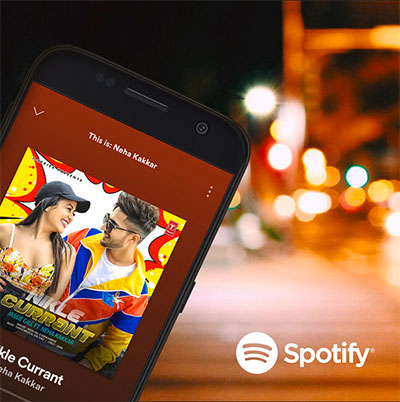
    Popular music streaming service Spotify has officially launched its operations in India. It will offer brands a new platform to connect with consumers.


    Upon launch, OnePlus, Brand USA, and Anheuser-Busch InBev will have exclusive rights to launch their advertising campaigns on Spotify India. Through Spotify, these brands will be able to reach out to highly engaged, passionate and socially active users.


    Said Sunita Kaur, Vice President of Advertising Sales at Spotify, APAC: “Spotify’s connection to culture and understanding of how music is consumed allows us to build personal relationships and trust with our fans. The Indian advertising industry is thriving as brands target active internet users. We are thrilled to launch in India with three incredible, diverse brands and we are exploring more opportunities to bring other advertisers on board in this market, creating a new playground for them to reach audiences through the power of audio and our streaming intelligence.”


    Spotify comes to India offering the best listening experience in local and international music, with the Spotify app available to download for free or with an upgrade to Spotify Premium for only INR 119 per month.


  • OnePlus unveils new brand campaign


    OnePlus has released a short film titled “The Journey” to celebrate the festive spirit of Diwali.   Elaborating on the emotions behind the film, Vikas Agarwal, General Manager – India, OnePlus explains, “This Diwali, we are happy to connect with our community in a refreshing way. OnePlus has always looked at innovative ways to connect with the community. This festive season, we decided to take the road less travelled and created a short film for our fans which is a first for OnePlus in India.”


    While the concept was conceptualised by OnePlus, the video was produced by Boring Brands and shot in Mumbai and Ladakh.

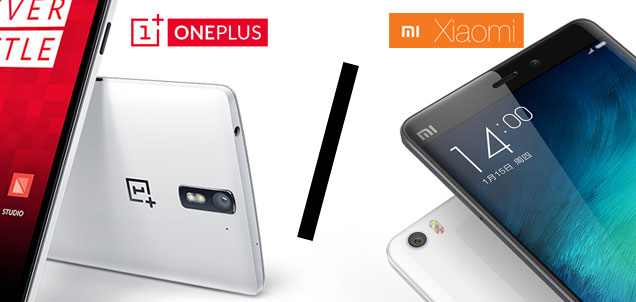
  • How OnePlus and Xiaomi are fighting the big brands


    By Ravi Balakrishnan


    Late last year, reports began to circulate about HTC and Sony exiting smartphones. Among other things, these old warhorse brands are apparently being worn down by aggressive China-based competitors, who offer a better product in a critical price segment: the sub-Rs 15,000 block. As smartphones plateau in China, India with growth at an estimated 40% year on year, is morphing into the ultimate battle ground.


    Brands are using every trick in the book: fighting for in store real estate, launching online only models, offline only models and throwing cash after celebrities of both the desi and foreign variety— see Hugh Jackman’s star turn for Micromax.


    And then there are players who seem more interested in setting the book of tricks ablaze. Here’s how OnePlus and Xiaomi (which claims to be growing at 45% every quarter) are fighting the big boys:


    They’ve made a virtue of a necessity

    Building a new mobile startup is hard. There’s inventory to be managed, supply chains to be set up, and of course retailers to be appeased. Irate mobile shop owners are known to put up notices warning customers that they buy a particular brand at their own risk, if not kept entirely happy. Being initially available only via flash sales on Flipkart (for Xiaomi) and by invitation only on Amazon (for OnePlus) helped these brands build buzz. But they also put a positive spin on having a limited number of gadgets to sell. Karan Sarin, head – marketing, OnePlus admits about the by invitation model, “It was more of a supply chain related decision.” According to him, it was an upgrade on flash sales pioneered by Xiaomi for its Mi3 phone, and piggybacked on by numerous other brands, since a sale where sites crash adds up to a bad consumer experience.


    They do advertise: just not the kind that people get bored by

    “Do we do marketing? Of course we do,” says Manu Jain, India head, Xiaomi India. “Do we do paid marketing? No,” he adds. The argument for both brands is remarkably similar: why pay to push your message, when there are legions of persuasive fans who do it for free? Also why use television when it’s possible to reach a relevant target audience organically via social media? According to Jain, “When you watch a TV ad and buy, you are paying not just for having seen the TV ad but also for the hundreds who watched it.” Xiaomi believes in passing those savings on to the customer which is how Jain claims it was able to offer a feature-loaded phone that would ordinarily cost upwards of Rs 35,000 at Rs 15,000. The pillars of marketing at OnePlus are community, online and experiential. Even the recent billboards, says Sarin is retail partner Amazon. com’s initiative. Anisha Motwani, marketing and digital strategist with the Max Group of companies points out, “Youngsters hardly look at ads these days. There’s no content for them on TV. These companies are doing a fabulous job of online marketing targeted at the segment they cater to.” Sarin believes, “Earlier, brands were built by size of marketing budgets or celebrity endorsements. With OnePlus we proved that wrong.”


    They appreciate the value of geek cred and know how to harness it

    OnePlus and Xiaomi had a common early adopter profile: young, tech savvy consumers. Sarin joyfully recounts having his brand name checked by a tech entrepreneur in an interview. With Xiaomi, customers who go the extra mile and show up for fan meets often turn out to be working in tech companies. These are people that obsess over the minutiae of spec sheets, pay close attention to (or write) reviews and who, often publicly, mock the sort of person who’d thoughtlessly splurge on an iPhone.


    OnePlus began life on a forum where the company sought feedback on the sort of features that ought to make the cut. The site attracted a sizeable Indian contingent. According to Sarin, this lot forced the company’s hand leading to an earlier than anticipated India launch for OnePlus. Having landed such a fanbase, the company had to think harder to keep them engaged. One of these events was a free 3D printing workshop, allowing users to create phone holders and cases. Held in Bangalore, OnePlus’s timeline is now full of fans asking when the show will roll around to their city.


    Such consumers are always looking to evangelise what they perceive to be underdog brands. A secondary set of consumers for Xiaomi are an older lot who rely on young friends or relatives for recommendations. Nifty little touches like OnePlus naming the OnePlus Two ‘the flagship killer’ helps fuel the David versus Goliath narrative.


    They understand consumer experience

    Phone consumers have a troubled history with updates. One of the last on Nokia’s Symbian actually disabled some of the features that the model had shipped with. But with Xiaomi, vital updates are drawn from fan suggestions. Posts that multiple people agree on or issues that crop up on its forums are given priority: for instance, clubbing messages from banks, etailers and such under Notifications leaving the main messaging segment dedicated to actual contacts. Or in India, offering a Copy OTP option for ecommerce transactions. Upgrades are cascaded across the line. Even to two and a half years old phones like the Mi3. None of this is accidental since according to Jain, “Why should we force customers to upgrade just because they want the latest OS? We will give it to them and make them advocates.” Realising Indian consumers value touch and feel, OnePlus broke its global template to have kiosks at malls. It also tied up with Ola allowing people to sample and later buy phones, with a guaranteed delivery in 15 minutes.


    It’s unlikely to be entirely smooth sailing, though. Xiaomi has already started a tie up with The Mobile Store and is being sold via Airtel, though Jain asserts it will continue to be an online first brand. As Anshul Gupta, research director at Gartner observes, “The market is so huge that if someone focuses only on online they will still get sales of over a million. But in a five year horizon, unless you are present in physical stores, growth opportunity will be limited even if the online space for argument’s sake accounts for 40% to 50% of purchases.” While it’s easy to start with, Karthik J, senior market analyst, client devices, IDC India believes, as the traction gains, vendors look to offline retail. Will the disruptions that have worked for these brands in an online driven model, be malleable enough for an offline world?


    Source:The Economic Times

    Copyright © 2016, Bennett, Coleman & Co. Ltd. All Rights Reserved

    Licensed to republish