Tag: Oneindia.in

  • Industry welcomes DAVP plans to embrace digital with cautious optimism

    By A Correspondent


    Directorate of Advertising and Visual Publicity (DAVP), the multi-media advertising agency of the Government of India, in its Annual Report 2011-2012 stated that out of the total value of advertisements released by DAVP, 15 per cent goes to small newspapers, 35 per cent to medium newspapers and 50 per cent goes to big category of newspapers. DAVP also has an audio visual wing which undertakes various advertising or publicity campaigns through various other multimedia vehicles like the television, radio, out of home and now even the internet and mobile.


    In what could be a shot in the arm for the digital industry, DAVP has been conducting pilot projects on websites and through SMSes. According to DAVP’s Annual Report 2011- 2012, 33 of India’s top websites were empanelled for releasing advertisements. In addition to this, more than 110 advertisements via SMSes were also sent.

     

    Rajan Anandan

    According to Mr Rajan Anandan, VP and Managing Director, Google India: “This is a welcome development for the entire digital advertising industry. With over 120 million Internet users in the country, digital is already the third largest advertising medium in terms of revenue in the country. It’s too early to talk about the impact, but it’s definitely a step in the right direction as the overall marketing/advertising approach is making a shift to being more accountable and measurable.”


    In fact on July 26, The Sectoral Innovation Council by the Ministry of Information and Broadcasting submitted a list of recommendations to the Minister of Information and Broadcasting, Ms Ambika Soni. One of these recommendations stated: ‘New Media should be utilised for media campaigns by the government’. In addition to this, it also recommended that ‘E-mode transactions should be a priority for the functions of DAVP, RNI, CBFC and licensing activities of the Government for ensuring transparency’.


    Arpan Chatterjee

    Mr Arpan Chatterjee, online media professional and consultant with webdunia.com noted: “This is a logical extension by DAVP to focus on digital media, which is generating a critical mass in the country. It is to be noted that DAVP started digitization of its own system of issuing release order and payments to media companies over a year back and the fact that it is now looking at digital media more seriously was only a matter of time. DAVP’s move to enter the digital media will only add to the importance of the digital medium, but how it uses the medium is something one has to wait and watch. DAVP ads can also help create certain guidelines for internet advertising in India, which currently is self-regulated.”


    Even before these recommendations were made by the Sectoral Council, the IAMAI (Internet & Mobile Association of India) is said to have lobbied hard to bring a shift in the government’s approach towards digital media. The IAMAI is also said to have played a key role in getting the mobile SMS aggregators empanelled.

     

    Dr Subho Ray

    Dr Subho Ray, President – Internet & Mobile Association of India (IAMAI) explained: “Today with 100 million internet users and growing every day, digital is the most cost effective way to reach out to youth and, through them, their parents. The engagement with internet and mobile of the youth is very deep and the relevance of the message too gets transmitted on this medium. Young urban voters aged between 18 and 35 are a major constituency today for all political parties. And the internet, whether through mobile or PC, has surfaced as the best medium to reach this group.”


    DAVP recently revamped its website with an aim to make it user-friendly, it has also adopted digitization by issuing release orders and payments to media companies online. In fact the Ministry of Tourism is said to have been one of the early adapters and a large advertiser online. While these developments also show the government’s willingness to use digital, nevertheless what remains to be seen is how effectively the medium is used by the government in the long run.


    Mr Gyan Gupta, CEO, Dainik Bhaskar Digital Division pointed out that although these are good recommendations and a welcome step, it all depends on how much DAVP is willing to spend on digital. Just like any other medium, digital too needs a sizable ad spend: “DAVP has started this process last year and the trial is still on. Although this is a fantastic move, the question really boils down to how much is the government willing to spend on digital? What will be the ad spend from DAVP on digital? Digital today has become the third largest medium with increasing reach – it has become a medium which cannot be ignored. But, if the government is not willing to spend a sizeable amount or if each publisher does not get a decent money or ad revenue then it is not worth it, it will be irrelevant.”


    Mr Gupta too had a set of recommendations for the DAVP, which is said to have had a consensus among the other local language publishers: “First, they have to look at the categorization of the website very clearly and second, DAVP must also ensure that enough volume of advertisement is pumped into digital.”


    Now that more and more people are gaining access to the internet and spending more time online, not just in urban but also in rural India, perhaps the government has realized that it is a medium it can no longer ignore. With the 2014 general elections fast approaching, the government is expected to increase its advertising spends in order to showcase its achievements and with the Council’s recommendations to use digital, the government could well use digital extensively to reach out to the youth.


    Mr Upen Rai, Director, Times Internet Ltd, observed: “By bringing digital publishers into the DAVP fold, the signals are very clear from I&B ministry that it is digital all the way. With e-filing of taxes and other e-govt frays including Passport Kendras, it was a matter of time! Next stop would ideally be its relevance to general elections, yes this time around social, and digital will play a large part… Watch out for this space…”


    The 2009 Lok Sabha elections or general elections saw political parties advertising online and the next general elections could well see political parties further increasing their spends online.

     

    BG Mahesh

    Mr BG Mahesh, Founder and MD, Oneindia.in said: “Considering the contribution of Government ads in Print and TV channels, if the similar importance is given to the digital medium, it will be a very good sign for the Digital industry. It will not only fuel the higher growth rate for the digital industry, but will also provide the government a better connect with youth of country who spend a lot of time on Internet. Furthermore, if DAVP also extend the digital spends to mobile internet, the reach would be much broader as today phones with internet connections, or smart phone, start from as low as Rs5,000 and their dependence on electricity is very less as compare to desktop/laptops.”


    So, how would the youth of today react to government advertisements? Will it have any positive impact on them? Ms Chhaya Balachandran Aiyer, CEO and MD, BCWebWise said: “Awareness will increase, and we can pave the way for a betterIndia. We will see more open forums, debates and discussions. There are perils of uncensored content, at the same time, and this is something India needs today.”

     

    Chhaya Balachandran Aiyer

    So, while the industry has welcomed the Sectoral Innovation Council’s recommendation that the Government must utilise the new age media for its media campaigns, there is a cautious optimism among industry players as far as ad spends in the medium is concerned.


    Mr Anurag Gupta, MD, DGM India stated: “Government spending should be seen in the same light as spending by any brand. A marketer spends his monies where the users are, and if users are online then the best way to reach them is by advertising online! Any online media consumer whether it is youth or the older people will react to online advertising by the Government in pretty much the same manner as they would seeing the same ad in print or on TV.”

     

    Anurag Gupta

    Nonetheless if the government approves of these recommendations and does increase its digital ad spends, it would be a major boost for the entire digital industry particularly for increasing the digital advertising revenue. Currently, DAVP ad spends seem majorly skewed towards print and, to an extent, even television. However as the government increasingly uses the new age medium, what kind of implications digital advertising may have on DAVP ad spends only remains to be seen.
     

  • Slow and not-yet-steady…


    By Robin Thomas


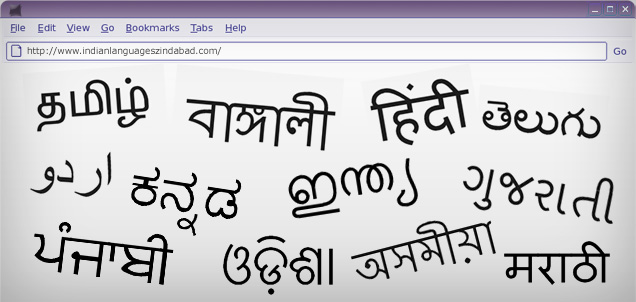
    India is a country where majority of the people don’t speak English and its media – print, television and radio, specifically – have a larger share of local language content. But the same cannot be said about the internet, at least now. The internet in India is still, by and large, dominated by the English language content. According to the ‘Internet World Stats’ 2010 report, after English, Chinese is the second widely used language on the internet followed by Spanish, Japanese, Portuguese and German. These results, perhaps, assure India that there is immense scope for Indian language content to not only flourish, but also increase user interactivity.


    Take for instance, i-Cube report 2011 by IAMAI-IMRB which states by December 2011, there were 121 million claimed Internet users. There are 90 million (70 mn in urban cities and 20 mn in rural villages) users that use Internet at least once a month (active Internet users). Of the active Internet users in urban cities, 26.3 million access Internet through their mobile phones. This has been the most recent change in the access behaviour and it is expected that this trend will continue to grow in the immediate future.


    BG Mahesh

    Mr BG Mahesh, Founder and MD, Oneindia.in observed: “Whatever is happening in print and TV will happen on the Internet. The language pie is far bigger than English in print and TV. English will also grow, but the language pie will be very large.”


    Even as the internet consumption rapidly grows, the Indian language content has also been evolving over the years. According to industry estimates, the search volume in Indian languages is less than 2 per cent of the total search that takes place online. The online growth of Indian language consumption is mainly said to be because of video consumptions.


    Hemant Jain

    Mr Hemant Jain, Senior Vice President, Hungama Mobile pointed out the need for relevant language content and the need for increasing access of language content to the consumers. “I believe that not only there is a need of content in local languages, but more importantly the content should have local context for it to be more relevant for the consumer. The challenge in increasing access to content in Indian language includes the standardization of fonts and internationalized domain names, an issue the Indian government is already working on. The two biggest challenges I foresee are bandwidth infrastructure to deliver ease of access and local language to drive mass adoption.”


    With online video touted as the next big thing for content consumption in Indian languages, there has been an increase in the Indian language video content found online, which may be due to the fact that video has more takers than written content.


    Some steps are said to be taken to increase local language content for instance, Raftaar, a Hindi language search engine developed by Delhi-based research firm Indicus Analytics, debuted earlier this year. Local language newspapers have gone online: webduniya.com offers content in Hindi, Tamil, Telugu and Malayalam. Malayala Manorama is another local language paper offering news online in Malayalam language.


    “There was a time when we saw 85 per cent of our traffic was from NRIs. Post 2007, we saw the page views increasing from India, now we get over 60 per cent of our traffic from India. The broadband penetration, mainly due to BSNL, has helped the growth of internet in non-urban India. Also, most schools have internet in their curriculum. So children lead the usage of internet at homes and other members have felt they might as well use the internet” added Mr Mahesh of Oneindia.


    As far as search in Indian languages is concerned, there have been efforts to localize the content. Google, for instance, in search has ‘transliteration’ which allows users to type Indian languages using Latin text. Google also has search options in the Indian languages and is said to be working proactively with the government as well as content companies in India to come out with a solution that would increase Indian language consumption on larger scale.


    Lalitesh Katragadda

    Mr Lalitesh Katragadda, Head of Products, India-Google, pointed out the need to solve the language consumption problem in order to increase the number of internet users. “We are going to rapidly run out of users if we don’t solve the language problem, which is making the internet work for Indic users. The challenge is that the Internet for the next 3 billion users will not be built by websites alone, or by monetary interests, which has driven the Internet for the first billion and a half. The Internet for the next 3 billion users will, by force, have to be built by the users themselves. For example, AdSense allowed a way for people to monetize their content, which got the content ecosystem to flourish and so on.”


    Mr Arpan Chatterjee, experienced online media professional and consultant with webdunia.com stated: “Lotof work is happening on this front, with Indian language search engines and Google having Search in major Indian languages. Major social networking sites are also now getting into Indian languages. But the availability of quality Indian language online content is still limited, except for some news portal of large Hindi or regional newspapers.”


    Arpan Chatterjee

    Also monetization of language content is a challenge today as there is not enough language content, and as a result, there is little or no language consumption online. There is a need to drive up language content in the online space. According to Mr Mahesh, not only is the government support crucial for this development, but the publishers too must take steps to help increase language consumption. “One needs a lot of patience and sustaining power to do well in the Indian language space. There are many opportunities in this space – ecommerce will be a reality in the language space in the coming years. With mobile internet becoming big one can think of providing various language services for the massive mobile user base in India,” he added.


    Nevertheless the growth of consumption of Indian language content may take some time as the broadband penetration in India is still very low. Another avenue, as pointed out by Mr Mahesh is, to look at is the mobile, as it is believed that the next phase of the internet explosion will come from mobile. Mobile, which is one of the highest penetrated devices in the country today, is expected to not only expand the internet usage, but also bring in more user participation which may result in the development of more Indian language content.


    Mr Chatterjee is of the view: “With more than 70 per cent penetration in mobile phone connections in India , and internet on mobile touching close to 100 million users, with more than 40 per cent being only mobile web users – only accessing the web through mobile. Mobile is the medium which can drive Indian language usage to a new level. Even in countries like Bangladesh, mobile payment solutions have helped get into interiors of the country.”


    With multiple devices now opening up opportunities – smart phones, tablets, and so on which are likely to spur language consumption online and mobile, government support is again is equally crucial, believe industry players. Access to mobile internet must be made at affordable rates especially with the arrival of 3G. “Mobile internet browsing is pathetically slow in India. 3G has arrived, but it is not affordable for majority of the users. Affordable, fast mobile internet plans and font support will change the mobile internet scene in India” said Mr Jain.


    Although the Indian language content in the online space has evolved over the years, it is said to be witnessing a slow adoption of its content especially from publishers mainly because of monetizing challenges. Digital players believe that like print, television and radio, Indian language consumption in the online space will also grow faster and soon have bigger share than the English language. One of the main reasons for this to happen is estimated to be because of the expansion of literacy rates and the increasing broadband and mobile penetration. ” India, with a much larger youth population, needs to put more focus on language online content and use mass channels like education portals, government services websites into multi lingual formats to drive language usage,” concluded Mr Chatterjee.


  • The Anchor: BG Mahesh on 5 reasons why the future is regional language internet

    By BG Mahesh


    Diversity of India is the main factor:

    Official data related to literacy is 74.04 per cent. Now internet is used only by the upper middle class, slowly penetrating to the huge middle class sector, which is the largest in India. The upper strata of this middle class is moving to the upper middle class category and their aspirations are high.


    The Economy Factor:

    Indian internet penetration will double in coming years. Upper strata of the internet users may not understand Indian language but others, which is the majority, is going to outnumber this upper strata. If the economy grows, middle class internet usage will increase, which will lead to consumption of Indian language content.


    The changing in media consumption:

    One can see the phenomenal growth of Hindi language newspapers circulation during last five years, soon news papers will see stagnation in circulation and readership – users will be depending other media channels like Internet and Television.


    The increasing demand for mobile internet access:

    There are 898 million mobile subscribers in India, 292 million of these living in rural areas. The same data showed that 346 million Indian mobile users had subscribed to data packages. Telecom operators are already activating GPRS by default as they realize their users want mobile internet access. We need to recognize the fact that mobile internet (and possibly desktop internet) is not a luxury anymore but a necessity.


    Regional language internet involves masses:

    Unless there are content and services out there in a language the masses can understand why will they use the internet? Regional languages will bridge this gap. Advertisers are not for or against any language. Once they see there is a huge user base of regional language users, they will jump onto the advertisers’ bandwagon on the language sites.


    BG Mahesh is the Founder & MD of Oneindia.in