Tag: Omnicom

  • Publicis, Omnicom in merger talks


    By A Correspondent


    You don’t need to pinch yourself. We do have a sense of humour but it’s no April 1 and we aren’t imagining things. New York and Paris are getting closer with ad biggies Publicis Groupe SA and Omnicom reportedly in advanced level talks for merger.


    See also:

    > Ad Age: Omnicom-Publicis in merger talks. Here’s why it seems unlikely


    > Daily Telegraph: Omnicom-Publicis 20 billion pounds ‘merger’ faces regulatory hurdles


    > Bloomberg: Publicis said to be in late-stage talks on merger with Omnicom


    It’s not the case of one gobbling up the other, but more of a getting together of equals. But it sure means some mindboggling realignments with such biggies like creative agencies Leo Burnett, Saatchi and Saatchi, Publicis Worldwide, BBDO, and DDB together. Ditto with Zenith Optimedia, Starcom, OMD, PHD. And MSLGroup, Ketchum…. some arch rivals may be part of the same flock.


    A senior official of one of the agencies told MxMIndia that while it’s an interesting situation at this point, such a merger will need to happen given the way the world is going.


    Needless to say, the combined Ominicom-Publicis entity will overtake current #1 WPP. Both companies did not comment at the time of filing this report and there have been some who have said the merger may well not happen.


  • Indian creatives are a global influencer: Tim Love


    By Tuhina Anand


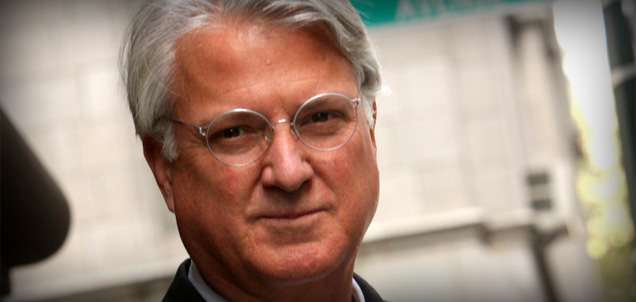
    Tim Love, Vice Chairman and Chief Executive Officer, Omnicom, APIMA is a known name in the Indian advertising circuit. He has been a frequent visitor to India exploring new opportunities for mergers and acquisitions, expressing his thoughts on various Indian advertising forum and playing a crucial role in the India chapter of the Omnicom Group. As Mr Love announces his retirement and plans to switch gear and get into developing teaching platform, MxMIndia seized the opportunity to talk to him about how he ventured into advertising, his long and illustrious career and life post-retirement.


    It’s been a long and successful career for you, if you were to pin point- what would have been the turning point in your career?

    I was very fortunate to have worked for two people at the start of my career who really took the time to teach the business. The first was someone who had been a teacher at the US Naval Academy. He was also debate coach there and his entire approach was to develop us into composite advertising people. This was a holistic approach, requiring me to get experience with all facets of the business. He was also very focused on innovation and, crucially, believed we learn more from our failures at innovation. He would take the time with me to better understand what I was learning. This also took the fear out of trying new ideas and challenging conventional wisdom.


    The other person was an incredibly disciplined business writer. He taught me the famous P&G one-page memo-writing discipline. He was so good at it that he later started his own consultancy called “Leadership on Paper” and has worked with many of the world’s biggest and best marketers, including P&G. He drilled this discipline into us. He would make us rewrite a recommendation or conference report so many times until it was about perfect. It affected how we organized our thoughts and how we presented our ideas. This discipline would prove very valuable as my career broadened with the globalization of our industry and the need to communicate with people all over the world.


    One challenge that you faced recently and how you overcame that?

    I have found that the nomenclature we use can be helpful in taking advantage of learning opportunities. For example, several years ago our industry became increasingly aware and focused on the analog to digital transformation. I thought we ought to stop talking about it like it was something in the future, and instead began saying we live in a “post-digital” world. This helped me shift my frame of reference and those of my clients and colleagues.


    You have had a close association with India, how do you see the creative landscape here and can India come out with creative solutions (more often) that can be used worldwide?

    There are more than 20 official languages in India and several hundred separate dialects. The challenge of creating big, relevant ideas that connect with people whose brain processes are wired so diversely requires a very sophisticated kind of creativity.

    Ideas in India need to be relevant across a wider array of mental technologies. This is especially so as internet access experiences explosive growth in India, and make people the first media. This also places a creative priority on visual strategy that is more prevalent than in some other markets which are less language-diverse. India’s writers, designers and artists are increasingly influencing our industry outside of India.


    In India, among the creative fraternity, who do you think has immense talent?

    My esteem for the industry talent in India is so deep that it would be unfair to mention specific names. The most creative people in any communications discipline know that an idea is just an idea until it changes the way you see the world. Recognition of India talent is vibrant and growing in Cannes, Effies and D&AD.


    How do you see the Omnicom group poised in India today and the way forward?

    We see India as a fundamentally important market for fuelling our need to attract top talent and business growth. That’s why we specifically identified India in our regional view. The “I” in APIMA is for India, loud and clear. (Here again an example of nomenclature breaking with convention.)


    For you, what has been your biggest achievement vis-a-vis Omnicom Group in India?

    I have been privileged to work with some of the most extraordinary leaders in India. Leaders who have not only influenced their countrymen, but have raised the professionalism of our industry over all. Leaders like Keki Dadiseth, Sundar and Shekhar Swamy, Sam Balsara, Jasmin Sohrabji, Shiv Sethuraman, Madhukar Kamath, Josy Paul, Bobby Pawar, Sonal Dobral, Ajai Jhala, Prabha Prabhu, Yusuf Hatia, Bharat Patel, Gurcharan Das and so many others since my first visit to India on business in 1993.


    You have had a long and illustrious career, what would you miss about advertising in your daily life after retirement?

    Few can look backward without regret and forward without fear.


    The paradox of being so plugged in and always on with so many clients and people worldwide. The really great thing is how easy we can continue to be connected today. I don’t need to miss these people, because I can still be in touch with them, just an email away. Someone said to me it really should be called rewirement.


    So, what do you plan to do post-retirement?

    I’m very much looking forward to developing a teaching platform for global brand-buidling with Dr Linda Scott of Oxford University. And, continuing to grow through “lecture and learning” opportunities at schools like MICA, Yale, Columbia, the Lee Kuan Yew School of Public Policy, Miami University and others who invite me. For example, I will be at MICA the first week on February for a Management Development Programme and really looking forward to deepening my understanding of India advertising and marketing services.


  • Ketan Desai is Integer Group MD in India

    By A Correspondent


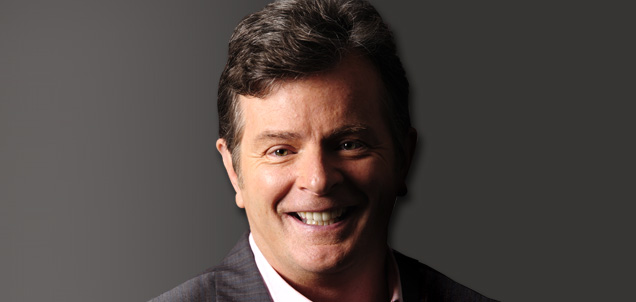
    The Integer Group, a leading promotional, retail and shopper marketing agency in India, has further boosted expertise with the appointment of Ketan Desai as Managing Director of The Integer Group India. Mr Desai assumes his new role immediately.


    He will work alongside Shiv Sethuraman, Chief Executive Officer of TBWA\Group India and Dan Paris, Regional Managing Director of The Integer Group Asia Pacific. Mr Desai will not only manage existing network client shopper marketing programmes, but also continue to develop The Integer Group India as one of the leading promotional, retail and shopper marketing agencies across the Indian sub-continent.


    Mr Desai joins The Integer Group after completing a 14-year tenure with Grey Global Group, where he led major client relationships in both India and Sri Lanka. He has worked with both global and local clients such as Procter & Gamble, Marico, Hindustan Times, Audi and GSK, and has significant retail and shopper marketing experience after leading the ITC and GSK shopper business for Grey Group.


    Commenting on his appointment, Mr Desai said, “I am extremely excited to join the team. The Integer Group is a top promotional, retail and shopper marketing agency, and for me, it is the opportunity to develop winning solutions for world class brands at the point of purchase.” He added, “Retail and shopper marketing is my passion and there is no question for me that it represents the future of the industry.”


    “Ketan has considerable experience in many retail categories across our industry, demonstrating the leadership essential to drive growth for some of the biggest brand owners in the world,” commented Mr Sethuraman. “His addition to the senior team here in Mumbai is a huge asset as our business grows and continues to diversify into the fast-growing space of shopper marketing.”


    Mr Paris added, “Ketan has rare expertise in our industry, combining a wide brand portfolio with experience in the growing Indian market and sub-continent region, whilst demonstrating the granular insight critical to driving powerful and effective creative work for the brands under his stewardship.”


    The Integer Group is one of the world’s largest promotional, retail, and shopper marketing agencies, and a key member of the Omnicom Group Inc.


  • Welcome,the new adland superpower:Dentsu


    By A Correspondent


    It’s no longer watercooler chatter or just a whisper in the corridors. By gobbling up Aegis, Dentsu has made its intentions very clear. Sir Martin Sorrell and Maurice Levy, the Japanese are a-comin!
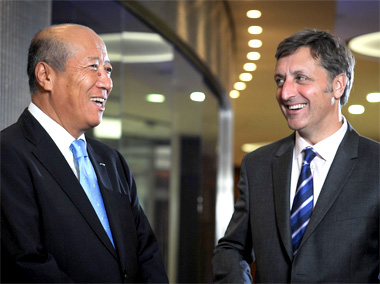
     

    Announcing the mega-deal: Tadashi Ishii, President and CEO, Dentsu Inc and Jerry Buhlmann, CEO, Aegis

    Dentsu’s $4.9 billion acquisition is being counted as the biggest in the advertising business. It’s the second buy of a British ad entity within a month. But, of course, Aegis is a large network while BBH (which sold out to Publicis) is just a creative boutique.


    There was nothing forthcoming from the Dentsu and Aegis offices in India, however, it’s set to be business as usual for the now. The nitty gritty will only be completed by the end of the current year, and the impact, if at all, will be more on shared services, sources tell us.


    There is a marked difference between our respective styles of functioning, an insider at Dentsu told MxMIndia on conditions of anonymity. “But that too is a global issue”.


    Another industry voice told MxMIndia that the scale which Dentsu attains will help it considerably. It’s not just the preserve of networks like WPP, Omnicom, Publicis and IPG any more. The rub-off will be very positive on both entities and pitches henceforth will see them as significant players.


    First some background:

    In July 2009, Dentsu announced its medium-term management plan titled “Dentsu Innovation 2013”, focusing on global business expansion and intensifying digital offerings, together with further strengthening its mass media business, to drive its business strategy as one unified group and to achieve strong growth. Looking to its clients’ and media agencies’ business landscape, Dentsu’s business exposure has been expanding globally, especially with strong focus on emerging markets including Asia.


    On the other hand, Aegis, a global focused media and digital communications group with highly competitive digital service offerings, enjoys a strong presence across Europe and increasingly in the US (clearly the world’s largest advertising market), and is rapidly growing its footprint across Asia and the Pacific. The combination of Dentsu and Aegis will be highly complementary, bringing together a global media platform with capabilities to provide integrated solutions, and offer enhanced quality services to clients.


    Both companies place “client centricity” at the core of their values and Dentsu’s corporate vision for “Good Innovation.” and Aegis’ to “Reinvent the Way Brands are Built” demonstrate the respective commitment to continuous improvement.


    The Rationale:

    Dentsu believes that a business combination between Dentsu and Aegis will deliver the following strategic and financial benefits:


    1. Expansion of global presence

    The geographical fit between Dentsu and Aegis is highly complementary. Dentsu has a leading market position in Japan’s advertising and marketing sector, an established presence across Asia, and an increasingly expanding business in the US, with mcgarrybowen as its core US subsidiary.


    Additionally, Aegis enjoys a leading position showing strong presence across Europe and increasingly in the US. Moreover, Aegis is rapidly growing its footprint across emerging markets, and has established robust positioning in Asia excluding Japan.


    Together, the enlarged group will be a stronger global competitor with the scope and scale to compete for and win international mandates across Japan, Europe, Asia Pacific and the Americas. The combined network with a full range of advertising, media and marketing services will enable Dentsu and Aegis to provide highly integrated services for local, regional and global clients across multiple international locations.


    2. Enhanced service and integrated solution offerings

    Dentsu and Aegis each rely, in order to be competitive, on distinct service offerings and expertise, together with their creativity and integrity, to exploit best solutions with a variety of service offerings.


    Following the transaction, the combined group will have a strengthened ability to offer a wider spectrum of niche services and expertise as a full service agency. With both Dentsu and Aegis’s extensive experience and knowledge, the combined group will enhance its ability to offer integrated solutions to clients.


    3. Intensified digital capabilities

    The adoption of ‘scaled’ technologies by consumers has driven the proliferation of connected devices and advancements in communication technology, significantly affecting clients’ advertising and marketing activities. Dentsu faces strong client expectations to strengthen digital solutions.


    With the rise of digital consumption and client demand for digital services, Dentsu has successfully enhanced its digital solutions over the years. By integrating Aegis, with Isobar and iProspect’s digital strengths in creative origination and performance marketing, the combined business will provide a powerful global platform for media, content and digital technology, and will increasingly support client activities.


    The combination of Dentsu and Aegis, with its robust client portfolio, will count at least 71 out of the top 100 marketers as clients on a combined basis, and will provide global and local clients with a new, differentiated proposition to achieve their objectives, and also accelerate the drive to continuously create new innovations as one unified group.


    CEO-speak:

    Here are comments from the respective CEOs:

    1. Dentsu: Tadashi Ishii, President and CEO:

    I am pleased to announce this exciting and transformational combination between Dentsu and Aegis. Together, we will be able to deliver fully integrated and best-in-class services to our clients through a new global communication network born in the digital age offering a broadened service portfolio. Dentsu and Aegis will be the market leader in the Asia-Pacific region, enjoying a strong presence across Europe and the fastest growing agency network in the US.


    In recent years, under the leadership of Jerry Buhlmann and his team, Aegis has been recognised as the most successful independent media and digital communications agency with strong performance momentum and talented, client-focused employees. We look forward to working with our new colleagues with whom we already share a common “client-centric” philosophy. Jerry and I have huge ambitions for a truly client-focused global communication network built in the digital age, and are looking forward to further innovating our business and continuing to contribute to our clients’ success.


    2. Aegis: Jerry Buhlmann, CEO:
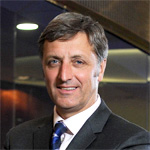
    This is a compelling combination of two great businesses that will create one of the world’s most dynamic marketing services groups – and the first to be born in the digital age.


    We at Aegis are delighted at the prospect of being able to play a full part in helping Dentsu create a platform for global growth and continued digital innovation. By forming the first communications group with true global reach, the growth strategies of both businesses will be enhanced as we provide more scale, geography, capability and investment to support clients.


    “For the people of both these great businesses, the combination offers continuity and the promise of working for one of the most exciting, high-growth companies in our industry. We have complementary geographic fits and aligned visions and strategies. Together, we have strengthened investment capabilities as we work to help more clients than ever before navigate the complex and converging media ecosystem.”


    The India angle:

    Market observers in India credit the team led by Sandeep Goyal for the initial salience of Dentsu amongst advertisers. The Japanese ad network is no longer an alien name, even though it’s not as big as WPP, Publicis, Ommnicom or IPG.


    In India, Dentsu has the following arms: Dentsu Marcom, Dentsu Communications, Dentsu Creative Impact, Dentsu Media and Dentsu Digital. And Aegis has: Carat, Vizeum, Isobar, iProspect, Posterscope, Brandscope, Hyperspace, Carat Fresh Integrated, PSI and Doosra.


    But the presence of Mr Goyal earlier and now Rohit Ohri has ensured that business keeps coming in to Dentsu, a senior media agency executive told MxMIndia. As for Aegis, the leadership of Ashish Bhasin means that the group has stability at the helm.


    For Mr Ohri: Ken Terasawa (Exec Vice Chairman), Soumitra Karnik (NCD) Narayan Devanathan (Dentsu Marcom), Titus Upputuru (NCD, Dentsu Marcom), Arijit Ray (Dentsu Communications), Glen Ireland (Dentsu Digital), Yutaka Kamoshita (Dentsu Digital) and Divya Gupta (Dentsu Media) and for Mr Bhasin: Kartik Iyer (Carat), Anand Bhadkamkar (CFO), S Yesudas (Vizeum), Haresh Nayak (Posterscope), Shamsuddin Jasani (Isobar), Zaheer Mirza (Doosra).


    While Mr Ohri is travelling and not available for contact, the information that MxMIndia received the morning after the announcement that the overall global structure will be unveiled only by the year-end, and following that regional and India-specific restructuring may happen. However, in the same breath, a source in a Dentsu international office told us that given the slowdown managements will be sensitive to overspending, so don’t be surprised if the process towards rationalization happens quicker.


    Suggested reading:

    Ad Age report: Not the ‘Big Four’ Holding Firms in Adland Anymore — Now It’s the Big Five

    http://adage.com/article/agency-news/big-holding-firms-adland-anymore-big/236001/
     

  • Ketchum appoints Rob Flaherty CEO, Ray Kotcher becomes Chairman

    By A Correspondent


    Ketchum has announced that Rob Flaherty, senior partner and president, will also assume the role of chief executive officer, effective July 1. Raymond L Kotcher, senior partner and CEO, will become the chairman. This shift follows a multi-year plan designed to ensure a seamless management transition at the highly successful agency, which PRWeek recently named as its 2012 agency of the year.


    Mr Flaherty joined Ketchum in 1989 and was named president in 2008. He will continue to report to Mr Kotcher. Over the course of his tenure Mr Flaherty has been involved in all aspects of the firm including having successfully led its largest office (New York), one of its global practices (Corporate) and several of its largest client engagements. He has counseled client organizations and brands including IBM, FedEx, Philips and Pfizer.


    According to Dale Adams, President and CEO of Omnicom’s Diversified Agency Services group (DAS): “As CEO, Ray developed the Ketchum brand into one of the most successful in the DAS group of companies and in the public relations sector. I have great respect for Ray’s leadership and many accomplishments and am pleased to have his continued commitment and involvement as chairman. His ability to lead and plan with this group will ensure the transition to Rob will be seamless.”


    Mr Kotcher, started at Ketchum in 1983, was appointed president of the agency in 1992, and in June 2000 was named CEO. As CEO, he transformed and grew the firm. In 2009 Kotcher led one of the public relations industry’s largest-ever mergers when Ketchum and Pleon combined operations to create the leading communications consultancy in Europe.


    Under his leadership, Ketchum’s geographic client-service footprint also grew in developing markets through acquisitions in China, India and Russia and a joint venture in the Middle East. As CEO, Kotcher also led the development of a range of offerings in areas such as change management, sports and entertainment, and word-of-mouth marketing.


    “I am privileged to have served as Ketchum’s CEO through more than a decade of extraordinary change and opportunity in the communications industry,” said Mr Kotcher.


    “The appointment of Rob to CEO has been long planned for and he is distinctly qualified for this role,” he continued.


    As chief executive, Mr Flaherty will work with Mr Kotcher and other leaders of the firm to guide agency strategy. He also will remain focused on providing clients with breakthrough ideas and the agency’s talent with clear opportunities for growth.


    “Having called Ketchum my home for 23 years, I am deeply honored to assume the role of CEO from Ray. Ray has been an outstanding leader, mentor and friend. I tremendously value our partnership and am looking forward to it continuing,” said Mr Flaherty.


  • Special to MxM | Daily Commentary by Shashi Sinha

    By Shashi Sinha


    The Conclave got off to a rousing start yesterday. The sessions this year were in a different format from last time, where we had a few international speakers. What’s working is the international case studies that were being presented by several international leaders. There is a common theme running this year where it is not about digital, it is not about activations but about larger ideas which can be made popular and which people can use as a part of their journey. They don’t necessarily have to embrace the content, but they can embrace an idea and they can exploit it as per their wishes. So there is a consistency in the way in which the sessions have been rolled out.


    One of the moving sessions was by Tim Love of Omnicom, who expressed how ideas multiply when you connect with them in different ways. So, while there was a common theme this year at the Conclave, each one was different and had their own theories to present. Personally, this format works better than the format we had last year, where we had presenters coming and discussing internal issues like recession and so on, which were good to an extent but there is a newness that is needed every year and that was what has been achieved at the Conclave this year.


    This enables a level of conceptual thinking that is needed behind every idea. So, all in all, it was a good day to start with as there were not too many sessions and there were less but effective presentations.


    The Conclave saw some big international marketers from Coca Cola and Intel discuss the way ahead for the industry, but the sessions on Saturday will see some key and large marketers from India shedding light on mantras and ideas for a better tomorrow. I think from an organiser’s point of view, not only getting them to interact but also present their point of view is what will make it a different experience for the delegates this year.


    As for the awards that would begin from today, we are proud to have received tremendous amount of participation from agencies, but I think still that the scale could have been bigger. That is what we will attempt to do next year. This year there was a delay in the forms being dispersed and so on, so it requires evangelisation and we need to sell the idea and concepts well. But it is a very good beginning; you will see the results on Saturday.


    Net-net, I think, this year we have managed to get some high quality marketers to come and share their mantras. Second, the whole theme around the power of ideas has been simplified and has been presented in an enlightening way to the delegates. A lot of people were saying it is all about digital; but that is not the case. It is about an idea and how you magnify an idea. Third, and last, everyone keeps talking about co-creation of ideas but it is not about that – it is about how consumers embrace ideas. Delegates can look forward to more empowering sessions in the two days, especially the young turks from the industry.


    Shashi Sinha is CEO, Lodestar UM. He is also President of the Advertising Club Bombay and Chairperson of the Goafest Awards Governing Council.


    Click here to view all Goafest 2012 stories


  • Being the best is our trademark: John Ziegler


    After a three-month long restructuring and realigning exercise in India, DDB Mudra Group presented itself in a new and refined avatar to the world on Tuesday. Having found its saviour in Mudra to expand its foot print in to India, DDB Worldwide is ready with a formula and a team that it promises would shake up the Indian advertising and media market and make it a force to reckon with in the coming months.


    Representing the group to make this historic makeover, John Zeigler, Chairman and CEO of DDB Group, Asia Pacific, Japan & India was a picture of hope and accomplishment as he presented to the gathering his views and expectations from the alliance.


    As the leading voice, and overseeing markets that span 21 agencies in 16 countries, and more than 2,500 employees, Zeigler is a great believer in reinvention and what it implies for brands in this global, think local, market. In conversation with Johnson Napier of MxMIndia, Zeigler emphasises on India’s role in the APAC market for DDB Mudra Group, on how rival agencies like WPP are taking a cue or two from his agency and what the agencies of today need to know to stay ahead of the curve. Excerpts:


    Q: How would you assess DDB Worldwide’s growth story across the globe, especially in the Asia Pacific market led by India?

    Across our businesses worldwide, we are looking to achieve a growth rate of 15 per cent. With the kind of businesses we have in India, we should be able to achieve a growth rate of 25 per cent plus. As for our other agencies across Asia Pacific, we had a compounded growth rate in excess of 30 per cent year on year.


    Q: Having upped your stake in Mudra recently and post the overall restructuring exercise in India, it seems to be an affair that was heavy on the investment front. Your comments.

    I would say the investments have really been in terms of people, training, exposing them to the rest of the business operations that we have and we are doing that dynamically every day. From another investment point of view, we see the opportunity to jointly grow our businesses which doesn’t require any investment other than time, talent and people.


    Q: Do you see Omnicom further raising its stake in Mudra anytime soon?

    That is something that will be really dictated by the equity partners comprising of Reliance Group and Omnicom. It is something that will echo with the passing of time. From our point of view, it should happen as quickly as possible.


    Q: You have all along emphasised the importance of emerging markets for the DDB Group. Have you identified any new markets that you plan to tap in the near future?

    We are going to scale up our growth soon in the market of Vietnam. We have just wrapped up an acquisition deal there and will be starting a new business soon. And the other key country for us would be Indonesia. But we would be able to tell you more about these markets only later.


    Q: While the emphasis of the group is on providing 360-degree integrated solutions, it is creative that is stealing the thunder to a certain extent in India. What do you derive of this sentiment? Where does digital fit in this matrix for the group?

    In terms of social creativity, what we have learnt is that the connection of creativity across digital and traditional – there is no wall. We have to look at it as a complete communication opportunity to capture the consumers’ interest and intrigue, the ability to pass it on and for them to become the media. So we are going to be growing digital but not as an exclusive digital entity alone; we’ll be growing digital within the core business as well as specialty part of the business.


    Q: How would you assess Omnicom’s growth story against those of WPP and Publicis Groupe who have also heightened their interest around the Asia Pacific market? 

    Omnicom is very anxious to grow inAsia. We have demonstrated that already. If you look at the last five years, you will see Omnicom has had much greater organic growth than WPP. This organic growth has been complemented by some strategic acquisitions and you will see Omnicom continue to grow much faster than the other groups. Again, our goal is never to be the biggest, it is just to be the best. In fact, WPP has also now changed their slogan to say that being best is better than being the biggest. But that’s only because they have talked about being the biggest, that they are understanding the importance of being the best – like we always have; so they are trying to take an element of that positioning from us.


    Q: Though a sister agency, how has BBDO been growing in India and in Asia Pacific?

    We work differently and therefore I cannot comment as such, but I would say that they have been doing well in India. Obviously we would like to support them and help them sell their services to their clients through the existing base from the DDB Mudra Group. We do share some clients, like for instance we both service Johnson & Johnson, Mars, and others. So we compete and collaborate with BBDO where it is relevant for our client.


    Q: Though not as grave as its predecessor, the slowdown has impacted the growth of the industry to an extent, including in India. What are your views on the global media growth story going forward?

    Most of the agencies are trying to fix the economic crisis situation by leveraging money – making money spread thinner than it should. That’s one of the reasons why banks got in trouble because of bad business practices. I think a lot of people are struggling with the economic crisis because they have tried to cut their cost structures down so far that they have actually started to cut into the value of their corporations. I don’t believe that cost-cutting, mergers and acquisitions, and the availability of finance will help the rest of the world reinvent itself. But I do believe that creativity applied to a business will give any business that uses that well, a competitive advantage. I believe that those firms which access and leverage competitive advantage best will win. I think the countries that are leveraging competitive advantages are winning today. Shanghai, Hong Kong, Singapore are leveraging their strategic expertise, their positioning, their competitiveness and they are benefitting from other areas that aren’t doing so well. But all this has to be seen from a country and a geo-political level, and would, therefore, differ across markets.


    Q: Has this sentiment aroused the apprehensive levels of clients?

    They are very apprehensive as they often ask how we increase our share of returns to our shareholders. There comes a point where the only way to do that is to gain a point from the competitors. And you can only gain more points from your competitors if you are more creative.


    Q: Worldwide, there is a trend of companies opting for CMOs to drive the growth for the organisation. Should ad and media agencies look at this trend as a means to beating the recession blues?

    We don’t have a CMO as such at the top as we work in an executive committee collaborative fashion and we do not believe that one person can manage that through the complexities of all brands and offerings.


    One of the things that agencies have more trouble is that clients have more focus in cutting the cost of an agency then they have put in to understanding how to get best value out of the agency. Until that changes, we cannot reinvent ourselves because we are running on very thin margins, we are trying to be creative and inventive, but we are being constrained by financial controls.


    The first thing that many clients do when they come to an agency is, they say: we do not pay for senior management involvement; that is agency overheads… some clients even come and say: I want to know how much time of your senior management I’m going to get and then we’ll negotiate the rest… those clients are smart because they are buying the best expertise and not just buying heads to do functions and processes.


  • DDB Mudra announces new ‘A’ team

    By A Correspondent


    Madhukar Kamath, Group CEO and MD DDB Mudra Group announced on February 23 that the restructuring of the Mudra Group is complete, and shared a slew of changes in responsibility of his ‘A’ team, pursuant to the Group’s integration with Omnicom and DDB Worldwide.


    The architecture & identity of the new DDB Mudra Group will be shared with the media at a press meet scheduled on February 28, in the presence of John Zeigler, Chairman & CEO – DDB Asia Pacific, India & Japan. The effective date for the change of identity and the roll-out will be March 1.


    With regard to his senior team, Mr Kamath announced the following:

    Rajiv Sabnis will be President – DDB Mudra Group and will report to him.  He will be responsible for building the DDB Mudra and Mudra brands in Mumbai and the Western Region. He will also be responsible for initiating integration projects and business for DDB MudraMax from the existing clients within DDB Mudra and Mudra.


    Ranji Cherian will be President – DDB Mudra Group and will also report to him. He will be responsible for building the DDB Mudra and Mudra brands in the South. He will be responsible for initiating integration projects and business for DDB MudraMax from the existing clients within DDB Mudra and Mudra in the South.


    Anurag Bansal will be Director Finance, DDB Mudra Group.   He will now function as deputy to the Group CFO, Dilip Upadhyaya.


    Sudarshan Banerjee, apart from his role as Head, Mudra Ahmedabad, will now also be Director – Business Development, DDB Mudra Group and will report to the Group Chief Operating Officer, Pratap Bose.


    After a successful stint in Mudra West, Arijit Ray (currently President – Mudra West) will now work with Mr Kamath on a new assignment in the DDB Mudra Group, possibly in the DDB Asia-Pacific network.


    “With these changes in place and with Mandeep Malhotra (Mandy) driving the Experiential, Retail and OOH Agenda, Aneil Deepak (Andee) leading the planning and creative function in DDB MudraMax as National Head – Ideas, N.P. Sathyamurthy driving the MudraMax media agenda, Venkat Mallik running RAPP and Tribal DDB, Soumitra Sen and his fast expanding DDB Health & Lifestyle practice, Ashish Mishra in Water, and Radha in Maatra, Vandana Das joining us as President – DDB Mudra Group in Delhi in mid March, Sonal Dabral coming on board as the Chairman & Chief Creative Officer, from  March 1, and Pratap working closely with me as the Group COO and  driving the entire New Business Agenda, I look forward to exciting days ahead,”  said Mr Kamath.


    DDB Mudra Group isIndia’s largest integrated marketing communications and services network. Its customized and collaborative approach helps its clients build valuable and enduring brands. The group’s capabilities span Advertising, Media, Digital & Data marketing, Experiential marketing (Promotions, Events, Rural), Trade marketing, Youth marketing, Localization & Pre-Media services and Brand Strategy & Design consultancy.


    With over 1,100 employees and 26 offices, offering direct contact across 1,75,000 villages, 4000 towns, 3500 schools and nearly 7 million students, the DDB Mudra Group was India’s most awarded agency network at Cannes, Spikes and Abbys among others in 2011.


  • Chinese Madhouse looks to wow India


    By Johnson Napier


    Countless comparisons could be drawn on how two of the biggest and most admired economies are driving brands from all across the world to be a part of a growth story that is unparelled. Or how the APAC region is all about just these two economies today, putting the other developed nations in the region in a state of oblivion. Having wowed the world with growth stories that defy market odds, China and India today command attention from business stalwarts and entrepreneurs like no other, especially entrepreneurs from emerging mediums like Digital and Mobile that are shaping the way the world goes about doing its business. But despite the huge buzz around these two economies, there is very little that transpires when it comes to the two economies trying to venture into each other’s territory to gain mileage and expand base – especially in the digital space.


    But all that could change with the advent of the largest mobile solutions and advertising network firm from China- Madhouse. Launched in 2006, the company enjoys the reputation of being tagged as the most intellectual and largest mobile ad solutions company in China. In India, Madhouse will work towards providing brands, advertising and media agencies and marketers with a host of comprehensive mobile marketing solutions. It has already tied up with a host of strategic partners including WPP, Vivaki, Omnicom, Aegis and so on from the media agency side of the business and would work towards providing them holistic mobile marketing and advertising network solutions.


    The Madhouse India team would be headed by Vinod Thadani, who until now was handling mobile responsibilities for Group M India andSouth Asia. Given that the two countries share market complexities that are similar in nature and have a population base that is very high, it seemed like a natural extension for Madhouse to step in to India, making it the first such venture into foreign territory in APAC.


    Throwing light on how the APAC market compares to the other regions and reacting on his choice of targeting India as the hub for launching the venture, Joshua Maa, Founder & CEO, Madhouse Inc. said: “Today APAC occupies ad spends growth to the tune of 32 per cent, making it the largest in the world. These are led by the economies of China , India and Indonesia that are the key drivers of this growth in APAC. To gain success in a market like India requires the ability to manage complexity, and this is an area where we excel.”


    Hoping to leverage the opportunity of using mobile as a mass media device, Maa went on to elaborate the business module by stating: “If you compare the mobile markets of India and China, they are almost identical. While China has a mobile user base of 960 million, India’s number stands at 894 million. But where mobile internet users are concerned, China has 356 million users while India’s number stands at 150 million. Therefore, we foresee a huge growth in India and decided to make this our first market to launch in APAC.”


    In India, the agency’s focus would be centred around disciplines of mobile ad serving, mobile ad network and mobile marketing solutions. Having wowed clients in China like HP, KFC, Unilever, Intel, Coke, and others, Maa hopes to emulate a similar example here by getting important brands to align with the network: “Being the only full-service provider in the market and having a skilled and experienced team in place, we hope to attract a lot of clients in the days to come.”


    Emphasising on the partnership, Vinod Thadani, COO, Madhouse said: “Madhouse will offer mobile marketing solutions created and carried out for advertisers by a team of experienced media professionals that understand this medium. On a technical level, mobile advertising can now achieve accurate intelligent targeting and provide real-time reporting – a very convincing proposition for advertisers.” According to Thadani, the need of the hour is to unlock the potential of the mobile medium and they are therefore determined to grow the Indian Digital Media market from Rs125 crores to Rs1,000 crores in the next 3 years. “The need of the hour is to understand the medium thoroughly and this would be possible by partnering with the right partners and going back with the right solutions to clients.”


    Perhaps the best reason for elation among mobile clients in India was provided by Ranjan Kapur, Country Manager, WPP, who began by discussing how India, as an advertising market, was highly undervalued. “Despite India boasting such a good growth in economy, the advertising spends in China stand at US $55 billion while for India it is at US $6 billion, this shows that we are still an under-advertised and under-branded market.” Citing the reason for China leapfrogging ahead of India, Kapur said that the single biggest factor for India’s dismal record in getting more ad spends was because it jumped on to the services bandwagon and chose to ignore the manufacturing sector. “While the Services sector contributes about 55 per cent to the GDP growth, it is still very shy on spending on marketing and promotional activities. And this is an area where Manufacturing excels. But all that is changing and the Services industry is opening up and spending more.”


    On the ad spends growth in India, Kapur said that while there is a 15-20 per cent growth, it is digital that is intriguing the advertisers the most. “Digital ad spends recorded a growth of 30 per cent.Mobile, specifically, is a Rs125 crore industry today and given that there are 300 million internet users predicted by 2015, mobile advertising is expected to account for about one-fourth of conventional traditional advertising. So it can be said that a revolution in digital in India is beginning to happen now.” This growth will be boosted further by the Government’s efforts to spread mobile and internet usage in rural areas for which it has promised 2,50,000 nodes for broadband in the next four years. “So mobile marketing in the rural areas will be a mass phenomenon, once this plan gains momentum.”


    Another interesting addition to the venture would be Rovio Entertainment that is more popular for its Angry Birds concept around the world. “Madhouse is a valuable partner for us in China , and we are excited about the opportunity to extend our collaboration to India as well,” said Bijay Gurung, Key Account Director, Rovio Entertainment Ltd. “With India being the second largest Facebook market, it opens the door for us to entertain even more fans as we are aiming for one billion downloads by the end of the year.” The current number stands at 700 million. Apart from that, Rovio would also focus on pushing itself as a publishing firm, a large-scale animations firm and further look to enhance its merchandise business.


    In an era where it is becoming difficult to lead lives without smartphones, iPads and other such mobile gizmos and with a lot left to be accomplished in the Data, Voice and Text domain and lack of established tools and systems that makes it difficult to answer the question of how this medium can be leveraged by advertisers to reach out to their consumers, probably an established Chinese mobile dragon could well show Indian mobile companies the way this medium could be harnessed to its full potential.


  • JWT restructures to bring in 3 NCDs


    By Tuhina Anand & Shubhangi Mehta


    After roping in Bobby Pawar as its Chief Creative Officer and Managing Partner, JWT is now bringing in more changes in its team structure which Colvyn Harris its CEO dubs it as `transformational changes’.  It is learnt that JWT has brought in a three National Creative Director structure which includes Swati Bhattacharyya in Delhi, Tista Sen in Mumbai and Senthil Kumar down South. All three NCDs will have a team of ECDs under them and when Bobby Pawar joins which will probably be in March 2012 as the CCO , he will spearhead this structure.

    Ms Bhattacharya has been heading the GSK business at JWT while Ms Sen and Mr Kumar have been Executive Creative Directors at the agency.

    On the restructuring, Mr Harris said, “I cannot think of 3 more deserving and talented people who have imbibed the best of JWT values and who believe in the JWT Company. It has taken us some time to recognize that their current roles and responsibilities far exceed what national creative directors in other agencies are responsible for. Given the sheer scale of our operations, and our most admired line-up of India’s finest and the world’s most admired brands, it was imperative to recognize the creative leadership team with a designation based on their role.”

    “Given the exigencies of the market and the pressure which is being brought to bear on us to improve our creative work – especially from clients who are in the more competitive categories – we believe that the combined skills and talents of Swati,Tista and Senthil will be able to provide the best solutions for our clients, our brands, and our people, added Mr Harris.

    Talking to MxM India on the creative pillars that JWT is creating, Mr Harris said, “The roadmap that JWT has drawn of being a creative powerhouse and being creative led and creative driven organisation will be achieved by these changes. Bobby along with the team will help us in realizing this vision. In fact, people who are saying that the CCO position at JWT has been unstable should know that Adrian came as the Delhi office head so we didn’t really have anyone take the CCO position for long. Bobby’s position in that sense is of true CCO who will lead a team of around 300 creative people at JWT along with the newly restructured team.”

    It may be recalled that when Josy Paul had joined JWT as its NCD, Agnello Dias had also been promoted as NCD and the agency followed the dual NCD structure at the helm but no CCO. It was only later when Mr Paul quit that Mr Dias was made CCO, though he too quit soon after to start Taproot India.

    Mr Harris also said  that one should gear up to hear of some more announcements at JWT very soon. The agency has also recently roped in Max Hegerman as Senior VP and its Head to look after JWT’s Digital strategy.

    On his mandate at JWT, Mr Bobby Pawar said, “My job at JWT will be ensure we change our benchmarks and set new standards. Critical would be in setting a vision and then delivering on it. JWT will be the magnet for the best talent in the industry and offer the most creative solutions ever seen.”


    INTERVIEW

    Bobby Pawar, the guy who is taking over as Chief Creative Officer and Managing Partner of JWT, has been responsible for turning around the agencies which he has worked for. When he was at BBDO in Chicago he weaved his magic to make one of the hottest shop in the region. In India too, with Mudra as its Chief Creative Officer he has been instrumental in the agency winning awards and accolades on many international and desi platforms. The agency has done some high decibel advertising like the ones for Volkswagen launch in India and there after its variants that had caught eyes of many. With Mr Pawar’s next destination being JWT which has  seen causalities in quick succession including Bruce Matchett, Josy Paul, Agnello Dias and Adrian Miller. Looks like JWT is gearing up for combat and shut the wagging tongues of the industry. Here’s an interview with Bobby Pawar who sportingly answered our questions though he steered away from some specifics.


    Q: Omnicom as a parent, so many awards in the kitty all with your leadership… why then did someone like Bobby Pawar leave?

    I guess I am addicted to challenges and the task of polishing JWT’s creative luster and raising the game there was just too seductive to pass up.


    Q: What is the mandate at JWT, also we have seen the creative head at JWT being an unsteady wicket in last few years, should we expect a change now?

    Colvyn didn’t asked me to partner him on the mission of maintaining status quo. I would hardly be the right guy for that. Both of us want JWT to evolve, to build on the past, but look firmly at the future. The focus will be on the work and the people who do it. And that means the entire agency. We don’t just want a highly creative creative department, but a highly creative company. Everybody has a role to play in making sure the solutions we think up, sell, and execute are as great as the brands need them to be.


    Q: Was the Omnicom deal anything to do with your moving out?

    If anything the Omnicom deal almost kept me back. That is a great company and I have the highest regard for John Wren, Chuck Brymer, John Zeigler et all. They made me feel very welcome, but as they say a man’s got to do what a man’s got to do.


    Q: How would you sum up your stint at Mudra?

    I loved it. See, I’m not leaving because I am unhappy. When I started nobody gave us a chance. Four long and hard years later, our creative reputation is the opposite of what it was. We did pathbreaking work for Volkswagen, Big Cinemas (Silent National Anthem), 7-Up, Union bank Of India, Emirates, Philips, Economic Times, McDowell’s No. 1, etc. We were the winningest DDB agency at Cannes this year along with DDB Paris, 3rd in the agency of the year standings at Spikes and we had the most metals Abbys. Not too shabby, right?


    Q: What should we expect from Bobby Pawar in his JWT avatar?

    I believe that agencies don’t just need to create, they also need to invent. Why can’t we invent a whole new medium while we thinking of a campaign that runs on it? The future will be invented by those who ask the most interesting and unexpected questions.


    Photograph of JWT Mumbai courtesy JWT website. Images of Messrs Harris and Pawar from the JWT and Mudra sites respectively

  • Analysis: Will Omnicom upset the applecart?

    By Tuhina Anand

    Now for years, Omnicom has been trying to gain a greater share in the Indian market, but it has finally managed to get it right with the Mudra acquisition.

    It has been making moves recently to gain a foothold in the Indian market by debuting in the country its media agency OMD and then by bringing creative agency BBDO. Omnicom also acquired 100 per cent stake in TBWA but the coup is definitely getting Mudra and the talks of majority stakes turning to 100 per cent stake, Omnicom will in one sweep manage to pocket a sizeable chunk of the advertising pie in India.

    In fact, the seriousness of India as a market could be gauged from the fact that Tim Love , the Chief Executive Officer of Omnicom, Asia Pacific India Middle East Africa (APIMA) region has always pointed to his business card which puts India separately and not club as part of Asia or APAC as is the norm. He had stressed during his meetings that this showed how important is India as a market for Omnicom and its commitment to the country.

    Many youngsters in the agency have applauded Omnicom’s present move in Mudra, hoping that it would give the agency a fresh lease of life. Not to forget that Mudra has been on an overdrive in the last two years, with the agency winning awards at the national festival. Recently the network (DDB) also won at SpikesAsia so there has been a buzz. Its sub-brands Water, its strategy and design consultancy unit and Terra, bottom of pyramid marketing had also been launched earlier with much fanfare.

    In fact, with Mudra’s acquisition, Omnicom gains in getting hold of a fully integrated advertising services agency which otherwise would have been difficult if the latter had gone doing things on its own. Currently, Mudra has- Mudra India, DDB Mudra, Mudra Max and Ignite Mudra and each of these have their own strategic business units like Mudra India has 5 SBUs including Mudra West, Mudra South and Mudra North & East. Water, a strategy & design specialist, and Maatra, a localization & pre-media specialist. DDB Mudra comprises four strategic business units, DDB India, Tribal DDB India, RAPP India and DDB Health & Lifestyle. Mudra Max consists of 16 strategic business units that provide clients seamless solutions across a wide array of media touchpoints.

    In the months to follow, it would be interesting to see how Omnicom would try to bring its own flavour to Mudra. Also how would its other agencies like BBDO, TBWA and OMD be placed in the scheme of things and continue as independent units would be worth the watch. But one thing is sure with this move Omnicom has suddenly leapt in the big circle as there is no denying that Mudra has the pedigree that can give Omnicom though a late entrant, a name and grip in the industry that it has been trying for long but had not succeded ealier.

    More importantly, will this move shake the WPPs who have well-settled in the Indian industry? After all, any new player comes with the big intentions which if not shakes the sedentary life of the oldies but definitely puts them on their edges. Only time will tell.

  • It’s official! Omnicom to pick up majority stake in Mudra

    Omnicom Group Inc announced that it has entered into an agreement to acquire a majority stake in the Mudra Group. As part of the agreement, Omnicom will extend its partnership with the Reliance ADA Group.

    Mudra will significantly expand Omnicom’s service capabilities and presence in India. The Mudra Group comprises: branding and communications agency Mudra India; marketing and advertising agency DDB Mudra; integrated engagement and experiential agency Mudra Max; and Ignite Mudra, an agency that caters to entrepreneurs. Mudra has 26 offices across the country and an extensive field activation network.

    In conjunction with the strategic partnership, Reliance Group Chairman Mr Anil Ambani will join the Omnicom International Advisory Committee. “This acquisition is an important step in achieving Omnicom’s strategy to extend and deepen our presence in rapidly growing markets,” said John Wren, President and CEO of Omnicom Group in a communique. “Our vision is to be a source of innovation in every market we serve. Mudra is widely acknowledged as an outstanding company with impressive creative product and expertise in a broad range of disciplines. Mudra’s innovation and depth of talent will strengthen our business capabilities not only in India but around the world.”

    “DDB has been an excellent partner over the years. We have benefited immensely from the collaboration and transfer of knowledge from around the globe. We are proud to belong to such a storied network,” Mudra Group CEO Madhukar Kamath said. “Omnicom and DDB have clearly been the inspiration for Mudra Group’s transformative growth over the last five years. My colleagues and I look forward to the next decade of explosive growth in the Indian market.”

    DDB Worldwide President and CEO Chuck Brymer noted, “This acquisition will further unite two companies that have long held the same values, creative goals and ambitions. Under Madhukar’s leadership, Mudra is the original challenger brand of the Indian communications industry, and it shares DDB’s culture of creative excellence. Together, we will create even greater growth for our clients in this rapidly changing, technologically driven region.”

    DDB and Mudra Group’s shared history is rooted in a relationship that began in 1988 and has grown tremendously since the formation of DDB Mudra in 2007, which established DDB India, Tribal DDB, Rapp and DDB Health & Lifestyle in the Indian market.

    John Zeigler, CEO, DDB Asia Pacific, added, “Mudra has an impressive history as both creative leaders and strong believers in integrated solutions making them one of the most innovative companies in India.”

    Omnicom Group EVP and CFO Randall Weisenburger also noted, “In addition to significantly expanding our service capabilities in the region, this partnership will bring with it an exceptional Shared Services and Operations Center in Ahmedabad that will help Omnicom more efficiently expand its other operations in India. Additionally, Mudra recently moved into a new headquarters facility in Mumbai called Mudra House, a sustainable building and one of the few in India to be awarded LEED (Leadership in Energy and Environmental Design) Gold certification. Mudra House is widely acclaimed for its conservation features and state of the art technology.”