Tag: Olympics

  • Do brands have a mid-life crisis?

    Do brands have a mid-life crisis?

    Ashoke AgarrwalNike is 60 years old, and is it showing signs of middle age?

    The brand still signs the world’s most high-profile athletes and has a legacy of proprietary technology.

    The mojo was displayed at the Paris Olympics with a three-day ‘Nike on Air’ gala.

    It debuted new shoes for runners, basketball, and soccer and optimized performance apparel for skateboarding and breakdancing. It also showcased Project A.I.R., a platform that leverages generative AI to design and print personalised prototypes for athletes in minutes.

    It was as if the brand was pushing to remind everyone of its mojo. Forty years ago, at its pomp, the brand had debuted Air, a tiny, pressurised airbag in the shoe’s sole that gives athletes an energy return as their foot hits the ground. A legendary functionalisation of the brand’s ‘Just Do It’ promise with a literal swoosh of compressed Air. Today, the legend lives on moviedom with a movie called “Air” starring no less than Matt Damon and Ben Affleck, but does the brand’s mojo?

    Or, like a lifetime achievement award, is the movie a tribute to a has-been cultural phenomenon?

    The brave show at the Paris Olympics did not hide Nike’s struggles with low sales numbers and its longest losing streak since 1980. The company’s move from wholesalers to direct-to-consumer wasn’t as successful as hoped.

    The reasons for Nike’s bad period are myriad, and it will probably cause them to go on for another 60 years.

    The point I want to make is that many storied brands—Nike, Coco Cola, Levis, VW, Marks & Spenser, Bajaj, Titan—the list is long—are undergoing a crisis. And the commonality between them is that they are all “middle-aged” or “old.”

    The most straightforward explanation for the crisis is that times change, consumers change, technologies change, and challenges come with change.

    However, shouldn’t then the uber-successful leader brands should be the first to meet such challenges? They have the resources, expertise and experience.

    But nine out of 10 ‘middle-aged’ leader brands flounder with a new generation of consumers.

    Could the explanation lie in the realms of psychology – the mid-life crisis that affects most successful men in Western cultures as they slide into middle age?

    While a mid-life crisis is, at its core, a disruption in self-confidence and self-image, its manifestation is a rejection of this disruption and an over-assertion of the past.

    Is Nike’s Paris Olympics show an assertion of this sort?

    The wise counsellors suggest that the proper response to a mid-life crisis is to evaluate the self, identify your core values, discard peripheral notions that no longer fit the circumstances, and orient your core values to the new paradigm.

    Is Nike confronting a new generation for whom fitness is a holistic concept that deals with social attitudes, diet, and exercise? To them, is seeking the extra edge of proprietary technology in their daily exercise regime an aspect that robs it of a value they cherish -authenticity? So, while they admire Nike and the premier athletes whom it helps perform better, the admiration does not translate to them wanting the brand for themselves. They are happy with brands like On Running and Lululemon.

    So, how does Nike be relevant to the new generation? For starters, it should be admitted that the mother brand is now a niche brand for performance athletes and the small part of the market that are aspiring athletes or have a self-image of being athletes. There is money to be made in that niche to support their other plans. It should then get down to using its inventiveness and brand-creation skills to launch a new brand that hooks onto the concept that fitness is a 360-degree concept with authenticity at its core. It could then build a whole range of products and services, including digital platforms and AI application layers to enable an individual to ‘Be the Fittest Yourself’.

    The above is just an illustration. An innovative set-up like Nike would have scores of better ideas provided it got out of its middle-aged funk and stopped doubling down on the past.

    The point is that a brand in a mid-life crisis needs to recognize the crisis, reevaluate and use the opportunity to reinvent.

    There are so many well-resourced brands in mid-life crisis worldwide that I expect all the big consultancies to make a beeline for this rather lucrative pie.

    But then, aren’t the McKinsey’s of this world also in mid-life crisis?

    It may take a bold, young start-up consultancy to convince old, foggy brands to see their mid-life crisis as an opportunity to reinvent.

  • Olympics 2024: what new social media guidelines mean for athletes and their sponsors

    Olympics 2024: what new social media guidelines mean for athletes and their sponsors

    Representative pic: person taking a selfie. Courtesy: pickpik.com (Creative Commons Licene)


    By Layckan Van Gensen

    Cellphone cameras are ubiquitous at modern sporting events. Whether it’s a school swimming gala, the local rugby club squaring off against their bitter rivals or a national team fighting for tournament glory, every moment is a potential photograph.

    The Olympic Games are no exception. More than 10,000 athletes from 200 countries or regions are set to compete in 32 sports in this year’s host city, Paris, giving fans ample opportunity to fill their camera rolls with images of their favourite sporting heroes.

    And participants, too, will be able to memorialise their time in Paris – far more freely than ever before. This comes after the Games’ governing body, the International Olympic Committee (IOC), unveiled new social media guidelines in December 2023.

    Most of the guidelines are aimed at athletes; some relate to “accredited individuals other than athletes” such as coaches, technical staff and countries’ Olympic committee representatives.

    As a legal scholar specialising in sports law, with a focus on image rights, I’ve been closely following the IOC’s stance on athletes’ use of social media – especially photographs and videos. Image rights are a broad bundle which may include rights over the use of the individual’s still, moving and animated images, name, signature recorded voice, catch phrases, associated iconic acts, logos, trademark and brands.

    These rights can be worth a lot of money. For example, Indian cricketer Virat Kohli can earn anything between US$2 million and US$2.7 million per social media post.

    Overall, it appears that the IOC has tried to strike a balance between protecting the media rights holders while still recognising the value of a participant’s image rights. It allows them to show more content than before and, more importantly, to acknowledge their personal sponsors, who play an important role in commercialising their images and building their brands. Loyal fans will get a fuller picture of their favourite athletes’ Olympic journeys than they’ve been able to before.


    Social media at the Olympics

    Vancouver’s 2010 Winter Olympics have been described as “the first social media games”, marking the first time that the IOC created social media guidelines. These were refined for the London 2012 Summer Olympics.

    At the last Summer Olympics, hosted by Tokyo in 2020, athletes were not allowed to:

    • share any content from accredited areas used for a sporting competition or ceremony
    • post about their personal sponsors.

    These restrictions were designed, the IOC said at the time, to protect media rights-holders such as TV stations and other big media organisations.


    What’s changed

    Under the new guidelines accredited participants can share their experiences far more freely on social media platforms during what the IOC calls the “game period”, from 18 July to 13 August.

    They may:

    • take photographs and record audio and video inside and outside the accredited areas
    • share photographs on their personal social media platforms up to one hour before the start of the competition they’re taking part in, and after they have left the doping control areas
    • share posts from the training and practice areas, the opening and closing ceremonies and the Champions Park, where athletes gather after their competitions to meet and interact with fans.

    Of course there are still some restrictions.

    Videos may not be live streamed, may not be longer than 2 minutes and may not include actual competitions. So, coaches can’t film an athlete in action and then share the video or photos. Athletes also can’t record another athlete training, or post highlights from their personal competition on social media. They can only share such images or videos from official media rights-holders’ accounts.

    Perhaps most intriguingly, photographs and videos that use artificial intelligence may not be shared. It’s unclear how the IOC intends to police this rule.


    Not for commercial purposes

    Media rights-holders aren’t left completely unprotected by the new guidelines. Participants are not allowed to post for commercial purposes throughout the game period.

    A post will be regarded as “for commercial purposes” if its purpose is to generate financial profit or promote any third party or products or services.

    One of the main goals of the new social media guidelines is to balance the rights of media holders and those of the participants. This attempt at a balancing act can be seen in the new rules for non-Olympic partners – those who don’t sponsor or have official merchandise licensing contracts with the IOC.

    Brands or companies in this category may run generic advertising during the game period as long as it hasn’t been especially designed for the Olympics and has already been in the public eye for at least 90 days before the tournament starts. Advertisements in this category can’t be run more frequently during the Games than they have been previously. The IOC will apply these rules flexibly to enable “business-as-usual” campaigns.

    Participants are allowed to provide one “thank you” message to each of their non-Olympic partners during the games period but it may not include a personal endorsement.The Conversation


    Layckan Van Gensen is Junior Lecturer in Mercantile Law, Stellenbosch University. This article is republished from The Conversation under a Creative Commons license. Read the original article.

  • Adani campaigns for Indian Oly contingent

    As the Indian contingent gets set for the 2024 Summer Olympics, its principal sponsor, the Adani Group, has pledged its support to the champions of the nation through a campaign with the theme #DeshkaGeetAtOlympics.

    Speaking on the launch of the film, Sanjay Adesara, CBO, Adani Sportsline, said: “At Adani Sportsline, we extend our best wishes to our champion athletes, and hope that we have more success than ever before. With the help of our programmes, we are fully committed to support our athletes all the way in their quest for excellence at the highest level in sport. And while they are fighting it out for the top prize, we must support them, cheer them on, and motivate them.”

  • Thums Up partners with Mohammed Siraj

    By Our Staff


    After celebrating the ‘Toofani’ spirit with #PalatDe and #TaanePalatDe campaigns at the Tokyo Olympics and Paralympic Games 2020, Thums Up has fast bowler Mohammad Siraj starring in it s#PalatDe campaign.


    Announcing the partnership, Arnab Roy, Vice President and Head-Marketing, Coca-Cola India and South West Asia said: “The Coca-Cola Company has been the longest corporate partner of the Olympic Games and our recent associations with the Paralympic Games and the ICC World Cup, underscore the company’s philosophy of endeavouring to be a part of the joyous moments and occasions of its consumers. The ability of Cricket to create unique and memorable moments makes it a robust platform for us to connect with sports fans around the globe. We are elated to welcome Mohammed Siraj, one of the best bowlers in the world on this exciting journey with us. It is inspiring to witness how extraordinary people like Siraj have overcome real life challenges and risen to become a beacon of national pride. Such inspirational stories resonate with the spirit of the brand.”


    Added Sukesh Nayak, Chief Creative Officer, Ogilvy India: “The spirit of the brand resonates with the stories of grit, hard work and determination of our players, who overcome all hurdles to play for the country. After Olympics and Paralympics, in the third instalment of the #PalatDe campaign, we will be celebrating the victories of our cricketing heroes over their naysayers. Siraj’s story in particular is very inspiring and we are proud to partner with him and have him share his story with the world.”


  • Sony Sports tops for seven consecutive weeks

    By Our Staff


    Sony Sports TV channels have featured at the top of the sports genre viewership for seven consecutive weeks thanks to the telecast of UEFA Euro 2020, Copa America 2021, the India tour of Sri Lanka, the Olympics and the ongoing India tour of England.


    Said Sandeep Mehrotra, Head, Ad-Sales, Network Channels, Sony Pictures Networks India: “Our efforts that resulted in unprecedented growth overall of marquee events such as UEFA EURO 2020 & Olympic Games Tokyo 2020 attracted non-traditional advertisers who seek the last mile reach. While all our events generated phenomenal interest amongst advertisers, we extended innovative solutions to ensure that the brands’ visibility is amplified especially during the Olympic Games where the broadcast is spread across the day and viewer interest is higher around events with Indian participation. Women’s cricket is also on the rise, and we already have brands on-boarded for the India Tour of Australia series starting in September and are in the process of closing more. The series is a significant milestone for Team India as they will be playing their first day & night test match with a pink ball and is sure to attract a lot of interest from cricket fans.  We are sure that this series will be looked upon as an opportunity by many female centric brands as well to deliver their communication and reach out to a large audience base which the women cricket has been attracting of late.”


  • Target 2024. But is anyone listening?


    By Sanjeev Kotnala


    Sanjeev KotnalaFinally, Olympics Season 31 comes to an end. The athletes left the Village to meet again and try living to the motto – Faster, Higher, Stronger – Together. The amount of space and time on media dedicated to the games will keep decreasing exponentially. Soon, we will get tired of talking about it.

     

    Olympics season 32; Paris is too far away in 2024. Elimination or qualifying is yet to start. So, it will have to wait till July-August 2024 to trend.


    The Olympics are like a reality show. The games are played at multiple levels and formats. One where athletes dedicate efforts and energy into qualifying and preparation. Two, the sports bodies and sponsors rarely do what is demanded of them. And three – the netizen and citizens show off a country. The armchair experts in everything – from sprint to swimming, from decathlon to hurdles and boxing to wrestling. The game of hard drawn punch of commenting, mixing politics, case and religion with celebration and result. The moment marketing and the run for taking the credit. The post-show suggesting what is wrong and how it can be tackled. Repeating what has been written, said, read and discussed during and after every Olympic fiasco. Oh! Sorry, we managed seven medals this time round. The ratio of athletes qualifying for quarterfinal and above to the whole contingent was better than before.


    Everywhere, you read the story of hardship. Is that a necessary qualification? What kind of pleasure do we get reading these stories of hardships? What does it say about us as a nation? Have we not tired of fairytale coincidences? Of herculean persistence and passion? Nothing sounds new. Maybe, someone is leveraging this poverty, hurdles, and barriers in creating mentally tough and ambitiously hungry athletes. Is that our solution to get more wins. Otherwise, how come the country yet lacks the infrastructure, process, and grassroots sports facilities.


    There is more discussion on why PM is calling the sportsperson. And if he does so, why is he on speakerphone. I fail to understand. What I understand less is the giant face of PM instead of the sportspersons in every banner and stage. Someone needs to do a reality check and put the proper weightage. I hope that nation knows who the PM is, and he knows that it should have been Major Dyanchand face on the poster. Then who is approving such blatant miscommunication?


    Every member of the women’s hockey team has a background story to share. That Aditi missed a medal – not knowing she was punching far above her weight. Everyone was. No one questions why she stayed at a hotel 90 minutes away from the golf course – when it is known for early morning starts? Why were some athletes’ personal coaches not given national status to be with the athletes when they fought their biggest battle?


    And then we blame cricket for polarisation. The myopic sports federations and the blind journalists, and the politicians fail to see a learning opportunity. Try to find out what happened? How did the tide turn? How have we succeeded in cricket? What is happening at the grassroots? What are the tournaments and academies from where the next crop of talent is ready to be harvested? No cricket may not be the best example, but there is a lot that can be learnt. And doing a part of it would itself make a huge change.


    Maybe the celebrity sportsperson taking the brands to court should give a flip. However, I believe moment marketing criticised by many, may be doing sports something good. Think about it. Success is a success when celebrated. When everyone wants to ride the moment, some realise the existence of future possibilities. And maybe the penny drops. However, it must be done within limits.


    I do hope we snap out of these coincidences and unexpected results. Yes, sports have unpredictability built-in. But there still must be some ranges of operation. Send a smaller contingent of officials, provide the best of coaches, infrastructure and equipment and support.


    Want corporate support. Give the organisation supporting a sportsperson – winning at any international event business, tax advantage, or other such advantages.


    Want a ridiculous suggestion. In 2022-23 take your potential stars and coaches to Paris to practise. Pick a wider set now and invest behind them. But I know the sports ministry, federations have their own way of doing things.


    Soon, the media and social media will also slowly simmer down their comments on the subject. The causes for good or bad performance will be forgotten. The felicitation will be over, and the so-called sports-loving nation will go back to its daily routine. The brand will forget the athletes they honoured. The moment marketing will search for another moment.


    The sportsperson missing the glory will carry their nightmare moments, realising when, where and which moment the glorification slipped out of their hands. Everyone being so moralistic, will only talk of reaching the Olympics and performing at the most significant sports arena.


    Avoid announcing awards and rewards when the games are on. The way they play for the national pride and the medal, coming from the struggle they have seen, don’t distract them. Declare well in advance. Create a body where people who announce such awards deposit the money within 15 days. The body releases it to the sportsperson in the next 15 days. There are no surprises; few are still waiting for the cash rewards of the last Olympics. A transaction that should not take more than few clicks.


    No one remembers the people who missed the medal. Are they not your best and still potential. If sports need to go many levels up, every stakeholder must have a process and complete dedication. To do so, one needs to take care of the fear of athletes. The life after medal and without a medal. Take care of it at the Olympics and at the national stage.


    A junior champion dedicating life to sports misses on studies. Never sure how life will phase out later. Can there be some insurance if the sportsperson has been the nation’s best for a certain period?


    If nothing else: take a printout of this and reread it on August 11, 2024 when the Paris Olympics end. Do you anything would have changed?


  • Phir Dil Do Hockey Ko 2.0


    By Shailesh Kapoor


    Shailesh KapoorThe summer Olympics are in their last leg, and it has been one of the better editions for India, with the possibility of an all-time best haul of seven or eight medals at the time of writing this column. India won two silver and four bronze medals at London 2012, but the follow-up at Rio was filled with disappointment. Two medals came only at the fag end of the games, from PV Sindhu and Sakshi Malik.

     

    The stand-out India story from these Olympics has been the performance of both the hockey teams. The men’s team won the bronze in a creditable performance over two weeks. It’s the first hockey medal at the Olympics for India since Moscow 1980. And the Moscow games were heavily curtailed in terms of country participation on account of the Cold War.


    Since 1980, it has been frustrating to watch the Indian team, in what is the unofficial national sport of the country, fall by the wayside, not just because of rise of other teams like Australia and Germany, but equally because of the administrative mess that all Indian sports except cricket seem to find themselves in, more often than not.


    The last few years have been better, with some resurgence in performance, a younger team, and more intent from the federation. But hockey has slipped out of public attention, and there is absolutely no viewership or sponsor interest to speak of. It’s now well-known that both the men’s and women’s hockey teams were sponsored by the Naveen Patnaik-led Odisha Government, an unusual scenario in sports, to say the least.


    Ormax has been tracking India’s most popular sportstars for three years now, and not once has a hockey player featured in the monthly Top 20 list. There were two attempts by Hockey India to take the league format in hockey. Both leagues struggled to survive, and the last edition was held four years ago in 2017.


    Unlike some of the other sports in which India does well, like shooting (though the Indian shooting performance at Olympics at Rio and now Tokyo has been a letdown to say the least), hockey is a fairly watchable TV sport. But you need good, consistent performances by the national team to build media conversation and audience interest. And that has been missing all these years. Till this week, that is.


    The story of the women’s team, which finished fourth this morning in a tight bronze medal contest, has been even more incredible. Till this week, the Indian women’s hockey team has never been a force to reckon with, struggling to qualify for the major tournaments, or finishing at the bottom spots when they could. Even at these Olympics, the first few games followed the same trend. But once the team scraped through to the quarter-finals, they got their big chance to get noticed. The 1-0 quarter-final win against Australia, arguably the most-fancied team in women’s hockey, will always count as a defining moment in women’s hockey in India.


    In 2010, when the men’s hockey World Cup was held in New Delhi, the title sponsors Hero Honda crafted a memorable campaign that said ‘Phir Dil Do Hockey Ko’, using cricket stars to endorse the sport. But India only finished eighth in that World Cup. And that’s where that winning idea succumbed to the reality check of the team just not being good enough. The story is different now, and hence, the next 4-5 years can be very exciting for Indian hockey.


    So, what do we expect to change? A lot, actually. The most obvious change will be sponsor interest in the sport, which in turn would lead to the resurrection of the hockey league in India. Once that happens, the sport will have a well-packaged audience window to exploit, much like Kabaddi has managed over the last decade. That should set the ball rolling. It’s now for the federation and our ever-interfering-in-sports governments to back the sport and ensure that the potential is indeed realised.


  • Rajesh Mani joins Commonwealth as ECD

    By A Correspondent


    Rajesh Mani has come on board Commonwealth as Executive Creative Director at the Mumbai office. Mr Mani has moved to Commonwealth from Leo Burnett and has 12 years of experience in creating distinct and memorable work.


    He co-created, with Rajiv Rao, the hugely popular Blackberry Boys version 1 and also wrote the much loved song for Blackberry Boys. He has also done some acclaimed films like Hutch callertunes, Vodafone 60P/minute film and was also part of the core team that launched the Zoozoos. His other internationally acclaimed work was for the global launch of Lenovo X300 laptops with a film that was showcased during the Beijing Olympics titled ‘The Flying Sumos’.


    Mr Mani, or Mani as he likes to be called, said: “Leo Burnett was a leap of faith. At Ogilvy, I worked on one of the best brands in the country, Vodafone. Commonwealth offered an exciting prospect of working on one of the biggest car brands in the world at a global level and a rare opportunity to interact and imbibe from the best in the business – Prasoon Joshi, Jeff Goodby, Linus Karlsson and Washington Olivetto. On a global platform like Commonwealth, it is important to understand the finer points of cross-cultural communication challenges and pegging ideas on simple human truths that are geography agnostic.”


    Prasoon Joshi said: “Am really pleased that Rajesh Mani is a part of Commonwealth. He has tremendous experience and talent which will further strengthen the operation. I am positive that Rajesh will be instrumental in creating and delivering stellar quality work.”


    Commonwealth is a first-of-its-kind 50-50 joint venture, combining San Francisco-based Goodby, Silverstein & Partners, an Omnicom Group company, and New York-based McCann Erickson Worldwide, an Interpublic Group company. In forming the joint venture, Commonwealth combines a wealth of creative talent, extensive global automotive experience and strategic business leadership that is unique in the industry.


  • Taste of India backs Hope of India


    By Meghna Sharma


    Think of Olympics, and the one word that comes to mind is ‘glory’. With only a few weeks left for the mega event to begin, all eyes (and hearts) will be on the Indian contingent, which is the biggest by far that is being sent to the Games. While that increases India’s chances of bagging more medals, what it has also done is turn the attention of brands towards the aspirants with the obvious intention of improving awareness and possibly, even sales of products.


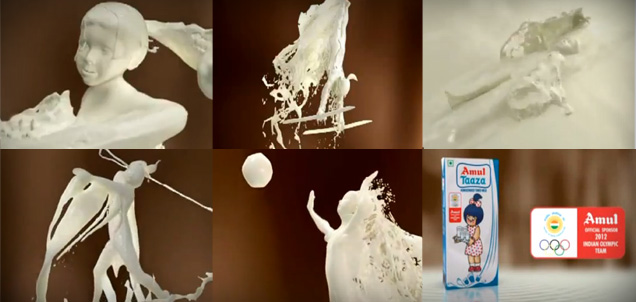
    One brand that is taking the lead in associating with the mega event is Amul. The Anand-based Gujarat Cooperative Milk Marketing Federation’s (GCMMF) Amul has signed a memorandum of understanding with the Indian Olympic Association (IOA) for sponsorship of the Indian contingent.


    With this, Amul has become the official sponsor of the Indian team. For Amul, this association would work in two ways: first, allowing it to push its multiple products that have been positioned for the purpose of building stamina and strength and, second, enabling it to encourage aspirants to go out and deliver their best performance at the event.


    RS Sodhi

    Speaking on the association, RS Sodhi, managing director, Amul, “Amul is committed to strengthening the Olympic movement in India and encourage young generation from all corners of the country to take up sports in a big way.”


    With milk being Amul’s core ingredient, the brand believes that milk is nature’s original energy drink and plays a pivotal role in building the physical and mental strength of the athletes.


    “India is the largest producer of milk in the world and Amul is not only India’s, but Asia’s, largest milk brand. This association, and activities around it, will help in engaging the youth so that they can enjoy a healthy life,” he added.


    In fact, this is not the first time that the milk major has stepped up to push for the cause of promoting sports. In 2011, Amul sponsored the Nether lands cricket team in the ICC Cricket World Cup and Switzerland-headquartered Sauber F1 team at the inaugural Indian Grand Prix. “We use the opportunities available on local and global scale to associate,” explained Mr Sodhi, on the brand’s recent decisions to associate itself with sporting events. “It is a good and positive association to connect with the youth.”


    Helping the brand in its mission is media agency Lodestar UM, which is the media agency on record for the company and has helped the brand associate with sporting events at a global level in the recent past.


    [youtube width=”400″ height=”225″]http://www.youtube.com/watch?v=0Qafz4YDG1A[/youtube]

    According to Lodestar UM, such associations will help the brand as India is a young nation with over 60 per cent of the population being below the age of 35 years and sports is a high interest area for them. “Amul has always been involved in raising the bar. The Olympics association has helped place Amul on the global map of international sporting events. We saw a great fit…Amul’s dairy products stand for high energy and complete nourishment and Olympics stand for values like strength, determination, vigour and winning which every person aspires to, and wishes to imbibe and practice in his daily life. We also saw this as an excellent platform for Amul Milk to assert the positioning of ‘World’s original energy drink’,” said Dhruv Jha, business head, Lodestar UM Content & Experiences.


    Although the brand has come up with a special campaign on the event for the medium of television, it doesn’t plan to come up with any more. “We are continuing our advertising, but no special Olympics focus has been planned during the Games,” said Mr Jha.


    Another motivator, that has always done its bit in raising the awareness levels of Amul with its consumers, will be at it around Olympics too. The eye-catching hoardings that figure the polka-dotted Amul Girl will continue disseminating messages as they always do.


    Rahul da Cunha

    According to Rahul daCunha, MD and creative head of daCunha Comminucations which created the Amul Girl, one should keep a catch-out for interesting and tongue-in-cheek hoardings during the period. “We have already started the build-up and there is a scope for many more as the Games have so many aspects and characters to it.”


    Mr DaCunha is proud to be associated with the brand and now its association with the world-class games. He added: “What can be more Indian than to support the Indian contingent in the Olympics. It’s a very ‘cool’ and prestigious moment for the brand. In the last year and a half, the brand has been getting allied with activities and events which will help it globally too.”


    And the attempt doesn’t end with Olympics. Amul plans to keep associating itself with such major events in the future too. “We will like to associate with any good event/series. Our focus is on the domestic market. But yes, Olympics will help in better brand recognition around the world,” said Mr Sodhi.


    Mahesh Ranka

    Mahesh Ranka, founder & CEO, Indus Sports and Sponsorship, feels that since it’s a home-grown brand, such association will help it create a buzz. “During and after the Olympics, when people will read or see about the games, hopefully, Amul as the brand will be on people’s minds. It’s a very good move by the brand and hopefully other corporates will also learn from it.”


    Not just the brand recognition, Amul hopes that the Indian contingent will get the country recognized in the world with a good medal tally as well. “Olympic Games have come to be regarded as the world’s foremost sports competition where more than 200 nations participate. Participation in Olympics is the aspiration of every athlete and with the kind of investments made by our country in this arena to select, nurture and train the best athletes, we are confident that Indian contingent will deliver the best ever performance in the London games and make our country proud.”


    So, let’s hope the players take India to new heights at the games while the brand would manage to do its bit and bask in the success as well.


  • The Anchor: Prasana Krishnan on 5 things to watch out for in the 2012 Olympics

    By Prasana Krishnan


    1. Indian contingent: The Indian sportspersons have only improved since Beijing 2008. Apart from gold medals, I think our chances of winning a larger number of medals are higher than ever – meaning more silver and bronze medals too – leading to a larger overall tally of medals.


    2. Individual performances: Since the last Olympics, a lot of Indian sportspersons have come to the fore. Our boxers and shooters will do us proud this time as well. And, so will the badminton players.


    3. Team spirit: Controversies might have outshone them. But I do feel that Indian tennis team’s performance will be worth watching. The players are in great form.


    4. Hockey: It’s our national sport and hopefully they will make us proud. The hockey team’s performance is definitely something to look forward to.


    5. Usain Bolt: Don’t be surprised if he smashes his own record. After all, he is ‘Lightning Bolt’!


    Prasana Krishnan is COO, Neo Sports Broadcasting Pvt Ltd


  • Ranjona Banerji: TV lacks training to cover live events

    Ranjona Banerji

    By Ranjona Banerji


    The fire which engulfed and destroyed large portions of Maharashtra’s most important government building on Thursday afternoon dominated news broadcasts and the newspapers on Friday – hardly surprisingly. TV channels switched from whatever they were covering – mainly the unseemly drama over India’s tennis stars and the Olympics to concentrate on the fire in Mumbai.


    It’s self-evident that TV is the best medium to cover live events. However, this is where lack of training – both anchors and reporters – gets exposed. Having shown viewers the fire over and over again – which really points to the camerapersons being able to locate the targets – TV reporters then appear to be at a loss. Instead of hundred several of them “standing by” at various locations around an incident, news channels might be better served if they trained some reporters to collect information while others dealt with on-camera duties. This way, viewers would get some news instead of having to hear: “The fire is still raging and as you can see people are waiting anxiously and if my cameraperson could show you…” over and over again.


    This is an aside: Instead of concentrating on emulating some fancy foreign accent, reporters who appear on English channels might spend more time on their grammar. A young girl on Times Now kept talking about the “backside of the building.” Backside however refers to the derriere, posterior, bottom, buttocks, bum – that is, the rear end of humans. She could have just said “back of the building”. This would not have been so jarring – or amusing – if she had not acquired an ambivalent pseudo-foreign accent.


    * * *


    Incidentally, local channels usually win at times like this and Times Now, being the only major English news channel located in Mumbai had the clear upper hand.


    * * *


    And the same can be said of The Times of India. For the past four years now, Mumbai’s largest English newspaper has been flexing its muscle when it comes to local coverage. With the Mantralaya fire, they covered just about every angle. Since they have employed a large proportion of the city’s reporters, they also benefited from the expertise their staff has picked up in other papers!


    In order, Mid-Day comes next and the tabloid newspaper has done a comprehensive and detailed job, then the Indian Express and finally, Hindustan Times. It is at moments like this that Hindustan Times seems to pay the price for concentrating more on packaging than substance. The Times of India has dispensed with packaging to provide material and this seems to be a winning strategy. Undoubtedly, a commendable achievement for a “product” from a group which is also responsible for some of the worst practices in the media today?


    “Sabotage” asked the Economic Times in a boxed item on their front page, thus emphasising the suspicions that almost everyone has about this fire.


    * * *


    Eminent heart specialist Ramakant Panda’s defence of the medical fraternity (obviously still feeling hurt by Aamir Khan’s Satyamev Jayate) on Times of India’s edit page was not just weak, it was quite funny. Imagine using the incredible service provided by Prakash and Mandakini Amte to the tribals as an example of how great doctors are. If other doctors bothered to even do half of what the Amtes have managed for years, our healthcare to the poor would not be so despicable. Most doctors in Maharashtra however refuse to do their rural stint since it severely cuts into the ka-ching of big city cash registers. Please.


    * * *


    This is just a personal note. My rage against biased coverage of the tennis fiasco led one young (am assuming young from the way it was written and the handle Poopsonurface) person to call me a “Calcutta partisan presswalla”. Amused as I am, I must humbly declare that I have never worked in Calcutta or Kolkata in my career which spans almost 30 years. Other than Mumbai, the only other place I have worked in is Ahmedabad. As to his or her’s other suggestion that I “get a life”, I have taken that under advisement!


  • Games on, but GECs not worried


    By Meghna Sharma


    The UEFA Euro Cup has made the Europeans forget all about the economic crisis; London, along with the whole world, is eagerly waiting for the world’s biggest sporting event – the Olympics – to begin. The world is buzzed about the various sporting events coming up in the next few months.


    Sports, around the globe, generate a major interest and channels – sports or otherwise – fight each other out for viewership and advertisements, and brands try to out-do each other through advertisements and activations to leave a mark on the public’s mind.


    The last event of such a stature in India was the recently concluded IPL which saw the entertainment channels fighting for eyeballs. With the next three-four months choc-o-bloc with sporting events, MxMIndia takes a look at how channels in the country are gearing up.


    Event Period Channel
    UEFA Euro Cup June 8- July 1 Neo Prime
    Wimbledon June 25-July 8 Star Sports
    India-SL series July 22- Aug 7 Ten Cricket
    Olympics July 27-Aug 12 DD/ESPN or Star Sports

    Time to worry?

    According to the media planners, for GECs and other channels, there is nothing to worry about. “Non-cricket fare is still appealing to a small niche segment and hence, its popularity is not reflected in ratings. India in the months of Jul-Aug has always been a moderate performer and not as high profile as some others and so this will also not have a major impact,” feels Shubha George, COO -South Asia, MEC.


    Suresh Balakrishnan

    And she is not alone. Suresh Balakrishnan, CEO, Brand Programming Network, agreed with her and added that though cricket is more than a sport in India, even IPL, which has both cricket as well as entertainment and was telecast at primetime, hasn’t been able to affect channels, especially the GECs in the recent past. “Lately, IPL has been able to get a rating of 2-3 which has hardly affected any GECs, so I’m sure other sports won’t matter to them at all. However, there is no denying the fact that viewership for other sports is increasing in the country. And major events might be able to at least reach the ratings which cricket gets, in the coming years.”


    Mr Balakrishnan, however, feels that sports channels don’t have much to worry about as there are many male-focussed brands which help them generate enough ad revenue. “Having said that, I also feel that channels showing sports other than cricket know that recovering money isn’t an easy task,” he added.


    The television behaviour showcases the interest of the masses which obviously tilts towards popular entertainment channels. However, most media planners agree that sports viewership is growing in the country and soon things might change but until then channels will have to make do with what they have/get.


    Amin Lakhani

    Amin Lakhani, principal partner, Mindshare said: “All leading newspapers and news channels have special coverage of important events, take Euro Cup for instance, but how much of it is being converted into viewership or readership? Even then, that hasn’t deferred them from covering the events because they know that, though tiny, there is a loyal following. Even brands are doing activations for sports which are gaining popularity in other sectors apart from Sec A&B – Pepsi is doing activations for football.”


    Business as usual

    Akash Chawla

    Entertainment channels continue to enjoy the largest share in the viewership pie. Although, they continue to compete with each other, when it comes to other genres, nothing has been able to write them off.


    Akash Chawla, Zee Entertainment Enterprise (ZEEL) marketing head – national channels, said: “Just like IPL, we are ready to combat any other sporting event. Our programming strategy does not depend on these events.”


    “For us, it will be business as usual. The channel is backed with strong and fresh content for its viewers, irrespective of the programming on competing genres,” said Hemal Jhaveri, general manager, Movies Ok.


    Hemal Jhaveri

    Other genres which focus on the same target audience as the sports channels are youth and news. But many in these genres believe that such sporting events don’t affect their viewership. Nikhil Gandhi, executive director, youth channels, media networks, Disney UTV claimed that most of the sporting events attract a majority viewership of urban youth, whereas they, as channels, focus on the HSM belt which includes 62 cities. Hence, such sporting events won’t affect their viewership.


    A broadcast veteran from a Delhi-based news channel too felt that news channels give enough coverage to the various sporting events, so there is no question that the events might eat into their viewership pie. He said that though both cater to the same TG, they are different genres and people might shift between the two, if needed.


    Nikhil Gandhi

    On the other hand, Neo Prime, the sports channel which is currently telecasting UEFA Euro Cup 2012, is aware of the competition within and between other genres and risk involved, but is still optimistic. “Sports is still a male-dominated genre, whereas other genres (read GECs) enjoy female viewership. But during big events, there are chances of a shift in the remote control. Sports do get eyeballs. And as for the advertisements, the brands which advertise on sports channels are different from the ones in GECs or other channels. Hence, nothing overlaps each other,” said Prasana Krishnan, COO, Neo Sports Broadcast.


    Prasana Krishnan

    Hopefully, as said by various media personalities, sports other than cricket in the coming years will be able to generate same interest among Indian citizens across sections and help sports channel to boom and enter the main TRP race as well.


     Imaging: Rafiq, Pictures courtesy: London2012.com