Tag: Niteen Bhagwat

  • Blue Star promotes self-brand Windus in latest ad campaign

    By A Correspondent


    Blue Star in association with FCB Interface has created an ad film that communicates its new air-cooler brand Windus’s cooling benefit in an interesting manner. Four young women visiting their friend’s house on a hot summer day slip into winter wear just before entering the house because their friend’s house has a Windus air cooler.


    B Thiagarajan, Joint Managing Director, Blue Star Ltd said: “Blue Star launched its range of Windus air-coolers last year with the strategic goal of pursuing new opportunities in areas adjacent to its current businesses. The new TV commercial for the upcoming summer highlights that the Windus range of air coolers provides winter-like absolute cooling even in the scorching summer season. The communication focuses on a stylish imagery for the product, along with maintaining Blue Star’s premium brand personality in the minds of the consumers. The Company continues to increase its investments in this product category, with the objective of establishing Blue Star as a significant player in this segment.”


    Added Niteen Bhagwat, Vice Chairman, FCB Interface: “The attempt is to bring freshness and style to a mature category. In a style that is visual so that you get the message even if you do not hear the audio.”


    Said Robby Mathew, CCO, FCB Interface: “What do you do when you enter a category where everyone’s saying the same thing in the same way? The answer is this film. A simple plot where guests are padding up in layers to visit a Blue Star home in summer! The beautiful lensing, the music and Blue Star’s offbeat humour, all come together to make a film that is way outside the category.”


  • Interface creates new TVC for Blue Star

    By A Correspondent


    Blue Star has unveiled a new TVC for its inverter range of home air conditioners. The TVC brings alive Blue Star’s new brand proposition – Nobody cools better. The film is set in a home where the guests have just left and the tired host and hostess are looking forward to some much needed rest when they notice something amiss. Unknown to them, some guests have overstayed. The reason? Blue Star’s incredible cooling.


    B Thiagarajan, Executive Director & President- AC&R Products Business, Blue Star, said: “The differentiated value proposition to the residential audience over the last few years has been ‘Get office-like cooling at home’ which leveraged Blue Star’s expertise in cooling offices. Given the fact that Blue Star is now well entrenched in the residential segment with an overall 9 per cent market share in Room ACs, we felt it prudent to communicate a new value proposition of ‘Nobody Cools Better’ which highlights our unmatched expertise, experience and deep understanding of the science of cooling. Our tone continues to be premium, modern and aspirational and this TVC will help us further strengthen our equity amongst the discerning home buyers.”


    Niteen Bhagwat, Executive Director, Interface Communications shared, “A powerful consumer insight ‘People not wanting to leave a well-air conditioned room’ delivered in a style that breaks the category clutter and is a welcome departure from the sameness of air conditioner advertising. The client team and the agency took a risky bet and the research tells us that consumers love it.”


    Robby Mathew, National Creative Director, Interface Communications said, “The creative idea of ‘blending in’ was a mother to execute. Shot live with minimal CG, the end result does justice to Blue Star’s quirky advertising.”


  • Does editorial content need an eye in the sky?


    By Ananya Saha


    Recently, The New York Times set up a news analytics team with the aim of establishing a better understanding of how editorial content is consumed – to know if the content being created is actually working, and if they’re publishing the news the right way, and where and how can they fix the gaps.


    With more and more people consuming and sharing news in real time, do media houses in India too need analytics team to make data-driven decisions? Would it help the editorial decisions? Do Indian media houses need it yet? While Sriram Kilambi of Bloomberg preferred to not comment since Bloomberg is considering it, the industry thinks it is the right time to employ data analytics for editorial decisions.


    Mitrajit Bhattacharya, President-Publisher, Chitralekha Group

    Different media houses have their own methods of assessing the efficacy/ response to their content. We religiously go through the traditional letters and emails from our readers. The feedback is very sharp on new media like Facebook. Based on continuous feedback from our readers we decide to make changes in our edit mix. It’s a continuous process though. Use of analytics is always welcome. It just makes the feedback process bias-free and scientific.


    Niteen Bhagwat, Executive Director & CEO – Asterii Analytics

    The data analytics and its role in news and journalism was the tipping point in US market after the Obama election campaign. Nate Silver, an analyst had predicted that Obama would win even when expert commentators had predicted that Romney might win. However, Silver’s prediction was right since he based his theory on data available. He made an editorial comment based on marketplace. Now, that was the tipping point. There is a lot of data around that can be used. Even the US papers moved to data-based journalism from opinion-based journalism.


    There are three kinds of journalists in a news room: traditional, social media or digital-friendly journalists, and quant or quantitative-oriented journalists. Quant journalists are the ones who can make sense of huge amount of data. Now, whether it is journalism, corporate communication or PR, we will need people in all three buckets or people who have all three qualities.


    The second point is, NYT is one of the 100 publications that have a metered payment gateway. And it has registered more subscription revenue than advertising revenue. This makes the publications enjoy more freedom when it comes to content. With data analytics in place, one can understand the online reading habit – can know the demography, or which part of the publication is being consumed more, which will allow more tailor-made content.


    Shantanu Bhanja, VP (Marketing), HT Media Ltd

    Yes, for sure. While the editorial judgment is paramount, analytics are valued inputs to that judgment. Our analytics team helps us give the editors a pulse of the consumer, as well as feedback on our news offerings in real time as well as over periods of time. The final editorial decisions are taken solely by the editorial team. However, an analytics team provides the reader interface. We carry out various studies, both online and offline some continuous (with different periodicity) and some as and when the need arises.


    Projit Chakrabarti, Head – Marketing Services, NDTV Limited

    Well certainly for genres of news that fall into the category of ‘information’ or ‘news you can use’; with more and more 360-degree targeting to the consumer  becoming increasingly relevant, data and analytics will drive the dissemination of certain kinds of news and information. It will most certainly help from a contextual and utilitarian point of view but may be not so much from an editorial point of view. Indian media houses definitely need it.


    Ashish Pherwani, Partner, Advisory Services, Ernst & Young

    At the end of the day, a media house (whether TV, print, radio, website, whatever) provides audiences to advertisers.  With the growth of digital distribution channels and the proliferation of lower-cost hardware options, audiences are changing the manner in which they consume content.  Hence, media houses now not only need to provide their content to their audiences in the manner and format of their choice, but also keep using analytics to understand changing audience preferences, to better cater to them.


    Analytics will also enable better sales efficiency – enabling ad sales teams to sell in a more targeted manner. And of course, editorial teams, to understand what type of content do their audiences prefer, at what time and how it must be packaged. Hence, analytics leads to (1) better serving the audience and (2) better monetization of the audience.


  • Asterii seeks to create new wave in the world of analytics

    By Johnson Napier


    How often do we come across marketers, media agencies and surprisingly, even research bodies who say the inevitable: ‘due to lack of data… we couldn’t project the right numbers’ or ‘our projections fell short of expectations due to the variation in numbers’ and so on? In fact most marketers are wary of pumping in huge monies behind a project or activity given the lack of availability of accurate data that goes a long way in simplifying trends and analysing customer behaviour across markets – ingredients that play a critical role in the marketing plan of most brands.


    While research agencies are the most sought after for mapping such trends, they often fall short in providing a plan that is wholesome; something that could alter the way marketers look at the future. Such shortcomings are turning out to be easy pickings for agencies, which are on an overdrive launching divisions dedicated solely to analytics and data. And the latest to join the bandwagon is ad agency DraftFCB+Ulka that has announced the launch of specialty division, Asterii Analytics in India.


    Niteen Bhagwat

    In India, the team will be led by Niteen Bhagwat, who has been assigned the post of Executive Director and CEO. Sharing his views on the new launch, Mr Bhagwat admitted that while agencies were waking up to the phenomenon in a heightened manner, there was still a lot that is needed to be done in the space. “The mantra at DraftFCB+Ulka has always been about creating brand wealth and making our clients richer. At one point in time, it was having right strategies and good creatives, which will continue but the marketplace is becoming increasingly competitive for our clients. The same set of tools or decision-making may not be as optimum or efficient as it was earlier. We believe that if our clients have to compete, they have to take decisions that are completely rooted in data. So, if we have to continue delivering on our promise of creating brand wealth with the underpinning of analytics, it is absolutely critical. It also compliments beautifully with our overall approach of being a strategy strong agency group.”


    An analytics person with more than two decades of experience in the field, Paula Fedoris, EVP, Chief Analytics Officer – DraftFCB pitched in by giving a global overview on the origins of analytics and the need for the discipline to make it big in India. “In certain markets, the marketing and media analytics trend has been taking place for the past 15 years or so. There are certain agencies, particularly in theUnited StatesandEurope, which have gravitated towards making sure that marketing strategies and media investments are as smart as possible. So we have been applying analytics to these challenges for quite a few years now. This is more so for agencies which are more focussed on one-to-one marketing or database marketing or direct marketing, they have always been very quantitative-oriented.”


    Paula Fedoris

    According to Ms Fedoris, with some organisations, when the internet came in a big way in 1999-2000, it was then that some of these tools and techniques went on the online space. “Over the years, we have been able to generate a lot of data by our marketing activity. The companies are trying to data-mine insights from this information to draw new insights and conclusion and make better decisions, not only about their current business but also on where they need to go in the future and how this information can help in identifying new and important trends that they need to be mindful of, as they develop a strategic direction and maintain competitiveness in the marketplace.”


    Citing statistics, Ms Fedoris said that overall businesses are generating about 40 per cent new data every year and how companies are being able to harness this information and in the marketing arena this has been accelerating even more.


    As for the USP that Asterii would bring to the table, Mr Bhagwat stated categorically: “Asterii will bring a far sharper focus on analytics than other offerings from marketing communication companies. That’s majorly because it is a standalone agency, so much of the resources and people in the team will be focussed on Asterii; they won’t get lost in handling other functions within the organisation. As for the other groups that offer analytics, what we understand far better than most is the concept of insights. So we would be far better than the others based on our insights and ideas in the marketplace.”


    In fact, Mr Bhagwat was certain that it was the most opportune time to launch in the country as marketers would take a liking to the service given the hostility that’s being faced by them amidst a hostile economic scenario. “When businesses are under pressure, analytics is proven to be able to give you a lift in terms of sales or profitability and by a huge margin, if done properly. If the market conditions are tough, analytics would probably be the answer to find new segments to increase growth or market share or figure out ways to optimise your marketing communication by doing market mix modelling. So, if at all there are budget pressures, analytics will help clients spend their money more effectively. In a sense, now is the best time for us to launch our division.”
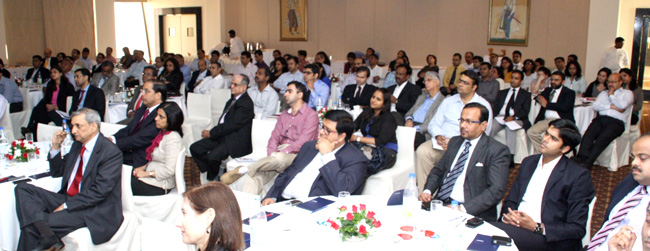


    Chancing upon the opportunity, Mr Bhagwat admits that the agency has approached at least ten marketers to offer their services. These include clients who are aligned to the advertising agency as well. “We have started speaking to a whole host of people we are associated with and the response has been encouraging. Close to ten marketers have evinced interest and we would be meeting up with them to decide future course of action. What actually materialises, I think only time will tell.”


    On the sectors that the solutions would be centred around, Mr Bhagwat said that it would be automotive, packaged goods, financial services and retail. When asked on how they went about shortlisting these sectors, Mr Bhagwat said: “There are certain sectors that are rich in data, so the comfort level in doing analytics in those areas will obviously be very high. Also, at the same time, companies in sectors such as retail, automotive, packaged goods and financial services would be analytics-aware sectors and so the kind of solutions that they would want would be of a different kind versus companies in, say, fashion or food where analytics is not used as much.”


    A much more historical and detailed perspective was provided by Ms Fedoris: “Historically, analytics started with the financial sector because they are very quantitatively-focused and this got further momentum with the advent of credit card transactions and the ability to find out what the people were purchasing. In theUnited States, we were able to marry our purchase decision behaviour with the demographic information and so that was always a robust area that people focused on. It seemed to then migrate to the travel industry, as people began to book their airline tickets and have loyalty programmes, both the airline and the hotel industry understood the importance of relationship marketing and began developing databases of their customers. Ultimately it moved on to retail as people used their credit card in the retail establishment and then finally it moved on to the packaged goods area.” According to Ms Fedoris, a lot of people are going on to the internet to find information on how to go about buying packaged goods product and are able to find solutions online. “So these are the core sectors that emit a lot of data on patterns and trends,” she said.


    So focussed is the group on the new division that it won’t stop short in going all out as far as investment is concerned. Asserts Mr Bhagwat: “Analytics, for us, is an absolutely critical offering that the agency group is going to have. So investments won’t come in the way of growth as such. We are not looking at this only as a revenue model but more as a capable solutions provider. We have invested in new office space in Mumbai that can seat up to 50 people; we are also investing in fairly expensive software and hardware that goes with it. Also, Paula would be coming toIndiaon an ongoing basis to be able to bring along global best practice tools that are in use around the world. This will enable us to have global scale and capability in our Indian operations.”


    As for the growth, Mr Bhagwat feels it is too early to foretell, but that is not of concern as yet. On a stronger note, he feels that the analytics market is still in its infancy and has a lot of potential that’s yet to be explored. “Analytics market inIndiais still in a nascent stage; they do not pay as much money as they do in international markets. So it is an under-served and under-priced market,” quipped Mr Bhagwat. According to him, all this will change once people start understanding the true value of analytics and how one can take advantage over competitors by employing analytics. In his opinion, the tipping point is next couple of years. But what is important is that the availability of good quality data is going to improve dramatically in the future, he concluded.


     

  • DraftFCB+Ulka launches Asterii Analytics

    By A Correspondent


    The DraftFCB+Ulka group has launched Asterii, an analytics company which is stated to continue the group’s endeavour to build capabilities and solutions that will create brand wealth for its clients.


    Explaining the rationale of the launch, a release from the company said, “Today’s business environment is being reshaped by three distinct factors. The first factor is a rapid decline of exploitable market segments. Easy access to technology and global internet-driven communication systems means that any idea gets replicated in months, if not weeks. The market has millions of profitable niches but these are not visible using conventional marketing techniques. “The second factor is the high cost of launching new brands and variants and consequently the high cost of failure. A cluttered market environment compounds the problem.


    “In such an environment marketers and businessmen are discovering that the time-tested method of intuition-based decision systems, albeit with a lot of process and information backups, is not yielding the desired results. In such an environment, there are several companies, which we call analytic organisations, which are competing on the basis of analytics and have built the entire organisation on a culture and process of data-driven decision systems. These companies increasingly are outperforming their peers in the marketplace “This shift has become possible because of a third factor which is the confluence of data and the computing power needed to manage and interpret that data.India, traditionally, has a paucity of good data and computing power was too expensive for the medium-sized business.


    “But today, India is at a tipping point due to the rapid expansion in the retail and financial sectors and a huge amount of data being available to marketers, the IT and communications revolution would mean computing power on your desktop. These three factors are going to intensify a trend and a shift towards analytics-based decision-making, which would become the game changer for companies over the next ten years.”


    Asterii is headquartered in Mumbai with Niteen Bhagwat as the executive director and CEO. The global analytics network has over 100 analysts within the DRAFTFCB network with key resources in Europe andUSA. Asterii has domain expertise across retail, automotive, financial services and packaged goods. The release said that Asterii, a coined word, is derived from the word Asterism which means seeing a pattern of stars in the sky and patterns, which give meaning to the billions of data points that any business has to interpret and decipher.


    Asterii will draw on over 50 years of expertise in creating ‘brand wealth” and developing communication programmes and marketing strategies that are based on unique consumer insights. The company is unique among analytics companies in that it goes beyond techniques and tools to bring “insights” which are rooted in data and analytics and which will help create solutions that will have a predictable impact on the client’s brands and business.


    Asterii, a specialist marketing analytics company, plans to support clients across the entire spectrum of marketing activities. It is supported by a global network of analysts in the DraftFCB ecosystem, giving its clients and business partners access to the global tool kit and best of breed technology solutions. The Asterii solutions toolkit will span the entire spectrum of marketing activities from the assessment phase to growth and maintenance strategies for a brand. The specific modules that Asterii Analytics offers are as follows:


    • Assessment Solutions

    Robust tools to help clients evaluate and select markets, map competitive forces and thus help assign a value to the consumer opportunity. This will help create a macro view on the brand and also help develop go to market strategies.


    • Growth Solutions

    Growth opportunities that emerge from being able to segment the market and do predictive modelling based on behaviour data or other unstructured data sources. Growth is about designing the right acquisition programme and by developing a robust testing and consumer response model. Growth is also dependent on the pricing decisions.


    • Relationship Management Solutions

    Asterii believes in the adage that the best means of growth are from within and that meeting customer expectations and creating customer delight is far more valuable than acquiring new customers.


    • Monitoring & Optimisation solutions

    Analytics also means that measuring and calibrating the performance of the marketing programme. With state of the art reporting platforms like the smart wall and the social news room data and information becomes easily interpretable insight.