Tag: Nishant Rao

  • LinkedIn’s Nishant Rao appointed IAMAI Chairman

    By A Correspondent


    Nishant Rao

    Nishant Rao, Country Manager – LinkedIn, is the new Chairman of Internet and Mobile Association of India (IAMAI). Rao would be taking over from Rajan Anandan, Managing Director – Google India.


    Nishant Rao takes over at a time when the industry is going through a growth trajectory with more than 300 million internet users and more than 200 million mobile internet users. He said: “This is an exciting phase in growth story of internet in India. The digital industry is growing steadfastly and with that we now have regulatory and policy issues cropping up. IAMAI has been working persistently towards the growth of the medium and is also working with all stakeholders to create a conducive digital eco-system. It is our vision to work closely with the government, agencies and members to ensure a healthy growth and functioning of the digital eco-system.”


    Vinodh Bhat, Co-Founder & President – Saavn is the new Vice-Chairman, who will take over his new role from Kirthiga Reddy, Managing Director, Facebook India. Kunal Shah, Founder – FreeCharge has been elected as the new Treasurer.


    The new team was announced at the 11th Annual General Meeting, which was held today.


  • LinkedIn crosses 30-million member mark in India

    By A Correspondent


    LinkedIn has announced that it has crossed 30 million members in India. This marks a 50 per cent growth over the past two years. LinkedIn had 3.4 million members when it started operations in the country in 2009. India continues to be the largest market for LinkedIn after the Unites States in terms of member base.


    The  30 million members on LinkedIn represent a diverse cross-section of skills (from management and human resources to testing and training) and industries (from tech to education and automotive),  helping to power  an already vibrant Indian economy and paving the way to strategic initiatives such as ‘Make in India’.


    Nishant Rao

    “We’ve reached a critical mass in India, a country that remains a strategic market for us.  But we still have a long way to go, and along the way, we want to continue to add value to the professional journeys of our members. We also see a significant opportunity to collaborate with key players in India in areas such as skills development, so that our members can create an even more significant impact on the economy,” said Nishant Rao, Country Manager, LinkedIn India.


    LinkedIn’s research shows that 1 in 2 (53 per cent) students and young professionals believe the best way to get their first job is through internships. In line with this finding, LinkedIn partnered with MTV and other major companies in India, such as Flipkart and L’Oreal to help students find internship opportunities. This partnership saw 85,000 students applying for internship opportunities and taking important first steps in their professional journeys.


    Other interesting facts about LinkedIn’s members in India:

    Top 10 industries represented:


    :: Information Technology and Services,
    :: Computer Software
    :: Accounting
    :: Education Management
    :: Electrical Manufacturing
    :: Financial Services
    :: Banking
    :: Mechanical engineering
    :: Telecommunications

    :: Automotive


    Top 10 most followed companies:

    Members in India are most interested in the technology industry, and are major followers of tech companies, including several home-grown giants.


    :: Tata Consultancy Services
    :: Accenture
    :: IBM
    :: Hewlett-Packard
    :: Infosys
    :: Cognizant
    :: Wipro
    :: Google
    :: Microsoft
    :: HCL Technologies


    About LinkedIn

    LinkedIn connects the world’s professionals to make them more productive and successful and transforms the ways companies hire, market and sell. Our vision is to create economic opportunity for every member of the global workforce through the ongoing development of the world’s first Economic Graph. LinkedIn has more than 364 million members and has offices around the world.


    Press contact


    Deepa Sapatnekar

    LinkedIn India

    +91 9920131177

    dsapatnekar@linkedin.com


    Trishnala Vijayakar

    Edelman India

    + 91 9773400258

    Trishnala.Vijayakar@edelman.com


  • Mobile marketers discuss trends & future at IAMAI Summit

    By Sneha Johari


    The number of connected Indians is also going to exceed the English newspaper circulation in India by ten times and will exceed the English speaking population in India by 1.5 times. These and a variety of other facts and figures were discussed and deliberated on at the Mobile Marketing Summit 2014, organised by the trade association IAMAI at the Hyatt Regency in Mumbai on Wednesday. The event saw a turnout of around 200-odd marketing enthusiasts learn about future marketing trends, understanding consumer behaviour, the mix of social and mobile media among a host of other topics.


    Rajesh Jain

    Rajesh Jain, Chief People Officer of netCORE Solutions spoke about the integration of marketing and technology which is already upon us (and is slowly merging). Tushar Vyas, Managing Partner Interaction of GroupM South Asia took some stand-out numbers and presented them in the context of the Indian online population.Talking about the next 100 million users (the upcoming generation as well as people who are converting to smartphones), in the near future, the number of connected Indians is going to be larger than the US population. India is the world’s second largest online user base. He also gave the stats on the number of connected Indians exceeding English newspaper circulation cited earlier. Mr Vyas added that the tolerance for delay (in any service) is decreasing as the information gap closes in and more and more things become available to a consumer faster. “The mobile web is increasingly becoming visual and discoverability is now social,” said Mr Vyas.


    Neeraj Roy

    Neeraj Roy, MD and CEO of Hungama Digital Media Entertainment stressed on the statistics of mobile consumers. “79% of smartphone owners are also smartphone shoppers. The Asia Pacific region will have the largest in B2C e-commerce in the near future,” said Mr Roy. Content is consumed across devices and people want a uniform experience across devices. The CEO of Proscape Services, Michele Raspone demonstrated how Proscape helped in cutting costs and enabling technology for their clients.


    Nishant Rao

    In the midst of all marketing talks, Nishant Rao, MD, LinkedIn India spoke about how mobile could be leveraged to become more productive professionals. He stressed on the importance of having a simple app for your business which worked efficiently and delivered the content or service. “Mobile is a mindset,” said Mr Rao. It should not be viewed as a technology separate from our lives. When asked by an audience member whether it would be best to have an all in one app, a mix of Facebook and LinkedIn, Nishant said that although that would be a nice idea, people prefer to keep their personal and professional lives separate.


    As the Summit progressed, a session on Marketing APPeal: Nuances of Mobile App Marketing discussed important aspects of investing in apps, best methods for a marketer to retain users on the app, native ads, how to use push notifications effectively while increasing consumer engagement and how to prevent overexposure of information. Rohan Tyagi, Digital Product Head of ABP News, said that push notifications helped in increasing their user engagement fourfold. This led to higher consumption of news. “You need to study your app as well as its users carefully. We segregated our users based on their engagement (high or low engagement) and delivered notifications accordingly,” Mr Tyagi said.


    Veer Chand Bothra, Chief Innovation Officer of netCORE Solutions said that looking at the app as content was necessary. He also mentioned that content is the king. His advice to marketers using apps? “Integrate all your information channels- voice (call), SMS, push notifications and email. As a marketer, take an omni-channel approach where the experience remains uniform across platforms,” Mr Bothra replied. Jay Jain, Director and Co-Founder of m-AdCall Digital Media, an app which lets you earn incentives for watching ads, said, borrowing from experience, “Give points to your consumers to bring them back to your app.”


    Nitish Tipnis, the ‘old-school’ Director of Marketing & Sales, Hover Automobile India neatly demonstrated Nissan’s social-only approach to the launch of its SUV, the Terrano and the phenomenal results they got from this medium last year. Nitish elaborated on how the customer is interested is knowing how technology works for them, that as marketers we should not bombard them with high-end tech specs but rather simplify and explain. In his research, he found that 95% of automobile-buying prospects research online before making a decision to purchase an automobile. “Create conversation, ensure quick responses, use multiple channels to engage with customers,” Mr Tipnis suggested.


    Rajiv Dingra

    The last plenary session explored the symbiosis between Mobile Marketing and Social Media. Rajiv Dingra, Founder and CEO, WATConsult, talked about using the right kind of content for social and differentiating correctly between the print, TV and online, especially social media.


    Snehi Mehta, Head – Client Solutions, Facebook India said, “Brands must have a voice on social platforms. Facebook is not just a social media platform, it is a mass media platform. We have to simplify planning metrics. Planning metrics have changed. It’s not about a 30 second advertisement anymore. The need of the hour is optimum reach.”


    Different case studies were also presented towards the end of the Summit.


  • Weekend Exxxtra: One in 3 parents in India don’t understand what their child does for a living: LinkedIn study

    By A Correspondent


    One in three parents in India admit they are unfamiliar with what their child does for a living and so may find it challenging to provide the right advice to support their child’s success. Interestingly, 90 per cent of the Indian parents surveyed agree that they could benefit their child if they had a better understanding of what he/she did at the job. These were findings of global survey by online professional networking platform LinkedIn which was also conducted in India.


    ‘LinkedIn Bring in Your Parents Day’ is a way to help bridge this gap by bringing parents and their children together at the workplace, so they can learn from each other.


    LinkedIn has announced ‘LinkedIn Bring In Your Parents Day’, on Thursday, November 7, 2013 to help bridge this gap by bringing parents and their children together at the workplace, so they can learn from each other. Professionals are encouraged to invite their parents into their workplace to provide them with a first-hand look and greater understanding of what they actually do every day.


    Nishant Rao

    “With a plethora of options available to professionals today it is plausible to say that most parents may not completely comprehend what their children really do at work each day”, said Nishant Rao, LinkedIn India’s Country Manager. “By introducing LinkedIn Bring in Your Parents Day we not only attempt to bridge the gap between parents and their children, but also let professionals in India provide their folks a glimpse into what they do at work, and in return, takeaway valuable lessons and even greater appreciation from their parents.”


    The survey further reveals that two third of parents surveyed want to learn more about what job their child does. In India 65 per cent of parents surveyed are familiar with the job/career that their children pursue. Globally, careers such as social media manager, investment banker and sociologist are among the top 10 professions that parents are least likely to comprehend. While in India, this list includes professions such as care nurse, sub editor and radio producer.


    37 per cent of Indian parents surveyed would like their children to pursue a career path similar to theirs; the highest globally. However, when it comes to working in a preferred industry, Indian parents have varied views. Contrary to popular belief, a mere 28 per cent of Indian parents, want their children to become doctors, while 40 per cent of them would like to see their children employed in a finance-related job, making it one of the most coveted jobs/ sectors. According to the survey, a large number of Indian professionals (36 per cent) also look forward to bagging a job in finance. It is interesting to note that only 1 per cent of the parents surveyed want their children to become politicians.


    The top 10 misunderstood jobs in India, with the percentage of parents who weren’t confident in their ability to describe the job are:

    1. Lumberjack (75 per cent)

    2. User Interface designer (64 per cent)

    3. Actuary (64 per cent)

    4. Radio producer (59 per cent)

    5. Care Nurse (55 per cent)

    6. Fire-fighter (55 per cent)

    7. Laboratory technician (53 per cent)

    8. Sub-editor (52 per cent)

    9. Veterinarian (52 per cent)

    10. Data Scientist (51 per cent)


    LinkedIn Bring In Your Parents Day will be held in 14 countries including the United Kingdom, United States, France, The Netherlands, Sweden, Germany, Italy, Spain, Brazil, Australia, India, Canada, Singapore and Hong Kong. Many companies have confirmed their participation.


    We enourage – parent, employees, and businesses in media, advertising and marketing to participate. Details at www.LinkedInBringInYourParents.com.


  • Linking In with Nishant Rao @ IAA Webinar


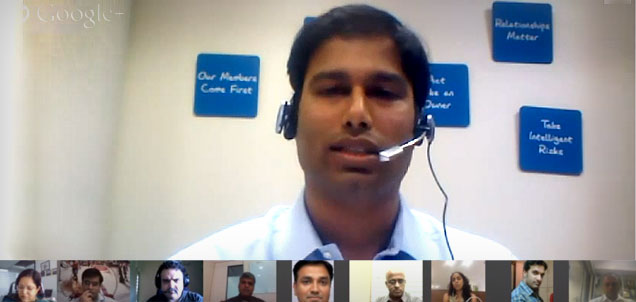
    The International Association of Advertisers (India Chapter) conducted its third webinar on Thursday, June 27 with Nishant Rao, Country Manager, Linked In India.. The IAA Webinar series with the theme ‘World Goes Digital’ is spearheaded by Abhishek Karnani and director, Free Press Journal group and Manish Advani, head – marketing and public relations, Mahindra Special Services Group as co-chairs. *


    The panellists included:  Manish Advani, (Mahindra Special Services Group), Gaurav Mendiratta (Sociosquare), Deepali Naair (L&T General Insurance), Sheran Mehra (Mahindra Holidays), Vinay Krishna (JigServ), Ramakrishnan Laxman (MCCS, ABPNews group) and Suraj Lokare (Xanadu Consulting).  Pradyuman Maheshwari, Editor-in-chief and CEO, MxmIndia moderated the event. Other than the panellists, some questions that came in from the public in response to our announcements on social networks were also posed to Mr Rao.


    Excerpts from the Q&A:

    Opening Remarks by Nishant Rao:

    As consumers, we’re getting tonnes of information at our disposal and what avenues like Social are creating is a way to have a voice and participate in that and create our own information. So as this information floats what becomes super important is its relevance to us. What LinkedIn is trying to solve is help each professional to be more productive and successful. And we are trying to do that by ensuring those relevance because we know who you are based on your industry, your function and the sort of things you have mentioned on your profile we can try and make sure that there are insights that are relevant to you. So that’s a big part of our consumer-value proposition in addition to having a critical mass of professionals that we can collaborate and communicate with. With so much information being created we see an opportunity for companies and brands to play a part in making our members more productive and successful. The way we are doing that is by tapping into a lot of insights that are being shared by consumers on LinkedIn whether it is their opinion on news or opportunities etc we are using those signals to help understand what their unique needs are and allowing brands and companies to play a part in getting them their relevant information and content so that they help these professionals in whatever way they can. So fundamentally, what the internet has enables is because of this explosion of information it is changing not only how we collaborate and communicate but also how companies can play their part in making us more productive and successful in this hyper-competitive and super-charged environment.


    In the last few years, news seems to have become an important focus area especially for portals like LinkedIn. Could you share what’s the percentage that news as a domain contribute to the overall traffic on your website. Also, most content on your website in US-based, are we going to see content being updated from India as well?

    Nishant Rao: As we analysed as to what kind of information helps make the consumer more productive news is definitely one of those things that all of us professionals look to update ourselves with because it is so important. The broader vision is for LinkedIn to become a professional publishing platform for individuals and part of that is generating insights that are relevant to a news article or content piece…but overall this is a shift in direction to make sure that we move away from being just a static profile to being a more holistic representation of who you and I are as members. So the starting point is to have some content so that people can share their opinions. Where news is concerned, we are making it a point to have more integrated channels with it. For example, a leadership channel which could come from some influencer content or some news content or from some individual writing a post. So that’s an overall direction that LinkedIn is taking.


    As for the question on percentage share, we do not report site metrics at that level but what I can say is that LinkedIn is catapulted to becoming the largest source of a lot of news sites. So we respect the IPs of the news sites out there and so when we find a news article and click on that it’s actually a page view that gets generated and because of that we have become one of the largest routers of traffic of different sites and that gives you a sense of impact that LinkedIn is having in this space. As for content, we are trying to take the approach where be it a global influencer or somebody else they will offer views and insights from an overall perspective and gradually we will be having more local news and local influencers having local relevance. So we are in the process of making that happen.


    Personal networking platforms have really taken off in India and if one were to compare LinkedIn to these websites, it is slightly on the backfoot and the fact that Twitter stopped the feed to you didn’t help at all. From a consumer behaviour perspective, if one wants to attract the B2C customers, could you help us understand what LinkedIn does on that front apart from using your platform to update their profiles?

    Nishant Rao: We started our business about a decade ago and around that time we were more of a profile-update or looking-out-for-jobs offering. What we seen in the US about 3-4 years ago and which we are starting to see in India also is that people have stopped updating their profile just when they are looking for jobs and that is really when what’s enabled a lot of magic to happen. People are realising that their profiles are kind of their conduit to other factors. If you think about the three types of content that consumers are saying they want from the sites are information on connections and opportunities, looking for updates on brands that help make them more productive and successful and they are looking for information which is relevant to current affairs. What people are also realising is that the more you fill your profiles and keep it fresh the more the opportunities that are presented. In fact according to a research that we conducted, jobs was the No 5 out of top 5…so that’s the kind of shift that we have experienced especially in markets like US and are now seeing it in India as well. Eventually we believe that the more information you give us the more we can make it more relevant.


    As for the demographics, we think of our site as being for ‘prosumers’ – professional consumers. These TG are skewed towards being an educated, affluent audience in comparison to other larger sites that are there around. That just comes from the bias that LinkedIn has on the professional context. It’s a self-selection mechanism; we do not aspire to be a site where one comes for entertainment reasons or just to hang out. TNS did this survey for us which helped us codify the difference between a personal networking platform and a professional networking platform. The genesis of what they found is that people go to personal networks to spend time and they go to professional networks to invest time. So each consumer can have these different personas and as a result these different sites give you a manifestation of this. I use FB, Twitter, LinkedIn but I am a different person across each of these platforms. So the professional context has really helped us in terms of not playing the same game as the other networks; we want professionals to come and not have diluted conversation but aspirational and productive comments on the site. The numbers are a manifestation of that and I would say even in India where we have more than 20 million users the ratio of number of users on LinkedIn versus the personal networks is closing fast and that gives you a sense of the value that people see on our site.


    One has to come up with new ideas and strategies on a daily basis and when one talks of strategies on LinkedIn one feels very restricted because it has been a kind of a closed network when it comes to APIs in building applications. While it is kind of opening up now, is there a conscious decision behind what you decide to do?

    Nishant Rao: As a company, part of our hesitation to completely open up APIs is making sure that the member experience is not compromised as a result of that. We are constantly straddling the line between making sure that we are fostering innovation as well as making sure that our members have a good experience on our network. We have seen a tremendous increase in the number of members using our APIs and are realising the power of our APIs that are available. So we do have a large set of APIs for people to use and I think part of our philosophy of taking care of our members’ concern has helped us keep our context to a professional level. Also, we are helping marketers leverage some of these APIs in a more creative way. Sometimes there is a disconnect between the creative ideas that one has and which APIs do you use. So sometimes it becomes more of an educational exercise than anything else. It’s not like we are trying to make a monetisation play on building up those APIs as propriety to us… but we are helping give them that mindshare or the education needed to harness the full power of LinkedIn.


    Big Data seems to be the buzzword these days. How much of it is LinkedIn leveraging in India?

    Nishant Rao: I agree with you that Big Data has become one of those buzzwords that everyone wants to do something with it but I came across an observation where it was revealed that about 68 per cent of the companies have some sort of a data warehousing BI solutions but only 8 per cent used it. So that gives you a sense of disconnect that exists. This is something that LinkedIn had to take into consideration seriously because of the volume of data that is seen. The way we use it is that we are moving on to having unstructured information using technologies like Hive etc. We’ve also taken it further to use those insights and pull it back into our product processes. For example, when we launched our iPad application it was a single mirror image of our website but we observed a spike in the usage at coffee time in the morning between 7-9am and again in the evening called as the couch time where people were catching up on what they missed out. So that insight we used to get another reiteration out so we integrated a calendar for the morning time where people get sort out their agendas and meetings and for the evening we added the news element where people could catch up on what they missed the whole day. So that was an example where we used Big Data to funnel back into product.


    LinkedIn charges vendors to reach out to candidates, is there a way this accessibility that can made more user friendly?

    Nishant Rao: If you compare LinkedIn to some of the other talent firms they take a different approach by publishing phone numbers and email addresses and stuff like that. But it’s our philosophies to not such things as we do not like doing it because we value our members first. One can even message a person if he is not in connection and it is up to that person to realise that it is important to him and thus respond to the message or to the connection. So the power rests with the members to make those decisions rather than in some sense bastardize the concept of a connection.


    How can small and midsize businesses (SMBs) leverage best from a platform like LinkedIn both from a hiring and outreach perspective?

    Nishant Rao: For us at LinkedIn, we see enterprises playing a big role in enriching the lives of our members. So we are looking at transforming the way companies hire, market and sell by making it more relevant. If there is a relevant job for the member it is better for the member as well as the company because you are moving on from quantity-based to quality-based processes. So for SMBs in particular, we are seeing in particular that LinkedIn is a platform rather than a one-off point solution. LinkedIn provides SMBs to provide your TG in a manner that you want to target them. We even have an option for SMBs to display ads to the relevant TG that they wish to online.


    Hs LinkedIn thought about using Verified Accounts?

    Nishant Rao: We haven’t announced anything on those lines as yet and our belief is that verification may not be unique to any given person. We’d like to think about verification as the network verifying for you though we already have tools out there that are free and for public use. Also, we always encourage our customers when they are making a hiring decision to tap into the fact that a person is not a single person but there is a network around him and more likely than not there could be a lot of common factors between the two.


    As for the question of verification, we haven’t picked up any noise as yet about profiles being inaccurate or factually wrong. Maybe that’s the reason why it hasn’t bubbled up to the top list of priorities that we have. But we have seen a lot of traction in these other more dispirit verification sources.


    How can regional players look at integrating with what LinkedIn has to offer to its members?

    Nishant Rao: What we’ve realised is that consumers can wield a lot of power from our network. It goes back to what is the business problem that one is trying to solve. If it’s a business problem then we do have consumer-based solutions or enterprise-based products that can drive there. As we’re able to get local relevance from that content they can use it as their traffic source and use it to build awareness about his products. They can even use it to solve talent solutions. So it all depends on the problems that regional players are looking to solve.


    Would we see a comeback of LinkedIn Events online?

    Nishant Rao: We used to have LinkedIn Events and we are in the process of sun-setting a lot of things that were individual features into a larger amalgamation. I wouldn’t be able to tell on what’s the immediate future on that and fundamentally that’s because we have so many features running on our site. We are always looking to see where our members are seeing for traction.


    LinkedIn is trying to make a paradigm shift in Sales as well. We have a Sales Navigator as a premium subscription product that’s there where the premise is that of we can take cold calls and convert them into warm prospects it is a win-win for everybody. We are always looking at opportunities for making the lives of our members productive and successful.


    *Disclosure: MxMIndia has partnered the IAA (India chapter) Webinar series



  • LinkedIn’s Nishant Rao in IAA webinar on June 27

    By A Correspondent


    The International Advertising Association (IAA) – India Chapter has announced its next webinar with Nishant Rao, Country Manager, LinkedIn, as speaker. The webinar will be held on the Google Hangout platform on Thursday, June 27 at 3pm. MxMIndia is partnering this initiative.


    Srinivasan Swamy, President, IAA, India Chapter, said, “We began with Rajan Anandan in April and followed it with Ajit Balakrishnan in May. We are seeing increased participation, and are glad that this knowledge sharing platform by IAA about the Digital medium is gaining traction.”


    Abhishek Karnani, Director, Free Press Journal and Manish Advani, Head – Marketing & Public Relations, Mahindra Special Services Group, are co-chairing this IAA webinar series.


    “It’s an honour to be presenting Nishant Rao in our next Webinar. This ‘World Goes Digital’ webinar series is aimed at helping professionals across age groups understand digital trends and nuances,” said Mr Karnani.


    “When I landed in India after a long stint in Canada, I didn’t know anyone in India, but through LinkedIn I was able to expand my network at a rapid pace. Network led to Net worth for my organization. I am glad through IAA many youngsters in India will learn more about LinkedIn that too from a leader of LinkedIn,” said Mr Advani.


    The inaugural webinar with Rajan Anandan, MD, Google India, was held in April and with Ajit Balakrishnan, Founder and CEO, Rediff.com in May. Over the last few months, the IAA (India Chapter) has conducted a series of activities – the IAA Leadership Awards, a Gender Sensitization Seminar, and the IAA Olive Crown Awards. Every month, the IAA also conducts IAA Debates in different cities, on topical issues concerning the industry.