Tag: Nike

  • Do brands have a mid-life crisis?

    Do brands have a mid-life crisis?

    Ashoke AgarrwalNike is 60 years old, and is it showing signs of middle age?

    The brand still signs the world’s most high-profile athletes and has a legacy of proprietary technology.

    The mojo was displayed at the Paris Olympics with a three-day ‘Nike on Air’ gala.

    It debuted new shoes for runners, basketball, and soccer and optimized performance apparel for skateboarding and breakdancing. It also showcased Project A.I.R., a platform that leverages generative AI to design and print personalised prototypes for athletes in minutes.

    It was as if the brand was pushing to remind everyone of its mojo. Forty years ago, at its pomp, the brand had debuted Air, a tiny, pressurised airbag in the shoe’s sole that gives athletes an energy return as their foot hits the ground. A legendary functionalisation of the brand’s ‘Just Do It’ promise with a literal swoosh of compressed Air. Today, the legend lives on moviedom with a movie called “Air” starring no less than Matt Damon and Ben Affleck, but does the brand’s mojo?

    Or, like a lifetime achievement award, is the movie a tribute to a has-been cultural phenomenon?

    The brave show at the Paris Olympics did not hide Nike’s struggles with low sales numbers and its longest losing streak since 1980. The company’s move from wholesalers to direct-to-consumer wasn’t as successful as hoped.

    The reasons for Nike’s bad period are myriad, and it will probably cause them to go on for another 60 years.

    The point I want to make is that many storied brands—Nike, Coco Cola, Levis, VW, Marks & Spenser, Bajaj, Titan—the list is long—are undergoing a crisis. And the commonality between them is that they are all “middle-aged” or “old.”

    The most straightforward explanation for the crisis is that times change, consumers change, technologies change, and challenges come with change.

    However, shouldn’t then the uber-successful leader brands should be the first to meet such challenges? They have the resources, expertise and experience.

    But nine out of 10 ‘middle-aged’ leader brands flounder with a new generation of consumers.

    Could the explanation lie in the realms of psychology – the mid-life crisis that affects most successful men in Western cultures as they slide into middle age?

    While a mid-life crisis is, at its core, a disruption in self-confidence and self-image, its manifestation is a rejection of this disruption and an over-assertion of the past.

    Is Nike’s Paris Olympics show an assertion of this sort?

    The wise counsellors suggest that the proper response to a mid-life crisis is to evaluate the self, identify your core values, discard peripheral notions that no longer fit the circumstances, and orient your core values to the new paradigm.

    Is Nike confronting a new generation for whom fitness is a holistic concept that deals with social attitudes, diet, and exercise? To them, is seeking the extra edge of proprietary technology in their daily exercise regime an aspect that robs it of a value they cherish -authenticity? So, while they admire Nike and the premier athletes whom it helps perform better, the admiration does not translate to them wanting the brand for themselves. They are happy with brands like On Running and Lululemon.

    So, how does Nike be relevant to the new generation? For starters, it should be admitted that the mother brand is now a niche brand for performance athletes and the small part of the market that are aspiring athletes or have a self-image of being athletes. There is money to be made in that niche to support their other plans. It should then get down to using its inventiveness and brand-creation skills to launch a new brand that hooks onto the concept that fitness is a 360-degree concept with authenticity at its core. It could then build a whole range of products and services, including digital platforms and AI application layers to enable an individual to ‘Be the Fittest Yourself’.

    The above is just an illustration. An innovative set-up like Nike would have scores of better ideas provided it got out of its middle-aged funk and stopped doubling down on the past.

    The point is that a brand in a mid-life crisis needs to recognize the crisis, reevaluate and use the opportunity to reinvent.

    There are so many well-resourced brands in mid-life crisis worldwide that I expect all the big consultancies to make a beeline for this rather lucrative pie.

    But then, aren’t the McKinsey’s of this world also in mid-life crisis?

    It may take a bold, young start-up consultancy to convince old, foggy brands to see their mid-life crisis as an opportunity to reinvent.


  • Virtual Influencers: Hit or Miss?

    Virtual Influencers: Hit or Miss?

    Kunal SinhaIf you looked at recent CMO surveys and panel discussions lately, artificial intelligence (AI) and influencer marketing are on top of the agenda. 81% of US marketers say that influencer marketers is an essential part of their social media strategy; 77% of Indian marketers are confident in their agency’s capability to effectively manage influencer campaigns[1]. At the same time, 81% marketers say that AI has had a positive impact on their work[2]; and over three quarters of Indian marketers (78%) say they are ready to embrace AI[3].

    What happens when you combine the two? We get virtual influencers. Even though human influencers still vastly outnumber virtual influencers, the latter have caught the fancy of marketers and agencies and are becoming increasingly common.

    52% of U.S. social media users already follow a virtual influencer, and that percentage is higher in India at 58%[4].

    Global brands including Prada, Cartier, Disney, Puma, Nike, and Tiffany use virtual influencers to promote their products.

    Lil Miquela is a pioneer in the virtual influencer space. Describing herself as a 19-year-old robot living in LA, she has 2.6 million followers on Instagram https://www.instagram.com/lilmiquela/?hl=en

    and 3.5 million followers on TikTok https://www.tiktok.com/@lilmiquela?lang=en

    Managed by creative agency Brud, she has featured in brand partnerships with Prada, Calvin Klein and BMW, earning a spot on TIME magazine list of 25 Most Influential People on the Internet.

    Fashion brand Myntra created the virtual influencer Maya, incorporated her into the studio section of the Myntra app, where she doles out fashion advice apart from advocating mental health, inclusivity and body positivity. ‘Based out of Bangalore, and a student’, she has a follower base of 178K already, and endorses brands like L’Oreal.
    https://www.instagram.com/maya_unlimited/?hl=en

    Kyra or Kyraonig was created by Himanshu Goel, launched in Jan 2022, and enjoys a following of 243000 on Instagram https://www.instagram.com/kyraonig/?hl=en.

    She has has been prominent in the music and entertainment industries, endorsing various brands such as Amazon Prime Video, boat, MG, Titan EyeX and John Jacobs.

    Within two years, it is expected that  marketers will dedicate 30% of their celebrity and influencer marketing spends to virtual influencers[5].

    What should they keep in mind, as they embrace this opportunity?


    Virtual influencers give you control over content

    Brands that want to get across a certain message or have a specific point to make through their influencer partnership have a higher level of control over content with virtual influencers. Being able to control what an influencer posts can be appealing to some brands with a very specific message to share.

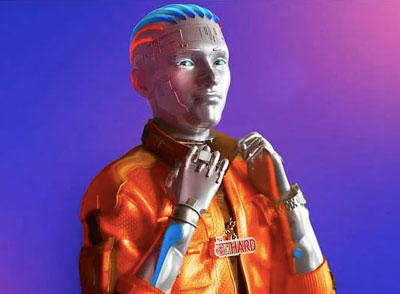
    Youth entertainment channel MTV collaborated with DDB Mudra to develop India’s first virtual rapper ‘BotHard’ to draw attention to its property, MTV Hustle 2.0. The bot was brought to life with the GPT3 platform and was specially trained to find rhyme structures of popular rappers. This collaboration inspired the creation of over 350,000 rap videos, with the show racking up 2 billion views across social platforms. This represented a nine-fold growth over the previous season. By creating a virtual influencer in-house provided the brand with greater control, agility, intellectual property ownership, and brand differentiation.


    Adaptability

    Virtual influencers don’t age, can speak multiple languages and can be made to travel to any place. This level of adaptability and flexibility allows brands to potentially use one virtual influencer for campaigns in different regions instead of identifying and engaging different influencers in various markets.

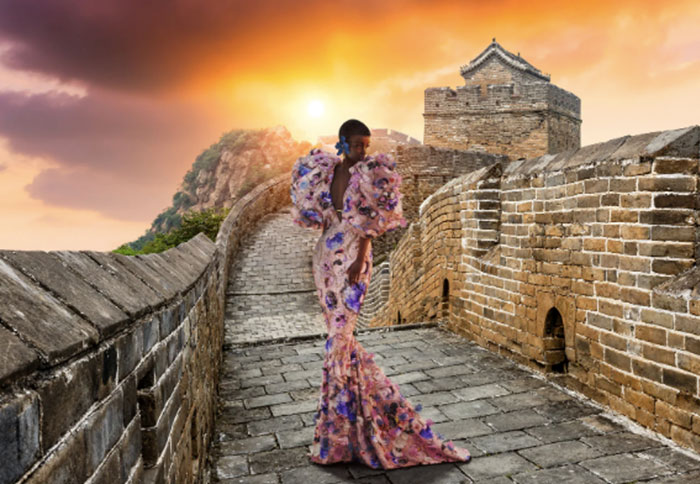
    British fashion house Ralph & Russo, successfully used a virtual influencer to launch its 2020–2021 couture collection. The company designed Hauli, a tall Black virtual model. Her name was derived from the Swahili words for strength and power.


    The campaign featured her posing at the Taj Mahal, the Great Wall of China, and other wonders of the world, location where conducting a photo shoot with a human influencer would be difficult (and expensive). The combination of an African influencer and a global context contributed massively to the campaign’s success. The promotion achieved 19.4 million views worldwide, with the brand estimating the value of the media exposure at $65.1 million.


    Brand safety and reputation

    While virtual influencers may seem to be a safer bet than real-life influencers, they’re not completely immune to controversy.

    Humans don’t fully understand how these systems work or make decisions, which poses a huge challenge for marketers and agencies. In the absence of clarity, is difficult for brands to predict how these virtual influencers might be accepted. Granted AI’s cool factor, marketers should be careful about diving in headfirst to avoid unfavourable PR.

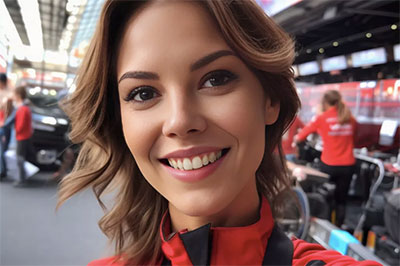
    Earlier this year, automaker Mahindra launched an AI-generated influencer named Ava, which was designed to showcase the team’s journey in the ABB FIA Formula E World Championship, and towards a more sustainable future for the planet. Mahindra’s team used GenAI tools like Midjourney and Leonardo AI to create its new ambassador, saying ‘Having Ava, an influencer that is strongly associated with us and documents our journey, but with a broader appeal to help promote our core values as an organisation, is a project we’re hugely excited about.’

    Eva’s Instagram account @avabeyondreality described itself as a “Sustainable Tech Queen & Racing Rebel Robot”, with the goal of fueling inclusion through AI innovation. It documented the virtual influencer’s life through 11 posts, the first of which dated back to 8 December 2023.

    The launch of Eva was met with backlash from fans and media alike on social media. Many argued that the team should have hired a human ambassador rather than a virtual influencer.  Devin Altieri, a PR consultant in motorsport, wrote on X:  “Mahindra creating an AI team ambassador that is a woman instead of simply hiring one real, actual woman to fill that role is so incredibly messed up”. Alanis King, an auto journalist added: “I’m not an AI expert, but everything I see is about enormous energy use. Isn’t it weird to call this a ‘Sustainable Tech Champ’?”

    Faced with such strongly negative response, particularly from experts, Mahindra abandoned the project and deleted Eva’s Instagram account.


    Fuel fans and consumers’ desire for novelty.

    With some brand ambassadors and influencers, some brands find value in stability and longevity. We know how Tiger Woods’s association with Nike lasted 27 years.

    On social media era, on the other hand, many consumers crave something new and different, and find brands that rely on familiar celebrities as stale or uninteresting.

    As they scroll social media quickly, it requires something unusual to make them pause.

    Research shows that one reason consumers follow virtual influencers is that they are unexpected and previously unknown. Although betting on a virtual influencer may require a leap of faith, marketers should realize that human influencers may be perceived as overexposed or past their prime.

    Traditional influencer marketing can be expensive, particularly when collaborating with celebrities or industry experts. On the other hand, virtual influencers are a cost-efficient and scalable option, requiring less time and resources. While the initial investment in creating a virtual influencer can be significant, the long-term benefits far surpass the costs.


    Kunal Sinha is a senior strategy and foresights executive based in Jakarta, Indonesia. He is the author of several books including The Future of India’s Rural Markets and Raw – Pervasive Creativity in Asia. He writes for MxMIndia every other Monday. His views here are personal.

    ________

    [1] https://www.ey.com/en_in/media-entertainment/how-influencer-marketing-is-impacting-brands-in-india

    [2] https://sproutsocial.com/insights/index/

    [3] https://www.campaignasia.com/article/47-marketers-in-india-believe-ai-will-make-them-more-productive-linkedin-report/491903

    [4] Influencer Marketing Factory Report

    [5] Gartner global forecast, 2024

  • Brand Purpose & Credibility: Key to survival for Brands


    By Bhuvi Gupta


    Bhuvi GuptaThe last few weeks have had us all heaving a huge sigh of relief. The hold that the Covid-19 Delta variant had taken over our lives seems to have abated for the time being. We are all now in between where we have a longing to return to business as usual (usual being the new normal) at least for the short term but are scared about when the Third Wave will rear its ugly head.
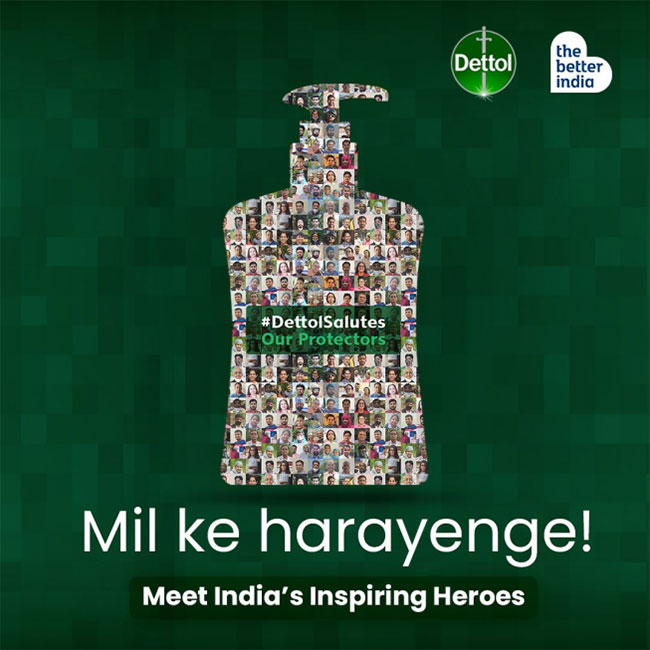


     

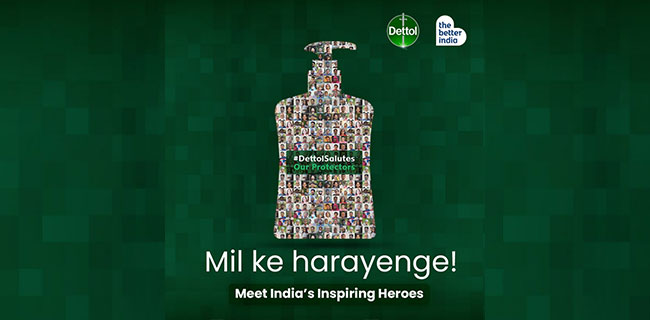
    The storm of the last month made us all grateful for the positive power of the social media. And Dettol captures this sense of gratitude perfectly in its timely Covid warriors campaign which has just been launched. It hits the ball out of the park for multiple reasons – the timing, the ‘grateful’ mood of the nation, how it captures brand’s promise of protection and safety, and its high virality quotient.


    We all depended on Covid warriors the past few months – these are people who managed to save lives by foraging for medicines, ventilators and beds by using social media and extending their networks. It is influencer marketing campaign but in a respectful way because atypical ‘influencers’ are being used. By using influencers, Dettol gets the benefit of their reach and engagement thereby ensuring virality. The campaign replaces its branding on the package to celebrate these unsung heroes. Packaging has long been an under-leveraged branding vehicle. The campaign is hence a win all the way and is bound to pick up many a pencil, elephant and metal.


    Dove and  ‘Hair Love’


    I have talked about how with the information overload that the internet and specifically social media has decreased mental bandwidth for retaining advertising in many of my pieces.  Long-form marketing, content marketing, product placements that add credibility to the product narrative hence become more important to kindle a desire to purchase. Internationally, Dove and Nike are both investing in being true to their brand purpose.


    It has always fascinated me that the 2020 Oscar-winning short film, Hair Love was funded via a Kickstarter campaign and that a major participant in the Kickstarter was Unilever-owned Dove. Despite funding the short film, Dove did not try an overt product placement but kept its participation covert.  Just as other entities that contributed to the Kickstarter, Dove only appears in the ending credits. Because the messaging was true to the brand narrative, it helped market the film by arranging for community screenings, and reaching out to tastemakers and media.  This did not help them to sell products but it did help them to cement their perception as a brand which was genuine.


    Nike – Breaking2

    A similar case is of Nike. Nike has set the bar for sports marketing in the last few decades and they are constantly raising it to ensure they maintain a high share of voice.  In 2014, Nike set out to do what was impossible at the time – a project to break the two-hour marathon barrier. The documentary Breaking2 captured the entire three-year journey that culminated in an unsuccessful attempt in May 2017. While the star marathoner, Eliud Kipchoge missed the 2 hour mark by a mere 26 seconds in 2017, he achieved the feat in 2019.


    The project leveraged science and research to create an optimum environment which enabled the carefully chosen athletes a shot at breaking the record. The environment comprised of the perfect shoe, the best possible time of year, the track, a mechanism to manage headwinds (which affect speed) and many other miniscule parameters.


    While the project executed over a three-year period was directly linked to Nike’s products, it was the larger objective of relentless effort to enhance performance to test the limits of human endurance and capability, which made it closer to brand purpose than marketing communication.


    It was hence a perfect balance – communication that served a larger purpose while also enabling the company to sell shoes.


    Brand purpose is key in 2021. Customers want brands to embody an inspiring ethos, have a strong point of view and take actions to spread their purpose rather than communicate only to sell products.


    In a crowded market, the only way a brand can stand out today is to add credibility in communication.  Marketing is inherently transactional in nature, but communication which leads with brand purpose is key to move customers down the funnel and make them return, especially for products which are easily replaceable.

  • Nike celebrates achievement of athletes in latest film titled ‘Unlimited Pursuit’

    By A Correspondent


    In its latest ad film titled “Unlimited Pursuit”, which is part of the Nike “Unlimited” — Just Do It campaign, the film celebrates the power, beauty and pursuit of athletic perfection.


    The film features an all-star cast of the world’s greatest athletes, those who push their own limits to embark on an unlimited journey and to empower the next generation of athletes. From Scout Bassett, Simone Biles, Elena Delle Donne, and Gabby Douglas to Allyson Felix, Dafne Schippers, Shelly-Ann Fraser-Pryce, English Gardner, Alex Morgan and Serena Williams, these world-class athletes push their limits not just every four years, but every day. Recovering from setbacks, losses and injury, rising from obscurity and destroying obstacles to claim victory, they command the spotlight and inspire Nike to innovate to match their strength and their dreams.


    The Nike “Unlimited” — Just Do It campaign includes the “Unlimited Will” film,  “Unlimited Courage” film, “Unlimited You” film, “Unlimited Youth” film and the company’s recent series of athlete shorts. The campaign celebrates both the everyday and champion athletes who regularly push their limits — and who are poised to prove their unlimited potential this summer and beyond.


    Nike also profiles a number of its premier athletes and new performance innovations, here, detailing in-depth the resolve that victory requires.


  • Lowe & Lifebuoy win India’s first Global Effie

    By A Correspondent


    Lowe Lintas and Partners India’s campaign for ‘Lifebuoy Super-Fast Handwash’ was declared the 2012 Global Effies Bronze winner at New York on Wednesday. Earlier this year, Global Effies had called for entries of globally effective campaigns across the world. Lifebuoy was shortlisted earlier in the month along with brands like Nike, Google and X- box.


    Said Saji Abraham, Global Planning Director, Lifebuoy and Virat Tandon, Global Business Director, Lifebuoy: “Lifebuoy Superfast Hand-wash is a liquid handwash formulation that kills 99.9% germs in 10 seconds. We responded to this fantastic innovation with a simple but insightful and persuasive idea – that children are in a hurry when it comes to hand-washing; and so if your handwash cannot keep pace with them, germs on their hands will just not go. This campaign won because we were bold, competitive and consumer focused at the same time.”


    Joseph George, CEO, Lowe Lintas and Partners, said: “As an agency, we take the Effies seriously. And so winning, not just the Lowe & Partners Worldwide Network’s but also India’s first ever Global Effies is hugely satisfying and encouraging.”


    See also:

    http://www.effie.org/winners/showcase/category/43 Grand Effie winners

    http://www.effie.org/winners/showcase/2012/6695 Information on Lifebuoy ad and credits

    http://www.effie.org/winners/showcase/2012/6695 The Lifebuoy presentation


  • The Anchor: 7 ads that star sports and sportsmen

    By Hemant Kenkre


    In no particular order – from the dancing girl on the cricket field to Sehwag’s Ma – there’s something about Indian ads and sports that hits the spot


    #1 Palmolive Da Jawaab Nahi:The Haryana Hurricane, as Kapil Dev was known, endeared himself to millions of Indians (not just cricket fans) with the line from the Palmolive Ad – ‘Palmolive Da Jawaab Nahi. ’ Kapil’s earthy personality and toothy smile in the ad will always be remembered as much as the “Kitne Aadmi The” dialogue from Sholay.
    #2 Cadbury – Asli Swaad Zindagi Ka:Can anyone forget the Cadbury TVC where the lady friend of the batsman prances out on the field and dances her way into the arms of her hero, who has just hit a six? Kucch Khaas Hai Is Ad Main!
    #3 Josh Ka Rang – Coca-Cola 1996 World Cup:In 1996 when Coca-Cola won the pouring rights for the ICC World Cup (India. Pakistan & Sri Lanka), they announced their return into India with a super TVC – Josh Ka Rang –that ‘played’ around the colour red, showed youngsters from the Indian sub-continent playing on the streets, on the banks of the Jamuna, with the Taj as the backdrop, running among red-chillies laid out to dry. All peppered with the awesome ‘Dum Mast Kalandar’ track by Nusrat Fateh Ali Khan
    #4 Nothing Official About It – Pepsi 1996:While Coca-Cola’s TVC and strong PR campaign for the 1996 ICC World Cup was going great guns, rivals Pepsi  pulled the rug from under their feet by launching their campaign ‘Nothing Official About It,’ which featured most Indian and international cricketers who were playing the World Cup and cocked a cheeky snook at Coca-Cola’s ‘Official beverage of the Cup’ status
    #5 Aila Plane – Pepsi  2003 ICC World Cup:This Pepsi campaign, where Shane Warne and Carl Hooper kidnap Sachin Tendulkar – ostensibly to put him out of action from the tournament – is hilarious. Especially Warne and Hooper mouthing Hindi words like ‘Iski Toh Gayee’ and when Sachin sees an aircraft and says ‘Alia Plane’
    #6 Nike 2007 Cricket:The 2007 edition of the ICC World Cup saw Nike, the official apparel sponsor of the Indian team produce a superb TVC where young cricketers atop a bus stuck in a traffic jam, playing the game with passion, smashing tea cups from the hands of innocent bystanders all spiced with the Goan folk song ‘Yo Baile Yo’ playing in the background.
    #7 Karlo Duniyaa Mutthi Main, Sehwag Ki Maa – Reliance Mobile:This TVC was probably inspired by a Bollywood blockbuster where the Najafgarh’s hero (Virendra Sehwag) cannot connect bat to ball and gets a call from his Mother who tells him ‘Karlo Duniyaa Mutthi Main.’ Our hero tosses off his helmet and the ‘villainous’ bowler is promptly whacked out of the park by Viru!


    A communications professional, Hemant Kenkre played cricket for Bombay University and has captained the Cricket Club of India.