Tag: Niira Radia

  • NDTV appoints Soli Sorabjee as ombudsman. Now will he clear air on Barkha Dutt episode?

    By A Correspondent


    It’s a welcome move, but one wonders what would have been the impact had this appoinment been before the entire Niira Radia episode was raging where the channel’s star editor and anchor Barkha Dutt was embroiled in a controversy over unethical practices.


    Be that as it may, NDTV has now announced the appointment of former Attorney-General of India and eminent jurist Soli Sorabjee as its Ombudsman who will provide an independent perspective on our coverage and investigate any viewers’ complaints regarding NDTV.


    In his honorary position, Mr Sorabjee will be entirely independent from NDTV and will investigate any complaints viewers may have about NDTV’s coverage.


    Sonia Singh, NDTV’s Editorial Director and President of the Ethics Committee said, “Every day, we in the media face new editorial challenges regarding journalistic boundaries and we are delighted that Mr Sorabjee will, with his unchallenged integrity, be able to provide much needed insight and advice.”


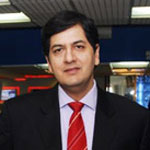
    Vikram Chandra

    Added Vikram Chandra, NDTV Group CEO and Executive Director: “NDTV has always been committed to the highest standards of integrity and balance in its news coverage and we have now decided to take that one step further by appointing an independent ombudsman who can adjudicate on any issues that may come up in the future.”


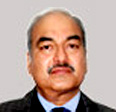
    KVL Narayan Rao

    Speaking on his appointment, KVL Narayan Rao, Vice Chairperson, NDTV Group said, “Mr Soli Sorabjee is an independent, highly respected, highly regarded legal luminary, with years of experience in handling issues relating to freedom of expression and freedom of the press and censorship. We are delighted he has agreed to be the ombudsman for NDTV.”


    Viewers can send in complaints and questions to http://www.ndtv.com/soli


    MxM View: We do not know whether Mr Sorabjee will examine the Barkha Dutt-Niira Radia episode, but since the ‘case’ hasn’t closed yet, it would be interesting to have his views on the issue. It may well clear Ms Dutt’s name once and for all or we could well have Mr Sorabjee aver that by doing what she did, Ms Dutt has brought disrepute to the profession and the NDTV group.


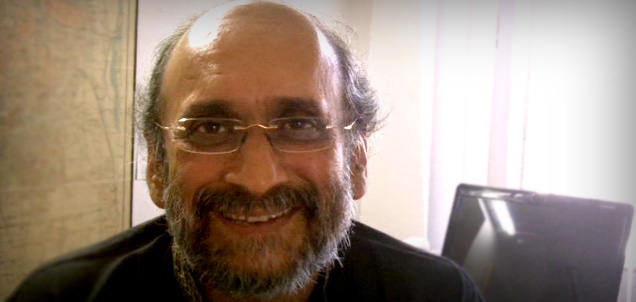
  • Possible for ethics & profit-making to co-exist: Paranjoy Guha Thakurta (Text & Video)


    By Shruti Pushkarna


    As he launched the second expanded edition of his book, ‘Media Ethics: Truth, Fairness and Objectivity’,  in the capital last week, MxMIndia caught up with veteran independent journalist and educator,  Paranjoy Guha Thakurta for an exclusive interaction. In this candid one-on-one, Mr Guha Thakurta spoke at length about ethics in media today, self-regulation vs. regulation; the debate on the freedom of expression on the internet and the need for media to be ethically and socially responsible.


    Mr Guha Thakurta’s experience spanning nearly 35 years, cuts across different media: print, radio, television and documentary cinema. He is a writer, speaker, anchor, interviewer, teacher and commentator in three languages, English, Bengali and Hindi. His main areas of interest are the working ofIndia’s political economy and the media, on which he has authored/co-authored books and produced documentary films. He lectures on these subjects to general audiences and also trains aspiring and working media professionals.


    Mr Guha Thakurta has served as a member of the Press Council of India nominated by the University Grants Commission between January 2008 and January 2011. In April 2010, as a member of a two-member sub-committee of the Council, he co-authored a 36,000-word report entitled ‘Paid News: How Corruption in the Indian Media Undermines Democracy’.


    Does an expanded edition mean a lot more to discuss in media ethics?

    The first edition of this book came out more than three years ago, since then a lot has happened. Moreover, after the book came out, there were a lot of people who came up with suggestions on how this book could be improved. So this book is about 40 per cent bigger and thicker than the earlier edition. There are new chapters – there is an entirely new chapter on corruption in the media based quite a bit on my experience as a member of the sub-committee of the PCI, which inquired into corruption in media and how it undermines democracy, the entire phenomenon of paid news. There’s also a new chapter on reality television and some of the existing chapters have been drastically rewritten and revamped, notably the chapter on the internet because a lot has been happening in the internet space; also the chapter on advertising, which was particularly weak in the first edition – I think it has been strengthened substantially in the new edition.


    Also a whole lot of major developments have taken place concerning the media in the recent past; these have all been incorporated in the new edition. Among these would be the News of the World and Rupert Murdoch controversy in UK, the entire Wikileaks and Julian Assange phenomenon and back home here in India, the entire Niira Radia conversations; all of these have raised significant questions pertaining to media ethics and these have been incorporated in the new edition of the book.


    How important is the ‘code of ethics’ in today’s commercialized scheme of things?

    Ethics is very important in every sphere, particularly so in the case of media, because you are dealing with information which is akin to a public good. The problem essentially arises because this information is being disseminated by privately owned corporate bodies with an important goal to maximize profit; therein lies the conflicts of interest. The problem arises because there are sections of the media that are interested in profit maximization to the exclusion of other goals.


    It’s become a bit of a cliche – once upon a time it used to be said, ‘journalism is a mission’, today journalists work only for a commission. We are seeing the corporatization and commercialization of the media having an impact on the kind of content that is being produced. The viewers of television channels, the readers of newspapers, and the listeners of radio stations are being perceived more as ‘consumers’ rather as citizens. They are ‘consumers’ of products and services which are being provided by companies which advertise.


    Can journalistic ethics and profit-making can co-exist?

    I do believe it can, it’s not easy but it is possible for ethics and profit-making to co-exist.


    What is your view on the issue of regulation v/s self-regulation? What works for you?

    In an ideal world, self-regulation is the best form of regulation. But what do you do with those who cross that proverbial ‘lakshman rekha’, what do you do with those who don’t follow the code of conduct which is supposed to be self-regulatory in nature. I’ll give you an example, in the US, when Janet Jackson had a wardrobe malfunction in the middle of a live broadcast, the channel was fined immediately by the Federal Communications Commission because the wardrobe malfunction happened during a live broadcast, it happened during primetime and the channel had to first pay the fine and then appeal against the decision in a court of law.


    What happens in India? Not very long ago, there was a series of incidents involving Bhanwari Devi Maderna episode in Rajasthan and content was put out during the day on television, which many considered to be pornographic in nature. When the Ministry of Information and Broadcasting issued show cause notices against these TV channels, all of them came to Shastri Bhawan saying, ‘we apologize and we won’t do it again’. That’s the nature of self regulation in this country.


    As far as print is concerned, we have a Press Council of India which has no powers to punish anybody, it cannot impose a fine, leave alone put a person behind bars, and its recommendations are not even binding on the government. We don’t have statutory organizations which are empowered in the manner in which say the Federal Communications Commission is, or the Office of Communications in the UK is. So it’s fine to talk about self regulation but what do you do when somebody doesn’t listen to you, do you have the wherewithal to punish them?


    Do you think we need an independent official regulatory authority for television news channels as against one set up by the channels?

    Yes, I do personally believe that it is possible and desirable to have an independent regulatory authority which is independent of the government as well as the media. Such a regulatory authority can be funded by the government, but it can nevertheless be autonomous and independent of the government, in the manner in which bodies like the Supreme Court of India, or CAG or Election Commission of India function.


    So, I do believe it is possible to have such a communications commission. The problem is that for the last decade we have been debating the need for such a commission and the joke is that every time the government proposes to form such a commission, the government collapses. There have been 10 or 12 avatars of a Bill to set up such a commission; time alone will tell when and if such a commission is established in India.


    Your view on Dirty Picture not being allowed to air during the day on Sony?

    The whole Dirty Picture episode has thrown up a number of issues pertaining to censorship, pertaining to what content is appropriate or not, and if adult content can be shown on television, if so when. I think these issues are contentious and debatable and they are going to be debated for quite some time to come.


    Would you agree with Justice Katju’s view when he says people in media are of poor intellect?

    I think Justice Katju is exaggerating. There are journalists who are dumb and there are journalists who are not dumb. I think Justice Katju is not being fair to the media fraternity but that’s his personal point of view, he also thinks 90 per cent of Indians are fools, I beg to disagree with him.


    There’s a belief that the Indian media doesn’t take too kindly to criticism. Agree?

    Who among us are willingly going to accept criticism? All of us have our egos, in that sense, I don’t think the media is unique. I think there is neither any individual nor any group who likes criticism but the point is if you do believe in democracy, if you believe in fairness, and if you are in the public eye, then you better get used to criticism otherwise you’ll end up like Ms Mamata Banerjee who could not take being lampooned online. This shows not only lack of tolerance on part of individuals, especially public figures, but I think it fails to appreciate the nature of freedom of expression.


    Isn’t it upsetting that all the journalists’ organizations like Press Club, Editors Guild are tightlipped about Paid News?

    I won’t entirely go along with you on that, I mean there was a conspiracy of silence about corruption in media and paid news, even the report of the subcommittee that was prepared by me and my colleague for the PCI, was sought to be suppressed by a powerful lobby of publishers within the PCI. Finally in October 2011, the PCI was literally forced to make that report official, place it on their website with a disclaimer saying that entire council had not approved of its content. But I won’t say all journalists’ organizations conspired to put under wraps this report. There have been sections of the media who have been reticent of highlighting corruption within the media fraternity, but I don’t think it’s true for the entire media.


    Do you think that Public Relations has adversely impacted the quality of journalism?

    No, why blame the PR person…she or he is doing his or her job. You can also say the government has bribed the media, you can say that corporate captains have bribed the media. So I don’t think we need to look for excuses, I think journalists have to look within if they have to introspect about why there is corruption in the media. You can always hold somebody or the other responsible for your sins but at the end of the day, you are yourself responsible I believe.


    Your views on the ongoing debate on the freedom of expression in the internet age

    I think this is a huge debate. The internet is not just the newest medium of mass communication, it’s also a form of personalized communication, and it’s difficult to control. Issues relating to freedom of expression on the internet have acquired many new dimensions and these are very contentious and not easy to resolve. And we’ve seen this debate been going on for a while…the ‘infamous’ Danish cartoons on the prophet Mohammed were all drawn ostensibly to generate a debate on freedom of expression. Yes, that cartoon was widely circulated on the internet, as was the gruesome video showing Daniel Pearl getting beheaded. But it’s also worth remembering and underlining the fact that the mainstream media were restrained in reprinting, publicizing either the Danish cartoon or Daniel Pearl’s beheading.


    The point is, sometimes in the name of freedom of expression, you want to generate a debate but you end up generating one huge controversy which goes out of control. It was the Danish PM who argued that the cartoon controversy was the biggest crisis that small Scandinavian country faced after the Second World War and he was particularly worried because it even had an impact on the economy of Denmark because countries of West Asia stopped buying dairy products made inDenmark.


    So very often we might want to start a debate without realising its wider ramifications. But the bigger question of what constitutes the right to offend, what is freedom of expression and the new dimensions these issues have acquired in the day and age of internet, these are very important, they are being debated and I think these debates are going to go on for quite some time.


    And given all of this, your view on the future of news media in India?

    The future of news media in India is very bright. Unlike many countries in the world, all media in India continue to expand, whether it’s print, radio, TV or internet. According to 2011 census, one out of four persons in India still cannot read or write her or his name, so as more and more people become literate I think all sections of media are going to expand. At the same time, media has to become more responsible, not just socially responsible but also more ethical if it indeed has to contribute to building democracy, to building a better country.


    If you were still a kid getting out of college, would you get into journalism given the ethical standards followed?

    That’s a difficult question…when I became a journalist 35 years ago, the Emergency had just got over. That was a unique 19 month period in the history of the country where for the first and so far the only time in politically independent India, the government of the day sought to abridge freedom of expression. For 19 months, during the Emergency, freedom of expression was sought to be curbed. I don’t think that will happen again, but the very fact that I was a student during that period did influence my decision to become a journalist. If I was born 35 years later, I don’t know if I would have preferred to become a rock star, or an airline pilot or a heart surgeon instead of a journalist.
     

  • Media & Adland Wishlist 2012


    By Anil Thakraney


    The Indian media, in general, has got a number of things right. It puts serious pressure on the ruling government and sometimes the judiciary, so that the right things happen, and they happen fast. This crusading spirit is important in a slow- moving, chaotic nation like ours, so kudos on that front.


    However, there are a number of things that are not so right with our media, especially the mass media, and here’s hoping we get to see some course correction in the coming years. Here’s my Top Ten wish list.


    1. Radiagate was a wakeup call for all journalists. When access to the rich and powerful gets too close, one needs to quickly draw a line and back off. Some didn’t, and are lucky to still have their jobs. The scandal brought immense disrepute to the profession, and credibility will be hard to restore completely. Here’s hoping in the future the Indian media remains free of any such nonsense. We can’t afford it.


    2. The Broadcast Editors’ Association put out a 10-point code of conduct for news channels on how they should cover the Bachchan baby birth. And the very private family event passed off very privately without the channels breathing down their necks. What one would like to see in the coming year is that this practice becomes standard operating procedure during private celeb moments, and there is no need for codes any more. This would also delight Shri Katju.


    3. While it did change to a certain extent as the year closed, most editors behaved like Anna Hazare’s cheerleaders all through the year 2011. This is not just unfair, it’s against the fundamental principles of journalism. Here’s looking forward to less bias and more balance in the year 2012.


    4. It’s very clear that our media houses have aligned themselves with various political parties, and their respective biases keep becoming apparent even to the layman. This must change for sure, starting from 2012. Media without objectivity is like Rakhi Sawant without silicone. No one wants that.


    5. No more paid news. Repeat after me children… no more paid news. Repeat after me children… no more paid news.


    6. Here’s hoping all those TV anchors who indulge in hysteria and drama are promptly transported to the Bigg Boss house in the coming year. And are not allowed to enter newsrooms again. The junta wants news and views. Not nautanki.


    7. No more front half-pagers in the coming year. Where advertisers demand that the front page be vertically slashed. A fatwa needs to be declared against proprietors who agree to this criminal practice.


    8. Would like to see some kickass innovations in the print media this year. Both, newspapers and magazines. The digital media threatens big-time, it’s like a wolf at the door, and our old-world editors continue to pretend nothing’s happening, as they dish out the same tired stuff. I am also hoping editors who refuse to re-invent are shown the door before 2012 closes.


    9. Really wish that in the year 2012 the maha excitable radio jocks shut the eff up and play the effing music. Even if all the radio stations play the same ten songs at the same time.


    10. All the girls in the TV newsrooms need to glam up. I noticed the nails are becoming brightly coloured these days, but I want to see more. I mean, if I am stuck with the likes of Abhishek Singhvi, Chandan Mitra and Mani Shankar Ayer discussing the same tosh night after night, I need some joy to come from somewhere.


    Ad World 2012

    The Indian ad world, though it gives many awards to itself, hasn’t really set the world on fire. Okay, so we do score the odd international award now and then, but clearly we have a long way to go. Aside from that, our ad guys will face many serious challenges in the coming years, and quite frankly, I am not sure the industry leaders are ready as yet. I still get a sense of complacency and self-satisfaction when I meet agency bigwigs.


    Here are ten changes I would like to see in 2012.

    1. Once and for all, ad agencies must set aside their rivalries and egos, and must come together to work out a fee structure. It’s obvious the agencies are underpaid by their clients, and this puts serious pressure on their resources. This is also a common complaint I hear from agency heads. Well, grumbling won’t solve the problem. Start the New Year with many beers, and figure a way out!


    2. I think hot shops are back with a bang in the ad world, and in the coming year they will put real pressure on the large networks. Aggie and Padhi are just one example, but I predict more people will quit large agencies and set up their own boutiques. Since their rates will be lower, many clients will be tempted to defect from the traditional agencies. And I think this is a good development as it will result in superior work overall.


    3. Experts in TV media continue to head ad agencies, and I am hoping at least a few agencies will smash this system and promote young creative chaps skilled in the new media. Because old-world creative directors generally don’t understand the digital space, and they need to make way for the young geeks. Sooner the better.


    4. Simultaneously, I wish in the year 2012, youngsters in the ad agencies get off the internet (and that includes Facebook) and spend some time in the villages and small towns. There is a dire need for agency staffers to be well rounded in their skills. This is not Singapore. This is India, and a whole lot of people are still looking to buy their first colour TV.


    5. I wish ad agencies would bring back the lost pride into their strategic planning function. The number one reason many suits quit the business to join the world of marketing is the lack of brand planning within ad agencies. Ad agencies have become creative sweatshops, and this leaves no work for managers but to be good executors. Starting 2012, I am hoping this changes, because it’s bleeding the ad world of its talent.


    6. Dear Creative Director, please, please, please do at least ONE nice press ad in the year 2012. I beg of you. People still read newspapers in this nation. Puleeeeaze!


    7. I know the media buying function is now completely divorced from advertising. And it is my belief that this has badly affected media innovations. I recall those days when the three of us – the account executive, the media planner and the creative director – would lunch together and crack ad ideas. I hope at least once in the year 2012, Balki, Lynn and their client servicing person share a drink and discuss brands.


    8. No fake ads in 2012. Repeat after me, children. No fake ads in 2012. Repeat after me, children. No fake ads in 2012. Repeat after me, children.


    9. No noisy TV commercials in 2012. People don’t buy from shriekers. Repeat after me, children. No noisy commercials in 2012. People don’t buy from shriekers. Repeat after me, children.


    10. I am hoping at least one brand will show all of us how to exploit viral magic on the internet in 2012. At least one brand will become the Kolaveri of 2012.


    Cheers!


    Anil Thakraney has worn various hats in advertising and as a journalist for around 25 years. He is editor-at-large, MxMIndia. The views expressed here are his own.

    Visual: Rafiq


  • The Year in the News Media


    By Ranjona Banerji


    This year started with a hangover – like all New Years should. But unlike the pleasant pain that goes with the knowledge of a party that may have meant over-indulgence but was fun just the same, the media started 2011 with one of those truly mammoth unpleasant hangovers.


    The outcome of the Radia tapes was, at best, a loss of reputation for a few well-known journalists but at worst, a loss of faith in the media as an institution. Public knowledge about the somewhat questionable dealings between journalists and publicist Niira Radia meant that the media could no longer hide in those famous ivory towers. Even more unfortunate was that the finger of suspicion was pointed at all journalists because of the transgressions of a few. It did not help matters that although Vir Sanghvi lost or surrendered his influential column Counterpoint in the Hindustan Times, Barkha Dutt did not just continue with NDTV, but went from strength to strength.


    So it was a somewhat cautious Indian media which initially tackled the phone-hacking scandal in the UK and the closure of the Rupert Murdoch-owned News of the World. Here was journalistic excess in order to get a story taken to a whole other degree – criminality. The tabloid press and the British public and celebrities have historically had an interesting and confrontational relationship. But the desire to delve into every aspect of the lives of the rich and famous – without the reverence shown in our part of the world – made for big sales and bigger profits. The readers loved the sleaze and watching the powerful cringe.


    But this scandal was something else. It was newspapers hiring investigators to pry into the private lives of ordinary citizens and using dubious methods like hacking into voicemail messages to gain information. One reporter lost his job for spying on British royals; but what was the punishment for breaking into the cell phone of a murdered teenager, deleting her messages and not only giving hope to her family that she was still alive but also materially distorting a police investigation into her disappearance?


    As it turned out, the reprisal was fierce and final: a newspaper which was over 150 years old was shut down and the British parliament had a public questioning of the owners and editor of News of the World – Rupert Murdoch and his son James and Rebekkah Brooks.


    The world’s media watched shocked as skeleton after skeleton popped out of the News of the World and NewsCorp cupboards. But surely there was no room for complacency here in India. After all, the problem was not just the Radia tapes; it was also the elephant in the room – paid news. Media houses – without or without the collusion of journalists – had been selling editorial space to political parties. The reader or viewer, of course, was left in the dark and assumed s/he was reading or watching real news stories.


    In the midst of all these depressing signs that some media introspection was required, we had all the uncomfortable revelations by Wikileaks, which turned international diplomacy on its head and exposed lies about the US role in the Iraq war and the black money held by European banks. The subsequent arrest of Wikileaks editor Julian Assange in the UK, on an old sexual assault charges filed in Sweden added to the drama. Was Assange really guilty as charged or was this an international conspiracy to get him extradited to Sweden and from there to the US to punish him for publishing secret cables and other information on the internet? The jury’s still out on that one.


    Wikileaks, though, emphasised once more how the internet was changing journalism and anyone who ignored it, did it at their own peril. Social media is playing the role of a catalyst in creating public opinion outside of the traditional media. The traditional media may not be destroyed but it will be damaged if it does not pay attention.


    Back in India, though, we still had a couple of dramas to play out. The new chairman of the Press Council of India, retired judge Markandey Katju, decided that he didn’t want to be head of a toothless body that was limited to the print media. He proceeded to write a series of articles attacking journalists, calling them frivolous, badly educated and shallow. He listed the sort of news that should be carried and slammed the choices made. He also said that the Press Council’s ambit had to be increased to include television.


    Katju may have been wrong and he may have been right in his opinions, but unfortunately for him, the Press Council remains toothless. And besides, instructing newspapers and TV channels on what aspects of news should and should not be carried impinges directly on the freedom of the press. No one spared Katju and so he quickly backtracked a little.


    Then, perhaps just to prove Katju right, media coverage of the Anna Hazare-led anti-corruption agitation proceeded on just those shallow, one-sided and breathless lines that the former judge had bemoaned. This protest was covered as if it was the only one the country had ever seen. Numbers were inflated or exaggerated. Those who questioned aspects of the Jan Lokpal Bill were shouted down as enemies of the people. As is inevitable, the print media could not sustain its adoration of this movement and started asking uncomfortable questions. TV however continued with its happy path of supporting this “national movement” at all costs until, slowly, a bit of reason leaked into the emotion.


    The doubts had crept into TV studios after the standing committee submitted its version of the bill but the Anna Hazare movement remained adamant on its own stand. But it was really the indifference shown to the movement by the people of Mumbai which ended that love affair. Rather than focus their cameras on 4,000 people pretending they were 40,000, TV cameras panned empty grounds showing us how low the turnout was.


    In journalism, as in life, there are no absolute truths. But there are facts. In 2011, the facts have shown that the people are watching the media. And there’s hardly any place to run or hide. Like we’re forcing politicians and government servants to come clean on their dealings, a little bit of spring cleaning by the media would not be amiss in 2012.


  • Hard Knocks: Radia was not the one to blame

    By Anil Thakraney

    Make no mistake about this: Niira Radia did no wrong. At least, technically she did no wrong. The seductress has announced her retirement from corporate PR, citing health and family reasons, but we all know better. No corporate suit would want to continue to use her organisation’s services post Radiagate.

    But truth be told, Radia only did her job. She may have been involved in murky negotiations, but all she did was ride an already corrupt and rotting political system. Exactly the way many of us bribe our way out of red-taped procedures, not because we are dishonest, but because the straight route is much too painful and time-consuming. So what exactly did Radia do? She aggressively lobbied for her clients, was proactive, cut deals, influenced ministerial berth allotments, won the goodwill of powerful journalists… pretty much all that a solid PR person ought to be doing. Her only guilt was that her methods were hard-edged and her objectives cut-throat, but that’s about it. She was handling mighty corporate accounts, and the demands must have been heavy.

    In short, Radia only pressed those buttons which work in this nation. In that context, terming the scandal ‘Radiagate’ is unfair in itself. Give me a Radia any day over those nice but ineffective PR people who sit back and issue press releases for a fat fee.

    The hard reality is that the actual culprits were the netas, the babus and the journalists who fell for her charms, compromised their positions, and were caught with their hands in the cookie jar. She tempted, they fell like nine pins. It is they who ought to have paid for their follies. And while some politicians are in jail, nothing happened to the journalists. For them, life goes on as if it was a minor career hiccup. The ‘gate’ ought to have been named after one of these worthies.

    Anyway… goodbye, Niira. You spend quality time with your family as the corporate world gets busy hiring expert press-release-issuing chicks.


    ***


    PS: So, Shakti Kapoor got kicked out of the Bigg Boss mad house. What a moron he is! The channel expected him to molest a few ladies (there are 13 in the house) and he ended up behaving like Mahatma Gandhi! Now I can believe the show isn’t scripted.


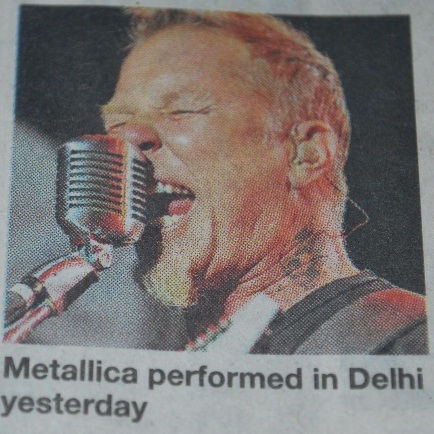
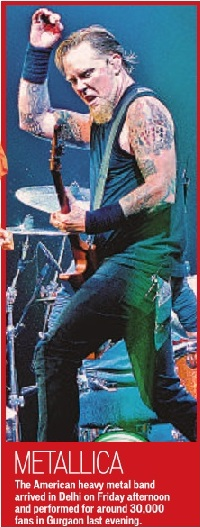
  • Mediaah!: When Delhi Times and HT Cafe reported that Metallica performed

    By Pradyuman Maheshwari

    The Delhi Times clip
    The HT Café photo-story

    It’s not something that’s not happened before. I recall Time magazine doing it in the late 1970s when it reported that an Indian politician had visited China when in fact he had called off the trip last-minute.

    I was alerted on this thanks to a Facebook post by a former colleague, Narendra Kusnur. The city supplements of both the Hindustan Times and Times of India in Delhi reported that the Metallica concert had happened on


    Friday. While the front page of the main paper did make a mention of the chaos at the venue, that of their supplements – which Kusnur believes happened because of an early deadline – was incorrect.

    I am sure this is more than just a severe embarrassment for the editor and management of both publications. It’s not the case of an error in reportage or a typo or even a wrong picture that was printed. And mind you it doesn’t appear to be an inadvertent error.

    Here was a case where the paper’s editors cheated their readers by deliberately printing incorrect information. We got to know about it thanks to a vigilant reader and also because it was a much-hyped event.

    But my worry is what if the editors do such acts habitually, with other events too. Also a cause of concern is that the city supplements of the two leading newspapers in the capital carried a similar error. The Times of India blanked out the news item on the epaper, while HT didn’t do that. So obviously the decay exists not just in one publication.

    I went through the front page of HT City and Delhi Times on Sunday to see if there’s any apology. I didn’t see any in the epaper edition. Times magazine, btw, had apologised for the error.

    This only further accentuates my distress that the reader is being taken for a ride and no one really appears to care.


    The Niira Radia exit. Good riddance or sad to see her go?


    I still remember the days when Vaishnavi was setting up. The Tata group accounts were consolidating under an agency with a name unlike the other PR agencies. In the early days, the folks were working out of makeshift office at the Taj Mahal hotel and the Army and Navy Building in Mumbai.

    But the proof of the pudding is in the eating, and I found it very pleasant interacting with Vaishnavi staffers. For a period when I was with the Dainik Bhaskar group, we had recruited Vaishnavi with an assignment which again was executed very well.

    The PR industry grapevine always had assorted stories about how the Vaishnavi bosswoman Niira Radia had managed to net the entire Tata group account. Needless to say most of it was out of jealousy. Guess they found some merit in getting the entire business group to go to just one agency for PR just as you tend to do for, say, media buying.

    My sense is that this policy doesn’t work. It’s always good to get a few different players, given their strengths in various business areas and have experience professionals available in the locations you want them.

    Two questions: now that she’s gone (well, as of close of business today), what’s the view. How would the world remember Niira Radia? High profile lobbyist or a quality communications professional? Lobbyist yes, but perhaps incorrect to stretch it to her being a wheeler dealer.

    There’s a lot that exists as part of the deliverables under public affairs, and there’s nothing wrong if the influencing has to happen beyond media folk. For instance, if a senior politician from Kerala thinks he or she is not being recognised by the powers that be in Delhi, then there’s nothing wrong in pushing your way around in Delhi.

    And if there’s a journo or bureaucrat who is amenable and can get influenced, it’s surely not the crime of the practitioner.

    That both the Tatas and Reliance groups entrusted their responsibility to Radia speaks volumes for her skills.

    There is a lot on Radia that the various enforcement agencies are busy with. I don’t see anything happening to her. She has enough contacts to get her out of any mess and has enough dirty stuff on people to pull the trigger if anyone gets naughty.

    Question 2: were the Tatas wise by going in for Rediffusion? I would be interested to know what swung it for Arun Nanda. After all, he doesn’t have the best PR brains with him any longer.  Perhaps that’s why tied up with Edelman.

    But then 10 years back when the group went in for Vaishnavi, similar questions were being asked. Radia’s team put up a decent show. The Tatas can obviously spot talent where not many of us can.


    PostScript: Are news media professionals worried about the mutterings of Press Council chief retired Justice Markandey Katju. Read this hilarious account on Legally India. Must-read. More on Katju’s comments on the media next time (which I promise you won’t happen after three weeks!)