The News Broadcasters Association has appointed the following Board Members as officebearers for the year 2015-16: Rajat Sharma – President (Chairman & Editor-in-Chief, India TV); Ashok Venkatramani – Vice President (CEO – ABP News Network Pvt. Ltd.); Anurradha Prasad – Honorary Treasurer (Chairperson-cum-Managing Director, News24 Broadcast India Ltd.).
The other members on the NBA Board are: K.V.L. Narayan Rao, Executive Vice Chairperson NDTV Group – New Delhi Television Ltd.; Ashish Bagga, Chief Executive Officer- TV Today Network Ltd.; M.K. Anand, Managing Director & Chief Executive Officer– Bennett, Coleman & Co. Ltd.; Ashish Kirpal Pandit, Chief Executive Officer – Zee Media Corporation Ltd.; A.P. Parigi, Group Chief Executive Officer, TV18 Broadcast Ltd.; MV. Shreyams Kumar, Whole-time Director, Mathrubhumi Printing & Publishing Co. Ltd.
Television broadcasters have urged the government to stick to the deadline of June 30 for mandatory cable digitisation in the four metros and slammed vested interests who were trying to create roadblocks.
Cable digitisation in India has been hailed as the break of a new dawn for the entire broadcasting industry and all stakeholders – viewers, cable operators, multi system operators and broadcasters will benefit from it.
“By and large, the industry has welcomed this transformation, but it is unfortunate that there are certain pockets of vested interests that are trying to create roadblocks,” said Uday Shankar, president of the Indian Broadcasting Foundation and the chief executive officer of Star India. “We remain confident that the government, TRAI, the parliamentary committee and for that matter even the courts will not allow these isolated voices to jettison what now is a national mandate.”
Cable digitisation will to allow viewers to get more channels and will give them the option of refusing channels that they do not want. Being digital, it will also provide better quality of sound and picture. For MSOs, this would mean better transparency and ability to get a clearer idea of the number of subscribers. MSOs will therefore be able to declare revenues more precisely. With high bandwidth at their disposal, they will now be able to offer value added services and improve revenues.
But some cable operators have cited unavailability of digital set top boxes and urged the government to extend the deadline.
“The deadline must and has to be met. If it doesn’t happen on time, the confidence in this transition will completely evaporate and investments will not come in,” said Sunil Lulla, managing director and chief executive officer of Times Television Network, which runs Times Now, ET Now and Movies Now channels.
In the current cable regime, broadcasters have been finding it difficult to generate revenues and scale up. “Broadcasters, particularly news broadcasters, have been crippled with huge carriage costs and poor subscription revenues. Digitisation changes all that. We will have far more resources to put into content, which will again benefit the consumer a great deal,” said KVL Narayan Rao, president of the News Broadcasters’ Association and executive vice-chairperson of the NDTV Group.
Digitisation will benefit broadcasters as they will no longer have to pay large carriage fees and will now be able to get better subscription revenues. In the run up to the deadline, over the last two months, many television broadcasters have been communicating the shift towards digitalization at least five times a day.
“Yes, there will be some disruption during this process but this is a game changing transition for the industry in India,” said Mr Lulla.
With less than 60 days to go for the switch from analog to digital distribution, different stakeholders of the broadcast and cable industry are battling out their respective concerns with the government and the regulatory authority. Following the Tariff Order and Interconnection Regulations for the Digital Addressable Cable TV Systems issued by Telecom Regulatory Authority of India (TRAI), a lot of stakeholders have raised issues that will affect their business in which they deem the order to be unfair.
While the News Broadcasters Association (NBA) protested against the carriage fee mentioned in the order, local cable operators (LCOs) carried out a black flag protest during the recent Assocham event attended by the Minister for Information and Broadcasting, Ms Ambika Soni. The LCOs have objected to the revenue share prescribed by the regulator and the Multi System Operators (MSOs) have expressed concern over the increased number of ‘must carry’ channels mandated by TRAI.
MxMIndia spoke to a few representatives of the industry to understand their concerns in the run up to digitization.
Ashok Mansukhani, President, MSO Alliance
What’s your first response to the Tariff Order?
The Tariff order has a mixture of good and bad. Fundamentally, it lays out the path for digitization but there are certain issues which worry us like the mandatory ‘must carry’ channels. We don’t think that’s a fair thing to do, if the broadcasters have the right to decide how many channels to bring to India or create within India, we should have the right to decide what should be the capacity, obviously the capacity is much larger in a big city than a small city. Apart from that, there are some issues on revenue share, which is based on a formula which is pending in the Supreme Court. Our worry is that if the Supreme Court decides otherwise, the whole business model would break down. These are the main two concerns.
News broadcasters are objecting to the carriage fee mentioned in the order issued by TRAI, what’s your view on it?
Now everything will be transparent. What is possibly going to happen is that carriage fee, which is creating such a big hoo-ha today, will get replaced by genuine pay channel ecosystem but that is about five years away. In the current process, we have to digitize about a 100 million homes and enormous sums of money are required but no fiscal incentive or tax incentive or infrastructure incentive has been given by the government. I think in the run up to digitization, the broadcaster should not derail the process; rather they should sit down with the cables operators and the MSOs and work packages with attractive content and at compelling rates to attract consumers. I think that’s really what they should be doing instead of writing editorials about carriage fees.
Do you think the sunset date of June 30 is achievable?
No, it’s not achievable. There are just 60 days left. The negotiations with broadcasters have not begun. The revenue shares are default revenue shares but no discussions with operators have taken place. No agreements are in place. Out of 10 million boxes, only 2 million boxes have been installed. Many of those boxes don’t have smartcards, in other words, they don’t have the conditional access system, and they are vanilla digital set top boxes. I think it’s high time for the government to carry out a reality check. I am sure this will be discussed in the next task force and I am sure government will fix a new date.
Jehangir Pocha, CEO, INX News
What’s your first response to the Tariff Order?
The TRAI order has been a disappointment to news broadcasters because we were repeatedly told that there would be no carriage fee. We were repeatedly told that there would a mandated EPG or menu system, which has not been delivered. These two things add up to a huge financial burden on broadcasters, especially news broadcasters, an industry that is, contrary to public assumption, not doing at all well, that is facing huge financial burdens and many channels have gone bankrupt.
Apart from carriage, do you see any other issues in the run up to digitization?
I think the other issues are really about the willingness and commitment with which the policy can be rolled out because this is going to disrupt some vested interests, it’s going to disrupt a regular way of doing business and therefore, there is going to be a natural push back. But the concept of digitization is superb, it’s wonderful that the government and the regulator have pushed for it, but there have been some imperfections in what they have presented. Another thing that doesn’t make enough economic common sense to me is how the price was set so low for free channels and pay channels because the entire industry’s problems stem from the fact that the consumer is literally being subsidized by paying such low price for content, which in every other country, costs so much more. How this price has been set, by whom and who’s paying for the inherent subsidy in this, there hasn’t been enough transparency on this.
Both NBA and the IBF have expressed disconcert at the carriage fee in the order issued by TRAI, but the TRAI maintains that there is no cause for dissatisfaction on carriage fee. As a news broadcaster, what will be your next step?
I think we will have to explain to TRAI and the ministry just what the imperfections in this otherwise very positive bill are, and how they will create a huge financial burden for news broadcasters, how it will push us towards bankruptcy, how it will stop us from being able to create quality content and how it will, in fact, stop us from growing. If the government is interested in inclusive growth, news broadcasters play a very valuable role in this industry and in this nation. And our financial concerns should be addressed in some manner both by TRAI and the government.
Do you think the sunset date of June 30 is achievable?
Everything is achievable if the intent is there. There may be some practical concerns but let’s be realistic, while the policy is being presented now, we knew for 6 to 7 months that it was going to happen and I’m not sure if MSOs and LCOs spent adequate amounts of money, time and effort on preparing for this day, which they knew was coming. Now they are saying, this day has come and we need more time. We have seen consistent attempts to delay digitization, and I think we should have very little patience with more delays.
Pulak Bagchi, VP, Star India
What’s your first response to the Tariff Order?
It’s a step towards the right direction and I think it will be path breaking in terms of the reforms it triggers in the cable space.
What’s your view on the concerns being raised by news broadcasters over carriage fee?
Carriage is a phenomenon which is certainly not new – it’s been around since the inception of the industry. What TRAI has done is only put a method into the madness, which should be commended. Earlier, there was no transparency in the payments that were being made, now atleast you’ll be having a foothold into the figures. You’ll also be able to determine whether they are reasonable or not. TRAI has also said that they will be intervening in cases of arbitrary levels. So there’s really no cause for concern. I think we should not be pressing the panic button; it has taken so many years for the government and the regulator to come up with these formulations. It’s important that we live up to the mandate and we must also give regard to the expectations of the people of this country. Given that digitization is a reality today, the sooner we embrace it, the better.
Do you think the sunset date of June 30 is achievable?
It is, because it’s targeted towards four major cities where it’s not an alien concept. Perhaps there will be some incremental approaches that will be taken in those respective areas and I’m sure that the deadline could be met. There’s no difficulty in abiding by the timelines.
Are there any marketing initiatives or consumer awareness campaigns that you are undertaking in the run up to digitization?
Star and IBF have made it mandatory for all members to spread awareness in their respective channels. We are carrying out marketing campaigns, we are also doing citizen focused awareness programmes where people can be brought up to speed with what digitization is all about. And we are also trying to infuse in the public sensibilities as to why it is good for them.
Roop Sharma, President, Cable Operators Federation of India (COFI)
What’s your first response to the Tariff Order?
It’s very bad from LCO’s perspective. Since there is a vertical monopoly and no cross media holding, none of the MSOs will be negotiating with the cable operator and if they don’t negotiate with the cable operator, the latter will end up taking only a Rs45 share, with which the business becomes unviable and the LCO will be unable to give better quality service to the consumer. Even the set top boxes, which are going to be put, are of vanilla quality, they are very primitive boxes. Consumer will not be able to get internet, broadband or other services on the same box. Cable operator has to spend so much money in upgrading and the government has just mandated a technology. We are even ready to upgrade, but we must get a proper share. The regulator wants to be the controller of the business. As a result, lot of cable operators will be forced to sell off their network or the network will die its own death. There will be a lot of unemployment generated in the market.
Do you think the sunset date of June 30 is achievable?
No, the timeline is very short. First is the procurement of boxes – in Chennai none of the MSOs have given any orders for boxes. Even in Kolkata, we are hearing that the state government was not consulted.
In another major blow for TV channels, the Telecom Regulatory Authority of India’s (Trai) recent tariff order for digitization has a loophole that allows distributors to surreptitiously charge ransom-like placement fees from broadcasters. While this would be true for all tiers, it would be especially compounded in the Basic Service Tier (BST) where around 80 private free-to-air (FTA) channels are to be offered at Rs100 a month.
This makes for a crippling double whammy for TV channels and makes the “must carry” proviso meaningless as Trai has also legitimized the usurious carriage fee racket which has turned multiple system operators(MSOs) and cable companies into the most profitable part of the Indian TV industry, even as it has bled nine-tenths of the TV channels into sickness.
Over and above their other costs, TV channels annually pay over Rs3,500 crore as carriage fees alone, but collectively receive around Rs4,000 crore only of the approximately Rs20,000 crore paid by India’s viewers to cable companies and distributors.
Trai’s own report had said that there was evidence of tax evasion in the cable industry while independent industry estimates have routinely put under-declaration by this cash-rich industry at a whopping four-fifths of its subscriber base – all of which allows for thousands of crores to be denied to the exchequer every year.
According to an estimate, the government had lost around Rs5,950 crore in 2006-2011 in service tax alone due to under-declaration even as it posited the income tax evasion during this period at Rs17,413 crore, besides the loss of entertainment tax by states.
In this situation, industry sources said, Trai’s move to force TV channels to pay carriage fees to distributors, ostensibly to enable them digitize their systems, was totally unacceptable. “There is no justification for robbing the already impoverished TV channels to pay the rich distributors, as they have had a favourable business model for years, and in any case, would reap the rewards of digitisation far more than any other segment of the TV business,” said an industry source.
Adding that there was no justification for making the broadcasters pay for upgrading the infrastructure of the MSOs, they pointed out that upgradation was a one-time investment, but the carriage fees would continue to be an annual recurrence for broadcasters who, in any event, could not be suddenly made the medium to fund distributors.
Broadcasters are especially aghast by this move as the prices of their channels are regulated and have been frozen for years, even as distribution costs have been allowed to rise unchecked in the garb of scarcity of bandwidth – problems which were supposed to have been addressed by digitization.
Industry sources told ET that while they welcomed the Rs100 BST for 100 channels as being in consumer interest, there was a hidden minefield in the Trai tariff order that had come as a further shock. They said that the new order had no rules banning placement fees for channels in any tier, including the BST, and hence, this would again allow cable companies and distributors to fleece TV channels by demanding huge sums of money.
Distributors already demand placement fee for placing the channel in a particular slot – by a process known as Electronic Programme Guide management. However, they had hoped digitization to end this malpractice.
This problem is especially compounded, with the BST having only a restricted number of private free-to-air channels in its basket of 100 channels, compared to the large number of channels in the market place. As per the rule, at least five channels are to be carried in each of the following genres: movie, general entertainment, children’s content, news and current affairs and sports. This would allow distributors to cherry pick the minimum five channels in each genre and demand a huge placement fee to carry them since there are many more channels in each genre, language or market. In addition to carriage fees, this would be a crippling double whammy for broadcasters, sources specified.
The solution, sources said, would be to increase the numbers of channels and also ensure an equitable, but not equal, split between genres, since there is a larger proportion of news channels to, say, sports channels.
They also said that there was another burden in store for TV channels that Trai did not appear to have foreseen: Since every broadcaster would like to place its channel in the BST, the distributor could potentially subvert the letter and spirit of the Trai digitization order by fixing the carriage fee of the BST much higher than the carriage fee of its platform.
CARRIAGE FEE
Earlier, the News Broadcasters’ Association had slammed the Trai move to legitimize the ransom-like carriage fees charged by distributors, which have now been made a mandatory payment by all the broadcasters to the MSOs. Under this order, the MSO will not be bound to carry the channel of a broadcaster unless it pays carriage fees – which means that the broadcaster would have to pay carriage fees to the MSO to be carried on its platform – which would be decided solely by the MSO and would differ from MSO to MSO even in the same geography.
Industry sources said legitimizing carriage fees could sound the death knell for small broadcasters, particularly the regional channels. The Trai move also goes against the concerns showed by the government for small regional channels. Information and broadcasting minister Ambika Soni, in a Parliamentary motion to discuss the Cable Television Networks (Regulation) Amendment Bill, 2011, had said: “This process of digitalization, I feel, would have a major impact on regional channels. They do not get on to national carriages. They cannot pay the high (carriage) fee. There are small channels catering to different states…”
MUST CARRY
However, the nub of the matter was that the evil of carriage fee would be abolished only if the capacity constraint was adequately addressed by mandating MSOs to increase their capacity to 999 channels instead of just 500 channels.
India currently has around 800 registered channels available in the market and more are lined up for approval in the information and broadcasting ministry.
Despite this, surprisingly, Trai has put the minimum number of channel at 200 for small distributors and 500 channels for large distributors, which frustrates the purpose of “must carry” as outlined in the regulation. “Assuming for a moment that every broadcaster is willing to pay the carriage fee declared by the MSO in its RIO, how is the MSO going to carry all the channels on its platform if it has no capacity to carry all the channels,” sources asked.
They feared that the end result would be increased litigation between the broadcasters and distributors, thus potentially adversely affecting the smooth rollout of digitization. They said the situation can be salvaged only if Trai increases the numbers of “must carry” channels to atleast 500 channels by June 30 and 999 channels by January 1, 2013.
Industry sources also pointed to other major systemic issues which the Trai order had failed to address.
First, MSOs have been given the unfettered rights to decide the maximum retail price of the channels they carry- a move that would adversely affect both consumers and broadcasters as the MRP of the same channel could be different at the platform of every MSO. This would not only create confusion among the consumers, but would also increase the number of disputes apart from potentially allowing distribution platforms having their own channels a distinct advantage to manipulate for their own benefit. Sources said the solution to the peculiar situation was in allowing the broadcaster to have a say in fixing the MRP as is the right of manufacturers in all other sectors.
Second, the freeze on the price of a TV channel – which had been introduced as a temporary measure – had not been lifted even after eight years. This has seriously affected broadcasters as many have not been able to recover their basic cost of operation. Given that there are more than 800 channels, with more in the pipeline, market forces should be allowed to play out.
Ms Joseph added: “This unfairly penalises broadcasters and threatens the very survival of the broadcasting industry.” The NBA has urged the government and TRAI to take corrective action.
A member of the cable trade pooh-poohed the NBA’s reaction as childish. “Let them set up their own distribution mechanism and see how much they will need to pay. If we bleed, they will cease to exist,” a senior industry person told MxMIndia, requesting anonymity.
We are fine with rationalising carriage fees, but not eliminating them, the industryperson from the distribution sector added. “They should look at increasing ad rates to earn more,” he said, arguing that carriage fees are justified
In 1950, Jawaharlal Nehru said that freedom of speech should be granted to good and bad editors, but they should use it in national interest for he believed that if it is left to the government to decide, the good editors will be jailed and the only the chamchas will survive. This was the opening Justice JS Varma, former chief justice, Supreme Court and  News Broadcasters Standards Association (NBSA) Chairperson used for his keynote address for the session ‘Freedom of Media: Significance of self regulation’.
Justice Varma said that freedom of speech is precious and we have to preserve it. The way to do so is self regulation as the media is mature enough to know to do it themselves and ward off the danger of state regulation.
He said that it is not media’s right but rather an obligation to keep the people informed so that they can participate in government decision making process. It is the media’s duty to ensure transparency to ensure accountability.
Justice Varma emphasised that the media should not give the government a chance to step in and hold it accountable. He said that the media (which reports) and judiciary (which decides) are the two strongest pillars of our democracy and they shouldn’t use their strength (power) to harm anyone, lest their power be curtailed due to lack of their accountability.
Moving on, Justice Varma criticised the media, especially the broadcast media’s tendency for breaking news. He said that the key tenets of journalism should be kept in mind while reporting ‘breaking news’- is it true, fair and in public interest. He said that objectivity and due diligence must be applied while covering news. He cautioned the media, which has tremendous reach, to be cautious in its reporting as the effect of the news it flashes is instantaneous. He closed his address by saying “The more potential for damage, the more is the accountability you haveâ€.
The moderator, Barun Das, Zee News CEO and Vice President, News Broadcasters Association (NBA) spoke about how the media can’t be regulated as it is an essential pillar of democracy. He opined that free media can be good or bad but media which is not free can never be good.
Mr Das said that regulation is a process of evolution. The media needs to introspect and understand where it stands.
He outlined the dilemmas faced by the media while trying balance the content and the bottomline where news is trivialised for gaining eyeballs. The broadcast media especially is constantly grappling with trying to strike a balance between what the audience ‘would like to see’ and what they “should seeâ€.
The stage was then thrown open for the panel discussion. Each of the panellist was given time to speak and answer questions by the moderator.
The discussion was opened by KVL Narayan Rao, executive vice chair person NDTV and President, NBA.
Mr Rao said that there is no question of compromise on the fact that that media is free and that is the way it should be in a democracy. He said thatIndiais the largest free news market with a reach of 500 million households (news TV reaching nearly 115 million households).
He said that in the early 2000s, after the private players were allowed in, they got together to set up the NBA to set up a code of programming and ethics which will regulate their broadcasting. He emphasised that it was important to have an independent and respected authority to keep a vigil on what is happening in the industry. He was proud of the fact that they telecast a scroll reminding the viewers that they have a forum to go to if they have any complaints.
He also spoke about the NBSA which has been an advisory to the media with regards to improvement in news coverage and takes up issues suo moto if the media is found lacking.
When questioned by Mr Das about balance or conflict on interest between news and business, Mr Rao was emphatic that there should be a “Chinese wall separating news and commercial interestsâ€. He opined that news is to inform, educate and entertain the public independent of government and advertisers. He allowed that some compromise may take place but said that with digitisation, more cost can be spent on content and hence the scenario will change.
Next to take the mike was Nitin Desai, Former under Secretary General, United Nations and member NBSA.
Mr Desai started by saying that he disliked the term self regulation and “independent regulation would be a more appropriate termâ€. He said that emphasis should be given to developing the independent regulation in such a way that it is credible in the eyes of the media, the people and the view makers.
His main concern was about the emergence of new media and challenges presented to regulate it. He reiterated the need for due diligence to be given to fair and unbiased reporting, rights of an individual to privacy and avoiding trial by media.
He said that he had already noticed a change in the fact that the mindset of the editors and the non-media members on the NBSA was converging due to the internalising the sense of responsibility.
When questioned about the trivialisation of content, Mr Desai said that it was being done as the measurements showed that the audience preferred it. He said that there was a need for a different measuring system for news channels. He also opined that news channel have to stop behaving like money making operations and take responsibility to cover news that “people should knowâ€.
Phillip Turner, Chief of Bureau, CNN International, South Asia said thatIndiahad a long tradition of journalism but we tended to forget it. He emphasised that focus should be on stories that have a relevance to the rest of the world and maintaining the integrity of the media. He agreed with Mr Desai that the new media is presenting a challenge for regulation but he was of the opinion that everything would work out if the media stuck to the basic tenets of journalism – fair, relevant, responsible and accurate reporting.
When asked about the need for a NBA-like worldwide authority, he wasn’t sure that such a platform could work globally.
Kiran Karnik, member NBSA and former president of NASSCOM spoke about the challenges of new media. He said that today, when the news is available instantly as reported by citizen journalists and through the new media, it is the responsibility of the media to separate what is true and what is not. He also opined that news media today has shifted from reporting news to making news. He cautioned them to use the power they have responsibly by maintaining their standards and not infringing on the rights of the people.
When questioned on the challenges thrown up by the new media, he agreed that technology is not amenable to censorship and also the consumer is becoming the creator and consumer. But he emphasised that there should be zero tolerance for unverified news and the news media as the aggregators of news should use their own censors.
Mr Das wrapped up the session by stating that now is the time to convert challenges into opportunities and inclusive growth through media is the way forward.
Rewind to Anna Hazare’s Anti-corruption Movement. A senior Congress minister had then reportedly stressed on the need to curtail exaggeration in media reports. News editors had expressed anger and dismay when MXMIndia spoke to them.
Read Will Anna Wave Link to Media Curbs? Link to: http://www.mxmindia.com/2011/09/will-anna-wave-lead-to-media-curbs-2/
However, the Government did not really take any such measures – and all was well until Friday, Ocober 7, 2011. (see MxMIndia disclosure below)
A proposal for amendment In Policy Guidelines for Uplinking/Downlinking of TV channels has been approved – and among other things this approved proposal  states,
‘Renewal of the permissions of TV channels will be considered for a period of 10 years at a time subject to the condition that the channel should not have been found guilty of violating the terms and conditions of permission including violations of the Programme and Advertisement Code on 5 occasions or more.’
Read the approved proposal here.(http://pib.nic.in/newsite/erelease.aspx?relid=76506)
Broadcasters are up in arms. Mr Sunil Lulla, CEO & MD, Times Global Broadcasting, told MxMIndia on Sunday: “The new guidelines have come as a shock. More so, because the self-regulatory guidelines of the News Broadcasters Association (NBA) have been shared with I&B Ministry. One had never thought such guidelines could be brought in.â€
The NBA members too have collectively taken a strong objection to the guidelines. A statement issued by Ms Annie Joseph, secretary general of the apex association, says: “Firstly there is no such requirement under the existing Uplinking and Downlinking Guidelines for renewal. Secondly, there certainly cannot be any power vested in the MIB to cancel or “refuse to renew†a broadcaster’s license on their subjective view that a television channel has violated the terms of the Uplinking and Downlinking guidelines or the provisions of the Cable TV Act.â€
It further says, “The NBA urges the Government to urgently review the regressive decision which would be anathema to the constitutional framework of our country. NBA is seeking an urgent appointment with Ms Ambika Soni, Hon’ble Minister for I&B, to explain and clarify the concerns of NBA.â€
And here comes the twist in the tale. An unnamed person from the I&B department expressed surprise at the protest, saying that the government had in fact increased the number of violations from the present three to five.
However, news broadcasters do not believe that the government has the right to decide on what makes for public interest and what does not. Says Mr NK Singh, General Secretary, Broadcast Editors’ Association, “How will the government decide what is in public interest. Section 19 of the Indian Panel code, that speaks of Freedom of Expression, does not give the right to the government the right to decide Public Interest. The Government has no right to punish – for that we have the judiciary in the country. No bureaucrat can decide content code. “
When asked should the BEA not be happy considering that actions would now be taken after five violations instead of three earlier, Mr Singh states, “Well, did the government say that media has been doing a good job – and so the limit has been extended? What the government is doing is against the constitution.â€
The guidelines are a reason for concern for existing players:  what about the channels, which already have five or more violations against their names. Is it a cause of concern for them, or would the slate be wiped clean now – and the violations counted effective today. Read the complete list here: http://mib.nic.in/writereaddata/html_en_files/content_reg/OrdersWarningsAdvisories.pdf)
While news channels are leading offenders, GECs are not far behind. There are also cases of all news channels being pulled for the coverage of the Mumbai terror attack. In the case of GECs, the objections have been both on programming and advertisements.
Does this mean that news channels will always be subjected to the whims of the government? The Broadcast Editor’s Association is definitely seeing red. Mr Singh states, “Content is jeopardised by the government. Does it mean that self-regulation by broadcasters has no value? â€
Mr Singh adds: “There would always be a threat – and more so after the fourth notice. It is not practical and none of the broadcast bodies have been consulted. It is all the more unfortunate because it has come at a time when Indian media is doing its best. BEA strongly criticises the new guideline regarding content – it is against civilian law. The government must desist from such measures.â€
Both the Indian Broadcasting Federation (IBF) and News Broadcasters Asscoation (NBA) have regulatory structures and complaint cells. Channels also carry announcements at frequent intervals inviting viewers to lodge complaints, if any. And then we have the Advertising Standards Council of India (ASCI), the watchdog for advertisements, which has been a reasonably active player for over 25 years. The new guidelines make all of these bodies in a way answerable to the cabinet committee (or Electronic Media Monitoring Centre).
The NBA statement sums up the concerns of the fraternity:
“Most importantly, the proposed modification of the Uplinking and Downlinking guidelines is a direct assault on the self regulatory regime put in place by broadcasters, which has been encouraged and recognized by the MIB. Such proposed step is wholly retrograde and places broadcasters at the arbitrary mercy of the MIB; and is therefore a violation of the constitutional right to freedom of speech and expression and will not be countenanced by the NBA.â€
Clearly the government and I&B minister Ms Ambika Soni specifically must address the concerns of broadcasters. The request from the NBA to meet Ms Soni is a move in the right direction.
Update @ 10am According to reliable sources in the Ministry of Information and Boradcasting, representatives of leading television industry bodies are likely to meet Minister Ms Ambika Soni on today (Tuesday) afternoon.
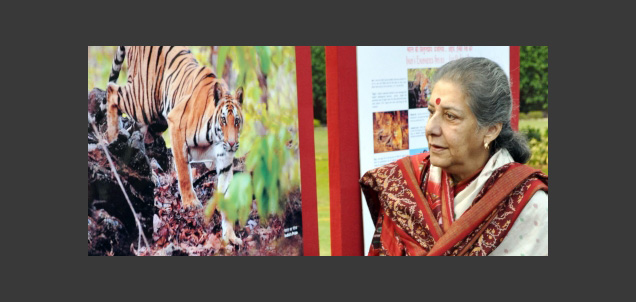
Photograph: Fotocorp (File photograph of Ms Ambika Soni releasing a DAVP calendar for the year 2011)
Disclosure: MxMIndia is a firm believer in the freedom of the press and the self-regulatory route to check on content. We will take every effort in guarding this and ensuring that governments do not step in to police the media. However, we also believe that broadcasters must need to re-examine the content they air and help make the self-regulatory process a success.
Â
Also, read print media reports on the issue:
The Indian Express: http://www.indianexpress.com/news/cabinet-nod-to-tightening-eligibility-criteria-for-running-tv-channels/857167/
 By A Correspondent