Tag: New York

  • 5 Tips, 5 Books & 5 Movies that can Help Us Mainstream Deaf Individuals


    By Shruti Pushkarna


    Shruti PushkarnaHow many of you have watched the Academy Award winning movie CODA? A film that won the Best Picture, Best Supporting Actor and Best Adapted Screenplay at the 94th Oscars.


    CODA (or Child of Deaf Adults) features deaf actors Marlee Matlin and Frank Kotsur portraying their disability on screen. The film centres around Ruby Rossi, the only hearing character in this family drama.


    What really stood out for me in this fictional representation of a complex issue, is its ending. When their seventeen-year-old daughter (Ruby) decides to follow her passion and leaves for college to pursue music, the deaf family is left to fend for themselves. But throughout the movie, the filmmaker never puts the onus of inclusion on the disabled, and same is true of the conclusion. Their surrounding community, which is the (hearing) fishing community figures out ways of communicating and transacting with the Rossi family.


    September is observed as the Deaf Awareness Month and this year the theme is ‘Building Inclusive Communities for All’, where deaf people feel connected to their community as well to those without a hearing impairment.


    Officially, India has only 250 certified sign language interpreters for a deaf population of ranging between 1.8 and 7 million.


    With an estimated count of 700 million people (globally) to experience hearing loss by 2050, it’s time we learn ways of including deaf individuals in mainstream conversations. And what better time to start than the Deaf Awareness month!


    The obvious question to ask is how can we include deaf individuals in day-to-day activities, at work or even in social settings?


    Here are five easy tips.


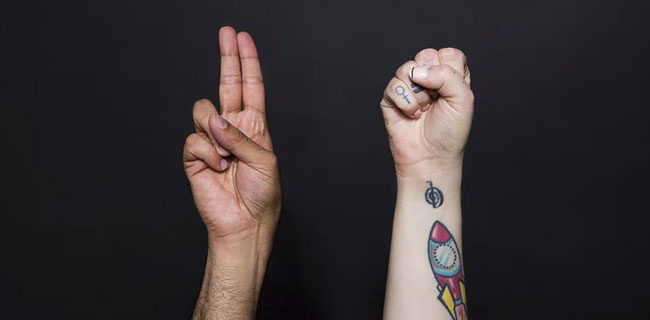
    1. Learn basic sign language to initiate communication with a community severely dependent on visual cues. In 2017, the United Nations officially recognised September 23 as the International Day of Sign Languages. The aim was to raise awareness about the importance of sign languages as a means of communication and as a fundamental human right of deaf individuals.

    2. Speak clearly without overemphasising or speaking too loudly or slowly, remaining natural in your delivery.

    3. It always helps to communicate in quiet environments because noisy backgrounds can make it harder for the deaf (and hard of hearing) to focus on what is being said.

    4. Always face the person you are communicating with while speaking or signing. Deaf individuals rely on gestures, facial expressions, and lip movements to communicate effectively.

    5. Use visual aids like whiteboard, notepad or smartphone apps makes it easier to engage with the deaf especially if it involves information exchange.


    In case you are curious about life with hearing impairment, here are five books that focus on the theme of inclusion using deaf characters.


    1. El Deafo– This is a graphic novel based on the childhood experiences of American author, Cece Bell. It’s a heartwarming and humorous tale of a young girl navigating the world with her hearing aid, recounting her challenges and triumphs.

    2. You’re Welcome, Universe– This book by Whitney Gardner features an Indian teenage deaf girl who gets expelled from her school for spraying graffiti on the wall. In her new school, she tries to find new friends and embarks on a journey of self-discovery.

    3. Wonderstruck– This is an illustrated novel by Brian Selznick which follows the story of Ben, a deaf boy traveling to New York in 1977, and Rose, a deaf girl traveling to New York in 1927. The two stories overlap around the themes of connection and belonging.

    4. Deaf Like Me– This novel by Thomas S Pradley and James P Pradley, is based on a true story. It recounts the journey of a hearing family raising a Deaf child. It delves into the challenges they face and their efforts to support their child’s communication and inclusion.

    5. Deafening– This is a novel by Frances Itani, set during/before World War I, which tells the story of a young woman who becomes deaf due to a bout of scarlet fever.

    And in case you are someone who prefers movies to books, here are five cinematic recommendations with diverse portrayals, exploring themes of deaf culture and inclusion.


    1. Sound of Metal (2019)- Directed by Darius Marder, this film tells the story of a heavy metal drummer who begins to lose his hearing and must adapt to a new way of life within the Deaf community.

    2. Iqbal (2005)- Directed by Nagesh Kukunoor, Iqbal is centred around a Deaf and mute aspiring cricketer. The film highlights his determination to overcome obstacles and pursue his dream of playing cricket at the national level.

    3. The Shape of Water (2017)- Directed by Guillermo del Toro, this fantasy drama features a mute, non-verbal female lead who communicates using sign language. The film explores the power of communication beyond words and the connection between the characters.

    4. Children of a Lesser God (1986)- Directed by Randa Haines, this film revolves around the romantic relationship between a hearing teacher and a Deaf custodian at a school for the Deaf. It explores issues related to communication, love, and societal expectations.

    5. Soundtrack (2011)- Directed by Neerav Ghosh, this film is loosely based on the life of musician and composer Suman Sridhar. The film features a DJ who loses his hearing but continues to create music. It explores his journey of adaptation and resilience.


    Change is not easy to come. Especially not in a country as diverse and complex as ours. It’s true that it takes more than one to transform and build an accessible world. But it’s the action of one that translates into a collective movement for change.


    Can you commit to learn to sign at least one word this September?


    Wondering why MxMIndia publishes a disability advocacy column? Well, we strongly feel that the media can dramatically transform the world of persons with disabilities. This series attempts to help bring forth issues that the media must champion to create a truly inclusive and accessible India. Writing  this column is Shruti Pushkarna, a former journalist and  now a disability inclusion advocate based in New Delhi. Her views here are personal. To access the archives of her 75-plus columns, please visit: https://www.mxmindia.com/category/ columns/shruti-pushkarna/


    If you have a view on the issues raise or would like to align with MxMIndia on this cause, write to us at editor [at] mxmindia.com.


  • 5 Tips, 5 Books & 5 Movies that can Help Us Mainstream Deaf Individuals


    This article has been updated at https://www.mxmindia.com/columns/5-tips-5-books-5-movies-that-can-help-us-mainstream-deaf-individuals/

    By Shruti Pushkarna


    Shruti PushkarnaHow many of you have watched the Academy Award winning movie CODA? A film that won the Best Picture, Best Supporting Actor and Best Adapted Screenplay at the 94th Oscars.


    CODA (or Child of Deaf Adults) features deaf actors Marlee Matlin and Frank Kotsur portraying their disability on screen. The film centres around Ruby Rossi, the only hearing character in this family drama.


    What really stood out for me in this fictional representation of a complex issue, is its ending. When their seventeen-year-old daughter (Ruby) decides to follow her passion and leaves for college to pursue music, the deaf family is left to fend for themselves. But throughout the movie, the filmmaker never puts the onus of inclusion on the disabled, and same is true of the conclusion. Their surrounding community, which is the (hearing) fishing community figures out ways of communicating and transacting with the Rossi family.


    September is observed as the Deaf Awareness Month and this year the theme is ‘Building Inclusive Communities for All’, where deaf people feel connected to their community as well to those without a hearing impairment.


    Officially, India has only 250 certified sign language interpreters for a deaf population of ranging between 1.8 and 7 million.


    With an estimated count of 700 million people (globally) to experience hearing loss by 2050, it’s time we learn ways of including deaf individuals in mainstream conversations. And what better time to start than the Deaf Awareness month!


    The obvious question to ask is how can we include deaf individuals in day-to-day activities, at work or even in social settings?


    Here are five easy tips.


    1. Learn basic sign language to initiate communication with a community severely dependent on visual cues. In 2017, the United Nations officially recognised September 23 as the International Day of Sign Languages. The aim was to raise awareness about the importance of sign languages as a means of communication and as a fundamental human right of deaf individuals.

    2. Speak clearly without overemphasising or speaking too loudly or slowly, remaining natural in your delivery.

    3. It always helps to communicate in quiet environments because noisy backgrounds can make it harder for the deaf (and hard of hearing) to focus on what is being said.

    4. Always face the person you are communicating with while speaking or signing. Deaf individuals rely on gestures, facial expressions, and lip movements to communicate effectively.

    5. Use visual aids like whiteboard, notepad or smartphone apps makes it easier to engage with the deaf especially if it involves information exchange.


    In case you are curious about life with hearing impairment, here are five books that focus on the theme of inclusion using deaf characters.


    1. El Deafo– This is a graphic novel based on the childhood experiences of American author, Cece Bell. It’s a heartwarming and humorous tale of a young girl navigating the world with her hearing aid, recounting her challenges and triumphs.

    2. You’re Welcome, Universe– This book by Whitney Gardner features an Indian teenage deaf girl who gets expelled from her school for spraying graffiti on the wall. In her new school, she tries to find new friends and embarks on a journey of self-discovery.

    3. Wonderstruck– This is an illustrated novel by Brian Selznick which follows the story of Ben, a deaf boy traveling to New York in 1977, and Rose, a deaf girl traveling to New York in 1927. The two stories overlap around the themes of connection and belonging.

    4. Deaf Like Me– This novel by Thomas S Pradley and James P Pradley, is based on a true story. It recounts the journey of a hearing family raising a Deaf child. It delves into the challenges they face and their efforts to support their child’s communication and inclusion.

    5. Deafening– This is a novel by Frances Itani, set during/before World War I, which tells the story of a young woman who becomes deaf due to a bout of scarlet fever.

    And in case you are someone who prefers movies to books, here are five cinematic recommendations with diverse portrayals, exploring themes of deaf culture and inclusion.


    1. Sound of Metal (2019)- Directed by Darius Marder, this film tells the story of a heavy metal drummer who begins to lose his hearing and must adapt to a new way of life within the Deaf community.

    2. Iqbal (2005)- Directed by Nagesh Kukunoor, Iqbal is centred around a Deaf and mute aspiring cricketer. The film highlights his determination to overcome obstacles and pursue his dream of playing cricket at the national level.

    3. The Shape of Water (2017)- Directed by Guillermo del Toro, this fantasy drama features a mute, non-verbal female lead who communicates using sign language. The film explores the power of communication beyond words and the connection between the characters.

    4. Children of a Lesser God (1986)- Directed by Randa Haines, this film revolves around the romantic relationship between a hearing teacher and a Deaf custodian at a school for the Deaf. It explores issues related to communication, love, and societal expectations.

    5. Soundtrack (2011)- Directed by Neerav Ghosh, this film is loosely based on the life of musician and composer Suman Sridhar. The film features a DJ who loses his hearing but continues to create music. It explores his journey of adaptation and resilience.


    Change is not easy to come. Especially not in a country as diverse and complex as ours. It’s true that it takes more than one to transform and build an accessible world. But it’s the action of one that translates into a collective movement for change.


    Can you commit to learn to sign at least one word this September?


    Wondering why MxMIndia publishes a disability advocacy column? Well, we strongly feel that the media can dramatically transform the world of persons with disabilities. This series attempts to help bring forth issues that the media must champion to create a truly inclusive and accessible India. Writing  this column is Shruti Pushkarna, a former journalist and  now a disability inclusion advocate based in New Delhi. Her views here are personal. To access the archives of her 75-plus columns, please visit: https://www.mxmindia.com/category/ columns/shruti-pushkarna/


    If you have a view on the issues raise or would like to align with MxMIndia on this cause, write to us at editor [at] mxmindia.com.


    An earlier version of this article had misspelt Movies in the main headline as Bovies. It has been corrected. Our apologies – Ed


  • Subhash Chandra gets Emmy Directorate Award

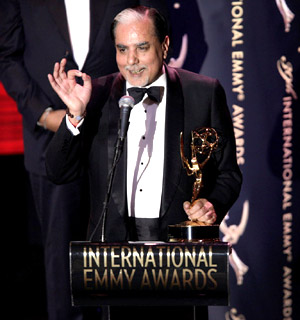
    Zee Group Chairman Subhash Chandra giving his acceptance speech at 39th International Emmy® Awards, held at the New York Hilton in New York City (CREDIT: Chip East / PSG)

    By A Correspondent


    Subhash Chandra, founder of Zee Group, has received the 2011 International Emmy Directorate Award. Mr Chandra made history by becoming the first ever Directorate Award recipient from India. The award was presented at the 39th International Emmy Awards, which took place on Monday, November 21 at the Hilton New York in New York City.


    “Subhash Chandra is a one of a kind visionary – a self-made entrepreneur who made his mark on the Indian television industry by launching the first privately-owned channel in India,” said Bruce Paisner, President & CEO of The International Academy of Television Arts & Sciences. “We happy to present him with our 2011 International Emmy Directorate Award as Zee Entertainment Enterprises prepares to celebrate its 20th anniversary, in 2012.”


    Remarked Mr Chandra, “India is the cynosure of the world today and it’s a great privilege to be the first Indian recipient of this award. It really means a lot to me, Zee Group and the Indian media and entertainment Industry.” He added, “While there have been many representations from India in the areas of technology and retail, this puts India’s media industry on the map and raises the profile of India with regards to its media and content.”


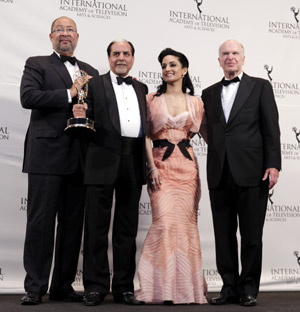
    Zee Group Chairman Subhash Chandra with Richard Parsons, Citigroup chairman and former chairman and CEO of Time Warner (far left), and Emmy Award-winning actress Archie Panjabi (The Good Wife), who both presented him with the 2011 International Emmy® Directorate Award, as well as Bruce Paisner, President & CEO of The International Academy of Television Arts & Sciences (far right) at the 39thInternational Emmy® Awards, held at the New York Hilton in New York City. Marks the first time in history that an Indian received this honor. (CREDIT: Allison Joyce / PSG)

    Richard Parsons, Citigroup chairman and former chairman and CEO of Time Warner, along with Emmy Award-winning actress Archie Panjabi (CBS Network’s critically acclaimed hit drama “The Good Wife”) presented the International Emmy Directorate Award to Mr Chandra during The International Emmy Awards Gala.


    The 39th International Emmy Awards were hosted by Jason Priestley, who was joined on stage by a cast of international celebrity presenters. Actor, director and producer, Mr Priestley was hosting for the second consecutive year. He was joined on stage by a starry cast of presenters including Brazilian actor Vladimir Brichta, Jeff Hephner (Starz’ Boss), Edward Herrmann (Gilmore Girls), Rick Hoffmann (USA Network’s Suits); John Larroquette, Danny Pino (NBC’s Law & Order: Special Victims Unit), Ally Sheedy, Blanca Soto (Univision’s Eva Luna and El Talismán), Jessica Szohr (Gossip Girl); Wendy Williams (host of syndicated talk show The Wendy Williams Show) and Goku and Luffy (characters from Toei Animation’s animated hit Dragon Ball Z and One Piece).


    The International Emmy Awards recognize excellence in television programming produced outside the United States. The awards gala is attended by 1,000 international entertainment decision-makers every year. For a list of nominees, visit http://iemmys.tv/news_item.aspx?id=136.