Tag: networking

  • The Anchor: 8 reasons why professional networking sites are important

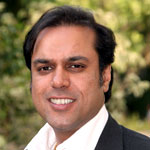
    By Yogesh Bansal


    In today’s competitive scenario “Who you know” is as important as “What you know”. Meeting people and making positive connections can benefit you in different phases of your professional life, as you climb up the ladder. Networking and meeting people in different areas of expertise can help you when you need information on something or may even land you into job in the future.


    Professional networking sites enable you to:

    1) Control your online identity


    2) Educate yourself about the current market scenario which is of utmost importance, besides your qualification


    3) Gather a good understanding about the market as it is important to inculcate or polish the skills required


    4)  It lets you collect information about your prospective employers and build the right industry contacts


    5) It helps you understand the practical aspects of a profession and prepare your behaviour and mind for the forthcoming challenges


    6) Let’s you have an opportunity to interact with the professionals in the market


    7) Encourages you to broaden your horizons, think beyond your limits and explore more career opportunities to understand where your skills could be best utilized


    8)  Increases your online visibility and makes you easily searchable.


    Yogesh Bansal is Founder and CEO, ApnaCircle.com


  • LinkedIn celebrates 15 million members in India

    By A Correspondent


    LinkedIn announced that more than 15 million professionals are now using the platform in India. Indiais LinkedIn’s largest market outside the USin terms of membership. LinkedIn started its Indiaoperations in 2009 with a member base of 3.4 million.

    Hari V Krishnan, Country Manager, LinkedIn India, said: “We are delighted to reach the 15 million member milestone. It demonstrates that professional networking is becoming increasingly important to Indian professionals. In just three years our member base has grown by over 300 per cent. We attribute this growth to the tools we have developed that help professionals to stay connected, gain insights for their businesses, bag that dream job and ultimately, realize their professional potential. As awareness of our product features has grown, engagement and adoption of the platform has accelerated.”


    In India, members turn to LinkedIn to keep up with industry discussions (58 per cent), fostering their professional identity (75 per cent), networking with other professionals (77 per cent) and learning about companies (46 per cent).


    In addition to its growing membership base, LinkedIn has experienced growing demand for its marketing solutions and hiring solutions in India. A number of high profile brands are opting for LinkedIn Marketing Solutions to build conversations and influence with a highly targeted, affluent audience.


    Brands like AMEX, Wipro, DSP Blackrock and VolkswagenIndiahave leveraged the customized solutions that LinkedIn provides to its advertisers. Furthermore, companies like ING Vysya Bank, HCL Technologies, Genpact and Larsen & Toubro have been extensively using LinkedIn Hiring Solutions to recruit professionals for various positions in their organization.
    LinkedIn India is headquartered in Mumbai with 4 offices across Gurgaon, Bengaluru and Mumbai.


  • 5 reasons why Phase III is vital for FM radio growth

    By Rana Barua


    1. More reach:

    The reach of radio will further increase with an additional 839 new FM stations in more than 200 new cities. Thus the medium will become even more effective and the opportunity will also be huge for the advertisers, especially because of radio’s reach in even the tier 2 and 3 cities.


    2. News in FM radio as a revenue stream:

    News on FM radio, in whatever form, will open up newer revenue streams if packaged well. The industry, for long, has been waiting for news to be allowed on radio. It will therefore be interesting, especially from the listeners as well as the advertisers’ point of view.


    3. Multiple Frequencies to create new genres:

    Multiple licensing, especially in larger cities, will bring new genres to radio. Larger stations, for instance, may want to create another genre of station, perhaps in a different language or a completely different programming category altogether. This will be another interesting facet for the advertisers and listeners.


    4. Networking will be allowed:

    Networking will bring down cost and thus play a critical role in radio’s growth. It will streamline a lot of cost of being in radio. Allowing networking means one will be allowed to run the FM station sitting out of a main hub; as a result the cost may come down.


    5. Create job opportunities:

    Phase III will open up a lot of job opportunities. Multiple licensing, news and networking will open up jobs. Therefore FM phase III will bring a lot more excitement as well as opportunities, thereby bringing in more talents, and genres.


    Rana Barua is veteran media professional, a former COO, Red FM and an advocate of radio

  • AdAsia: Experiencing India

    By Tuhina Anand

    AdAsia 2011 has seen more than 1000 delegates registered from 25 different countries. While Indian delegates lead the pack as it’s the host country, there are also many delegates from different other parts of the world including UAE, Pakistan, Vietnam, Japan and Indonesia among others. At the venue of AdAsia one can see these delegates soaking in the Indian culture and cuisine and also attending the various sessions that comprise stalwarts from the industry from across the world sharing their insights with the audience. For some, travelling thousands of miles is standard networking practice, for others it’s a chance to know what is happening in the other parts of the world, learn from them and apply some of the discussed pointers back home.

    Anis Khan, the MD of Leo Burnett in Karachi, Pakistan says his reason for being at AdAsia is to get an opportunity to listen to his colleagues from across the world and pick up new learnings from their sessions and interaction with people. He said, “After the downturn in 2008, AdEx across the world has dipped though many countries have bounced back. I am specifically looking at understanding how different industry people from various countries have been combating this challenge. Also I would like to learn more on the alternate and digital media and I think the AdAsia platform will help me in this.”

    Chris Thomas, Chairman and CEO of BBDO Asia, Middle East & Africa, Chairman of Proximity Worldwide is in India as a speaker for one of the sessions. But besides that he is upbeat about the vibrancy and scale of discussions. He said, “The theme this year is interesting and content built around the various subjects around the theme is good learning. We do get an India perspective but also getting international and an external perspective to the theme. It gives us an idea how alive and kicking the industry is in Asia and particularly in India.”

    Then there are those like Keith Thomson, International Business Development Director, BlackLite Media FZ-LLC, an outdoor agency in UAE for whom the platform is a good opportunity to connect with people beyond UAE. He said, “While Arabic population is aware of BlackLite but I am looking at acquainting people with what we do beyond this geography and also people who are already spending in this market to connect with them and persuade them to allocate additional sum and look at our medium.” But Thomson says that the networking bit is bit restricted as he doesn’t know too many people here and will use the list provided by AdAsia to connect with delegates later on their emails. He says, “It’s work in progress.”

    Trung of Vietnam is at AdAsia with a group of 30 people from his country. His motive is to study and experience AdAsia and be ready when their country hosts AdAsia in Vietnam in 2013. He has one grouse though, that in his group, especially people in a slightly older age category, are not enjoying the lavish spreads laid out for the guests. There should be food that would appeal to their palate, he feels, as not everyone enjoys Indian food.

    Food is not a problem for Jerry S Justianto, Director, Masima (contents + channels) which runs a number of radio channels in Indonesia. It’s his first visit to India and he is enjoying the food to the hilt, “especially the dessert”.  He also finds a common link between middle-class Indonesia and India which he feels enjoy similar kinds of popular culture.

    The delegates have enjoyed the gala extravaganza and have talked about it with appreciation. But it’s not all work and no play – some have even managed a bit of tourism.  Yukinori Sasaki, Deputy Director, External Relations Office, Dentsu Inc, said, “Its my second visit to Delhi. I was expecting to meet lot of people and not just from advertising industry. I have managed that, but I didn’t get to meet many advertisers.” However, Sasaki has other plans on his itinerary which includes a visit to the Taj Mahal in Agra.

    Some delegates also shared what AdAsia should do differently next year. Mehwish Rafi, Chief Strategy Officer, Adcom from Karachi, said, “As far as knowledge, case studies and information goes, we have had a lot of it. But the sessions should have been more interactive. Even if there was an option of receiving questions online beforehand and then addressing those during the session, it would have made so much sense.” This definitely should be noted especially when one is talking about listening to consumers and how digital should be used, perhaps the industry should start practicing what it preaches.

  • ‘Social media is an explosion’

    By A Correspondent

    Companies in India have gauged the might of social networking and are currently spending over Rs 1,200 crore with 30 to 40 per cent of marketing budget on digital media according to the findings of a study titled ‘Explosion of Social Media: Transforming The Corporate Business Scenario,’ by The Associated Chambers of Commerce and Industry of India (Assocham).


    Releasing the highlights, Assocham secretary general DS Rawat said, “Goods and services worth about Rs 23,000 crore are traded currently on the social networks across the world and the figure is likely to swell to about Rs 1.35 lakh crore by 2015 with India’s share likely to cross Rs 10,000 crore mark during the course of next three to four years.”


    It was observed that majority of start-ups, leading national and international companies operating in India are embracing the social media to enhance their business and on an average spending anywhere between Rs 2 lakh to Rs 50 lakh a year on social marketing campaigns.


    A large number of national and multi-national corporations in India are using the services of social media management companies that help small, large brands to manage, heighten their social network presence and maximise their exposure in the newsgroups and newsfeeds of the people logged on the social networks.


    “The significance of social media in the current scenario can be gauged from the fact that the department of information technology (DIT) has recently advised all government departments to make the most of social media in their day-to-day work and communicate with citizens effectively,” said Mr Rawat.


    Assocham interacted with about 1,400 directors, chief executive officers, chief financial officers, chairmen, managing directors, executive directors et al from sectors as diverse as BFSI (banking, financial services and insurance), auto, FMCG, manufacturing, IT, telecom, biotech, education, infrastructure, consumer packaged goods and healthcare to ascertain the extent of their spending on online activities and about 75 per cent of them said that they have doubled their spending on social media this year.


    “Companies both large and small are turning to social media platforms as the percentage of internet users on social networking sites continues to climb,” said Mr Rawat while releasing the survey that was carried out in Ahmedabad, Bangalore, Chennai, Delhi, Kolkata, Mumbai and Pune between April and August. “Brands today cannot afford to ignore the significance of social media as a key medium to target their identified customers and connect with them,” said Mr Rawat.


    Companies are taking advantage of social media to advertise, launch new products, study consumer behaviour pattern and communicating, interacting directly with their customers and wooing new clientele. Assocham interacted with 200 representatives of various companies in Delhi and about 60 per cent of them said that they have a dedicated staff who work round-the-clock and are constantly plugged into the web to monitor online traffic on their web portals.


    As many as 110 respondents said that they have hired employees specially for their social and interactive media cell who perform the task of tracking conversations, blogs, discussions, chats on social networks to ascertain the consumer preferences and perceptions towards their products and services. Nearly 40 per cent of respondents in the city said that started their campaigns on social networking websites with a tiny budget and clocked revenue of about three to four times their budget in a span of about five to six months terming it a successful venture.


    Almost all the respondents said that their dependency on traditional print media for advertisements has reduced drastically and people logged on social networks are their core target group and social media allows them to directly interact with consumers Currently, there are over six crore mobile internet users and about eight crore users using internet across India.


    Facebook, Twitter, YouTube, Google+, Linkedin, Orkut, Hi5, Friendster and BigAdda are certain popular social networks used by companies in Delhi to carry out their social media campaigns. “Low cost coupled with higher visibility and wider reach on social media is the grave reason behind this surge in number of companies cashing in on inevitable social media platform to reach young customers as highest number of active social media audience in the country is in the age group of 15 to 25 years,” the Assocham study emphasizes.