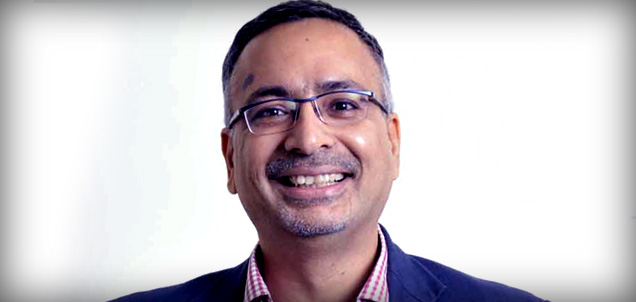
Nalin Mehta has been appointed the Managing Editor of Moneycontrol. He has been Network 18’s Group Consulting Editor for the past year.
He has previously held leadership roles like Executive Editor at The Times of India-Online; Managing Editor, India Today (English TV channel); and Consulting Editor, The Times of India.
Prior to Moneycontrol, Mehta was Dean and Professor, School of Modern Media, UPES University, where he had conceptualised and conducted courses on digital journalism. He has also worked with the UN and international financing institutions like the Global Fund in Geneva, Switzerland; taught and held research positions at various universities and institutions in Australia, Singapore, Switzerland, and India.
A DFID-Commonwealth scholar, Mehta has done his PhD in Politics from La Trobe University, Melbourne; M.A. International Relations, University of East Anglia, UK, and B.A. Journalism (Honours) from University of Delhi.
News18 Kannada has announced the appointment of Siddu Kaloji and Swaroop Murgod. Kaloji joins the channel as Editor (News and Programming) and Murgod as Head of Production. The channel also announced the elevation of Vijayalakshmi Shibarur and Lakshmana Hoogar to the core leadership team.
Commenting on the appointments, Karthik Subbaraman, Executive Editor (Special Projects), Network 18, said: “Siddu and Swaroop are among the finest talents in journalism in Karnataka. They bring innovation, creativity and speed, attributes which will help take what is the state’s most credible news channel to a wider audience. Vijayalakhsmi Shibarur, who ranks among the best investigative journalists in the country, is also moving into a frontline role as part of the core leadership team of News18 Kannada. And so is Lakshmana Hoogar, a fearless anchor who heads political coverage. I wish all of them the best for their new roles and upcoming challenges.â€
News18 Network has announced the launch of its campaign 18=1. The network recently consolidated all its general news channels under the News18 brand which has allowed it to develop one, seamless identity across its 16 national and regional channels in 15 languages.
Speaking on the launch of the campaign, Rahul Kansal, Group Brand Advisor, Network 18 said:“The new brand campaign would help cement perceptions of our leadership, across the length and breadth of the country. Which in turn would help advertisers in finding a one-stop solution to their media needsâ€.
Netcore Solutions has joined hands with CNBC-TV18 for a knowledge-sharing event – ‘The Martech Marathon 12 x 25’ to be held on June 13 in Mumbai. The event introduces will see 25 top Martech evangelists putting forward their ideas and insights. The TEDx-style event, which will also be live-streamed for remote audiences.
The line-up of speakers at the event include Shivakumar, Group Executive President, Aditya Birla Group; Siddharth Banerjee, EVP-Marketing, Vodafone India; Apurva Chamaaria, Chief Revenue Officer, RateGain; Mona Gandhi, Head of Strategic Alliances and Growth, Airbnb India; Gunjan Soni, CMO of Myntra & Head of Jabong; Jaimit Doshi, Executive Vice-President, Kotak Securities; Rubeena Singh, CEO, iProspect India; Sameer Pitalwalla, Co-Founder & CEO, Culture Machine; Sidharth Rao, CEO and Co-Founder, Webchutney; Pallavi Chopra, Haed of Marketinig, RedBus; Subrat Mohanty, Co-Founder & CEO, Hurix Digital; Amresh Godbole, Managing Director, Digitas India; Sridhar B, Chief Digital Marketing Officer, Diageo; Pooja Jauhari, CEO, The Glitch; Srinivas Jain, Executive Director and Chief Marketing Officer, SBI Mutual Fund; Himani Agarwal, Director, Commerical Marketing, Microsoft; Lakshmi Narasimhan, Chief Growth Officer, Group M;
Said Kalpit Jain, Group CEO of Netcore Solutions: “The end-customers are embracing digital technologies in every walk of their lives, building expectations that are driving the digital disruption across all industry verticals. Every marketer is thus driven to understanding and adopting Martech, and the easiest way to do this is through best practices, which only these Martech evangelists can talk about.
Added Joy Chakraborthy, CEO – Forbes India and President Revenue, Network 18: “With ‘The Martech Marathon 12 x 25’ we want to assist modern marketers with adopting new-age technology, allowing them to amplify brand reach and presence. Along with knowledge sharing, the platform also intends to serve as a hub for networking, and generation of breakthrough ideas and practices that largely aid the Martech universe.â€
For a while now, Mumbai-headquartered English daily Free Press Journal has been conducting knowledge seminars on a variety of issues engaging industry persons. Earlier this month, FPJ and Moneycontrol organised ‘India’s Road Ahead’ in Mumbai. This was attended by more than 100 participants from various walks of life. Manish Maheshwari, CEO, Network 18 digital delivered a welcome address which was followed by a presentation by Free Press Journal’s Consulting Editor R N Bhaskar. A keynote address at the event was delivered by Nitin Gadkari, Minister for Road Transport & Highways, Shipping and Water Resources, River Development & Ganga Rejuvenation in the Government of India.
The man who introduced Independence Rock in the country, much much ahead of the likes of Sunburn, NH7 etc is disillusioned with the live acts business. “There’s no money in it… the newer players have messed up the business model with very low margins,” rues Farhad Wadia who quit Network 18 last month to join the Capricorn Group as Senior VP, Marketing and Sales.
It’s crossing over to another industry altogether, Mr Wadia admits, but added that companies in the business of live events need to relook at their P/Ls. “Only Sunburn is making money and that too after going through losses for the first two-three years,” he explains. According to Mr Wadia, while keeping sponsors happy is fine, live act companies are selling the sponsorships very cheap making the business unviable.
Mr Wadia joined the Network 18/TV 18 group in 2007 after a two-year stint with Hindustan Times. He has also worked with Channel 4 Networks in the UAE, his own company Power Productions and the now defunct Radio Star India.
What Farhad Wadia is best known for though is Independence Rock, a 28-year-old live music acts property, that didn’t happen last year due to sponsorship issues but will definitely take place this year, the showman promises.
Meanwhile, at Capricorn, which has a lot of real estate and runs some hotels (like in Pune, the Courtyard Marriott and Regency on Dhole Patil Road), he hopes to use his sales and marketing expertise in selling dream, er, properties.
CNN-IBN has appointed Vishal Bhatnagar as National Revenue Head, with immediate effect. He was earlier SVP & Regional Head-North & East, CNBC-TV18 and CNBC Awaaz. This move is a part of the leadership re-alignment now underway at Network18 News Media, the client facing ad sales unit which manages the advertising interests of the news and factual entertainment channels at Network18 Group.
Speaking on this development, Dilip Venkatraman, CEO, CNN-IBN said “Vishal’s track record and experience in monetizing news brands is exemplary. His contribution will be critical as we shape a new phase of leadership for CNN-IBN”.
Vishal Bhatnagar added “CNN-IBN has clearly emerged as a benchmark amongst general news brands in the country, in terms of credibility, viewership and innovation. I look forward to working closely with the channel team to ensure we build further on its revenue leadership as well”
Commenting on the larger re-alignment at Network18 News Media, Sanjay Dua, CEO, Network18 News Media said “We believe that our brands are well-placed to build further on their leadership, both in terms of innovative client solutions as well as a strong network proposition. Each of our leaders comes with a proven track record and strong leadership acumen and we’re confident that this alignment is the beginning of a new phase of growth for us”
Mr Bhatnagar brings with him over 18 years of rich experience in sales across media and has been with the Network18 Group since 2004. He holds degrees in management and commerce from the International Management Institute (IMI) and the University of Delhi.
Network18 News Media spearheads the group’s effort towards consolidating and optimizing revenue growth across its six news & factual entertainment channels (CNBC-TV18, CNBC Awaaz, CNN-IBN, IBN7,IBN-Lokmat & History TV18) spanning the full spectrum of General news, Business news, Regional news and Factual entertainment. Ad sales for the ETV regional news network, subject to regulatory approvals for the acquisition, will also form part of this stable. While acting as a centralized sales agency, Network18 News Media also reflects the group’s focus on individual brands via dedicated teams and revenue leaders aligned to each channel.
Hardly had the news of the acquisition of English news channel NewsX by ITV Media Group and Hindi news channel Live India by Prosperity Agro filterd in, there were murmurs on whether it was vital for the government to impose entry barriers for the news media. ITV of course has been in the news for around five years and Live India already had a sizeable stake by a property developer HDIL.
As part of MxM Mondays, we spoke to a cross-section of news media practitioners to offer their views on the issue.
This issue of media ownership has been debated on in the past, and more so recently, because of the entry of corporate groups into the news media. Earlier this year we saw two big corporates enter the media domain, when Reliance Industries bought a stake in Raghav Behl-led Network18 and Aditya Birla Group invested in the Aroon Purie-led Living Media India.
While big business owning media is not a new phenomenon, there are numerous instance of politicians owning and controlling sections of the media, especially in Southern India.
Hence the question arises: Is it a cause for worry when people with non-media interests start owning the mass news media?
Here are a cross-section of views from captains of the industry (in alphabetical order of their last names):
Tariq Ansari, Chairman and Managing Director, Next Mediaworks Ltd
Tariq Ansari
The worry is not around who owns the media but whether they act in a way that is consistent with journalistic standards of integrity and fair play. We seem to have forgotten simple journalistic conventions like a declaration of interest from the owner of the publication/channel on stories in which there is a substantial commercial interest.
Media, much like steel or fertilisers or communications, will eventually belong to those who have the means and desire to invest in it. The point about it being the preserve of a few is inexplicable. Nobody is stopping anyone from raising the capital to start a newspaper/magazine/TV station/radio station/website. We live in a free country. Anyone who has the ability to own media should be able to do so, without limitation. Clearly my preference would be that criminals or those with clear vested interest should not own media, but I am not sure if the law of the land can prevent this from happening.
Vinod Mehta
Vinod Mehta, Former Editor-in-Chief, Outlook magazine
I am worried. Media diversity is very important for freedom of the press. I don’t want Media in the hands of a few owners. It should be open to all.
And here’s what MxMIndia’s regular columnists say:
Ranjona Banerji, senior journalist, columnist and Contributing Editor, MxMIndia
Media ownership is a worry to the extent that journalists are not able to withstand corporate pressure. For instance, the Birlas started Hindustan Times and the Tatas has a stake in The Statesman (to name just two) and the battle between marketing and editorial is as old as the profession. The problem comes when senior editors capitulate and reader interest is surrendered or sacrificed. I would turn the spotlight back on journalists: are we fighting the good fight?
Many years back when I asked a leading industrialist why he was keen on starting a news channel he replied with the famed Deewar dialogue (some alcohol in the system did the trick): Aaj mere paas buildingey hai, gaadi hai, bank balance hai, but even then these guys owning newspapers and channels are ruling the world. We were in the late 1990s, and journalists and news media owners were indeed much sought after. That may have waned over the years, but the desire to own news media stays. What hasn’t changed is that the intent of owning the news media goes far beyond returns on investments.
When the British ruled India, it was the desire to mobilize public opinion that led to several national leaders and even businessmen to embrace news. Post-Independence, with the birth of a new economy, it was a mix of nationalistic sentiment and also to use it as an ally in a tightly controlled business environment. The ’60s and ’70s saw the media taking off with magazines like the Illustrated Weekly of India, later India Today and several others in regional languages. The imposition of the Emergency got people to realize the importance of the news media as the liberalization of the economy and and the airwaves ensured that there is no looking back.
Being a democracy, there are no entry barriers to the media. And rightly so. However, when a few years back a few real estate and assorted players jumped into news television there were representations to the information and broadcasting ministry that there ought to be tighter controls.
The current murmurs are being heard because NewsX has been acquired by businessman Kartikeya Sharma. ITV, his media company, also runs the newspaper Aaj Samaj and regional and Hindi news network India News. And the reason for the concern: it was feared that being the brother of Manu Sharma who has been convicted in the Jessica Lallmurder case, he could misuse his position to influence the executive and the judiciary. Well, the Supreme Court upheld its sentence of life imprisonment in 2010, so evidently he didn’t achieve much. To be fair to Sharma, a senior editorial and business executive who has worked with him, told me that he saw no interference on content, especially on the Manu Sharma front.
Clearly, the money power of rich businessmen and politicians cannot bring in readers or viewers, as the case may be or make a success of the media enterprise. In the late’80s, the Ambanis acquired Commerce Weekly and converted it into a business daily. They also acquired The Sunday Observer that was once edited by Vinod Mehta and was exceedingly popular.  The Ambani indulgence in the media failed despite hiring top journalists and publishing executives. They could only use the papers to fight a few minor battles, and even those without much success.
Mehta worked and fell out with industrialists Vijaypat Singhani and L M Thapar as both found news too hot to handle and counter-productive to their primary businesses (and revenues). One had assumed he would meet the same fate when Rajan Raheja, a then-emerging industrialist with some interests in real estate, set up the Outlook magazine group. Mehta has led many battles with the mighty and powerful in his magazine and both Raheja and Mehta have survived each other.
Save the Outlook example which is a good indicator of business interests and independent journalism co-existing, clearly big money is not enough to drive consumption of news media. My worry though lies elsewhere:
1. Lack of transparency in the ownership of media.
2. Creation of a monopolistic scenario with business groups investing in multiple and similar vehicles
3. Level playing field for competition in case of vertical and/or horizontal cross-ownership, and
4. Diversification of media companies into entities beyond news
1 & 2. Transparency requirements in media ownership are critical. When the government announced recently that a certain conglomerate doesn’t not have interests in the media, is it really the case, or is that what is on paper and hence deemed correct? While doubts have been raised about how the acquisition of a sizeable chunk of Network 18 via an independent trust would impact the editorial independence of the group, the real worry is the rumoured interests of the group in other media ventures too.
Could we have a situation that a genre of channels or newspapers or the media entities in particular region of the country be owned – directly or indirectly – by one group? How do we tackle a monopolistic scenario such as this?
3. The PR head of a radio station in Delhi once complained that she could never hope to get her press release into the two main English dailies in the city because both had their own FM stations. So, while the most inane event from the group’s radio station gets covered, the lady’s FM frequency never got a mention even for a big activity. So rampant is this blacking out of a rival group’s activities that it’s now considered standard practice. In many countries there are strict rules for horizontal and vertical cross-ownership. While the TRAI has suggested restrictions in vertical ownership (a TV channel can’t fully own a DTH or cable platform etc), horizontal ownership is fine (so a TV channel can also run a newspaper, radio station etc).
4. The last of my worry areas can be a bigger concern, and, if misused, even graver than big business or a political party getting into the media. Many news media groups have invested in sectors outside of news and doubts have been expressed if there is any connect between the relationships with governments via the news media and the winning of such contracts.
Even though the government at the Centre is weak, and we can be sure it will flex its muscles often enough in the run-up to various elections until 2014, I don’t see any immediate solution to the problem. But what can play a deterrent for those who abuse the media will be public opinion via social media.
Sevanti Ninan, Editor, thehoot.org and Columnist, Mint
Sevanti Ninan
Yes, it is a cause for worry when people with vested interests start owning the mass media because political ownership of the media is increasing, and there are no transparency requirements on media ownership.
Readers and viewers are unable to discern ownership-related biases. There is also a renewed trend of corporate investment in media increasing. Media companies are supposed to file ownership details with the registrar of companies, but one, it is not properly done, and two it is very difficult for lay people to access the correct and latest data.
On the issue of media being a preserve of only a certain groups, even now it is fairly widely owned.
Maheshwar Peri, Chairman, Pathfinder Publishing India Pvt ltd
Maheshwar Peri
In my opinion there is no cause for worry. I think, increasingly, the cause for worry comes from a few industrialists who’ve gotten into media. But if you go back to the flag bearers of Indian journalism in the 1980s, Indian Express was owned by RNG, an industrial group. So, to say that ownership by industrialists would hurt media is a slightly wrong way of looking at it.
There is definitely a cause for worry when people get into media for reasons other than running it as a professional empire. If you look at some of the politicians who’ve come into media or political parties that are launching their own channels, that’s a cause for worry because they have a reason to dish out news which suit their needs and opinions.
So there is a problem when people in public office get into media, but it’s not so much of a problem if industrialists or venture capitalists or any others moneybag get into it because they want to make it a commercially viable operation. And they know they can make it commercially viable only when the reader/viewer respects them. In case of politicians, they are not interested in making it commercially viable; they just want to ensure that their point of view finds a space in the public domain.
I think unless a reader or consumer respects you, you won’t be able to sell beyond a point. So all of us, whether or not owned by corporates, are always trying to ensure that we give unbiased and credible information so that the reader continues to respect us as well as the advertiser continues to invest in us.
And what makes one think that they have a better opinion about media than a fruit vendor? I don’t think there can be a classification of who has a better opinion about certain things in this country – we are a democracy. So the worse thing is to say that ‘these’ kind of people can get into media and ‘those’ kind cannot.
Tarun Tejpal, Editor-in-Chief, Tehelka magazine
Tarun Tejpal
To some extent, there is cause to worry about media ownership. We have to air, discuss and examine issues of monopolies, cross media ownerships, and of cross business ownerships. And to try and build in some structural safeguards that both help ensure the financial viability of honest, robust media, and deter media owners from using their media instruments for unfair advantage in their other businesses.
Theoretically, it (media) should be open to all. But we must build in safeguards that minimize the misuse of public discourse and public instruments of media. This is not easy, but a discussion must start on this issue at all levels.
Paranjoy Guha Thakurta, Senior Journalist
Paranjoy Guha Thakurta
The growing corporatization of the Indian media is manifest in the manner in which large industrial conglomerates are acquiring direct and indirect interest in media groups. There is also a growing convergence between creators/producers of media content and those who distribute/disseminate the content.
In India’s unique ‘mediascape’, it is often contended that the proliferation of publications, radio stations, television channels, and internet websites is a sure-fire guarantor for plurality, diversity, and consumer choice. There were over 82,000 publications registered with the Registrar of Newspapers. There are over 250 FM radio stations in the country. Despite these impressive numbers of publications, radio stations and television channels, the mass media in India is possibly dominated by less than a hundred large groups or conglomerates, which exercise considerable influence on what is read, heard, and watched.
One example will illustrate this contention. Delhi is the only urban area in the world with 16 English daily newspapers; the top three publications, the Times of India, the Hindustan Times, and the Economic Times, would account for over three-fourths of the total market for all English dailies.
However, what is unacceptable is media barons using news outlets as tools to further their business interests. In this country, as in the world over, large media corporations are clearly playing a bigger role in the political economy that they report on. Though a free media is fundamental to the existence of a liberal democracy, concerns about the accountability and transparency of media companies remain. For instance, the RIL deal has enabled Network 18, Eenadu, and the merged group to expand its offerings to benefit its stakeholders and its advertising target audiences. What remains to be seen is whether clear boundaries can be etched between the boardroom and the newsroom.
There’s absolutely no doubt about the fact that if it’s truly going to be a responsive media, then the media should reflect the views, the interests, the aspirations of a larger section of population as possible. The problem with much of our media is that they are too busy trying to ‘reach’ consumers to potential advertisers than providing information to citizens.
Next Week:
Why do we all like to damn TAM?
The Sectoral Innovation Council recommendations last week said that there was need for an alternative to TAM, short for the media research company formed by a jv of two international research biggies: Nielsen and Kantar. This is a view that has been expressed several times over the years.
One of the main peeves against TAM is the number of Peoplemeter boxes present to collect data. Can 8000+ boxes effectively poll a populace of 1.2 billion, is what many broadcasters keep asking in public. In private though, not many are ready to pay up by increasing their subscription fee to enable the installation of more boxes across the country.
Also, what’s happening to BARC, the joint industry body that was to provide an alternative?
MxMIndia will speak to a cross-section of the industry to get answers. Meanwhile, if you have a view, email it to us at editor@mxmindia.com with the subject ‘MxM Mondays #2’
India’s competition watchdog has approved Reliance Industries’ acquisition of stake in Raghav Bahl’s media companies Network 18 and TV18 Broadcast.
The Independent Media Trust, a trust set up for the benefit of Reliance Industries Limited, acquired the stake by subscribing to the optionally convertible debentures of companies controlled by Mr Bahl.
The deal, expected to be around Rs2,700 crore, is touted to be one of the biggest in the media industry.
The Competition Commission of India states in its order that the assessment of competitive impact of the proposal was carried out to ascertain whether both groups are engaged in production, supply, distribution, storage, sale or trade of similar or identical or substitutable goods or services.
However, CCI noted that new channels can be started with ease in the country given the scope of innovation and technology. “The commission is of the opinion that the proposed combination is not likely to have any appreciable adverse effect on competition in the business of supply of television channels in India… specific determination of relevant product and geographic market in respect of supply of television channels in India is not necessary,” the CCI said in an order put up on the commission’s website.
The TV18 group operates CNN-IBN and CNBC TV18 channels, among others.
What’s the best way for large advertisers to get some ‘good press’ in the media? Use PR agents? Throw lavish parties? Suck up to the editors? Naaah! All that is old fashioned stuff. Nowadays, at least in India, where the media acquisition laws are weak, the industrialists simply go ahead and buy a large stake in a media house. Thus controlling the content, whether the proprietors would like to accept that or not. Recently, Ambani picked up a substantial stake in the Network 18 group. And now the Birlas have bought into the India Today group. Am quite certain more large industrial houses are eyeing similar acquisitions in the media.
This is obviously terrible news for content heads. Because their powers get badly curtailed. Of course, the worst case scenario, which means direct intervention in the content agenda, sucks big time… that’s a nightmarish situation. But even the best case scenario sounds pretty depressing. Because that would mean the media house cannot report/write a single word against the shareholding industrial group. And will often be compelled to project them (and all their partners and subsidiaries) in a favourable light. Consider this: If Mukeshbhai gets caught in a scandal, will Rajdeep Sardesai even think of going after the big man? You know the answer.
I can understand why the corporate world wants to invest in the media. Because it’s a powerful weapon to have in the war chest, and industrialists can leverage business/political deals with its help. The question is: Can we not have tighter laws on media acquisition, like it happens in the western world? Surely the time has come for that.
As a journalist, what worries me most is the yet another body blow to the freedom of expression. Already the industry has suffered because of paid news, sponsored news and other malpractices. Not to speak of the greater powers bestowed to the marketing department of the media company. And now this! Clearly it’s not a good time to be a journalist in this nation.
As for moi, I am seriously thinking of shifting back to advertising. The advertisers are calling all the shots anyway. 🙂
* * *
PS: Haha. The advertising life depicted accurately and hilariously in pictures. If you belong to the ad world, you will identify with every single situation. I am sure you are living them right now!
Link: http://thisadvertisinglife.tumblr.com/
Anil Thakraney is a Mumbai-based commentator and editor. He is also Editor-at-large, MxMIndia. The views expressed here are his own
This sort of an acquisition is part of a growing trend of ‘corporatization’ of the media where big business houses such as the Aditya Birla Group and the Reliance Industries group are investing into existing media groups. Through this process of consolidation, they are also bailing out these groups.
The Raghav Behl-led Network 18 and Ramoji Rao-led Eenadu are now part of one big conglomerate because Reliance Industries Ltd (RIL) has bailed out both by pumping in a huge amount of money. On paper, it appears as if they are still separate corporate entities, which they are, as per the laws of the land. But the kind of associations they have struck gives an impression that they are now going to work like a conglomerate. Now this is exactly what has happened in the case of Mr Aroon Pourie who heads the India Today group which is also going to be one major conglomerate. So what we are seeing, in that sense, is the ‘cartelization’ of the media. There are cartels being formed, there are oligopolies being formed.
The recession in the west has led to shrinking of advertising expenditures for the media in India and across the world especially after 2008, and this has had a direct impact on the fortunes of media organizations. So this process of consolidation has got expedited. What this means is that the media in India is going to become less plural, it’s going to be dominated by relatively fewer groups. What you are really seeing is, large corporate groups exercising greater dominance on the media. Now there are two implications.
Also read:
AV Birla group buys 27.5% in India Today group
Birla may use personal money for buy, Mail Today may now launch editions in Mumbai, other metros
Why media purists needn’t worry about Kumar Mangalam Birla’s 27.5 % in Living Media
One is, of course, you are finding telecom companies (Mr Aditya Birla also happens to be the head of Idea and Mr Mukesh Ambani’s RIL is a major player in the broadband wireless access space), which are providing you communications, are also now playing an important role in companies that produce content. So the content providers and content distributors are coming together. This, in my opinion, is going to result in a loss of heterogeneity, resulting in a loss of plurality. In a sense, the oligopolies that are going to be formed will also impact the listeners of content, the viewers of content, or the readers of content. The content they get will be less heterogeneous.
The other part of the story is that these companies are also big advertisers. Therefore, the clout of the advertiser will go up. As I said, the telecom service providers are now becoming important stakeholders in companies that are producing content. So the distributors of content are becoming stakeholders in the producers of content. Similarly what you also see at another level, the companies which are big advertisers are also now becoming the owners of the media. So in my opinion, these trends towards ‘cartelization’, or the formation of these giant corporate conglomerates is not going to lead to greater plurality as far as the consumers of content are concerned.
The numbers of TV channels and newspapers and websites often give you a very deceptive kind of a picture and the capital is a classic example of that.Delhiis the only city in the world with 16 English language daily newspapers. This gives you a misleading picture, that readers of English dailies inDelhihave a huge choice. But the fact of the matter is that two newspapers, The Times of India and Hindustan Times would account for well over three-fourths of the total market of all English daily newspapers. And if you add to that Economic Times, then these three publications put together would account for more than 80 per cent of the total circulation of all English newspapers in India. So, in terms of numbers it looks good, but if you look at the structure of the market, you see few dominant players.
In India, unlike in other countries of the world, like US, UK or Australia, there are no cross-media restrictions. In other countries, there are both vertical as well as horizontal restrictions. Vertical restrictions mean that the content producer and the content distributor are different companies/groups. In India, the same guys who are producing content are also distributing the content. You have the DMK controlling the distribution channel and also producing the television channel; you have Zee News producing news and also controlling Dish TV. There are clear conflicts of interest that arise if your distributor and the provider are the same. That’s only one part of the story.
The other is what is called horizontal cross media restrictions. That means, the same company dominates all forms of the media, like print, radio, TV, in the same geographical area. In our country we don’t have any legal restrictions on cross media holdings. As far as the media is concerned, the group concept or the conglomerate concept does not operate in our country. So you have Bennett Coleman Ltd which brings out various print publications, and then you have Times Global Broadcasting which brings out the television content. These two companies happen to be controlled by the same set of people. But because the legal restrictions that exist in India apply to individual entities and not to conglomerates, effectively you have no cross-media restriction.
Speaking of editorial content, editors will not publish or broadcast anything that would go against the interest of the corporate that controls; these would become subtle forms of censorship and control. For instance, Living Media which includes, Aaj Tak, India Today, Headlines Today and Mail Today, these publications or these broadcasters are unlikely to publish anything negative that could affect the business interests of the Aditya Birla Group. So that could be an eminent danger, that degrees of freedom that editors and content providers would enjoy, would get curtailed not just because of the pattern of ownership but also because the owners of major conglomerates are also major advertisers.
Even if on paper, the editors have the autonomy and independence to publish what they like, there could be subtle forms of censorship wherein editors would feel constrained or would think twice before publishing any story that could in any way go against the interest of the promoters of the company that control these media conglomerates.
I am optimistic about the future of media in India but I am also concerned about the fact there is loss of heterogeneity, loss of choices to the consumer.
(As told to Shruti Pushkarna)
Paranjoy Guha Thakurta is a senior journalist, editor and broadcaster based in New Delhi.
He’s had an indelible association with Network 18 and was largely responsible for the group turning into a large conglomerate today from being a wannabe a few years ago. He’s better known for effecting quite a few turnarounds across the multiple organisations that he’s worked in, especially start-ups that have gone on to become large empires today. Whether at HCL Group, where he headed business development for HCL Comnet or at ABCL, where he set up the Film Distribution Business or at the Times of India Group where he launched their music label – Times Music, Haresh Chawla has an exceptional approach in the way businesses need to function.
Having sent the media world into a tizzy post his decision to move on from Network 18, Haresh Chawla is back in the news and will be seen reprising a role that he has advocated earlier, though in a smaller way. Chawla has joined private equity firm India Value Fund Advisors (IVFA) as Partner and will be responsible for building and scaling up businesses owned by IVFA across sectors, as well as leading media & entertainment investments at IVFA. He will resume office on June 1, 2012.
In conversation with MxM India’s Johnson Napier, Haresh Chawla divulges his plans and responsibilities at IVFA, on the scope that private equity firms offer to mid-sized businesses and admits on missing working for the behemoth that continues to make noise even after his departure. Excerpts:
Congratulations on your appointment as Partner, IVFA. After your announcement of moving on from Network18, many had anticipated you to be joining another large media entity but that’s obviously not the case now. What made you join a private equity firm and not take up anything else?
My desire really was to grow from the role that I had undertaken at Network 18 and try and do something different. As I said, I have prior experiences in building businesses and brands and I can use that in a much different environment where the operating environment is different and where both capital and management coexist together and you also have to mentor teams. So it’s slightly different attempt from a pure operating point of view.
Any other interesting offers from media entities before you took up this role at IVFA?
I wouldn’t like to comment on that.
While you’ve donned the role of being an entrepreneur-investor in the past, what is the newness that this role will bring to the fore at IVFA?
It’ll be about focussing on new projects. If you see, the fund (IVFA) is a diversified fund, so it will be in a larger operating space in that sense. Also, the fund will also be about operating with mid-sized companies and scaling their businesses up. This is what will be the difference in the projects that I have undertaken in the past and what I will be doing at IVFA.
My experiences around building brands and teams in the past will come in handy here, only this time around it will be done in a much larger space. The company is unique, in the sense that it has both capital and management, so the canvas is much larger than what I have attempted in the past.
You’ve been seen as a leader who enjoys taking up challenges in floating new start-ups and turning them into profitable ventures. How similar or different will be your approach at IVFA?
The approach would be pretty much similar to what I have done in the past. The challenge is that IVFA is a firm that buys businesses that are at an interesting stage in their lives and really help them scale up and build them into much larger businesses. I look forward to continuing what one has done in the past few years and build up on that.
Your new role would see you being involved with various other sectors apart from Media & Entertainment. Having largely handled media-based clients in the past, how do you see yourself acclimatising to these new sectors?
I actually see this as an opportunity. Whatever work I do on Media & Entertainment will clearly be an opportunity for me to put to use my past experience. As for work on firms with a non-media background, I look at it as a challenge as to how to learn a new business and how to further develop that into something more meaningful for the company.
One of the focus areas at IVFA would be on strategic management thinking that is required to scale up mid-sized businesses into large professionally-run enterprises. Is this something that is being ignored by most other equity players of today?
IVFA is unique in the sense that it has a very strong operating focus as well, which is not the case with other PE fund companies. The other thing about IVFA is that it tries to take majority stake in businesses. Bottomline is, the operating focus of IVFA is of a magnitude that’s very different from other PE funds.
What do you perceive of the private equity space in India today given that the country is witnessing a slowdown where investments/spends are concerned?
My sense is that despite the slowdown,Indiais still a growing market. One of the challenges that PE businesses had is that valuation has been prohibited in the Indian market for the last few years. But I guess that there is sensibility coming back in the valuations as the economy comes to terms with moderate growth. Therefore clearly, opportunities for private equity players are better because access to public markets is currently less buoyant. So you will find entrepreneurs and promoters turning to private equity now versus the last few years where public markets were the major source of money.
Do you miss your association with Network 18?
I do and I have learnt a lot at Network 18 where brand building and engagement is concerned. Hopefully I could use a lot of what I have learnt there at IVFA.
Would you like to comment on how work is progressing at Network 18 post you moving on?
No, I wouldn’t like to say anything on that front.
Is there a goalpost that you have set aside for IVFA in a year from now?
Right now I am taking a break and will join IVFA in two months’ time. You could probably call me later and ask me this question again and I’ll be able to give you a clearer picture on the road ahead.


 Media ownership is a worry to the extent that journalists are not able to withstand corporate pressure. For instance, the Birlas started Hindustan Times and the Tatas has a stake in The Statesman (to name just two) and the battle between marketing and editorial is as old as the profession. The problem comes when senior editors capitulate and reader interest is surrendered or sacrificed. I would turn the spotlight back on journalists: are we fighting the good fight?
 Many years back when I asked a leading industrialist why he was keen on starting a news channel he replied with the famed Deewar dialogue (some alcohol in the system did the trick): Aaj mere paas buildingey hai, gaadi hai, bank balance hai, but even then these guys owning newspapers and channels are ruling the world. We were in the late 1990s, and journalists and news media owners were indeed much sought after. That may have waned over the years, but the desire to own news media stays. What hasn’t changed is that the intent of owning the news media goes far beyond returns on investments.




 By Anil Thakraney