Tag: NBSA

  • Justice AK Sikri appointed Chairperson of NBSA

    By A Correspondent


    AK Sikri

    News Broadcasters Association (NBA) has announced the appointment of Justice A K Sikri, former Judge of the Supreme Court of India, as Chairperson of the News Broadcasting Standards Authority (NBSA). He will assume office on May 26, 2019.


    In a statement, NBA President Rajat Sharma said that Justice Sikri’s vast experience in judiciary and an impeccable record as a judge would definitely strengthen self-regulation and NBSA. NBSA, he said, is a self-regulatory body that implements the Code of Ethics and Broadcasting Standards and Guidelines for its member news broadcasters. It is an independent body which is completely free from any interference from the NBA, Sharma added.


  • What form of Regulation in India?


    Observer Research Foundation, a New Delhi-based think tank, held a seminar last week on Perspectives in Media Regulation: Lessons from the UK, with featured speakers from the Reuters Institute for the Study of Journalism, London. The question, as always, is, can we effectively regulate media in India? Indeed, should the media be regulated? By whom?
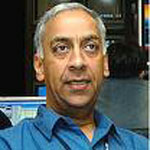
     

    By Chintamani Rao


    The on-going debate on media regulation is in many ways the stuff of the coffee house debates of the sixties, in which jhola-carrying intellectuals diagnosed the ills of the world and prescribed remedies, while the rest carried on running the world in their own ham-handed way.


    The best indication of this, at last week’s seminar, was perhaps in the presence – or otherwise – of a member of the broadcast regulatory body, TRAI. The hosts indicated their seriousness by having Dr Vijaylakshmi Gupta give the keynote address, obviously to set the Indian context before we heard about the UK. Dr Gupta indicated hers by reading out prepared platitudinous speech and then leaving immediately.


    And so the coffee house debate carries on….


    In a discussion on regulation on another occasion I wondered why the media have a say in whether they wish to be regulated: were the banking, or insurance, or telecoms or airline companies asked if they do? The Chairman of the News Broadcasting Standards Authority answered that was because the media is special, not like any ordinary business, and has a role of national importance. Unlike banks and insurance and…?


    If you break the broad regulation issue into its component parts, it comes down to two distinct aspects: ownership and content. Issues of ownership include both, the who? question- who should own the media; and the what? question – what they should be allowed to own, i.e., cross-media ownership.


    The ownership question has no real answers. The discussion at another seminar a few weeks ago was perhaps typical. A senior journalist who had recently had a fairly public falling-out with his corporate employers, was critical of non-media corporates owning media companies. He was also not in favour of media conglomerates; owner-editors; journalist-owners; and of government or political parties owning media. I said I couldn’t disagree with what he had said, and asked who then, in his opinion, should own the media. No answer.


    The point is not to find fault with this speaker. It is, rather, that this is an unresolvable issue, in which every answer raises fresh questions.  What is necessary is not to limit who may and who may not own, but transparency about who does. It calls, as with most things in India, not necessarily for new regulations but first for implementing existing regulations.


    The other aspect of the ownership question is cross-media holding: born of the concern that media conglomerates, through cross-media domination, can drivepublic opinion. That’s a theoretically sound concern, but in practice doubtful at two levels. First, it is questionable whether in the pluralistic environment that is India even the largest media conglomerate can actually drive public opinion.


    Second, what is the efficacy of such regulation? Even in the highly regulated and media-rich United States the media business is oligopolistic. And yet, going back to the first question, it is doubtful if any of the six dominant houses is in a position to actually drive public opinion.


    The real issue in cross-holding is, to my mind, not when a single company owns properties across print, TV, radio and the internet, but when a broadcasting network owns distribution channels. For a content owner to be in a position to control what gets to the viewer, and so be able to choke the pipeline for its competition, is a serious travesty of consumer rights. In India every major broadcasting network owns distribution platforms, the two biggest networks have collaborated in a joint ventureto distribute content, and there is no law to protect the consumer. That is a serious issue for the regulatory authorities to address.


    The real, vexed question is of content regulation. Can we? Indeed, should we? Self-regulation or statutory? And, all the while,a government that has been trying for five years to regulate audience measurement wants you to believe that it is committed to self-regulation in content! It is the same government that in its previous term tried to create a broadcast regulator who would be not a constitutional authority but be hired and fired by the government. The proposed structure also required each broadcaster to have on its rolls a Content Auditor who would screen content and tell the Editor what to drop or modify and – incredibly – inform the broadcast regulator if the Editor didn’t comply.


    The UK currently has no regulation of print media. The response of the press to the Leveson enquiry and the consequent government proposal is to resist any regulatory mechanism, which is to be expected. But it must be said, in fairness, that the News of the World scandal, though huge, was a ‘rarest of the rare’ case that was effectively exposed and dealt with swiftly, which is a great deal more than we can expect. Whether one NOTW should lead to from no regulation to statutory regulation is debatable.


    In the US, too, there is no regulatory mechanism – self- or government. It depends entirely on good practice. The Editor is responsible, and owners typically take a back seat on editorial decisions. Would an editor carry content prejudicial to the owner’s interests? Probably not, but in a robust media environment you can’t stop the rest of the world from seeing you.


    In India broadcasters, in particular, have made moves to self-regulation by setting up the News Broadcasting Standards Authority (NBSA) and, for entertainment content, the Broadcast Content Complaints Council, both under the aegis of the broadcast industry bodies. A necessary limitation of such self-regulation is that it is limited to the members of these bodies. In the case of news, that means 53 channels of 23 NBA member broadcasters. The other 150 known news broadcasters in the country are beyond the pale.


    The effectiveness of self-regulation is often questioned because, even if you don’t doubt their intent, self-regulatory bodies do not have the statutory authority to penalise offenders. Members themselves often don’t accept the rulings of the regulators they have created. Indeed, the first time the NBSA indicted a broadcaster the peeved member quit the NBA in protest.


    Dr David Levy of the Reuters Institute had an interesting take on the matter. Effectiveness of self-regulation, he said, is a function first of culture: far more than of legal guarantees.In other words, some of us are made that way, and some just aren’t. The implication that we are incapable of self-regulation may raise some hackles but let’s face it, that’s fundamentally true.


    The very idea of statutory regulation, on the other hand, is anathema. Those of us of a certain age have actually lived through it in its extreme form, nearly 40 years ago, and can’t begin to contemplate what it might be like in this multimedia age.


    So where does that leave us, between the devil and the deep sea?


    Giving statutory penal authority to self-regulatory bodies has its own set of issues.The only viable answer seems to be co-regulation. I see a system in which a self-regulatory body such as the NBSA conveys a verdict and recommends a penalty to a statutorily authorised one, such as perhaps the TRAI. If the statutory body does not agree with the recommendation, it must respond to the recommending body through a laid-down process, and the two come to an agreement.


    That media owners protest against any and all forms of regulation is not surprising: who wants to be regulated? Every time content is mentioned in the same breath as regulation, even a limit on advertising time, they get all excited about Article 19, freedom of speech, democracy, et al. While no one doubts the sanctity of our constitutional freedoms, there can be no such thing as unfettered freedom. The trouble is, the press think everyone should be accountable and subject to criticism and control – the legislature, the executive and the judiciary; indeed, both Church and State – except themselves.


    There is no perfect solution. The best solution is one that protects consumer interest, and that necessarily means some measure of control while enabling and protecting media freedom.


    Chintamani Rao is an independent marketing and media consultant. A former news broadcaster, he served on the boards of both the IBF and the NBA, and was involved in the creation of the NBSA.


  • Channels fined, to apologise as news self-regulator NBSA acts on 7 complaints

    By A Correspondent


    The News Broadcasting  Standards Authority (NBSA), the self-regulatory body set up by the News Broadcasters Association has acted upon various complaints received by and has issued seven orders on the complaints, a copy of which was shared with MxMIndia.


    The following is the action taken against the complaints:

    1. Complaint filed by Atul Jain against ABP News for programme ‘Bura na Mano’ was rejected (Order 21)


    2. Complaint filed by the Joint GM of IRCTC against Aaj Tak against a sting operation titled ‘Dalal Junction’ was upheld (Order 22). Aaj Tak is required to display an apology from Jan 13 to 17, 2014 and also remove the video from the website


    3.Complaint from Seema Mittal against Aaj Tak regarding a story in the programme ‘Vardat’ with first telecast on November 7. Complaint upheld. Aaj Tak is required to carry an apology as well as pay a fine of Rs 1 lakh. Video to be removed from website.


    4. Complaint filed by RK Lal of Mallige Medical Centre against CNN-IBN on news aired on March 29 to March 31, 2013 and April 6, 2013 with a repeat airing as well as on Face the Nation on April 1. Complaint upheld. CNN-IBN has been asked to carry an apology on Jan 10 before the 9pm news.


    5.Complaint filed by Mr Hariharan on child rape victim being identified by CNN-IBN journalist while covering protest on December 23, 2012. NBSA has advised the channel to be more careful and responsible in future as well as remove the video from IBNlive.com and other weblinks.


    6.Complaint against Sakshi TV regarding report on April 12, 2013 titled ‘drunken girls hulchul midnight’and case filed against pub management by 4 students of NALSAR. Complaint upheld. Channel to pay fine of Rs 1 lakh and carry an apology on January 15-17 at 8pm. Weblinks to be deleted.


    7. Complaint filed regarding ‘Face the Nation’ with a discussion on the Phaneesh Murthy case aired on CNN-IBN on May 22 where complainant alleges that her name was unnecessariyly revealed and wrong info was disseminated on subjudice matters. Complaint upheld. Channel warned, asked to send an apology letter to complainant and video of the show on website(s) must be deleted.


  • @FF12: NBSA chief suggests independent regulation for media

    By A Correspondent


    In 1950, Jawaharlal Nehru said that freedom of speech should be granted to good and bad editors, but they should use it in national interest for he believed that if it is left to the government to decide, the good editors will be jailed and the only the chamchas will survive. This was the opening Justice JS Varma, former chief justice, Supreme Court and  News Broadcasters Standards Association (NBSA) Chairperson used for his keynote address for the session ‘Freedom of Media: Significance of self regulation’.


    Justice Varma said that freedom of speech is precious and we have to preserve it. The way to do so is self regulation as the media is mature enough to know to do it themselves and ward off the danger of state regulation.


    He said that it is not media’s right but rather an obligation to keep the people informed so that they can participate in government decision making process. It is the media’s duty to ensure transparency to ensure accountability.


    Justice Varma emphasised that the media should not give the government a chance to step in and hold it accountable. He said that the media (which reports) and judiciary (which decides) are the two strongest pillars of our democracy and they shouldn’t use their strength (power) to harm anyone, lest their power be curtailed due to lack of their accountability.


    Moving on, Justice Varma criticised the media, especially the broadcast media’s tendency for breaking news. He said that the key tenets of journalism should be kept in mind while reporting ‘breaking news’- is it true, fair and in public interest. He said that objectivity and due diligence must be applied while covering news. He cautioned the media, which has tremendous reach, to be cautious in its reporting as the effect of the news it flashes is instantaneous. He closed his address by saying “The more potential for damage, the more is the accountability you have”.


    The moderator, Barun Das, Zee News CEO and Vice President, News Broadcasters Association (NBA) spoke about how the media can’t be regulated as it is an essential pillar of democracy. He opined that free media can be good or bad but media which is not free can never be good.


    Mr Das said that regulation is a process of evolution. The media needs to introspect and understand where it stands.


    He outlined the dilemmas faced by the media while trying balance the content and the bottomline where news is trivialised for gaining eyeballs. The broadcast media especially is constantly grappling with trying to strike a balance between what the audience ‘would like to see’ and what they “should see”.


    The stage was then thrown open for the panel discussion. Each of the panellist was given time to speak and answer questions by the moderator.


    The discussion was opened by KVL Narayan Rao, executive vice chair person NDTV and President, NBA.


    Mr Rao said that there is no question of compromise on the fact that that media is free and that is the way it should be in a democracy. He said thatIndiais the largest free news market with a reach of 500 million households (news TV reaching nearly 115 million households).


    He said that in the early 2000s, after the private players were allowed in, they got together to set up the NBA to set up a code of programming and ethics which will regulate their broadcasting. He emphasised that it was important to have an independent and respected authority to keep a vigil on what is happening in the industry. He was proud of the fact that they telecast a scroll reminding the viewers that they have a forum to go to if they have any complaints.


    He also spoke about the NBSA which has been an advisory to the media with regards to improvement in news coverage and takes up issues suo moto if the media is found lacking.


    When questioned by Mr Das about balance or conflict on interest between news and business, Mr Rao was emphatic that there should be a “Chinese wall separating news and commercial interests”. He opined that news is to inform, educate and entertain the public independent of government and advertisers. He allowed that some compromise may take place but said that with digitisation, more cost can be spent on content and hence the scenario will change.


    Next to take the mike was Nitin Desai, Former under Secretary General, United Nations and member NBSA.


    Mr Desai started by saying that he disliked the term self regulation and “independent regulation would be a more appropriate term”. He said that emphasis should be given to developing the independent regulation in such a way that it is credible in the eyes of the media, the people and the view makers.


    His main concern was about the emergence of new media and challenges presented to regulate it.  He reiterated the need for due diligence to be given to fair and unbiased reporting, rights of an individual to privacy and avoiding trial by media.


    He said that he had already noticed a change in the fact that the mindset of the editors and the non-media members on the NBSA was converging due to the internalising the sense of responsibility.


    When questioned about the trivialisation of content, Mr Desai said that it was being done as the measurements showed that the audience preferred it. He said that there was a need for a different measuring system for news channels. He also opined that news channel have to stop behaving like money making operations and take responsibility to cover news that “people should know”.


    Phillip Turner, Chief of Bureau, CNN International, South Asia said thatIndiahad a long tradition of journalism but we tended to forget it. He emphasised that focus should be on stories that have a relevance to the rest of the world and maintaining the integrity of the media. He agreed with Mr Desai that the new media is presenting a challenge for regulation but he was of the opinion that everything would work out if the media stuck to the basic tenets of journalism – fair, relevant, responsible and accurate reporting.


    When asked about the need for a NBA-like worldwide authority, he wasn’t sure that such a platform could work globally.


    Kiran Karnik, member NBSA and former president of NASSCOM spoke about the challenges of new media. He said that today, when the news is available instantly as reported by citizen journalists and through the new media, it is the responsibility of the media to separate what is true and what is not. He also opined that news media today has shifted from reporting news to making news. He cautioned them to use the power they have responsibly by maintaining their standards and not infringing on the rights of the people.


    When questioned on the challenges thrown up by the new media, he agreed that technology is not amenable to censorship and also the consumer is becoming the creator and consumer. But he emphasised that there should be zero tolerance for unverified news and the news media as the aggregators of news should use their own censors.


    Mr Das wrapped up the session by stating that now is the time to convert challenges into opportunities and inclusive growth through media is the way forward.


  • More bite for toothless PCI?


    By Akash Raha

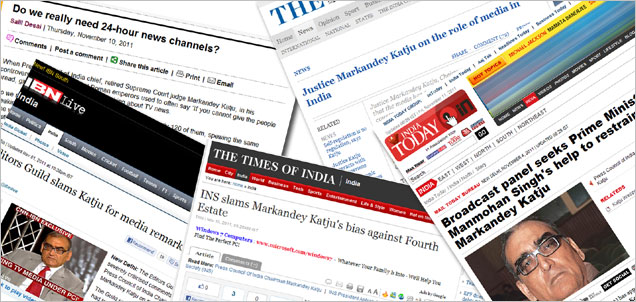
    Recently Chairperson of Press Council of India (PCI), Justice Markandey Katju triggered a volley of criticism and discussion after he lambasted the broadcast media, saying most of them suffer from “very poor intellectual level”. He went on to suggest that broadcast media should come under the purview of the PCI. MxM India asked some well-known media faces what they think.

    Arnab Goswami, Editor in Chief, Times Now and Vice President, Broadcast Editors’ Association (BEA) told MxMIndia: “I don’t know why Justice Katju is making these comments. There is absolutely no need to try and demolish the principle of self-regulation in TV news which ensures that electronic media is free and out of control of vested interests. Justice Katju should not make these sweeping generalizations.”

    Upset over Justice Katju’s comments on the media, former Chief Justice of India J S Verma too is reported to have recently called the PCI an “ineffective” body and said it should wrap up if it does not meet its mandate. Verma chairs the News Broadcasting Standard Authority (NBSA), which is set up by the News Broadcasters Association (NBA). In a recent statement Verma said that he is “deeply anguished” with the kind of language that Justice Katju uses which “sounds authoritarian”. NBA has requested the Prime Minister to stop the PCI from meddling with the dealings of broadcast media.

    On whether broadcast media should come under the ambit of the PCI, Rajdeep Sardesai, Editor in Chief, IBN18 Network said “I believe that the self-regulation mechanism which has been put in place by major news broadcasters must be allowed to strengthen itself. The Press Council has been unable to curb pernicious practices in the print media such as ‘paid news’, so I don’t see how mandating it to now to oversee the electronic media will serve any purpose.”

    Talking about whether he thinks electronic media should be brought under the purview of  PCI Paranjoy Guha Thakurta, an independent journalist and critic, said, “The electronic media needs to be regulated independently – this is because self-regulation is inadequate and ineffective under certain extreme circumstances. The regulator should be independent of both media interests – including the interests of the big corporate media – as well as the government. Even if the regulator is funded by the government, it can be truly autonomous and/or independent if it is Constitutionally mandated thus – such examples include the Supreme Court of India, the Election Commission of India and the Comptroller & Auditor General of India. Ideally the electronic media should have a separate regulator. Even if the ambit of the Press Council of India is widened to include the electronic medium, it has to be made truly independent and autonomous and, most importantly, empowered. The Press Council in its current form has no punitive powers and is hence akin to a toothless tiger.”

    To put things in perspective, PCI was established as a statutory print watchdog by an Act of Parliament in 1978. In recent times, PCI has come under question following chairperson Justice Markandey Katju’s recent remarks on the state of the media in India and its inability to keep a check on paid news.

    When asked if Justice Katju was trying to police the media, Mr Guha Thakurta played down the suggestion, saying, “The Press Council of India is a quasi-judicial body set up an act of Parliament. The way it is supposed to function has been clearly laid down. There is no question of Justice Katju (or for that matter, any Chairman of the Press Council) acting as either a good cop or a bad cop.”

    The question remains, should news broadcast come under the ambit of PCI? One of the reasons for opposing such a suggestion remains that since PCI has been unable to check the menace of paid news in print, there is no reason why it should make any positive change in the broadcast industry. Another argument says that the only reason why PCI has been unable to make a change is because it is still a toothless quasi-judiciary body and the government needs to empower it and give it some tooth. Either way, in this chatter and amidst much confusion is set Justice Katju and his criticism of media professionals as he sees them as naïve and stupid. Criticism which has obviously riled the veterans of the broadcast industry.

    In the wake of this controversy, several discussion forums are being organized on the PCI, the question of paid news, etc. The Foundation for Media Professionals (FMP) is organizing a panel discussion in collaboration with the Press Club of India on the topic ‘Media and Public Interest: Freedom vs Accountability’ on November 12 at Press Club of India, New Delhi. The panelists at this discussion will be Markandey Katju, Rajdeep Sardesai, Neelabh Mishra, Zoya Hasan, Pankaj Pachauri, Abheek Barman, Madabhushi Sridhar and Paranjoy Guha Thakurta with T R Ramachandran as moderator.

    Later, on November 18, MxMIndia has partnered the event ‘Paid News: Fooling People all the Time’ organised by Moneylife Foundation and Citizens Action Network with the support of industrialist Cyrus Guzder to be held in Mumbai’s Madame Cama Hall. The evening will see the screening of the documentary ‘Brokering News’ followed by a panel discussion with senior journalists and the film-maker Umesh Aggarwal. The panelists at this discussion are Umesh Aggarwal, Ayaz Memon, Paranjoy Guha Thakurta, Bhawana Somaaya, and Sucheta Dalal. This panel plans to discuss the issue of paid news, which has been a bugbear even for regulatory bodies such as the PCI.

    For more: http://www.mxmindia.com/2011/11/mxmindia-partners-%E2%80%98paid-news%E2%80%99-event/