Tag: Nawazuddin Siddiqui

  • The Rise & Rise of Tier 2-3 Youngsters


    With apologies to none at all

    By Vikas Mehta


    Vikas MehtaIt’s not news when we talk about people like Dhoni, Bumrah, Lovelina Borgohain, Chanu Mirabai or even Vijay Shekhar Sharma who have made a name for themselves in sports or business. Towns like Kota which have churned out toppers for IIT entrance exams, actors and artists like Nawazuddin Siddiqui or Anurag Kashyap have already propelled small towns of India into the limelight. But, today, these towns are in the forefront of delivering much more than just sporadic gifted individuals. They are now changing the socio-economic structure of Bharat while contributing to a deluge of talent to corporate world too. And don’t forget these youngsters are also tomorrow’s consumers.


    What it underlines is the importance of Tier-2 and Tier-3 towns of India. While we understand Urban (read metro) India and talk about Rural India, there is a huge chunk of these towns which, like a sandwich, have imbibed the good and the bad of both Urban and Rural India. The fact that I have been living in one such town for the past nine-odd years has helped me understand this small town phenomenon better.


    Traditionally, Dehradun was a town with hardly any industry, some government and public sector undertakings and a decent tourism sector. Over the years, it also acquired the reputation of being a good education hub, in school education and training institutions of national importance and of late also in graduation and postgraduation.


    Till a decade ago, to earn a living, one had to be either a government employee in public sectors like ONGC, Survey of India, Forest Research Institute, or be associated with the likes of IMA, Indian Institute of Petroleum, or be self-employed. And getting a public sector job was the biggest dream of the youth. It promised a lifetime of employment, good perks and better retirement perks too.


    Since the above jobs were limited, self-employment played an important role in the commerce of Dehradun. People were self-employed in tourism, in retail, or as serviced employees in government or quasi-government employees in organisations like the ONGC or the educational institutes or the IMAs and the FRIs. And many of these self-employed carved interesting niches. They had bookshops which became a melting pot of the intellegentia, or food outlets like bakeries and restaurants that became a must for the tourists. With educational institutes abounding, hostels, tiffin service, small eateries, sprung up aplenty.


    But the abundance of educational institutes also changed the job scene. Many of the self-employed used to pass on their business to their children, who till not too long ago, were pretty content in accepting this. But now with education at their doorstep, they started thinking differently. And this has happened across socio-economic classes. A help in the household would earlier be content if her daughter took up similar jobs. Or a taxi-driver’s son would take up the same job from his father. A small-time kirana shopowner would let his son take over his shop and a restaurant-owner would pass on the restaurant to his progeny and his employees would pass on their jobs to their children.


    The arrival of education, across all levels, has changed the game. Ask a homemaker and she will complain how it is not easy to find household help. Ask a retailer and s/he will bemoan the fact that the son does not want to run the shop. Ask a small-time plumber and s/he will tell you with pride that his son is doing engineering. Ask a tailor and s/he will be proud to say that his daughter wants to pursue fashion designing. Ask a teacher in a school and s/he will wax eloquently about the daughter doing a computer course.


    Here, I will give the example of my parent’s household help. Thirty years ago, when my parents shifted to Dehradun after retirement, they had a household help whose husband was a daily wage-earner labourer and who had three sons and one daughter. Her initial outlook in life was that the sons will get into being labourers as soon as they hit the teens and the daughter will be married off and would continue her tradition. But then with my parents’ encouragement, she sent all her children to a local small-time private school with my parents funding part of the education and also tutoring them. Today, one son is a front-desk manager in a four-star hotel in Bhopal after doing a two-year course in Dehradun from a hotel management institute. Another one is a cashier with a retail chain having done a diploma in cost accountancy, the third one has started his own repair shop after getting a technical degree from a private college and the daughter has done under graduation before she was married off in an arranged marriage to an engineer in another town, where she takes some private tuition for primary government schoolchildren.


    That to me is the difference in education, even in a small town of Bharat. In another Bharat, without education this would never have happened.


    The arrival of education has shifted the benchmarks. Small towns offer all types of education. Dehradun has engineering colleges, management institutes, pharmacy courses, fashion design institutes, airhostess training institutes, institutes teaching various dances, institutes churning out trained actors, institutes offering retail courses, architecture courses, English-speaking courses, courses training you for a BPO job and of course institutes who train you to get admission into all these institutes. I am not even talking about the normal graduate courses and the ITIs, which are a given. And of course, for primary education Dehradun has more than 300 private non aided schools.


    Many of these institutes are charting their own unique courses. They are offering dual specialisations, credit-based trimester system, industry oriented certifications like SAP or NIIT Swift or even Art of Living. Many flaunt the number of patents their students have registered or the inventions that have merited international recognition.


    And I am sure this phenomenon is being replicated in Raipur, Ranchi, Kochi, Guwahati, Sangli, Mangalore etc. May not be at the same scale, but definitely across the spectrum. Dehradun has a classified weekly newspaper. It is a big hit with edition each week running into 30-40 pages. I see ads for everything in it. Last week, it had almost 10 pages of ads for educational institutes and teachers and other administrative posts. The interesting thing was that the ads were not just for Dehradun or its surroundings but for places as far as Jaipur, Bhopal, Varanasi…..And tell me how many metro cities even have such an amazing, classified only, newspaper?


    Yes, education has changed a lot. But the leveller has been technology. The 4G revolution has inspired the Bharat youngster in more ways than one. And I am not even getting into online education and different online specialisations available. First, is the exposure to the world. My daughter finds about a college in London to pursue her interest because an Instagram friend spoke about it. A beauty parlour owner’s son being a part of Arsenal Football club fan discovered his passion for football coaching.


    Second, is the confidence level. Mediums like Reels have not only given the youngsters a medium to express themselves but also realise that they are no less than the so-called slick city bred.


    Thirdly, it is also changing the cultural identity of the youngsters. It’s not uncommon to see teenaged girls in Dehradun wearing short skirts, hair tied back in a bun, speaking English, walking out of air hostess training institute. Nor is it uncommon to see young men in suits whizzing around on scooters, bending down to touch the feet of elders. Over the last two months, Doon Times has carried enough articles about international DJs and Bollywood stars performing at college festivals. And this evening on Christmas Day sitting at a small café, watching confident youngsters strutting around while talking in Hinglish, I realised that this could well have been the scene in a Gurugram or Mumbai café.


    Finally, the combination of all of the above is making the smalltown youngsters more risk-ready. They are not afraid of doing unconventional things. Exposure, confidence and comfort in finding one’s own identity is making the youngster willing to explore, look at new career paths and be ready to be an entrepreneur too. This is breaking many barriers. And talking to the youth today, it is clear they are ambitious. They still are keen for a job in public sector undertaking. But they are not averse to the private sector. They want a job that will expose them to the world. They want to move to a bigger city and also abroad. And those who have the independent streak, it’s not about opening a small restaurant or having his own taxi. It’s about having a chain of restaurants or a fleet of taxis. For a teenage girl, marriage, though still important, is no longer a driving force. She wants to have some education so that she too can contribute to the household. And she is not limiting her ambition to just be a teacher.


    My wife and I walked into a showroom of a global brand in a prestigious mall in Dehradun. We were discussing, in English, the merits of a T-shirt which seemed to be priced on the higher side. To my shock, which later turned into genuine surprise, the sales girl politely intervened and explained the premium on the T-shirt. I asked her about her good English and she explained to me that she had done her PGDBM from an institute in Dehradun itself and had joined the MNC as a trainee. Her first six months would be on shop floor for her to understand the consumer and the market dynamics.


    I was intrigued. Here was a small-town girl from Bharat. She was comfortable in conversing in English, with strangers, in a shop. She had no qualms or stigma associated being a sales girl, that too after doing a PGDBM! She had broken family barriers, social taboos and wanted to be a part of the world. And her school was called St Kabeer. Figure out if it’s Saint or Sant Kabeer. I spent five minutes quizzing her and I realised that the youth of Bharat has arrived. Not only is she confident and articulate but she is also contemporary. Not modern, but contemporary.


    She is with the times. Mind you she is not a rebel and neither has she given up on tradition. She had mehndi on her hands and the one holiday she never misses is Raksha Bandha. She would not admit that she has a boyfriend, but had some good male friends. She will marry a bit late after she is sure of her job or career. She will not mind a proposal that her parents get but she needs to accept the person too. And she was not interested in just a job but a career.


    What is surprising was not that she was ready to speak to an unknown male (of course my wife’s presence helped) but that she was willing to speak on some subjects which I thought were sensitive.


    The tough and determined rural life has had a very positive impact on such people. Their struggles have strengthened them. But the underbelly of the Urban India has also gotten to them. Drugs consumption is seen as a part of a lifestyle. Most of the youngsters I spoke to, don’t smoke and consider smoking as harmful but drugs were not a taboo. Social drinking seems to be on the rise. Two-hour hotel rooms are mushrooming in every locality at ridiculously low prices. Some private medical clinics talk about unwanted pregnancies being on the rise. But there is no real data to analyse this properly.


    The bottomline is very clear. Tier 2-3 towns youngsters are neither urban or rural but they have carved out their own niche. Companies and brands need to understand them better.

     

  • Bail Kolhu Oil campaign advocates gender equality in kitchen

    By Our Staff


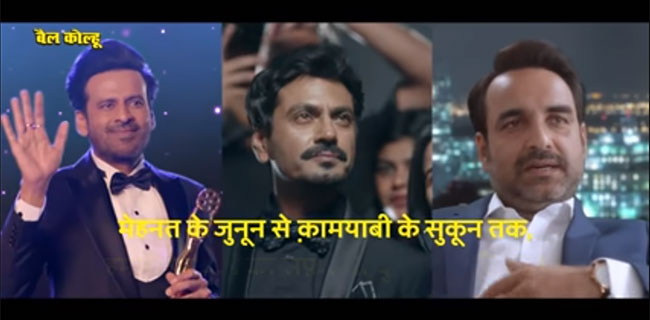
    Bail Kolhu Mustard Oil, a brand of BL Agro, has launched a new campaign. The TVC advocates to equalise gender roles in the kitchen with tagline #RasodeMeinMardHai. It stars actors Pankaj Tripathi, Manoj Bajpayee and Nawazuddin Siddiqui. The advertisement was conceptualised and created by Leads Brand Connect.


    Commenting on the launch of Bail Kolhu’s new TVC, Ashish Khandelwal, Managing Director, BL Agro, said: “Bail Kolhu is a long-standing brand with recall value rooted in consumers. So, our vision with the TVC went beyond generating brand lift and into advocating #RasodeMeinMardHai concept, and we couldn’t have found a better fit to champion the social cause than Pankaj Tripathi, Manoj Bajpayee, and Nawazuddin Siddiqui. Their persona and journeys are very apropos of the initiative, which is why the message we wanted to convey comes out very naturally and effectively.”


    Added Leads Brand Connect CEO Sanjay Srivastava: “Leads Brand Connect team came up with an extremely unconventional but necessary concept of “why should cooking be a woman’s job alone.” It’s a stereotype that is often represented in advertisements, and we wanted to break that chain while simultaneously supporting the idea that men should cook too. With Pankaj, Nawazuddin, and Manoj, we were able to bring that out without being on the nose about it and, of course, creating more recall for Bail Kolhu.”

  • Wasseypur trio shoot for BL Agro Mustard Oil

    By Our Staff


    BL Agro Industries, a FMCG company, has launched the second television commercial of its signature brand, ‘Bail Kolhu’, mustard oil. It features ‘Gangs of Wasseypur’ fame trio – Manoj Bajpayee, Nawazuddin Siddiqui and Pankaj Tripathi. The TVC created by Leads Brand Connect, a multi-dimensional creative agency, is launched across the national television channels.


    Said Ashish Khandelwal, Managing Director, BL Agro: “Bail Kolhu is our 50-year-old signature brand, which has become a household name over the years. We have always intended to deliver the best quality edible oil because we understand that food is a common factor amongst all of us. Be it any occasion, food is the ingredient which connects us all and makes the occasion a memorable one. With this TVC, we wish to highlight the trigger food gives us.”


  • Bail Kohlu… Kohlu ka Bail Kaun?


    By Sanjeev Kotnala


    Sanjeev KotnalaThe ad by BL Agro Industries’ mustard oil brand, Bail Kolhu is interesting – due to its somewhat unique approach.  I have never seen ads from the brand, and I am not sure if they were regular advertisers on social media and TV.


    This TVC/DVC featuring Manoj Bajpayee, Nawazuddin Siddiqui and Pankaj Tripathi- the three much-loved and hated characters from Gangs of Wasseypur is trying too hard, too much too soon. They belong to the core markets of the brand. They are known to have struggled with a late entry into Bollywood, finally succeeding against all odds. The fit seems perfect.


    The three actors are damn good, and they deliver on expected lines.  As depicted in the film and what people know, their life stories resonate with the audience and seem an apt fit for what the brand wants to communicate. They are known more for their craft more than being stars. People find them grounded and relatable in real life- something that the brand wants the audience to believe about it. In some press release, I read these values are – Perseverance, Purity and Dependability.


    The ad is simple. The celebrity brand ambassador reflects on his life, and short clips of their interviewed story make the point.  There is an unmistaken undercurrent of struggle before success. Additionally, the ad moves into the expected lines of showing the relentless pursuit of their dream and not leaving it mid-way. There it empathises on a determined-focussed approach and never letting it go. This is then transferred on to brand as it recounts to have followed a similar life pattern.


    It seems a good move when the brand is trying to expand and is engaging in creating the business delivery channels. However, when it comes to the consumer, this alone may not suffice. I believe that they will most likely take it further with the three ambassadors and product feature and/or benefit-led communication. If it is there, the brand will be better advised to bring them when the iron of buzz and discussion is hot. Otherwise, this disruptive sounding initial communication may just disrupt their plans.


    There is a lack of brand name integration in the film other than Manoj Bajpai reference to Kohlu ke Bail. At the end of the commercial, the bridge-line ‘Mehnat ke zanoon se kamyabi ke sakoon tak hamari pehchan ka safar bhi kuch eisha hi raha’ ( our journey towards gaining the identity has been similar, from passionate efforts to the comfort of success) that tries to wrap up the stories and link them to the brand is good but may not do the job.


    The brand association remains weak. It hinges on the unique sounding brand name- something that the film has really not exploited enough-the complete picture of mustard oil making the traditional way.


    The multi-star single film is different. It looks as if the film were initiated as three independent films but then stitched together for a shorter version. Something the brand should avoid as it clutters and sends a confusing message. It could work better as individual stories than overlapping ones.  The first test should be if the film communicates the right message clearly and cleverly in the least number of exposures.


    At the same time, compliment the team behind it who wrote and directed the ad- and the client who was sure what they wanted from the ad. There is enough buzz and talk about the ad and mostly positive.


    I hope this is just the beginning and not the end of the campaign. The brand will have to move fast and invest in moving from awareness and action at the trade level to interest and effort at the consumer level. The brand may need some tangibles to make the shift; maybe the brand could do with some second opinions and advice.


  • Gangs of Wasseypur trio shoot for mustard oil

    By Our Staff

    BL Agro Industries Limited has announced a multi-starrer brand endorsement with Manoj Bajpayee, Nawazuddin Siddiqui and Pankaj Tripathi as the faces for ‘Bail Kolhu Kacchi Ghani Mustard Oil’. They will be seen together in the commercial TVC of BL Agro and on social media campaigns of the brand.

    Said Ghanshyam Khandelwal, Chairman and Managing Director, BL Agro: “Bail Kolhu is our company’s flagship product, which has been in the market for the last 5 decades. It holds a very strong market and a goodwill in the edible oils category, and we wanted somebody who hold the similar position in the minds of people. Manoj ji, Nawazuddin ji and Pankaj ji are not only actors but are household names who connect with people from across the country. All the three gentlemen are self-made and are the legends in the Bollywood industry. Their determination, grit, hard work and perseverance to reach to the heights they are at today, corresponds our journey as well. We also started our journey from nowhere; had our own set of challenges, learnings, and ultimately, we saw success. With this amazing trio, we could rewind, relive and connect with our journey”.

    Added Richa Khandelwal, Director, Leads Brand Connect, the advertising agency of BL Agro: “Bail Kolhu is the pioneer and flagship product of BL Agro Industries which is a symbol of purity and strength. A thoughtful brand positioning was important for Bail Kolhu, which has been successfully there in the market since ages. On-boarding the iconic trio was an introspective decision as all three of them reflect strength, vibrance and power, as individuals. Also, they share a great chemistry, coming from small towns and humble family backgrounds, similar to Bail Kolhu, which was started by family members from a modest background who hailed from a small town in Uttar Pradesh. Also, the three actors have a great fan following and are famous names amongst the masses, they could be easily connected with the brand, which also has a cult following across the Nation.”


  • HDFC Ergo unveils new TVC

    By Our Staff

    HDFC Ergo General Insurance launches a new TVC campaign. Conceptualised by Mullen Lintas, the “poochoge, toh aapko milega sahi jawaab” campaign features two TVCs, primarily focusing on health insurance and motor insurance. Featuring the brand ambassador Nawazuddin Siddiqui in a double role along with the multi-faceted Piyush Mishra, coming together on screen is sure to raise the entertainment quotient.

    Said Mehmood Mansoori, President – Shared Services & Online Business, HDFC ERGO General Insurance: “The past year has proved that these are very uncertain and unprecedented times that we are living in. The whole pandemic situation has further made us reiterate that financial security and well-being is of the highest importance. In such scenarios, a well-comprehensive insurance policy provides peace of mind and helps in overcoming difficult situations. In testing times, the right kind of insurance will also protect an individual from digging into their savings. HDFC ERGO has always promoted insurance awareness in the country, with this campaign we aim to educate our customers and encourage them to ask the relevant questions while opting for an insurance policy.”

    Added Azazul Haque and Garima Khandelwal, CCOs at Mullen Lintas: “The campaign revolves around the simple idea that we ask too many questions when it comes to health related issues or while buying a vehicle, but while getting insurance for the same, we don’t ask relevant questions. The idea is to push the consumers to ask the right questions regarding insurance as HDFC ERGO has the right answers. In the creative execution, we wanted the same quirky brand tonality and with the idea of showcasing Nawazuddin in characters we have never seen before. So he is seen in a double role again, and Piyush Mishra makes a surprise entry in the campaign. The famous duo of Nawazuddin and Piyush Mishra is coming together on screen after a long time. So bringing them together makes the campaign clutter breaking and extremely memorable.”


  • HDFC Ergo unveils new TVC

    By Our Staff

    HDFC Ergo General Insurance launches a new TVC campaign.

    Notes a communique: “Conceptualised by Mullen Lintas, the “poochoge, toh aapko milega sahi jawaab” campaign features two TVCs, primarily focusing on health insurance and motor insurance. Featuring the brand ambassador Nawazuddin Siddiqui in a double role along with the multi-faceted Piyush Mishra, coming together on screen is sure to raise the entertainment quotient.”


  • Bombay Fables appoints Rafiq Gangjee as CEO

    By A Correspondent


    Rafiq Gangjee

    Senior entertainment business professional Rafiq Gangjee has been appointed CEO at Bombay Fables, a writer’s company which produces films as a boutique production house. Bombay Fables recently produced Netflix’s ‘Serious Men’ and announced their next with Nawazuddin Siddiqui.


    Gangjee worked with Yash Raj Films as VP, Marketing and Communications for eight years as also Balaji Telefilms, Eros, Cinestaan and Sundial Entertainment. He also runs a consulting firm at Zabardast Communications which he started way back in 1989. He has also taught genetics at St Xavier’s College, Mumbai, being a marketing manager at a shipping company and also worked with advertising agencies (Rediff, Everest and Speer).


    Said Sejal Shah, Partner at Bombay Fables: “We are beyond thrilled and really lucky to have Rafiq on board at Bombay Fables; the new kid on the block. He has promised to bring structure and vision to our crazy ideas, and mad ambitions. Rafiq will have a tough job fulfilling all our creative dreams”.


    On this new appointment of his, Gangjee said: “We grew up listening in awe and rapt attention to entertaining fables from our parents and teachers. And now, to be a part of a kickass team, and along with them, be able to create and weave awesome fables, is a fairytale in itself. The biggest challenge and fun-thing is keeping up with Bhavesh, Sejal and Gaurav’s childlike creative enthusiasm. As they say, “Too much fun will be had by all!”


  • PokerStars India signs Nawazuddin Siddiqui as brand ambassador

    By A Correspondent


    PokerStars India has launched its first poker TV commercial (created by Ogilvy) and announced its association with actor Nawazuddin Siddiqui. The launch and association is designed to strengthen the brand’s resonance as it seeks to bring the concepts of poker to a wider audience, notes a communique.


    “We are delighted to partner with Nawaz for this ground-breaking TV advert,” said Ankur Dewani, CEO, Sachiko Gaming, adding: “Nawaz is one of the most engaging and, popular and personalities in Bollywood who has shown great resilience, determination and skill to get to where he is today. These are all key attributes belonging to poker players and PokerStars India so we could not have partnered with anyone better. I look forward to working with him on many successful projects in the future.”


  • Asian Paints illustrates the importance of doing great work in new digital film

    By A Correspondent


    Asian Paints has launched a new digital film for its adhesives range of products. The new brand film titled ‘Screaming Furniture’, featuring Nawazuddin Siddiqui has been conceptualised by McCann India.


    Speaking about the new digital film, Amit Syngle, COO, Asian Paints Limited said: “Ever since its launch, the Asian Paints Adhesives range has always stood for providing a modern and progressive choice, a Choice Tarakki Ki, to customers and applicators through its range of innovative and high-performance products. With this new film, we are aiming to strengthen this position even further, amongst the target segment. This film is a fun & engaging watch. It takes the brand message and creatively weaves in the insight that a perfect job is crucial to earning a perfect reputation in the market. And with Asian Paints Adhesives, you will always get a perfect job done!”


    Added Suraja Kishore, Executive VP & GM – McCann Mumbai: “Adhesives as a category have been far too long stuck in a grimy sweaty functional space. Coming from Asian Paints, key point of difference for our adhesives is that it helps carpenters achieve not just function but also form and finesse. To bring alive this point our campaign creatively amplifies the idea that liability of not using Asian Paints Adhesives is to be remembered for a shoddy job. The insight that every time a furniture makes a creaking noise we don’t blame the adhesives we rather blame the carpenter has been cleverly amplified in an amusing manner. We are excited to rewrite the rules of the category and make Asian Paints adhesive synonymous with design and décor rather than mere functional benefit of just great bonding.”


  • Cars24 announces integrated brand repositioning campaign

    By A Correspondent


    Cars24 has launched ‘Car bechniho, toh Cars24’ – a new brand proposition, in  line with its ambition to own the category of used car commerce. The ad campaign features actors Nawazuddin Siddiqui and Mandira Bedi as they share their struggles of selling their used cars.


    Said Vikram Chopra, CEO, Cars24: “Cars24 has been around for a while, but we realised that there were multiple reasons why we had such a wide fan base. A very large number of our branch walk-ins were from referrals from other happy consumers who had earlier sold a car at Cars24.  We realized it’s time we move from a single benefit proposition to appropriating the category of used cars. The latest campaign establishes Cars24 as the clear dominant leader in the segment, and re-positions all other methods of selling your used car as tedious, harrowing and unreliable.”


  • Conference round-up:A paisa vasool show!

    By Rahul Chandawarkar


    The best Bambaiyya term to describe Goafest 2018 would be ‘paisa vasool’, as both the knowledge seminars and leadership summits were of high quality and provided ample knowledge enhancement.


    While the two-and-half day, annual event began with a rousing session by yoga guru, Baba Ramdev, it ended with an equally interesting session with Bollywood actor, Nawazuddin Siddiqui.  These two events were interspersed with sessions on Facebook, artificial intelligence, Swedish and Korean advertising, interactions with sporting icons, Jonty Rhodes, Rajyavardhan Rathore and Sania Mirza and two exhilarating sessions by teenagers Sparsh Shah (14), a gifted,wheel-chair bound youngster and Amelia Conway (15) a talented advertising film-maker.


    However, it was the yoga guru, who gave the event a rousing start with his aggressive statement, ‘Hum MNC companies kodhoolchatayenge’(we will make MNC companies bite the dust).


    Stating that the main objective of the Patanjali brand was to defeat and vanquish MNC companies, Ramdev said, “The East India company looted our country for centuries. The MNCs are doing the same now. This must stop. This why, we formed Patanjali to compete and beat them.”


    Expressing his confidence in the Indian economy, Ramdev said, “The Indian economy is growing at 10% as compared to the US and UK markets which are struggling at an abysmal 2%. There are opportunities galore in our own country.”


    Predicting that Patanjali would become the No 1 consumer products company in India very soon, Ramdev said, “We plan to introduce a wide range of dairy products, a complete range of apparels and even a drinking water brand called Divyajal next year.”


    Day two began with some scientific crystal ball-gazing, when Dean Donaldson and Jonathan Tavss, transformation strategists and digital futurologists from Kaleidoko predicted that artificial intelligence would become common place and that robots would dominate our everyday lives. They also explained how geno media would be the new frontier after social media and how countries across the world including India were investing in genomics.


    Cameron Worth of Sharpend took the technology discussion further when he demonstrated how the popular liquor products could be ordered, billed and consumed remotely with the use of technology like the ‘internet of things’ (IoT).


    Later, little, Sparsh Shah, just 14 and wheel chair-bound, afflicted with the rare, congenital disease osteogenesis imperfecta (brittle bone disease) sang, spoke and clapped and touched everyone’s heart. There was scarcely anyone with dry eyes, as this teenager from New Jersey, USA mesmerised everybody with an articulateness and a maturity beyond his years.


    Speaking on the twin topics of self-responsibility and social responsibility, Shah urged the audience to adopt a ‘can-do-will-do’ attitude to life. “All of us must be completely positive in our outlook. This is self-responsibility,” Sparsh said. Likewise, he urged the advertising fraternity to give back to society by taking up socially relevant campaigns. “There is an urgent need for inclusive advertising campaigns, where we help the less fortunate among us also make the journey,” the teenager said to thunderous applause.


    Later, young Bollywood actor Sidharth Malhotra displayed a remarkable yen for branding and marketing, as he answered questions with aplomb.To begin with, he asked the Goafest organising committee: “Have you allowed advertisements on the Goafest App? If not, then I would like to advertise my latest film on it!” to much laughter and amusement.


    Having thus set the tone, Malhotra in response to one, brand related question said that it was the brand that chose a personality and not vice versa. “This is the way it is working for me and I am happy with it,” he said. Expressing satisfaction at being able to endorse brands such as Brylcreem, Metro shoes and Pepe jeans, Malhotra said, “The Pepe jeans campaign has been particularly pleasing to me, considering that I was the first Indian to endorse this multinational brand of jeans. I was familiar with the product and hence enjoyed the campaign even more.”


    Malhotra singled out advertising campaigns for Amul milk, Cadbury chocolates and Bajaj electrical appliances as being very memorable. He even attempted to hum the Amul milk campaign jingle to drive home his point. According to the young star, it was important for advertising agencies to give back to society with socially relevant advertisments. “People like Aamir Khan and some advertising agencies have been doing a great job on this front,” Malhotra said.


    Later, Olympic silver medallist and minister of state for sport and youth affairs, Rajyavardhan Rathore expressed confidence that his government’s ‘Khelo India’ campaign of encouraging school level sports would go a long way in ushering a sports culture in the country.


    He also expressed satisfaction that the Prime Minister’s MUDRA (Micro Units Development & Refinance Agency Ltd) scheme had disbursed loans worth Rs 4.5 lakh crores  to micro entrepreneurs across the country in a very short span of time. “These are very positive developments for our nation,” Rathore said.


    Day Two concluded with South African cricketing icon Jonty Rhodes throwing light on the recent ball tampering incident in world cricket, stating, “Most cricket teams try to rough up the cricket ball in Test match cricket to generate reverse swing. Only thing, the Australians did it illegally and got caught!”


    On the final day, Rapha Vasconcellos, Head of Creative Shop, APAC Facebook explained why brands must focus on telling stories and use the social media as a platform to build meaningful interactions.


    Vasconcellos explained how short videos could be made for the mobile handset to drive home a brand’s message. “Small brands are teaching us to rethink our own craft. They are showing us the possibility of building a storyboard using your phone,” Vasconcellos said.


    In the same vein, Samuel Akesson, Art Director, Forsman&Bodenfors turned the entire concept of advertising on its head. Forsman&Bodenfors, an agency famous for its world renowned campaigns like Volvo Trucks – The Epic Split and Nike #Breaking2, is also the advertising agency which works very differently from any other agency in the world. They do not have any hierarchy and work as a collaborative team.


    Akesson said: “What we do is ‘human’ mostly. Perhaps there is a lack of humanity in advertising, which is why sometimes advertising is bad at making people feel anything.”


    Indian tennis icon, Sania Mirza later explained how advertising was more mature now than it was when she was a teenager. “Previously, I was asked to pose with the tennis racquet in a particular way and mouth some dialogues. Now, they are far more subtle and creative,” she said.


    In the post-lunch session, yet another prodigious teenager, Amelia Conway, just 15 and an advertising film maker (director, Adolescent) explained why it was important for teenagers to conceptualise and execute advertising campaigns for teenagers. “I am happy that advertising agencies in my country are waking up to this fact and providing us with the opportunity to work,” Conway said.


    Later, Wain Choi, chief creative  officer at the South Korean company, CJK-Valley explained how some inexpensive advertising campaigns had reaped very high dividends for brands. Burger King for example offered free coffee to anyone who volunteered to wake up sleeping commuters on Seoul metros at their designated stops, the message being printed on their eye patches!


    Similarly, the company, Uniq Flo got a lot of free mileage when they offered branded, cold resistant bubble wrap papers to shoppers to fix on their windows.


    The curtains were brought down by popular, Bollywood actor, Nawazuddin Siddiqui who spoke about his early days of struggle and how he considered the lead role in the under-production, biopic, Thackeray, as the most challenging role of his life.


    Rahul Chandawarkar is a former newspaper editor and presently a journalist, columnist communication strategist and triathlete based in Goa.