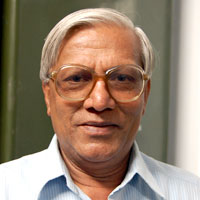
 The Padma Shri award for Sahitya (Literature) this year has gone to author Vijaydutt Shridhar, 60, former editor of Navbharat and the only journalist on the list. The award is well-deserved for the man who has almost single-handedly taken up the task of preservingIndia’s history through the lens of time, past and present – the newspapers, magazines and periodicals.
In an email and telephonic interview with MxM India’s Archita Wagle, Mr Shridhar talks about his passion, the Madhavrao Sapre Samachar Patra Sangrahalaya evam Shodh Sansthan in Bhopal, Madhya Pradesh.
Q: Tell us about your career, and what you are doing now.
I am retired now and I concentrate on the museum and my books nowadays. Before that I was the director at Makhanlal Chaturvedi University of Journalism and Communications. I also worked as the editor of Navbharat. I have worked with several state level committees related to journalists and newspapers in Madhya Pradesh. I was a member of the Madhya Pradesh Vidhan Sabha Press gallery committee for two decades.
Q: What prompted you to start the Sapre Sangralaya in 1984?
I was working on my book Shabd Satta, which chronicles 150 years of journalism in Madhya Pradesh. I had to travel far and wide to research for my book. While researching for the book, I realised that there was no systematic classification of the material that I required. Authenticating the material was also difficult, and posed a lot of problems for me as history is incomplete without properly verified material. I visited individual collectors, but the newspapers in their collections had started deteriorating. This sparked the idea of preserving newspapers.
Q: How did you get the material for starting the museum?
I met Pandit Rameshwar Guru, a veteran journalist, Hindi poet and Mathematics teacher. He also had an extensive collection of journals, newspapers and periodicals going back two generations. But due to family obligations he was ready to donate them. He had two conditions, though. One, he wanted the material to be saved systematically and in the name of future generations. Two, the collection or the museum which would house them will not be handed over to the government or any university as Mr Guru feared that the material would not be cared for properly at either places and that the universities are more concerned with their salaries than preserving the heritage that such a collection represents.
Q: Can you tell us more about the Sapre Sangralaya and the work it does?
After Mr Guru agreed to donate his collection, a society was set up in the name of Madhavrao Sapre, the pioneer of Hindi journalism. The ideology that Lokmanya Tilak had when he started Kesari, was the same ideology that Shri Sapre had, so he launched Hindi Kesari. The Sapre Sangralaya collects all kinds of old periodicals and newspapers in all the languages – Hindi, Marathi, Urdu and so on – for the purpose of preserving them. Earlier I used to travel to different places scouting for materials. I once bought an old collection of Punch magazines from a man who sold them for a song because he wanted to pay for his liquor. But as time passed, people came to know about the work we are doing and they donate their private collections to us, knowing that we will take good care of the material they donate.
Q: How are the footfalls in the museum? Do you get a lot of visitors?
The museum is acknowledged as a research centre by many universities. We mostly get journalists and academicians who come to the museum as they know that what they might not get anywhere else, they will find it here. Once, the editor of an established and well-known Hindi newspaper came to the museum because he wanted to see a copy of a particular issue for January 1962 of his paper. It was a moment of pride that we had the issue which their archives didn’t have.
Q: How do you arrange for the funding for the Sangralaya?
The Central and the state government provide funding for the museum but they never interfere in the day-to-day working. We also receive donations. So funding is not a problem for us.
Q: Any future plans for the Sangralaya?
You should know that the paper a newspaper is printed on is not of the finest quality. We have newspapers and journals dating from the 1600s. Constant handling also accelerates the deterioration. We have preserved the material we have gathered so far by chemical treatment, pest control, laminating the old papers, and transferring the old papers onto microfilm. So far, we have transferred material up till the 19th century. But now we are looking at digitising the content we have. We are looking at transferring all the material to DVD so that people who come to the museum to look at these newspapers for their research will be able to go through the DVDs and the newspapers can be preserved better.
Q: The website for the museum is in Hindi. Would you consider having a website in English, in order to reach a wider audience?
The suggestion that you have given is a good one. We are translating the summary for the website in to English and other languages… but only the summary, the rest of the website will be in Hindi as that is the language we work in. But once we translate the summary, that will provide enough information for people about what we do.
Q: You are an author; any work in progress on that front?
I have written three books and now I am in the process of completing my fourth. My first book was Bhartiya Patrakarita Kosh, which is an in-depth study of Indian journalism in the pre-Independence period (1780-1947). The book covered the whole sub-continent -India,Bangladesh and Pakistan. It is the history of Indian journalism in all languages of country – origin, growth, struggles, achievements and contribution.
My second book was Shabd Satta which covered the history of 150 years of journalism in Madhya Pradesh from 1849 to 1999. My book Choutha Padav is the history of 1000 years of Bhopal with special reference to BHEL. Now I am working on my latest work, Pahela Sampadkiya, which is a collection of the first editorial in prominent Hindi language newspapers. The book has about 28 editorials and my comments and analysis on each of the editorial.
Q: How do you find time to manage both your writing and your day-to-day commitments?
Now that I have retired, I can devote more time to writing and my work at museum. So it is not difficult.
Q: How does it feel to have your efforts recognized by the government in the form of the Padma Shri in Sahitya?
I didn’t expect to be awarded. I have been working on the museum for the last 28 years. I never expected to get the award as the government doesn’t declare it in advance, but it feels good.
 Times Network anchor and editor Navika Kumar has been named Editor-in-Chief of its soon-to-be-launched Hindi news channel, Times Now Navbharat. In her new role, Kumar will lead the editorial mandate of the channel besides continuing in her role as Group Editor, Times Network and hosting ‘The Newshour’ @ 9 pm and the interview show ‘Frankly Speaking’ on Times Now. She will also closely work with the business and leadership teams of the network to drive the channel’s growth strategy and work towards building Times Now Navbharat to become the leader in the Hindi News category.