Tag: Narendra Kusnur

  • Old tunes, new TVCs: Good, bad, or…?


    By Meghna Sharma


    What do Bharti AXA, Hero Pleasure and Slice have in common? In their latest commercials, all have used old songs, remixed or tweaked, to sell their products.


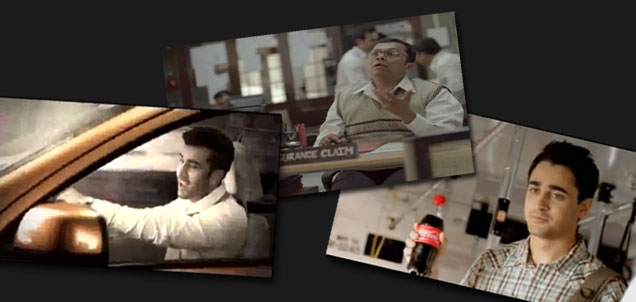
    Yes, the old melodious songs are once again back in vogue as advertisement industry jazz them up to attract audiences. Chala jaata hoon (from the film Mere Jeevan Saathi) and Chakke mein chakka (Brahmachari) for the Nissan Micra ads, Aap yahaan aaye kis liye (Kal Aaj Aur Kal) for Bharti AXA, Tum jo mil gaye ho (Hanste Zakhm) and the earlier Aaj ki raat (Anamika) for Coca Cola, Aaj kal tere mere pyaar ke charche (Brahmachari) for Raymond and Mud mud ke na dekh (Shri 420) for TVS Scooty are some of the new-old tunes on the block. Even Bombay Times got into the act, using Style mara toh darna kya, an edgy takeoff on Pyaar kiya toh darna kya from Mughal-e-Azam, with the words changed to suit the brand.


    Why is there such an epidemic of remix fever in TVC land? Are creatives running out of ideas, or have they just hit upon the fact that old is, well, gold?


    New, or an old trend?

    Prathap Suthan

    History repeats itself and the advertising industry knows that they cannot do without the old classics. “It’s not for the first time that you’ll see advertising agency using old songs, it’s been going on since a very old time, It was there even when I joined the profession,” recalls Prathap Suthan, Managing Partner/Chief Creative Officer at BangInTheMiddle and Chief Creative Officer at iYogi Inc.


    He isn’t alone; many from the industry feel that the old classics are evergreen and anyone can relate to them. But what’s more important is, how does one use them? “If an old song works for one brand, you’ll see many others copying the trend. But that doesn’t mean or guarantee it will work for all of them. If a song fits the situation and helps the brand tell their story in 30 seconds is when an agency has done a good job with it,” feels Manish Bhatt, founder director, Scarecrow.

     

    Manish Bhatt

    The Indian Railways advertisement which used Ashok Kumar’s song Rail gaadi is a perfect example of using an old film song for a current situation. The advertisement not only became an instant rage among youngsters but also got many awards at national and international level. “Encashing on an old tune is what matters here more,” adds Mr Bhatt.



    Narendra Kusnur

    Narendra Kusnur, music columnist and critic, feels that since Hindi film songs have always been popular in India and the older ones have a high recall value, so naturally they can act as an effective tool in advertising as longed as they are used intelligently and go along with the brand positioning. “Why only old Hindi songs? Titan watches used the western classical piece Mozart’s 25th Symphony. People remember the tune and the ad, though many don’t know it’s Mozart. However, it’s always more satisfying to create a completely original jingle line. Something like Lifebuoy or Vicco Vajradanti or Vicks. So that should be the first effort,” he adds.



    Josy Paul

    “Making one nostalgic has worked in the past, does even today and will continue to do so even in the future,” asserts Mr Suthan.


    However, Josy Paul, Chairman and National Creative Director, BBDO India, feels that a trend is not an idea but a bunch of guys following each other. And the guy who started it may have already left the room.


    Shortcut or creativity?

    There is no dearth of songs because of the Indian film industry and one can find a song to fit any situation – but does using them mean that the advertising industry being lazy? Or is this creativity too?


    “Using an old song alone won’t do the trick; one needs to add new value to the song or force people to look at it again because of the unusual nature of the idea. Else, it’s just an old song which one might hear on the radio,” says Mr Paul.


    “There is nothing wrong in using an old track, but one should not treat it as a shortcut. Finding an appropriate song which fits the bill is difficult and needs creativity too. It’s an art form as well,” adds Mr Suthan.


    Citing the example of Parle’s campaign Roko mat, Mr Bhatt explains, “If an original jingle/song is catchy or works wonder for a brand then originality shouldn’t never be ignored. The main aim is to stand out of the clutter and help a brand reach its TG.”


    Hemant Kenkre

    Hemant Kenkre, a former music channel professional and a corporate and brand communications veteran, explains, “The old songs are remixed to suit the younger lot whereas the older generation too recalls the retro numbers. However, the brand managers need to understand that the song should suit their brand rather than overpower it. But it wouldn’t be right to say that there is any negative impact in using old songs for a brand.”


    “Using the power of music to one’s benefit is the deal breaker here – old or new doesn’t matter,” Mr Bhatt adds.

     

  • Will switching to youth ent work for V?


    By Meghna Sharma


    Prem Kamath

    Launched 16 years ago as a music channel, Star India’s Channel V is now turning into a full-fledged youth entertainment channel. Starting July 1, V will stop airing music programmes in India and focus on fiction and non-fiction shows. The reason: “Over the last two years, there has been an explosion of ‘music only’ channels, but everyone’s playing identical playlists,” says Prem Kamath, executive vice-president and general manager at Channel V. “In order to grow as a channel and as a brand, it has always been critical to have an offering that is unique in our competitive space,” he adds on being quizzed on the decision.


    Many experts feel that it was bound to happen as more and more channels try to mould themselves to stay connected with what their target audience wants. But there many questions arise: could this mean the beginning of the end of music on TV? What is the future of music genre? Where is it headed?


    The beginning

    The scene for Indian music channels was set with the launch of MTV in the early 90s. Soon after, Channel V was launched in 1994, and since then there has been no looking back.


    The launch of these music channels also led to a boom in international as well as Indie pop culture. However, it was shortlived and Bollywood music took over, and the two channels, along with many other launched afterwards, started playing popular filmi songs. But over a period of time, these two channels moved beyond playing only music with shows like Roadies, Splitsvilla and Dare 2 Date.


    Hemant Kenkre

    According to music columnist Narendra Kusnur, somewhere down the line for these channels, music took a backseat: “I’m sure any channel would do thorough research while trying to change their gameplan. So, if a music channel shifting towards being a youth entertainment channel is proved beneficial – for viewership as well as revenue – then it wouldn’t harm them to take such a step.”


    He’s not alone in voicing this. Even Hemant Kenkre, a former music channel professional and a corporate and brand communications veteran, feels that channels are now branding themselves differently to reach out to their TG. He, however, does blame the availability of music on various platforms – radio, cellphones, laptops, iPods – as the reason for this shift. “Today, the youth is moving towards reality shows and they want it from the channels meant for them. As for music, they get their share of it from other mediums too.”


    Luke Kenny

    Former VJ, musician, actor and 9XO programming head Luke Kenny, on the other hand, feels that the channel (Channel V) decided to shift long back and has been moving slowly towards it, but there are still many who want music on television. “If music was dead on TV, then how would you explain other new music channels cropping up and doing well too?”


    He added: “Having said that, I do believe that with more channels showcasing Bollywood songs, music channels have lost their niche and have just became promotional channels. Therefore, if a channel decides to change colours, it might work. And you never know, Star India might come up with a new music channel called Music OK.”


    Industry talk

    If one takes a look at various channels, be it music or a GEC, they will find that, there is a great deal of music in some or the other. We have music trailers/songs aired across all channels. Award shows, too, have musical performances and talent shows like Saregama, Indian Idol, DID and even celeb dance show Jhalak Dikhla Jaa  are high on ratings.


    Mohit Joshi

    Therefore, according to media planners, the existence of specialised music channels is a difficult game. “Today, unfortunately for the masses in India, music equals to Bollywood. This is the challenge. This was not the case in the ’90s when there were a lot of private music albums that were launched -Silk Route et al, and the music channels were used for their amplification. So, there was something more than Bollywood, which is not the case today. In the current scenario, if music channels do not experiment with music or the content, then there is a fear that they will dilute their relevance over a period of time,” says Mohit Joshi, managing director, MPG India.


    Adds Carat Media India’s senior VP Himanka Das: “Channel V’s decision to discontinue music is a welcome change and would offer interesting opportunities to build engagement content with the youth, considering the very little content that is available to them in entertainment beyond music. Music as a genre gets 6-7 per cent share in the youth segment of viewers with Channel V contributing 24 per cent to this share amongst 20+ channels. Channel V vacating this space is someone else’s gain!”


    Punit Pandey

    Meanwhile, other music channels aren’t perturbed and are waiting to see how the channel is accepted in its new avatar. As per TAM (CS4+, All India market), there has been a consistent growth in the music genre. In 2007, the genre share of music channels was 2.02 per cent whereas in 2012 (till week 24) the share has grown to 3.62 per cent.


    Punit Pandey, senior VP and business head, 9X Media Group, agreed with Mr Das and added: “Music has, and will continue to, work on television. It is close to a Rs360-370 crore industry (in the HSM belt) and growing. More and more people are ‘watching’ music, so there is nothing to worry about for music channels at large.”


    Nikhil Gandhi

    Similarly, the view from UTV Bindass which started out as a Youth Entertainment Channel (YEC) and has been a pioneer in the segment is that though in the recent past music channels, especially MTV and Channel V, have started shifting focus from music to fictional and non-fictional shows, there is no reason for sleepless nights. “We have an advantage over other channels entering the YEC genre as we have already created a connect with the TG,” says Nikhil Gandhi, Disney UTV Executive Director – Youth Channels, Media Networks. And adds an alert: “So, I would like to tell other channels entering the YEC genre to work on their strategies well.”


    Apprehensive marketers?

    The change in positioning is due to the feeling that youngsters now have a strong spending power. And, hence, are targeted by various brands more than ever before. TV forms a core part of advertisement for these brands as youngsters also spend a lot of time in front of the television sets.


    Simeran Bhasin

    But what happens to youth brands if a channel changes its content strategy? According to the various marketing heads, the apprehensions will emerge if the channel isn’t clear about the shift and isn’t able to help a brand reach its TG.


    “If the TG of a brand matches that of the channel, it won’t matter if they decide to change over a period of time. However, if there is a shift in TG then a brand would think twice before advertising on that channel,” says Simeran Bhasin, head – Marketing and Retail, Fastrack.


    Harkirat Singh

    MTV’s latest show Sound Trippin was partnered by Woodland because the brand feels that youth oriented channels helps them reach their TG. However, the brand is clear that it get associated with channels or shows only if it feels there is a connect between the brand and the viewers. “Like any other brand, while media planning, the TG of a certain channel is important for us. We look for shows which are able to reach and connect with our TG. So, if a channel changes its content plan, we will want to go through their new strategy to figure out where do we figure and how it can benefit us,” says Harkirat Singh, MD, Woodland.


    Will the shift work?

    According to the industry professionals, the change in content plan by a channel is done after a lot of research and only time can decide if it will work in its favour or not. However, they believe that a channel should remain true to its philosophy because otherwise it will lose its identify as well.


    Samyak Chakrabarty

    Expanding on it, Samyak Chakrabarty, MD, Electronic Youth Media Group and Chief Youth Marketer, DDB Mudra Group believes that ‘youth’ is a very misunderstood word and youngsters cannot be defined in one category as all depends on the exposure and the background one comes from. “In their perception to become ‘youth’ channels, they are getting muddled up and don’t know where they are headed. Today, a youngster cannot associate MTV or Channel V with anything like they do for other brands. For instance, technology means iPad, connectivity means Blackberry etc. I think music channels should have remained with what they started as, instead of losing their identify to gain more TRPs. Such moves will only lead to their downfall, in the long term.”


    From being largely optimistic to one predicting a downfall, we received mixed reactions to the proposed change in Channel V’s identity. However, one thing is clear, no matter what Star India decides, there will be many who will wait to see what this mean for them and the genre, at large.