
Tag: Naomi Osaka

  • Mental Health & A&M


    By Sanjeev Kotnala


    Sanjeev KotnalaAt the end of May 2021, women’s tennis star Naomi Osaka withdrew from the French Open to preserve her mental health. As if taking a cue, many athletes in recent times have been vocal on the subject. Fortunately, now it is receiving the desired focus. We, at least for the celebrity and sports personalities, are now agreeing, ‘It is OK to be not OK.’ And celebrating their courage to be open about it.


    In the Indian context, we have read about the mental health issues of Deepika Padukone, Virat Kohli, Abhinav Bindra, Tiger Shroff, Amitabh Bachchan, Sanjay Dutt, Shah Rukh Khan and many others. Many may say that it is easier for them to be open about mental health than an average person.


    Mental illness, also called mental health disorders, refers to a wide range of mental health conditions – disorders that can affect your mood, thinking and behaviour in personal and professional life. Mental illness includes depression, anxiety disorders, schizophrenia, eating disorders and addictive behaviours.


    Reports suggest elite athletes experience mental ill-health at a rate comparable to the general population in anxiety, depression, post-traumatic stress and sleep disorders. We now acknowledge these superhumans – high-performance humans are also vulnerable to mental health issues.


    Which makes me look inwards in the Marketing Advertising community. Just like #MeToo opened up flood gates. People shared their experiences.


    Are we going to see people from Marketing and advertising now coming out with their experiences and issues? Personally, I doubt.


    The industry has all the environment that could lead to mental health issues. It is high performance led. There is subjectivity. There is a swinging of fortunes in approval, appreciation, rejection and dejection. There are creative blocks that make people question their abilities. Then some push confidently even when they are way behind their benchmarks. Loss of business, shifting fortunes, impossibility to predict and control outcomes. The growth. The layoffs. The repeating iterations. The questions about capabilities, abilities and capacity of someone understanding the problem. Long working hours, no control on timelines and expected to be working beyond office hours add to the problem.


    Like me, many of you must have seen cases of people that we never rightly labelled as mental health issues. Because no one wanted to accept such a problem. Theek ho jayega. You will overcome it. Let’s drink to it. ‘Come on. Burn out. Recharge. Are some of the stock solutions offered by colleagues.


    I am not a doctor but, like every advertising marketing professional, an observer of life. And that makes me sure that sooner or later, we will be able to question behaviour and have a place for the proper counselling. Maybe the HR and the stakeholders in the industry could initiate a debate on it and think of possible policies to address it.


    Campaign did a research survey on the subject. Which told us 71% feel that their organisations haven’t taken any concrete steps towards actively reducing workplace stress. Employees claim they haven’t been receiving considerate timelines and are even unable to sign off for the day post 6 or 7 PM. Additionally, they are dealing with the pressures of coming to the office and are expected to be available over weekends.  Exchange4media did a story that told us that as an industry, we are opening up to it. Times Network-initiated #ActNow to spread awareness, normalise conversations around the issue and sensitise people to be responsive to the mental health needs of others. The business insider did a story on World Mental Health Day: How to address the challenges of overworking in an ad agency. Not enough. And we know the reality.


    I may have spoken about the Marketing and Advertising Industry as I am a part of it. But I will not be surprised that it is an omnipresent problem. Police, sales, Manufacturing, Bureaucracy, and students are included in the list.


    We need an ecosystem that does not treat it as a taboo subject. Time we are a lot more open and inclusive in our reaction and acceptance of the possibilities. Remember, It is OK, Not to be OK.


  • Uncool for Naomi Osaka to not do press…. even if it distressed her mentally?

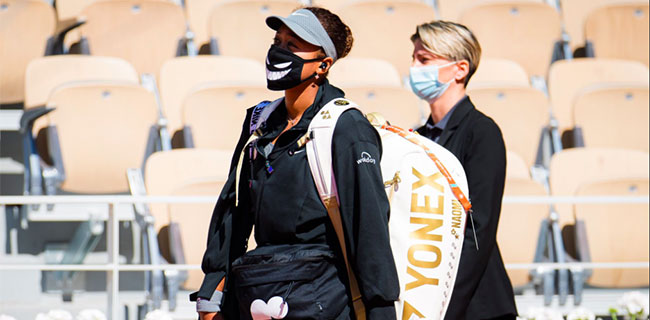
    Courtesy Naomi Osaka’s Twitter handle


    By Ranjona Banerji


    Ranjona BanerjiThe withdrawal of tennis star Naomi Osaka from Roland Garros 2021 raises a tranche of questions about the relationship between people in the public eye and the public. Like with recent events with actress Meghan Markle and her husband, the UK’s Prince Harry, the intrusive element of press scrutiny becomes too painful for some to bear. And others see this claim of weakness as self-indulgent.


    Osaka, four-time Grand Slam winner and an outspoken advocate against racism and for human rights, had announced before the French Open started that she would not be doing press and was willing to pay the daily penalty. Osaka cited mental health issues with the rigour of press questioning, win or lose.


    Her statement after her withdrawal on Monday night, was thus:

    “This isn’t a situation I ever imagined or intended when I posted a few days ago. I think now the best thing for the tournament, the other players and my well-being is that I withdraw so that everyone can get back to focusing on the tennis going on in Paris.


    “I never wanted to be a distraction and I accept that my timing was not ideal, and my message could have been clearer. More importantly I would never trivialise mental health or use the term lightly.”

    pic.twitter.com/LN2ANnoAYD

    — NaomiOsaka大坂なおみ (@naomiosaka) May 31, 2021


    Osaka’s refusal to meet the press and now withdrawal, goes against current rules for sportspersons and current expectations. Post-match press is mandatory because it is one more way in which a sportsperson, who depends upon the public for popularity and continuance of the sport and therefore income, pays back. Also, in that broader context in which sport is founded, it speaks to fair play – win or lose, the game goes on. And no one, big or small, is free from scrutiny. Besides, few players except those at the top, can afford to play the daily fine even if they wanted to duck the press.


    All four Grand Slam tournaments issued the following strong statement after Osaka’s decision not to do press, which may have led to her decision to withdraw:


    “A core element of the Grand Slam regulations is the responsibility of the players to engage with the media, whatever the result of their match, a responsibility which players take for the benefit of the sport, the fans and for themselves. These interactions allow both the players and the media to share their perspective and for the players to tell their story. The facilitation of media to a broad array of channels, both traditional and digital, is a major contributor to the development and growth of our sport and the fan base of individual players.”


    https://www.rolandgarros.com/en-us/article/statement-from-grand-slam-tournaments-regarding-naomi-osaka


    The statement makes their stand clear. As far as the press itself goes, here is the crux of the issue: are we going to far. But if we don’t go far enough, we are also held up to question and therefore, what is far enough? Do we outrage or do we try and understand?


    When it comes to celebrity journalism – as opposed to straight out sports journalism, although lines can be blurred – what are the rules and are there any? People who may feel for Osaka here also know that there is enormous interest in the private lives in the minutiae when it comes to celebrities. But there is also the undeniable reality is that the press provides a vital role in today’s world, when to comes to showing truth to power or revealing unpleasant truths. Can the rules change because someone does not like it?


    Routine press conferences, like post-match ones, by the way, can be tedious and banal, even for journalists. The best sports writing comes from reporting or commenting on a game or a match. Some questions are really stupid, and you cringe as a journalist when you hear them.


    But this exposure to stupidity is shared between all players and indeed anyone who faces questions. There will always be a combination of intelligent, game and skill related questions, of needling and of all out fluff. It’s par for the course. And you can always refuse to answer questions you do not like. You are also protected to some extent at these controlled press conferences by the moderator.


    Importantly, press conferences are sometimes the only way a journalist low down the pecking order can get access to big stars. Anyone who has covered a tournament knows that for the organisers, everything from the seat in the press box to permission for an interview, depends on how powerful a journalist you are.


    Here in India, journalists and members of the public are understandably outraged that the Prime Minister of India does not take questions from the press and has not for seven years. A public responsibility means that you must be answerable the public. This applies to all stakeholders: If you own even one share in a company, you have the right to question the directors. And the public are stakeholders in sport, through the press.


    Much as discussing your failures may be painful, the flip side however is that by discussing both your shortcomings and successes in public, especially if you are a big-name player, is that you may in fact help up-and-coming hopefuls work on their own skills. One cannot discount the enormous impact that players like Osaka have on the larger world.


    Osaka has received considerable support from current and former players, some of whom are very influential in the game:

    https://www.theguardian.com/sport/2021/may/31/naomi-osaka-withdraws-french-open-press-conference-fines-tennis


    And although traditionalists and some journalists feel like the tournament organisers that Osaka cannot shirk her responsibilities to the public, it is undeniable that mental health issues open up a whole new dynamic in the way sport is run. Osaka’s initial statement did not mention depression, but she indicated that constant harping on her lack of clay court skills aggravated her social anxiety problems. How can these be overcome, and can the tennis world help her and others to do so?


    Players lower down the rankings have talked about how their mental health problems are swept under the carpet because of the huge money in keeping sport running. Tennis bodies now have to relook at their rules – which must apply equally to all – and reassess what stays and what goes. All rules, in that sense, are written in sand and must evolve.


    I don’t have the answers. But clearly, something has to give.