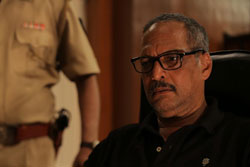

Tag: Nana Patekar

  • #MeToo India: A Year Later…


    By Shailesh Kapoor


    It’s been a little over one year since the #MeToo movement erupted in India. Tanushree Dutta’s accusations against co-star Nana Patekar triggered off a chain reaction, whereby several women, including many in the media and entertainment business, came out with their accounts, some anonymous, accusing co-workers of sexual harassment.


    Fourteen months is a long-enough time period to look back and wonder: Did the #MeToo movement really change things for the good? The answer is not very encouraging. The #MeToo movement in India has fizzled out spectacularly, with no major signs of any fundamental shifts in the thought process. Yes, it provoked many organisations into putting more robust sexual harassment policies in place, and may have sensitised many working men about how they should treat women co-workers. But a lot of these ‘changes’ were perhaps borne out of fear – the fear of being caught on the wrong foot, the fear of losing one’s career, or the fear of bad PR for a corporate.


    The real test of the movement’s success or failure can be judged through the current career status of those accused in it. If we focus specifically on the entertainment business, the accused in the corporate sector lost their job, and many of them have since been marginalised. But if you look at actors and directors, the picture is a more mixed one. Alok Nath had a film release earlier this year and director Vikas Bahl’s Super 30 released with him getting the director’s credit (the very well-made film went on to do good business too). Sajid Khan, one of the most prolific offenders, has not managed to restart his career, and that’s something even those indifferent to the #MeToo movement will be happy about, given the quality of his last few films.


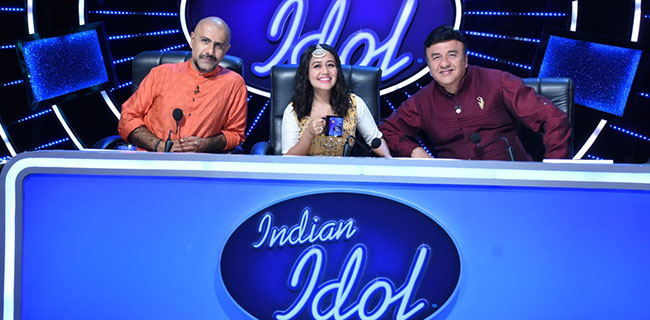
    But the biggest and the most darning evidence that the movement is all but history is the re-establishment of Anu Malik as a judge on Indian Idol. The music composer was removed midway in the last season when accusations against him surfaced, to be replaced by Javed Ali. But in this season, he has been a part of the show right from the start, as if nothing really happened last year. Interestingly, he shares a platform there with Vishal Dadlani, a strong voice on social media on a wide range of social topics, including gender equality.


    That Sony would actually go with Malik this season amazed me no ends. He was eminently dispensable. The show does not rely on any one judge, and Malik, in any case, has a jaded imagery by now. It’s not like he’s the Amitabh Bachchan on whose shoulders a big show like KBC firmly rests. Keeping Malik away from Indian Idol would have simply been good optics. But Sony, I think, have chosen to take a legal position than a socio-cultural and ethical one, and reinstated Malik. There has been a social media backlash, but it’s not of a proportion that cannot be managed.


    It’s unfair to call out Malik and Sony, because the decision is symptomatic of the larger concern on how #MeToo was more of a fad than a real change. And hence, we can expect more men accused in the movement last year to slowly get ‘rehabilitated’ over the coming months.


    Do we need #MeToo Season 2 to take forward the unfinished job in changing mindsets? Perhaps yes.


  • Honourable route would’ve been to apologise, right?


    By Ranjona Banerji

    Phew!!

    The #MeToo movement in the media is now heading into several different directions. We have had stories of repeated bad sexual behaviour between colleagues, we have seen allegations against editors, both dead and alive, we have seen some media houses taking instant action and some taking slow action. We have seen some media houses promising that they will take action, if the allegations are found to be true pending investigation.

    Most of all, we have seen an enormous outpouring of pent-up anger and pain by generations of women in the workplace. Thanks to Tanushree Dutta’s complaint against Nana Patekar, the floodgates have opened across several industries. Big names, big transgressions of trust, as well some allegations which many, including women, find to be in the grey area between consent and anger. We have had a few fake allegations as well, unfortunately trying to use a very important movement to settle personal agendas. Human nature, after all. It was journalist Sandhya Menon who bravely broached the media citadel and several walls which protected male privilege have since fallen.

    And now, the backlash. Although many men apologised, some with disingenuous hurt innocence, some with jobs and reputations lost. Others have fought back, most notably, the most infamous alleged sexual predator of all, one of India’s most famous journalists and currently minister of state for external affairs, MJ Akbar. At last count 14 women have come out with their stories about their experiences with Akbar, when he was their editor. The pattern is remarkably the same, a massive difference of age and power: a senior powerful and legendary male editor and a young impressionable female journalist. The first was Priya Ramani. The most damning was that of Ghazala Wahab. All the women who have spoken out are now senior and respectable journalists.

    Akbar has sued only Priya Ramani for criminal defamation so far. He is fighting for his lost reputation. The Narendra Modi-led BJP government, full of cultivated sanctimony about the empowerment of women, stands with Akbar. There is not even a hint of him standing down until enquiries are complete. Both Ramani and Wahab remain steadfast and so do several women who know what has gone on in newsrooms for years.

    Let us remember that although the Supreme Court laid out the Vishakha guidelines for sexual harassment in the workplace in 1997, almost no media house even bothered. It was only in the late 2000s that conversations about Vishakha began. The Sexual Harassment of Women at Workplace (Prevention, Prohibition and Redressal) Act was passed in 2013. Under this, each organisation has to have an Internal Complaints Committee. One can only hope that those organisations who have even bothered to set these up will now take them seriously. And others will also follow.

    There are some senior women journalists who find themselves caught up in the bind of patriarchy and have to defend the men accused. Some have tried to deflect attention from workplace harassment and slam a society which allows the rape of babies. The trouble is that by doing this, they are endorsing workplace harassment and sexual abuse. The law, when it is applicable, has different punishments for degrees of crime. Does not mean that a “lesser” crime must be ignored because larger crimes also take place.

    In any case, it is unlikely that any of the journalists who have come forward are looking for criminal punishment, legal reparation or monetary compensation from these men. They want acknowledgement and they want workplaces are cleaned up. As we saw with the Tech Mahindra case, where a young man spoke about being harassed by a female senior boss – he only found the courage after Section 377 was decriminalised. Workplaces have to be sensitised to harassment and bullying and bosses and colleagues must know that violation of personal space is unacceptable.

    The other major defence has been made by journalist and poet CP Surendran. Eleven women have come forward with stories of sexual harassment by Surendran, some when he was editor of DNA. His response is truly extraordinary and frankly unacceptable. Complaints were made at the time, other staff and the HR department were made aware. Surendran has this to say:

    “I may have made what some people consider to be sexist comments. I believe sexism is an intellectual and physical reality. I choose not to think in given categories. This may be construed as arrogance…

    “I have no gender or political loyalties. I have paid a price for this all my life. I often rub people of both genders the wrong way with my often ill-considered views…

    “The Me Too movement needs victims to feed and fatten itself. I won’t be the last.”

    What does all this even mean? The last line is straight from the Trump-Kavanaugh playbook, where the perpetrator conveniently plays the victim. The first two statements are remarkable logical flights of fancy. To say that sexism is “an intellectual and physical reality” is stating the obvious and conveniently ignoring the fact that sexism is no longer acceptable, and it is horrific that it ever was. I am not sure what high intellectual quality there is in supporting millennia of gender discrimination. The excuse of having no gender or political loyalties is convenient bunkum and means nothing.

    Many media houses have come out strongly in favour of ending workplace harassment in their editorials. One can only hope that this is reflected in their own workplaces.

    Allegations have been made about two senior editors at The Wire. Two are throwaway lines from dubious Twitter handles, neither of which have gone further than talking about Sidharth Bhatia’s lip quivering and some salacious comment about a woman colleague he is said to have made in my presence. I heard no such comment and no complaint was ever made to me about quivering lips. The handles did not reply to my questions about when they worked in DNA with me and have now moved on to targeting journalists within The Times of India.

    The other accusation is from a film-maker, against Vinod Dua, when she was starting out in her career and contains details of place and conversation in a Facebook post. The Wire has taken note of for both allegations and stated that their Internal Complaints Committee is deliberating the matter.

    Regardless of those accused of harassment fighting back – and no one denies them the right to do that – but when the anecdotal evidence is overwhelming, a more honourable route would perhaps have been to apologise. So far, women and men who find inappropriate workplace behaviour and sexual harassment unacceptable show purpose to keep fighting the good fight. The intent is to clean up the work environment, not destroy reputations. If we work together on this, it can only get better.


    Ranjona Banerji is a senior journalist and commentator. She is also Consulting Editor, MxMIndia. The views here are personal

  • Stop the Silence about Sexual Abuse!


    By Ranjona Banerji


    Between the #MeToo movement, the US Senate’s questioning of Supreme Court nominee Brett Kavanaugh over allegations of rape, Tanushree Dutt’s accusations of sexual harassment against Nana Patekar, we also have several younger women filling social media with stories of harassment and abuse from well-known men within their world. It is a horror story from the point of view of all these women, the humiliation, the fear and the destruction of self that they go through because of these particular abusive men they have encountered or are involved with.

    And, as with all such accusations, they have the social trial that they go through. Where they are doubly, shamed, humiliated, abused, harassed and harangued. For having the courage to speak out and the temerity to accuse a man and thereby ruining his “reputation”.

    So, let’s get it out there, up front: Yes, false accusations can ruin someone’s reputation. And lest you forget and start getting excited, remember that real accusations usually destroy the accuser’s life under the laws of patriarchy which bind us. And the perpetrator gets away with it.

    Culpability, complicity and silence is where we in the media demean ourselves and our vocation.

    Regardless of whether Kavanaugh becomes a US Supreme Court judge or not, the whole country and enough of the world saw Christine Blassey-Ford and Kavanaugh being interrogated. And also saw how a woman gets excoriated by the system for having the courage to speak out about a very traumatic episode of her life. Because she spoke out so late she must be lying is the argument and that is nothing but a version of the one that says she wore a short skirt to she asked for it. And looking at how a dignified college professor in her early 50s was torn apart during and after her testimony, why should anyone wonder that more women do not speak out?

    The Tanushree Dutta versus Nana Patekar case is very similar. He is a well-known film star; she had a short career, short in fact because she complained about Patekar 10 years ago. But today, when she speaks about it again, she is accused of not bringing it up. She is vilified once again. Her career was ruined then; her character is being destroyed now.

    Even worse, it now seems that everyone knows about Patekar’s behaviour, but it is indulgently tolerated because he is talented! And close to a political party. The same argument has been applied to Sanjay Dutt and Salman Khan. And there are others in the Indian film industry who are no better and a whole lot worse. And the system is geared so that they get away with it and their victims shut up and put up with it. Or else.

    How many stories and investigations have film journalists done on sexual abuse within the film world? Almost nothing. It’s all gossip and boys will be boys and I can’t upset my sources and I need access. Much like some political reporters and almost all business “journalists”.

    Before I go further, I would like to quote from a Facebook post by well-known defence lawyer Rebecca John, who fights several such cases. She’s talking about the toxic atmosphere that women who complain about sexual abuse have to face in the legal system:

    “Let me share the real story of a woman who complained spontaneously, and without delay and therefore passed the “truth yardstick” that has been erroneously set for all women. A case was registered many, many years ago. What happened? She still waits for it to effectively start. Why? Because the rich and powerful man who opposes her, has moved court after court on one pretext or the other, engaging a battery of equally rich and powerful lawyers, and the trial has been stalled. Ever since her complaint many, many years ago, she has been targeted and defamed. For so many years, she has waited patiently and quietly to tell her story in court.

    “What has he done? He has made it clear that he doesn’t care for the process but wants to exit without a trial. I want to ask our courts: who gets punished here, the victim or the perpetrator? I want to ask some of my friends who knowingly and unfeeling participated in the process of his rehabilitation – whether they know or recognize the daily ordeal suffered by the woman? Whether they ever bothered to reach out to her when he and his family were busy making wild, baseless allegations against her. “She, by the way, is a real person, but suffers in anonymity because the law likes to keep her that way – to prevent her from exposing every dirty, filthy trick he has used to intimidate her. I want to ask the state prosecutors what the f** * they have done, while one man has completely subverted the system. It’s reached a stage where she no longer cares and wonders why she bothered to start this in the first place. She is no match to his power and privilege. And it appears no one wants to hear her story. And that’s the place he wants her to be in. Tired and exhausted.”

    Over the past few days on Twitter, young women have been sharing the most gut-wrenching stories about how they are harassed and stalked when they venture into today’s dating game, by young men known to them and to their worlds. Using social media and technology, they are bombarded with sexual imagery and asked to share their own. When confronted, these young men pretend to apologise and then make themselves into the victims, of life or circumstance or of the phases of the moon or whatever rubbish. These sham apologies are more signs of harassment and abuse. These are men who pretend to be aware and full of annoying trendy words like “woke” and supporters of the #MeToo movement, while behaving absolutely no differently from other predatory men.

    It is no secret that violation of privacy and penetration of dignity are easy ways to target women. And society expects women to keep quiet. We get very angry about gangrapes. Well, so we should. But everyday indignities and all the way up to strong physical and emotional assault must apparently be tolerated.

    And then there’s us, the media. We are terrified within ourselves and our newsrooms. Everyone knows stories of powerful editors who transgress all lines; what have we done about it? Everyone single one of us who looks into a mirror is guilty, of complicity, of cover-ups, of silence. And what we make some fuss about in other professions, why are we so silent when it comes to our own?


    Ranjona Banerji is a senior journalist and commentator. She is also Consulting Editor, MxMIndia. The views here are personal

  • Reviewing the Reviews: The Attacks of 26/11

    The Attacks of 26/11

    Key Cast: Nana Patekar, Sanjeev Jaiswal

    Directed By: Ram Gopal Varma and Rommel Rodrigues

    Produced By: Parag Sanghvi


    Ram Gopal Varma did it again – aimed too high and crashed. He has his devotees who started the buzz that The Attacks of 26/11 would be his return to form, after hilarious misadvenures like Department. But RGV crashed and burned spectacularly again, with a film so insensitive and gruesome that it hurts to watch.


    Incidentally, only Karan Anshuman of the Mirror got it right – Nana Patekar plays Hassan Gafoor, not Rakesh Maria, and the commission for which he deposed was indeed the Pradhan Commission. Take a bow, Karan!


    Most critics stayed with 2 stars; even the usually generous Times of India could not manage a 3 on this one.


    Wrote Madhureeta Mukherjee, “It’s evidently researched; yet, we’re left as observers, watching the rampage rip the soul of the city. While the thought is poignant, the horror isn’t palpable throughout and the execution doesn’t cut as deep as the actual tragedy. No hard steel of emotion ripping into your gut stemming from cinematic brilliance.”


    Sanjukta Sharma of The Mint commented, “To take a surreal, unforgettably, mind-boggling event like the attacks on Mumbai on 26 November 2008, and turn it into a movie of dramatic power is, in one sense, pure exploitation and titillation. In another sense, it is a realization of the story’s limitless dramatic potential. Perhaps both these factors are at work in this film that begins as an act of remarkable ambition and ends as a wishy-washy and tacky work. Truth be told, it was impossible to not feel the surge of fellow feeling and soaring heart rates in the audience when Varma shows Kasab and his gang shooting down human beings with their AK-47s with impunity. Five years on, it is too soon, and Varma knows it. The immediate reaction on reliving it aside, the thin storyline lapses into banality.”


    Shubhra Gupta of the Indian Express correctly analyzed the voyeuristic tendency of the film. “Varma loses the advantage by slipping into familiar treads. People being killed, and limbs being turned into bloody colanders on screen need to be treated, in this kind of a film which demands respect because it claims veracity, with respect. Here the director sheds restraint, and becomes a voyeur, and turns us into voyeurs too. Adults being butchered are bad enough, but children, and babies? You do not show me multiple close-ups of tots about to be shot. No, no, no. And then we are treated to long treatises on religious edicts and what’s good and bad, which are just plain tedious. It had the potential to be both smart procedural, and spiffy action, but ’26/11′ sinks somewhere in the middle.


    Rajeev Masand of IBNLive was left cold too. “It’s not often that you go into a movie knowing exactly what to expect, but The Attacks of 26/11 is that rare exception. The plot and the end of this movie are no secret because the 2008 terrorist attacks on Mumbai, and the way the horror unfolded on the night of November 26, is still fresh in public memory. Unfortunately, in the hands of director Ramgopal Varma, these unprecedented events are portrayed in a one-dimensional, jingoistic, and almost hysterical tone. The Attacks of 26/11 often resembles a tacky B-movie. Even if there’s a voyeuristic fascination in observing how 10 men managed to lay siege to a city like Mumbai, this film is so lacking in genuine emotion and original perspective that despite the carnage, you’re hardly moved.”


    Karan Anshuman of Mumbai Mirror was scathing. “To begin with, the film is less about 26/11 and more a biopic on Ajmal Kasab’s life after he got onto the boat that brought him here. The screenplay completely skips two out of three days of the attack, which invalidates the idea that you’re watching a movie relevant to 26/11 and is relentlessly focused on Kasab. Instead of giving us valiant moments of the real champions of the hour, the NSG, revealing to us how they save the day and take out eight of ten terrorists one at a time, we’re limited to witnessing Kasab’s participation, capture, and conviction for his role in the massacre. A biopic would’ve been fine if that was RGV’s intention to begin with and if he visually delved into Kasab’s past and reasons. But that’s not what the film is about. In fact, so much more information has been unearthed since, but the writers ignore all of it.”


    Mumbai-based critics could, perhaps, not delink emotions from the film – they had experienced what the city and its people went through. How does a writer in another city see it? Sudhish Kamath of The Hindu writes, “The Attacks of 26/11 is probably the most definitive modern Ram Gopal Varma film. It’s the epitome of inconsistency. Of crassness. Of insensitivity. Of horror. Of atheism. Of audacity. Of voyeurism. And it also has momentary flashes of brilliance. And understatement. The good, the bad and the ugly – all at the same time…. You could argue that the filmmaker wants you to see this as a horror film (listen to the score for proof) because there is simply no other explanation for what happened – a bunch of men on a killing spree, staging one massacre after another in crowded landmarks of the city, leaving the police and public helpless. Only that this helplessness is shown with an almost sadistic glee and gratuitous detail that the terrorists may actually be pleased with this depiction.”