

Tag: Nagesh Kukunoor

  • 5 Tips, 5 Books & 5 Movies that can Help Us Mainstream Deaf Individuals


    By Shruti Pushkarna


    Shruti PushkarnaHow many of you have watched the Academy Award winning movie CODA? A film that won the Best Picture, Best Supporting Actor and Best Adapted Screenplay at the 94th Oscars.


    CODA (or Child of Deaf Adults) features deaf actors Marlee Matlin and Frank Kotsur portraying their disability on screen. The film centres around Ruby Rossi, the only hearing character in this family drama.


    What really stood out for me in this fictional representation of a complex issue, is its ending. When their seventeen-year-old daughter (Ruby) decides to follow her passion and leaves for college to pursue music, the deaf family is left to fend for themselves. But throughout the movie, the filmmaker never puts the onus of inclusion on the disabled, and same is true of the conclusion. Their surrounding community, which is the (hearing) fishing community figures out ways of communicating and transacting with the Rossi family.


    September is observed as the Deaf Awareness Month and this year the theme is ‘Building Inclusive Communities for All’, where deaf people feel connected to their community as well to those without a hearing impairment.


    Officially, India has only 250 certified sign language interpreters for a deaf population of ranging between 1.8 and 7 million.


    With an estimated count of 700 million people (globally) to experience hearing loss by 2050, it’s time we learn ways of including deaf individuals in mainstream conversations. And what better time to start than the Deaf Awareness month!


    The obvious question to ask is how can we include deaf individuals in day-to-day activities, at work or even in social settings?


    Here are five easy tips.


    1. Learn basic sign language to initiate communication with a community severely dependent on visual cues. In 2017, the United Nations officially recognised September 23 as the International Day of Sign Languages. The aim was to raise awareness about the importance of sign languages as a means of communication and as a fundamental human right of deaf individuals.

    2. Speak clearly without overemphasising or speaking too loudly or slowly, remaining natural in your delivery.

    3. It always helps to communicate in quiet environments because noisy backgrounds can make it harder for the deaf (and hard of hearing) to focus on what is being said.

    4. Always face the person you are communicating with while speaking or signing. Deaf individuals rely on gestures, facial expressions, and lip movements to communicate effectively.

    5. Use visual aids like whiteboard, notepad or smartphone apps makes it easier to engage with the deaf especially if it involves information exchange.


    In case you are curious about life with hearing impairment, here are five books that focus on the theme of inclusion using deaf characters.


    1. El Deafo– This is a graphic novel based on the childhood experiences of American author, Cece Bell. It’s a heartwarming and humorous tale of a young girl navigating the world with her hearing aid, recounting her challenges and triumphs.

    2. You’re Welcome, Universe– This book by Whitney Gardner features an Indian teenage deaf girl who gets expelled from her school for spraying graffiti on the wall. In her new school, she tries to find new friends and embarks on a journey of self-discovery.

    3. Wonderstruck– This is an illustrated novel by Brian Selznick which follows the story of Ben, a deaf boy traveling to New York in 1977, and Rose, a deaf girl traveling to New York in 1927. The two stories overlap around the themes of connection and belonging.

    4. Deaf Like Me– This novel by Thomas S Pradley and James P Pradley, is based on a true story. It recounts the journey of a hearing family raising a Deaf child. It delves into the challenges they face and their efforts to support their child’s communication and inclusion.

    5. Deafening– This is a novel by Frances Itani, set during/before World War I, which tells the story of a young woman who becomes deaf due to a bout of scarlet fever.

    And in case you are someone who prefers movies to books, here are five cinematic recommendations with diverse portrayals, exploring themes of deaf culture and inclusion.


    1. Sound of Metal (2019)- Directed by Darius Marder, this film tells the story of a heavy metal drummer who begins to lose his hearing and must adapt to a new way of life within the Deaf community.

    2. Iqbal (2005)- Directed by Nagesh Kukunoor, Iqbal is centred around a Deaf and mute aspiring cricketer. The film highlights his determination to overcome obstacles and pursue his dream of playing cricket at the national level.

    3. The Shape of Water (2017)- Directed by Guillermo del Toro, this fantasy drama features a mute, non-verbal female lead who communicates using sign language. The film explores the power of communication beyond words and the connection between the characters.

    4. Children of a Lesser God (1986)- Directed by Randa Haines, this film revolves around the romantic relationship between a hearing teacher and a Deaf custodian at a school for the Deaf. It explores issues related to communication, love, and societal expectations.

    5. Soundtrack (2011)- Directed by Neerav Ghosh, this film is loosely based on the life of musician and composer Suman Sridhar. The film features a DJ who loses his hearing but continues to create music. It explores his journey of adaptation and resilience.


    Change is not easy to come. Especially not in a country as diverse and complex as ours. It’s true that it takes more than one to transform and build an accessible world. But it’s the action of one that translates into a collective movement for change.


    Can you commit to learn to sign at least one word this September?


    Wondering why MxMIndia publishes a disability advocacy column? Well, we strongly feel that the media can dramatically transform the world of persons with disabilities. This series attempts to help bring forth issues that the media must champion to create a truly inclusive and accessible India. Writing  this column is Shruti Pushkarna, a former journalist and  now a disability inclusion advocate based in New Delhi. Her views here are personal. To access the archives of her 75-plus columns, please visit: https://www.mxmindia.com/category/ columns/shruti-pushkarna/


    If you have a view on the issues raise or would like to align with MxMIndia on this cause, write to us at editor [at] mxmindia.com.


  • 5 Tips, 5 Books & 5 Movies that can Help Us Mainstream Deaf Individuals


    This article has been updated at https://www.mxmindia.com/columns/5-tips-5-books-5-movies-that-can-help-us-mainstream-deaf-individuals/

    By Shruti Pushkarna


    Shruti PushkarnaHow many of you have watched the Academy Award winning movie CODA? A film that won the Best Picture, Best Supporting Actor and Best Adapted Screenplay at the 94th Oscars.


    CODA (or Child of Deaf Adults) features deaf actors Marlee Matlin and Frank Kotsur portraying their disability on screen. The film centres around Ruby Rossi, the only hearing character in this family drama.


    What really stood out for me in this fictional representation of a complex issue, is its ending. When their seventeen-year-old daughter (Ruby) decides to follow her passion and leaves for college to pursue music, the deaf family is left to fend for themselves. But throughout the movie, the filmmaker never puts the onus of inclusion on the disabled, and same is true of the conclusion. Their surrounding community, which is the (hearing) fishing community figures out ways of communicating and transacting with the Rossi family.


    September is observed as the Deaf Awareness Month and this year the theme is ‘Building Inclusive Communities for All’, where deaf people feel connected to their community as well to those without a hearing impairment.


    Officially, India has only 250 certified sign language interpreters for a deaf population of ranging between 1.8 and 7 million.


    With an estimated count of 700 million people (globally) to experience hearing loss by 2050, it’s time we learn ways of including deaf individuals in mainstream conversations. And what better time to start than the Deaf Awareness month!


    The obvious question to ask is how can we include deaf individuals in day-to-day activities, at work or even in social settings?


    Here are five easy tips.


    1. Learn basic sign language to initiate communication with a community severely dependent on visual cues. In 2017, the United Nations officially recognised September 23 as the International Day of Sign Languages. The aim was to raise awareness about the importance of sign languages as a means of communication and as a fundamental human right of deaf individuals.

    2. Speak clearly without overemphasising or speaking too loudly or slowly, remaining natural in your delivery.

    3. It always helps to communicate in quiet environments because noisy backgrounds can make it harder for the deaf (and hard of hearing) to focus on what is being said.

    4. Always face the person you are communicating with while speaking or signing. Deaf individuals rely on gestures, facial expressions, and lip movements to communicate effectively.

    5. Use visual aids like whiteboard, notepad or smartphone apps makes it easier to engage with the deaf especially if it involves information exchange.


    In case you are curious about life with hearing impairment, here are five books that focus on the theme of inclusion using deaf characters.


    1. El Deafo– This is a graphic novel based on the childhood experiences of American author, Cece Bell. It’s a heartwarming and humorous tale of a young girl navigating the world with her hearing aid, recounting her challenges and triumphs.

    2. You’re Welcome, Universe– This book by Whitney Gardner features an Indian teenage deaf girl who gets expelled from her school for spraying graffiti on the wall. In her new school, she tries to find new friends and embarks on a journey of self-discovery.

    3. Wonderstruck– This is an illustrated novel by Brian Selznick which follows the story of Ben, a deaf boy traveling to New York in 1977, and Rose, a deaf girl traveling to New York in 1927. The two stories overlap around the themes of connection and belonging.

    4. Deaf Like Me– This novel by Thomas S Pradley and James P Pradley, is based on a true story. It recounts the journey of a hearing family raising a Deaf child. It delves into the challenges they face and their efforts to support their child’s communication and inclusion.

    5. Deafening– This is a novel by Frances Itani, set during/before World War I, which tells the story of a young woman who becomes deaf due to a bout of scarlet fever.

    And in case you are someone who prefers movies to books, here are five cinematic recommendations with diverse portrayals, exploring themes of deaf culture and inclusion.


    1. Sound of Metal (2019)- Directed by Darius Marder, this film tells the story of a heavy metal drummer who begins to lose his hearing and must adapt to a new way of life within the Deaf community.

    2. Iqbal (2005)- Directed by Nagesh Kukunoor, Iqbal is centred around a Deaf and mute aspiring cricketer. The film highlights his determination to overcome obstacles and pursue his dream of playing cricket at the national level.

    3. The Shape of Water (2017)- Directed by Guillermo del Toro, this fantasy drama features a mute, non-verbal female lead who communicates using sign language. The film explores the power of communication beyond words and the connection between the characters.

    4. Children of a Lesser God (1986)- Directed by Randa Haines, this film revolves around the romantic relationship between a hearing teacher and a Deaf custodian at a school for the Deaf. It explores issues related to communication, love, and societal expectations.

    5. Soundtrack (2011)- Directed by Neerav Ghosh, this film is loosely based on the life of musician and composer Suman Sridhar. The film features a DJ who loses his hearing but continues to create music. It explores his journey of adaptation and resilience.


    Change is not easy to come. Especially not in a country as diverse and complex as ours. It’s true that it takes more than one to transform and build an accessible world. But it’s the action of one that translates into a collective movement for change.


    Can you commit to learn to sign at least one word this September?


    Wondering why MxMIndia publishes a disability advocacy column? Well, we strongly feel that the media can dramatically transform the world of persons with disabilities. This series attempts to help bring forth issues that the media must champion to create a truly inclusive and accessible India. Writing  this column is Shruti Pushkarna, a former journalist and  now a disability inclusion advocate based in New Delhi. Her views here are personal. To access the archives of her 75-plus columns, please visit: https://www.mxmindia.com/category/ columns/shruti-pushkarna/


    If you have a view on the issues raise or would like to align with MxMIndia on this cause, write to us at editor [at] mxmindia.com.


    An earlier version of this article had misspelt Movies in the main headline as Bovies. It has been corrected. Our apologies – Ed


  • Reviewing the Reviews: Mod

    Mod

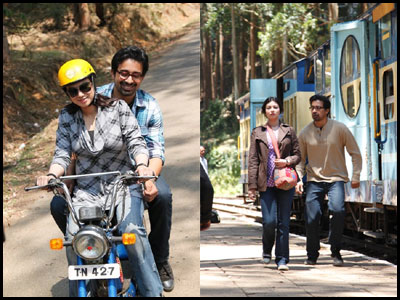
    Key Cast: Ayesha Takia Azmi, Rannvijay Singh Singha, Raghubir Yadav, Tanve Azmi, Ananth Mahadevan

    Written and Directed By: Nagesh Kukunoor

    Produced By: Sujit Kumar Singh, Elahe Hiptoola


    In the glut of releases this week, Mod is the pick, simply because Nagesh Kukunoor is the director, and even though his last few films have been heart-breakingly bad, there are still hopes from the man who made Hyderabed Blues and Dor.

    The title is confusing, most read it as the abbreviation of modern, when it is intended to mean turn. Most critics, perhaps relieved that it wasn’t as awful as Kukunoor’s Bombay to Bangkok, found good things to say about it. Readers would be confused, however, when ratings range from one to three and a half. What is slightly off-putting that Kukunoor has given up on originality. This one too, is taken from Korean film, Keeping Time.

    Mayank Shekhar of the Hindustan Times gives it one and a half stars, but perhaps nails it when he writes, “Most still recall Kukunoor for Hyderabad Blues (1998), a game-changer in low-budget Indian films, which could instruct and delight at the same time. He has since become a pure genre filmmaker. Which is truly what separates the so-called “indie” from the supposed hard-core mainstream. Traditional Bollywood directors pack in every genre into one movie, alternating action with romance, comedy, drama etc. “Cutting edge”, “independent”, “Hindie”, potentially global “crossovers” would be too flatulent an epithet for those who don’t do that. But they don’t produce anything extraordinarily personal, astonishingly moving or real, either.”

    Trade journalist Komal Nahata on koimoi.com gives it one star and writes, “On the whole, Mod may win critical acclaim but it will remain a dull fare at the box-office, its poor initial and the dull pre-Diwali days only adding to its problems.”

    Another trade man, Taran Adarsh, writing in bollywoodhungama.com gives it two stars and states, “Mod is an emotional love story of two completely mismatched people – a genre Kukunoor has never tackled earlier. In fact, in his earlier movies, love was a part of the main plot, but it’s the central theme this time. Mod boasts of an interesting idea and even Kukunoor’s mature handling of the material needs to be lauded, but the film suffers for two reasons – it unfolds at a sluggish/lethargic pace and is prolonged.”

    Rajeev Masand on IBNLive goes with two stars but is brutal. “Mod is a test of your patience because the screenplay is a complete drag. The film unfolds lazily well after the twist has been revealed; and the central conceit isn’t even true to its own logic. There are plot holes the size of craters here. Ayesha Takia has a calming presence, but Ranvijay Singha, despite his earnest efforts, simply doesn’t have the chops to carry off such a complex part… Let down by sloppy writing, this is one hard slog.”

    Aakanksha Naval-Shetye and Soumyadipta Banerjee of DNA, however, give it three stars and say, “The film feels straight out of a book of short stories and has a certain old-world charm. The downside is that everything is too picture perfect here, and things just fall into place rather conveniently towards the end. The music doesn’t help much. The slow pace especially in the first half drags on forever, even though thankfully Ayesha’s cutesy act won’t let you complain too much.”

    Surprisingly, Nikhat Kazmi of the Times Of India gives it a low (by her standard) two and a half stars. “It’s a sweet, small and simple film spilling over with charming locales and charming people too. It’s the pace of the film that takes its toll on you. Understandably, life follows a languid rhythm on the hills and cannot move at lightning speed. But hey, a film’s got to have sufficient movement and pace to keep the drama flowing. Here, the events unfold with extenuating lethargy and test your patience time and again.”

    Ganesh Nadar writing in rediff.com gives it two stars. “Out of 12 reels, 10 are focused on Ayesha (Takia). The rest of the cast have to make do with the remaining two. All one can say of the hero is that many a time one is left wondering why he does what he does, and many a time he looks like he doesn’t know why he does what he does. It’s a lovely story with great actors, and great scenery. What screws it up is the slow movement. You really have to have patience to watch the movie or be happy just to watch Ayesha. Wish director Nagesh Kukunoor had someone to tell him that slow and steady doesn’t win races any more. You have to be fast and racy. A must-see for Ayesha fans; the rest can give it a miss.”

    The level-headed Shubhra Gupta of The Indian Express says, “It’s so obvious that Andy is not who he says he is that you wonder why Kukunoor takes so long to get to the point. But then, he needs to pause to show off all the nice waterfalls and the rocks and the winding roads. The scenery is fine only for a bit, but then gets overtaken by situations which you can see a mile off. You know that that Andy is disturbed much before the doctor (Mahadevan) pronounces his diagnosis. The reason for his being the way he is unspools with no surprises. Takia is her familiar wholesome-girl-next-door but has to shoulder too much of the film, and Rannvijay is one-tone.”

    The unsigned NDTV.com review goes off on a tangent: “Mod is like a gentle sonnet played on a cosy winter morning. It is the tenderest love story in ages with a central performance by Ayesha Takia that strikes a chord deep in your heart. It’s a film you want to adopt, embrace and hold close to your heart.”

    No wonder audiences go by friends’ tweets or word of mouth to decide on which movie to watch!