Tag: Multi Screen Media

  • MSM unveils sports entertainment offering – LIVSports.in

    By A Correspondent


    Multi Screen Media (MSM) announced the launch of LIV Sports, a premier digital sports entertainment destination – www.LIVSports.in. The digital destination will present one-point access to the right mix of sports and entertainment innovatively across devices. Coming from the Sony Network, LIV Sports will target the avid sports fan as well as entertainment seekers.


    LIV Sports is the official mobile and internet broadcaster for the 2014 FIFA World Cup starting 12th June 2014. LIV Sports will show both live and video-on-demand match content, with rich and informative statistics and analysis.


    NP Singh

    NP Singh, CEO, Multi Screen Media (MSM) commented, “The idea was to create a premier digital sports entertainment destination where we will offer quality content which is mass inclusive and not designed to cater only to ardent sports fans. We have attempted to redefine the way sporting content is presented and consumed. With LIV Sports we will attempt to keep every cross section of our consumers actively engaged through high quality interactive sports content with informative data and analytics.”


    Nitesh Kripalani, Executive Vice-President – New Media, Business Development and Digital/Syndication at Sony Entertainment Network, reiterated, “LIV Sports is the first and only digital destination to offer a unique mix of live Sports, live statistics and engagement, thereby catering to multiple user groups and their preferences. With LIV Sports we are aiming to create a new category of “Sports Entertainment”. You can either watch the live match, with all the deep statistics overlaying the video, or you can just click a selfie in your team’s jersey using the Jerseyfy Me application. We have also brought back the digital avatar of the Player cards, combined with educating fans about the different athletes with – Pehchaan Kaun. The objective is to empower the Sports fan with deep statistics on video; as well as engage with the fence sitters.”


    Over the next few months, viewers will be able to catch up with the widest range of sporting content, including Football, NBA, UFC, Tennis and Cricket on LIV Sports. The digital destination will offer live and exclusive video content along with a complete coverage of the latest sporting content present, across devices. Considering the fact that data and statistics makes sports interesting, LIV Sports makes available to its viewers the most comprehensive and in depth world-class sporting data and info- graphics. Consumers will be able to access content like details of individual players, performances of teams, rankings, comparisons, event charts and heat maps.


  • Amazon, Flipkart investing heavily on TV ads during IPL

    By Pritha Mitra Dasgupta


    A clutch of e-commerce companies are investing heavily in the current edition of the Indian Premier League (IPL), the country’s most glamorous cricketing extravaganza, for buying onair advertising space.


    Companies, including Amazon India, Flipkart and Go Daddy, have invested heavily in IPL7, confirmed Rohit Gupta, president of Multi Screen Media, the official broadcaster of the tournament. Multi Screen Media will have nine presenting and associate sponsors for this season of IPL.


    “This is at par with previous seasons of IPL where we had eight to 10 sponsors,” Gupta said. The presenting sponsors include Vodafone and Karbonn Mobile and the associate sponsors are Amazon India, Havells, Perfetti, Marico and TVS.


    According to Gupta, while the presenting sponsors have paid anywhere between Rs 50 crore andRs 60 crore, and will get airtime of over 200 seconds per match, the associate sponsors have paid Rs 25-35 crore and will get over 100 seconds of advertising time per match.


    “We will be signing two more associate sponsors next week,” he added. The channel has already sold 60-70% of its on-air inventory at Rs 4.75-5 lakh for a 10-second spot.


    Amazon India, which launched its operation in India 10 months ago, will be launching its first Indian television commercial during IPL 7. The company’s print and online campaigns have been created by Taproot and the media mandate is being handled by IPG Group company Initiative Media.


    “Amazon.in is working across platforms for the IPL season. In line with our vision to be the most customer-centric company, we have spent the last 10 months building on our favoured, trusted and reliable global brand,” Amazon India’s spokesperson said, but declined to divulge the details of the TV commercial. “As our target customers around the country will be watching IPL, we hope to entice and delight them with our trusted online shopping experience.”


    Sharing the advertisement space with the e-commerce firms is first-time entrant and two-wheeler maker TVS.


    According to Gupta, the Supreme Court verdict helped iron out the initial hiccups in signing the deals. “There was a lot of skepticism and apprehension in the beginning whether the tournament will happen or not and therefore we faced a lot of challenges in closing the deals with advertisers. But once the Supreme Court verdict came in favour of the tournament within 7-10 days, we closed most of the deals,” he said.


    A senior media planner attributed the surge in advertiser interest to the IPL brand. “Good or bad, there is no other property on television which can give the kind of mileage that IPL can deliver. And the tournament has built so many brands over the last six years, especially mobile handset brands like Micromax, which has now become aglobal player,” the media planner, who did not wish to be named, said. Multi Screen Media is expecting a spike in viewership to over 200 million, according to Gupta.


    “Firstly, the number of matches has come down to 60. Secondly, this year, there are fewer afternoon matches, which tend to get low viewership. Finally, because of the player auction, there are no clear favourites. Anyone can win the tournament. We believe all these factors will culminate into high viewership this year.”


    Source:The Economic Times

    Copyright © 2014, Bennett, Coleman & Co. Ltd. All Rights Reserved

    Licensed to republish


  • Freeze! Media agencies put on hold IPL-7 buys given uncertainty over tourney

    By A Correspondent


    Media-buying firms have frozen all ad sales of the Indian Premier League for the next 48 hours as they await clarity on the future of the tournament, two top officials of leading media buying firms said.


    They said advertisers are considering either re-negotiating ad rates for the IPL, or considering pulling out of the twenty20 tournament and putting their money on elections instead, after the Supreme Court on Thursday recommended suspension of two teams – Chennai Super Kings and Rajasthan Royals.


    Gautam Kiyawat

    Gautam Kiyawat, CEO at media buying firm Madison Media group, said the development will hit the sentiments of marketers. “There was a bit of scepticism from the beginning with some matches being moved out of the country and now with the potential disappearance of two star teams, advertiser sentiments are going to tank even further,” he said. Media buyers, which represent some of the country’s biggest advertisers, are of the opinion that if 20-30 per cent of the IPL matches are scrapped, it would bring down the overall revenues of the popular twenty20 tournament by half.


    Multi Screen Media-run Sony Entertainment, which holds broadcasts rights for the tournament, would also face a similar quantum of losses because advertising airtime would also shrink with less number of matches, said the CEO of a top media buying firm.


    Multi Screen Media (MSM), which is charging Rs4.5-5 lakh for 10 seconds, was expected to better its last year’s IPL earnings of around Rs900 crore that was helped by 30 per cent – 40 per cent jump in advertising revenues. Rohit Gupta, president at MSM, said: “Since the final order has not come yet, it is too early for us to comment on the matter. Let the order come.”


    If Chennai Super Kings and Rajasthan Royals are banned, then it would have a direct negative rub-off on advertisers. Title sponsor PepsiCo, which had has committedRs400 crore for five years, stands to lose the most, as it has hinged its entire annual plans on the tournament that falls in peak summer season for the soft drinks sector. PepsiCo declined comment on the matter.


    CVL Srinivas

    CVL Srinivas, CEO at GroupM, the country’s largest media conglomerate that also represents PepsiCo, said, “It is too early to take any decision (on whether or not we should advice our clients to stay away from the IPL) as we don’t know which way the scenario will pan out. We will get more clarity in days to come and then we will weigh the options for our clients.”


    Some matches of the IPL will be played in the UAE, which is not a market for many brands, and with the Supreme Court banning two teams, advertisers stand to accrue huge losses if the tournament is scrapped. Navin Khemka, managing partner at media buying firm ZenithOptimedia, said absence of two key teams will bring down the value of IPL as a property.


    IPL’s brand value grew 4per cent, from $2.92 billion in 2012 to $3.03 billion in 2013. The total brand value of the nine franchises last year reached $325.8 million from $321.12 million in 2012, according to consulting firm Brand Finance.


    Nandini Dias

    Mr Khemka said that big advertisers may choose to be on elections over IPL, while likely lower ad rates may open IPL doors to smaller companies. “The sense is that overall ad rates could come down in the IPL. The flip side is that many small advertisers, who otherwise were not able to afford IPL as the entry costs were very high, may get a chance to be a part of it this time,” he said. Nandini Dias, CEO at media-buying firm Lodestar UM, said the agency was not advising clients to pull out of the tournament.


    “Controversies in cricket seem to have become a regular occurrence. Advertisers like PepsiCo have paid unprecedented amount of money despite all the controversies and uncertainties,” she said. “There are enough clients who want to ride on the higher viewership likely due to controversies. In fact, there are clients who change their media plans and skew their media plans to news channels when the channel is breaking news regarding controversies and scams.” The hospitality industry too could take a hit if some matches are cancelled.


    Source:The Economic Times

    Copyright © 2014, Bennett, Coleman & Co. Ltd. All Rights Reserved

    Licensed to republish


  • Rejig @ MSM. Frmr Star Plus head Pantvaidya to steer SET. Sneha Rajani to watch on movies, Anooj ‘Sab’ Kapoor to also head new venture

    By A Correspondent


    It’s been in the work as per the grapevine. Multi-Screen Media Private Limited (MSM) has announced that Sneha Rajani, will assume the position of Deputy President and Head, MSM Motion Pictures. Nachiket Pantvaidya, who has recently joined the network, takes over as Senior. Executive VP & Business Head, Sony Entertainment Television (SET). Anooj Kapoor, will assume additional responsibilities as Senior Executive VP and Business Head, SAB, and also a new initiative in the Hindi entertainment space.


    NP Singh

    Said N P Singh, CEO, MSM on the announcement, “I am certain that Sneha, Nachiket and Anooj will revitalize and provide fresh perspective to their respective areas of responsibility. Each brings unique strengths to grow the business and we wish them the best in their new roles. I am confident that 2014 will be a year of innovation and growth for MSM.”


    Ms Rajani, who has been Business Head, Sony Entertainment Television, will have end-to-end responsibility for MSM Motion Pictures and will chart the success and future of that business as a key force in movie production. She has been associated with MSM for over 15 years and has previously been Business Head, Max, which she launched and led for 10 years before assuming responsibility of the flagship GEC.


    Mr Pantvaidya who was the Business Head of Star Plus and also held several roles in the Star India network, including being the Head of Star Pravah and MD of FOX Television Studios will now head SET. An IIM Ahmedabad alumnus, Nachiket has had stints with BBC and Disney in the past. He has also held several positions in MSM from 1996 to 2004.


    Meanwhile, Mr Kapoor will With the success of SAB, Anooj has demonstrated capability for building differentiated audiences for the network. Anooj has been with MSM since 2007. Prior to joining MSM, Anooj worked with Colgate Palmolive as product manager, Lowe Lintas as Creative Director and also ran his own production advertising company. He has a Masters in English Literature and a MBA from SP Jain Institute of Management Studies.


  • Neo’s Prasana Krishnan joins Sony Six as Business Head

    By A Correspondent


    Prasana Krishnan

    Multi Screen Media (MSM has appointed Prasana Krishnan as Business Head of sports entertainment channel Sony Six. Mr Krishnan comes in with over 17 years of experience in media and consulting sectors.  In his previous role, he was Chief Operating Officer of Neo Sports Broadcast Pvt Ltd.  His other previous stints include Nimbus Media, The Times of India Group and Arthur Andersen.


    Commenting on the development N P Singh, COO, MSM India said, “We are delighted to have Prasana join the team at this important juncture and we are certain that his experience and understanding of the business and our audience will help us achieve our objective of becoming the leading player in the genre. We are optimistic that Prasana’s appointmentwill further strengthen and grow SIX’s position in what can be called as one of the most competitive broadcasting markets in the world. We look forward to a long and fruitful working association with him.”


    On joining MSM, Mr Krishnan said, “I am delighted to have become a part of this prestigious group. As India’s Premier Sports

    Entertainment Channel, Six has uniquely positioned itself showcasing some of the world’s finest international sporting properties like Pepsi IPL, UFC, NBA, TNA& UEFA EURO. ”


  • Multi Screen Media forays into film production with MSM Motion Pictures

    By A Correspondent


    Leading broadcaster Multi Screen Media Private Limited has ventured into film production under the banner of MSM Motion Pictures.


    The new venture has collaborated with Eros International for its first film titled ‘Bajate Raho’ that is set for release on July 26. Three other films are on the floors and set for release later this year.


    NP Singh

    Said NP Singh, COO, MSM Network, “We are delighted to venture into the movie business as it offers enumerable opportunities for us to co-create, produce, innovate and offer engaging and high quality content to entertain the Indian audiences.” On Monday (June 17), Mr Singh was present at an event to unveil the new venture as well as the film, in the presence of its stars.


    According to sources, MSM Motion Pictures will be associated with medium budget ventures to start with but will eventually go in for big, solo productions. Initially Mr Man Jit Singh, CEO of MSM Network and Mr NP Singh will personally oversee the division.


  • Skyfall, Hobbit on Pix post deal with MGM

    By A Correspondent


    English movie channel Sony Pix has partnered with Metro Goldwyn Mayer (MGM) Studios, one of the leading studios of Hollywood. Under this arrangement, Sony Pix will premiere the studio’s new titles on television which includes Skyfall, The Hobbit and in future the remake of Robocop. In addition, the channel will also be home to all the Bond titles and popular movies from their stable such as the Rocky series, Terminator, Species, The Pink Panther and Conan the Destroyer to name a few.


    NP Singh
    Saurabh Yagnik

    N. P. Singh, COO Multi Screen Media, said, “We are pleased to announce the deal with MGM and this is another step in providing world class entertainment to our viewers.” Saurabh Yagnik, Business Head, Sony PIX said, “Sony PIX is on a strong growth path and has been consistently operating in the No.1/2 slot in the category. It is aggressively strengthening its library through investment in content. This association with MGM will significantly help the channel to operate in the top 2 slots in the genre.”


    The association is strategic and gives the channel access to some of the biggest premieres this year like Skyfall and The Hobbit. Sony Pix will also be airing the entire Bond series exclusively on the channel.


  • Stakeholder view of one month of digitization


    By Ananya Saha


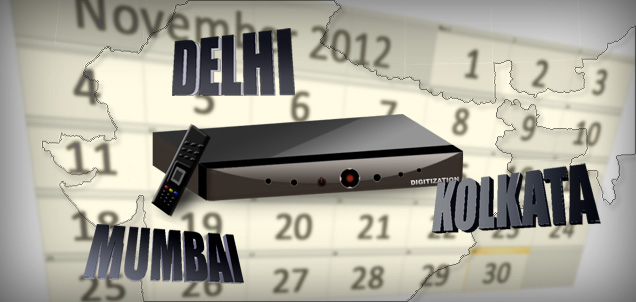
    It has been a month of mandatory digitization in the three metros of Mumbai, Delhi and Kolkata. Even though government officials may make us believe that the metros are completely digitized, , the ground reality appears to be different. Analogue signals continue to be available, and not all stakeholders are happy with the way things are shaping up. Meanwhile, in Chennai, the digitzation hearing has been postponed by four weeks. It is likely to happen only by December 31, though given a cloud over whether the government will be allowed to run a cable service (in Arasu Cable),  will be allowed to be


    Man Jit singh

    Calling the Phase I a tremendous success for industry, Man Jit Singh, President of the Indian Broadcasting Federation (IBF) and CEO, Multi Screen Media said, “Digitization has been a huge success. The kinds of effort that was done to get digitized, no where in the world have we seen this kind of achievement has been done. Kolkata has not reached 100% digitization yet, but I think it will get there.” He also acknowledged that fact that there are few illegal signals in Delhi and Mumbai but assured that the IBF is working with other stakeholders to have these illegal signals completely switched off.


    Roop Sharma

    On the other hand, Roop Sharma, President, Cable Operators Federation of India (COFI) highlighted how none of the promises made on digitization by MIB have been achieved so far. She said, said, “During Parliament discussion on the Cable TV Act Amendment Bill last November, the then I&B Minister Ambika Soni said digitization will provide choice of channels to consumers-through a-la-carte selection, provide high quality service, controlled pricing of pay channels and thus lowered billing to consumers, and that consumer to pay only for what they wish to watch. Consumers were to get internet video-on-demand and value added services through set-top-boxes, and she had said that small cable operators will not be rendered unemployed, there will be transparency and correct accounting of channel viewership, govt will get tax on all connections as no under-declaration will exist, and that there will be no ambiguity in TRP ratings. Now, with one month of digitisation over, has this been achieved?” She is of the view that nothing that I&B Minister had promised the Parliament has been achieved yet and still, the Ministry has announced successful completion of phase I and started roll out of phase II.


    The figures

    Swapan Chowdhury

    Currently, according to various stakeholders, over 95% digitization has been achieved in Delhi and Mumbai even as Kolkata trails behind with quite a less percentage. Swapan Chowdhury, General Secretary, Cable & Broadband Operators’ Welfare Association, Kolkata, however, estimated, “Mumbai achieved 75% digitization and 70% in Delhi while digitization in Kolkata is only about 40-45%.”


    Mr Chowdhury also said that the actual activation of set-top boxes in November for Kolkata has been than a lakh. Arvind Prabhoo, Owner, Orbit Television Network, Mumbai said that the actual reason behind high numbers from Mumbai is because of stopping of analogue signals. “Most of the networks have reported 90-95% switchover in Mumbai. This figure has happened after the stoppage of analogue signals. We were hardly touching 60-65% before the analogue signals were not switched off. Even then, at least 35-40% people have not taken to digitisation voluntarily.” Though the piracy is still an issue in some pockets of Mumbai, over 8-9 lakh STBs were installed this month alone.


    Certainties and Uncertainties

    “There are certain distributors who have not made their pricing policy clear yet. There us a lot of confusion over revenue-sharing. One of the major issue is Entertainment Tax. If the govt charges Rs 45 per STB connection, does that mean every house that has two television sets, pays Rs 90 entertainment tax,” voiced Mr Prabhoo.


    Ms Sharma said that broadcasters are making lumpsum deals with MSOs for pay channels and not based on the number of consumers opting for those channels. “Hence, there are no accurate figures. Discrimination is rampant. Rates of pay channels are not based on market demand but whims of the large content aggregators, vertical monopoy business houses/ companies like MediaPro who enjoy monopoly in pay TV content distribution,” she remarked.


    Ashok Mansukhani

    Although, the DTH operators this writer reached were unavailable for comment, there have been mixed reports on its success rate. While one report says it has done well in the Capital where the availability of analogue signals has been low, MSO Alliance chief Ashok Mansukhani has another view. “DTH is surprised at its poor performance. They need to take a call on what they are upto: have they grown in the last six months,” he asked. “According to statistics, it’s 70:30 in favour of cable and that is not going to change soon. Where did cable have the capacity to retain 70% of cable base? For DTH, there is enormous churn which is as much as 33% of the total amount claimed. And how come the government doesn’t take the churn into account,” asks Mr Mansukhani.


    While Ms Sharma and Mr Prabhoo said that the issue of carriage fees has not been sorted out yet either, Mr Man Jit Singh sounded optimistic, “We expect there will be decrease in carriage fees as digitization rolls out for simple reason that the capacity constraint of analogue system will go away. However, carriage fees is not going away completely and it will take time. Both broadcasters and MSOs are working together to make a gradual transition to reach a stage economically in the short run so that it sorts itself out in the long run. We feel that carriage fees is moving in the right direction.”


    Phase II: Lessons from Phase I

    Phase I was not a smooth ride. And Phase II will be even tougher since it will be rolled out in 38 cities simultaneously. Apart from stronger communication aimed at the end consumer, the stakeholders need to tighten their belt for doing their bits too.


    Mr Mansukhani said that in the second phase, more attention should be given to the consumers and less to the broadcaster. “Awareness creation by all stakeholders is necessary since once people are aware, they are open to change. In the phase I, we were not communicated on the need of digitization and we still do not know why digitisation is happening,” said Mr Prabhoo.


    Ms Sharma said insisted that for the next phase transparency is required on each level: between broadcasters and channel aggregators; between channel aggregators and MSOs; between MSOs and LCOs and between LCOs and consumers. “Digital Cable System is new and is not tried and tested. Lots of teething problems, application hazards are poping up which needs to be addressed. Redressal of all such issues should be considered on practical ground and not on any task force or ministrial meeting. The first phase of digitization is practically incomplete. Supply of STB in the first phase is inadequate, the pressure of second phase will push the process into much more complication. Authority is not accepting the time for settling down for supply of STB and the technology,”said Mr Chowdhury.


    Mr Singh concluded, “The early seeding of boxes and getting the message out to consumers that they need to get their boxes early is one key message. IBF’s campaign to build public awareness was extremely effective and we should continue with that campaign for phase II. The ministry’s effort to coordinate with all stakeholders was in excellent trend that should continue. If anything, I think MIB  is going to take even more proactive stance of monitoring the actual implementation of the roll out of boxes city by city. So I think a lot of the learning from phase 1 will apply to Phase 2 and it is very positive.”


  • Sony’s stake hike allows MSM flexibility: Man Jit Singh. Regional/niche channels on anvil

    This is one soap that Sony Entertainment Television bosses are happy to see the end of. Over two decades ago, a group of seven entertainment industry biggies (including then superstar Jackie Shroff) and Sony Pictures got together to launch Sony Entertainment Television.  There were also rumours of senior minister Sharad Pawar’s brother-in-law Sadanand Sule having a stake. Multi Screen Media, as the company was called, had a complex shareholding, as is the case with many Indian corporations.


    Four years back, the minority shareholders were in a legal tangle which was finally resolved, but it was evident that they wanted to cash out soonest.


    So when the communique reaches media inboxes on Sony Pictures’s announcement of an agreement to acquired around 32 per cent of MSM’s shares currently held by Grandway Global Holdings Limited and Atlas Equifin Private Limited. The transaction, which will bring Sony’s stake in MSM to a little over 94 per cent, will close by end-December 2012.


    Under the terms of the agreement for this acquisition, aggregate cash consideration of $271 million will be paid by SPT to Grandway and Atlas, subject necessary government approvals, with $145 mn to be paid by December 2012 when the transaction ends and the balance $126 million will be paid in in three equal annual installments starting from the fiscal year ending March 31, 2014.


    “SPT has enjoyed great success with our channels in India and this acquisition further demonstrates our commitment to entertaining Indian audiences,” said Andy Kaplan, president, worldwide networks, SPT in a statement. “We’d especially like to thank Grandway and Atlas for their entrepreneurial spirit that helped to get this venture off the ground 17 years ago.”


    MSM chief executive Man Jit Singh (who as a Sony representative was chairman of the Board even when Kunal Dasgupta was CEO) spoke to MxMIndia’s Pradyuman Maheshwari from London on phone. Excerpts from the interview:


    This thing has been going back and forth for a while between Grandway, Atlas and Atlas.

    Yes, it’s been some time.


    So, is it only a cash transaction or with there be a non-cash consideration as well?

    As stated in the press release that it is $271 mn transaction of which there is a upfront payment of $145 mn and then three equal installments.


    And the balance 6-odd per cent?

    The balance 6 per cent  is held by a fund called the Capital Group which is not part of this transaction.


    Capital has had some stake for a while…

    Yes, they’ve held the stake from 2001. The Indian stakeholders are exiting. Capital Group is another transaction.


    Are you happy with the 1 bn-odd valuation of the company?

    We are delighted with the valuation which happened at the end of an extensive private equity process which determine the market value and then Sony stepped in and decided to acquire the stake, which for us is great news. Because now: a) it show Sony’s commitment towards India and to the channel operation and b) it will give us a lot of flexibility in running our business. And we’ll be able to make investments as we go forward. So, we are delighted with this news.


    In the year around 1999, I think the evaluation was something around 2.5 bn. And that was of course the first high that Sony had reached. And now it’s come down quite a bit.

    As you know, perhaps it was a little later. But as you know during the dotcom period the valuations which were thrown around were extraordinarily high. I think that it was a moment in time, the markets have settled and businesses have fairly matured and I think the valuations are where they are and they are correct.


    You mentioned that this will allow some more freedom for doing various things so anything on the anvil. You’ve spoken about regional channels in the past and you did buy this Bengali channel. Anything more…

    As you know, we are in the process of acquiring a stake in Maa TV which we have announced already and that will continue. We’ll take opportunities as they come and we now have the flexibility to move quickly and consummate those opportunities. And we look forward to doing that.


    Is there any particular direction that you are looking at?

    We are certainly looking at regional channels as we are interested in regional channel space. And as you know we have made a major investment in our sports channels. And we expect that sport is an area where you have to continue to buy rights when they become available because you have to bid for them. And we’ll be in a position to make those investments when they come to us.


    But those investments you have made. Sony is already investing a fair bit for this acquisition and you’ll have to make a lot more investments for all of this.

    Correct.


    That mandate you have received…

    Yes. By investing in MSM, Sony has shown its willingness and enthusiasm for the Indian market. And they are very very open to continue….


    Is there anything else you are looking at other than channels because digitalization will allow all that to happen?

    Absolutely. We believe that digitalization is going to make us able to deliver different kind of content to smaller segments of viewership. So we believe that there will be opportunity to create niche channel. This will certainly help us by allowing us to look at all those opportunities. We believe there is a good amount of things that can be done over the next two-three years.


    The last two years have been tremendous for MSM because we have Sony doing so well, SAB is doing so well and IPL hasn’t been too bad. So would you credit that for the way things are right now and at Sony’s commitment?

    I think you have to look at Sony’s commitment which was committed in the good times as well as in the bad times to MSM. It is only that its bigger commitment is to the Indian market. Sony has always believed that India is one of the most important of the BRIC countries and it’s a place where Sony must invest and grow the market. So there has been a commitment to India. So we should give them credit for being consistent in their beliefs that India should be one of the key markets in which certain focus is on. And not only that but on the channel business, our electronic business side, it is a growth market for us on both sides.


    And will we see some synergies with all of that all, in the near future?

    Absolutely. This will give us much more flexibility to be able to create synergies between our electronic groups and our channel business. And we see opportunities to bring things together.


    Is there a possibility of a change of the company name now that Sony’s ownership is near-total? Perhaps Sony Entertainment Television…

    Why you don’t like MSM?


    No, I love it. One has got used to it. But still the fact is that now since it’s a Sony it could well be called that. Is it on the cards?

    I’ll be honest; we don’t have any plans to do that. But thank you, I’ll think about it (laughs). I’m quite happy with MSM, maybe because we all came up with it. There is no such plan. We are quite satisfied with it. Also, the channel is Sony Entertainment Television. So, I’m not sure if we’ll need to change the company name. Let’s put it this way, there has been no talk on this.


    With inputs from Meghna Sharma


  • Where the economics stand for 4 key stakeholders post IPL’s fifth season

    By Ravi Teja Sharma


    Beyond the brawls and the bustups, there was cricket. And business, which became steadier and better. As millions continued to watch the cricket, IPL 5 strengthened the league’s business credentials.


    Franchises

    Their costs are mostly fixed and they are squeezing more out of each revenue stream. In the humdrum of IPL3, the operative word was ‘valuation’. The then-IPL chief Lalit Modi proudly announced two new franchises, Kochi at $333 million and Pune at $370 million.


    In other words, Pune’s owner, the Sahara group, was paying 3.3 times the priciest original franchise (Mumbai, $112 million), setting a new benchmark for valuing a team.


    More insanity followed: Modi was dismissed by a tweet, Kochi imploded, and Sahara had second thoughts about its $370 million investment. Sanity returned in season five. “Initially, it was more about valuations, not viability,” said Venky Mysore, CEO of the Kolkata team. More than any other season, IPL 5 has been about viability.


    Not of the surviving kind, but of the thriving kind. “For the first time, most of the franchises will be financially better off,” said IPL commissioner Rajeev Shukla.


    “Many have become profitable after IPL 5.” Like Kolkata. “We reduced our combined losses by about 50 per cent in IPL 4,” said Mr Mysore. “This year was equally good or better than last year…we should wipe out the remaining losses.” Chennai and Delhi say they have been profitable since season three, and that this year was better.


    The economics for a franchise are simple. Every franchise incurs two kinds of costs, and both are essentially of a fixed nature: the licence fee and player costs.


    For a metro franchise, the licence fee is around Rs35 crore a year, while the player cost is Rs55 crore. Add sundry expenses, and a franchise is looking at total costs of Rs100-120 crore. On the revenue side, there are essentially three revenue streams.


    The biggest revenue contributor is the ‘central pool’. All the money the BCCI raises by selling broadcasting rights and sponsorship goes into a common pool. The BCCI keeps part of this and distributes the rest among teams.


    With the BCCI negotiating hard with the broadcaster and sponsors, each franchise’s share of the central pool has steadily increased-from Rs29 crore in season one to Rs40 crore in season four.


    “The central payout will increase to Rs 50-60 crore this year,” said Mr Shukla. The franchises have no control over the central pool. They do have control over the other two main revenue streams: ticket sales and sponsorships, from where the good franchises raised, on an average, Rs30 crore and Rs30-40 crore, respectively.


    In both these areas, IPL-V saw the franchises, with one eye on growth and another on the bottom line, pushing new levers. Teams say they increased ticket prices and reduced the number of passes, and consequently made more.


    “Gate collections in season five would have doubled compared to earlier years,” said Rakesh Singh, joint president, India Cements, the South-based cement company that owns the team, without giving specific numbers.


    Amrit Mathur, CEO of the Delhi team, too declined to share numbers, but described ticket sales as “phenomenal”. “We limited passes only to our contractual agreements,” he said. What teams did more was to reach out to the paying fan.


    Kolkata, for example, had 10 cars going around the city and doubling up as ticket counters. The team also did corporate sales to fill up the 80,000-seater Eden Gardens.


    For next year, it is looking to convert some of those seats into hospitality boxes, whose revenue potential is 20 per cent more. Teams earned more from sponsors too by selling advertising on 10 designated spots on a player’s uniform.


    “We expect it (sponsorship revenues) to be 50-75 per cent higher than year one,” said Mr Mathur. Chennai’s strategy was to cut back on sponsors. “We wanted to clear the clutter and charge more instead,” said Mr Singh of the Chennai team, whose sponsors include Aircel, Gulf, LifeOK, Amrapali and Usha.


    Some other nascent revenue streams are gaining ground, like merchandising. “About 10-12 per cent of our revenues this year came from licensing and merchandising,” said Colonel Arvinder Singh, COO of the Punjab team. And the Delhi Daredevils is looking to lend its name to sports bars, the first of which has come up at the Delhi airport.


    For teams owned by corporates, in addition to a tangible payback, there’s also an intangible one for the main business. For example, all the branding on the Bangalore players is from the liquor and airline brands owned by team owner Vijay Mallya.


    “That has been our main priority,” said Russell Adams, vice president-commercial operations for the Bangalore team. Similarly, India Cements has used IPL to drive into markets other than the South.


    Besides the visibility from player jerseys, it has been wooing cement traders in cities in Gujarat, Madhya Pradesh and Rajasthan with a package of an IPL match in Chennai and a pilgrimage to Tirupati.


    “This was a masterstroke for us: to enter a market dominated by biggies like Ultratech,” said Mr Singh. It all contributed towards viability-of the long-term kind. And valuations, today, stand forgotten.


    Broadcaster

    Viewership addition tapered, but it’s still a critical mass watching. There’s pressure on two of the numbers that matter for SET Max. According to TAM, which tracks TV viewership, the number of people who tuned into IPL grew just 0.4 per cent this year, against 12.9-19.8 per cent in the previous ones. And they watched less.


    If they saw 4.5 per cent of all the minutes they could have in the first three years, they saw 3.5 per cent in 2012, the same as in 2011. Or, a TVR (television viewership rating) of 3.5 per cent. That said, even a TVR of 3.5 per cent is top draw, more so if it comes with a reach of 162.9 million.


    “No programme will give the pan-India reach that IPL does for two months,” said Nandini Dias, COO of media-buying house Lodestar Universal. It is why, she added, SET Max commands a 60-70 per cent premium in pricing over another programme with an identical TVR.


    This year, SET Max charged Rs5 lakh per 10 seconds, the same as in 2011 and 150 per cent more than in 2008. “Ratings fell, but we did not drop our price,” said Rohit Gupta, president of Multi Screen Media, which runs SET Max. Mr Gupta declined to disclose revenues, though he admits it is “lower than 2011”.


    A senior official from the channel, not wanting to be named, said revenues from IPL-IV crossed Rs1,000 crore, against Rs800 crore in IPL 3and Rs260 crore in IPL 1. SET Max’s original deal, struck in 2008, was for $1.02 billion (about Rs 4,000 crore) for 10 years.


    This was revised in 2009 to $1.64 billion (Rs 6,560 crore) for nine years. When the number of matches increased from 60 to 74, in 2010, this number increased further, said Mr Gupta, on a “pro-rata basis”. Back-of-the-envelope calculations show the current deal would be for about Rs 8,000 crore and that SET Max needs an average of Rs 1,050 crore a year over the remaining five years to break even.


    “IPL has become a brand that is big enough to sustain for many more years,” said Piyush Pandey, executive chairman of Ogilvy & Mather India. Added Ms Dias: “If IPL remains in the top five programmes through the coming year, it could still command its 60-70 per cent premium.”


    The other broadcaster, Times Internet, which owns the rights for international broadcast, Internet, mobile and valueadded services, and radio, expects to break even this year. According to CEO Rishi Khiani, Times Internet is paying Rs 67 crore a year to BCCI.


    It reached 26 million viewers this year-an increase of 55 per cent over 2011. “If you sell it right, there is an opportunity,” said Mr Khiani.


    Sponsors

    They got their bang, in different ways. For more, they will likely have to pay higher. IPL’s main sponsors only have good things to say about their pricey tie up. The established talk about reaching a wider audience.


    “We were well-known in the north, but now have spread awareness in other parts as well,” said Rajeev Talwar, group ED at DLF, which paid Rs 40 crore a year for the title sponsorship. The fledgling talk about IPL as the main piece of their brand strategy.


    Karbonn Mobiles started in 2009 and tied up with IPL in 2010. Sashin Devsare, ED, said IPL put Karbonn “in the consideration set of a mobile buyer.” Likewise, Volkswagen, which came to India in 2007.


    “We needed to raise brand awareness,” said Lutz Kothe, head of marketing and PR, Volkswagen Passenger Cars. “All these sponsors would have got five times worth exposure for every rupee spent,” said Hiren Pandit, managing partner with media-buying agency Group M.


    “But over a period of time, that exposure becomes a blind spot if there is no other engagement.” For example, Vodafone used ad campaigns to push specific business ideas: ‘happy to help’ in 2008, the Zoozoos in 2009 and 2010, 3G in 2011, and Internet services this year.


    In contrast, DLF was content being the title sponsor and having an on-ground presence. All sponsorship deals are due for renewal.


    “Most were done on an anticipated performance of the league,” said Basabdutta Chowdhury, CEO of Platinum Media, a unit of Madison World. “Now that it has a proven record, BCCI would be looking at higher value.” The season of BCCI hardball is beginning.


    Promoter

    BCCI’s golden goose is IPL and it is making it work overtime. Just how important the IPL is to the entity that runs cricket in India can be gauged from one statistic. In 2010-11, the IPL accounted for 48 per cent of the revenues of the Board of Control for Cricket in India (BCCI).


    Add revenues from the Champions League Twenty20, which owes its existence to the IPL, the figure shoots up to 60 per cent. IPL is BCCI’s golden goose, and the board is making it lay as many eggs as it can.


    This means birthing new revenues streams by adding more dates to a packed cricketing calendar or earning more from existing streams by negotiating hard with those who want a piece of the IPL. Both have yielded smart financial payoffs for the BCCI.


    Thus, in 2009, was born the Champions League, which essentially gives the BCCI and the top four IPL finishers a revenue kicker. The same year, BCCI renegotiated the TV deal with Set MAX and squeezed out 78 per cent more.


    In 2011, it added two teams to the IPL (one has since folded) at a valuation that was about thrice the maximum from the initial lot in 2008. Overall, the number of matches increased, which translated to higher TV and sponsorship revenues.


    The BCCI earned more. So did the franchisees, as the BCCI shares some part of its broadcast and sponsorship revenues with them. BCCI’s ‘surplus’-the equivalent of a corporate net profit-has increased from Rs 11.6 crore in 2008 to Rs 118.8 crore in 2010.


    Numbers for the last two years are not available, though the BCCI had forecast a surplus of Rs 209.9 crore for season four.


    “BCCI revenues have gone up,” is all that Rajeev Shukla, commissioner of IPL and vice-president of BCCI, is willing to disclose. Revenues could increase further as all sponsorship deals are due for renewal now. And even as it says it will address scheduling concerns, the BCCI has allowed all franchisees to play three T20 matches with teams from tier-II cricketing nations like Canada, the US, Netherlands and Ireland.


    “This will spread awareness about IPL and improve the league’s reach next season,” said Mr Shukla. And also improve the BCCI’s financial health.


    Source: The Economic Times
    Copyright © 2012, Bennett, Coleman & Co. Ltd. All Rights Reserved

     

  • Broadcasters slam TRAI notification to limit ads

    By A Correspondent


    Broadcasters and advertisers have slammed Telecom Regulatory Authority of India (Trai) move to limit the duration of television advertisements to 12 minutes in an hour, and accused the regulator of exceeding its brief.


    A new notification issued by the regulator on Monday limited the amount of advertising on TV channels and disallowed any shortfall in a particular hour to be carried over. According to industry estimates, this could impact advertising revenues of broadcasters by 15-40 per cent.


    “Trai has no jurisdiction in the subject. Advertising is governed by the Cable and Satellite Act and the appropriate authority is the ministry of information and broadcasting,” said Uday Shankar, president of the Indian Broadcasting Foundation, and the chief executive officer of Star India. “The regulator is overstepping its brief,” he added.


    According to Mr Shankar, the low revenues from subscriptions give broadcasters no option but to rely on advertising inventory and revenues to survive.


    An Indian Broadcasting Foundation official said an earlier government guideline stipulated that Trai could issue an advisory with regard to advertising but not a notification.


    Sunil Lulla, managing director and chief executive officer of Times Television Network, which runs Times Now, ET Now and Movies Now channels, too criticised Trai’s decision. “This move is completely ridiculous. Self regulation is the best regulation,” he said.


    “This move will have an immediate impact because right now there is no other big source of revenue for broadcasters,” said Rohit Gupta, president of Multi Screen Media, the company which runs Sony Entertainment Television. The IBF will appeal against this new regulation, he added.


    Barun Das, chief executive officer of Zee News, questioned the timing of the regulation at a time when the entire broadcasting industry was going digital. “We have a limit mentioned in the Cable Act. If at all there is a need for regulating duration of advertising, it possibly could have waited some more time for the digitisation process to settle down.” he said.


    Mr Das said his channel had voluntarily cut its advertising inventory by 30per cent earlier this year. “We realise that too much advertising is a deterrent to viewership. We were not driven by regulations, rather we were driven by market forces,” he said.


    Mr Das said the viewers had choices not only of channels but also of media platforms. “I am not sure if advertising volume needs to be regulated. I would tend to believe that too much advertising would anyway drive away viewers,” he added.


    Sale of television rights have become an important source of income for sports bodies such as BCCI but the restriction on advertising will adversely impact the ability of broadcasters to recoup their investments, forcing them to scale down their bids.


    Source: The Economic Times
    Copyright © 2012, Bennett, Coleman & Co. Ltd. All Rights Reserved

     

  • Despite 59 cuts, Sony asked to push Dirty Picture airing to after 11pm

    By Kshama Rao


    Until late on Saturday, Multi Screen Media channels Sony Entertainment Ltd and Sony Max showed several promos of the award winning Vidya Balan starrer, The Dirty Picture, which was to be screened on the channel on Sunday at noon and 8 pm.


    However, at the appointed time, the channel was running a repeat telecast of its crime shows. Minutes stretched and soon a scroller ran across the channel citing “unavoidable reasons” for not showing the film.


    The unavoidable reasons, as we learnt later, was a directive issued to the channel by the Information and Broadcasting Ministry for deferring the telecast of the film. The ministry was in consultation with the Central Board of Film Certification which had given the film a U/A after “59 cuts”.


    Pankaja Thakur, CEO, CBFC said: “We didn’t ask Sony to not show the film. We only advised them to ensure there was Parental Guidance. We, at CBFC, have nothing to do with the telecast timings, it’s the prerogative of the broadcasters. Our job ends with certifying the film. As it is made out to be, it’s not an overnight decision the ministry or CBFC took. We have been in talks with the channel for a long time now regarding the timings, we were not happy that they were showing the film at 12 and 8 pm. We had already received complaints and four days back, a case was filed against the film’s telecast and the Nagpur Bench of the High Court passed an order asking the I &B Ministry to look into the matter.”


    “According to the Programme Code of the I & B Ministry, a U/A film means you need to have parental guidance, otherwise where is the difference between a U and a U/A film? All that the channel needed to ensure was tell its viewers that the film needed parental supervision. But I guess the decision of just doing away with the telecast was taken by them,” she added.


    To the channel’s credit, they had begun showing the promos, accompanied by the U/A symbol. But we guess, the common man is not aware enough to understand its implications. “Yes, it’s true, most viewers are not aware enough about what U, A or U/A means.”


    Ms Thakur added that the television industry runs on “self-regulation: “They follow certain Standards and Practices which their body of broadcasters have framed. There have been so many cases where despite a U/A certificate, channels have aired films without ensuring there is parental guidance. Films like Murder 2, Ragini MMS, Haunted, which are not conducive viewing for children have been shown on TV. Is that ethical? It’s high time channels and the film industry stop thinking about the losses they will incur or the money they will make. The common man has to be adequately represented in the bodies governing censorship. A dialogue has begun in that direction. And by the way, 59 cuts amounted to just six minutes. It’s time the film and TV industry stopped thinking only about the losses incurred.”

    Tanuj Garg, CEO, Balaji Motion Pictures, the producer of the film, messaged: “It is unfortunate that even after a valid U/A certificate from the CBFC and all the cuts being in place, the telecast was stopped. We have not seen this happen to any other film with this certificate and are pained by the victimization given that this is among the most celebrated and loved films in recent times. I’m not sure how Vidya (Balan), Niharika (Khan for best costumes) and Vikram (Gaikwad for best make up) would feel about collecting their National Awards!”


    A leading industry person who has brokered many deals for channels and film-makers said: “Why should the government pre-empt as it did in this case? Once you give a certificate, let the audience decide if they want to watch it or switch off their TV sets. The minute these films don’t generated adequate ratings, the channels would stop buying these films! What happened with The Dirty Picture is unfair.”


    An adult film on a General Entertainment Channel also means losses in sponsorship deals and viewership. An industry insider said: “Sony had already caused problems with the consummation scene in Bade Achche Lagte Hain, they got a rap from viewers as the show ratings have dipped badly in the recent weeks and now with this, they were pushing the envelope too far. As it is, all channels have been forced to run a scroller that says viewers who find any objectionable content, could alert the Broadcasting Content Complaint Council or IBF.”


    Meanwhile, the Twitterati is abuzz with voices of protest coming from the film industry. Filmmaker Karan Johar tweeted: “A national-award winning film cannot have a national telecast? This is not an irony but simple and plain hypocrisy! If the censorship is not a final authority, then what is? Complicated and blurred lines defeat the core of democracy.”


    Actor-producer-director, Farhan Akhtar tweeted: “Has the telecast of The Dirty Picture actually been stopped? I’ll believe it when I don’t see it…shame!”


    Producer-director Kushan Nandy tweeted: “In this country, a minister can watch porn in the Parliament, but won’t allow us to watch a 56-cut censored film at home!”


    Meanwhile, the film was sold to Sony by Balaji as part of a bouquet deal for Rs 9 crore…and with sponsorship losses and a dent to its image in the competitive GEC market, Sony would need to do a lot to build a pretty picture.