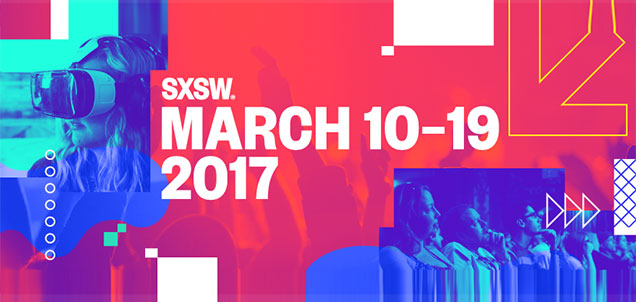
South by Southwest (SXSW, in short) is an annual congregation of nteractive, film and music professionals who assemble for a slew of conferences and festivals that typically happen mid-March in Austin, Texas in the United States. SXSW was established in 1987 and has grown considerably over the years. According to the ‘About Us’ section on sxsw.com which we recommend you access, “SXSW proves that the most unexpected discoveries happen when diverse topics and people come togetherâ€. Hmmm.
The 2017 edition – the thirtieth in the series – took place on March 10 to 19. The 2018 edition dates have been announced: March 9 to 18. Even if you can’t make it to an SXSW, it’s always good to keep track on what happened and who said (and did) what. Presenting here a ‘trendwatch’ by the folks at MullenLowe Group, which in India, as we know, is called the MullenLoweLintas Group. Read on…
(Note we haven’t erred in not putting a space between Mullen and Lowe… that’s how it’s written)
By MullenLowe Group
SXSW was born in 1987 when an intimate group of thinkers and music lovers recognized a need to discuss the future of entertainment and media. That first year, 150 registered attendees unexpectedly grew to 700 on opening day, and the undeniable charm of Austin set the stage for what is now one of the preeminent events at the intersection of the interactive, film and music industries, with over 72,000 people in attendance.
Being able to attend SXSW is both a privilege and a necessity. The quality and diversity of learning opportunities is only limited to the number of hours you want to spend in talks, meet-ups or workshops, armed with an open mind, a notebook, a backup battery and lots of water and snacks on hand. From our time in Austin we’ve identified six trends and how they implicate brands. Virtual Reality, voice recognition interfaces and robotics sparked the hunger and amazement that technology feeds us, while activism, emotions and ethics kept us feeling inspired and connected as human beings. Each of these topics will dramatically change the way consumers engage with brands moving forward.
#1. Smartphones as a gateway for bigger experiences
Like last year’s conference, Virtual Reality dominated the entertainment conversation at SXSW. In addition to several entertainment-focused activations, one of the biggest developments was an influx of content showing VR’s potential as an empathy tool. But clunky, expensive hardware and lacking streamlined distribution still remain big hurdles standing between the hype and the reality of mainstream consumer adoption for more immersive, interactive experiences. Affordable options like Google Cardboard and Samsung Gear provide lighter-weight virtual experiences by simply opening a VR app and sliding your phone into the goggles. The result? The phone is instantly transformed from a distracting text messaging, email and newsfeed machine to a conduit for an uninterrupted, 360-degree environment creating a heightened emotional connection.
In addition to lightweight VR, the phone emerged as a tool for adding real world value through the abundant augmented reality apps on the SXSW tradeshow floor. Apps like Aurasma make it possible to trigger a video or additional content by holding your phone over printed collateral or an OOH board. Other mobile apps like Seek are taking the route of Pokémon Go and creating scavenger hunt-like experiences where consumers can unlock exclusive content and prizes by holding the phone over objects in the real world. The week before SXSW, Shazam announced its partnership with Zappar, an augmented reality technology that will trigger 3D holograms with a Shazam code without requiring another AR app to be installed on the mobile device, creating a simpler consumer experience that has real scale.
IMPLICATION
Innovation around smartphones has been flat-lining, but 360-degree video and augmented reality are creating new opportunities to leverage smartphones as a conduit for bigger experiences. Thinking of ways to leverage the smartphone as a means for creating bigger mixed reality experiences vs. just as one of a three- or four-screen strategy is something all brands and marketers should be doing. And for brands in the travel or entertainment category, 360-degree video is a means of creating undistracted emotional connections with consumers on a device that typically makes it harder to capture attention. Even if you don’t have a 360-degree video production capability in place, there are plenty of publishers who are already creating content in this category that you can sponsor or integrate with, and new platforms like Facebook 360 are making it possible for wider 360-degree video distribution
#2. Interfaces everywhere
Even before SXSW, the rise of conversational interfaces was a rising 2017 trend, making huge waves in January at CES when Amazon Alexa announced integration into hundreds of products and promised to change the landscape of how consumers access information. But there was also no shortage of content around other nonscreen-based interactions at SXSW. One of the most popular devices was Levi’s smart jacket where the sleeve serves as a remote control allowing you to navigate music playlists and accept or decline phone calls easily while, for example, biking. Lampix, a smart lamp technology, can turn any surface into a smart surface, so — a piece of paper into a functioning computer screen or your floor into a multiperson game. Rotex, a smart tattoo technology, enables you to interact with virtual reality environments without the use of a control by applying the tattoo to your arm during gameplay.
IMPLICATION
While not applicable to every product or service, brands should be thinking about ways they can evolve or add value to their products by incorporating useful digital interfaces. From a media standpoint, brands who think beyond paid impressions on a screen will be better prepared for a world where consumers are accustomed to diverse interfaces.
#3. The rise of emotional data
The topic of big data is no stranger to SXSW (or any other tech or brand conference for that matter). Wearables have created an influx of personal data collection, like heart rate, blood pressure and body temperature, but technologies that capture and respond to emotional data were more prevalent this year. IBM showcased an alpha product that will create customized original musical compositions based on a consumer’s taste and mood. Lily, an emerging fashion chatbot, provides fashion advice by understanding emotions, perceptions and aspirations about your body to make more personalized fashion recommendations.
IMPLICATION
Highly personalised experiences at every brand touchpoint will soon be table stakes for consumers. While many brands already have a strong programmatic strategy in place for their marketing programs, they should also be thinking about how all consumer touchpoints can be better curated, from a first visit to a retailer’s website to customer service. And as artificial intelligence continues to grow, there is greater opportunity for importing data into AI platforms to make recommendations in conversational interfaces (e.g. chatbots or Alexa Skills).
#4. Humans become robots and robots become human
It may seem like a paradox, but these are two clear trends. On one hand, there’s a race to make humans a better version of themselves, giving them machinelike features and skills by applying technology to overcome traits or limitations intrinsic to the human being. For example, we now have access to technology that can literally edit our DNA, and that presents the possibility of modifying the development of the human race. We are also experiencing the human brain as the new explorer’s frontier, where brain coding will take human intelligence to unprecedented scenarios: robotics at the service of movement, vision and language. As Bryan Johnson from Kernel suggested, the technology to become superhumans should be accessible to everybody as another human right, the human right of evolution. However, on the other hand, there is a race in emerging technologies to inject natural human skills into machines, that is, to make artificial intelligence more human. Technology is being applied to program robots with emotional awareness, empathy, intuition, compassion and sensitivity, as a means of making them more efficient, useful and agile machines. At the same time, humans are expecting more intimate and meaningful relationships with machines, which will be built upon their humanlike reactions but also their humanlike appearance. Marc Sagar, two-time Academy Award winner, and CEO/co-founder of Soul Machines Ltd, amazed us with his pioneering project of giving face and embodiment to virtual agents that can learn through social interaction. The future of intelligence, should that be biological intelligence, brain intelligence, or computing intelligence is just starting to be shaped.
IMPLICATION
As artificial intelligence, conversational UIs and machine learning become mainstream, brands have to remember, more than ever, that we are in the business of people. Humans’ need for connection and humanized relationships will always be at the core of our basic needs. Humans, or superhumans, for that matter, will connect with humanized brands — brands that tap into human truths and build significance and meaning people can connect and engage with
#5. And technology brought ethics back
Technology is not an instrument at the service of society anymore. As we have seen in many of the talks at SXSW, technology and technologists are defining the world we are going to live in. We have also seen that technology has no limits, that nothing is impossible. As Andrew Grove from Intel said, “A fundamental rule in technology says that whatever can be done, will be done.†Technology will, sooner or later, do it. As the role of technology expands, the need for ethical awareness grows with it.
Current topics such as security and privacy, the information bubble, identity, smart cities and autonomous driving spur an ethical debate. But the level of ethics involved when we are defining the future should encompass a broader spectrum. The future of employment, identity, health, sports and the human race urgently calls for ethical expertise. An ethical expertise that can shape the world and the society we want to live in, with technology contributing accordingly.
IMPLICATION
This new ethical framework will have an impact on consumers’ frame of reference, and they will look at their world differently. It will also increase their suspicion of the world around them, including brands. It is a great opportunity for brands to ensure transparency and honesty in their relationships with their customers, and especially in addressing ethics as part of their business model.
#6. Activism as a contribution to the future
Even if SXSW congregates a large number of “liberals†dedicated to the most progressive industries, never before have politics and activism taken such a big chunk of the SXSW agenda. SXSW went political this year, as if there was a need for the progressive thinkers to go through a group catharsis to ventilate, do some internal evaluation and overcome the trauma of the current political climate. Beyond that, this boost of activism proves that technology and humanity are very much intertwined. Technologists who are working hard to improve the world of the future have proven to be as concerned about the world in the present. There is a sense that democracy, and therefore humanity, is in danger. And activism is as much a way to contribute to the world of the future as it is to the world of the present.
There was plenty of Trump. CNN’s Van Jones captivated the audience by turning the conservative threat into an opportunity for liberals to work for the world they want to live in. But there was much more than Trump. Women, gender, refugees, homelessness and the overarching claim of equality were stronger topics. Jessica Shortall from Texas Competes had a very emotional and provocative talk on how to build a business development case to gain LGBT+ rights in Texas.
IMPLICATION
As seen at SXSW, activism is now a part of culture. If brands want to be a part of culture too, they cannot ignore this. Brands that don’t get involved will be left behind. There is a new consumer mindset. Consumers know that buying a brand can be activism in itself. Buying into a brand implies buying into the brand’s beliefs and principles. A brand with purpose is a brand with a very clear signpost. But consumers want that purpose to turn into action; they are asking brands to become activists.
Â
Republished with permission
The original can be accessed at http://sxsw2017recap.mullenlowegroup.com/files/SXSW2017_Recap.pdf
For more on SXSW, please visit sxsw.com