
By A Correspondent
It’s been India Shining on the strategy front in Asia. Last week, Mullen Lowe Lintas India had a great showing at the recent Warc Prize for Asian Strategy awards. While it picked up the 2015 Grand Prix, the grand prize and a Gold for its Idea Cellular campaign, ‘No Ullu Banoing’, it also got the Local Hero Special Award and a Silver for its Havells’ campaign, ‘A Woman is not a Home Appliance’, and a Bronze for Tata Tea’s ‘From Packaged Good to Packaging Good’.
The Warc Prize celebrates the best in strategic marketing in Asia, and entries are judged on the quality of strategic thinking and the results they deliver. The Grand Prix comes with a cash prize of $5,000.
More than 135 campaigns from across the region entered this year’s competition, with half of the 39 shortlisted entries coming from India. They were judged by a panel of senior marketers and agency-side strategy experts, chaired by BV Pradeep, Unilever’s global vice-president of consumer and market insight.
Apart from the Mullen Lowe Lintas Group, BBDO India also picked up the Asia First Special Award and a Gold for its ‘Touch the Pickle’ spot for Whisper and McCann Worldgroup got a Silver for its Government of India campaign relating to Voluntary Compliance Encouragement Scheme, entitled ‘A Crash Course in Recovering Taxes from Stubborn Defaulters’.
“Idea Cellular’s campaign was outstanding because it was based on a powerful and universal cultural insight that worked across the whole of India, across urban and rural populations and across socio-economic classes,†Pradeep said in a statement. “The strategy expanded the market, strengthened brand equity and drove growth of sales revenues. To achieve all three deliverables with one campaign was really amazing.† Other than the five special cash awards, 17 campaigns from across the region picked up gold, silver and bronze awards at the prize event held in Mumbai, at an evening hosted by DDB Mudra Group.
Idea Cellular: The ‘fool-proof’ internet service
(Mullen Lowe Lintas Group India / Aditya Birla Group / India)
Grand Prix
This case study shows how Idea, an Indian telecom company, made the mobile Internet more popular with a humorous campaign.
- The mobile internet category in India faces the barriers of price and relevance, with many telecoms attempting to increase usage through discount trial packs, but many users still not seeing mobile data as relevant to their lives.
- The campaign strategy tapped into the unsavoury, seamier side of the country, where being economical with the truth in order to scam others is popular.
- Hence the creative execution suggested that using the mobile Internet made people less likely to be ‘made a fool of’.
- The campaign used TV, print, radio and out of home ads, along with social media.
- Then the rate of growth of data subscribers for Idea was nearly twice the rate of growth of data subscribers for Airtel, a rival telecom

Government of People’s Republic of Bangladesh: Anti-urinal campaign ‘language matters’
(Grey Advertising Bangladesh / Ministry of Religious Affairs Bangladesh / Bangladesh)
Market Pioneer Special Award
This case study discusses a campaign from the Bangladeshi government that tackled the problem of public urination by encouraging behavioural change.
- The challenge was that 20% of the residents of Dhaka, Bangladesh’s capital city, are pedestrian commuters, with many of the men urinating on the way to and from work.
- The campaign strategy was based on a cultural insight: as people in the Muslim majority nation respected ‘holy’ things the anti-urinal messages, previously written in Bangla, were replaced with Arabic messages with directions to the nearest mosque and public toilet.
- The campaign purely relied on the outdoor signs and did not use TV or print, however it was covered by both online and print newspapers, earning free PR.
- Utilisation of public toilets in mosques rose by 50% during the campaign period.

Visa: Get Lost Challenge
(BBDO China; Proximity China; OMD China / Visa China / China)
Research Excellence Special Award
This case study describes how Visa China appealed to the new generation of Chinese travellers to encourage the use of its credit cards on their trips abroad.
- Visa faced an uphill struggle, because China UnionPay, the Chinese government-owned payment system, holds 80% market share of outbound transactions by Chinese tourists.
- First, Visa identified a new target group of travellers who, while abroad, preferred to explore less obvious landmarks away from the big Chinese tourist groups.
- Then, with its ‘Get Lost Challenge’, the credit card issuer encouraged them to take more chances, but with a Visa card in their pocket.
- Visa used video, print and online media to spread the message and drive consumers to its website.
- The Visa Get Lost Challenge reached 9 million people, or about 10% of Chinese overseas travellers, becoming Visa’s most successful China campaign ever.

MasterCard: The Priceless Engine
(TBWA\Digital Arts Network, Carat / MasterCard / Singapore)
Channel Thinking Special Award
This case study describes how MasterCard, the second largest credit card brand, launched a marketing platform that generated business from social media in Asia Pacific.
- MasterCard is considered the second largest credit card brand in Asia Pacific after Visa, but Visa outspends MasterCard four-to-one on marketing.
- MasterCard launched The Priceless Engine: an innovative marketing platform that turns big data into usable data, and provides its partners with deeper insights, allowing them to deliver the right offers and messages to the right people at the right time.
- The Priceless Engine powered MasterCard’s ‘New Year’s Eve’ campaign, featuring Hugh Jackman, across six markets; it encouraged people to share who they would want to spend their New Year’s Eve with and why, providing MasterCard with valuable data and insights.
- This campaign resulted in never-before-seen business results for MasterCard, turning social media into an actual business-generating channel.
Havells: A woman is not a home appliance
(Mullen Lowe Lintas Group India / Havells India / India)
Local Hero Special Award
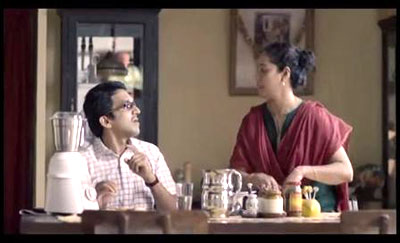
This case study describes how Havells, one of India’s most respected electrical products companies, launched and executed a communications campaign aimed at Indian (female) homemakers in order to increase consideration and raise sales of its home appliances.
- The task was made difficult by the buyers’ set shopping habits: buy a reputed brand, and preferably the one they already had a good experience with.
- In order to break into this market, Havells, a newcomer, ran a campaign on TV and online that broke away with an image of a woman tied to her kitchen and her home appliances so she could take better care of her husband.
- Havells unequivocally said “the woman is not an appliance” and it will foremost “respect the woman”.
- The company managed to hit all its objectives, including increased consideration scores and a +150% sales increase six months after the launch of the campaign.
Content strategy summaries source: Warc.com