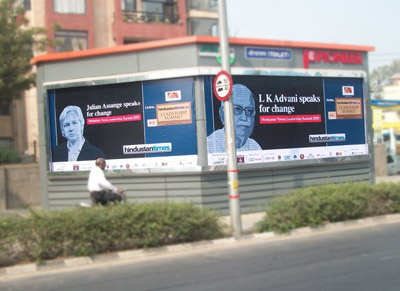
Tag: Mudra Max

  • Hindi channels say ‘Vanakkam’ & ‘Namaskaaram’ to Southern hits


    By Meghna Sharma


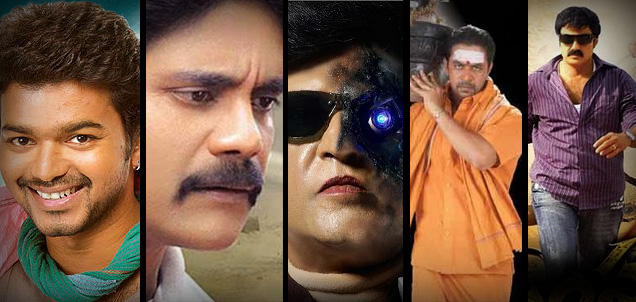
    What is common between Ghajini, Wanted and Bhool Bhulaiya, apart from the fact that they were all blockbusters and starred A-listed actors? The fact that they were all remakes of popular South Indian films.


    Lately, Bollywood has been experimenting with a lot of films made down south. And since, the small screen is a reflection of what happens on the big screen, even the channels – movie as well as GECs – are cashing in.


    There has been a spate of south Indian dubbed films being shown on the television. According to the recent data, there isn’t much difference between the ratings for Hindi and dubbed films on TV. On an average, both get a 0.3TVR (HSM CS15+ on channels like Colors, Star Plus, Sony Max, UTV Movies, Star Gold in Jan -June) as compared to prime time where Hindi movies score better.


    So, it is logical to wonder, why the sudden acceptance of South Indian dubbed films on national channels? Is it a Rajnikanth effect or there is more than what meets the eye…


    Formula or freshness?

    Manisha Sharma, weekend programming head, Colors feels that the acceptance started gradually over four-five years ago with experimentation by all three stakeholders – Bollywood, broadcaster and viewer.

     

    Anilkumar Sathiraju

    “The viewer was getting hungry for content and the increased frequency with which Hindi blockbuster movies were being repeated ensured that he was willing to experiment with dubbed movies. The other thing that worked for the dubbed movies was the fact that the production quality of south Indian movies has gone up tremendously in the last decade. Also, the movies which were initial successes were the ones which had stars who, at some point, had crossed over into Hindi like Rajnikanth and Nagarjuna,” she added.


    According to media planner Anilkumar Sathiraju, associate VP and head South, Mudra Max, the fresh content and faces are working in favour of the dubbed movies on channels. “Movies down south, especially Telugu films, have a certain mantra – say six over-the-top fight scenes, two behind-the bushes romantic songs – which isn’t very common in Bollywood movies of late. So, people don’t mind watching something ‘different’.”

     

    Mohan Gopinath

    However, there are movie channels like Zee Cinema, which have been showing South Indian dubbed films for a long time, which feel that the trend has caught on other channels recently. “To be frank, these movies have always rated on Zee Cinema, so the appetite has always been there. Other channels have picked the trend up in the past few years and now the viewer gets South films, dubbed in Hindi, all across. Now with South Indian films being remade into Hindi films, the appetite for dubbed films has increased,” says Mohan Gopinath, business head, Zee Cinema.

     

    Manasi Sapre

    Also with broadcasters taking precautions to maintain the real essence of the film while dubbing, not much is lost in translation. So, viewers find it easy to relate to the films.


    Manasi Sapre, director programming and acquisitions, Movie channels UTV, said: “Though, dubbing is a challenging job, we make sure that the essence of the film isn’t lost in the process. Therefore, it varies – sometimes they are sourced dubbed and sometimes we do it.”

     

    Vijay Subramaniam

    “Till a decade or so ago, most regional movies were shown with subtitles which didn’t attract the viewer as much it does today, since they are dubbed. So, not only masala movies but also artistic films are able to find their way into one’s living room,” said Vijay Subramaniam, deputy GM, Madison Media.


    Apart from the content and viewer’s acceptance, Anamika Mehta, COO, LodestarUM feels that it’s the explosion of media which is behind this: “What happened with the song Kolaveri di is the finest example one can give today. Boundaries are shrinking and more and more people are coming to know about the film culture down South.”


    Cost cutting

    Vajir Singh

    Vajir Singh, editor, Box Office India accepts that freshness in content and crossover of actors – famous like Rajnikanth or lesser-known ones like Siddharth – does play a role, but feels that it is the cost of acquisition that plays a bigger part here: “If a channel can purchase entertainment at cheaper rates, then why shouldn’t it? South Indian films in comedy and action genre have always done well as they provide pure entertainment to viewers and eyeballs to the channel.”


    He’s not the only one to voice such a sentiment. Even media planners feel that cheaper acquisition rates are a main reason why suddenly these movies are being shown on television so frequently. “It is far cheaper to acquire little older or newer South Indian movies than latest Hindi movies which are showcased as premieres on the weekends by channels. So, it helps them to build a bigger library,” said Ms Mehta.


    “Broadcasters, over years, have been struggling with increased cost of acquisition, limited hits and increased competition. As compared to about a decade ago when a Bollywood star would have 2-3 releases a year, today stars prefer to do one movie at a time. Also, in a good business year the number of blockbuster movies will not cross 10. This, coupled with the fact that there are new channels getting launched in both Hindi GE and Hindi movie space, ensured that broadcasters was struggling for content and more willing to experiment with south Indian dubs,” explained Ms Sharma.


    The new experimentation seems to be working for Bollywood and it is working for the channels and viewers too. No one seems to mind it!


    Pictures courtesy: maxtelevision.com, Imaging: Rafiq
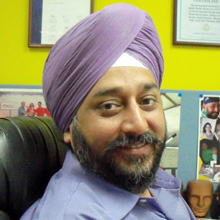


  • TAM releases mid-week TVRs for SMJ

    By A Correspondent


    Since Sunday last, when Aamir Khan made his debut on the small screen with Satyamev Jayate, there has been much discussion on the show and how it has established a new dimension to  entertainment television. Albeit only on Sunday mornings.


    While the all-India ratings will be out only next Wednesday, those for six metros was released this morning. According to TAM Media, in the All4+ category, the show’s prime telecast got a rating on 4.27 in the six metros for all nine channels. In the C&S4+, overall viewership TVR of the prime telecast was 4.08. In the three Hindi-speaking metros (Mumbai, Delhi and Kolkata), the show got a TVR of 3.79 on Star Plus itself. In the 6 metros (all4+), DD National scored a TVR of 0.43.


    Pratap Bose, COO, DDB Mudra was disappointed by the ratings. “To be frank, I was expecting a higher rating, so I’m surprised at a 3.79 TVR in the three metros. According to me, the show should have gotten at least a rating of 6 across sections. However, I’m optimistic and hope that as the show progresses, it will be able to do well.”


    On the other hand, Ashwini Kamat, GM, MediaCom feels that the ratings are okay since it’s mid-week rating only. “I’m sure the ratings which will come out on the coming Wednesday would be much higher. It would be closer to 4.5 TVR for the three metros.”


    Echoing the view that one must wait for the All-India ratings is Sundeep Nagpal, Director, Stratagem Media. “Given the canvas of the issues raised and the multi-channel simulcast across the country, the six-city numbers are probably not the best way to judge the popularity of the programme,” he said.


  • Will Marathi content be a shot in the arm for FM in Mumbai?

    By Robin Thomas


    What’s common between radio stations in Kolkata, Bangalore, Chennai, Hyderabad, Ahmedabad, Kolhapur, and Kochi? They give almost equal prominence to local music along with the Hindi or Bollywood songs. This is in direct contrast to the Mumbai market where FM stations mainly play Bollywood songs which are quite popular with the Mumbai listeners.


    According to RAM’s (Radio Audience Measurement), Radio Establishment Survey 2011 findings, although the mother tongue of 51 per cent of FM device owners in the city is Marathi, an overwhelming 80 per cent of them prefer Hindi music and RJ talks on radio. Nevertheless, the survey also revealed that as compared to 2007, the preference for music and RJ Talk in Marathi has witnessed an increase in 2011.


    It’s not that the all the FM stations in Mumbai have ignored the Marathi speaking audience. Big FM, Radio Mirchi and Radio City play Marathi songs, but only on Sundays and they are the only radio stations to do so.


    Big FM, for instance, has been airing Masala Chaha every Sundays between 7am to 9am since 2009, much before Raj Thackeray’s diktat to the radio stations to play Marathi music. But even then, a Big FM spokesperson was of the view that although there is a market for Marathi music, Mumbai being a cosmopolitan city, most Mumbaikars prefer listening to Bollywood music. “There is surely a market for Marathi music, given the high population of Marathi speaking public. However, Mumbai is a cosmopolitan city with a wide audience base, and a mass channel has to play the music that appeals the most… which is Hindi, a lot of it being Bollywood. Phase III will unleash the true potential of radio and will allow for more differentiation in content, along with newer genres and radio stations that will cater to a more specific audience base.”


    Radio Mirchi airs ‘Mumbai Dhol’ every Sunday, between 12 noon to 3pm, hosted by RJ Rohit. ‘Mumbai Dhol’ covers the culture of the city, the happenings and plays back to back Marathi music, contemporary and the classics.


    Indira Rangarajan, VP, Programming, West & Central, Radio Mirchi stated: “The response to our Marathi show – ‘Mumbai Dhol’ has been very good. Following the resurgence of Marathi films and music, we had decided to experiment with a slot specifically for Marathi songs and it has worked well. I believe there is plenty of scope for Marathi music in Mumbai and over the years this popularity will increase further.”


    RadioCitytoo plays Marathi retro songs every Sunday evening between 5pm to 6pm during ‘Sandhikali Aasha’, a radio programme hosted by RJ Vishaka.


    After looking at the Marathi content being offered by these three stations, one wonders if there scope for more Marathi content on Mumbai radio stations? Or will the Marathi music lovers have to wait a little longer for a radio station that caters to their tastes?


    Unlike the private radio stations, the government-owned FM stations, AIR FM2 Gold and AIR FM1 Rainbow, play a mix of Hindi and Marathi songs every day. The private radio stations would do well to take a lesson from these government-owned radio stations.


    Naval Toshniwal, CEO, Tomato FM, a Kolhapur-based FM radio station, was also of the view that although the potential for Marathi music is huge, Mumbai being a cosmopolitan city will play more Hindi or Bollywood songs. “Yes, there is a huge scope for Marathi music in Mumbai. However, no private FM station would want to play only Marathi music, it will have to play Bollywood or Hindi songs too because of the cosmopolitan listenership. Looking at the current FM scenario where every station sounds the same, I believe that a radio station which plays a little more Marathi music will create some amount of differentiation in the market.”


    FM stations in the city play Marathi hit songs during prime-time, especially on occasions like Maharashtra Day or Gudi Padwa. For instance, Big FM Mumbai will be playing Marathi songs during the breakfast show from March 19 to March 23, celebrating the occasion of Gudi Padwa.


    According to Janardhan Pandey, Associate VP, Mudra Max: “Although the market may not be big, the potential for Marathi listenership is huge in Mumbai. The issue, however, is that there has not been any serious attempt by FM stations to woo the Marathi listeners. Awareness about Marathi programmes aired on radio stations seem to be non-existent, the Marathi programmes or music are played during mostly non-prime time. However unless a FM station does not aggressively promote its Marathi programmes, and plays Marathi songs more frequently, it will neither add new listeners nor will it attract new advertisers. There are a lot of retail advertisers in the city catering to the Marathi audience.” Ajay Rao, Vice President, Dentsu stated: “There is a huge scope for Marathi listenership in Mumbai as Marathi generates high level of passion.”


    The good news is that increase in the frequency of Marathi music on radio stations could mean attracting new listeners to radio, and perhaps even new advertisers. Moreover, multiple frequencies may bring some good news to the Marathi music lovers as it will bring new genres of radio stations.


  • Apollo makes it ‘snow’ in Chennai

    By A Correspondent


    Apollo Munich Health Insurance launched ‘Optima Restore’, an ‘Unbelievable’ health insurance product in a unique way. To bring this offering closer to the people of Chennai, Apollo Munich conceptualized an unbelievable event where the people of Chennai experienced “snowfall in Chennai” at the Express Avenue Mall on February 19.


    Mudramax, the agency partnering Apollo Munich in their ‘Unbelievable’ concepts, came up with an execution whereby it snowed in Chennai, a city which has never seen snowfall! An innovative pre-event hype promotion saw promoters distributing Apollo Munich branded balloons with ‘Snowfall in Chennai’ written on it, as invites. Radio also acted as an invite medium to drive people in hordes to the event!


    On the day of the event, the team created a maze-like structure through which people could explore their way to the main event, to experience snowfall – for most of them, this was the first time in their lives that they experienced something like this. A snow machine threw imitation snow around an igloo throughout the day, attracting crowds who not just experienced it, but took home the experience, through their mobiles and cameras, to share with others.


    To round off the snowfall effect, the team also got them to play a game of skiing on the large screen, using a motion sensing game. Speaking on the event, Mandeep Malhotra, President and Head Mudra Max (OOH, Experiential, Retail) said: “That the event was a huge success can be seen by the number of people who participated. For a mall event to reach out to more than 100,000 people over the weekend is rare. Needless to say, the brand delivered on its promise of offering the ‘Impossible’ to the people of Chennai and I am indeed happy that I was present here personally to experience the same”


    Speaking about Optima Restore and unbelievable ‘Snow in Chennai’, Antony Jacob, CEO, Apollo Munich Health Insurance, said: “For the past four years, Apollo Munich has brought to the marketplace, unique and innovative products. Optima Restore is the latest and most exciting with the presence of two unbelievable benefits.”


  • Volkswagen & Mudra Max go 360 on OOH for Think Blue

    By A Correspondent


    Volkswagen is not just a brand but a proud bearer of automotive heritage. ‘Think Blue’ is a philosophy of the brand’s ecological and sustainable activities that has been designed to promote it’s key corporate objective of sustainability and environmental protection.


    The current initiative aims at strengthening the brand’s ‘Think blue’ philosophy using the opportunity provided by the Delhi Auto expo.


    Mudra Max has exclusively implemented a high decibel campaign in Mumbai and Delhithrough a mix of digital, experiential, on ground and OOH execution. The campaign is based on the international template which tells the story of the Volkswagen brand’s evolution as a responsible brand leveraging the ‘Think Blue’ philosophy.


    Mudra Max and Volkswagen installed an exceptional art-piece of the iconic Beetle created wholly out of scrap collected from various Think Blue clean-up drives undertaken by Volkswagen at different locations.


    The concept has given life to lifeless objects that have been discarded. The team took 15 days to put together a real-sized Beetle, made entirely of scrap ranging from discarded mother boards, keyboards, disposed machinery parts, mobile phones, cans, plastic bottles, cassettes, wires and other such scrap.


    To maximize impact and reach, the Delhi T3 terminal served as the venue to exhibit the Beetle art-piece along with a holistic mix of media elements, ranging from a constant running AV on the Think Blue philosophy and the making of the Beetle, a digital set up which connected the location live to Volkswagen’s micro-site and pages on Facebook, cameramen to capture pictures of passersby and giving them away in custom made ‘Think Blue’ photo jackets as mementos, with promoters engaging people to a classic steel-plated information kiosk on the heritage of Volkswagen and Think blue.


    At the same time garbage collection drives were initiated where the trash collected were mounted in cases and put on billboards to spread awareness and to have a more responsible behaviour towards the environment.


    Taking the display of the art-piece forward, the Beetle was brought back to Mumbai and is now exhibited at Mahim causeway, one of the most significant junctions in the city catering to high decibel traffic and footfalls all day long.


    This would further heighten the impact and buzz created by the art-piece and would create talking points around the brand’s philosophy of Think blue and achieving sustainability while creating something beautiful.


    A concept of ‘Fence branding’ preceded the entire ‘Think blue’ activity. A global template campaign of Volkswagen was rolled out worldwide on December 15, 2011. The primary requisite was continuous running space which would complement the ‘story telling’ creative of Volkswagen.


    Huge fences at Inorbit mall, Travelators at Delhi T3 airport, Fence branding at the T1 Delhi Airport were taken up. The size of the media was enormous running up to 700 square feet at one go.


    In addition, an entire Delhi Metro train was wrapped with the ‘Think Blue’ story to create higher impact and interest. This was coupled with a block-out media presence across significant stations of theDelhi metro & DAME.


    Speaking on the execution, Vikas Nowal, Vice President, Mudra Max-OOH on behalf of the Mudra Max team said: “We wanted to ensure that the Volkswagen campaign receives equal prominence in the communication across media. Therefore, the need of the hour was to create disruptive opportunities for the message to hit home. The Earth Hour activity was probably the simplest yet most relevant introduction to the brand’s commitment to taking care of the environment. The Beetle installation is something we are all extremely proud of achieving, and is the best embodiment of the iconic brand, and the worthy cause it champions. We continue to look at how we can help spread the brand’s message to a wider audience.”


    Bishwajeet Samal, Head of Marketing Communication at Volkswagen India said: “Our aim was to create buzz and drive home the message of ‘Think Blue. Drive Blue.’ With Out of Home activations like the Beetle art piece constructed purely out of scrap, branding of a Delhi Metro with the ‘Think Blue.’ message, creating the ugliest billboard in New Delhi from garbage collected from cleanliness drives in New Delhi; our outdoor agency effectively positioned Brand Volkswagen as a responsible automobile manufacturer.”


  • Inext, the youth-centric newspaper launches its website

    By Akash Raha


    Inext, the youth-centric newspaper launched its website on January 3, and is currently running the campaign ‘Iktara’. MxM got in touch with Alok Sanwal, COO and Project Head, Inext to know more.


    Speaking about the response of the advertisers towards the newly launched site, Mr Sanwal said: “In less than seven days of the launch of inextlive.com, we have received tremendous response from the business fraternity. We are receiving a lot of offers for grabbing a space on this youth hangout portal. We are, however, looking for advertisers that espouse youth-centric sentiments and resonate with Inext’s business philosophy.”


    To complement the launch of the online campaign, ‘Iktara’, which gives a platform to local folk singers to perform and make it big, was launched recently. According to Inext, the campaign has done very well in the first week. The audience has responded positively and the site has received many recorded CDs and DVDs, the best of which will be showcased on the site.


    Inext is now trying to focus on the resurgence of folk tradition inIndiaand capitalize on it in order to build a successful consumer connect in the four states it is present in - Uttar Pradesh, Uttaranchal,Biharand Jharkhand.


    Inext had an expansive campaign, with radio, digital and print initiatives, to promote their newly launched site. While Radio Mantra has been giving them radio coverage, Mudra Max and Vermillion have handled their digital and print initiatives respectively.


    Inext, the compact daily, primarily focuses on youth and is published by Jagaran Prakashan Ltd. Currently, it is available in 12 cities across four states. The paper and its newly launched website targets youths in mini metros in the age group of 13-25.


  • Mandeep Malhotra is President & Head, Mudra Max

    By A Correspondent


    Mandeep Malhotra has recently been elevated as President & Head at Mudra Max. He will be in-charge of the Mudra Max offerings comprising of experiential businesses (Kidstuff, Celsius, Terra and Concrea) and retail cluster which include Prime Retail, Prime Consult, Prime Wayfinding, Multiplier and Pratham.


    Mr Malhotra will handle these responsibilities in addition to his current role as Head, OOH. He will be reporting to Pratap Bose.


    Commenting on his appointment, Mr Malhotra said: “I am proud to be part of Mudra Max, a specialist agency that offers its clients an integrated approach to brand and business solutions. The agency is a great place to work as it provides a supportive and enabling environment that helps people realize their full potential. I look forward to taking charge of this mandate and leading my team in achieving new highs for our clients.”


    Pratap Bose, COO Mudra Group said: “Over the last 3 years, Mandeep has done a commendable job in driving the growth and profitability of our OOH businesses and also in creating the finest Outdoor team in the country. That apart his charm, confidence and ‘never say die’ spirit, which has always been his biggest asset, has been extremely endearing and infectious.”


    With a Masters in Business Advertising fromMelbourne, Mr Malhotra has over 12 years of professional experience in outdoor media. Prior to this appointment, he has worked with Clear ChannelIndia, Rediffusion DY&R,141 Wall Street (the OOH arm of Bates 141), Asian Age, Pioneer and Total Media Melbourne.


    He has managed brands such as Tata Indicom, Airtel, Reebok, Discovery, CNN-IBN and Nokia among others. He has won 4 One Show awards, 3 Pencil Awards and a few dozens Outdoor Advertising Awards (OAA).


    He was a part of the Gold Lion team atCannes and has also received an award as ‘The Entrepreneur of the Year’, along with bagging ‘The Suit of the Year’ twice at Ogilvy & rmg. He is the brain behind the recent successful launches of Aircel, Pepsi, Reebok, HT, Jet Airways, Reliance Capital, Micromax, Amway among others.


    The DDB Mudra Group isIndia’s largest integrated marketing communications and services network. The group’s customized and collaborative approach has helped its clients build valuable and enduring brands. With over 1,100 employees and 26 offices, they offer direct contact across 1,75,000 villages, 4000 towns, 3500 schools and nearly 7 million students. They wereIndia’s most awarded agency network at Cannes 2011.


  • Mudra meets WGC’s golden rule

    By A Correspondent


    The brief that World Gold Council gave Mudra Max, which provides multi-speciality expertise to help build brands in the age of convergence, was to reinstate gold at the top of women’s wish-list by increasing desirability and making gold purchase the centre of celebration during Diwali.


    Mudra’s campaign for WGC captured audience’s attention at multiple relevant touch-points by giving higher weightage on innovations to break through an extremely cluttered media scenario.  The strategy adopted for different medias is as deatled below.


    > Television: The TV plan encashed on the festive opportunity by being present at big properties like premiere movies, awards night, reality show finales, news channels etc. A disruptive message “Somethings last, somethings don’t. This Diwali, don’t just spend. Invest” was created for the show Gadget Guru on NDTV. This helped in attracting the attention of a highly focused TG on the relevance of gold.

    > Print: A 10-year-old archival copy of TOI was used as TOI jacket, reinstating the message that ‘very little from 10 years back is worth remembering. Gold jewelry being the exception”. For the first time ever, an L-band format was used which was a combination of Masthead and Text Wrap, ensuring that the reader’s focus was drawn to the campaign message that appeared on front page of leading dailies such as Hindustan Times and Loksatta. A disruptive content ad was placed in Mint, grabbing reader’s attention on the creative message in an unconventional manner.

    > Radio:  On the day of Dhanteras, a well-known RJ from a leading radio station was ‘discovered purchasing gold jewelry from a partnering retailer’. The activity kicked off with a teaser a day before Dhanteras and continued the next day with live sound-bytes being aired from the retailer to create hype in order to drive people to purchase gold jewelry.

    > Activation: An activity was developed partnering retailers, where people walking into the store were encouraged to try out jewelry and get the moment captured in a WGC-branded framed photograph with the communication “Let this memory endure. Just like gold”.

    > Outdoor: Large format and ambient media involving tactical using innovations were used. In addition to most conventional hoardings, innovative ideas such as Roadblock on e-zone TVs, scrap TV innovation, jewel box on hoarding, LED in Gurgaon & shopping bags at airport were used.


    As a result of these innovations, the World Gold Council became one of the most visible brands during the three weeks of activity across mediums. The campaign created high recall due to nature and the scale of innovations used, creating a complete 360-degree surround (Source: MAP, TAM)·  Imports rose in October to $7.2 billion against a monthly average of $4-5 billion (Source: Economic Times). There was a 30 per cent jump in gold prices during Diwali over last year, owing to high confidence and demand (Source: Economic Times).

  • Mudra Max does OOH campaign for HT summit

    By A Correspondent


    Beginning November 18, 2011, Mudra Max – OOH executed an out-of-home campaign for the ninth edition of the Hindustan Times Leadership Summit held early in December in New Delhi. The campaign ‘When Leaders speak for change, change happens’ was carried out at all key junctions and arterial roads across Delhi/NCR. The Out-of-Home campaign was a mix of billboards, utility, gantry, drapes, bus shelters, office media and metro trains which were put to use with an aim to create the desired impact and communicate the message effectively.
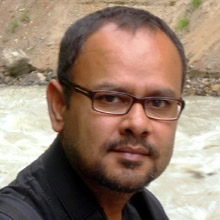
     

    Hindustan Times is said to have wanted to bring a fresh perspective on critical issues facing the society today – impacting the future of governance, economic growth, education, cinema, and more. The challenge for Mudra Max-OOH was therefore to showcase Hindustan Times as a brand that creates awareness among its readers, that it is a newspaper that listens and avidly takes up public issues, and undertakes global-scaled initiatives such as the Leadership Summit encouraging debate and bringing about change by capturing issues and solutions that we face every day.


    Subhashish Sarkar
    Sanjoy Narayan

    Mandeep Malhotra, President, Mudra Max-OOH said, “We are proud to be associated with Hindustan Times for leading a powerful forum which is a unique congregation of leaders and opinion makers of global stature, raising the bar of discussion on critical world issues. By this mega act, HT has indeed shown its intent to make a difference in a changing world.”


    Subhashish Sarkar, Senior Vice President,Mudra Max-OOH, said, “The objective of the OOH campaign for the ninth Hindustan Times Leadership Summit, was to highlight and remind readers and informed citizens alike of this year’s event and high-profile participants. At the same time, the challenge was to maintain the exclusivity of the forum and not have the brand-image ‘diluted’ through casually selected media. The executed campaign bears this out in plenty.”


    Sanjoy Narayan, Editor in Chief of Hindustan Times said, “In modern India, change is constant. In the last two decades, it is said, India has changed a lot. So has the world around us. The changes that India faces are, thus, on several fronts – some domestic, others global. And all of these changes throw up for India, the challenge of keeping pace with them.”