
Tag: Morbi

  • Perfecting the Art of Non-News


    By Ranjona Banerji


    Ranjona BanerjiRahul Gandhi’s Bharat Jodo Yatra is clearly causing heartburn. Within Big Mainstream Media, which refuses to cover it, and some political parties which denigrate intent and outcome. The second is understandable: that’s politics.

    But the media is another story.

    Or, let’s be honest, the same story.

    Both Rahul Gandhi’s walk across India and the terrible collapse of a bridge in Gujarat have got similar media treatment. Scant, local and biased in favour of the BJP whenever possible.

    When it comes to Morbi and the deaths of 135 people, the best that we get now from the media is from local coverage. And soon, even that will dry up. The police have arrested some low-level managers and security guards, and subcontractors.

    Anyone who lives in India knows that a mess of this magnitude could not have happened without political and bureaucratic collusion. Fans of the government blame people for being on the bridge, shaking the bridge and so on. Fans in the media have so many other things to talk about like the annual winter pollution in Delhi.

    Delhi is a tiny small part of a gigantic nation. But we will now discuss bad air quality for the next few months as if it affects everyone. We will never find out what happened in Morbi. The prime minister is already off inaugurating other things. No one will check whether those things work, are necessary or important. The fact of inauguration by a Great Man is all the proof we need.

    The national television media has perfected the art of non-news. News-gathering costs money. It requires time and effort. A “debate”, according to a former TV journalist I met recently, costs about Rs15000 or less. Easily affordable and far more effective in drawing in viewers. Content is unimportant. Largely, it needs to be high decibel and low quality for best results.

    Media watchers have been fed this diet of sound, filled with toxicity and dubious information, with intent, not just impunity. And the same media worthies who create and revel in bad journalism, especially if it creates social dissonance and disaffection, are overjoyed that The Wire is under police and government scrutiny.

    Of course, as always in such matters, our dear liberal friends within the media and outside are at the forefront of the criticism of The Wire. These liberal, upstanding, fair, just, and sanctimoniously self-righteous members of the media are outraged that The Wire made so many mistakes in its articles on Meta and even worse, got taken for a ride.

    It is therefore heartening to see media organisations like the Press Club of India, Editors Guild, Brihanmumbai Union of Journalists, NWMi, DigiPub, to name a few, condemning police action against The Wire, based on the complaint of one member of the BJP’s IT Cell.

    “Without glossing over The Wire’s lapse, it would be pertinent to recall that in the recent past there have been numerous instances of media excesses and completely over-the-top stories by media houses: be it absurd reports of chips in currency notes; fake WhatsApp forwards on Chinese soldiers killed in Galwan or unalloyed hate-mongering and incitement. These “reports” have enjoyed complete immunity and have hurtled India into a post-Truth conjuncture, where the right to be reliably informed itself has been steadily jettisoned.”

    The above paragraph from the BUJ statement makes the situation clear to anyone with a clear head on their shoulders. The negative response to The Wire’s transgression, from within the media, is lopsided and biased. The Indian media is notorious for lacking introspection. Why The Wire has to be held to a higher standard than everyone else beats me. And then there is the horror of having the government “investigating” journalists.

    I personally remain sceptical about Big Tech and its policies, especially when it comes to rightwing authoritarian governments.

    In general, I prefer to remain sceptical of fascism.

    Unlike, you know…


    Ranjona Banerji is a senior journalist and commentator. She writes on MxMIndia on Tuesdays and Fridays. Her views here are personal

     

  • Are businesses missing out on opportunities to sensitise & include?

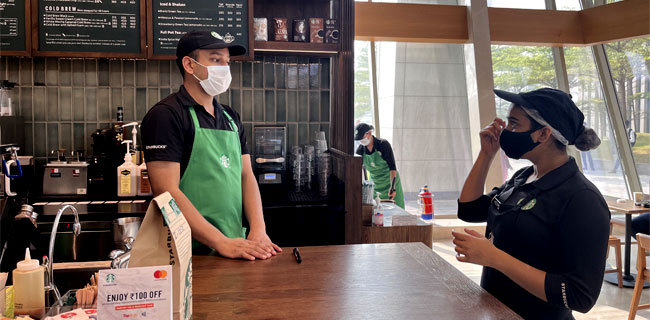
    Starbucks outlet at Noida Sector 16B where the baristas use sign language
    Starbucks outlet at Noida Sector 16B where the baristas use sign language Photograph: Shruti Pushkarna


    By Shruti Pushkarna


    Shruti PushkarnaThis week started with waking up to the news of Morbi bridge collapse and the death toll crossing 130. Since 2020, health, education, employment, entertainment and almost every aspect of our lives have been reeling under the aftermath of Covid 19. News reports and social conversations revolve around natural or manmade disasters, rape and murder, fiscal scams and political horse trading.
     

    Radicalisation and inflation are on the rise. Cars, petrol, houses, food, everything costs more. There are no jobs.  Businesses are struggling. We are taxed for everything, including hospital room rent.


    In short, an average Indian is grappling with a gazillion problems on a daily basis. If your own issues don’t depress you enough, there is communal hyperbole to push you towards hopelessness.


    A simple ask for empathy seems unreasonable against this ubiquitous backdrop of societal grief. At a time, when the daily commute to work and back is an exercise in aggression due to bad roads, bad driving and bad traffic, how can anyone retain their sensitivity towards another human being?


    Thousands of people in urban and rural parts of the country can’t think beyond arranging two square meals a day. No wonder politicians and corporate giants get away with dirty ploys and false promises, because who is keeping track anyway?


    Fighting for inclusion and access for persons with disabilities sometimes seems secondary in this context. Especially if a large part of advocacy involves calling out the gaps and faults. At times, it helps to apply a two-pronged approach to the same problem. Where shrill activism fails, positive reinforcement does the trick.


    On that optimistic note, let me refrain from citing unmet targets and implementation loopholes pertaining to the country’s disabled population in today’s piece. Instead I want to share two encouraging encounters which deserve propagation.


    Due to temporary confinement following a knee injury, my movements inside and outside the house were possible only with the aid of a wheelchair. Desirous of watching a movie in the cinema hall, I booked a seat in PVR Director’s Cut at Ambience Mall, Delhi. I assumed there would be wheelchair access to the last row of seats I booked. But when I reached the assigned auditorium, the staff enquired if I could stand up and walk at all. Used to taking my mother (in her wheelchair) around inaccessible spaces, I was ready to slip into my activist avatar, demanding access. Just then the extremely polite personnel brought out a motorised wheelchair and helped me shift out of mine.


    Before anyone else entered the hall, I was escorted up the several set of stairs, seated secured with a seatbelt. It took the wheelchair operator around ten to fifteen minutes to transport me to my seat. He did that with patience and grace. I was mightily impressed. Of course, similar treatment was meted out at the time of exiting the hall. In addition, as my husband escorted me to the accessible washroom, the PVR staff jumped up to help, ensuring the facility was clean.


    My inability to walk didn’t hamper my entertainment experience, thanks to the trained and empathetic staff. There are definitely solutions available to accommodate and include, even in physical spaces that are built discarding the principles of universal design.


    I also noticed fellow movie-goers observe how a young person with an impairment was out and about, enjoying a fun evening like anyone else. If there were people speculating why did I venture out at all, I’m certain there were an equal number wondering, why not!


    Subtle sensitisation supersedes stereotypes.


    A few days ago, when I went down to a newly opened Starbucks to fetch myself my morning dose of caffeine, I was in for a pleasant surprise. I noticed the baristas at work were quietly focused on their jobs except they exchanged a few signs with each other as orders were passed on.


    Curious, I asked the cashier if they were hearing impaired. Her response was affirmative. All the seven baristas were hearing and speech impaired and their two managers were fluent in sign language. The cashier proudly shared that she was pursuing an advanced course in Indian Sign Language to further bridge the communication gap.


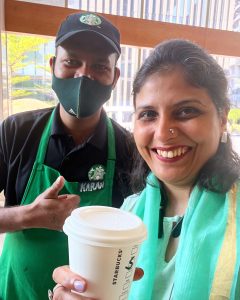
    With a barista at the Starbucks outlet
    With a barista at the Starbucks outlet

    As I collected my cup of coffee, I remembered to sign ‘Thank You’ to the cheerful server. I also signed to check if I could take a picture with him. He obliged, acknowledging my honest attempt to communicate in an inclusive language.


    This Starbucks is located on the ground floor of a commercial building that houses several private offices and a co-working space, in Noida Sector 16B. High influx of professionals provides an unmissable opportunity for sensitisation. Hiring persons with disabilities in a mainstream job helps counter misconceptions along with restoring agency and dignity.


    These two recent incidents speak of the power of change that is possible with certain additions and adjustments to a limited (and rigid) idea of normal. Publicising and broadcasting such acts of inclusion can whip up support for the excluded (disabled, elderly, severely ill) sections of the population. Practical demonstrations also help individuals and institutions realise that incorporating accessibility is not unfathomable.


    Here’s hoping that several such reports feature on the ‘good news’ sections of mainstream media.


    So why are we publishing this column on an A&M site? Well, we strongly feel that the media can dramatically transform the world of persons with disabilities. And this series can help bring forth issues that the media must champion to create a truly inclusive and accessible India. To write this column, we invited Shruti Pushkarna, a former journalist who now works as Director, EnAble India where she heads North India operations as well as media and communications outreach. Shruti writes for MxMIndia every other Thursday. Her views here are personal. To access the archives of all her 60-plus columns, please visit: https://www.mxmindia.com/category/columns/shruti-pushkarna/


  • Sorry, Morbi, for a weak media…

    Image courtesy: Twitter feed of PIB Ahmedabad/Gujarat


    By Ranjona Banerji


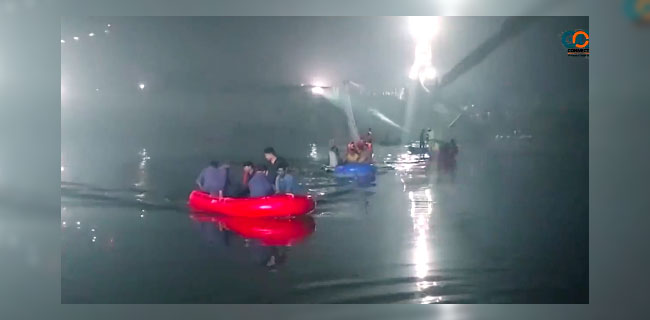
    Ranjona BanerjiThe deaths of at least 134 people in Gujarat after the bridge they were on collapsed is a national tragedy. The suspension bridge in Morbi, Gujarat, had recently been repaired and renovated collapsed on Sunday evening.

    Gujarat is in campaign mode or to put that more correctly, the BJP from top to bottom but especially the top, is in campaign mode.

    The state of Gujarat has been sold to India as a “model” state since at least 2012, in order to bolster then chief minister Narendra Modi’s push to become prime minister. Despite all evidence to the contrary, the electorate clearly believed it. Fake news and Photoshop were both very effectively used – infrastructure from other countries and places – from Singapore to the US and anywhere in between but obviously not Gujarat – were presented as being in Gujarat as proof of Modi’s great skills and as a promise of what India could expect when he became Prime Minister.

    The Covid-19 pandemic provided ample evidence that Gujarat’s administration and healthcare infrastructure were unable to cope and that rampant lies were being told about the treatment of patients and the number of deaths. The horror of the pandemic forced a pro-Modi pro-BJP media to report with rigour on the lies being told and the indignities inflicted on patients and their families in Gujarat.

    It did not take long however for the mainstream media to revery to its usual rah-rah position when it comes to Modi and the BJP.

    Don’t get me wrong. The Morbi bridge collapse has been covered: that’s how we know about what happened.

    But and this is a significant but, the narrative is full of pro-Modi pro-BJP nuance.

    The first step is to blame the opposition for saying anything at all: why are you playing politics in a national tragedy and blaming the Gujarat government, let the facts emerge.

    The second step is to blame lowdown government functionaries and those in the company which carried out the repairs/

    The third step is to blame the people themselves for being on the bridge, shaking the bridge, crowding the bridge.

    But the fourth and most important step is to protect the Prime Minister. Modi who is on an election campaign in Gujarat. He however did not visit Morbi immediately after the accident. He carried on with his campaign visits and just issued a statement about how sad he felt. The media then made it its business to pump up and promote Modi’s decision. The attack on other parties followed.

    At no point, from within the mainstream media and especially television, were there any cries for resignation and responsibility at the top. Except of course of security guards and ticket sellers at the bridge.

    Rumours that the company which had the contract for repairs may not have had the requisite expertise or that someone from Gandhinagar insisted that they be given the contract remain unsubstantiated. That the hospital which Modi is going to visit is being refurbished is also being shown without comment. For any other administration, any other politician, there would have been outrage and insistence on accountability at the top. But not when it comes to Modi and the BJP.

    This is how criminal incompetence has been allowed to thrive in India. And the mainstream media is fully culpable. The deaths of these people will soon be forgotten and we will carry on as if nothing happened. The Government at the Centre has to protected at all costs. The lives lost are meaningless.

    Meanwhile, there is this from Meta, which owns Facebook, Instagram and Whatsapp. After the accident, people on these platforms could not view anything on the Morbi bridge collapse because they were told that the Gujarat and Morbi hashtags went against Meta’s “community standards”.

    This is what makes it very hard to trust Meta and what makes it very easy to believe that it is in cahoots with the BJP. Today, Meta has said that the hashtag was blocked in error.

    https://www.wsj.com/articles/more-than-130-people-dead-in-cable-bridge-collapse-in-indias-gujarat-state-11667206283?st=vbbnjdzzeagmjip&reflink=article_copyURL_share


    Yeah, right.

    Our deepest condolences to all those families who have lost loved ones at Morbi. And our sincere regrets that we do not have a more robust system, including a strong media, which would help you get justice.


    Ranjona Banerji is a senior journalist and commentator. She writes on MxMIndia on Tuesdays and Fridays. Her views here are personal