Tag: Monica Tata

  • IAA to host ‘The Mentorship Program’ in Mumbai

    By A Correspondent


    The International Advertising Association (IAA) India Chapter has invited Sangita Jindal, Chairperson of JSW Foundation to launch its Mentorship program for 700 young professionals with about 35 leaders on Friday, September 19 at Bombay Stock Exchange’s International Convention Hall. The Mentorship program will be launched right after interactive session on “Engaging with the Audience – Lessons from the Entertainment Industry” between R. Balki, Chairman & CCO, Lowe Lintas + Partners and Stefan Haves, renowned Director from Hollywood from 4 pm onwards. Anish Trivedi, renowned Theatre personality and Author will moderate this session.


    The HBO South Asia is the Presenting Partner and Mahindra Special Services Group and NASSCOM are the knowledge partners of the IAA Young Turks Forum.


    Srinivasan K Swamy

    “IAA is for the first time doing a double event – an high energy interactive session followed by a mentorship programme where 20 young executives will have their questions answered on their personal career issues by one of the 35 seasoned professionals/entrepreneurs assembled at the event. The interactive session too will be a very engaging one since Balki and Stefan are well known professionals. Balki in addition to award winning advertising work has also directed two successful Bollywood films “Cheeni Kum” and “Paa”. Paa won 5 awards out of 14 nominations at the 16th Star Screen Awards. Stefan Haves on the other hand is also an acclaimed director, creator and producer of circus, theater and film whose creations have appeared across the globe,” said Srinivasan K Swamy, President IAA India Chapter & Vice President, Development, Asia Pacific.


    Monica Tata

    “HBO has always had a strong connect with youth audiences and we are delighted to be associated with this thought exchange platform for young leaders,” said Monica Tata, Managing Director HBO South Asia, Presenting Partner of the IAA Young Turks Forum.


  • IAA Young Turks forum discusses ‘How Cinema influences Culture and Marketing’

    By A Correspondent


    The International Convention Hall at the iconic Bombay Stock Exchange towers played host to the second edition of the IAA Young Turks Forum on Tuesday, August 6. Well-known film-makers Mahesh Bhatt and Stuart Sender participated in a discussion that was moderated by Hungama Digital Media MD and CEO Neeraj Roy. The topic of the discussion was ‘How Cinema influences Culture and Marketing’.


    “The question is how we can put some star power and thinking in terms of how we market media, culture and ideas – to work for some other issues and causes that will make people think and make an impact in meaningful ways,” said Stuart Sender.


    Mahesh Bhatt

    Director and Producer Mahesh Bhatt said, “Having believed that movies do not influence human nature and bring any change, I discovered that some movies that came from my heart did have a significant impact on the lives of people; therefore, it had an impact on culture.”


    The evening ended with well-known singer and musician Joi Barua regaling the audience with his foot-tapping songs.


    Srinivasan Swamy

    Welcoming the gathering and speakers, Srinivasan K. Swamy, President, IAA India Chapter & Vice President, Development, Asia/Pacific region of IAA, said, “Young Turks Forum initiative attempts to bring global captains face-to-face with the youth so that they can get first-hand knowledge on issues that concern us all.”


    “Given our strong connect with the youth, HBO is delighted to be associated with the Young Turks Forum, an excellent thought exchange platform for future leaders,” said Monica Tata, Managing Director HBO South Asia, Presenting Partner of the IAA Young Turks Forum.


    “The response to this edition of the IAA Young Turks Forum was phenomenal with an audience of over 800 people. We promise to come back with an equally enriching Young Turks Forum event in two months,” added Manish Advani, Head, Marketing and Public Relations, Mahindra Special Services Group, and Chair of the IAA Young Turks Forum series.


  • DDB Mudra releases new campaign for HBO Premium

    By A Correspondent


    DDB Mudra West has released a new campaign for HBO South Asia to promote HBO’s belief – nothing should come in the way of entertainment.The HBO Premium channels campaign has been launched with the aim of making sure that audiences have an uninterrupted ad-free viewing experience.The campaign will highlight the HBO premium channels- HBO Defined and HBO Hits proposition of being 100 per centad-free.The objective of this innovative campaign is to get people to visit the HBOPremium.comwebsite and subscribe to HBO Premium channelsor directly through DTH operator or digital cable operators.


    HBO Premium will take a new route in their quirky TVCs with HBO Premium Accessories like HBO Agriculture and HBO Super Clone. To illustrate these TVCs further, HBO Super Cloneis a clone that manages everything in life so that one is not interrupted while watching TV. HBO Agriculture is a set of plants that grow foods like popcorn, burgers, etc., so that hunger doesn’t interrupt one from watching TV. The HBO Ultimate Couch is a couch that has just about the whole house built into it – dumbbell holders so that one doesn’t have to get up to workout, a wash basin so that one doesn’t need to get up to go to the restroom, an in-built kitchen and phone charging station and much more.


    Monica Tata

    Announcing the launch of the new multi-media campaign, Monica Tata, Managing Director, South Asia for HBO India Pvt Ltd said,”Both the HBO Premium channels maximize the entertainment experience by airing HBO Original content and blockbuster movies 100% break-free. We have initiated a multimedia campaign developed by DDB Mudra to promote the visibility and popularity of this unique proposition of HBO Defined and HBO Hits across platforms including print, cinema, TV, digital and social media. Our aim is to spoil our viewers with the very best non-stop, high quality programming, thus providing an unparalleled viewing experience.”


    Rahul Mathew

    Speaking about the creative strategy behind the campaign, Rahul Mathew, Creative Head,DDB Mudra West, said, “It’s not often that a channel can truly boast of a viewing experience and not merely bleat about its content. And we wanted to make sure that the communication reflects the richness and the uniqueness of the channel. HBO premium accessories as an idea does that and allows for many interesting executions in different media.”


  • Monica Tata back to Time Warner fold as MD, HBO India

    By A Correspondent


    It’s an announcement that’s brought a smile to many in the industry. Monica Tata, who surprised many last year by quitting the Turner Entertainment Network of which she was virtually the face, is now back to the Time Warner fold as Managing Director of HBO India. HBO India is part of HBO Asia, which is a joint venture of Time Warner and Paramount, and Turner is a Time Warner company. HBO India sales and distribution are handled by Turner in India.


    Ms Tata will be based in Mumbai and report to Jonathan Spink, CEO, HBO Asia. She will be responsible for introducing and developing various initiatives to enhance the company’s offerings in India and its subcontinent, including providing strategic direction and managing partner relationships.


    “We are pleased to have Monica join the HBO Asia family. With Monica’s experience in the industry and her familiarity with our brand and channels, she is the ideal candidate to develop and grow HBO’s brand and market share in South Asia,” said Mr Spink.


    “I am excited to join the HBO Asia family as I love the brand and this is an exciting opportunity for me,” said Ms Tata. On joining the channel from the same family, she asserted, “Yes, it is the same family in the sense that Turner distributes and manages the sales of HBO, which belongs to Time Warner and so does Turner. But they are different entities.” She said that she will be figuring out the growth area for the channel in the next few months.


    Shruti Bajpai, Country Manager, HBO Asia, who has been based out of Dubai for a while now, will primarily drive marketing for the channel and will report to Ms Tata.


    Ms Tata has over 23 years of media experience and was most recently the General Manager, Entertainment Networks, South Asia for Turner International India Pvt Ltd where she was responsible for steering and overseeing all network initiatives across Turner’s entertainment brand portfolio in South Asia. Prior to that, she served at Star Television, Mid-Day Publications and Sunday Mail.


    There are three 24-hour HBO movie channels available to viewers in India – HBO, the blockbuster movie channel which was launched in 2000, and two premium HD advertising-free movie channels, HBO Defined and HBO Hits, launched earlier this year.


    Industry observers believe that with Ms Tata at the helm and given that she is one of the seniormost sales heads in the Indian broadcast business, HBO India adsales may move out of Turner in future and be handled by an internal team. It’s also possible that the bouquet of channels under her may grow, it is conjectured.


  • Monica Tata quits Turner. No replacement for now

    By A Correspondent


    Monica Tata, GM – Entertainment Networks, South Asia at Turner International India, has put in her papers. A Turner official confirmed the development and informed that she will be with the company till the end of the year. Ms Tata’s next destination is not known, and it is learnt that her position may not be filled in for the moment.


    With over 23 years of experience, Ms Tata has had an excellent record of increasing sales, effective negotiations, P&L analysis and strategic implementation of business operations. She joined Turner in 2004 after a 12-year stint at Star India and earlier at the now-shut Sunday Mail. She is Honorary Secretary of the International Advertising Association, India Chapter and is part of the Indian Broadcasting Federation’s proposed Indian Television Festival core organizing committee.


    Ms Tata was recognised as ‘Next 30’ most powerful women to look out in 2010 and was also adjudged as one of India’s hottest young executives of the media industry in 2009 by Business Today magazine and adjudged amongst the Top 50 influential women in media, marketing and advertising by Impact magazine earlier this year.


  • Broadcasters set to mix ideas & business @ITF

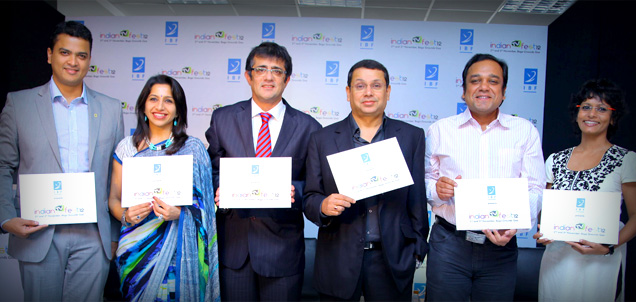
    Announcing the Indian Televsion Fest (from left to right): Keertan Adyanthaya, Monica Tata, Sunil Lulla, Uday Shankar, Punit Goenka and Lydia Buthello


    By Johnson Napier


    The god-like status that the medium of television commands in India today is indicative from the endless attention that gets showered on it from all and sundry. Whether for the advertisers who are willing to bend rules and swing  to their tunes or for the viewers who can take a liking to anything that’s thrown across at them (well, almost), the Indian broadcast industry is calling the shots in a manner that is pivotal to its growth.


    In fact, the popularity that it commands can be gauged from the growth that the medium has been throwing up in the past five years, which has been in the range of 12 per cent. This of course is backed by its ability to occupy a lion’s share of the ad pie and still remain a favourite medium for the advertisers.


    But while there are some obvious highs that ensue from the medium, the medium has been at the receiving end as well. Like the constant criticism it attracts for not being able to display a show of unity to voice common issues rather letting personal goals take precedence. Then there are also those who question the absence of a platform for the industry to come together and air and share views of common interest. But the last peeve may well be a thing of the past with the announcement of the Indian Television Fest 2012.


    The Indian Broadcasting Federation (IBF), led by president Uday Shankar of Star India and core festival committee members comprising Sunil Lulla of Times Television Network, Punit Goenka of ZEEL, Keertan Adyanthaya of NGC Networks, Monica Tata of Turner International India and Lydia Buthello of Star India announced the first-of-its-kind event for the industry. The two-day festival will be held at the Baga Grounds,Goa on November 2 and 3, 2012.


    The two-day fest would be a unique platform for the Indian and global broadcasting industry to network and exchange ideas through engaging panel discussions and master classes. Renowned names from India and across the globe are expected to participate in the mega event. And since it’s Goa, with the inviting beaches for company and some fun.


    Throwing open the idea to the gathering, Mr Shankar began by thanking his core team members, without whom the fest wouldn’t have been a reality. Explaining the thought process behind the exercise, Mr Shankar said: “The idea has been in the pipeline for almost a year now. We felt it was the right time to launch Indian Television Fest as the industry has grown big enough to manage an event of this scale. It basically stemmed from the need to create a platform where the entire broadcast industry could come together under a single roof – irrespective of the organisational and competitive background – so that there could be co-sharing and exchange of ideas and conversations on how the industry can take a big leap into the future.”


    According to him, what would make the event special would be its ability to get together honchos and industry persons from different verticals under television to come and be a part of the give-and-take. He affirmed: “Apart from some familiar and popular names the event will see the best in broadcasting brain trust from India and the world descend at the venue. The ultimate aim of ITF would be to service the larger Indian broadcasting community. It will also be driven with the dual need of being business-minded in its approach while at the same time having a social connect, as we believe the two are interlinked and cannot work in isolation from each other. All in all, we plan to make this event truly iconic in nature.”


    Giving a lowdown on the two-day event, Monica Tata of Turner India began by bringing to light some of the high points of the Indian broadcast industry. Providing a bird’s eye view of the current media scenario, she said: “India is the third largest market for media behind US and China. It has reported a growth of 12 per cent in the last five years which will continue to keep swelling. Further, the country boasts a reach figure of 500 million and is estimated to be worth Rs33,000 crore. This number is expected to triple to almost Rs100,000 crore by 2017. Needless to say there are tremendous opportunities that will enable the industry reach this figure in the coming few years.”


    Highlighting the tremendous opportunities that the Indian market presented for the future, Ms Tata said: “India has a penetration level of just 60 per cent leaving a lot to be achieved going forward. Further the C&S households are expected to grow to 88 per cent from the current 81 per cent. Also, the average time spent on television viewing is still low at 150 minutes compared to other countries that are almost double the number. And finally, with digitisation, DTH, HD taking off in a big way coupled with the unhindered growth of regional channels should see the industry enjoy prime status in the near future.”


    According to Ms Tata, some of the key themes scheduled at ITF include: best practices and masterclass that’ll be weaved around core areas of content, distribution, revenues, technology, etc; presence of visionary speakers like James Murdoch of International News Corporation, Andy Bird of Walt Disney, Hugh Johnson of Channel 4, Michael Lynton of Sony Corporation of America, Subhash Chandra of Zee & Essel Group, etc; debates and conversations; interaction with regulators and policy-makers; and finally encouraging cross-genre ideation.


    Presenting his viewpoint, Sunil Lulla of Times Television Network said: “There was no platform as yet in India where the issues and concerns of the Indian television industry were being raised and addressed. ITF will be a platform where one can learn, interact and demonstrate the road for the future. Three factors that’ll drive this event include the need for conversations, need for confidence to hold an event of this stature and need for commitment from the industry to take this industry from Rs33,000 crore to Rs100,000 crore by 2017.”


    On the key highlights to be expected at the event, Punit Goenka of ZEEL said: “We all know how New Media is going to be the platform of the future and we also know how regionalisation is going to take the industry further…and since regional has a lower base it is growing faster than the other genres. However, there are avenues that we need to discuss. Nobody has an answer as to how we will reach the Rs 100,000-crore mark but one has to start the process of thinking about it.” When asked if it would be a practically possible to reach the Rs100,000 crore mark in a short span of four years he said: “We have to talk about it and see how we get there. Nobody has an answer as to how we would get there. But unless you talk about it and bring it up in discussions how do we even make a beginning to reach there? I think the end goal is not important; it’s the journey which is going to be important.”


    When asked on the initial response that the event has managed to generate, Mr Lulla said: “Members from the broadcast industry have shown tremendous enthusiasm to the initiative, which can be seen from the initial buzz that is being created where registrations are concerned. As you know, we are a little late industry as we like to start things a little later. We hope the television industry supports us in a fashion by sending more members to attend the event. We have fantastic line-up of speakers from India and abroad; and of course, we would like the industry to stretch themselves a bit and sponsor many other themes and elements that we have lined up out there.”


    Mr Lulla added: “As you know, we are always a last-minute booking.com industry, so it’ll be a challenge to get a lot of people to attend the event. Also, there will be the challenge of generating advertising revenues so that we can stage the event successfully. But we are confident of putting up a successful event.”


    On the benefits that will accrue to IBF from the event, he said: “What IBF will particularly benefit from is take the ideas that come out and find out what will be the cornerstones for the industry going forward and what will become items of agenda. What people who come there to attend the event to take off is personal learning – so there will be ideas, new friends will be made…in all, it will be a mind-opening event, so to speak.”


  • So why did Turner stop Imagine(ing)?


    By Team MxMIndia


    Just when the Hindi general entertainment space was getting interesting with the top 3-4 players all coming within sneezing distance of each other in the numbers game, the industry was jolted by news of the closure of Imagine, which given its pedigree, was launched with much fanfare not many moons ago. From shock to sadness and even rage (at least on the social media) admirers and naysayers were seen on an overdrive trying to piece the chain of events that had led to the downfall of the channel that was seeing red for some time now.


    This was in stark contrast to the kind of emotions that were flying thick and fast exactly a year ago, when Turner General Entertainment was merged into its parent company Turner Broadcasting System Asia Pacific, Inc. The emotions then were almost similar to what the channel heads were going through when they flagged off the channel more than four years ago, making it one of the most loud and admirable launches of the time. While anticipation and expectations were riding high on the faces of each and every member of the team at launch, the same was the scenario during the merger exercise last year as the company was probably taking a last shot in reviving the fortunes of the network to see themselves battle against the competent lot at the top. But all that was not to be as tribes from the world of media and outside woke up to the news of the channel shutting down yesterday.


    Siddharth Jain

    Replying to questions put forth by MxM India (read interview),  Siddharth Jain, Managing Director- South Asia, Turner International India Private Limited put it out right and straight as he said: “This is a carefully considered business decision based on performance of the channel. We invested substantially and put all possible resources behind Imagine TV throughout. As in any other business, the investments were directly linked to reaching a certain performance benchmark. However, in the two years Imagine did not grow or perform as per expectations and as a result, Turner made the carefully-considered decision to cease operations of the channel.”


    Mr Jain is probably being modest in quoting that the channel did not perform as per expectations in the past two years, but the writing was on the wall in the first three months of 2011 itself, when the channel failed to get the viewers and advertisers excited with its most expensive property that cost the company in excess of Rs50 crore to produce. ‘Zor ka Jhatka’, hosted by Shah Rukh Khan, failed to get the desired ratings and didn’t do much to push the channel in the top league as was expected. In fact, in an interaction with the media before the show went live, an exuberant Sameer Nair had vouched that the show along with a few others would catapult Imagine among the top 3 in the Hindi GEC space. Wishful as he was, that was not to be. Its failure forced the thinktank at Turner to come up with steps to plug the loopholes, even if it meant changing its course altogether.

     

    Sameer Nair

    Thus in April 2011, Turner announced the merger of Turner General Entertainment into its parent company Turner Broadcasting System Asia Pacific, Inc. This was followed by the formation of a special committee comprising various Turner officials such as Monica Tata and others along with officials from Turner General Entertainment Network including Sameer Nair and Harsh Rohatgi with the intention of charting out a long-term course for the channel. This move was even vindicated by Steve Marcopoto, President, Turner Broadcasting System Asia Pacific (TBSAP), who went on to explain the need for such a proposal, which was to assess its performance and chart a long-term course for Imagine. But just when the merger was announced, Sameer Nair did the unthinkable by announcing his decision to exit the company.


    In an interaction with MxMIndia Editor-at-Large Anil Thakraney, Sameer Nair was quite upfront about the reason for his decision to move on: “I was used to operating independently. After Turner took over, one had to integrate into the Turner system. And this made me just a department head. And so I left.”


    Expressing concern towards the chain of events that led to the closure of the channel he said, “I am quite shocked and disappointed to hear that they’ve decided to shut the channel down. They (Turner) seemed to be quite gung ho about Imagine, and I thought they were going full steam ahead. There is a lot of investment and a number of jobs at stake.”


    Mr Nair’s exit from Imagine was followed by a few other key exits and the network’s failure to find a suitable replacement. Even attempts to vow the audiences by launching a slew of reality and mythological shows didn’t do much for the channel as it still figured in the #6/7 slot amongst its peers in the space.


    In fact, even as recently as 2-3 months ago, the channel was going all out with its promotional activities as it announced the launch of new shows. But that too has been brought to a halt as Mr Jain explained: “We cease all business operations of Imagine TV. The closure is a complicated process as we are ensuring fulfillment of all our business commitments to advertisers, distributors, production houses and other partners.”


    The news came as a rude shock to producers, some of whom were in the midst of production schedule (see story: Rude Shock for Producers & Performers). Rajan Shahi who had launched ‘Jamuna Paar’ on Imagine just a little over a month ago, refused to comment on it saying “it would be too premature”. Other producers like Siddharth Tewary, the Sagars who had ‘Chandragupta Maurya’ and ‘Dwarkadheesh’ aired during primetime were incommunicado as they grappled with the sudden turn of events.

     

    JD Majethia

    JD Majethia who had launched two shows, ‘Jassuben Jayantilal Ki Joint Family’ and ‘Ek Packet Umeed’ four years ago said: “It’s sad and shocking. It was a channel which with the entry of Vikas Behl at the helm of things looked poised for bigger things, a turnaround but that was not to be. It’s a huge setback for producers and for those who work on a per day basis. A daily show means a minimum of 100 people associated with it in various capacities and with Imagine closing down, it spells doom for them. All that talent and labour goes down the drain. It’s a loss of about Rs200 crores worth of yearly business for Imagine and the industry on the whole.”


    Veteran producer Dheeraj Kumar of Creative Eye Productions said: “It was an overnight decision but it could have been done a bit smoothly. I am hopeful that Turner with its huge umbrella of channels would give us a chance of providing content to them. I am optimistic.”


    Programming propaganda

    Ever the one to influence viewers and attract the attention of the advertisers too, content was one of the biggest setbacks for the channel, going by the buzz emanating from experts. While the start for the Imagine was glorious, as it did manage to attract sizeable channel share (see chart below) and even break into the 150+ GRP mark at some point, it was an experience that was shortlived. The maximum channel share that the channel attained was 8.5 in H2 2009.
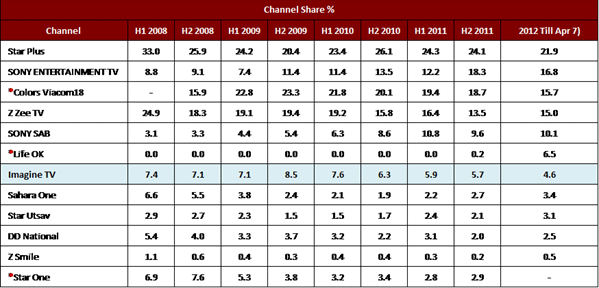
     

    Source: TAM Media Research / TG: CS 4+ yrs / Market: HSM / Period: H1 (Jan-Jun) & H2 (Jul-Dec) 2008, 2009, 2010, 2011 till April 7, 2012

     

    Mohit Joshi
    Divya Radhakrishnan
    Karthik Lakshminarayan
    Pankaj Krishna

    Explaining the implications, Mohit Joshi, Managing Director, MPG said, “The General Entertainment domain is very competitive and each channel is constantly improving content and production. The viewer has many options today and hence has become more ruthless with the channel choice. In spite of a great start, Imagine lost it mid-way. In an attempt to gain viewership and numbers, it resorted to telecasting shows like Rakhi Ka Swayamvar, Rakhi Ka Insaaf and so on. Though these shows could have given a short-term boost in numbers, in the long run, viewers didn’t find the content appealing enough. Also these shows dented the channel image by giving it a ‘sleazy’ tag – which is not acceptable in the GEC domain.”


    Divya Radhakrishnan, Founder, Helios Media, said, “GEC is a highly competitive segment and the cost of running a GEC is very high. Imagine had reached a level of stagnation especially in the last six months, however shutting down was not expected.”


    Karthik Lakshminarayan, COO, Crest, said: “Imagine had the brand heritage of NDTV and Turner. I think it was sheer bad luck that they eluded that one show which could give them success like Kyunki did for Star, Saat Phere did for Zee, Ballika Vadhu for Colors and Bade Acche Lagte Hain is doing now for Sony. For a GEC to break even it takes 4-5 years so one needs to stay invested for a long period to see the returns, hence the move is a surprise.” In fact, he has a surprising statement to make: “Their overnight decision has caught us unawares and our media plan needs a quick revision. We had spots to go on air on the channel as we talk. I think now those spots are up for grabs and may the best player win.”


    Blame customer pull, not distribution!

    There are primarily two ways of impacting Channel Trials – namely Consumer Pull led by content affinity, and Broadcaster Push led by Distribution initiatives, explains Mr Pankaj Krishna, Founder and Managing Director, Chrome Data Analytics & Media (see Analysis: How Imagine lost due to consumer pull, not distribution. “Going by Chrome OTS numbers (Opportunity To See – percentage of households that have access to a channel) – Imagine TV has clearly been in the league of the top GECs with an OTS of 95% across HSM.”


    According to Mr Krishna, “consumer pull clubbed with Strategic Distribution Planning has a huge impact on the overall performance of a channel”. “Over the years, Imagine lost out on factors contributing to the former.”


    Staff shocked

    It was Terrible Thursday for the staff at Imagine. They had no clue of the closure, even as they had faced yet another week of dismal ratings from TAM. Said Jain on the fate of the staff: “Turner will retain some employees for a transition period and some others are being offered permanent roles within other Turner channels to fill current vacancies. For the other Imagine employees getting impacted, Turner has set up an HR outplacement service which will provide advice on how to write a better CV, interviewing techniques and other job hunting skills. We will also introduce the employees to recruitment consultants, HR professionals from other media organizations and facilitate their new job search. Our focus is to ensure the closure is executed in a fair and appropriate manner for all of them and in full compliance with all legal requirements, employment terms and company policies. We will use our best endeavours to make this as smooth a transition as possible for them.”


    There has been much dismay in the brodcast fraternity too. Colors CEO Raj Nayak in fact made a clarion call to the industry via Twitter: “To all my friends in the TV business. Let’s try & accommodate our friends from Imagine wherever we have vacancies in our system.”


    Way ahead

    The move does spell a warning for other broadcast majors to sit up and take notice. Let’s not forget examples of a few channels that had to shut shop midway including Star One, Zee Next, 9x and Real for lack of vision and programming blunder.

     

    Ashish Pherwani

    As Ashish Pherwani of E&Y writes in his analysis for MxMIndia (when is it right for a channel to pull the plug): “Over the last decade or so, most unsuccessful channels which have tried ‘overhauls’ and ‘makeovers’ that have failed to achieve their objectives within six to eight months, have eventually shut down their operations.” According to him, for a channel to succeed, “the only asset it has is viewership. Channels which operate without a robust management team, a unique market position, and a defined target audience, won’t be able to garner sustained and loyal viewership. If channel management is able to make these three aspects fit seamlessly together, chances are the channel will succeed as a business, else, it would make business sense to pull the plug!”


    Turner may probably pay heed to Pherwani’s suggestions if it ever were to take another swipe at launching a Hindi general enterainment cahnnel  channel. Going by its past track record where it teamed up with Alva Brothers to launch Real and proceeded by acquiring Imagine from NDTV, chances are that the network may already be on the prowl hunting for its next prospect. Until then, the network seems content to bask in the laurels of its sister channels that have been showing good growth in the genres they operate in.


    Written by Johnson Napier with inputs from Anil Thakraney, Ashish Pherwani, Pankaj Krishna, Kshama Rao, Tuhina Anand and Robin Thomas
     

  • Pogo achieves highest GRP in kids genre

    By A Correspondent


    After holding the number 1 title in kids’ genre over the past 6 months (*Source: Tam, All India, Kids 4-14, Weekly GRP), Pogo has achieved the highest GRP of 174 in almost the last 6 years in the kids’ genre (Cartoon Network earned 181 GRP’s in week 21 of 2006).


    Also, the premier of the movie Chhota Bheem: Dholakpur to Kathmandu delivered a TVR of 2.4, the highest of any movie or show in 2012. This combination of GRP and TVR has led to POGO dominating the viewership pie with 25.6per cent relative share.


    Monica Tata, General Manager, Entertainment Networks, South Asia, Turner International India Pvt. Ltd. said: “We are elated with Pogo’s increasingly better performance, and the irrefutable contribution of Chhota Bheem in making the channel reach such a milestone. The response received from our viewers is nothing but an encouragement to continue to provide quality and engaging content so as to surpass these accomplishments.”


    Pogo, a multi-genre channel created exclusively for kids in India, was launched successfully by Turner on January 1, 2004 and is distributed by Media Pro Enterprise India Pvt. Ltd. POGO is available in over 24 million cable & satellite homes.


  • The Anchor: Monica Tata on 6 reasons why running a kids’ channel is no child’s play

    By Monica Tata


    The kids’ genre is the largest genre in terms of viewership after mass genres like GEC contributing to 18.3 per cent of the viewership pie (Source: TAM Media Research | TG: CS 4-14 | Market: All India | Period: 2010 – Wk 3 of 2012).


    Although it caters to kids, being a successful player in this genre is no child’s play. It is a competitive market where players need to have the ability to constantly create content that is engaging and innovative. They need to be adept at technological evolution and have the foresight to adapt content over multiple and mobile platforms.


    #1 Single TV Households

    One of the biggest concerns of special interest channels like kids’ channels is the phenomenon known as ‘The tyranny of the single TV households’. In India, a majority of households have only 1 TV set which are controlled by parents during prime time hours. This is why GECs dominate the television viewership pie. Today, over 85% of kids also tune in to GEC channels. Thus the task becomes even more challenging to sustain and increase the viewership of kids’ channels. Kids’ channels’ need to constantly reinvent their content and packaging so that there are novelty factors to the channel that excite kids and at the same time, maintain familiarity so that kids don’t lose connect with the channel.


    #2 Target audiences

    It is the only genre which is fortunate to receive a new set of target audience every five years. Kids between the ages of 4-14 years being the core target audience, content and programming needs to be aligned with their entertainment requirements, perceptions, behavior, social and cultural ideologies, geo-demographics, etc. Kids also change their mind very easily basis what they or their friends think is ‘cool’ or not. Thus, it becomes imperative to stay ahead of times and ensure that content created for the target audience has the potential to be molded and refreshed from time to time.


    One such shift noticed in 2011 with regard to the viewership habits of kids is that they prefer to watch fewer shows on kids’ channels than before and have begun to spend more time per show. Thus, although the viewership for the number of shows has reduced, the overall category viewership remains mostly unchanged.


    Gatekeepers are another important factor to consider while trying to reach the core TG. *48% of parents always exercise control over what their kids watch. This means that if the parents are not happy with the content that is being aired on your channel, chances are that the kids won’t be allowed to watch it. Content on the channel should be considered safe by the parents for their kids. Another way to expand the viewership pie is by creating content that can be viewed by adults as well.


    #3 Content

    With consumers having a much wider choice of channels, ownership of quality content is increasingly being seen as a key differentiator for broadcasters. Once, Cartoon Network was the only kids’ channel airing international content, fast forward to today, and there is a plethora of kids’ channels airing classic international content (like Tom and Jerry), anime cartoons (like Hagemaru), local live action shows (like M.A.D) and the latest craze – Indian animated content (like Roll No. 21 and Chhota Bheem).


    Another way to garner success for content is to make it fun and engaging for gatekeepers as well as 66% of parents watch TV together with their kids. For instance, POGO has continued to hold the title as ‘The No. 1 Kids and Family Channel’ thanks to shows like Chhota Bheem and Mr. Bean that are among the top three rated kids shows by kids and adults. *(Cartoon Network New Generations 2011) Engaging and innovative content with storytelling and strong characters at the core is the focus for broadcasters of kids’ entertainment.


    #4 Animation

    Creating animated content is a time consuming and expensive process. Although we have taken it up as our prerogative to boost this industry via our ‘Desi Toons’ strategy, there are several challenges. Firstly, in order to truly make animation travel across borders, the storyline and characters need to have global appeal and resonate with kids irrespective of cultural and geographical borders. In this scenario, it becomes difficult to make mythology content travel which is what a majority of studios pitch to us. We have had some success in terms of shows like Kumbh Karan and movies like Arjun: Adventures of the Ice Lotus which have managed to do well in other regions of Asia Pacific because their plot is more contemporary.


    Another challenge is the outsourcing business models that animation studios have in place. This model makes it reasonable for large film production houses to outsource animation to India but for broadcasters it becomes quite expensive. Animation studios and broadcasters need to arrive at a happy settlement wherein there is a cost effective quality model.


    #5 Role of language/dubbing

    India is a vastly multicultural and multilingual region. This factor, initially, proved to be a challenge to expansion of viewership markets as content available on kids’ channels consisted of international shows available in English. Broadcasters began to realize the potential of dubbing content in local languages so that the channel could be consumed by the masses across India. Thus subsequently, kids’ channels were made available in Hindi, then Tamil and Telugu and now even in Marathi and Bengali.


    Content providers are taking this a step further by now transcreating scripts of international shows in local languages and not merely translating them. Shows based on humor are that much more hilarious if they capture the colloquialism and nuances of the language.


    #6 Beyond Television

    In today’s multi-screen playground, it’s not uncommon for kids to consume content on more than one platform. This represents huge opportunities for broadcasters to expand the presence of a brand or a character in the mobile and online space through smart phones, tablets and computers. Moreover, broadcasters and content houses are increasingly working towards building anytime anywhere access to content.


    The contribution of content to the digital success cannot be undermined here as well. It is important to leverage popular content on television to these online and mobile platforms in appropriate formats that are engaging, innovative and unique. For instance, Chhota Bheem’s popularity on-air has definitely contributed largely to the success of www.pogo.tv. ‘Chhota Bheem Balloon Blaster’ is one of the most popular games on pogo.tv which allows fans to connect with their hero through a game. The site has seen immense success with about 500,000 unique viewers per month. Apart from prime television when it comes to appeasing kids, merchandising is one of the most powerful tools to connect with them.


    Merchandising, today, has transformed into a global arena; providing an array of international and local brands to choose from. We are witnessing a healthy rise of various kinds of merchandising in every product category. Kids want to have their favourite characters with them (in the form of stationary, bags, lunch box, bottles, clothes, toys, etc.) wherever they go; be it school or outside or at home!


    For instance, Cartoon Network Enterprises (CNE), the licensing and merchandising division for Cartoon Network and Pogo, has reflected the growth of the industry by reaping profits and growing by almost 70 per cent in 2011 and has added 680 SKUs. CNE Products are now available in over 5300 retail counters across India. With the advent of 3G and the digitization deadline in sight, the prospects of growth in terms of market penetration and revenue accountability from subscription models in nothing but encouraging to invest the kids’ genre.


    In spite of these challenges, the performance of the kids’ genre in 2011 is an indication of the potential and growth of this market with the right mix. The genre not only recorded growth but also saw the entrance of new channels like Sonic and growth in regional languages as well with Marathi and Bengali feeds. In Tamil, for example, the share of Kids is higher than News. Many automobile, telecom, financial services and grocery products now target kids as well, which means this genre will continue to be attractive to advertisers in years to come. From that perspective, there is no looking back for the kids genre with infinite growth possibilities provided ‘Content remains King’.


    Monica Tata is General Manager, Entertainment Networks, South Asia, Turner International India Pvt Ltd.


  • Staff restructuring @ Turner

    By A Correspondent

    More than two decades after launching with pan-regional CNN and Cartoon Network services, and having grown to 23 channels and 29 websites in nine languages, Turner Broadcasting System Asia Pacific (TBSAP) is to realign its structure to reflect its considerable business outside of Hong Kong. The large, geographically-diverse Asia-Pacific region has over the years become a combination of distinct sub-regions, each with its own characteristics, business imperatives and growth challenges. In order to pursue the network’s ambitious new goals in an increasingly dynamic and fragmented Asia-Pacific region, TBSAP is to rebalance its resources to better seize the exciting opportunities in these territories of North Asia, South Asia and Southeast Asia/Pacific, each of which will come under a new management structure.

    Mr Steve Marcopoto, President and MD TBSAP, commented, “The driving principle behind our new set-up is to provide ownership and accountability to each Asia-Pacific sub-region in pursuit of growth. To better align us to meet the challenges and opportunities of these distinct markets in the years ahead, business will be run out of each sub-region with Hong Kong oversight and support.”

    Individual roles of the TBSAP executive team are to be realigned as follows: Mr Sunny Saha becomes SVP & MD Entertainment Networks, TBSAP, and takes on expanded responsibilities on strategic planning across the company, while continuing to oversee the functions in Hong Kong that support TBSAP’s new sub-regional operations. Mr Saha will also directly manage the company’s entertainment networks in Southeast Asia/Pacific, with the support of Mr Robi Stanton who assumes the role of GM, Networks Australia and New Zealand. Mr Saha will remain as TBSAP’s lead executive for all activities on global properties such as Cartoon Network.

    Mr Anshuman Misra will become SVP & MD of Networks and Content Distribution (NCD) Asia-Pacific, taking on full responsibility for Turner’s content sales business across the region. He will also assume responsibility for syndication sales.

    The North Asia region will be managed by Yew Ming Lau who will assume the new role of SVP & MD, North Asia. Mr Siddharth Jain will assume management of South Asia as SVP & MD while Ms Monica Tata, as VP & GM Networks, will now manage all of Turner’s India networks with the assistance of dedicated business heads reporting to her. The team at Imagine, until some months back headed by Mr Sameer Nair, will report to Ms Tata.

    In light of the increasing priority of CNN International News Source, Mr Ringo Chan will devote his major focus to this pursuit as SVP, CNN Broadcast Sales & Affiliate Relations, while maintaining his responsibilities for NCD in Greater China as well as the important liaison work he conducts for TBSAP with the PRC.

    Mr Jeremy Carr will assume important additional responsibility for growing TBSAP’s digital entertainment properties as VP Entertainment, Digital & Adsales.

    Finally, Phil Nelson will assume full regional responsibility for Business Development as VP of Business Development, Asia Pacific.

    These new operating arrangements will take effect immediately.

    “We have the best management team in the business and our new approach will focus each of our executive resources more deeply on specific areas, rather than across the entirety of the substantial and complex region of Asia-Pacific,” Mr Marcopoto added. “This is a positive, forward-looking, strategic and long-term initiative to continue to grow Turner Asia and deliver optimum performance to better seize exciting opportunities in the years ahead.”