Tag: mobile advertising

  • Most Indians find mobile advertising the most annoying, reports Nanu survey

    By A Correspondent


    nanu, the fastest growing mobile VoIP apps, unveiled the outcome of a targeted survey among a group of Gen X, Gen Y and Millennials from India using smartphones, with diverse work profiles. Amounting to a total sample size of 3735, 60 per cent of the respondents are annoyed with mobile advertising and marked the adverts as most annoying and obtrusive. However, banners still holds some preference for mobile users due to its unforced nature since approximately 52 per cent of respondents have rated banners as least annoying while more than 55 per cent  respondents believe pop-ups and video adverts as the most annoying form of mobile advertising.


    As any mode of advertising focuses on two factors – increase sales and brand building, mobile advertising in its present form fails to address either of them as indicated by the outcome of the survey. It reveals that even though 46 per cent of respondents may click intentionally on banner adverts, but 80% still avoid clicking on pop-ups and video adverts. Moreover, about 75 per cent of respondents indicate their doubts about making any purchase decision from mobile advertising.


    Commenting on the findings of the survey, Martin Nygate, Founder & CEO, nanu said, “The findings of the survey clearly highlights the ineffectiveness of the existing modes of advertising that brands are adopting, due to its intrusive nature. Increasingly, this invasive side of mobile advertising is adding up to its own plight by pushing mobile phone users to resort to using ad blocking software. It’s the present form of mobile advertising that eradicates all the smartness of our smartphones”


    “We believe that mobile advertising needs to be completely non-intrusive and infused with the right set of analytics to ensure enough value proposition for both users and brands,” added Mr. Nygate


    Mobile advertising is today the core of any brand’s digital marketing media strategy and marketers are aggressively looking at options to ensure the right visibility for the brand, thereby enhancing brand recall for the products and services. The outcome of the survey indicates the status quo of the mobile advertising segment, leading to annoyed and irritated consumers coming at the cost of brands’ advertising budget for mobile.


  • The Anchor: Madan Sanglikar on 5 reasons mobile advtg delivers more ROI than conventional media vehicles

    By Madan Sanglikar


    #1 No other medium in the world has the reach that mobile enjoys. While mobile implies reaching everybody, it is also targeted since mobiles are personal. Mobile phone is hardly ever an arm’s length away from us.


    #2 The mobile is the only device they can own and use. Most of the population in India today does not have an access to computer.


    #3 Mobile is an entertainment, communication, information device. from brand perspective, it allows the consumer to do anything and everything without moving away from the screen. various elements of phone work together.


    #4 Mobile is actually clearing the gaps that the internet as an advertising vehicle had.


    #5 As of today, mobile gives 2-to-5 times the response to even online advertising. The search level on mobile phone on lot of retail-based products, especially food-specific businesses, has already outpaced computers.


    Madan Sanglikar is the CEO of ad2c.


  • The Anchor: 4 challenges hampering mobile advtg growth

    By Narasimha Suresh


    #1 The mobile, as a handheld device, is a lot more personal and contextual. Advertising on this medium thus cannot be the same as on the internet. A promotional ad that is sent to a handheld device can excite. But if it does not, it can create more harm to the brand. Thus, contextual and relevant marketing is missing, and this is the foremost challenge.


    #2 The current inventory and mechanism available does not address the advertising issue for mobiles. The banner advertising or SMS might not be relevant at all times. There are clearly not too many options that are available or that an advertiser can leverage.


    #3 Brand marketers do not know how to measure the impact of mobile advertising. Advertisers need to engage consumer not only through content but also through context. The mobile advertisement should not be a push, but pull consumers. Since this is all about advertising on handheld devices, the advertising needs to target the person there and then. If a person is checking out a product, the offer or advertisement about the product or category should reach them immediately.


    #4 There exists an ecosystem problem as well. The penetration of 3G and smartphones is still limited. If 3G spectrum is present, the network is too slow. Smartphones are priced highly, and thus limit the reach.


    Narasimha Suresh is CEO and Founder of TELiBrahma.


  • The Anchor: Albert Almeida on 5 things he would like to see happen in Mobile Advertising

    By Albert Almeida


    1. Ads beyond mobile internet:

    India is still a voice driven market. It would be great if consumers can hear an ad and make a free call rather than see an ad.


    2. Better targeting via location-based services and near field communication:

    Both these words have become full fledged buzz words in mobile advertising. This can be used for payment with your mobile device, pushing marketing or other content to the user’s phone, as well as many other possible scenarios we have not even thought of yet. NFC has taken off in many parts of Asia, and there is a huge potential for it in India as well.


    3. Richer forms of ads (beyond the banners and text ads) – videos – interactive flash based ads:

    The changes to the pricing strategies for advanced GPRS and 3G will allow more consumers to access mobile internet. With richer content, we would like to see a surge in creativity in the mobile advertising platform as well. Videos, app-based ads and interactive ads are just a few forms of advertising that we would like to see in mobile advertising.


    4. Social Integration in mobile advertising:

    With the surge in social networking via mobile devices, we would definitely like to see social integration in mobile advertising. This would also help create word of mouth for brands on social media.


    5. Advergaming on a mobile platform:

    Gaming has always had great pull and with mobile gaming on the rise, we would want more branded gaming content that can be offered for free in an ad funded model.


    Albert Almeida is the COO, Hungama Mobile


  • The Anchor: Viren Popli on 5 things mobile advertising in India should adopt

    By Viren Popli


    It is not internet advertising:

    Don’t treat it like internet advertising – banners, spam, CTR, CPI. It didn’t work, doesn’t work and will not work.


    More co-operation needed:

    Handset manufacturer, content owner and telecom companies need to work together and maybe share 30-30-30 and give the tech/reseller 10.


    Don’t interrupt conversation:

    Use waiting times when we are staring at a blank screen, or listening to a dumb audio sound for advertising. Keep it out of my real conversation.


    Consumer is the king:

    Allow consumers to select brands he wants to hear from, and ads he wants people to see when they reach out to him. After all, many of us use brands to define our personality – give him a piece of the action.


    More engineers in creative agencies:

    Have creative agencies hire more engineers and put them on par with the “creative types” – create internal stress. You can’t separate the technology from the message. So no matter how interesting the idea… If the technology doesn’t deliver, neither will the message.


    Viren Popli is Senior Vice President – Strategy and Market Development at Mahindra & Mahindra


  • The Anchor: 5 reasons why mobile advtg has a gr8 future

    By Sunny Nagpal, Co-Founder & MD, Httpool India


    We’ve come a long way since Martin Cooper invented mobile phone in 1973 as a portable handset, to early 1990s when they were actually available in the markets, or in 1994 when the first SMS was sent in Finland to 2000 when mobile advertising made its debut and still grows strong in the marketing scenario of the world.


    We have seen an exponential growth in mobile web and app usership, through the release and distribution of smart phones and open platforms like Android.Mobileis shaping up as an exciting medium for advertising and we have seen that the smart brands have already taken these first green shoots of growth as a sign to start investing in the medium.


    Mobile advertising, undoubtedly, has a great future as it begins to prove itself as the most effective digital advertising channel.


    Here is why the advertising on cellph”one” will be the most preferred one:


    1. One on One: (Personalized, location sensitive)

    One of the major reasons why mobile ads are so effective is largely due to mobile phones allowing advertisers to target their audience with messages that are intended just for the user. Users generally pay more careful attention to mobile ads (example: banner on a notification page). You see people adding utility and productivity tools to their phones in a very personalized manner. Advertisers have already started focusing here, creating such tools, applications which work as enhanced sponsorship and works well with mobile because it is such an intimate environment – people are looking to add more content to their phones and personalize them.


    Moreover, a mobile phone can provide information about the user’s movement and changing location that can be used for timely offers, such as a discount at a store or at a cafe in the food court as a user enters a mall.


    So, the next big thing is location-based marketing. This means the example that is often cited of someone walking past a coffee shop and getting a text telling him to come in and have a cup of coffee is not far off. Advertising for small local businesses can have a much stronger business case.


    2. Many to One: (Manifold Messaging)

    There are multiple points to deliver your brand messages, unlike other media, mobile advertising has a much richer menu of options to offer advertisers: voice (visual voicemail, ringback tones, missed call notifications), text (SMS), multimedia messaging (MMS), mobile Internet, billing touchpoints, handset clients and more.


    This allows an advertiser to create a trail with multiple messages delivered to same user through above means. However, here the attempt should be to deliver them as seamlessly and non-intrusively as possible.


    There are ads that can come across as real-time situations such as billing and location triggers, and can be highly effective in meeting immediate real-life needs and maximizing response rates.


    3. Two sided one: (Interactive)

    The interactive nature of the mobile phone removes barriers to responding and purchasing through direct user response capabilities.


    As mentioned, mobile’s targeting technologies make ads more relevant to users, while also delivering successful campaigns for advertisers. With mobile, the ads can become more effective and relevant to the user when they can engage in a conversation with the person with regards to the advertised product or service. Mobile advertising allows for users to click/touch the banner ad and then is prompted to their dial screens with the number already configured into their dialers. This functionality is called Click to call.


    There are also possibilities to do campaigns with a click to SMS/Purchase/Download/View Video/Email functions as well, all depending upon the campaign objective. Instant interaction will make the lead more valuable and in result lead to an increase in sales.


    4. “That” one: (Targeted)

    A mobile phone provides extremely granular details about the user. This allows advertisers to know exactly who the users are in order to target ads effectively. They can thus target by Geography (Country, City), Carrier (Airtel, Vodafone and so on), Channel (category of content – Entertainment, Business Finance, Travel and so on), Device (Nokia, Samsung, Micromax, iPhone and so on) and Operating System (IOS, Android, RIM, Symbian).


    Because targeted ads are inherently more relevant, they are more interesting. Users pay more attention to them, and advertisers get a higher response rate. This makes the medium really cost effective and ROI driven.


    5. Everyone has one

    Well, we all know that by now! Very often, we see people having more than one mobile phone. While volumes are great and will give you that reach, it is the way people use their phones that is of more interest to the advertisers. Mobile phones today are central to many aspects of people’s lives, and are a key access point for most media consumption – information, entertainment, communication, transaction, self expression and socializing.Mobileis a huge part of people’s live already and it continues to evolve its purposes.


    Think most developing countries. Think India, where most cities are still fighting to meet their power needs. In such times, mobile phones come up as a vital source of information, utility and entertainment. Broadband is still to cover whole of India, but mobile providers with 3G have changed the scenario of Internet browsing. This will only get better with time.


    Historically, it is clear that people don’t like to pay for content. So then, we shall see advertising fund the mobile content as it funds TV, Print and Online.


    Mobile advertising in current scenario remains a part of overall digital mix, rather than a standalone platform and therefore advertising spend is largely contingent on, and limited by, overall media budget mix. However, this is slated to change soon, with most advertisers and agencies realizing the effectiveness of the medium both as a standalone and an integrated channel. We see major agencies appointing media planners dedicated to mobile, and it would be an understatement to say mobile advertising has a very bright future globally and in India.


    And for the advocates against the perception, here is what Thomas Watson, chairman of IBM in 1943 said: “There is a world market for maybe five computers”.


    Sunny Nagpal is co-Founder & MD, Httpool India


  • Email Marketing: Vast opportunities make it a favourite with brands

    By Robin Thomas


    Easily the most preferred medium for a brand or marketer to get close to his consumer, digital has never seen such a fervent chase being put up by its users. While it was mostly search and display advertisements that advertisers flocked to, much of digital advertising is still unexplored territory. The importance of engaging the youth through social media marketing has only just been realized, while video marketing and mobile advertising are also gaining traction among marketers.


    According to a recent IAMAI-IMRB report on Digital Advertising (as on March 2012), the total advertising spends including classifieds was valued at Rs2,850 crore.  It is expected that by FY2013 the digital advertisement spends will be about Rs4,391 crore.


    The March 2012 report on digital advertising points out that search advertising constitutes about 20 per cent of the total online advertising spend or about Rs570 crore.  The report also states that advertisements on social media, email and video over the Internet constitutes about 3 per cent (Rs94 crore), 5 per cent (Rs144 crore) and 2 per cent (Rs59 crore) respectively. What is noteworthy is that a major proportion, around 53 per cent, of the overall digital advertising spends come from classifieds listing (Rs1,496 crore).


    With such infinite possibilities continuing to emerge on a frequent basis around the medium, one tool that has been a favourite with the marketers in the recent past is email advertising. With just a handful of players that operate in the realm of providing email services, it becomes all the more challenging for owners to come up ideas that catch the attention of the advertisers. The question is whether there is enough being done around the vertical or if companies are missing out on the edge that this medium can possibly offer.


    The IAMAI – IMRB Digital Advertising report already states that email advertising is worth 5 per cent of the overall digital advertising spends. According to industry estimates, email advertising is expected to grow from the current Rs144 crore to Rs250 crore in the next year or two. The role or purpose of email marketing is said to be about delivering the message and inviting consumers into brand engagement. Further, with mobile internet being touted to take internet inIndiato new heights, email marketing is expected to also thrive in the long run.


    Mr Prasanth Mohanachandran, Co founder, AgencyDigi stated: “email marketing is very relevant and important today, it is cost-effective and reaches to wide range of audience. While it is already witnessing growth, mobile will only further grow email marketing as nearly 27 per cent of mails received by consumers are on handheld devices. The challenge, however, is to find newer ways to reach out to the consumers’ inbox and not their spam. Segmentation in email marketing will also help brands reach their relevant consumers.”


    Mr Gaurav Nabh, Business Head, Quasar was of the view that since email is the most used platform for internet users in India, it is absolutely important and critical for any brand as a medium for reaching out to its consumer. “It is a communication medium, much like print, radio or TV. What you do with this platform and how you are able to maximize its effectiveness depends on the idea and approach,” he said.


    What is noteworthy about email marketing is that it acts as a reach building medium by allowing brands to segment the audience as per their demographics and profile, and thus directly targeting them. While email marketing may be a cost-effective medium enabling larger reach, the challenges that accompany it are also large. Most email advertisements tend to be unsolicited mails and thus enter the spam mail. Lack of creative email advertisements could be another challenge for this business and hence it must not only get more creative but, also innovative in terms of rich media and interactivity and so on.


    “A lot has been done with email marketing as a platform – from embedding previews of videos to lead generation, polls and voting. The limitations of the platform are based on poor bandwidth and technology limitation of most email clients and platforms. email marketing has been most successful for finance and real estate sector – helping them in generating leads. email marketing is here to stay as it has a role and purpose and the fact that it is cost effective. Email marketing will over time be seen not as a reach builder, but that of targeted awareness, and a medium to initiate and enable dialogue rather than just spread the message,” affirmed Mr Nabh of Quasar.


    Mr Saurav Patnaik, VP-Marketing, Kenscio Digital Marketing Pvt Ltd was of the view that email marketing or digital direct marketing does not lack innovation, but to a great extent, is lacking creativity. “The agency’s focus has been on producing beautiful communication, but not much attention has been given to this channel. The road ahead is bright for this channel of marketing. We are very positive about the future and India as a market is growing and more the penetration of the internet happens the bigger it will get in the next few years,” he said.


    Mr Gupta of DGM India noted: “Spam is a big issue, due to which it faces similar issues as SMS marketing. Like SMS, email marketing is also being done by loads of small/unorganized players. Due to this the larger players with opted-in databases are not getting their due pricing and share. Because of its nature, email marketing is being predominantly used for activation/ response oriented campaigns rather than branding campaigns. It is, in fact, very cost effective for these objectives. Also it is very effective in lead generation campaigns for BFSI, travel packages, auto, online listing businesses etc. It also works very well for highly niche products.”


    While industry players are of the opinion that email marketing is here to stay and will grow over the years there is a need to be innovative and creative in delivering the message to the audience. E-marketing must be used to send relevant information and brands must start a meaningful dialogue with their consumers through email marketing. In order to escape spam and reach their consumers directly, email marketing could be used as a perfect tool for permission marketing. As internet consumption through mobile or smart phones grow, and consumers are given unique experience on mobile, email marketing could possibly witness a whole new chapter in the way it gets consumed.


  • Dial ‘M’ for Mobile & Money!


    By Tuhina Anand


    Bharti Airtel’s foray into mobile advertising or m-advertising opens up immense possibility in this space for a country likeIndiawhere mobile penetration is much higher than internet. Also the hand held device is something personal which many have the habit of checking frequently, hence the assurance that if a message is sent, the chances of it getting noticed is much higher.


    There are players who have been trying to explore this territory for a while but the limitation has been that they are all third party players and would need support of a telco. With Airtel’s entry, this space will get the much needed fillip and advertisers a better medium of targeted advertising.


    Airtel, being a leading telecom player, has the advantage of huge database and they can facilitate a targeted and customized communication for potential consumers. Mohit Beotra, Head, Emerging Business, Bharti Airtel Ltd, said: “Our perspective on mobile advertising is straight forward. We can help in targeting the right kind of customers based on the analytics. We have access to data that can help in increasing the effectiveness of a campaign. There is an opportunity for the marketers and our customers and we can help in facilitating that dialogue to reach to the right kind of people.”


    He added: “While we would like to open eyes to the kind of opportunity that m-advertising has for the marketers, we would also like to help them in constructing effective campaigns for them on this platform.”


    Airtel has a three-year deal with Mogae Digital, a company owned co-owned by Sandeep and Tanya Goyal, to be its sole and exclusive monetization partner. They will sell advertising solutions on behalf of Airtel and also drive marketing reach for the telecom giant. While it is estimated that mobile advertising will grow by more than 40 per cent in the next few years inIndia, Mr Beotra stated that these are merely figures floating around and one can’t surely put a number to it. However, he is sure that Airtel’s revenue from this venture would be significant in the coming years.


    A recent example of m-advertising is the launch of Life OK channel by Star which allowed the channel to target the viewers just hours before the launch as the message flashed on their screens when one finished their call thus helping in targeting the right consumers in the right place.


    Giving his take on Airtel’s move, V Balasubramanium, Chief Knowledge Officer & Director, Rainman Consulting, said: “It will be a catalyst for growth rather than re-defining m-advertising. It will help the m-advertising category to grow as telco companies can use the rich consumer behaviour insights they possess for an effective connect. As the effectiveness grow through their ablility to target the right consumer with the right message, then naturally more brands would flock in to this medium. This, I see, is a good start and I am sure the same will be explored by more companies. But the secret of success is how well you use your consumer intelligence from the existing data. Innovative analytics will thus play a big role for its success and that will be heart to success! As companies latch on to that then success is near the corner.”


    Sharon Aneja, Director, Earned Innovation & Business Head West, SMG Digital pointed out that for any one who is into the business of brand building, the real handicap is lack of information. If one has data, then half the battle is already won. She said: “Today, there is a need to get people interested at various points of purchase funnel and the communication should not stop once he or she reaches the shop floor. M-advertising can help in getting people more interested in the product even before the purchase decision is made. By taking a lead, Airtel has taken the industry leader position and set a precedent for others to follow in quality messaging and point advertising.”


    Ms Aneja feels that the move will open new doors, however the challenge is how one finds interesting ways to use that data. Having worked in theUKusing mobile advertising, she pointed that while the data protection rules are stringent there, the brands have used m-advertising to explore personalized messaging and targeted reach. She added: “I think in India, since it’s still the beginning of mobile advertising, one has seen a limitation in terms of offering which usually revolves around the WAP service. This however will change as technology comes into play. Also as the purchase funnel has changed, brands need to have several touch points to let the consumer experience and know more on the product. Something like location advertising would help on the mobile platform.”


    “The real opportunity also lies with the untapped reach which m-advertising can open up. This will give brands and marketers unprecedented reach to communicate to rural consumers which hitherto has been a challenge,” concluded Ms Aneja.


    Airtel’s m-advertising will be in compliance with TRAI regulation and would not reach those who have opted for DND. As Mr Beotra pointed that their customer base is huge and those on DND is not such a big number, hence in no way would those numbers affect the reach of Airtel’s m-advertising. However, the move has definitely opened up a new channel for advertisers who are pressed in today’s time to grab the attention of their consumers, both existing and potential in the cluttered market.

    Imaging: Rafiq (images: Microsoft Clipart)


  • Airtel forays into m-advtg, expects 40% growth

    By A Correspondent


    Bharti Airtel recently announced its strategic foray into the mobile advertising (m-advertising) segment in India. With this, Airtel will equip advertisers to connect with their potential customers in a targeted and personalized fashion via their mobile phones. The platform is designed to meet all the essential demands of advertisers such as inventory management, campaign management, reporting and analytics. As has been reported by MxMIndia in the past, Airtel has mandated Mogae Digital, a company owned co-owned by Sandeep & Tanya Goyal, former JV partners of Dentsu in India & the Middle East, to be its sole and exclusive monetization partner.


    Commenting on the development, K Srinivas, President – Consumer Business, Bharti Airtel, said: “We are excited to launch our mobile advertising platform. Personalization, sharp segmentation and contextualization are increasingly making this platform an exciting proposition for brands. With the mobile advertising market poised to grow by more than 40 per cent over the next few years, Airtel with its technology, scale and customer intelligence is placed uniquely to leverage this growing medium. Airtel’s m-advertising platform will enable advertisers to land their message in a simple, effective manner in an increasingly complex media environment.”


    Through Airtel’s m-Advertising platform, advertisers will be able to leverage multiple communications outlets and tools such as mobile internet (WAP), Messaging services and Airtel digital TV to engage their audiences. With this platform, companies can also extend their access to the rural audience with voice solutions.


  • Digital is the way to go, but…


    By Robin Thomas


    Consumers in India are evolving rapidly from print and radio to television and now digital. Just when you thought that digital was all about display advertising, bulk SMS, search, email advertising and online classifieds, in came the social media, video advertising, smart phones, tablets, apps, mobile advertising and so on.


    According to industry estimates there are 120 million internet users in India today, of which almost 30 per cent are from small towns. While India’s broadband internet penetration is still low, it is believed that the next phase of growth in internet will come from mobile users which are estimated to be over 800 million.


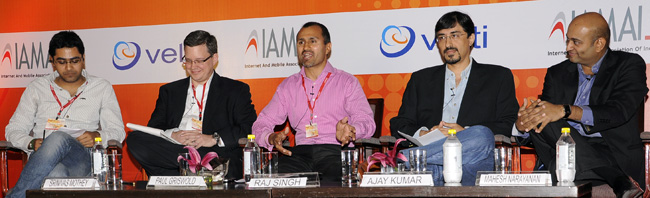
    As more and more youngsters gain access to various digital platforms, there is a greater need for marketers to not only engage the young consumers, but they must also be able to give them a unique experience across the digital platforms. The IAMAI (Internet And Mobile Association of India), which held its 8th Marketing Conclave, 2012 – ‘Digital Marketing 3.0’ on April 13 in Mumbai, extensively discussed the role of social media, video advertising and mobile advertising in the near future.


    Using Social Media:

    Today most companies have multiple social networking sites – Facebook, Twiter, LinkedIn and others. There are separate teams handling social media marketing for the company, but, are brands listening to their consumers? Do they interact and respond to queries and complaints? Do marketers understand the social media and know how to monetize it? Or are brands simply satisfied with the number of ‘Likes’ and views they generate on their social networking sites?


    Karthik Nagarajan, National Director, Social and Insights, Group M was of the view that unless one is not ready and mature enough as an organisation for the medium, the organization must stay away from social media.


    According to Usha Sangwan, Executive Director, LIC India, what brands lack today is the courage to be transparent, they don’t respond to negative feedback and fail to turn the customer as an advocate of their product. “Brands must not see social media as a mere marketing tool and limit to generating numbers alone, but social media must be used mainly for connecting with the TG and co-creating the product. Brands must try and understand their TG and become a part of their customer’s day to day life.”


    Virginia Sharma, Chief Marketing Officer, IBM India hit the nail on the head by stating that brands must have the ability to admit their mistake and apologise to the customer. She admitted that while there is a certain amount of fear among brands to apologise for a mistake committed because it may lead to negative public opinion, but felt it is always better to apologise and rectify the mistake which could lead customers to becoming an advocate of the brand.


    Vinay Bhatia, Customer Care Associate and Vice President Marketing and Loyalty, Shoppers Stop added that it a company’s reputation is harmed only when it fails to act responsibly to a complaint made, and not when it apologises for a mistake and tries to rectify it. “The problem with the companies today is that they make policies as if the consumer is a criminal. Accepting a feedback and acting upon it will not harm the brand but, if one chooses to remain silent about a complaint, that’s the worst one can do to his brand.”


    Leveraging Mobile Advertising:

    Besides the social media, mobile advertising is another challenge faced by marketers who have more or less failed to leverage the small screen. Sadly, mobile advertising is largely limited to only SMSes. Marketers are said to often mistake mobile as an extension of broadband internet and as a result they fail to give their consumers a unique experience on mobile.


    Speaking from a marketer’s point of view, Ajay Kakar, CMO, Financial Services, Aditya Birla Group stated that although the potential for mobile advertising is high, there is still a section of people who have not seen the mobile as an opportunity. He added that mobile industry must follow the ‘Jo dikhta hain, wahi bikhta hain’ policy and evangalise the benefits of mobile advertising. “Content is very important, don’t tells me about your brand, but tell me what’s in it for me? Give me the case study of successful mobile advertising. What I want to know is how much money mobile advertising is making for my brand and for my business? What you must do is to stop saying ‘buy me, buy me’ but, instead tell me ‘why me, why me’?”


    With the introduction of 3G and now 4G services, mobile internet is expected to be faster and with high quality content, better mobile applications, much better video and much more. In addition to these, smart phones and tablets are also said to play important roles in the growth of mobile internet in India.


    Mahesh Narayanan, Country Head-Mobile, GoogleIndiasaid that there is not only lack of understanding about mobile advertising, but also lack of discussion about mobile as a medium in board room meetings. “The consumer shift is already happening from traditional media to mobile; however, great amount of content for mobile is yet to be created. People are looking for your brand on their mobile phones but, ironically brands are absent on mobile.”


    While mobile subscribers will continue to grow and more people will access internet through their mobile phones, the challenge lies in monetizing the medium and to find newer ways to reach out to consumers besides SMS advertising.


    Paul Griswold, Director Product Management, Mobile Marketing, Velti was of the view that mobile is not treated as an integrated part of marketing strategy, but is seen as an extension to online. “There has been a failure to take the advantage of the one on one interactivity mobile offers and just sending SMS is definitely not the way.”


    The participants outlined not only the problems but also possible solutions. According to Srinivas Mothey, Head Mobile Marketing and Advertising, One97, the first step is to educate advertisers and agencies about the benefits of mobile advertising. Although every advertiser may have a different view about the medium, nevertheless they need to be encouraged to invest in mobile. “We are also encouraging advertisers to create mobile assets and not just mobile apps. We are beginning to see the positive results but, in order to see more results, it may take some more, but the first step needs to be taken.”


    Video Marketing:

    Video advertising/ marketing is not a new phenomenon for marketers. Traditionally, marketers are said to be comfortable with video and we have been seeing that on television, and will probably see the same, and in a much bigger way, online and on mobile in the near future.


    According to Debadutta Upadhyaya, Vice President, Vdopia Media, there has been over 50 per cent growth in video consumption in the last one year alone, the fourth largest globally. “Unlike other countries,Indiahas made the leap from web to email to social media and now video. There is still a long way to go on the creative aspect because the primary advertising medium of a creative agency has always been television, so creativity in video advertising is bound to take some time.”


    As India’s broadband penetration and mobile internet accessibility increases, it would be just a matter of time when video marketing would explode inIndia. Besides online, with 3G and 4G services, video consumption on mobile should be an altogether different experience for users and marketers.


    But Shubhranshu Singh, Marketing Director-IndiaandSouth Asia, Visa cautioned: “There is a difference between video on web and video on mobile, and the difference between the two is galloping ahead in terms of content. Perhaps the youngest audience in our country today will watch television online for the first time which could be an opportunity or a threat if we are not ready for it.”


    Digital marketing in itself has become 360 degree for marketers. It has gone beyond display and banner advertising, to becoming more interactive and innovative to reach out to consumers. Digital marketing, as the industry players pointed out, is in a transition phase from web, to email and now brands are trying to reach out to their customers through social media, mobile and video.


    Marketers must stop considering mobile internet as an extension to online and, therefore, give mobile users unique experience of mobile advertising. Social media must not be seen as a mere marketing but, a medium to interact with their consumers, know their behavior and be a part of their day to day life.


    Brands must be receptive to both positive and negative feedback of customers, admit to their mistakes, apologise to the customer and rectify the fault. Digital marketing will undoubtedly grow but, marketers must first be evangalised not only about the benefits of the medium but, also ways and means to leverage it.

    Imaging: Rafiq