Tag: MJ Akbar

  • V for Vindication, Victory


    By Ranjona Banerji


    Why were women in the media so overjoyed with the acquittal of journalist Priya Ramani in the case for criminal defamation filed by MJ Akbar, journalist turned politician? As many somewhat bemused people outside the media had asked, Ramani was the victim here, how was she acquitted? And what about the culprit? What was the punishment for him?

    And that’s the crux of this case. It wasn’t about punishment. It was about vindication. A famous, very famous journalist, much respected and admired as an editor for some ground-breaking work. But for decades there had been whispers about his behaviour with female colleagues, especially young female colleagues. Many of these went on to become stars in their own right. Priya Ramani is one of them.

    When she tweeted in 2018, then the man she had referred to in an article about sexual misconduct she had faced in 2017 was MJ Akbar, the famous man was furious. Within a few days, he filed a case of criminal defamation against her, claiming his reputation had been damaged.

    So in a neat twist of sexist history, the victim had to be acquitted and the culprit lost his case. But as the judge in the case, Additional Chief Metropolitan Magistrate Ravindra Kumar Pandey of Rouse Avenue Court, ruled, the right of reputation cannot be protected at the cost of the right of life and dignity of a woman. “The woman cannot be punished for raising voice against sexual abuse on the pretext of criminal complaint of defamation,” the judgment read. Further, that a woman has the right to put up her grievance after decades on the platform of her choice. “Time has come for our society to understand that sometimes a victim may for years not speak up due to the mental trauma”: the judgment said.

    Here, laid in clear terms, is the reason for the celebration. The ploy used by Akbar was wrong in intention and in result. The judgment answers all those questions people had raised in defence of Akbar (and of many men in similar circumstances): why after so long, why in an article and on a social media platform and so on.

    https://www.livelaw.in/top-stories/delhi-court-acquits-priya-ramani-in-mj-akbars-criminal-defamation-case-169993


    https://indianexpress.com/article/opinion/columns/priya-ramani-mj-akbar-case-rupan-deol-bajaj-me-too-movement-7194794/


    A potted history:

    What were we looking at here? The Me Too movement swept across the world in 2017. It started with allegations of sexual assault and abuse by a number of actresses against Hollywood producer Harvey Weinstein. It then moved to academia. And in India, allegations of workplace sexual abuse exploded in the worlds of glamour and the media. As far as the venerable media was concerned, this was an eyeopener for many, sadly for insiders as well as those without.

    Sexual abuse had been ignored for generations in the mainstream media, as women who had broken the glass ceilings, felt it was wiser to shut up and put up with whatever was dished out in order to stay in line with the men. That this should be the norm within the media, where people were lectured, informed, advised day and night on what to do when faced with sexual harassment and abuse. That this should be the norm in spite of the Vishakha judgment of1997, which set out the fundamental rights of working women.

    In 2013, we had been “shocked” by the assault allegations against Tarun Tejpal by Neha Dixit and the evident pain and trauma of the victim and the sheer brazen attitude of the perpetrator. In that case, lest we forget, Tejpal had in a long-winded letter admitted to the assault. Later he changed his story and the harassment of his victim began. He has his lawyers have used every legal trick to prolong the case.

    The celebration:

    The Me Too movement much as it brought many woman together also created many divisions. Many feminists felt that younger women were being unfair and had exacting standards from their male colleagues. Many were horrified that they had done nothing. Others felt that their colleagues and friends were being unfairly targeted.

    This one judgment however tells us that if we work together, we have a better chance of justice. Lawyer Rebecca John and her team worked hard with Ramani. But it was Ramani herself, her steadfast courage in the face of the wrath of a powerful man, that inspires us. Ramani’s colleagues, Ghazala Wahab and Niloufer Venkatraman who were witnesses and spoke of their own trauma and those who were ready to be witnesses, can also claim victory.

    “I feel vindicated to have my truth accepted in a court of law,” said Ramani after the acquittal.

    Akbar, say reports, left in a huff.

    Sometimes though huffing and puffing is just bravado gone wrong.

    Congratulations to everyone and to all the women who spoke out, who have suffered. Sometimes, there is huge justice even in an acquittal.


    Ranjona Banerji is a senior journalist and commentator. She is also Consulting Editor, MxMIndia. Her views here are personal

  • Unacceptable: Laxness & Laziness of the past


    By Ranjona Banerji


    The MeToo movement shows no sign of stopping although it is slowing down in terms of revelations and accusations as far as the media is concerned. That should give us a chance to take a breath and assess where we are. We have learnt of horrors we had not known of. We have seen exposed all the horrors which we did know of. The first of the last two statements sounds ridiculous and that is because it is. Sexual harassment exists everywhere: why would media organisations be different? Because we are full of self-righteous outrage when we report on how the rest of the world behaves?

    It took the advent of social media for media organisations and journalists to be forced to assess the way they work, present news and hide or display their biases. All the ivory towers of the past, of untouchable editors standing high above, arrogant newsrooms barely noticing readers as they crept by full of awe – all those images have been smashed to dust. And so it should be.

    Sexual harassment is one more unspoken pillar which has fallen, and it must remain fallen and trampled forever. No more excuses about talent or alcohol or families or need to be made for bad and illegal behaviour. The criminal defamation case filed by MJ Akbar against Priya Ramani is a prime example of the entitlement and arrogance which the powerful have been allowed to get away with. It should be a textbook example of how editors must not, cannot behave.

    But now what? The past is erupting around us and we have to use to that to ensure that it does not corrupt the future. We need to educate ourselves all over again, we have to insist that the Vishakha guidelines as well as the Internal Complaints Committees under the Sexual Harassment of Women at Workplace (Prevention, Prohibition and Redressal) Act are followed conscientiously. The laxness and laziness of the past is unacceptable – look at the misery and suffering which has been uncovered so far.

    The very fact that we have senior women journalists almost condoning the behaviour of editors like Akbar, pooh-poohing the complaints of women who have been mauled and worse, just shows how internalised harassment had become. Some women argue that life is tough and women must just suck it up. It sounds like it makes sense until you realise that it is unjust, and in a profession where we claim to fight for justice for others, is it not ironical that we do not fight for justice for ourselves? The world has changed. Racism is no longer a fun game for supremacists to play. Well, so also sexism.

    Getting off the soapbox now, to practical issues. Together with the Mumbai Press Club, the Network of Women in India is holding a conversation with senior editors on “how to change the culture in our newsrooms”, on Wednesday, October 24. Such conversations, within the sorority (and let’s use that word the same way fraternity is used these days) across India are vital.

    I might add here that, taking the Tech Mahindra case where a female boss harangued a gay employee, who was only emboldened to come forward after Section 377 was decriminalised, we need to expand our vision to all forms of harassment in the workplace.

    As journalists, we also need to rid ourselves of old practices. Why should a headline read: “Seven people, including women and children, were killed”? Why the “including”? And so on. There are innumerable examples of such inherent sexism in the language we use.

    I might share a story here of my own shortcomings. I was present at one of the meetings, at the Mumbai Press Club, when the Network of Women in Media was being created. The discussion was on the coverage of the Gujarat riots of 2002, since I worked with the Times of India in Ahmedabad then. Someone asked me how many special stories we had done on women and how they had suffered. So proud that I was of our fearless coverage until then, I was stumped. I had to shamefacedly admit we had not done such stories and then get the newsroom to start doing them once I went back to Ahmedabad.

    It’s the mindset. And it is so encouraging that today’s young journalists are challenging it.


    Ranjona Banerji is a senior journalist and commentator. She is also Consulting Editor, MxMIndia. The views here are personal


  • Time for Action now that Akbar has stepped down


    By Your Editor

    This comes as a shocker. Or perhaps not. As high as 44% of women surveyed in the media and marketing industry in India say they have experienced sexual harassment in the workplace, yet men and women in India are the least likely of any Asian country to report such instances, according to a survey by Campaign Asia-Pacific and Kantar. Just 9% said they had reported seeing or experiencing something to employers, compared to an average of 14% across the region. Read more at:https://www.campaignindia.in/article/almost-half-of-women-in-adland-have-known-harassment-research/447704

    A group of senior women both in advertising and public relations have issued statements to take stock of the situation, help those who have been impacted and look at the future of their respective practices. Some industry bodies have also voiced their concern. Curiously, some haven’t.

    Earlier today, this story was headlined: “Time for Action! Akbar must step down” with a clearly missive saying: “If the BJP doesn’t want a tag of being a party that doesn’t care about the safety of women, it must ask MJ Akbar to step down”

    According to the information received, the pressure on the government to get MoS External Affairs M J Akbar to step down was mounting over the last few days which eventually led to his resignation on Dassera Eve. One had hoped that the government had acted more swiftly on the issue and helped create a perception that it does care for the safety of women. Its reluctance to do so doesn’t speak too well for its intent.

    This is what we wrote earlier in the day:

    At MxMIndia, we believe that MoS External Affairs and former editor and media businessman must step down and let the charges be investigated. The BJP-led government at the Centre must advise him to do it if it doesn’t want to earn the reputation of being a party that doesn’t care about the safety of women. Its silence on the issue can be damaging in the elections next year.

    But more than how it impacts the political process, not asking Akbar to go – in the wake of 20-odd complaints against his doings, can severely impact the confidence of other women who have similar tales of woe.

    For, if the Union Government turns a deaf ear to the complaints against Akbar, can they trust the government to act on other acts of harassment? Ah, well, they always have the Courts to complain to. Which they will.


  • Honourable route would’ve been to apologise, right?


    By Ranjona Banerji

    Phew!!

    The #MeToo movement in the media is now heading into several different directions. We have had stories of repeated bad sexual behaviour between colleagues, we have seen allegations against editors, both dead and alive, we have seen some media houses taking instant action and some taking slow action. We have seen some media houses promising that they will take action, if the allegations are found to be true pending investigation.

    Most of all, we have seen an enormous outpouring of pent-up anger and pain by generations of women in the workplace. Thanks to Tanushree Dutta’s complaint against Nana Patekar, the floodgates have opened across several industries. Big names, big transgressions of trust, as well some allegations which many, including women, find to be in the grey area between consent and anger. We have had a few fake allegations as well, unfortunately trying to use a very important movement to settle personal agendas. Human nature, after all. It was journalist Sandhya Menon who bravely broached the media citadel and several walls which protected male privilege have since fallen.

    And now, the backlash. Although many men apologised, some with disingenuous hurt innocence, some with jobs and reputations lost. Others have fought back, most notably, the most infamous alleged sexual predator of all, one of India’s most famous journalists and currently minister of state for external affairs, MJ Akbar. At last count 14 women have come out with their stories about their experiences with Akbar, when he was their editor. The pattern is remarkably the same, a massive difference of age and power: a senior powerful and legendary male editor and a young impressionable female journalist. The first was Priya Ramani. The most damning was that of Ghazala Wahab. All the women who have spoken out are now senior and respectable journalists.

    Akbar has sued only Priya Ramani for criminal defamation so far. He is fighting for his lost reputation. The Narendra Modi-led BJP government, full of cultivated sanctimony about the empowerment of women, stands with Akbar. There is not even a hint of him standing down until enquiries are complete. Both Ramani and Wahab remain steadfast and so do several women who know what has gone on in newsrooms for years.

    Let us remember that although the Supreme Court laid out the Vishakha guidelines for sexual harassment in the workplace in 1997, almost no media house even bothered. It was only in the late 2000s that conversations about Vishakha began. The Sexual Harassment of Women at Workplace (Prevention, Prohibition and Redressal) Act was passed in 2013. Under this, each organisation has to have an Internal Complaints Committee. One can only hope that those organisations who have even bothered to set these up will now take them seriously. And others will also follow.

    There are some senior women journalists who find themselves caught up in the bind of patriarchy and have to defend the men accused. Some have tried to deflect attention from workplace harassment and slam a society which allows the rape of babies. The trouble is that by doing this, they are endorsing workplace harassment and sexual abuse. The law, when it is applicable, has different punishments for degrees of crime. Does not mean that a “lesser” crime must be ignored because larger crimes also take place.

    In any case, it is unlikely that any of the journalists who have come forward are looking for criminal punishment, legal reparation or monetary compensation from these men. They want acknowledgement and they want workplaces are cleaned up. As we saw with the Tech Mahindra case, where a young man spoke about being harassed by a female senior boss – he only found the courage after Section 377 was decriminalised. Workplaces have to be sensitised to harassment and bullying and bosses and colleagues must know that violation of personal space is unacceptable.

    The other major defence has been made by journalist and poet CP Surendran. Eleven women have come forward with stories of sexual harassment by Surendran, some when he was editor of DNA. His response is truly extraordinary and frankly unacceptable. Complaints were made at the time, other staff and the HR department were made aware. Surendran has this to say:

    “I may have made what some people consider to be sexist comments. I believe sexism is an intellectual and physical reality. I choose not to think in given categories. This may be construed as arrogance…

    “I have no gender or political loyalties. I have paid a price for this all my life. I often rub people of both genders the wrong way with my often ill-considered views…

    “The Me Too movement needs victims to feed and fatten itself. I won’t be the last.”

    What does all this even mean? The last line is straight from the Trump-Kavanaugh playbook, where the perpetrator conveniently plays the victim. The first two statements are remarkable logical flights of fancy. To say that sexism is “an intellectual and physical reality” is stating the obvious and conveniently ignoring the fact that sexism is no longer acceptable, and it is horrific that it ever was. I am not sure what high intellectual quality there is in supporting millennia of gender discrimination. The excuse of having no gender or political loyalties is convenient bunkum and means nothing.

    Many media houses have come out strongly in favour of ending workplace harassment in their editorials. One can only hope that this is reflected in their own workplaces.

    Allegations have been made about two senior editors at The Wire. Two are throwaway lines from dubious Twitter handles, neither of which have gone further than talking about Sidharth Bhatia’s lip quivering and some salacious comment about a woman colleague he is said to have made in my presence. I heard no such comment and no complaint was ever made to me about quivering lips. The handles did not reply to my questions about when they worked in DNA with me and have now moved on to targeting journalists within The Times of India.

    The other accusation is from a film-maker, against Vinod Dua, when she was starting out in her career and contains details of place and conversation in a Facebook post. The Wire has taken note of for both allegations and stated that their Internal Complaints Committee is deliberating the matter.

    Regardless of those accused of harassment fighting back – and no one denies them the right to do that – but when the anecdotal evidence is overwhelming, a more honourable route would perhaps have been to apologise. So far, women and men who find inappropriate workplace behaviour and sexual harassment unacceptable show purpose to keep fighting the good fight. The intent is to clean up the work environment, not destroy reputations. If we work together on this, it can only get better.


    Ranjona Banerji is a senior journalist and commentator. She is also Consulting Editor, MxMIndia. The views here are personal

  • Modi in the Media


    By Ranjona Banerji


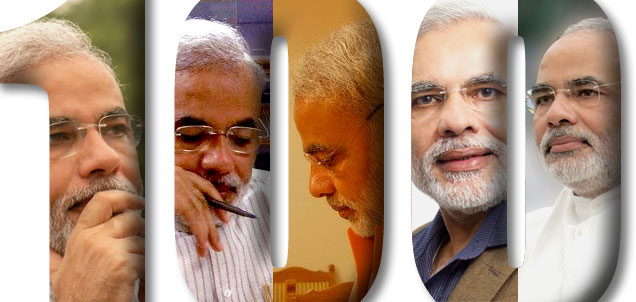
    100 days is now a media mantra when it comes to anything at all. Should one go as far to say that this has something to do with the title of a book written by Gabriel Garcia Marquez? Probably not. So we have to assess 100 days of the Narendra Modi government at the Centre. Not three months (which would be around 90 days) and not 200 days but perhaps we’ll re-assess the government at 365 days and call it one year?

    I put “100 days Modi government” into Google and got stories headlined around that theme, in order, from IBNLive, DNA, Indian Express, LiveMint, India Today, Hindustan Times, NDTV, Zee News, Times of India and Economic Times. So much for originality…

    Having decided to play “follow the leader” on the 100 days theme however it has to be admitted that all media outlets did not take the same line. Some gushed, some focused on the misses, some talked about hits and misses both, some spoke to the Opposition.

    The biggest takeaway from all this seems to be that Modi has made his ministers accountable. According to a fascinating story carried in Niticentral, a rightwing website, this has been achieved by spying on his own ministers.  http://www.niticentral.com/2014/08/25/narendra-modi-enforces-tough-discipline-among-ministers-236467.html.

    So the100 days theme runs like this: Modi has cut through plenty of slack, he has improved systems by making sure his own ministers work, he has travelled to many countries, he has not spoken enough, he has not made good on several other promises, some of the benefits accrued to his government come from UPA policies, he has renamed certain existing schemes, he has made an Independence Day speech, he has fed fish in Japan, he has stopped his party people from talking too much, he has stopped his ministers from speaking almost completely, he has got rid of several governors, he has sidelined the old-timers in the BJP, he has made his right-hand man Amit Shah party president…

    How much of this is remarkable and how much is pedestrian perhaps lies in the eyes of the believer. As TV news tries to jump from issue to manufactured outrage and print sprints to keep pace, we see a fractured image. There is a larger-than-life Modi in carefully posed pictures in foreign lands, we have a Modi who promises security for women and toilets for all, we have a Modi who says everyone must have a bank account.

    We have a BJP which launches a campaign in Uttar Pradesh claiming that hordes of Muslim men are conspiring to make Hindu women fall in love with them to convert them to Islam and thus increase the number of Muslims in the nation. We have BJP-run state governments and the Union HRD ministry trying to manipulate history. We have local BJP units and BJP allies pushing for India as a “Hindu” state. We have the RSS jumping in and claiming credit for Modi’s victory.

    And we have a media which is unable to put all these refracted elements together. So Gaurav Sawant of Headlines Today and a reporter from CNN-IBN got to Japan and behaved like no one has ever been to Japan before. They make ridiculously banal comments about Japanese trains, they comment on cleanliness. They say: “Look at these Japanese people sitting silently on a train.” “When will India ever have such clean stations?”

    What is this? A delegation of idiots goes to Japan? Where is Mark Twain when you need him? The tenuous connection is the promise of a bullet train in India made by Modi. The obsequious brainlessness of some TV journalists and presumably their editors will be part of an ignominious chapter in the history of Indian journalism.

    P S:

    Meanwhile, scroll.in tells us that Shekhar Gupta is no longer vice-chairman of the India Today group. He is now an “advisor”. This is a mere two months after he took over, having ended a long stint at The Indian Express.

    What gives at India Today? Is it family matters or recalcitrant employees? MJ Akbar didn’t last too long, Siddharth Vardarajan didn’t get further than signing a contract and Gupta is out in two months…

    http://scroll.in/article/shekhar-guptas-return-to-india-today-group-ends-in-two-months-to-take-advisory-position/?id=677005


  • NewsX kicks off show where guests will grill host MJ Akbar

    By A Correspondent

    He would anchor news-based shows on Doordarshan in the ’80s when he was with the Ananda Bazar Patrika group and later his appearances were at best sporadic. Until he joined the India Today group as editorial director when he was on nightly news more often.

    You can expect veteran editor M J Akbar to always come up (and carry off) concepts with a twist. On Sunday, news channel NewsX launched ‘Decode India with MJ Akbar’ where the guest leads the questions and discussions. The guest will question, argue, give his opinion and probe MJ Akbar on a topic of national significance. The inaugural episode of the 30-minute show featured controversial lawyer and politician Ram Jethmalani who discussed if there should be a referendum in Kashmir on the Indian Army.

    Mr Akbar is currently Editorial Director of The Sunday Guardian, which is part of the same media group that owns NewsX and a slew of other media titles.


  • INMA 2012: ‘News is not static but dynamic’

    By Shruti Pushkarna


    Sanjay Gupta
    [youtube width=”400″ height=”225″]http://www.youtube.com/watch?v=alB7H-4TpGU[/youtube]

    The International Newsmedia Marketing Association (INMA) hosted its 6th annual South Asia conference in New Delhi on August 7. With its theme of ‘Complexity Advantage’, Day 1 of the INMA conference witnessed some power packed sessions.


    One such session, ‘The Future of News’, was moderated by Jacob Mathew, Executive Editor, Malayala Manorama and President, WAN-Ifra. The session saw a lively discussion by the two eminent panelists, Mr MJ Akbar, Editorial Director, India Today & Headlines Today and Mr Sanjay Gupta, CEO, Jagran Prakashan Ltd.


    The technological innovations and its resultant empowerment of individuals have significantly changed the way people consume news today. Introducing the topic,’The Future of News’, Mr Mathew raised a few key questions: “Would the existing formats be relevant to the future? How will we ensure that news is available anywhere anytime in any format to be consumed by our readers?”


    He added that the growth of print has still not been affected as much in South Asia and that the countries in the region should learn from the mistakes made by colleagues in the rest of the world.


    MJ Akbar
    [youtube width=”400″ height=”225″]http://www.youtube.com/watch?v=Z5gZXE8988w[/youtube]

    Addressing the basic worry around the future of news, Mr Akbar said: “The reason why news will always be in demand is because man is not a hermit. Man lives in a community and in any community, ignorance is the basis of all conflict. Curiosity is elemental to human experience and as long as curiosity remains a vital part, news will thrive.”  He added that news needs a vehicle and that will be provided by news organizations in the future as well.


    Mr Akbar alleged that the real problem facing the society today is not the future of news but the future of a ‘journalist’. He pointed out two traps that journalists today increasingly fall into: “One trap is a fish trap where a journalist looks at the bait and swallows it. This trap is a dangerous challenge to credibility of news as this form of journalism is based essentially on what the journalist has ‘heard’. The other trap is delusion trap where the journalist thinks he/she is more important than news.”


    Mr Akbar also compared the newspaper to a ‘thali’ which has a variety of food ranging from healthy ‘dal and rice’ to not-so-healthy ‘achaar'(pickle). He said: “No thali is complete without achaar, but on the other hand, achaar cannot replace dal and rice.”


    Coming back to the basic point in question of how big a threat does technology pose for the print industry, Mr Akbar said: “No technology completely destroys another. They all continue to exist together. The only thing that will be destroyed in the future will be your business plans which will have to be reoriented.” He added that there is no essential competition between products (radio, TV, newspaper), every product has its own rationale and news organizations have to be ‘format-driven’.


    He concluded: “As long as the newsmaker and the news owner understand that news is not static but dynamic, there’s no reason to worry.”


    Mr Gupta echoed Mr Akbar’s views and maintained that there will be news as long as there’s society and as long as there are incidents taking place. He said that the new technology does help in uncovering the truth faster and in an easier way sometimes, but the basics of news is to uncover the truth. It is important, he said, that news media engages audience in a public debate over issues that matter.


    Mr Gupta added that good journalism is good business and he concluded by quoting Google’s head of news products, Richard Gingras: “The pace of technological change will not abate, and to think of our current time as a transition between two eras, rather than a continuum of change, is a mistake.”


  • Our battle is to out-think TOI: Meenal Baghel


    Meenal Baghel is the founder and Editor-in-Chief of Mirror, the nation’s most sprightly newspaper. Mumbai Mirror was launched seven years ago, and today the paper has editions in Pune, Bangalore and Ahmedabad. A part of the Times group, Mumbai Mirror boasts of a fantastic circulation of nearly 600,000 copies, and it’s become the city’s favourite compact paper.


    Meenal relives the journey with us, and speaks candidly about the many challenges she’s faced along the way. We also discuss her first book, ‘Death in Mumbai’, which received wide critical acclaim.


    I did a stint with Mumbai Mirror some years ago, and this gave me a chance to watch her in action. Meenal can be a demanding editor, she can be impatient, she can be tough. While these qualities don’t endear her to some, they have played a huge part in her success. I have to say she’s the most passionate editor I have worked with.


    By Anil Thakraney


    It’s been seven years editing Mirror. How’s the journey been? Tell me the highs and the lows.

    The high obviously has been to see the paper become an important part of Bombay. We have been successful in forging an emotional connect with the readers, which is very important. We get an enormous number of people calling in with stories. And we’ve routinely broken a lot of stories, so those are the big highs. The low is that the paper is still a bit inconsistent. You know, when we started the paper, it used to be called Mumbai Error. I wish we had a cleaner start in terms of the paper being more finished. But it’s been a sort of work in progress. We have learnt a number of journalistic lessons along the way because the market has changed, the reader has changed. For instance, when we were at Mid-Day, you could get away with a lot of things. But in this day and age, you can’t.


    Give me an example

    Like sometimes when, just to break the monotony, you put an entertainment story on the front page, there is a backlash. People now expect a more serious newspaper, it’s something different from what I had envisaged. But that’s also because there’s so much of entertainment everywhere that people don’t want more of it.


    One story you regret

    We ran the FIR of the TISS girl who was raped. That was a mistake. Because the details in the FIR were very graphic on what had transpired. And you realize that you may have ended up titillating. I regret that story, we got terrible feedback for it and we apologized for it.
     

    “I don’t think journalism offers enough challenges to the really bright people any longer.”

    I still see a number of typos in Mirror. Is this an un-lickable problem?

    I think there is a very real problem with journalism today, and it’s not only limited to Mirror. The problem is that the deskies is a disappearing breed. And it’s going to be a big challenge over the next few years. Also, there are very real problems we are facing, and these are going to change the profession drastically. It’s so rare to find people who want to come into journalism because they want to be journalists. For example, when you ask people, ‘Who edited this copy?’. Invariably the response will be: ‘I looked at it/I glanced at it/I skimmed through it.’ Another thing is I don’t think journalism offers enough challenges to the really bright people any longer. There is an attrition problem across aboard. People want to try out various things. When you and I were growing up, it was about sticking to a profession, a career path, and that no longer holds true. People now have the advantage of taking breaks, taking gap years, studying, etc. The journalism hours don’t allow too much of a personal life. And I think HR, owners, publishers, editors need to take all these things into account.


    Is the passion for journalism diminishing in young India?

    I think the important thing now is personal growth and personal life. That has taken precedence over wanting to change the country.


    What was Vineet Jain’s brief to you when you signed up for Mirror?

    His brief was very clear. He said it should be a smart paper and that it should be different from the Times of India. And because it’s a compact size, there are elements of a tabloid that you can incorporate. In fact, when we started the paper, there were a lot of conflicting opinions, so I was a little tentative in the beginning. And then one day he called me and asked why was I so tentative. He said, “I have given you this brief, just stick to it. And don’t be apologetic about it.” So that was wonderful.


    You think this country is ready for a Brit style tabloid?

    No. Though it’s very interesting because everybody is trying to incorporate the tabloid elements, but you can’t be openly unabashed about it. We are not ready for it. For instance, look at the responses Dr Vatsa’s column gets.


    Guess it’s a tightrope walk. You want to be tabloidy, and still have to be aware the nation isn’t ready

    Yes. Sometimes in the newsroom we think we can do a story, but when we see the backlash the next day, we start being more careful by censoring ourselves.


    And the problem is if you play safe and cut down on controversy, you get dangerously close to the TOI

    Yes. So what we try and do is this: I always say our competition is the Times of India. Because we go with the TOI. Now the TOI has massive width, they do like sixty stories at an average. So our battle is to out-think the TOI, in the sense that ‘this is what they will do, so let’s do something different’. We can get away with some naughty things that they can’t.


    Lots of court cases?

    Actually they’ve come down, ever since we’ve become safer. (Smiles.) But there’s also a lot of frivolous litigation, which is easily dealt with.


    More editions in the offing?

    At the moment, no.


    And for Mumbai Mirror, are you still as hands-on as ever?

    See, I am out for lunch with you! (Laughs) But yes, I like being hands-on. There are times when I can breathe down people’s necks. But I am trying to back off a little now that we have a very competent senior team. I also realize that people should be given more space, but it’s difficult. (Laughs.)

     

    “The TOI has lots of products that come with it, but everyone doesn’t necessarily read all of them, right?”

    Meenal, the perception is that Mirror benefits a lot from being the TOI’s free paper. Without that advantage, your circulation would be nowhere close.

    I am lucky and I won’t question my luck. We have a great readership, thanks to the TOI. But then you have to capitalize on that luck, you still have to deliver a good product. The TOI has lots of products that come with it, but everyone doesn’t necessarily read all of them, right?


    If you were a standalone paper, how much circulation do you think you’d lose?

    I guess we’d retain 60%. Because Mirror has become a genuine commuter’s paper. You have to travel in the train to see how many people carry it. It started off as a guilty pleasure, which people didn’t want to acknowledge they were reading, but they were all reading. But over time it has also become a lively paper. And that can’t be said about too many other papers in town. And people like that.


    Would you say Mid-Day was your training ground?

    Absolutely. I had always worked with broadsheets before that – Pioneer, Asian Age and The Indian Express. So when I joined Mid-Day, for a while it was like, where the hell have I landed? This is not how journalism is done. For the first six months I had no idea what I was doing. But I was in a senior job and I was getting paid an X amount, and I must tell you I HATE giving up. And then one day I went for a walk and said to myself the paper won’t change because of me, there was a reason why this paper was so beloved in Bombay. And that was the Eureka moment for me. I decided to try and understand it rather than look down upon it. And that changed things. I must say I learnt a lot from Aakar Patel (the then editor of Mid-Day). I learnt a lot from what the paper did on Page 1 and on headlining.


    One Indian print editor you most admire.

    I owe everything I learnt in journalism to MJ Akbar. About writing, about making pages, about what not to do, etc.


    It’s been seven years at Mirror. Don’t you feel the itch? Isn’t it tiring to do the same thing day in and day out?

    I keep wondering why nobody else offers me a job! I am joking, of course. Which is why doing the book was wonderful for me. It gave me a chance to step back and follow a story that had been fascinating me. And it was extended journalism. I have always felt when the number of days you feel bad about what you do exceeds the number of days you feel good, you should quit. I haven’t reached there. And there’s always something exciting happening.


    Being a hard-edged journalist, how do you reconcile with something like Medianet?

    That’s easy, because we don’t have Medianet in Mirror.


    But it’s there in your group.

    It doesn’t affect my life, so I don’t care about it.


    You aren’t asked to carry plugs?

    No. And it’s one of the things that has pleasantly surprised me. They have maintained the Chinese wall from the start.


    They have left you alone?

    Yes. And there’s another reason. Mirror is a small paper in the group, so it’s not necessarily the focus. We are a small cog in comparison.


    Have you ever been asked to drop a story?

    (Pauses) Not drop a story. I think what one learns over a period of time is that you have to pick your battles. I’ll give you an example: If there’s an entertainment story which is coming right ahead of the Filmfare awards, where somebody is going to be performing, and I have a damaging story on that person, would I delay it by a few days? Yes, I would.


    There used to be intense rivalry between the Independent and the TOI. Is it the same with you?

    Not rivalry, but there is great competition. When the TOI does something, and we’ve missed it, I give my reporters hell. And I am sure JoJo (Jaideep Bose) does the same when we get something.


    “Mid-Day killed itself. And I feel really bad. I feel bad that what was such a robust paper is no longer that.”

    You’ve pretty much killed Mid-Day. Feels good?

    The paper killed itself. And I feel really bad. I feel bad that what was such a robust paper is no longer that. We all worked very hard out there. We worked our asses off at Mid-Day and we used to take great pride in the paper being so robust, that it was second only to the TOI.


    What would you do if you were editing Mid-Day today?

    I’ll bring in more energy. What’s going for Mirror despite the inconsistency is that it’s never dull. And dullness in journalism is a cardinal error. Especially if you are a tabloid.


    Let’s shift to your book, ‘Death in Mumbai’. Does Meenal think Maria Susairaj got away lightly?

    I must tell you I ended up liking her quite a bit. I feel that she is a manipulative woman and that she may be a tease. But that’s not a crime, there are a lot of women like that out there. Did she kill or abet the killing? I don’t think so. She was in love with Emile Jerome, she really wanted to marry him. But he wasn’t committing to her. When he killed this guy, it was, in her mind, like his commitment to her.


    When you started writing, was there something you had decided you won’t do in the book?

    The only thing I told myself is to not be judgmental. Because someone else’s idea of morality could be different from mine. Like, I started out with a certain view of Maria but it became something else.


    In fact, that was the only criticism I read about the book. As a journalist, readers expected you give us your own view. Perhaps as the epilogue.

    There were genuine difficulties. Something happened in a room where there were only three people. One guy is dead and two are in jail. There is only so much information I had. And I genuinely did not want to play judge.


    You have always kept a very low profile. Marketing the book must have been tough.

    (Laughs.) It was! It was terrible. The only time you would see me on television was on things that were related to the book. Otherwise I wouldn’t be caught dead going on TV.


    Any more books coming up?

    I would like to write more books, but I love this job too much. Ideally I’d like to do both. But I haven’t thought of another subject so far. Might be interesting to write fiction.


    Would you like to edit the TOI?

    No. I think it would be fun to edit a broadsheet, but I don’t think I am ready to edit the Times. It’s the biggest paper in the country, it requires a greater understanding of business, politics… and I don’t think I am ready for it. Also, it requires certain people skills which I perhaps don’t have.


    Don’t rate yourself high on people skills?

    I think I am very good. But I need to be more patient. I can be impatient and that’s a serious shortcoming.


    You are 43. Don’t want to marry?

    It’s too late now (Laughs).


    Is it important to be single to edit a high pressure daily? Is it a price one pays?

    Sure. It’s a price a lot of women, more than men, have to pay for any high pressure job. It’s unfortunate, but it’s a fact. I may have been married, but it would have been very difficult with children.


    Photographs: Fotocorp


  • MJ Akbar’s The Sunday Guardian turns 2

    By Akash Raha


    The Sunday Guardian, the weekly Sunday newspaper, completed its second year in the market. The anniversary issue of the newspaper came out on February 5, 2012.


    Senior journalist and columnist MJ Akbar had launched the weekly newspaper from Delhi on January 31 2010. The newsweekly is also simultaneously published in London under the name of ‘India on Sunday’.


    Speaking about the two-year-long journey Kamal Shah, COO, The Sunday Guardian said, “It’s been an exciting journey so far. We’ve managed to create a distinct identity in a very short span of time, and have been able to assemble an excellent group of editorial staff who have consistently provided thought-provoking analysis and news. It is possible to be successful as a Sunday newspaper in this day and age of instant news. Our approach has always been analytical. We just don’t report news but look at news in depth!”


    When asked how the newspaper has grown in terms of revenue and circulation Mr Shah said, “We have concentrated since the beginning in establishing a broad circulation base and readership profile. We have managed the high net worth individuals, knowledge seekers and decision makers as our readers. Our revenues are growing and we’ll be able to capture a large percentage of advertising volumes in the weekly newspaper category.”


    According to sources in The Sunday Guardian, the newspaper circulates 74,500 weekly copies and 8,000 in its London editions. The weekly newspaper comprises of 40 pages of which 20 pages are devoted to the youth in the section Guardian20. The newspaper also has a digital presence on www.sunday-guardian.com.