
Tag: Millennials

  • Online chatting surpasses audio & video calling


    By Our Staff


    Almost seven in 10 respondents say that their chatting activity has increased in the last six months and 67% of those say that it shall remain the same or increase further in the next six months. These and more findings were revealed in the a study conducted by research major Nielsen for Bobble AI, the Conversation Media Marketing (CMM) platform.


    The study involved smartphone users both males and females, divided in two categories: 18-30 and 31-40 years conducted over a fortnight: March 2 to 16, 2021. 


    Key highlights of the ‘Conversation media’ focused survey report:

    1. Chatting is a daily activity which most of the people (94%) engage in EVERYDAY! Chatting has surpassed audio calling and video calling as the most common way of communication (by a significant margin – 13 percentage points over audio calling). Almost 7 in 10 respondents say that their chatting activity has increased in the last 6 months and 67% of those say that itshall remain the same or increase further in the next 6 months, establishing that chatting is here to stay as the most heavily used communication medium.


    2. The awareness and adoption of conversation media formats including emojis, stickers, GIFs across different demographies is very high– 95% users are aware of emojis in NCCS A and 93% in NCCS B and 91% users are using emojis in NCCS A and 84% in NCCS B. Similar pattern is observed for stickers – 92% users are aware of stickers in NCCS A and 85% in NCCS B and 81% users are showing preference for usage of stickers in NCCS A and 71% in NCCS B.


    3. Primary reasons for increasing popularity of chatting formats are that ‘its fun to use’ and ‘It helps in expressing oneself better’. The older age group score significantly higher for ‘makes messages easier to understand’.


    4. Awareness of re-sharing is similar across different chatting formats, however, the likelihood of re-sharing Emojis are significantly higher than stickers and GIFs.


    5. Emojis, Stickers & GIFs make the conversations real and personal as it allows people to express accurately and in a fun way. 80% of users believe that chatting formats make their message easier to understand.


    6. Emojis were ranked first as the most preferred chatting format, followed by stickers and GIFs.Moreover, Emojis are more likely to be used for ‘expressing an emotion’ and talk about various daily activities, whereas people prefer to use stickers to send best wishes on birthdays and festivals.

    a. 96% of users claim to use emojis, stickers, gifs to express an emotion (happiness, anger, or sadness to name a few)

    b. 85% of users claim to use these formats to wish on birthdays, anniversaries, festivals, etc.

    c. 81% of users claim to use chatting formats to express or tell something about an activity (eating, running, cooking, etc.)

    d. 70% of users claim to use these chatting formats to talk about trending topics, situations IPL, etc.


    7. When given a choice between a branded sticker & an unbranded sticker for specific situations, around 3 in 4 among the surveyed respondents claimed that they are likely to use a branded sticker vis-a-vis an unbranded sticker. Given that chatting is one of the main sources of communication these days and majority of respondents prefer branded stickers, it gives a powerful platform to the brands to advertise themselves and be a part of everyday conversations.


    Millennials and Gen-Z chats across platforms are evolving from just plain text to stickers, GIFs and emojis. Various keyboard and messaging platforms now understand what youngsters want and are investing to expand their content offerings in these areas. This, in turn, provides opportunity to brands to explore these unique chatting formats and connect with the intended audience most effectively.


    Commenting on the findings of the survey, Ankit Prasad, Founder and CEO, Bobble AI said, “The key findings validate the growing relevance of Conversation Media among GenZies and Millennials in the country and the rising inclination for chatting over any other means of communication. With more and more people working and living remotely and being compelled to multi-task, they are looking for new and innovative ways to express themselves better. Conversation Media like emojis, stickers, GIFs are a fun, engaging way for brands to break the clutter and connect with their audiences.  COVID-19 pandemic has caused gloom and Conversation Media Marketing serves as an opportunity for brands to drive positive impact and influence in the minds of consumers.


    The respondents for this survey are spread across 5 Metros across Zones (62%) including Mumbai, Delhi, Kolkata, Bangalore and Hyderabad and non-metro cities (38%) including Patna, Lucknow, Indore, Ahmedabad, and Jaipur. The fieldwork was done in an unbiased manner without intervention from Bobble AI and the quality control procedures were also followed very strictly.


     

  • It’s Mera Bharat Mahaan for Micromax


    By Prabhakar Mundkur


    In light of the Tanishq controversy, the new Micromax commercial provides an interesting counterpoint.

     

    The larger  truth that I am missing in all the marketing discussions on Tanishq is that ‘brand purpose’ came about because Millennials and Gen X in the West were looking for authenticity, honesty and purpose in brands.  In other words, they were looking for brands to mirror their own feelings and their higher purpose.  And this higher purpose took the form of say ‘Real Beauty’ for Dove as a proof of authenticity or the higher purpose took on a higher social responsibility to support some cause: sexism, racism (for us it is casteism), climate change, sustainability, poverty, domestic abuse, climate change and a host of other causes.


    I don’t know if the big brands have done a study of what this greater social responsibility might mean for Millennials and Gen X in India. I don’t think it is any of those that I mentioned for the Western audiences above.


    But the important point here is a that it is not marketing directors who sit in their ivory tower offices and determine brand purpose or the language a brand speaks. For brand purpose to be real, it must coincide with the people’s aspirations. Just as an example if the higher purpose of our targets in the country is to prevent “love-jihad” they may want to see brands that reflect that higher purpose. And Tanishq’s higher purpose was at odds with the higher purpose of a section of the public that engaged in the destruction of their commercial.


    After all, brands are not allowed to have a purpose that excludes the people it is talking to unless it wants to be altruistic or idealistic, which I am sure is not what Tanishq wants to be.


    Moving on, I found a useful counterpoint in this Micromax commercial.


    https://m.youtube.com/watch?v=aRo69b1wTNg


    The commercial essentially announces that they are back in the game after having taken a beating at the hands of the several Chinese mobile handsets in the market.


    In its ‘come back’ commercial appropriately titled ‘Micromax is Back’, the brand touches all the hot spots of the new Indian. Look at the various subtle inflections.  The story of an Indian entrepreneur who came from the ‘gullys’  of middle class India after borrowing Rs 3 lakh from his father.  A brand that was the No 1 brand in India and in the top ten brands in the world.  Stirring the new sense of ‘nationalism’ in the Indian.


    Then look at the skillful way in which the brand provokes anger against China by saying he was put down by Chinese brands. And that too in his own country? Oh, the injustice of it all!


    Then invoking the border conflict with China, invoking the Prime Minister were all briiliant strokes in a campaign that reeks of Made in India.  And to cap it all the new series being marketed by the marketers is ‘IN’. Another stroke of brilliance to use the first two letters of the country name. What could be more Indian, more desi that?


    Now go back to the Tanishq commercial and think for yourself whether it invoked the right feelings in the target audience. Or did it provoke mob anger by touching on a raw nerve that people are most sensitive about.


    For me this is a case study that brands cannot speak a language that does not strike the right chords among the people. Brands can’t hold beliefs that are in insolation without consulting the people they are talking to. Brands need the permission of the people before they speak.


    We have a choice now.  Either conform to the feelings of the new India that has been emerging for the last six years or continue to live in the past.


    Lofty ideals for brands must be examined in the light of the current mood of the nation.


    Prabhakar Mundkur is a veteran advertising professional and commentator. And also a musician. He has worked across geographies. His views here are personal


  • The Unfairness of It All


    By Prabhakar Mundkur


    When Hindustan Unilever announced its decision to rename its moneyspinner $500 million brand Fair & Lovely to Glow & Lovely, it was a classic case of doing too little too late.


    To imagine that the decision was perhaps based on the greatest upheaval of racist stereotyping of our time with the excruciating George Floyd pinned to the ground doesn’t say much for Hindustan Unilever’s decision. There is nothing to congratulate them about.  There can be no appeasement of public emotion. There can only be guilt and shame.


    Activists through the decades have objected to Unilever’s fairness cream but it needed a revolt as ugly as George Floyd’s death, for the great marketer to make this small move.  Not since Rosa Parks was denied a seat on a bus in Montgomery has the world been so affected by the colour bias of the human race.


    But how good is the new name Glow & Lovely? Decades of skin care research has shown that ‘Glow’ is a major benefit in for the skin care regimen. Just like ‘Shine’ is. a major benefit for hair. So, taking a benefit from research and planting it in a brand name is perhaps not the most creative way of configuring brand names. But then Unilever has not been particularly known for its creativity. That lesser brands like Emami had already pre-empted this thinking by naming their brands Glow & Handsome is a bit of a shame. After all, one expects leaders to show the way. Not follow in the footsteps of their smaller competitor in the FMCG business.


    But is Glow and Lovely a good name?


     There is a reason why Glow and Lovely doesn’t sound right given the vagaries of the English Language. The reason why it doesn’t roll of the tongue as easily as Fair and Lovely has to do with the English language. Both Fair and Lovely are adjectives. Glow on the other hand is either a verb or a noun depending on how you use it. Glowing & Beautiful would have sounded better in English. Because Glowing is an adjective. But it then lengthens the brand name. And Unilever might have decided they would stay close to the current syntax. Anyway to the large majority of Indians it would hardly matter. It’s just another name for Fair & Lovely. Fair and Glow are both four-letter words. But how the name changes the advertising need to be seen. Will the new ads have dark and glowing faces to make amends with the brand’s past? That is anybody’s guess.


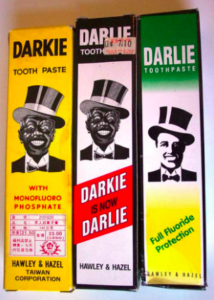
    How Darkie changed its name


    It may interest people to know that the exact opposite of Fair & Lovely existed as a toothpaste in Asia many decades ago. A toothpaste called Darkie. Produced by Hawley and Hazel, the brand was very popular in Asia. The pack showed a smiling black performer. The brand was then acquired by Colgate Palmolive which faced a lot of racist flak on the brand. In 1989, Colgate Palmolive decided to change the brand name to Darlie.


    “It’s just plain wrong,” Reuben Mark, chairman and chief executive of Colgate-Palmolive, said about the toothpaste’s name and logotype. “It’s just offensive. The morally right thing dictated that we must change. What we have to do is find a way to change that is least damaging to the economic interests of our partners.”


    Seems like a shame that another global company had thought about this so deeply more than 30 years ago. So Unilever in many way is 30 years too late.


     What will posterity say about Fair & Lovely?


     But what this would mean for the generations to come is anybody’s guess.  Will Generation Alpha which may use the brand a few years from now warm up to the brand given its history? (Generation Alpha is the demographic cohort succeeding Generation Z. Researchers and popular media use the early 2010s as the starting birth years and the mid-2020s as the ending birth years.)


    How will these young people see our racist past? One piece of research showed that Generation Z are as racist as their millennial parents. But will this continue on to Generation Alpha? Technology is likely to change a lot of mindsets in the future. And that may change the fortune of the brand called Glow & Lovely.


    Prabhakar Mundkur is an advertising veteran, a lateral thinker, storyteller and musician. He has spent several years in advertising – in India and elsewhere in the world – including at JWT China where he headed the Unilever business, amongst other functions. In fact he worked on Unilever brands for a good 17 years… though never on F&S ;-). A prolific writer now, he was LinkedIn’s #1 Top Voice for 2016 and YourStory’s 100 Emerging Voices 2018. He writes frequently on MxMIndia.

  • LoanTap unveils latest brand campaign

    By A Correspondent


    LoanTap, a digital lending organisation that caters to salaried millennials, has launched its latest brand campaign that positions itself as a young gene organisation that any millennial can relate to.


    Said CEO Satyam Kumar: “At LoanTap, we intend to be the loan seekers’ companion. Loan must fit the pocket of the millennials and should come at friendly terms. The concept of going to the branch and getting personal loan has become obsolete. When technology commands the financial processes, customization must be at the hand of consumers. We firmly believe that there’s a long term relationship between a lender and the borrower.”  He mentioned that today’s millennials or salaried professionals need financial help to cope up with the ever changing environment – be it parental care, career movement or their lifestyle requirement. LoanTap with its customer friendly approach, high level customisation and well appreciated customer care executives has an edge over most digital loan lenders.”


  • Majority of affluent middle class customers rely on banking and finance apps

    By A Correspondent


    Meeting expectations of the affluent middle class customers in India, in terms of digital experiences, is a very important ingredient of engagement for Financial Service brands to stay competitive, research released by Collison Group has revealed. It found that 93 percent of affluent middle class customers use banking and finance apps – up from 85 percent in 2014. It also revealed that 53 percent of customers prefer to do their banking online or via mobile app, while 27 percent prefer to go into a branch and 20 percent prefer telephone banking.


    Collinson Group polled 6,125 of the top 10-15 percent of earners from Australia, Brazil, China, France, Hong Kong, India, Singapore, the United Kingdom, the United States of America and the United Arab Emirates.


    Collinson Group recommends that financial services brands must act now to upgrade their loyalty infrastructure as the spending power of Millennials and Generation Z is set to soar in the next five years. Millennials are pushing companies to innovate faster and are defining new customer expectations. Born in the age of instant communication, smart technology, and a hyper-connected world, these young consumers are influencing digital transformation.


    “Digital will be the biggest battleground in financial services as digitally native Millennials and Generation Z become more lucrative target audiences for the sector. We can expect to see digital engagement continue to soar over the next three to five years. Brands need to act now in order to improve their digital offering, or risk missing the opportunity to build loyal relationships with lucrative audience segments,” said Anurag Saxena, India country manager, ICLP, owned by Collinson Group.


    The financial services opportunity

    “The way people shop and the way they interact with loyalty programmes has changed. Millennials and Generation Z for example, typically engaging across five screens simultaneously. Their relationship with brands is also completely different to other audience groups – they want instant gratification and claim not to want to save up loyalty points over a longer period to access a reward.”


    “But the traditional financial services firms actually have a clear opportunity to deliver highly engaging, digitally driven loyalty initiatives due to the wealth of data they collect. They need to go further in terms of using this data to improve targeting and segmentation to appeal to distinct audience groups. Banks really need to develop their own loyalty identities,” said Anurag Saxena, India country manager, ICLP, owned by Collinson Group.


    Recent research from the firm found that loyalty programme membership in the financial services sector had declined by 44 percent globally in the past two years. This decline was driven by brands not providing rewards programmes that customers value, and not engaging customers in their preferred channels. This research also found that brands getting it right are reaping the benefits –globally, banking loyalty programmes were found to encourage 82 percent of members to spend more, while credit card initiatives positively influenced 79 percent.


    “Digital loyalty initiatives can be far more cost effective than more traditional methods. By levering data and delivering highly personalised loyalty rewards at the appropriate time, brands can form emotional connections with customers and create additional sales opportunities across their organisation. Embracing digital tools will allow brands to communicate and engage their customers in more meaningful ways, and digital applications can be used to drive bank wide loyalty. Doing this will help create active digital footprints and take the next step beyond loyalty to fully fledged brand advocacy,” Saxena concluded.