Tag: midday

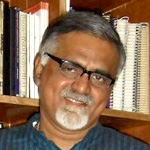
  • Sachin Kalbag is back at Mid-Day, as Editor-in-Chief


    Sachin Kalbag
    Sachin Kalbag

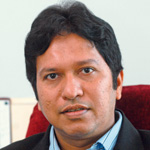
    Senior journalist Sachin Kalbag has been appointed Editor-in-Chief (Print and Digital). He has joined the Dainik Jagran group-owned Mumbai daily today. He will also oversee the group’s weekly paper, Sunday Mid-Day and the website, mid-day.com.

    This is Kalbag’s third stint with the paper, having joined it as a trainee in 1994. He has also worked across various publications over the last three decades, and other than being Editor of Mid-Day from 2011 to 2015, he was also Resident Editor of The Hindu’s Mumbai edition (2015-18) and Executive Editor of Hindustan Times (2018-22). Since 2022, he has been working with The Takshashila Institution as Senior Fellow. For a bit, he was also Washington DC correspondent with the now-suspended DNA newspaper.

    Kalbag takes charge from Tinaz Nooshian who has moved on.


  • Manajit Ghoshal turns entrepreneur with Media Lounge

    By a correspondent


    Manajit Ghoshal

    Manajit Ghoshal, former MD & CEO of Midday, has turned entrepreneur by floating a new company titled Media Lounge Pvt. Ltd. Partnering Ghoshal in the venture will be his good friend and owner of Ronak Advertising, Amardeep Singh Vig.


    Speaking on the development, Ghoshal said “Media Lounge is floated with the idea of creating a full service agency which has companies specializing in media buying, digital media, creative services, event management, PR, running exhibition centres and conducting media courses. We are planning a pan India presence and will look at mergers and acquisitions too.”


    Adding his inputs, Amardeep Vig said, “Ronak Advertising plans to go pan India and develop into a full service agency with all its verticals. We will grow both organically and inorganically. With the strength of Ronak advertising and Manajit Ghoshal on board as the MD & CEO of the new company, we are confident we will achieve a healthy growth rate and achieve our goals.”


  • Is there room for DNA in Delhi and Mail Today in Mumbai?


    By Ananya Saha


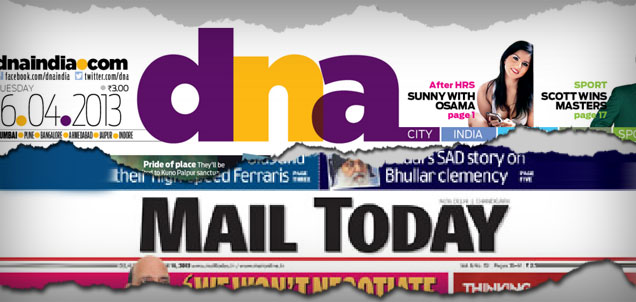
    Mumbai-based DNA is reportedly galloping ahead towards the capital. Launched on July 30, 2005, in Mumbai, DNA (short for Daily News & Analysis) is an English broadsheet daily owned by Diligent Media Corporation, now an Essel Group company. With presence in Mumbai, Bangalore, Pune, Ahmedabad, Jaipur and Indore, the recently refreshed daily is scheduled to be in Delhi on May 13. While NCR is seen as a battleground for the English heavyweights Times of India and Hindustan Times, many English dailies do not boast of good readership numbers in this market. Does the Delhi market need yet another English daily?


    Sundeep Nagpal

    “I don’t think there is too much room for another English daily in Delhi, at least in terms of readership,” says Sundeep Nagpal, Founder-Director of Stratagem Media, an independent media agency. “The English daily readership as a category, went up by about 5% around the turn of the last decade, but it’s back to the level that it was at, in 2008. However, what seems to be happening in most major markets, is that they seem to be able to absorb additional circulation to some extent. So, basically this suggests fragmentation,” Mr Nagpal adds.


    Anwesh Bose, Senior Vice President- Media, DDB Mudra is of the view that DNA is launching Delhi more with an image perspective in mind than revenues, for now. “With the Delhi launch they would be able to call themselves a national daily, finally,” he said. DNA has plans to eventually be present in all the four metros, and then launch its financial daily too in these markets. The Ahmedabad, Jaipur and Indore editions are franchised to the Dainik Bhaskar group, formerly joint venture partner of Zee in Diligent Media.


    Anwesh Bose

    But to capture readers and advertisers in Delhi, DNA would have to be aggressive in its positioning, and promotions, and adopt a push and pull strategy. As Mr Nagpal viewed it, DNA will have to create a market of its own and that would mostly happen in terms of a share of time spent on reading, and not as much in terms of new readers. Meanwhile, DNA has firmed up its team in Delhi with senior journalist Saikat Datta being appointed as the Resident Editor.


    Mr Bose said, “DNA would have to step into Delhi with deep pockets as they need to sustain for a long period of time before they can see profitability. Their strategy ideally should be of first of all establishing themselves as a brand that stands for something.” The new daily, according to him would have to come up with interesting ways of increasing their circulation, since the old methods of free gifting on long-term subscription does not hold any value anymore.


    While DNA is planning to enter Delhi, the capital’s compact daily newspaper – Mail Today – is getting set for a Mumbai launch this year. Mumbai has seen a reasonable healthy growth of 40 percent in readership of English dailies over the last six years, whereas Delhi has been at about 18 percent only, vis-a-vis 2005, asserts Mr Nagpal.


    Having launched in Chandigarh recently, Mail Today will have to compete with Mid-Day and Mumbai Mirror in Mumbai.


    AS Raghunath

    AS Raghunath, a senior print media brand consultant based in the capital, is of the view that Mail Today will be able to carve the niche in Mumbai. He said, “The Chandigarh and Delhi editions of Mail Today usually have a front ad jacket. So they do have a permanent source of revenue. Content-wise, Mail Today is a mixed bag and carries an ‘exclusive’, usually every day, which no other daily has. Even Twitter and Facebook communities quote Mail Today. Also, given the fact that Mumbai is a multi-newspaper market with English, Hindi, Telugu, Tamil, Gujarati dailies and publications, I am sure Mail Today will be able to carve a niche for itself.” He further added that while size will not be a challenge for Mail Today, any daily going in Mumbai would probably not add numerically to the market.


    On Mail Today’s stint in Delhi, Mr Bose remarked, “Mail Today is by no measure a success in Delhi… although, they have tried their best. It is bought more on relationship with the India Today Group than because of its content differentiation.” Mr Nagpal concurs that for a large cross-section of advertisers, Mail Today did not offer a unique/significant enough benefit.


    According to Mr Nagpal, “Mumbai Mirror (MM) has been able to create a huge dent in the market”. “It has stalled other competitors right where they were in their tracks and even eaten away their share considerably over the last five years, so I think MM is quite a success. But that does not mean that every new tabloid will do as well” he added. Mr Bose, however, holds a different view. He said, “Even with the might of TOI behind it, Mumbai Mirror could not make a huge dent, therefore it will be an uphill task for Mail Today to achieve success.” Mr Nagpal is of the view that Mumbai ought to be an easier market for Mail Today, for a whole lot of other reasons such as being more cosmopolitan, more adaptable, etc.


    The advertisers, obviously, would watch with interest as to the direction in which each of these publications grow in the respective markets. “It is sure that a lot of advertisers would get free space or space at a very marginal cost to begin with as the publications would want the advertisers to sample their product as well as it becomes a talking point with other advertisers for the publication. Also, there would be a lot of freebies during the circulation drive, so the consumer is going to make merry,” opined Mr Bose.


    Success or not, only time will tell. But it is sure a sign of healthy growth for the print sector. As Mr Bose concluded, “Print has seen a growth in 2012, where it grew by 9 percent compared to 2011. This year print would gain more as a lot of TV-friendly categories have shown interest in print, primarily to drive sales in a period of slowdown.”


  • Jaldi 5 with Sachin Kalbag: Upholding civil liberties…

    The arrest and eventual release of a young lady living in Palghar in suburban Mumbai thanks to a Facebook post as also her friend who ‘liked’ it sent shockwaves across India’s urban set who happily post their comments on social networks and microblogs. Leading English daily Mid-Day has announced a People’s Freedom Charter in defending the citizen’s right to free speech. MxMIndia interviewed Mid-Day executive editor Sachin Kalbag and asked him on what the paper hopes to achieve with the Charter.


    01. How do propose to ensure your Charter reaches its logical conclusion… as in ensure that students are not found to be on the wrong side of the law for exercising their rights, as stated by you?

    There will be no “conclusion” to this process. This is the first step in a long journey to defend freedom of speech. MiD DAY will, stridently and on a sustained basis, defend the freedom of speech of India’s citizens. It will mean that we give stories pertaining to this issue wide play. Of course, due to constraints of space in the print medium, we cannot be talking only of freedom of speech-related stories, or even all stories pertaining to the topic. But yes, it will be a large focus area.


    2. One of the biggest problems is the interpretation of how any speech or action will affect law and order and the social fabric. Don’t you think that what’s needed is public opinion against age-old laws and getting them changed eventually through the Executive or the Judiciary?

    In a true democracy, freedom of speech must be absolute. It is something we do not have right now because Article 19(2) of the Constitution puts “Reasonable Restrictions” on freedom of speech. Those restrictions are the sovereignty and integrity of India, the security of the State, friendly relations with foreign States, public order, decency or morality or in relation to contempt of court, defamation or incitement to an offence. If you read between the lines, practically anything can constitute as an offence (I calling someone ugly, or, for that matter, saying Sachin Tendulkar is an ordinary batsman). This is where the arbitrariness of “reasonable restrictions” needs to be highlighted. Another example of arbitrary interpretation and application of law is Section 66(A) of the Information Technology (Amendment) Act, 2008. Once again, anything can constitute as “offensive” and I could lodge a complaint with the police against you because I found your email or your Facebook post offensive. This is what we need to be guarding against. As right-minded citizens, we must oppose this arbitrariness. We should stand up against laws that can be used to settle scores or wrongfully applied.


    Through our Freedom Charter, we want to build public opinion in this regard. Ultimately, it is Parliament (the lawmaking body) which will have to debate and pass laws that do leave nothing to arbitrary interpretation. It is a tough challenge, but someone needs to be a catalyst.


    03. It’s been seen that not just the government, but also otherwise well-meaning, educated and well-read individuals do not take very kindly to criticism, especially when it’s on social media (and Twitter)?

    Not taking kindly to criticism is a universal trait. Who wakes up in the morning and says, “Come on, world, criticize me.”? The point is not about criticism, but my freedom as a citizen to speak my mind without any fear. If the person on the receiving side feels that the critic has no basis for what he or she said, the “affected party” can sue the critic for defamation so that the critic can prove whether his allegations are accurate or not. There are these laws that give the affected party a platform for redressal. But we cannot sit on a high horse and say, “No one can criticize me,” or “No one will oppose me because I am the government and I know what is best for the country.”


    04. Your report mentions that the Charter will be the guiding principle in your paper’s reportage. Could you give an example of how this will happen?

    We will ensure in reportage that civil liberties are upheld at all costs. You will see this in all our stories.


    05. This also means that in case of a situation where you or your paper are subjected to criticism, you’ll take it in the right spirit?

    Of course, we will take in the right spirit. We are an irreverent, anti-establishment, ideologically neutral newspaper. No matter what we do, our stories offend someone or the other. We believe that as a responsible newspaper, we will investigate our stories thoroughly, and that we will not carry stories without proper documentation to prove we are right. If in that process someone is offended, so be it. We are ready to defend our stand. And if we are wrong, we shall apologize and take steps to ensure that we do not repeat our mistakes. But at no point in time shall we say that, “We will not carry the story because it will offend someone.”


    Interviewed by Ananya Saha


  • MiD DAY is back with 3rd season of corporate soccer championship

    By A Correspondent


    The tabloid newspaper MiD DAY has launched the 3rd season of its MiD DAY Corporate Soccer Championship. The third season of the ground event will have 20 teams battling it out for the top position and a prize money of Rs. 1,00,000/-. Also 1 player will get a chance to win the prestigious Golden Boots Award along with cash prize of Rs.20000/-.


    Registration fee is set at Rs. 15,000 per team for the tournament and matches are scheduled to be held on 03rd and 04thNovember, 2012. These matches will be held at Western Railway Ground, Lower Parel. Apart from the prestigious trophy of supremacy, the winner will also get a prize money of Rs. 1,00,000/- whereas the runner-up will get Rs. 50,000/- and the winner of the Golden Boots will receive Rs. 20,000/-.


    Organizations like HDFC Bank, Bigtree,Serco Global Services,Standard Chartered Bank, British Airways World Cargo, NCO India Pvt Ltd, Xoriant Solutions Pvt. Ltd, Hutchinson Global Services PVT LTD, TATA Consultancy Services and many more will compete for the top position of MiD DAY Corporate Soccer Championship 2012.


    Speaking on the launch of the 3rd season of MiD DAY Corporate Soccer Championship, MiD DAY Infomedia Limited MD & CEO Manajit Ghoshal said, ““MiD DAY Corporate Soccer Championship is back with another season giving the corporate executives a quintessential break from their hectic schedule. Also MiD DAY is committed in engaging its core target audience,i.e, the Young professionals of the city through such initiatives. The best of the corporate world will be on show and all are invited to witness the football frenzy.”

  • Our battle is to out-think TOI: Meenal Baghel


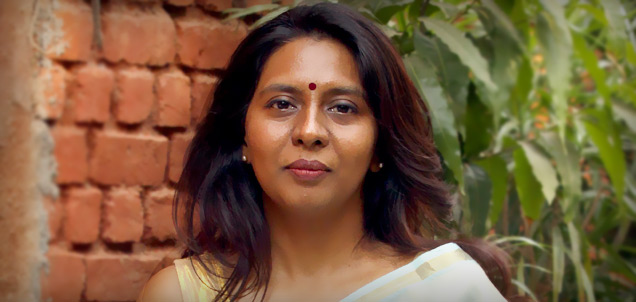
    Meenal Baghel is the founder and Editor-in-Chief of Mirror, the nation’s most sprightly newspaper. Mumbai Mirror was launched seven years ago, and today the paper has editions in Pune, Bangalore and Ahmedabad. A part of the Times group, Mumbai Mirror boasts of a fantastic circulation of nearly 600,000 copies, and it’s become the city’s favourite compact paper.


    Meenal relives the journey with us, and speaks candidly about the many challenges she’s faced along the way. We also discuss her first book, ‘Death in Mumbai’, which received wide critical acclaim.


    I did a stint with Mumbai Mirror some years ago, and this gave me a chance to watch her in action. Meenal can be a demanding editor, she can be impatient, she can be tough. While these qualities don’t endear her to some, they have played a huge part in her success. I have to say she’s the most passionate editor I have worked with.


    By Anil Thakraney


    It’s been seven years editing Mirror. How’s the journey been? Tell me the highs and the lows.

    The high obviously has been to see the paper become an important part of Bombay. We have been successful in forging an emotional connect with the readers, which is very important. We get an enormous number of people calling in with stories. And we’ve routinely broken a lot of stories, so those are the big highs. The low is that the paper is still a bit inconsistent. You know, when we started the paper, it used to be called Mumbai Error. I wish we had a cleaner start in terms of the paper being more finished. But it’s been a sort of work in progress. We have learnt a number of journalistic lessons along the way because the market has changed, the reader has changed. For instance, when we were at Mid-Day, you could get away with a lot of things. But in this day and age, you can’t.


    Give me an example

    Like sometimes when, just to break the monotony, you put an entertainment story on the front page, there is a backlash. People now expect a more serious newspaper, it’s something different from what I had envisaged. But that’s also because there’s so much of entertainment everywhere that people don’t want more of it.


    One story you regret

    We ran the FIR of the TISS girl who was raped. That was a mistake. Because the details in the FIR were very graphic on what had transpired. And you realize that you may have ended up titillating. I regret that story, we got terrible feedback for it and we apologized for it.
     

    “I don’t think journalism offers enough challenges to the really bright people any longer.”

    I still see a number of typos in Mirror. Is this an un-lickable problem?

    I think there is a very real problem with journalism today, and it’s not only limited to Mirror. The problem is that the deskies is a disappearing breed. And it’s going to be a big challenge over the next few years. Also, there are very real problems we are facing, and these are going to change the profession drastically. It’s so rare to find people who want to come into journalism because they want to be journalists. For example, when you ask people, ‘Who edited this copy?’. Invariably the response will be: ‘I looked at it/I glanced at it/I skimmed through it.’ Another thing is I don’t think journalism offers enough challenges to the really bright people any longer. There is an attrition problem across aboard. People want to try out various things. When you and I were growing up, it was about sticking to a profession, a career path, and that no longer holds true. People now have the advantage of taking breaks, taking gap years, studying, etc. The journalism hours don’t allow too much of a personal life. And I think HR, owners, publishers, editors need to take all these things into account.


    Is the passion for journalism diminishing in young India?

    I think the important thing now is personal growth and personal life. That has taken precedence over wanting to change the country.


    What was Vineet Jain’s brief to you when you signed up for Mirror?

    His brief was very clear. He said it should be a smart paper and that it should be different from the Times of India. And because it’s a compact size, there are elements of a tabloid that you can incorporate. In fact, when we started the paper, there were a lot of conflicting opinions, so I was a little tentative in the beginning. And then one day he called me and asked why was I so tentative. He said, “I have given you this brief, just stick to it. And don’t be apologetic about it.” So that was wonderful.


    You think this country is ready for a Brit style tabloid?

    No. Though it’s very interesting because everybody is trying to incorporate the tabloid elements, but you can’t be openly unabashed about it. We are not ready for it. For instance, look at the responses Dr Vatsa’s column gets.


    Guess it’s a tightrope walk. You want to be tabloidy, and still have to be aware the nation isn’t ready

    Yes. Sometimes in the newsroom we think we can do a story, but when we see the backlash the next day, we start being more careful by censoring ourselves.


    And the problem is if you play safe and cut down on controversy, you get dangerously close to the TOI

    Yes. So what we try and do is this: I always say our competition is the Times of India. Because we go with the TOI. Now the TOI has massive width, they do like sixty stories at an average. So our battle is to out-think the TOI, in the sense that ‘this is what they will do, so let’s do something different’. We can get away with some naughty things that they can’t.


    Lots of court cases?

    Actually they’ve come down, ever since we’ve become safer. (Smiles.) But there’s also a lot of frivolous litigation, which is easily dealt with.


    More editions in the offing?

    At the moment, no.


    And for Mumbai Mirror, are you still as hands-on as ever?

    See, I am out for lunch with you! (Laughs) But yes, I like being hands-on. There are times when I can breathe down people’s necks. But I am trying to back off a little now that we have a very competent senior team. I also realize that people should be given more space, but it’s difficult. (Laughs.)

     

    “The TOI has lots of products that come with it, but everyone doesn’t necessarily read all of them, right?”

    Meenal, the perception is that Mirror benefits a lot from being the TOI’s free paper. Without that advantage, your circulation would be nowhere close.

    I am lucky and I won’t question my luck. We have a great readership, thanks to the TOI. But then you have to capitalize on that luck, you still have to deliver a good product. The TOI has lots of products that come with it, but everyone doesn’t necessarily read all of them, right?


    If you were a standalone paper, how much circulation do you think you’d lose?

    I guess we’d retain 60%. Because Mirror has become a genuine commuter’s paper. You have to travel in the train to see how many people carry it. It started off as a guilty pleasure, which people didn’t want to acknowledge they were reading, but they were all reading. But over time it has also become a lively paper. And that can’t be said about too many other papers in town. And people like that.


    Would you say Mid-Day was your training ground?

    Absolutely. I had always worked with broadsheets before that – Pioneer, Asian Age and The Indian Express. So when I joined Mid-Day, for a while it was like, where the hell have I landed? This is not how journalism is done. For the first six months I had no idea what I was doing. But I was in a senior job and I was getting paid an X amount, and I must tell you I HATE giving up. And then one day I went for a walk and said to myself the paper won’t change because of me, there was a reason why this paper was so beloved in Bombay. And that was the Eureka moment for me. I decided to try and understand it rather than look down upon it. And that changed things. I must say I learnt a lot from Aakar Patel (the then editor of Mid-Day). I learnt a lot from what the paper did on Page 1 and on headlining.


    One Indian print editor you most admire.

    I owe everything I learnt in journalism to MJ Akbar. About writing, about making pages, about what not to do, etc.


    It’s been seven years at Mirror. Don’t you feel the itch? Isn’t it tiring to do the same thing day in and day out?

    I keep wondering why nobody else offers me a job! I am joking, of course. Which is why doing the book was wonderful for me. It gave me a chance to step back and follow a story that had been fascinating me. And it was extended journalism. I have always felt when the number of days you feel bad about what you do exceeds the number of days you feel good, you should quit. I haven’t reached there. And there’s always something exciting happening.


    Being a hard-edged journalist, how do you reconcile with something like Medianet?

    That’s easy, because we don’t have Medianet in Mirror.


    But it’s there in your group.

    It doesn’t affect my life, so I don’t care about it.


    You aren’t asked to carry plugs?

    No. And it’s one of the things that has pleasantly surprised me. They have maintained the Chinese wall from the start.


    They have left you alone?

    Yes. And there’s another reason. Mirror is a small paper in the group, so it’s not necessarily the focus. We are a small cog in comparison.


    Have you ever been asked to drop a story?

    (Pauses) Not drop a story. I think what one learns over a period of time is that you have to pick your battles. I’ll give you an example: If there’s an entertainment story which is coming right ahead of the Filmfare awards, where somebody is going to be performing, and I have a damaging story on that person, would I delay it by a few days? Yes, I would.


    There used to be intense rivalry between the Independent and the TOI. Is it the same with you?

    Not rivalry, but there is great competition. When the TOI does something, and we’ve missed it, I give my reporters hell. And I am sure JoJo (Jaideep Bose) does the same when we get something.


    “Mid-Day killed itself. And I feel really bad. I feel bad that what was such a robust paper is no longer that.”

    You’ve pretty much killed Mid-Day. Feels good?

    The paper killed itself. And I feel really bad. I feel bad that what was such a robust paper is no longer that. We all worked very hard out there. We worked our asses off at Mid-Day and we used to take great pride in the paper being so robust, that it was second only to the TOI.


    What would you do if you were editing Mid-Day today?

    I’ll bring in more energy. What’s going for Mirror despite the inconsistency is that it’s never dull. And dullness in journalism is a cardinal error. Especially if you are a tabloid.


    Let’s shift to your book, ‘Death in Mumbai’. Does Meenal think Maria Susairaj got away lightly?

    I must tell you I ended up liking her quite a bit. I feel that she is a manipulative woman and that she may be a tease. But that’s not a crime, there are a lot of women like that out there. Did she kill or abet the killing? I don’t think so. She was in love with Emile Jerome, she really wanted to marry him. But he wasn’t committing to her. When he killed this guy, it was, in her mind, like his commitment to her.


    When you started writing, was there something you had decided you won’t do in the book?

    The only thing I told myself is to not be judgmental. Because someone else’s idea of morality could be different from mine. Like, I started out with a certain view of Maria but it became something else.


    In fact, that was the only criticism I read about the book. As a journalist, readers expected you give us your own view. Perhaps as the epilogue.

    There were genuine difficulties. Something happened in a room where there were only three people. One guy is dead and two are in jail. There is only so much information I had. And I genuinely did not want to play judge.


    You have always kept a very low profile. Marketing the book must have been tough.

    (Laughs.) It was! It was terrible. The only time you would see me on television was on things that were related to the book. Otherwise I wouldn’t be caught dead going on TV.


    Any more books coming up?

    I would like to write more books, but I love this job too much. Ideally I’d like to do both. But I haven’t thought of another subject so far. Might be interesting to write fiction.


    Would you like to edit the TOI?

    No. I think it would be fun to edit a broadsheet, but I don’t think I am ready to edit the Times. It’s the biggest paper in the country, it requires a greater understanding of business, politics… and I don’t think I am ready for it. Also, it requires certain people skills which I perhaps don’t have.


    Don’t rate yourself high on people skills?

    I think I am very good. But I need to be more patient. I can be impatient and that’s a serious shortcoming.


    You are 43. Don’t want to marry?

    It’s too late now (Laughs).


    Is it important to be single to edit a high pressure daily? Is it a price one pays?

    Sure. It’s a price a lot of women, more than men, have to pay for any high pressure job. It’s unfortunate, but it’s a fact. I may have been married, but it would have been very difficult with children.


    Photographs: Fotocorp
     

  • Debrief: Mid Day: Maximum City. Minimum TVC

    By Anil Thakraney


    ‘My City, My Life’, the slogan, is a promising thought. What is even more promising is that Mid Day has chosen to compose an anthem for Mumbai city. A very good idea. This rotting, decaying, ignored city needs a war cry very badly. Something we can call our own and use to make a statement. Sadly, the execution sucks and the so called anthem is at best a below average jingle.


    Mid Day’s new TVC consists of vignettes of youngsters indulging in timepass. Goofing around at Marine Drive. Celebrating a cricket match victory. Goofing around some more near the Sea Link. And just in case you think they are a bunch of airheads, the kids are seen indulging in some more timepass: one of those candle-light marches. And the lazy, laidback ‘anthem’ will ensure you doze off rather quickly.


    An opportunity blown. There’s a lot more to the city’s youngsters, they are spirited, aware and want to see things change. They want to be a part of that change. Mumbai is the one Indian city that pulsates with energy, passion and ambition, that’s what keeps people rooted here, that’s what keeps the city alive. Despite all the problems people face. And if Mid Day didn’t want to deal with the city’s civic issues, they ought to have captured its raw passion. The anthem ought to have enshrined that energy and that can-do Mumbai spirit.


    [youtube width=”400″ height=”200″]http://www.youtube.com/watch?v=B_EJUXqpYwk[/youtube]

    I find this commercial pretty worrying. (And I use the word ‘worrying’ because as an ex employee I want the newspaper to do well.) This creative suggests to me that Mid Day doesn’t really understand Mumbai. That they have a superficial view of this great city. And that’s much more disappointing than one sad ad.


    Rating: (On a scale of 1 to 5): 1. A good concept murdered by thoughtless execution


  • Citing profitability, Mid-Day bids ‘ta ta’ to Delhi & Bengaluru editions; to concentrate on Mumbai

    By Rishi Vora


    Mid-Day, Mumbai’s leading English daily, has announced the shutting of its Delhi and Bengaluru editions. The reason: profitability. Mr Manajit Ghoshal, MD and CEO of the company, confirmed this to MxMIndia. “Both Delhi and Bengaluru editions will shut down with immediate effect. Tomorrow is the last time the papers will be circulated in the respective markets,” he said.


    Elaborating on the reason behind the decision, Mr Ghoshal  said, “We have decided to shut down both editions in the strategy to be more profitable. Advertising revenues in the two markets was on the decline, and so we decided to focus on our Mumbai edition.”