Tag: Mid-Day

  • Sachin Kalbag: No time for water, no time to blink

    By Sachin Kalbag


    On the morning of November 28, 2008, around 100 reporters rushed to Chabad House in Colaba where four Pakistan-trained terrorists had taken hostage all the eight Jewish people living in the building. Chabad House, or Nariman House as it was previously known, is the outreach centre for the Jewish community in Mumbai, and is the first stop for any religious activity for the community, especially for those visiting from outside the country. It was a natural target for Islamist militants who had laid siege to key locations in Mumbai from the night of November 26.


    There were a few reporters present at the spot, but most of the attention from media houses for the most horrific terror attack in India’s history was given to the Taj and the Oberoi, both plush five-star hotels where hundreds were held hostage, and many later killed. Nariman House, on the other hand, is in a middle-class area of Colaba at Hormusji Street, and access to the building is through a narrow lane on the west, and a slightly wider but still crowded lane to the north. Escape is practically impossible.


    It was in this situation that Rabbi Gavriel Holtzberg and his pregnant wife Rivka found themselves on the night of November 26. Later, reporters at “ground zero” were told that the hostages were tortured badly before being killed.


    For the reporters, which included this writer who was reporting for the Delhi-based newspaper Mail Today, there was seemingly not much to do but wait until the well-trained National Security Guards (NSG) commandos neutralised the four terrorists.


    However, it was not all just wait and watch. Intermittent fire had already been targeted at journalists at the Taj on the night Nov 27, and the four terrorists at Nariman House could have, out of desperation, hurt any of the hundreds of onlookers and journalists, which included cameramen from news agencies all over the world. In fact, a few bullets were indeed fired at us, but they seemed more like warning shots than any attempt at killing us. The terrorists, reportedly, were told that their only aim at Nariman House was to kill the Jews. According to a Times (of London) news report, the Pakistani handlers told the terrorists that “the lives of Jews were worth 50 times those of non-Jews”.


    A unit of 22 NSG commandos arrived in the morning rappelling down a military helicopter, and entered Nariman House. Soon, the exchange of fire began. A second unit of NSG commandos, most likely snipers, took positions in a building situated 100 metres north of Nariman House. Separating them was the narrow lane, whose most remarkable feature was a large banana godown which was shut indefinitely.


    There was neither food nor any water for journalists, so we relied on the goodness of the locals to provide us with biscuits and cups of tea. The more fortunate ones were given vada pav. We could not even imagine the stamina of the NSG commandos who had nothing to eat or drink during the entire offensive that last close to 12 hours.


    The terrorists, it was immediately obvious, were well-trained in military warfare and hand-to-hand combat. How else could they survive an onslaught by some of the best trained commandos in the world?


    In the middle of all this, journalists were shooting pictures, giving live newscasts and filing stories to their respective newsrooms. The pressure on television reporters was immense. Viewers from all over the world wanted the latest, and the live pictures were not providing much context. Studios kept calling their correspondents, who had nothing much to say. This often resulted in misreporting.


    One such reporter, whom I got acquainted with, was being repeatedly called upon to give updates. In frustration, he began describing events that never took place. For instance, he would sit and chat with me for 20 minutes, and then, when his editor called, he would simply rattle off trivial stuff that was the figment of his imagination at best. When I asked him why he did that, he replied, “This is television, yaar. You print guys will never understand.” Later, at around 6:20 pm, they even claimed that the operation was over.


    I was more amused than angry. I cross-checked with a Hormusji Stree resident, Dhaval Koli, whom I had befriended during the day. He said the firing is still on, and the operation isn’t over. Koli worked at the local Baskin Robbins shop, and he offered to take me around as he had lived his entire life there. His help turned out priceless because I could add details to my reports that others could not. For instance, he was the first to tell me that Sandra Samuel, the 44-year-old nanny of Holtzbergs’ son Moshe, had rescued the toddler. The operation finally got over at night, three hours after television reporters had declared it finished.


    Around 9 pm, I ate my first morsel in 26 hours – a vegetable sandwich bought by a colleague working at India Today’s Nariman Point office. Later, after filing stories, I went to a pav bhaji stall to eat some Mumbai street food. There is a certain satisfaction you get by eating good food after more than a day of not eating. My respect for war reporters went up a hundred notches.


    I had arrived in Mumbai on November 27, and stayed on for four more days. Most of these 102 hours were spent on the streets. I could not meet my parents or my friends, who kept calling up. No reporter I knew there could find time to drink water, leave alone meet friends and family. This was one of the most horrific events of independent India, and as reporters, we could not even blink. We were, we soon realised, eyewitness to history.


    Sachin Kalbag is Executive Editor, MiD DAY


  • Mid-Day CEO Manajit Ghoshal exits

    By A Correspondent


    Manajit Ghoshal

    Jagran Prakashan Limited has announced the exit of Mid-Day CEO and Managing Director Manajit Ghoshal.  JPL is the holding company of the Mid-Day group of publications. A letter from Jagran group CEO Sanjay Gupta was sent to all employees to intimate this on Friday, March 1.


    Although MxMIndia could not reach either Messrs Gupta and Ghoshal, the parting is said to be with immediate effect. Old Mid-Day hand Cyriac Mathew will hold charge.


    Mr Ghoshal saw a steady rise in the organization. Elevated to CEO in 2008 from his position of the CFO, he was also appointed Managing Director of Mid-Day Infomedia in 2009. When the Jagran group acquired the print and digital business of Mid-Day, Mr Ghoshal continued to hold charge of operations even as he reported to the JPL management.


    “The old and new management of the news company reposed much faith in him,” said a former colleague, commenting on Mr Ghoshal’s well-spirited reign and how he raised the bar for his colleagues.


  • Memories of Ayodhya, December 6, 1992


    By Ananya Saha


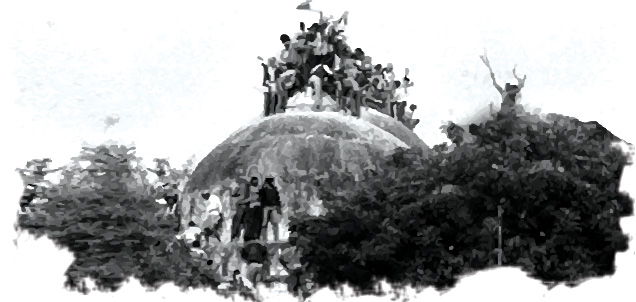
    Twenty years have passed since the Babri Masjid demolition. While the Ayodhya verdict did bring some cheer to the country, December 6 1992 has been engraved as a blot to India’s history. Two journalists, who were present on the scene, recall the horrific incident.


    Mark Tully former Bureau Chief for BBC in New Delhi was also present on the scene.


    My memory is of the complete failure of security to control the situation and of the extremely violent and disgusting slogans which were being shouted by the people who attacked the mosque. Lotof violence and damage was done to journalists. And I myself was surrounded by these so-called Kar Sevaks. There was an argument whether to beat me up or let me go. Eventually, a compromise was reached and they decided to lock me up in the temple room. That is my recollection.


    It was a sad day for India. It was a sad day for me because I have maintained that India is naturally, culturally, a secular country. But I believe that India has returned to its secular moorings. I think there are many lessons to be learnt from Ayodhya.

    Ajay Jha, currently, is the Delhi Bureau Chief for Gulf News. He was working with Mid-Day in 1992 and witnessed the demolition of Babri Masjid in Ayodhya in 1992.


    It feels that it happened just the other day. Even after 20 years, people feel anxious of the day. It was a blot for the country.


    I was staying at a hotel in Faizabad. I reached the spot about 9’o clock in the morning. It was, of course, not very easy to reach there due to security and administration. But finally when I reached there, I saw people running out of the Babri Masjid campus and shouting ‘Kaam hogaya’ (work is done).  As I went inside, I saw a mob atop tombs dancing and celebrating. There were three tombs at Babri Masjid. Then they started demolishing one of the central tombs. They were using iron bars to break it, which implies that they were prepared for the demolition. It continued for over three hours. It was not easy for them to demolish it.


    Suddenly I saw that lot of journalists were being assaulted. The reason, I was told, was something different. I was not the eyewitness to the reason. I was told that some foreign TV crew had apparently thrown biscuits towards the crowd that was hungry. They were angry that foreign media saw them as poor and hungry and second, that it should not go out to the world that demolition is going on until work is finished. Hence, the journalists were thrown out of the complex. Journalists were assaulted and mobbed. Probably, I was the only person who remained there throughout the evening.


    The first thing I did was to throw the pen and paper away. I started pretending that I was one of the Kar Sewaks. They looked at me suspiciously, and when asked I told them I had come from Delhi, they asked me to do kar seva, which I did.


    When they had demolished two tombs, they realised that it was already 1’o clock. They wanted to finish the work the same day because in winters it gets dark early, and it wouldn’t be possible for them to carry on after dark. After a while, we heard another noise telling the people, ‘sab hat jaao’ (everybody move away). It never came out in any of the enquiries but I can say it for sure, out came the huge dynamite sticks to blow up the remaining two tombs. The area was cleared. I could not see who said it, but heard it clearly, ‘ek dhakka do aur babri masjid tod do’ (give one push and destroy Babri Masjid).


    Finally, when everything was demolished by 3:30, lot of celebration was evident.


    While the demolition was going on, Advani requested the crowd to not carry on the destruction it in the name of Lord Ram. Whether it was union call or it could be that he created a monster he could not control. At least for public consumption he was urging the public to get off of the tomb.  But nobody would listen to him. In the evening when I left, I carried with me a small-sized brick on which was engraved 1516 in Hindi, the year that the brick was made.


    I had to walk a long way before I could reach Faizabad and file my report. It was very tough day. Interestingly, I reached there again the very next day around 9’o clock and I couldn’t see or find a single brick. Entire place was transformed overnight. They cleared everything and you could not recognise the area. Complicity of UP govt, administration, police, and to some extent govt also was evident. Policemen were present but were only watching what was happening. It was responsibility of Kalyan Singh govt, Narasimha Rao govt. local administration: everyone was working together towards the same aim that the mosque has to go and it went. It was all done in a planned manner – they brought their rods and what not to tear it down.


    I was told that dynamite sticks were brought from Punjab and that was the time that militancy in Punjab was at peak and it could have been done with Sikh militants.


    When I came back to Delhi, people used to come and worship the brick that I had as a reminder of the day. When riots had started next day, we were told to write timid reports so as not to create Hindu-Muslim tension.  I did visit Ayodhya thereafter as well. I still get the same feeling that what was the need to demolish it? It was a structure of mosque but it was temple inside. Now, you cannot get inside. You could not get the ‘mandir’ you wanted, and Hindu fanatics did not get anything by damaging a functional temple. You have to stay 50 metre away from structure, and only ‘pandit’ can do a ‘pooja’ on your behalf.


    Yes, BJP came to power after that, so probably that was the achievement. It was a power game, a political campaign.


     Image: Artist Rafiq’s impression of what happened on December 6


  • Mid-Day launches Fully Filmi

    By A Correspondent


    It is the 33rd anniversary of Mid-Day, and the publication is celebrating it in style. As the brand extension, the group has launched a Bollywood portal – Fully Filmi. The portal aims to address the need gap that the Bollywood-news websites have yet not been able to cater.


    Manajit Ghoshal,MDand CEO, Mid-Day, said: “When we thought of launching the website on Bollywood, we saw that there were hardly any websites that were doing breaking news. It was surprising, given that it is one of the biggest film industries in the world. The current crop of Bollywood websites does not dish out anything fresh; they do not have a dedicated team of journalists. They are more of news aggregators. We are going to focus more on coverage of authentic industry news.”


    The website has been getting positive reviews from the film fraternity, according to Mr Ghoshal. However, the website is due to get the responses from advertisers. Mr Ghoshal said: “We wanted to approach the advertisers only after the launch. Now that the web property has been launched, we will approach them in due time.”


    Among the target group of the website is the NRI community, and the audiences in interior India. The property will be promoted through Dainik Jagran’s Hindi dailies, and cross-referenced with Mid-Day to drive traffic. Other than this, the property is looking at film theatres and tie-ups for promotion.


    The group is trying also hard to regain its past numbers in Mumbai. Mr Ghoshal said: “We have been adding numbers to readership since last three years. However, we will be focusing more aggressively on that front. We wish to keep the trend up for the next couple of years. The group would experiment with newer formats, new innovations in our 33rd year.”


  • Our battle is to out-think TOI: Meenal Baghel


    Meenal Baghel is the founder and Editor-in-Chief of Mirror, the nation’s most sprightly newspaper. Mumbai Mirror was launched seven years ago, and today the paper has editions in Pune, Bangalore and Ahmedabad. A part of the Times group, Mumbai Mirror boasts of a fantastic circulation of nearly 600,000 copies, and it’s become the city’s favourite compact paper.


    Meenal relives the journey with us, and speaks candidly about the many challenges she’s faced along the way. We also discuss her first book, ‘Death in Mumbai’, which received wide critical acclaim.


    I did a stint with Mumbai Mirror some years ago, and this gave me a chance to watch her in action. Meenal can be a demanding editor, she can be impatient, she can be tough. While these qualities don’t endear her to some, they have played a huge part in her success. I have to say she’s the most passionate editor I have worked with.


    By Anil Thakraney


    It’s been seven years editing Mirror. How’s the journey been? Tell me the highs and the lows.

    The high obviously has been to see the paper become an important part of Bombay. We have been successful in forging an emotional connect with the readers, which is very important. We get an enormous number of people calling in with stories. And we’ve routinely broken a lot of stories, so those are the big highs. The low is that the paper is still a bit inconsistent. You know, when we started the paper, it used to be called Mumbai Error. I wish we had a cleaner start in terms of the paper being more finished. But it’s been a sort of work in progress. We have learnt a number of journalistic lessons along the way because the market has changed, the reader has changed. For instance, when we were at Mid-Day, you could get away with a lot of things. But in this day and age, you can’t.


    Give me an example

    Like sometimes when, just to break the monotony, you put an entertainment story on the front page, there is a backlash. People now expect a more serious newspaper, it’s something different from what I had envisaged. But that’s also because there’s so much of entertainment everywhere that people don’t want more of it.


    One story you regret

    We ran the FIR of the TISS girl who was raped. That was a mistake. Because the details in the FIR were very graphic on what had transpired. And you realize that you may have ended up titillating. I regret that story, we got terrible feedback for it and we apologized for it.
     

    “I don’t think journalism offers enough challenges to the really bright people any longer.”

    I still see a number of typos in Mirror. Is this an un-lickable problem?

    I think there is a very real problem with journalism today, and it’s not only limited to Mirror. The problem is that the deskies is a disappearing breed. And it’s going to be a big challenge over the next few years. Also, there are very real problems we are facing, and these are going to change the profession drastically. It’s so rare to find people who want to come into journalism because they want to be journalists. For example, when you ask people, ‘Who edited this copy?’. Invariably the response will be: ‘I looked at it/I glanced at it/I skimmed through it.’ Another thing is I don’t think journalism offers enough challenges to the really bright people any longer. There is an attrition problem across aboard. People want to try out various things. When you and I were growing up, it was about sticking to a profession, a career path, and that no longer holds true. People now have the advantage of taking breaks, taking gap years, studying, etc. The journalism hours don’t allow too much of a personal life. And I think HR, owners, publishers, editors need to take all these things into account.


    Is the passion for journalism diminishing in young India?

    I think the important thing now is personal growth and personal life. That has taken precedence over wanting to change the country.


    What was Vineet Jain’s brief to you when you signed up for Mirror?

    His brief was very clear. He said it should be a smart paper and that it should be different from the Times of India. And because it’s a compact size, there are elements of a tabloid that you can incorporate. In fact, when we started the paper, there were a lot of conflicting opinions, so I was a little tentative in the beginning. And then one day he called me and asked why was I so tentative. He said, “I have given you this brief, just stick to it. And don’t be apologetic about it.” So that was wonderful.


    You think this country is ready for a Brit style tabloid?

    No. Though it’s very interesting because everybody is trying to incorporate the tabloid elements, but you can’t be openly unabashed about it. We are not ready for it. For instance, look at the responses Dr Vatsa’s column gets.


    Guess it’s a tightrope walk. You want to be tabloidy, and still have to be aware the nation isn’t ready

    Yes. Sometimes in the newsroom we think we can do a story, but when we see the backlash the next day, we start being more careful by censoring ourselves.


    And the problem is if you play safe and cut down on controversy, you get dangerously close to the TOI

    Yes. So what we try and do is this: I always say our competition is the Times of India. Because we go with the TOI. Now the TOI has massive width, they do like sixty stories at an average. So our battle is to out-think the TOI, in the sense that ‘this is what they will do, so let’s do something different’. We can get away with some naughty things that they can’t.


    Lots of court cases?

    Actually they’ve come down, ever since we’ve become safer. (Smiles.) But there’s also a lot of frivolous litigation, which is easily dealt with.


    More editions in the offing?

    At the moment, no.


    And for Mumbai Mirror, are you still as hands-on as ever?

    See, I am out for lunch with you! (Laughs) But yes, I like being hands-on. There are times when I can breathe down people’s necks. But I am trying to back off a little now that we have a very competent senior team. I also realize that people should be given more space, but it’s difficult. (Laughs.)

     

    “The TOI has lots of products that come with it, but everyone doesn’t necessarily read all of them, right?”

    Meenal, the perception is that Mirror benefits a lot from being the TOI’s free paper. Without that advantage, your circulation would be nowhere close.

    I am lucky and I won’t question my luck. We have a great readership, thanks to the TOI. But then you have to capitalize on that luck, you still have to deliver a good product. The TOI has lots of products that come with it, but everyone doesn’t necessarily read all of them, right?


    If you were a standalone paper, how much circulation do you think you’d lose?

    I guess we’d retain 60%. Because Mirror has become a genuine commuter’s paper. You have to travel in the train to see how many people carry it. It started off as a guilty pleasure, which people didn’t want to acknowledge they were reading, but they were all reading. But over time it has also become a lively paper. And that can’t be said about too many other papers in town. And people like that.


    Would you say Mid-Day was your training ground?

    Absolutely. I had always worked with broadsheets before that – Pioneer, Asian Age and The Indian Express. So when I joined Mid-Day, for a while it was like, where the hell have I landed? This is not how journalism is done. For the first six months I had no idea what I was doing. But I was in a senior job and I was getting paid an X amount, and I must tell you I HATE giving up. And then one day I went for a walk and said to myself the paper won’t change because of me, there was a reason why this paper was so beloved in Bombay. And that was the Eureka moment for me. I decided to try and understand it rather than look down upon it. And that changed things. I must say I learnt a lot from Aakar Patel (the then editor of Mid-Day). I learnt a lot from what the paper did on Page 1 and on headlining.


    One Indian print editor you most admire.

    I owe everything I learnt in journalism to MJ Akbar. About writing, about making pages, about what not to do, etc.


    It’s been seven years at Mirror. Don’t you feel the itch? Isn’t it tiring to do the same thing day in and day out?

    I keep wondering why nobody else offers me a job! I am joking, of course. Which is why doing the book was wonderful for me. It gave me a chance to step back and follow a story that had been fascinating me. And it was extended journalism. I have always felt when the number of days you feel bad about what you do exceeds the number of days you feel good, you should quit. I haven’t reached there. And there’s always something exciting happening.


    Being a hard-edged journalist, how do you reconcile with something like Medianet?

    That’s easy, because we don’t have Medianet in Mirror.


    But it’s there in your group.

    It doesn’t affect my life, so I don’t care about it.


    You aren’t asked to carry plugs?

    No. And it’s one of the things that has pleasantly surprised me. They have maintained the Chinese wall from the start.


    They have left you alone?

    Yes. And there’s another reason. Mirror is a small paper in the group, so it’s not necessarily the focus. We are a small cog in comparison.


    Have you ever been asked to drop a story?

    (Pauses) Not drop a story. I think what one learns over a period of time is that you have to pick your battles. I’ll give you an example: If there’s an entertainment story which is coming right ahead of the Filmfare awards, where somebody is going to be performing, and I have a damaging story on that person, would I delay it by a few days? Yes, I would.


    There used to be intense rivalry between the Independent and the TOI. Is it the same with you?

    Not rivalry, but there is great competition. When the TOI does something, and we’ve missed it, I give my reporters hell. And I am sure JoJo (Jaideep Bose) does the same when we get something.


    “Mid-Day killed itself. And I feel really bad. I feel bad that what was such a robust paper is no longer that.”

    You’ve pretty much killed Mid-Day. Feels good?

    The paper killed itself. And I feel really bad. I feel bad that what was such a robust paper is no longer that. We all worked very hard out there. We worked our asses off at Mid-Day and we used to take great pride in the paper being so robust, that it was second only to the TOI.


    What would you do if you were editing Mid-Day today?

    I’ll bring in more energy. What’s going for Mirror despite the inconsistency is that it’s never dull. And dullness in journalism is a cardinal error. Especially if you are a tabloid.


    Let’s shift to your book, ‘Death in Mumbai’. Does Meenal think Maria Susairaj got away lightly?

    I must tell you I ended up liking her quite a bit. I feel that she is a manipulative woman and that she may be a tease. But that’s not a crime, there are a lot of women like that out there. Did she kill or abet the killing? I don’t think so. She was in love with Emile Jerome, she really wanted to marry him. But he wasn’t committing to her. When he killed this guy, it was, in her mind, like his commitment to her.


    When you started writing, was there something you had decided you won’t do in the book?

    The only thing I told myself is to not be judgmental. Because someone else’s idea of morality could be different from mine. Like, I started out with a certain view of Maria but it became something else.


    In fact, that was the only criticism I read about the book. As a journalist, readers expected you give us your own view. Perhaps as the epilogue.

    There were genuine difficulties. Something happened in a room where there were only three people. One guy is dead and two are in jail. There is only so much information I had. And I genuinely did not want to play judge.


    You have always kept a very low profile. Marketing the book must have been tough.

    (Laughs.) It was! It was terrible. The only time you would see me on television was on things that were related to the book. Otherwise I wouldn’t be caught dead going on TV.


    Any more books coming up?

    I would like to write more books, but I love this job too much. Ideally I’d like to do both. But I haven’t thought of another subject so far. Might be interesting to write fiction.


    Would you like to edit the TOI?

    No. I think it would be fun to edit a broadsheet, but I don’t think I am ready to edit the Times. It’s the biggest paper in the country, it requires a greater understanding of business, politics… and I don’t think I am ready for it. Also, it requires certain people skills which I perhaps don’t have.


    Don’t rate yourself high on people skills?

    I think I am very good. But I need to be more patient. I can be impatient and that’s a serious shortcoming.


    You are 43. Don’t want to marry?

    It’s too late now (Laughs).


    Is it important to be single to edit a high pressure daily? Is it a price one pays?

    Sure. It’s a price a lot of women, more than men, have to pay for any high pressure job. It’s unfortunate, but it’s a fact. I may have been married, but it would have been very difficult with children.


    Photographs: Fotocorp

     

  • Paritosh Joshi: _____________ Maketh A Man

    By Paritosh Joshi


    Surely, you are wondering why I chose to leave that first word blank when everyone knows the word that completes the aphorism?


    A Methuselah of our Media & Communications business came by a few years ago, when I was still gainfully employed and not a lily of the field, to talk about the media and their place in our lives. The conversation made an impression on me, abiding enough that I am compelled to develop it in today’s essay.


    Let me rewind to my early memories circa 1968.Kanpurhad no local English newspaper. The Times of India would ship theDelhi‘Dak’ Edition to our mofussil outpost. By the time the (now only of distant memory) Toofan Mail with her imposing steam locomotive growled intoKanpurstation with the precious newspaper, it would already be a day late. The news wasn’t yet stale, mind. After all, the only other source of news and current affairs we had, was the nightly bulletin on All India Radio delivered in the richly textured baritones of Jasdev Singh, Ashok Bajpai and their ilk. I must add that the scratchy Short Wave signals that our prized Murphy radio managed to extract from the ether made listening challenging at the best of times. Barring the most momentous of events and emergencies, the world beyond the nearest 10 kilometers was at least two days away. And it didn’t matter. Life, as we led it then, had little or nothing to do with the world beyond.


    Fast forward to 1977, nearly a whole decade later. We lived inNasikjust 175 kilometers fromBombay. Yes, in those days it was stillBombay.  Here was a city that offered not just one but TWO local (also local language) newspapers, Gavkari and Deshdoot. Times ofIndia,Bombay’s Dak edition would reach us the same day except it probably carried the previous day’s stories. There was still no television inNasik, so we still were served only by the stale newspaper and the highly expurgated radio. Not a lot had changed. Our lives continued to be led in the isolation and serenity of small townIndiaand, quite frankly, we didn’t think we were missing anything.


    Things began to change with the move toBombayin 1980. Suddenly, a television arrived at home. Black & White it may have been and only for a few hours of low fidelity transmission every day. And featuring exciting content such as missing people’s reports and Krishi Darshan, the farmers’ show, only occasionally spiced up with Chitrahar and Chhayageet. From consuming less than an hour’s worth of assorted media (perhaps half an hour each of radio and newspaper), our days now had at least another hour dedicated to TV.


    Television continued to grow. Print began to proliferate, not just in the form of a growing range of magazines, but also as a daily in the form of the afternoon or evening tabloid. Soon there was a Mid-Day fan and an Afternoon aficionado; an India Today enthusiast and a Week loyalist; a Stardust addict and a Filmfare feeder. Between all the diversity now available to them, many consumers were spending several hours a day just consuming all the options they were fond of.


    Cut to 2012. From perhaps 2 or 3 hours of exposure to various media a day, the modern urban Indian probably spends 4 or more hours a day consuming or in some way interacting with one medium or another. And it is no longer just urbanIndiaeither. DTH is available all over the country and a subscriber in the most remote hamlet has to just train its little antenna toward the sky to receive the latest content from around the world, a lot of it for free, in full digital video and Dolby Stereophonic Audio.


    People are defining themselves by the mix of content they consume.


    Can there be a segmentation approach that is based on shared commonalities AND uniquenesses in the way people consume the media?


    Which is why I left that heading blank.


    It really ought to read:


    Media maketh the man!


    Paritosh Joshi was until recently CEO, Star CJ. He has been a marketer, a mediaperson and a key officebearer on industry bodies. He is Strategic Advisor, Ormax Media. He can reached via his Twitter handle @paritoshZero


  • Ranjona Banerji: Media forgets more than it remembers

    Ranjona Banerji

    By Ranjona Banerji


    Most Indian newspapers stayed up late to bring readers the results of the Euro semi-final between Germany and Italy. The Times of India also managed to check up the Wimbledon scores and had a front page snippet on Rafael Nadal’s shocker of a second round exit. This is unusual because TOI usually does much less for tennis than other newspapers.


    (But CNN tennis reporter, I have a question for you: Is Rafael Nadal’s second round exit bigger than Pete Sampras’s fourth round exit in 2001, since you said that Nadal’s upset was the biggest in tennis history and no one could remember another? Nadal has two Wimbledon titles, Sampras at the time had seven Wimbledon titles – a record he holds with William Renshaw – and would never win another. The man Sampras lost to: Roger Federer. It was only 11 years ago, a little history is not a bad thing for a sports reporter. Or even, a good memory!)


    * * *


    The Houston Chronicle has fired a reporter for working as an exotic dancer (sometimes known as stripper) as a second job. The woman was exposed by a rival publication. Snitching on your competitors is a trend in Western journalism which is yet to reach India and one wonders whether that is not a good thing. The Guardian’s exposes of phone-hacking and other dubious practices by rival newspapers, especially those owned by Rupert Murdoch, perhaps fall in the realm of both public service and dogged investigative journalism. (The Hindu comes the closest in India, as it occasionally pulls up lesser media houses for journalistic and marketing transgressions.) But “investigating” fellow journalists of media houses and their personal lives to inform readers? Am not sure what category of journalism this falls into.


    * * *


    A minor storm in Indian journalism has been over the death of a photographer who worked with Tehelka, was sent into the hinterland to do a story on Naxals, got malaria there and died. The newspaper is at fault for apparently not factoring malaria into the threat element of this assignment.


    Newspapers in India are notorious for not being bothered about the dangers of newsgathering – mainly because most newspapers have dispensed with most kinds of dangerous reporting. (I could I suppose say the same thing about TV, in that they hardly started.) Gone are the days when even gossip columnists – like Devyani Chaubal being slapped by Dharmendra – faced physical dangers while working. I am being facetious I know but bullet-proof vests are hardly part of a reporter’s must-haves in India. There should be no room for callousness. But I am still unconvinced what Tehelka could have done about a mosquito. If they did not help the photographer or his family later, then there is cause for criticism.


    Still, it would not hurt media houses to take a closer look at employee welfare (this does not mean a box of mithai at Diwali) and on-the-job dangers.


    * * *

    Interesting that the anniversary of the Emergency came and went with little media attention. Are we moving on or did we just, like, forget?


    * * *


    The case of Abu Jundal or Jindal or Zaby or whatever his name is – the Lashkar handler of the 26/11 attacks sent to India by Saudi Arabia – is exciting but it is still in its early stages. Rather than focus their hysterics only on Pakistan, the Indian television media might like to look at it as a story first and probe all angles rather than jump into jingoistic propaganda.


    * * *


    The Indian media – particularly TV – got itself into a bit of a bind over Pakistan’s flip-flop over the release of Sarabjit Singh. Sarabjit is a celebrity prisoner whose family has ceaselessly campaigned for his release. Pakistan announced Sarabjit’s name and then changed it the next day to Surjeet Singh. Now the dilemma: should the media show happiness for Surjeet, rage against the machine for Sarabjit, damn Pakistan or blame Pakistan? Is one Indian equal to another or are famous Indians more equal? It is not known how hard Surjeet Singh’s family worked the media to get him released, so perhaps there’s an answer. Also Surjeet Singh walked across the Wagah border and claimed he was a RAW agent, a tag Sarabjit and his family have consistently denied!


    * * *


    Congratulations to Mid-Day on its 33rd anniversary and a whopping anniversary issue of 200 pages which I haven’t had the time to read yet. Might take me all week!.


  • Ranjona Banerji: TV lacks training to cover live events

    Ranjona Banerji

    By Ranjona Banerji


    The fire which engulfed and destroyed large portions of Maharashtra’s most important government building on Thursday afternoon dominated news broadcasts and the newspapers on Friday – hardly surprisingly. TV channels switched from whatever they were covering – mainly the unseemly drama over India’s tennis stars and the Olympics to concentrate on the fire in Mumbai.


    It’s self-evident that TV is the best medium to cover live events. However, this is where lack of training – both anchors and reporters – gets exposed. Having shown viewers the fire over and over again – which really points to the camerapersons being able to locate the targets – TV reporters then appear to be at a loss. Instead of hundred several of them “standing by” at various locations around an incident, news channels might be better served if they trained some reporters to collect information while others dealt with on-camera duties. This way, viewers would get some news instead of having to hear: “The fire is still raging and as you can see people are waiting anxiously and if my cameraperson could show you…” over and over again.


    This is an aside: Instead of concentrating on emulating some fancy foreign accent, reporters who appear on English channels might spend more time on their grammar. A young girl on Times Now kept talking about the “backside of the building.” Backside however refers to the derriere, posterior, bottom, buttocks, bum – that is, the rear end of humans. She could have just said “back of the building”. This would not have been so jarring – or amusing – if she had not acquired an ambivalent pseudo-foreign accent.


    * * *


    Incidentally, local channels usually win at times like this and Times Now, being the only major English news channel located in Mumbai had the clear upper hand.


    * * *


    And the same can be said of The Times of India. For the past four years now, Mumbai’s largest English newspaper has been flexing its muscle when it comes to local coverage. With the Mantralaya fire, they covered just about every angle. Since they have employed a large proportion of the city’s reporters, they also benefited from the expertise their staff has picked up in other papers!


    In order, Mid-Day comes next and the tabloid newspaper has done a comprehensive and detailed job, then the Indian Express and finally, Hindustan Times. It is at moments like this that Hindustan Times seems to pay the price for concentrating more on packaging than substance. The Times of India has dispensed with packaging to provide material and this seems to be a winning strategy. Undoubtedly, a commendable achievement for a “product” from a group which is also responsible for some of the worst practices in the media today?


    “Sabotage” asked the Economic Times in a boxed item on their front page, thus emphasising the suspicions that almost everyone has about this fire.


    * * *


    Eminent heart specialist Ramakant Panda’s defence of the medical fraternity (obviously still feeling hurt by Aamir Khan’s Satyamev Jayate) on Times of India’s edit page was not just weak, it was quite funny. Imagine using the incredible service provided by Prakash and Mandakini Amte to the tribals as an example of how great doctors are. If other doctors bothered to even do half of what the Amtes have managed for years, our healthcare to the poor would not be so despicable. Most doctors in Maharashtra however refuse to do their rural stint since it severely cuts into the ka-ching of big city cash registers. Please.


    * * *


    This is just a personal note. My rage against biased coverage of the tennis fiasco led one young (am assuming young from the way it was written and the handle Poopsonurface) person to call me a “Calcutta partisan presswalla”. Amused as I am, I must humbly declare that I have never worked in Calcutta or Kolkata in my career which spans almost 30 years. Other than Mumbai, the only other place I have worked in is Ahmedabad. As to his or her’s other suggestion that I “get a life”, I have taken that under advisement!


  • Ranjona Banerji: Media double faults in Paes-Bhupathi match

    Ranjona Banerji

    By Ranjona Banerji


    After years of working with city reporters, I accepted the fact that many grappled to understand the concept of “presumption of innocence”: If the police made an accusation against someone, why then it had to be true. But, of course, every accused has the right to defence. And while reporting a story, journalists are supposed to be objective. If they cannot provide both sides of a dispute, they must explain to the reader why they have failed.


    But in the initial rounds of this rather unfortunate fight in Indian tennis, where Mahesh Bhupathi and Rohan Bopanna have refused to partner India’s top tennis player Leander Paes in the 2012 London Olympics, the media started out batting for Bhupathi alone. In what appears to be a well-thought-out campaign, the doubles pair of Bhupathi and Bopanna sent out a series of letters and emails signalling their refusal to play with Paes even before the All Indian Tennis Association decided on the Olympic team. Several newspapers and news channels did not even make a willy-nilly attempt to contact Paes.


    The exceptions are possibly DNA and Headlines Today, who got in touch with Paes’s father. But for the most part, it was about the terrible wrong that was about to be done to Bhupathi and Bopanna – being forced to play with Paes for the Olympics. Mail Today and The Times of India seemed like they had stakes in Bhupathi’s career.


    These pressure tactics appeared to have failed and the AITA decided to pair Bhupathi with Paes. This is where objectivity completely failed India’s sports journalists. Bhupathi came on air and was quoted in print making all kinds of allegations against Paes. The Times of India at last informed us that they could not contact Paes. Therefore, the story remained one-sided.


    Bhupathi and Bopanna meanwhile, perhaps emboldened by this out-and-out media support stated firmly that if either had to partner Paes, they were willing to forgo the Olympics. Despite the media’s usual pattern of extreme jingoism, even this display of lack of country love, did not deter the pro-Bhupathi-Bopanna journalists. One cannot state that sports journalists are less jingoistic than the rest – we see what they do to cricketers regularly. In fact I can guarantee that any top cricketer who refused to play for India because he did not like his team members would be hung, drawn and quartered by the media. By the way, cricket is not even an Olympic sport and technically, when Indian cricketers play, they represent the board. Not so for tennis, where professional players put aside career considerations to play Davis Cup and the Olympics.


    However, as the week of allegations by Bhupathi and Bopanna came to a close, the media slowly started to turn. Paes may have contributed to that by issuing a statement that he was willing to go by the AITA’s decision. The Indian Express and Mid-Day started to look at being fair to all concerned. The Hindustan Times later also presented a larger picture. The Times of India came to the party last – but more on its edit pages than its sports pages.


    Where a reader should have been given perspective on this battle and information to negotiate through this unseemly fight, he or she got a minefield of accusations from only one side. Now the villain of the piece is apparently the AITA as Bhupathi has approached the sports ministry to step in. Bhupathi has accused the selection committee of being a bunch of bureaucrats who know nothing about tennis. To me they appear to be former players – perhaps not of the stature of Bhupathi but tennis players nonetheless, a fact which needs to be pointed out in the media.


    Monday night saw Times Now’s Arnab Goswami ask Mahesh Bhupathi some tough questions – some of which he struggled to answer. This is the first time that Bhupathi’s accusations were questioned. Later, the fathers of Paes and Bhupathi were on Times Now, where Paes Senior pointed out that Bhupathi was not blameless in this battle, while Bhupathi Senior tried to shrug that off and say the Olympic riddle had to be solved not the mistakes made by the boys.


    Appalling as this ego battle between India’s top tennis players may be, the media’s partisan stand has been as appalling.


  • Ranjona Banerji: Is the media fickle, or just having fun

    Ranjona Banerji

    By Ranjona Banerji


    Television is, of course, very worried about the next President of India, but newspapers have given it the treatment it deserved – reporting on the news rather than trying to create it.


    Which means that Friday morning saw the straining of the ties between the UPA and Trinamool Congress get full play in the papers, although Mamata Banerjee’s mocking of the prime minister seems to have got a muted response.


    There has been a distinct movement to belittle Manmohan Singh and the media now appears to have been taken along for the ride. It seems a bit odd that rather take a non-partisan stand, the media has been party to this campaign. Or maybe it is not odd and I am not surprised.


    The downside for Team Anna is that Mamata Banerjee has stolen their limelight. Of particular interest is her declaration in today’s Times of India that she is a “simple man”. Indeed.


    * * *


    Mumbai’s newspapers have focused this week on the extraordinary behaviour of the Mumbai police, with its raids on bars and restaurants and treatment of customers. On Thursday, The Times of India, Mid-Day and Hindustan Times dedicated pages to the police’s highhanded methods and its reliance on archaic laws to harass people. Vasant Dhoble, the assistant commissioner of police who conducted most of the raids, was also targeted. Pritish Nandy has written an impassioned article on the destruction of civil liberties in Mumbai over the years in TOI.


    Some of this concerted media focus has prodded the minister of state for home to ask the police to exercise some restraint. There has also been some discussion to re-look at all these old and pointless laws.


    Friday’s Mid-Day has a story on how the protests against Dhoble and the police which started on cyber space are now entering real life as well. And, according to the paper the city’s “young leaders” like Milind Deora and Poonam Mahajan have also asked the police not to harass the innocent.


    * * *


    The unfortunate ego battle between Indian tennis stars Leander Paes and Mahesh Bhupathi has now got full media attention, especially as it affects India’s Olympic media chances. Here too, the media is divided between the two and as Bhupathi is better at building media relations, his case is being viewed with more sympathy. This is, in spite, of the fact that Bhupathi is the one putting up terms and conditions and refusing to play with Paes and also that Paes has bigger dibs on the Indian Olympic team because of his higher ranking.


    * * *


    The News Corp noose around British prime minister David Cameron gets closer and closer. Testifying in front of the Brian Leveson Inquiry into media ethics, Cameron tried to stand his ground that he had done no wrong but was hard-pressed to explain a text message from former News Corp CEP Rebekkah Brooks which said “we’re definitely in this together” just before the general election which the Conservative Party and Cameron won.


    The nexus between Britain’s political classes and the Murdoch organisation is no secret but its tentacles appear to have poisoned British polity, the establishment and the media itself.


    * * *


    Interesting to see after all the hoopla over former army chief VK Singh and all that bombastic media support, suddenly the media focus seems to have shifted to his detractors!


    Fickle or just having fun?


  • Troll travails thanks to Twitter

    Ranjona Banerji

    By Ranjona Banerji


    Warren Buffett’s research has shown that while people may no longer read mainline newspapers, they are still loyal to their local community papers. Or at least that’s why Hathaway has invested in any number of community papers in the US but will not put money into the mainstream media. The same research also shows that people who do not buy mainline papers will read them online but not if they have to pay.


    This is a lesson about the internet that the traditional media in the west especially has yet to understand. In India, newspapers are free online but even they have irksome proceedings – like having to register to read the e-paper format like The Hindu. Others like Mail Today only have an e-paper format and no website which is also annoying.


    The freedom of the internet is what makes it appealing – even if no more than 200 people gathered to protest internet curbs – and this includes freedom from opening the wallet.


    The Huffington Post and Daily Beast both every effectively use social media like twitter and Facebook to push their stories – the Indian media is not quite so effective. Although Firstpost (web) and Mid-Day (paper) are not too bad and Firstpost also has the advantage of a fan base which retweets.


    The Times, London is a downer because it requires a one pound payment to open any story and the question is not of the amount so much as the procedure. This also stops The Times from reaching a wider audience as its stories cannot get picked up websites which collate news of a certain kind or allow readers to pass interesting articles along.


    * * *


    Until someone invents something better, Twitter remains the best disseminator of news as it happens. There are disadvantages, as passionately delineated by Namita Bhandare in the Hindustan Times (http://www.hindustantimes.com/technology/SocialMedia-Updates/Running-away-from-the-trolls/SP-Article1-868619.aspx). Bhandare’s problem is mainly to do with the viciousness of internet trolls and she has clearly suffered. But of course it could be argued that the only reason that these “trolls” are so annoying/frightening is because of the enormous access that the internet provides. These “trolls” exist in real life also but we may not meet them that often. The internet cannot invent new ways of human behaviour.


    This response to Bhandare’s article by someone who calls himself a “troll” (aah, irony thou are not dead in India yet) is also illuminating  http://chamchaa.wordpress.com/2012/06/10/an-open-letter-to-namita-bhandare/.


    * * *


    From my personal experience as a columnist for many years I can safely say that people will insult you if they want via any medium of communication open to them. Twitter is just one more. I for one have got death threats, legal notices envelopes filled with talcum powder pretending to be anthrax and plenty of questions raised about the sexual habits of my ancestors and in the old days, all these came via the post office. So what, say I?


    Years of reading letters to the editor (in practically every publication I have been part of) has at least made me realise that people are dying to be heard and deeply resentful when their voices are blocked – or when they perceive it as such. Twitter gives them such a wonderful platform to vent and get rid off their frustrations. Worse than any “troll” remains the famous Mumbai postcard writer with the initials ‘MSK’ whose imagination and capacity for personal insults was prodigious. I believe he is no more and his loss is deeply felt. These are the people who make becoming a journalist worthwhile.


    Yes, there are offensive people on Twitter but one can either not encourage them or just shut them off!


  • Bandh a ‘partial success’, no effect on petrol prices

    Ranjona Banerji

    By Ranjona Banerji


    Tracking Thursday’s Bharat Bandh protesting against the petrol price hike on TV led to a bit of confusion – was it a success or not. As it turned out, the Opposition-led bandh was what is known as a “partial success” so if you’re a half-glass pessimist, that’s the same as a “partial failure”. For Mumbai, TV showed us a bus in Mulund being attacked by a man in a BJP T-shirt – who either did not have the good sense or was just to brazen to hide his face from the camera. But social networking sites seemed to suggest that people did go to work. The morning papers said 60 per cent turn out in private offices and slightly more in government offices (really!). The commercial loss, said The Times of India, was Rs1,000 crore while Mid-Day pegged it at a more conservative Rs300 crore. Of course maybe with current rupee-dollar rate, both figures mean the same thing?


    There is also the other question about the loss caused by damage to property by “bandh” enforcers which as every newspaper painstakingly informed us, we the people would have to pay for.


    Across the country, the bandh fared better in some parts than others and apparently had no effect in Kerala at all.


    Petrol prices, by the way, had not come down by Friday morning at least.


    * * *


    As the TV news day progressed however, the bandh was sidelined first by BJP veteran LK Advani who announced in his blog that the BJP had made too many bad decisions recently and used the party’s favourite word “introspection”. This kind of took the wind out of the BJP’s sails as the main “bandh” caller. Immediate speculation began about a rift in the party – something political commentators have long known about. http://blog.lkadvani.in/blog-in-english/bjp-a-hub-of-hope


    Arnab Goswami interviewed Ram Jethamalani who had said similar things in a letter to Nitin Gadkari and Jethamalani was a hoot as always, even as he lost his ear pieces for a while and Goswami watched precious air time and money dribbling away.


    Jethamalani told Goswami he was a clever man who was trying to get Jethmalani round to Goswami’s opinion. Goswami said he had no opinion.


    No comment from me either.


    * * *


    The other big bandh spoiler was the Indian economy and the fall in GDP growth to 5.3 per cent, the lowest in nine years. Our TV newswallahs who usually shy away from the economy – possibly because they know so little about it – were forced to sit up and take notice and so gave us some uninformed guff, interspersed with a lot of dramatic music and stuff.


    Since the economic recession in the West in 2008, international TV newswallahs have become experts at this economy stuff and our TV people could learn from them how to use jargon effectively and impressively. Or, they could hire some journalists with a background in business and the economy. This would be particularly useful for the Sensex channels.


    Amartya Sen on NDTV sort of turned the argument on its head by saying that this obsession with GDP was misplaced. He started talking about inclusive growth and stuff which usually makes business people and economists turn faint from boredom as they cannot understand what that means.


    * * *


    At prime time, Headlines Today was still worried about cricket and Rahul Kanwal was in “hot pursuit” of Gautam Gambhir. Arnab Goswami asked why we need such bandhs at all and then proceeded to have a quarrel with Ravi Shankar Prasad about the NDA’s petrol policies.


    Mohandas Pai formerly of Infosys came up with a novel solution to bandhs – he said all bandh-callers should sit around statues of Mahatma Gandhi and hold hunger strikes. BJP people looked bewildered having never heard of this man nor seen statues of him anywhere in India.


    * * *


    Chief Election Commissioner SY Quraishi in Thursday’s Indian Express said, “Serious thought needs to be given to the ‘paid news’ that is threatening to erode the value and pride of the press and is starting to shake the foundations of democracy. A voluntary code would be the effective answer”.


    He was speaking at the annual convocation of the Express Institute of Media Studies.