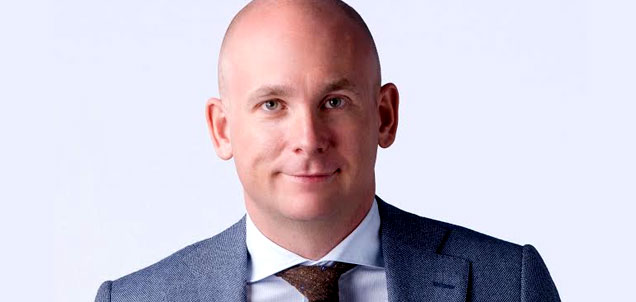
Programmatic ad buying has been and still is changing the face of online advertising, but still there is a lot of confusion and ignorance around what it actually is. So is it just goodbye to human negotiations and manual release orders with machines buying band booking ads? MxMIndia speaks with Michel de Rijk,CEO, APAC, Xaxis, the GroupM arm specialising in programmatic, who was in Mumbai last week. Excerpts from the interview:
Xaxis has been formed in 2011 and it has been in Asia Pacific since 2012. How has been the journey for so far in terms of the way the business has grown, the number of publishers and clients on board?
I think it has been a very interesting journey. Xaxis launched globally in 2011 and Asia Pacific in early 2012 when I joined. In general, the journey has been interesting because Xaxis was the first initiative like this within an agency holding group, this case WPP. The whole thing started back in 2005 or 2006 when WPP acquired a company called 24/7 and that was sort of a foundation for Xaxis later on. When we started in 2012, programmatic as we know it today was only running a little bit in Australia, the rest of the markets was nearly non-existing, especially the South-East Asia markets. We went in to these markets as the first entry in this space where we had to educate publishers, agencies and brands about what it means – the value of it. If you see where we started it at that time compared to where we are right now, the industry has run through a massive change. We are almost five years in right now, for us it means we got 18 offices across 14 markets in Asia Pacific, we have three offices here in India, just over 300 people we have currently in a region. Globally, we have grown Xaxis to 45 offices, close to 1300 people, so the growth has really been there. If I look specifically at India, I have always perceived India as a market where where technology is developing for outside India (unlike China where a lot of technology is being developed in the country). I think there is a lot knowledge and understanding of programmatic in market, I just do not think it has always been executed in the right way in India in itself and I think there are some opportunities and India is currently catching up a lot.
What are the learnings from APAC market that you think would be applicable for India? Given that India has had its peculiarity in terms of the digital development in itself as well as there is always this fear of whether programmatic will actually deliver results as the same way as human intervention would.
One of biggest challenges that India faces right now and the differences that they have with other markets in Asia or even the world is that I do not think India set the right fundamentals to be able to build a successful programmatic or audience-led strategy on top.
What do you mean by right fundamentals?
Things like measurement and ad serving- these are things that are fundamentals which if I talk to my counterparts in other markets outside of India or Asia and explain them that India is one of the markets where ad serving is not standard in the market, they are a little bit surprised by that because that has been a journey in their markets 10 years ago and everybody has accepted it and understands that. A third party measurement, a neutral view on success and performance is important. What is being perceived as results and how can programmatic actually deliver on expectations if the current way of buying is not being measured in a proper way. And, I think because programmatic is technology led, it needs to run on a foundation that is part of the technology led as well.
Are you doing something to evangelise this to ensure there are some standards? Obviously this is a huge stumbling block.
It is, absolutely! I think not only for programmatic but it is a huge stumbling block for digital growth in general. If you look at the brands which are successful in digital advertising, be it in e-commerce side or innovative bigger FMCG brands for example, they have embraced them and they understand that third partyad serving is extremely important for measure of their strategies.
In terms of clients, what you have are GroupM clients or you have clients who are beyond a client set of GroupM?
It depends a little bit on the market. From a global perspective, close to 25% of our business comes from outside of WPP clients that are partly driven from a Xaxis offering or one our other brands Plista, there is a lot of traction with direct clients. In India, our direct businesses are fairly small, single digit, which is clearly the focus for the remainder of this year and next year.
So with 75% of your businesses in various markets and in India, possibly more than that, come from within the GroupM fold, they also have to be convinced about your offering. How easy has that been to convince the internal customer?
It has not been easy. You sort of described it as internal customers and a lot of people in the industry think that it was easy for Xaxis to do business with GroupM agencies because we are in the same building, colleagues, sort of clients and supplier relationship and friends and all that. I think it makes it even more complicated. We need to deliver at least on par with better than the rest of the mediaplan to make sure that we stay in that mediaplan. I do not think the agency makes it easier for us. From an education point of view, it is not easy because the industry is constantly changing. Our products are changing as well because there are new products that we can launch based on technology, readiness and just the opportunities that we have. Every time you have to do re-education and re-training of all these people who come new in to these agencies. Like we have our own teams we have to keep training.
Are there challenges that you are facing with the internal customer? Are they the same in India as it is in the rest of the region?
There are few different challenges. In general, we are still working with a lot of internal, when we talk internal, our clients are agencies obviously, we are having a lot of education and a lot of discussions with these agencies around what have they done in the past and what are the new opportunities right now. I think in the past when media planning was placements and publish your ads, which have been changing because you do not have to buy media in bulk anymore like you used to be doing. You combined audience bases and do a cherry pick, single impressions based on the audience you want to reach as brand. I think there is a change of mindset. And, the second thing there is that brands and agencies are used to sort of a benchmark right now, whether it is performance or reach or anything like that now, which with all the new technology, data and insights that are there right now that they might not be the true benchmark. We go through this discussion with agencies and brands that click through rates of five percent is not a real benchmark. There is probably that has been driven on not real engagement with real audiences that we use as a benchmark and then go in to the new world where you are able to track and create more insights around whether there is real person behind the click or is it a fraud and all these issues that arise is that benchmarks may be set at a too high standard. So, now what programmatic brings to you, means that the results that are being delivered might be from a metric point of view but at least they are real results. People do not see that as long as their benchmark stays high, it is a difficult discussion to have because nobody wants to say that they have been doing it wrong for the past five years or so.
How has it been with brands and large advertisers? What is it that has convinced them to go in for programmatic as against traditional mode?
It all depends on what the brand wants to achieve. If you have to go back to the overall communication strategy of a brand, I think, especially what programmatic brings and eventually is just the technology, the underlining layer down. The whole idea of you as a brand, you may have a product or a service, what you want to do is reach an audience relevant to your product. We as an ecosystem have created a very complex world with all kinds of different matrices around in different channels which have been confusing if you ask me. But eventually we have to go back to the basics. So, how do we deliver what a marketer wants to have? I think we have over complicated the industry ourselves and we need to bring that back to more basic world. If programmatic technology and data gives you the ability to reach these audiences that you as a marketer want to have then everything in the middle is not relevant.
You have a central trading group as part of GroupM, and that is a very important and powerful unit over here which does the deals with publishers for clients. So, how does Xaxis work with them because they are doing the buying decisions and there are lot of deals and negotiations which are on which they get involved with.
The central trading group is extremely important and for big portion that creates the value that the group gives to brands. The word programmatic- it is a level playing field- a lot of people look at is as exchange and you bid against each other and your skill does not matter. That is how people look at programmatic. Real-time bidding (RTB) is there but only a small part of programmatic. In my world, zero percent of media goes in to RTB when we want to buy 100% in programmatic. Those are clearly two differences. In RTB, which is the biggest media buyer that we are as GroupM, do not create any benefits for our clients. The reason why any of our clients are with any of our agencies is because they are from a planning point of view, strategically they are good but also because they give and create training, that is why it is so important. You should not look at programmatic as a level playing field in RTB environment; you should look at it as an efficiency that brings technology to be able to do the cherry picking of the exact media but also the pre negotiated deals with publishers. That is why we still go the top 20 or 30 or 50 publishers in market and we set a direct trading relationship with them, whether it is Xaxisor together with the GroupM trading team and we set up these trading relationships where the execution of that trading relationship happens through programmatic. So, we have best of both worlds.
So, it does not happen through the CTG (Central Trading Group)?
Yes, we work very closely with them.
But, does it happen through them or does it happen through you’ll?
It is a little bit on their side and a little bit on our side. They bring clear value because there is a digital outlet of a big publisher; we have a big trading relationship with on TV. Then they support with their dealings in that. If it is more of a digital property where we deal with and most of the time Xaxis led.
Getting back to India, where given the fact that you have issues with measurement and other issues, where do you see business growing for you?
Unfortunately, I have not been in India for the last 10 months. But between my last visit and my visit now I have seen a big change already. The challenges around foundation..
In what way have you seen a change?
I think brands are more receptive and the foundation is extremely important and the measurement piece is extremely important. They start to understand thinking from audiences first instead from a product point of view; they have started to understand that a lot better from a year ago.
So, what are your specific targets for India?
There are a few things. First is education, people should understand the true values of programmatic. If I talk to a brand and the brand thinks programmatic is going to give them efficiency in their buying then that is sort of disappointing stage where the client is, because if you only look programmatic as an efficiency tool for your buying then you are missing out on the true benefits that programmatic gives to you. That is the main thing for this year and next year for India. That is the core thing. For us, on top of that is that we keep developing our centre pieces of technology called turbines, which is the Data Management Platform (DMP) that houses the biggest audience pool, also in India. There has been too much focus on from brands and agencies on which DSP (demand-side platform) should I use because there are so many out there. We have this fundamental belief that it does not matter which DSP you use because there are just pipes to inventory. For us the differentiator is how to we create a valuable data pool where our clients can execute on and that is what we have been doing.
Do you see business doubling?
We have been seeing business at least doubling over the last four years, I continue to expect that. I do not know the exact growth numbers in India when it comes to digital and programmatic. What we see that is programmatic, globally, still grows that 35-40 % that includes various markets like the US, Australia and UK. We see across Asia it is probably close to 50-60%. And, as long as we are growing faster than the industry does, which we have been doing, means that we have maintain our leading position in market.