Tag: Michael Roth

  • IPG’s big bet on India


    By Shambhavi Anand


    IPG is coming off a bad year with a significant decline in net income. What are the reasons for this? How’s 2014 looking?

    We did not achieve our goals and the primary reason for that were problems in Europe. We took a restructuring charge of $61 million to rightsize our cost profile. We also had some new business wins and expenses, and cost to pitch for new businesses ahead of revenues. Some of our agencies were not performing well. We took care of that in the restructuring so those were the reasons we could not deliver the margin we were looking for. The restructuring charge should give rise to $40 million benefits in 2014 and growth in the range of 3%-4%. We expect to expand margin by at least a 100 basis points.


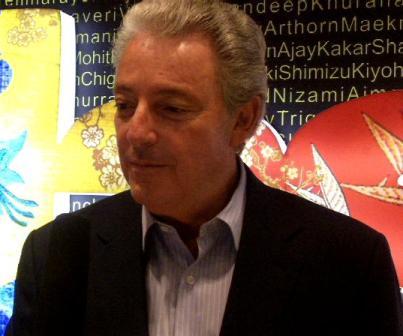
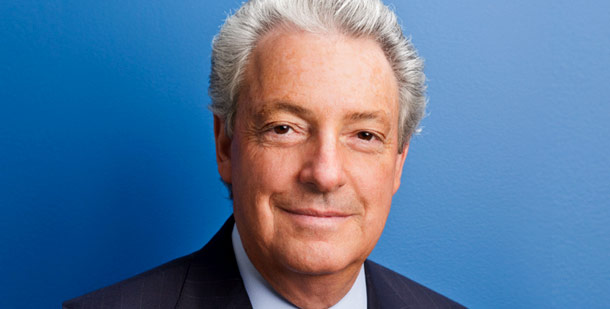
    Michael I. Roth


    Michael I. Roth is Chairman and CEO of Interpublic, one of the world’s largest organizations of advertising and marketing services companies.  Prior to serving in his current role, Mr Roth was a member of the company’s Board of Directors.


    Since assuming leadership of Interpublic in 2005, Mr Roth is credited with righting the company’s financial course and moved to make it an industry leader by defining new models that provide value to clients in a rapidly-changing media and marketing environment.


    Prior to his current role, he was Chairman and CEO of The MONY Group Inc., a financial services holding company that provides a wide range of protection, asset accumulation and retail brokerage products and services through its member companies.


    A certified public accountant, Roth holds an L.L.M. degree from New York University Law School and a J.D. from Boston University Law School. He is a 1967 graduate of the City College of New York.


    Given the Indian economy has been sluggish for a while, how has that changed or affected IPG’s hopes?

    The fact that we brought our board of directors here even though there is a slowdown indicates how important India is. Every market is going through a slowdown but the opportunities India offers are immense. We wanted to send a message to everyone that India is important to us. It is our second largest market and some of our best brands Lowe, FCB and McCann are continuing to grow.


    How do your clients feel about India as an investment destination?

    We invested in three acquisitions in India – Interactive Avenues, End to End Marketing Solutions and Corporate Voice. They show the confidence we have in the future. Macro economic conditions affect the environment in every economy. But with the kind of growth we have had, we can work through difficulties. Even in tough situations India has grown at 5%-6%, which is good. In the United States growth is around 2%-3%.


    What’s your evaluation of your Indian operations? Are you looking at any further acquisitions?

    We have done very well here. Including the acquisitions our growth is somewhere around 70%. We bring all the IPG offerings to the table here in India. We are always looking for acquisitions in various markets. We want to hear from our agencies on what’s substantial on the horizon. For us digital and activation seem to be the two most important areas of interest. That is one of the reasons we came here. But please don’t ask me to name names.


    Would you care to address the speculation that a merger between WPP and IPG is imminent?

    There used to be speculation about IPG and Publicis too. But there is no need to do a transaction like that. We have all the global offerings and disciplines to be competitive. We don’t need capital. The only reason we would do something like that is when somebody put a compelling price for shareholders on the table.


    But no one has done that so far. How do you believe the Publicis Omnicom merger will affect the industry?

    Whenever a transaction of this kind happens it will take a long time to be integrated. In this case, it is taking a long time even to happen, and in the meantime there will be disruption. We are seeing recruiting opportunities. There are disruptions in a number of their offerings and we hope to be a beneficiary of that. Obviously, there will be conflict potential, although the transaction has not taken place yet, so we haven’t seen a lot of it. We don’t view it as a threat. Everyone thinks that their media offering will be big. But it will be as big as WPP and we have proved to be very effective against them. Not being so big that we can’t be flexible and responsive to clients needs and provide the human touch. The answer is I don’t go home and worry about it.


    How has IPG Mediabrands which is competing in many markets where the other media agencies have a bit of a headstart doing?

    In 2013, Mediabrands was our best performing asset. So that is a pretty good indication that they are doing well. We don’t give specific figures on the profitability of our agencies but clearly both in India and on a worldwide basis they are leading us on growth, revenue and margin expansion.


    Source:The Economic Times

    Copyright © 2014, Bennett, Coleman & Co. Ltd. All Rights Reserved

    Licensed to republish
     

  • India@Cannes: Balki & Shekhar Kapur talk of how to do business in India


    By A Correspondent


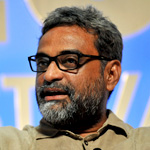
    Shekhar Kapur

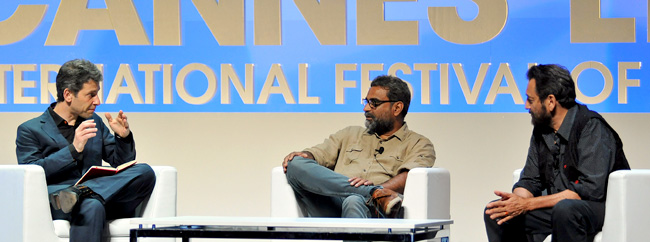
    One of the most exciting sessions on Day 3 of Cannes Lions 2012 – and not just for Indians – was the one by Lowe + Partners titled Global India. Oscar-nominated film director Shekhar Kapur and filmmaker and Chairman & Chief Creative Officer of Lowe Lintas, R Balki were in discussion with Wired editor David Rowan. On the seminar agenda was a look at the creative heritage of India and its influence on global culture and enterprise. This was the first time that Cannes Lions featured a seminar dedicated to Indian creativity and its global influence.


    Introducing the speakers, IPG Chairman Michael Roth stated that the session at Cannes was an indication of the importance of India in the global economy. Speaking of the growing importance and the shifting focus to India, Mr Balki said, “What has changed over the years is that earlier, India was judged globally. Today, India is the jury, be it the global products or ideas.” Talking about Indian creatives on a global platform he admitted that a lot of things don’t make any sense to the rest of the world. But he also pointed out that brands who have tried to implement global theory, have messed up in India. He said, “Global brands have to come to India selling like a local brand. Any global thought has to be highly ‘Indianised’ to be implemented in India. And, it’s a difficult job.” Mr Balki added, “If you want to know India, watch ‘The Story of India’ by Michael Woods.”


    R Balki

    Furthering Mr Balki’s point of an ‘Indianised’ idea, Mr Kapur remarked that India was a land of imagination. He said, “The West calls us melodramatic, we call it mythical.” He added that any idea to work in India has to be magically ‘Indianised’.


    Speaking on the impact of social media, Mr Kapur agreed that social media was set to change the way we live but not advertising. He also agreed that social media holds an opportunity for India and he said that the new real estate is the social media. He said, “Fifteen per cent of the world’s teenage population will live in India. So there will be a large number of consumers on social media. This will make us an influencing economy, if not a dominant economy.”


    Discussing his views on social media and its impact, Mr Balki remarked that social media currently in India is a one-sided communication, where we are expressing ourselves but not accepting messages. Talking about the Indian economy, Mr Kapur said that Indians needs to move from being job-makers to job-creators.


    Sharing tips for global brands entering India, Mr Balki said, “Stop looking at India as a market and you will succeed. And, let the Indians do the things in India.” Mr Kapur added, “When the West stops looking at India as a market and starts looking at it as a culture, they’ll make it there.”


  • How the WPP and Interpublic Group fared in 2011

    By A Correspondent


    WPP reported record profits of more than $1.45 billion for 2011, up a whopping 43 per cent from the year prior, and the holding company expects to see continued momentum in 2012 due to increased ad spending for the US presidential election and this summer’s Olympic games, according to Ad Age.


    Reported revenue for WPP, the biggest ad holding company in the world and home to creative agencies such as Ogilvy, JWT and media-buying behemoth Group M, was up 11.4 per cent year-over-year to $16.05 billion. However, WPP’s CEO-Executive Director Martin Sorrell is less optimistic about 2013, as there are no big events to bolster ad spend, and political ad dollars will drop off following the election.


    “We think 2012 looks similar to 2011, maybe at a slightly reduced level,” said Mr Sorrell. “But the one big cloud on the horizon we feel the need to address in 2013 is deficit reduction after the US election.”


    WPP said North America performed well, and in Europe the debt crisis is impacting growth, but overall the company said it still fared well in the region thanks to strong growth in the UK and acquisitions in Western Continental Europe.


    The company reported that Austria, Germany, Switzerland and Turkey, all showed strong like-for-like growth for the year, but France and especially Greece, Portugal and Spain remained affected by the Eurozone debt crisis. In 2011, nearly 30 per cent of WPP’s revenue came from Asia Pacific, Latin America, Africa and the Middle East and Central and Eastern Europe.


    The company said that emerging markets in Asia, Latin America, Africa and Eastern Europe represent the highest growth regions for WPP. The company plans to spend between $470 million and $630 million on acquisitions this year, Mr Sorrell said. The focus will remain on small and medium-sized agencies, particularly those in new markets or specialising in digital work, data analytics and technology.


    The past year saw a number digital agency acquisitions, including: F. biz and Gringo in Brazil; Rockfish and Lunchbox in the US; Who Digital in Vietnam; Promo in Russia and A4A in China. The company made a total of 38 acquisitions and 10 investments in 2011.


    The Interpublic Report-Card 2011

    US-based ad holding company Interpublic Group of Cos has reported that it nearly doubled its net income for 2011, up 96 per cent to $551.5 million, up from $281.2 in 2010, according to Ad Age. The company’s annual revenue was up 7.8 per cent, to about $7 billion.


    “Building on a very good 2010 result, we continue to show organic revenue growth that is at or near the top of our peer group,” said Interpublic CEO Michael Roth. “This performance keeps us on track to deliver on our goal of fully competitive profitability in 2014.” Mr Roth added all of the company’s regions grew in terms of organic growth in 2011, except for Europe, which is in the midst of a debt crisis.


    For the full year, continental Europe was down 0.1 per cent. The best region for organic growth last year was Latin America, which was up 17.8 per cent. For the fourth quarter, US organic growth was up 2.2 per cent, Latin American was up 30.4 per cent and Europe was down 3.2 per cent. Interpublic’s digital agencies, MRM, part of the McCann network, Huge and R/GA, significantly contributed to the company’s growth.


    In 2012, the company is targeting 3 per cent organic growth, noting “significant macro uncertainty on the global level.” Interpublic agency networks McCann Erickson and DraftFCB both saw major accounts defect in 2011. McCann Erickson lost Nescafe and other accounts, while DraftFCB lost SC Johnson and is now having to share Miller Lite with Publicis Groupe’s Saatchi & Saatchi.


    Source: The Economic Times

    Copyright © 2012, Bennett, Coleman & Co. Ltd. All Rights Reserved


  • AdAsia: Change, the only constant


    By Shruti Pushkarna and Tuhina Anand

    [youtube width=”400″ height=”300″]http://www.youtube.com/watch?v=VswkUKXre-I[/youtube]


    The AdAsia 2011 conference opened to a jam-packed hall at the Taj Palace yesterday in New Delhi. Welcoming over 1200 delegates, Minister for Information and Broadcasting Ms Ambika Soni said who else but the government of India could understand the theme of this conference better, for which “uncertainty is truly the only certainty”. Going further with the Minister’s perception of change being the only constant, MxM India’s Shruti Pushkarna and Tuhina Anand caught up with a few delegates to see what ‘Uncertainty: The New Certainty’, the theme of this edition of AdAsia meant for them and their respective businesses.

    Through the sessions, speakers and delegates seemed to be in general agreement on how the world is changing rapidly, especially in terms of technological advancements, and it is the pace at which one adapts to this change that will determine how successful or unsuccessful one is.


    Michael Roth, Chairman and CEO, Interpublic

    Michael Roth, Chairman and CEO, Interpublic said that the focus is on change, and with the global economy changing, the highlight of this conference is the need to stay ahead of the curve in terms of new technology and new economies. While Piyush Pandey, Executive Chairman & Creative Director, South Asia Ogilvy & Mather also agreed that the focus of the theme is about keeping our minds open to change, he added, “It does not mean that you have to change tomorrow morning… but prepare yourself for the change, if you are not ready for it, you will get left behind.”


    Tom Doctoroff, JWT North Asia Area Director Greater China, CEO


    Tom Doctoroff, JWT North Asia Area Director Greater China, CEO, however also put some stress on consistency. He said while the theme of the conference might be provocative, we have to acknowledge that which remains timelessly true, like robust brand equity and big brand ideas.


    Vikram Sakhuja, CEO, GroupM South Asia

    Vikram Sakhuja, CEO, GroupM South Asia put it in simple terms, saying, “Uncertainty is the new certainty in the context of marketing primarily because communication to consumers has moved from a sequential, controlled, advertiser talking to consumer, to much more devolved, fluid and instant conversation with a consumer”.


    Ravi Deshpande, Chairman and CCO, Contract Advertising

    Talking about the correlation that the politico-social world shares with the sentiment or the idea of a brand in a consumer’s mind, Ravi Deshpande, Chairman and CCO, Contract Advertising said, “…You are bound to have an impact on marketing or advertising when the world around us keeps changing… if the world is uncertain, so are we in our business.”