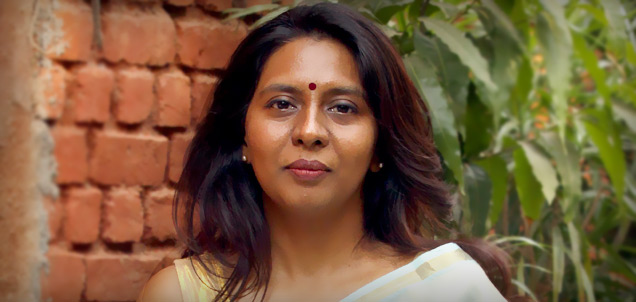
Meenal Baghel is the founder and Editor-in-Chief of Mirror, the nation’s most sprightly newspaper. Mumbai Mirror was launched seven years ago, and today the paper has editions in Pune, Bangalore and Ahmedabad. A part of the Times group, Mumbai Mirror boasts of a fantastic circulation of nearly 600,000 copies, and it’s become the city’s favourite compact paper.
Meenal relives the journey with us, and speaks candidly about the many challenges she’s faced along the way. We also discuss her first book, ‘Death in Mumbai’, which received wide critical acclaim.
I did a stint with Mumbai Mirror some years ago, and this gave me a chance to watch her in action. Meenal can be a demanding editor, she can be impatient, she can be tough. While these qualities don’t endear her to some, they have played a huge part in her success. I have to say she’s the most passionate editor I have worked with.
By Anil Thakraney
It’s been seven years editing Mirror. How’s the journey been? Tell me the highs and the lows.
The high obviously has been to see the paper become an important part of Bombay. We have been successful in forging an emotional connect with the readers, which is very important. We get an enormous number of people calling in with stories. And we’ve routinely broken a lot of stories, so those are the big highs. The low is that the paper is still a bit inconsistent. You know, when we started the paper, it used to be called Mumbai Error. I wish we had a cleaner start in terms of the paper being more finished. But it’s been a sort of work in progress. We have learnt a number of journalistic lessons along the way because the market has changed, the reader has changed. For instance, when we were at Mid-Day, you could get away with a lot of things. But in this day and age, you can’t.
Give me an example
Like sometimes when, just to break the monotony, you put an entertainment story on the front page, there is a backlash. People now expect a more serious newspaper, it’s something different from what I had envisaged. But that’s also because there’s so much of entertainment everywhere that people don’t want more of it.
One story you regret
We ran the FIR of the TISS girl who was raped. That was a mistake. Because the details in the FIR were very graphic on what had transpired. And you realize that you may have ended up titillating. I regret that story, we got terrible feedback for it and we apologized for it.
 |
“I don’t think journalism offers enough challenges to the really bright people any longer.” |
I still see a number of typos in Mirror. Is this an un-lickable problem?
I think there is a very real problem with journalism today, and it’s not only limited to Mirror. The problem is that the deskies is a disappearing breed. And it’s going to be a big challenge over the next few years. Also, there are very real problems we are facing, and these are going to change the profession drastically. It’s so rare to find people who want to come into journalism because they want to be journalists. For example, when you ask people, ‘Who edited this copy?’. Invariably the response will be: ‘I looked at it/I glanced at it/I skimmed through it.’ Another thing is I don’t think journalism offers enough challenges to the really bright people any longer. There is an attrition problem across aboard. People want to try out various things. When you and I were growing up, it was about sticking to a profession, a career path, and that no longer holds true. People now have the advantage of taking breaks, taking gap years, studying, etc. The journalism hours don’t allow too much of a personal life. And I think HR, owners, publishers, editors need to take all these things into account.
Is the passion for journalism diminishing in young India?
I think the important thing now is personal growth and personal life. That has taken precedence over wanting to change the country.
What was Vineet Jain’s brief to you when you signed up for Mirror?
His brief was very clear. He said it should be a smart paper and that it should be different from the Times of India. And because it’s a compact size, there are elements of a tabloid that you can incorporate. In fact, when we started the paper, there were a lot of conflicting opinions, so I was a little tentative in the beginning. And then one day he called me and asked why was I so tentative. He said, “I have given you this brief, just stick to it. And don’t be apologetic about it.†So that was wonderful.
You think this country is ready for a Brit style tabloid?
No. Though it’s very interesting because everybody is trying to incorporate the tabloid elements, but you can’t be openly unabashed about it. We are not ready for it. For instance, look at the responses Dr Vatsa’s column gets.
Guess it’s a tightrope walk. You want to be tabloidy, and still have to be aware the nation isn’t ready
Yes. Sometimes in the newsroom we think we can do a story, but when we see the backlash the next day, we start being more careful by censoring ourselves.
And the problem is if you play safe and cut down on controversy, you get dangerously close to the TOI
Yes. So what we try and do is this: I always say our competition is the Times of India. Because we go with the TOI. Now the TOI has massive width, they do like sixty stories at an average. So our battle is to out-think the TOI, in the sense that ‘this is what they will do, so let’s do something different’. We can get away with some naughty things that they can’t.
Lots of court cases?
Actually they’ve come down, ever since we’ve become safer. (Smiles.) But there’s also a lot of frivolous litigation, which is easily dealt with.
More editions in the offing?
At the moment, no.
And for Mumbai Mirror, are you still as hands-on as ever?
See, I am out for lunch with you! (Laughs) But yes, I like being hands-on. There are times when I can breathe down people’s necks. But I am trying to back off a little now that we have a very competent senior team. I also realize that people should be given more space, but it’s difficult. (Laughs.)
 |
“The TOI has lots of products that come with it, but everyone doesn’t necessarily read all of them, right?” |
Meenal, the perception is that Mirror benefits a lot from being the TOI’s free paper. Without that advantage, your circulation would be nowhere close.
I am lucky and I won’t question my luck. We have a great readership, thanks to the TOI. But then you have to capitalize on that luck, you still have to deliver a good product. The TOI has lots of products that come with it, but everyone doesn’t necessarily read all of them, right?
If you were a standalone paper, how much circulation do you think you’d lose?
I guess we’d retain 60%. Because Mirror has become a genuine commuter’s paper. You have to travel in the train to see how many people carry it. It started off as a guilty pleasure, which people didn’t want to acknowledge they were reading, but they were all reading. But over time it has also become a lively paper. And that can’t be said about too many other papers in town. And people like that.
Would you say Mid-Day was your training ground?
Absolutely. I had always worked with broadsheets before that – Pioneer, Asian Age and The Indian Express. So when I joined Mid-Day, for a while it was like, where the hell have I landed? This is not how journalism is done. For the first six months I had no idea what I was doing. But I was in a senior job and I was getting paid an X amount, and I must tell you I HATE giving up. And then one day I went for a walk and said to myself the paper won’t change because of me, there was a reason why this paper was so beloved in Bombay. And that was the Eureka moment for me. I decided to try and understand it rather than look down upon it. And that changed things. I must say I learnt a lot from Aakar Patel (the then editor of Mid-Day). I learnt a lot from what the paper did on Page 1 and on headlining.
One Indian print editor you most admire.
I owe everything I learnt in journalism to MJ Akbar. About writing, about making pages, about what not to do, etc.
It’s been seven years at Mirror. Don’t you feel the itch? Isn’t it tiring to do the same thing day in and day out?
I keep wondering why nobody else offers me a job! I am joking, of course. Which is why doing the book was wonderful for me. It gave me a chance to step back and follow a story that had been fascinating me. And it was extended journalism. I have always felt when the number of days you feel bad about what you do exceeds the number of days you feel good, you should quit. I haven’t reached there. And there’s always something exciting happening.
Being a hard-edged journalist, how do you reconcile with something like Medianet?
That’s easy, because we don’t have Medianet in Mirror.
But it’s there in your group.
It doesn’t affect my life, so I don’t care about it.
You aren’t asked to carry plugs?
No. And it’s one of the things that has pleasantly surprised me. They have maintained the Chinese wall from the start.
They have left you alone?
Yes. And there’s another reason. Mirror is a small paper in the group, so it’s not necessarily the focus. We are a small cog in comparison.
Have you ever been asked to drop a story?
(Pauses) Not drop a story. I think what one learns over a period of time is that you have to pick your battles. I’ll give you an example: If there’s an entertainment story which is coming right ahead of the Filmfare awards, where somebody is going to be performing, and I have a damaging story on that person, would I delay it by a few days? Yes, I would.
There used to be intense rivalry between the Independent and the TOI. Is it the same with you?
Not rivalry, but there is great competition. When the TOI does something, and we’ve missed it, I give my reporters hell. And I am sure JoJo (Jaideep Bose) does the same when we get something.
|
“Mid-Day killed itself. And I feel really bad. I feel bad that what was such a robust paper is no longer that.” |
You’ve pretty much killed Mid-Day. Feels good?
The paper killed itself. And I feel really bad. I feel bad that what was such a robust paper is no longer that. We all worked very hard out there. We worked our asses off at Mid-Day and we used to take great pride in the paper being so robust, that it was second only to the TOI.
What would you do if you were editing Mid-Day today?
I’ll bring in more energy. What’s going for Mirror despite the inconsistency is that it’s never dull. And dullness in journalism is a cardinal error. Especially if you are a tabloid.
Let’s shift to your book, ‘Death in Mumbai’. Does Meenal think Maria Susairaj got away lightly?
I must tell you I ended up liking her quite a bit. I feel that she is a manipulative woman and that she may be a tease. But that’s not a crime, there are a lot of women like that out there. Did she kill or abet the killing? I don’t think so. She was in love with Emile Jerome, she really wanted to marry him. But he wasn’t committing to her. When he killed this guy, it was, in her mind, like his commitment to her.
When you started writing, was there something you had decided you won’t do in the book?
The only thing I told myself is to not be judgmental. Because someone else’s idea of morality could be different from mine. Like, I started out with a certain view of Maria but it became something else.
In fact, that was the only criticism I read about the book. As a journalist, readers expected you give us your own view. Perhaps as the epilogue.
There were genuine difficulties. Something happened in a room where there were only three people. One guy is dead and two are in jail. There is only so much information I had. And I genuinely did not want to play judge.
You have always kept a very low profile. Marketing the book must have been tough.
(Laughs.) It was! It was terrible. The only time you would see me on television was on things that were related to the book. Otherwise I wouldn’t be caught dead going on TV.
Any more books coming up?
I would like to write more books, but I love this job too much. Ideally I’d like to do both. But I haven’t thought of another subject so far. Might be interesting to write fiction.
Would you like to edit the TOI?
No. I think it would be fun to edit a broadsheet, but I don’t think I am ready to edit the Times. It’s the biggest paper in the country, it requires a greater understanding of business, politics… and I don’t think I am ready for it. Also, it requires certain people skills which I perhaps don’t have.
Don’t rate yourself high on people skills?
I think I am very good. But I need to be more patient. I can be impatient and that’s a serious shortcoming.
You are 43. Don’t want to marry?
It’s too late now (Laughs).
Is it important to be single to edit a high pressure daily? Is it a price one pays?
Sure. It’s a price a lot of women, more than men, have to pay for any high pressure job. It’s unfortunate, but it’s a fact. I may have been married, but it would have been very difficult with children.
Photographs: Fotocorp

 By Anil Thakraney