Tag: Meenakshi Menon

  • Meenakshi Menon joins Icogz as Chairperson

    By Our Staff


    Meenakshi Menon
    Meenakshi Menon

    Meenakshi Menon has joined the board of Icogz, a business intelligence platform, as Chairperson.


    On the recent association with Icogz, Menon said: “Over the years my objective has been to deliver data driven actionable insights helping brands and businesses. That continues to be an area that fascinates me given the seismic shifts in the market place. Brand-owners today are drowning in data, that’s probably why the term Data lake! Unfortunately the digital world encourages silos given the fact that the two biggest players have walled gardens with restricted access. When I saw what Icogz had done in combining independent sources of data and establishing causal patterns across disparate data sets it was truly a Eureka moment.  For me it’s a fantastic opportunity to help a young dynamic team grow their business while helping brand owners, a constituency I have worked with for the last 40+ years. I have always believed in walking the talk and thus the investment, as not only do I believe in the product but also the team behind the product and their vision to build a truly world class product.”


    Amit Tripathi
    Amit Tripathi

    Added Amit Tripathi, Founder & Managing Director: “It gives me immense pleasure and honour to have Meenakshi on board as Chairperson of Icogz. Icogz has been a dream cherished for a while, and today is arguably one of the foremost Data AI tools in the industry. Having known Meenakshi for over two decades, it is extremely encouraging to associate with her and carve growth strategies for taking icogz® to the next level. We are currently engaged with some of the biggest brands across the World to build actionable intelligence and insights in their business, and under Meenakshi’s mentorship we hope to make a meaningful difference to their bottom lines as well as business growth.”


  • LokmatSakhi collaborates with FOGSI’s Narikaa

    By Our Staff


    LokmatSakhi.com, a Marathi portal for women by Lokmat Media, has collaborated with Narikaa, Federation of Obstetric & Gynaecological Societies of India initiative. The objective of this collaboration is to generate personalised material in Marathi about women’s health and well-being.


    Talking about the initiative, Hemant Jain, Senior EVP and Head of Digital Business, said: “We at LokmatSakhi.com are trying to break this barrier and trying to reach women across the globe with scientific information and useful content in Marathi language. The content is created with an objective of making safe, scientific, friendly space for women to seek proper health advice, medication and help them to get rid of taboo and fear. Our aim is to make women aware about their health and add value for the betterment of their lives, making them happy and healthy.”


    Added Meenakshi Menon, Co-Founder of WayBeyond Media: “When you help a woman or a girl with the correct information to protect her health and well-being, she becomes a valuable member of the community and society at large. The goal is to influence not just women and families in metropolitan cities, but also on the women in rural India.”


  • Meenakshi Menon’s Spatial Access is now a Deloitte company

    By A Correspondent


    It’s formal and final. It’s was rumoured to have happened in February this year, but now the official commuique has been issued. Deloitte Touche Tohmatsu India LLP (Deloitte) has acquired Spatial Access, the leading advertising and marketing advisory and analytics firm, founded by Meenakshi Menon. The move will  enhance Deloitte’s advisory capabilities and enable brands to make more efficient advertising and marketing (A&M) decisions.


    Speaking on the acquisition, Chandrashekar Mantha, Partner, Media and Entertainment Industry lead, Risk Advisory, Deloitte India said “Deloitte strengthens its foothold in the advertising and marketing advisory space by enabling our clients to enhance the effectiveness of their marketing spends which are directly aligned to their business objectives. Our endeavour is to help brands address their business challenges by introducing value added, and differentiated tech-enabled solutions across the A&M value chain,” he added.


    On working with Deloitte, Menon added: “We are excited to be a part of Deloitte. At Spatial Access, our differentiator lies in understanding the key challenges of the advertising and marketing fraternity. We have an insiders’ view of the industry.


    This proposition – combined with the need to scale up the impact of marketing through the technology and analytics skills of Deloitte is poised to provide a more holistic, effective, and efficient solution suite on a larger platform and most importantly, deliver significantly enhanced value to our stakeholders.”


    Spatial Access had a team size of around 30 people and over the last 15 years has carve a niche in the industry with its media spends advisory specialisation.


  • Spatial Access appoints Vineet Sodhani as CEO

    By A Correspondent


    Vineet Sodhani

    Spatial Access has appointed Vineet Sodhani as CEO. He takes charge after Geetanjali Bhattacharji left Spatial as CEO to join Discovery Communications.


    Said Meenakshi Menon, Co-Founder and Chairperson, Spatial Access on the appointment: “As media moves into a new era of complexity, Spatial Access, under its new leadership, will simplify it for its clients with custom solutions, many of which will be first time in the industry! With Vineet’s strong background in research and strategy, we will provide valuable insights, a lot of it in public domain, so that the industry gets more value.”


    Sodhani was on a sabbatical since April 2017 before which he worked with Times Television. He has also worked with Starcom Mediavest, Hansa Research. AC Nielsen and ORG-MARG. In 2012 he co-authored Guide to Indian Markets and is presently working on his second book.


    “I am excited to join Spatial Access to create an even more dynamic and vibrant organisation,” said  Sodhani, CEO, Spatial Access. “Spatial Access has that rare combination of a great customer and knowledge base. This strength will be used to drive value for every rupee spent on advertising, be it ATL, BTL or digital. We will raise some critical questions, for example, transparency, ROI and wastage. This may raise eyebrows as well as tempers, but if it results in improving benchmarks, we will feel we have delivered value to our clients.”

  • So which ads are most gender-sensitive?


    The image of the women in Indian advertising, is changing. From wife/mother/homemaker earlier, she is now career person/influencer/decision maker as well, which is a more accurate reflection of society. But it is still only a handful of ads that have gone a step further to bend gender stereotypes and show men taking on the roles traditionally played by women in a household. Gender sensitivity in advertising is still some way off, but the new, empowered woman in today’s creatives, shows it isn’t that far down the road either. Meenakshi Menon, Founder, Spatial Access, and AL Sharada, Director of Population First speak about how today’s ads have come a long way and pick their favourite TVCs…


    Do you think advertising is more gender-sensitive today than ever before

    Meenakshi Menon: I think the biggest problem with advertising today is that it lives in cuckoo land. You see the people in ads that you would never come across in the street. And the way advertising portrays women has also historically been a problem. But I think recently, one has seen a positive change.


    AL Sharada: There has been a visible change in the last two or three years, perhaps as a reaction from younger women and men against gender stereotyping and gender violence. Also, more women today are influencing and being actively involved in purchase decisions. There is more participation of women in the workforce, so obviously advertising can no longer ignore them. I don’t think it is being done because of social or altruistic reasons but it [has become] an important issue for [marketers]. Particularly with digital media, they are able to explore these issues in a more elaborate way.


    Menon: Now that you mention digital media, I think a lot of advertisers today are concerned about the gender issue not because they are genuinely concerned, but because digital and social media will immediately pounce on somebody if they are seen to step out of line. So thank god for social media.


    And would you say that gender-sensitive ads can really change social beliefs and improve the lot of women in the country?

    Menon: It’s a popular myth that advertising reflects the reality of life. So if wives are being beaten up in the privacy of their homes, should they then also be beaten up in the public arena of television? This is such a stupid argument. But as practitioners of advertising, if we believe that because of our creative work people go out and buy one brand rather than another, then it is our responsibility to not just reflect society, but actually guide society as well.


    At Population First, you’ve been doing a lot of activities to educate advertising people. Do you think you have been successful?

    Sharada: It really had a lot of impact in the sense that the [feedback] we received from the senior-most leaders in the industry was amazing. And that makes me very optimistic and hopeful that we will be able to take this agenda forward. Particularly, if you look at the fact that an ad is instituted for gender sensitivity this year means a lot because the industry is recognising gender-sensitivity as an intrinsic value for good communication.


    So let’s talk about the ads that you find worthwhile, sensitive and ‘right’…

    Menon : I’ve been very impressed with Ariel’s Share the Load ad. Everytime I see it, I want all the men that I know, to see it too. Today it is becoming increasingly fashionable for men to cook, but it’s not fashionable to do laundry. Everywhere across the developed world, laundry is seen as a chore for the individual — men and women do their own laundry. What I really like about it is that it’s the father saying, with regret, that he did not help his wife, or [pay heed] when his daughter was playing house while his son was playing cricket.


    Sharada: I totally agree, because in all our campaigns, we see that if you don’t change the family, you can’t change society. The balance between the father and mother is [shown as] unequal and this gets perpetuated through generations. This ad actually talks about the whole gendering process that happens in the family, where the girl is given a tea set to play with, while a boy is given a cricket ball, and how that builds up all the associated roles and responsibilities, which are not equal.


    What other ads would you list among the Top 3 or 5 on gender sensitivity

    Sharada: I think the Titan Raga ad is good because it talks about the right of the woman to have a career, and also subtly and effectively shows the attitude of a man when he wonders how he can be without a job…


    Menon: Another ad I thought interesting was the Biba arranged marriages one, where a hackneyed, traditional situation – of a boy’s family coming to see the girl – is [turned on its head] when the boy says, ‘Give me 10 days, and I will learn to cook something for you’. I thought that was really amazing.


    Sharada: There are two or three ads that challenge the gender stereotypes of a man. One of them is the Samsung Galaxy Note 4, where they show the man spending time with his daughter, taking her for her performance, taking her out for a meal and then, because he has to get back to work, he takes her to his office. The work-life balance we see in this ad, is usually associated with women, but here a man is seen striking that work-home balance. Another ad I like, which is similar, is the Raymonds one where a man opts to stay home to look after the child while the woman goes to work. We really need to question the ‘macho’ image of men, and bring in new and more socially-acceptable images of them. I also like the Myntra ad where a woman decides to leave the job [because her boss has promoted someone else over her because she is pregnant]. It addresses a very important issue of gender discrimination in the workplace and it was significant that they had a woman boss in the ad…


    Any message for marketers and the creative fraternity on producing gender-sensitive advertising?

    Menon: One way to distinguish advertising that is gender sensitive from advertising that is gender offensive, is for [a male] creative director to ask himself if he would be okay with an ad that portrayed his wife or mother in a similar way. If he uses that as a filter, then you might find more people saying this is ok, and that is not. We need to educate people on how they can tell whether something is gender sensitive or not.


    Sharada: There are four or five points which you should keep in mind when you are creating an advertisement. You should give equal space and an equal role to both men and women. I find many youth brands doing that, having an equal number of young men and women in the ads. Second, the way they are addressed and spoken to in the ad, is also very important. Third is to keep this in mind: Are you promoting certain stereotypes because they are comfortable and accepted, and will not cause hassles, or are you reflecting the reality? If you keep these things in mind, I think you can avoid being gender insensitive in your communication.


    Menon: Frankly, I think that we have seen a lot of gender-sensitive advertising today because more and more marketers are concerned about consumer backlash. Because of social media, it is very easy to point out something that is offensive. And yes, this trend is not limited to the urban areas alone.


    A part of this discussion appeared in BrandStand on Zee Business on March 5 and 6. Catch it on YouTube at http://bit.ly/BStand05Mar16. This story first appeared in dna of brands on March 7, 2016.


  • ‘Is Anyone Listening?’ @ Media Review 2015


    By A Correspondent


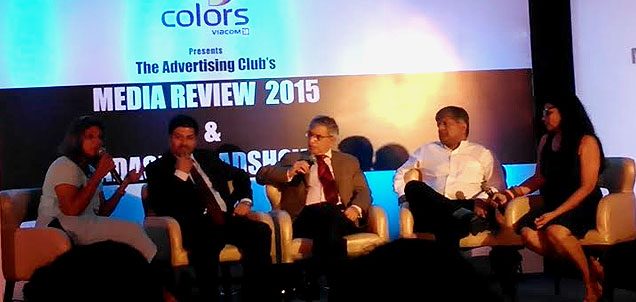
    On a day that threatened to be washed out thanks to a heavy downpour, the Advertising Club hosted its annual event, Media Review 2015, on Tuesday in Mumbai. The speakers included Shashi Sinha, Chief Executive Officer, IPG Mediabrands India, Meenakshi Menon, Founder and Chairperson, Spatial Access; Pradeep Dwivedi, Chief Corporate Sales & Marketing Officer, Dainik Bhaskar Group, and Punitha Arumugam, Head of Agency Business (India & SEA) at Google.


    Each speaker spoke on the topic ‘Is Anyone Listening? How Did Ad and Media Industry Combat The Challenge Of Continuous Partial Attention of Audiences.’


    “The ad model cannot continue to behave like an ostrich,” Meenakshi Menon said stressing that clients want to see the model changed. Most agencies today have launched a digital unit, but have no idea what to do with it, she added. “Companies live quarter to quarter, clients are restless and CMOs want to change the set up,” Menon said.


    Pradeep Dwivedi painted a colourful portrait of the print medium in India. The challenge is of how to get your attention back, he said talking about how we ought to rediscover print. It is not true that print isn’t emotional he said, print can be just as emotional as TV he pointed out highlighting a few print ad campaigns that were much talked about. “Print continues to evolve, and it takes up social issues as well more than any other medium,” Dwivedi said. Marketers need to get out of this metrocentricity, step out of the metros and figure out what people want, he said.


    Shashi Sinha, dwelled on the topic of managing media in a continuous partial attention world. He quoted Lord Kelvin, ‘If you cannot measure it, you cannot control it’, he said stressing on the importance of having a reliable measurement system in place. The core reason for the well-being of the industry is measurement, he pointed out. “Programmatic is the buzzword these days and we ought to link digital, TV and print measurement,” he said.


    “Big egos have little ears,” Punitha Arumugam said talking about the importance of paying attention to the consumers. “We have to listen to the consumer in this moment, now, not tomorrow,” she said. Arumugam cited examples of advertisements that have paid attention to the needs of the consumer no just on a product level but beyond. She spoke about Dabur’s ‘Brave and Beautiful’ ad campaign as well as Dove’s ‘Be Beautiful’ campaign. She also discussed the thought behind the Horlicks’ ad that set out to prove that Horlicks mixes in milk before you can skip the ad.


    Sam Balsara, Founder and Chairman, Madison World led the panel discussion with the four speakers next. The panellists discussed the changes taking place with the dawn of the new media and whether this changes the traditional values in this space. “The pivot is no longer the medium, but the consumer. The industry this needs to change pivot,” Menon emphasised.


    Very soon, agencies are going to be independent data providers, Arumugam said. “Tomorrow there’ll be data available in plenty; it’s about how you use the data.”


    The evening also witnessed a presentation on AdAsia 2015, Taipei to be held from November 22 to 25, 2015.


  • Sam Balsara to moderate panel at Media Review

    By A Correspondent


    The AdAsia Road Show and Media Review will be held on Tuesday, 21st July, 2015 at 6 pm at the Imperial Hall, 8th Floor, Palladium Hotel, Lower Parel, Mumbai.


    The Advertising Club has lined up four industry stalwarts Shashi Sinha, Meenakshi Menon, PunithaArumugam& Pradeep Dwivedi to present the Media Review.  Each speaker will present for 20 minutes. The title of the talk is “Is Anyone Listening?:  How Did Ad and Media Industry Combat The Challenge Of Continuous Partial Attention of Audiences.”


    Post their individual presentations there will be a panel discussion with the four luminaries to be moderated by Madison’s Sam Balsara.


    Besides the Media Review, a delegation from Taipei is flown in to present the AdAsia Roadshow and the Advertising Club will also handover the travel package, they have lined up with “Kesari” as Travel Partner for the convention and an exciting destination as an Add-on-trip.


  • The Advertising Club to host Media Review 2015 in Mumbai

    By A Correspondent


    The Advertising Club will be organizing its popular annual event, Media Review on Tuesday, 21stJuly, 2015 at 6pm at the Imperial Hall, 8th Floor, Palladium Hotel, Lower Parel, Mumbai.


    The speakers who have agreed to make a presentation and later be a part of the panel discussion are Shashi Sinha, Meenakshi Menon, Punitha Arumugam and Pradeep Dwivedi. The title of the talk is “Is anyone listening? : How did the Ad and Media industry combat the challenge of continuous partial attention of audiences.”


    The evening will also witness a presentation on AdAsia 2015, Taipei to be held from Sunday, 22ndNovember, 2015 to Wednesday, 25th November, 2015 at the Marriott Hotel, Taipei by a delegation that will be flown in from Taipei.


    The Presenting Sponsor for the event is Colors and is powered by Dainik Bhaskar.


  • The Most Annoying Buzzwords of 2014


    We asked the industry’s finest for buzzwords they grew heartily sick off in 2014. Big Data and Viral were the big losers. Read on for the rest:


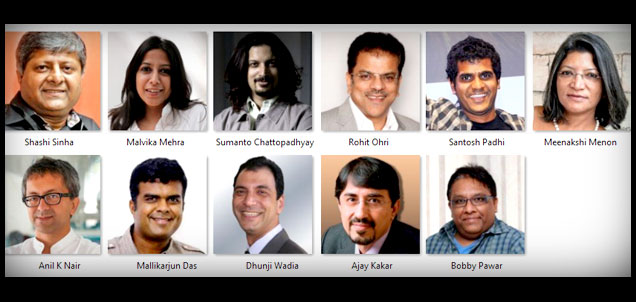
    Shashi Sinha, CEO, IPG Mediabrands

    1. Talent

    2. Compensation

    3. Digital

    4. Television measurement and

    5. Analytics were annoying as the more people spoke, the less they did anything about these things.


    For 2015, for starters, I have high hopes from the new TV measurement which Barc will put out, media agencies getting into content production, collaboration between all constituents of the ad ecosystem, budgets which will hopefully be at landmark levels and the World Cup which we should win again.


    HALL OF SHAME 

    Viral – Most of the time it is just an ad that runs way too long. Get some scissors, people


    Big Data – The ultimate Brahma Astra for the advertising charlatan


    The only viral I know of is the one that requires the intervention of a doctor

    Perhaps the most, abused & misused terminology in the year. Runs the danger of being called ‘Pig Data’.

    It’s just analytics. People have been doing this ever since humankind stepped on this planet.


    Malvika Mehra, National Creative Director and Executive Vice President, Grey

    The 5 most oft used words in 2014 were 1. Guys 2. Let’s 3. Make 4. A 5. Viral.


    Also ‘Take your time (4-5 minutes is great), but please don’t take my money. No budgets this year. And while you are at it, make it so stunning that it is ‘organic’ (unpaid distribution)’. Ji Sirji. ‘But ultimately make me a TVC. And I want a ‘BIG, LAUNCHY’ feel for our product in 30 seconds or less. Chal, paanch second aur le lo’. Ji sirji.


    The Pitch Bitch: ‘Of course we love you guys! We are just opening it up to 10 other agencies to inject some freshness into the brand (and test how much lower will they drop their price vis a vis yours for the same or more amount of work)’. Par Sirji?


    Femvertising: From soap brands, to makers of shampoos, sanitary towels, watches to home appliances and mobile network providers, everybody suddenly wanted to ’empower the woman’. I get the noble intent, but wish the brands would really ‘walk the talk’. Else it’s just a ‘token’ gesture. And consumers see through that inauthenticity.


    Interactive Pre-rolls: With stern warnings of ‘If you skip this ad, I will have to kill not only Jack and Jill and Mary and her little lamb, but also Old MacDonald along with all the cute animals on his farm’.


    Research: Gut instinct is officially dead. It got replaced by the R word. Heard about ‘No guts. No glory’? Not lately.


    Sumanto Chattopadhyay, Executive Creative Director, South Asia, Ogilvy & Mather

    Native Advertising: I imagine people wearing grass skirts and clapper boards singing jingles.


    Vlog: At times we Bengalis mix up our Vs and Bs. That’s what I thought this was all about!


    Content: As in, ads vs. content, content marketing. Like ‘traditional’ advertising has no content? I’m content to pass on this one.


    Social: Yeah, why not? Let’s party. And get paid for it! That’s what I say.


    Seamless: Every element has to seamlessly work with everything else. Imagine if our clothes were like that too! Now that would be some fashion trend.


    Santosh Padhi, Co-founder and Chief Creative Officer, Taproot India

    Pitch: If you do not respect yourself nobody will.


    Research: Like sex determination, it should be banned


    Low Budget: Instead of 300 insertions can we do 280 and improve the quality of the creative?


    Urgent: Premature babies forcefully welcomed will always run a risk


    Celebrity: They are the super highly paid creative directors, why do you need one more creative agency?


    Rohit Ohri, Executive Chairman, Dentsu India and CEO, Dentsu Asia Pacific (South)

    Integrated: Integration is the process, co-creation is the magic.


    360: 360 degree campaigns are consumer conversations in bursts, 365 is everyday relevance.


    Alignment: Alignment is passionless, belief runs deep.


    Structure: Structure constrains, open source liberates.


    Procurement: Vegetables are procured, ideas are partnered.


    Meenakshi Menon, Chairman, Spatial Access

    Big Data: That has to be on the top of my list. It’s just analytics. People have been doing this ever since humankind stepped on this planet.


    Twitterati: Everybody has become an instant expert on Twitter. I’d replace the term with ‘scum.’


    ISIS: ‘Isis’ is supposed to be the goddess worshipped as ideal mother and wife. Our vocabulary keeps evolving, sometimes not in the right direction. I’d call the group as a distortion than assigning them the name of a goddess.


    Homechef: Where mothers cooking for their families had some dignity to it, now we have a whole new concept of women cooking for complete strangers that they invite at home. The food is charged, of course. It’s just a little pretentious a term. Just call them plain old cook, maybe?


    Climate Change: It only gets talked about. Never acted upon. Perhaps replace it with – learn to breathe under water? Or ‘Grow gills?’


    Anil Nair, CEO and Managing Partner, L&K Saatchi & Saatchi

    Integration: The term liberally used when you don’t have a clue of what to do with your brand. It’s been institutionalised now. We will have Chief Integration Officers everywhere in no time. Put an end to this painful word. Replace it with ‘We need to have an idea,’ Sirjee.


    Social Listening: It’s something that our good old researchers have been doing for ages. It’s nothing more than trend analytics, only instead of taking a dictaphone out to record voices, you’re recording them off Facebook and Twitter. Just call it ‘consumer understanding’ and do not make an unnecessary tool out of it, please?


    Viral: The only viral I know of is the one that requires the intervention of a doctor and loads of medicine to go away. I don’t care where this term came from, it needs to disappear. It’s an epidemic that needs an antidote.


    SEO, SEM: Why are we making a mountain out of a molehill? Can we not get caught up in the process and its terminology and revert to a simple non-jargonised world?


    Big Data: For God’s sake, the database just got bigger. But it always existed. The most successful political campaign of this year was based on pure emotional advertising and not big data. Let’s stop jargonising information. Call it what it is (read: information).


    Mallikarjun Das, CEO, Starcom MediaVest Group (India)

    Big Data: A phrase bandied too easily and too much, especially by those who pay scant regard to rationality. The ultimate Brahma Astra for the advertising charlatan.


    Programmatics: A term used in context with media buying, especially on digital, when what they are doing is just using the optimiser.


    Fragmentation: The only problem with using the said buzzword is that it’s often used in a wrong way to strike some sort of terror in a client.


    Storytelling: Need I say more?


    360 degree: This term is like that sugarcane that’s passed through the machine 300 times. There’s no juice left in it and yet it’s being rolled one last time.


    Dhunji Wadia, President, Rediffusion Y&R

    Big Data: Perhaps the most, used, abused and misused terminology of the year. It runs the danger of being called ‘Pig Data’. There are questions regarding the implications of the approach and also the way it is currently done. It needs to look at data holistically – Total Information.


    Digital Evangelists: Don’t need them as you cannot preach to the converted.


    The ‘Selfie’ Contest/Promotion: Replace it with better imagination.


    E-commerce ‘Discount for the Day’: That runs for years together.


    Free App Download: With more and more retailers and brands reaching for e- and m-commerce, there is an explosion of apps to be downloaded. Begs the question, ‘Why would anyone pay to download such an app?’


    Ajay Kakar, CMO, Aditya Birla Group – Financial Services

    “Isse viral kar do!”: Which is what every client says. It’s content, not viral, please.


    “Facebook has 50 million visitors!”: So what? VT station has more people visiting, does that mean we put all our ads there?


    New media: Let’s just say ‘customer’ as opposed to new, old, traditional, or any other kind of media. Creative awards: Awards should be for creatives that work.


    Pitches: Here a pitch, there a pitch, everywhere clients flirting. Serial pitching must end. Let’s call them ‘Brand Custodians’ and not pitchers, shall we? Clients and agencies must stop playing the blame game. If one is the crutch to your success there’s no way one should let go.


    Bobby Pawar, Director and Chief Creative Officer, Publicis Worldwide

    Viral: For the love of likes, it’s just a video until lots of people see and share it. Most of the time it is just an ad that runs way too long. Get some scissors, people.


    ATL/BTL: It implies a caste system of ideas. The good ones go above, the so-called ‘hard working’ ones slide under. It shouldn’t matter where the idea lives, it must be good enough to move your audience. People don’t care, therefore you must.


    But: This is phaasi ka phanda for ideas. It is crueler that a blunt ‘no’. Why? Because it is preceded by some waffling words that give hope to the creative, then ‘but’ shows up and yanks the handle.


    Deadline: Nothing induces a creative butt-clenching moment like this word. Yes sir, three bags full sir, our work is time bound, but does it have to sound so, erm, deadly?


    Purchase: It’s the leading cause of hair-loss among agency CEOs.


    Source:The Economic Times

    Copyright © 2015, Bennett, Coleman & Co. Ltd. All Rights Reserved

    Licensed to republish



  • Social Access: Towards an equitable society

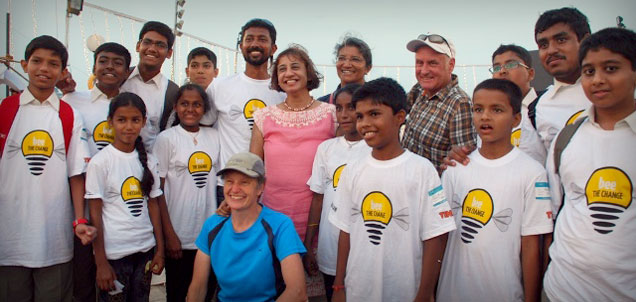
    On occasion of Launch of Social Access (Frm L to R) Abhilash Tomy, Lynn de Souza, Meenakshi Menon, Mark Inglis, Sarah Wilson (In sitting position) with children


    By Ritu Midha


    The launch of an organization or initiative is usually an event one dresses up for. So it was a surprise to see Meenakshi Menon at the Radio Club yesterday afternoon, abseiling. The occasion: The launch of Social Access, and the message, “bee the change”.


    Lynn de Souza
    Meenakshi Menon

    Social Access is an outcome of shared passion of two power media women: Lynn de Souza and Meenakshi Menon. The organization is being launched with the key objective “to use strategic communication and creative ideas” to re-orient society towards social sector by building channels among the four key players: NGOs, corporates, government bodies and society.


    The Social Access logo is bulb-shaped , created with the thought that “illumination is required to dispel darkness”. The organisation, say its founders, is inspired by the bee, and it symbolizes team work, acitivity, creativity and buzz. “Bee the change” is the Social Access tagline.


    States Ms Menon, “Our anthem is: Let’s do things because they must be done, and because we can do them.” It is based on a message from Lt Cdr Abhilash Tomy, the first Indian to circumvent the ocean solo, nonstop.


    She adds, “India has 4 percent of the world’s billionaires; however, when it comes to the giving index it stands 91st in an index of 153 nations. The total value of donations given in our country in 11-12 fiscal is Rs 5000 crore, which is a smaller amount than the brand value of a single brand, Parle G.”


    ‘Attitude overcomes limitations’
    The launch of Social Access was different, interesting and succeeded in driving home the message it set out to send. It was initiated with a few interesting activities: abseiling (under Sarah Wilson’s guidance), sailing with the kids, and cycling. 

    It was not only the two stakeholders in the organisation who interacted with the audience, but also LT Cdr Abhilash Tomy (the first Indian to circumnavigate the oceans solo, nonstop and assisted), Mark Inglis (the only double amputee in the world to scale Mount Everest & a Para Olympic silver medallist in cycling), Sarah Wilson (cancer and avalanche survivor engaged in teaching young women how to overcome fears through a riveting abseiling exercise.)


    Talking about his amputation and further victories in cycling and mountaineering Inglis stated, ‘To be the change one needs to remove limitations, and to overcome limitations you need to be a change maker, and that is what Social Access sets out to do.” He further stated, “Innovation, passion and commitment are equally important to achieve what you set out to achieve but the key thing is the attitude – attitude overcomes limitations.”


    An audio-visual took the audience through Tomy’s sailing experience. His beautiful lines about his adventure, sum up the journey of life in a way, “Sun shone and showed the path. Winds tested us, loved us, and egged us on. Waves sometimes angry and playful, and sometimes calming. We made lots of friends in the way. Every day added a new meaning to life.” His thoughts and ideas have been an inspiration for Social Access as it took shape.


    Interestingly, the entire event was put together without too much expense. Radio Mirchi was the key partner – they organised a contest on the radio for the event, helped with the venue and broadcast the event live. Other media major involved was National Geographic. Catalyst was the event partner.


    The organisation seeks to be the connect between the NGOs and organisations that can help them. Also, on the cards are communication solutions. As Ms de Souza says, “The intent is to provide the best solution – creative or otherwise, to the NGOs, depending upon their requirement.”


    Social Access has tied up with iVolunteer for easy facilitation of volunteers.


    The organization believes that it is about time Indians learnt to care and share more. Though impressed by the concept, one can’t help but wonder if India is ready for this kind of an initiative. States Lynn de Souza, “Of course it is ready. Many things are happening now…. Social media has stepped up awareness, charity and causes have found a voice. Corporations have realized that brand value goes up if you contribute to social causes. Society is more conscious now – and so are the government and local bodies. Media too is contributing. Another key thing is that awareness among youth is increasing, and they are coming forward.”


    The use of social media for raising awareness and mobilising people is one of the key areas Social Access intends focusing on. States Ms Menon, “Social media is giving voice to the dumb. We can use the power of media to help ideas travel across cultures, consumers, corporates, government bodies and more.”


    But will it really help in mobilizing people to get involved? Ms Menon and Ms de Souza believe that one cannot undermine the power of social media when it comes to mobilizing support for social causes. States Ms de Souza, “Social media will no doubt play a very important role in mobilising people. While social media per say has grown in the range of 90 percent, its usage for non-commercial purposes has increased close 190 percent.”


    The plan is not to make it a close-fisted organisation with a handful of employees. Anyone passionate about social causes can be involved . States Ms Menon, “It will be an open architecture society where anyone can contribute. We are building a community and providing a platform. Anybody can become a part of it.”


    Social Access has a two-pronged role – to get the corporates and other able organizations to support NGOs, and to get people to contribute in a myriad different ways. Concludes Ms de Souza, “We are focused on share of heart and mind, we are not looking at share of wallet. Our basic philosophy is that of equality. Everything must lead to an equitable society.”


  • Lynn de Souza & Meenakshi Menon launch Social Access

    By A Correspondent


    Lynn de Souza
    Meenakshi Menon

    With decades of experience in the industry, Lynn de Souza and Meenakshi Menon have come together to launch a new company called Social Access.


    The company will use strategic communication and creative ideas to re-orient society towards the social sector by building channels among the four key players – NGOs, Corporates, government bodies and the society.


    The venture, applauded by counterparts from the industry and others, was announced by Ms de Souza on February 5 on her Facebook page. The movement as described by them is open to everyone and anyone can join it. “We’ll soon have an event to formerly announce the launch as well as to discuss the core idea and plan behind it,” said Ms de Souza.


    Lynn de Souza had quit Lintas Media Group as Chairman and CEO last year. Meenakshi Menon is the founder and chairperson of Spatial Access.