Tag: McKinsey

  • Do brands have a mid-life crisis?

    Do brands have a mid-life crisis?

    Ashoke AgarrwalNike is 60 years old, and is it showing signs of middle age?

    The brand still signs the world’s most high-profile athletes and has a legacy of proprietary technology.

    The mojo was displayed at the Paris Olympics with a three-day ‘Nike on Air’ gala.

    It debuted new shoes for runners, basketball, and soccer and optimized performance apparel for skateboarding and breakdancing. It also showcased Project A.I.R., a platform that leverages generative AI to design and print personalised prototypes for athletes in minutes.

    It was as if the brand was pushing to remind everyone of its mojo. Forty years ago, at its pomp, the brand had debuted Air, a tiny, pressurised airbag in the shoe’s sole that gives athletes an energy return as their foot hits the ground. A legendary functionalisation of the brand’s ‘Just Do It’ promise with a literal swoosh of compressed Air. Today, the legend lives on moviedom with a movie called “Air” starring no less than Matt Damon and Ben Affleck, but does the brand’s mojo?

    Or, like a lifetime achievement award, is the movie a tribute to a has-been cultural phenomenon?

    The brave show at the Paris Olympics did not hide Nike’s struggles with low sales numbers and its longest losing streak since 1980. The company’s move from wholesalers to direct-to-consumer wasn’t as successful as hoped.

    The reasons for Nike’s bad period are myriad, and it will probably cause them to go on for another 60 years.

    The point I want to make is that many storied brands—Nike, Coco Cola, Levis, VW, Marks & Spenser, Bajaj, Titan—the list is long—are undergoing a crisis. And the commonality between them is that they are all “middle-aged” or “old.”

    The most straightforward explanation for the crisis is that times change, consumers change, technologies change, and challenges come with change.

    However, shouldn’t then the uber-successful leader brands should be the first to meet such challenges? They have the resources, expertise and experience.

    But nine out of 10 ‘middle-aged’ leader brands flounder with a new generation of consumers.

    Could the explanation lie in the realms of psychology – the mid-life crisis that affects most successful men in Western cultures as they slide into middle age?

    While a mid-life crisis is, at its core, a disruption in self-confidence and self-image, its manifestation is a rejection of this disruption and an over-assertion of the past.

    Is Nike’s Paris Olympics show an assertion of this sort?

    The wise counsellors suggest that the proper response to a mid-life crisis is to evaluate the self, identify your core values, discard peripheral notions that no longer fit the circumstances, and orient your core values to the new paradigm.

    Is Nike confronting a new generation for whom fitness is a holistic concept that deals with social attitudes, diet, and exercise? To them, is seeking the extra edge of proprietary technology in their daily exercise regime an aspect that robs it of a value they cherish -authenticity? So, while they admire Nike and the premier athletes whom it helps perform better, the admiration does not translate to them wanting the brand for themselves. They are happy with brands like On Running and Lululemon.

    So, how does Nike be relevant to the new generation? For starters, it should be admitted that the mother brand is now a niche brand for performance athletes and the small part of the market that are aspiring athletes or have a self-image of being athletes. There is money to be made in that niche to support their other plans. It should then get down to using its inventiveness and brand-creation skills to launch a new brand that hooks onto the concept that fitness is a 360-degree concept with authenticity at its core. It could then build a whole range of products and services, including digital platforms and AI application layers to enable an individual to ‘Be the Fittest Yourself’.

    The above is just an illustration. An innovative set-up like Nike would have scores of better ideas provided it got out of its middle-aged funk and stopped doubling down on the past.

    The point is that a brand in a mid-life crisis needs to recognize the crisis, reevaluate and use the opportunity to reinvent.

    There are so many well-resourced brands in mid-life crisis worldwide that I expect all the big consultancies to make a beeline for this rather lucrative pie.

    But then, aren’t the McKinsey’s of this world also in mid-life crisis?

    It may take a bold, young start-up consultancy to convince old, foggy brands to see their mid-life crisis as an opportunity to reinvent.

  • ML, LLM, Graphs & Market Modelling


    By Ashoke Agarrwal


    Ashoke AgarrwalNine months after the launch of ChatGPT, the hype has died down and the real work of building upon the burgeoning availability of Large Language Models (LLMs), of which ChatGPt is but one example, has begun.


    The interest of businesses in the concept of Big Data rose exponentially in 2012. Many expected a paradigm shift in consumer marketing based on nifty analytical systems driven by Big Data. Much was expected in data-driven decision-making, personalisation and customisation, targeted advertising, sharper segmentation, predictive analytics and real-time insights. In 2015, in its report titled ‘Big Data, Analytics and the Future of Marketing and Sales’,  McKinsey laid out the expectations.


    In 2023, the future is different from what McKinsey expected. The paradigm certainly shifted for Google and Meta, who cornered the advertising market based on a humongous amount of real-time Big data and state-of-the-art analytical engines.


    Change also happened for brands that marketed and sold products and services to B2C and B2B markets. However, the difference had little to do with their use of Big Data and advanced analytical systems. It was in the emergence of the digital universe as a product, go-to-market and communication platform.


    Dig a little, and you will find that the thesis that brands under-exploited the opportunity that Big Data presented to them mainly because they used legacy databases and ERP systems from the likes of SAP, Oracle and Salesforces to collect and store their Big Data. As a result, while many created special teams to mine, warehouse and analyse Big Data, most crucial business, marketing and sales decisions continued to be based on traditional business analysis and market research.


    Meanwhile, Google and Meta (then Facebook) invested in an analytical system that eschewed the rigidity of the traditional IT-age relational databases – essentially tables with rigid rows and columns. In a seminal decision that presaged the age of AI, they decided to populate their databases in graphs – a network of nodes with many properties with multiple links to other nodes, with each link specifying a kind of relationship with a property of the originating node and a property of the linking node.


    Such a database structure allowed for:

    :: Fast and more varied analysis

    :: More immediate additions and reconfiguration of the database as conditions change

    :: Better situational analysis and insight discovery through “what-if” analysis that changed node and link configurations


    Based on their ever-expanding, ever-enriched graphs and the use of Machine Learning (ML) driven near-real-time analysis, Google and Meta created a mighty advertising service with the confidence to offer brands a pay-per-click service. As a result, brands willy-nilly outsourced the harnessing of the real opportunity of the digital and Big Data age to Google, Meta and other digital ad exchanges that sprang up.


    It is no surprise that Google and Facebook are among the most advanced AI players today, including in the field of LLMs with Google’s Bard and Facebook’s Llama. The essential process that powers LLMs is that they parse large storehouses of text into triples of subjects, objects and predicates and then model them into graphs with the nodes consisting of subjects and objects and the links signifying relationships in the form of predicates.


    As Google’s and Meta’s LLMs improved power, it turbocharged their graph databases, allowing them to automate the process of incorporating unstructured into their graphs. Perhaps left to themselves, Google and Meta would not have exposed their LLMs to the public as they have done so now but kept it themselves as a background technology powering customer-facing applications. Instead, OpenAI and ChatGPT forced their hand.


    The resultant hype around ChatGPT has kickstarted the age of AI, with the world at large now seriously scrambling to incorporate AI into businesses, Governments, schools, hospitals and wars. Publications like The Economist and others have started ranking Fortune 500 companies based on the potential competitive advantages/disadvantages that AI can deliver to them!


    How will businesses in general and marketers in particular respond to the new horizons of AI?


    The powers of MI, Graph Theory and Advanced Modelling will create a new platform that will change how businesses, if not entire societies, are run. Just as the arrival of digital media changed economies at the core, Graphs with Big Data inputs from structured and unstructured sources (processed through LLMs) will create dynamic market models that will change how businesses are structured, with business and marketing strategy being almost wholly automated with human inputs needed only at the highest meta-strategy level. The shift will be paradigmatic enough for the world to label the resultant business order as the Nth Industrial Revolution, a sub-set of the First AI Revolution that will redefine human society.


    The question is whether individual businesses will seize this opportunity, invest and build proprietary dynamic models that will run their companies, or will they, once again, as they did with the digital revolution, outsource it to the next Google or Meta?


    The stakes this time are higher. Not only will the businesses themselves be more beholden to those who own and run the models, but in the process, society will create AI-driven behemoths that will be the first step to the dysfunctional system that those who fear AI imagine.


    Therefore, it is incumbent on business leaders and thinkers to pay close attention to this evolving opportunity and invest all that is needed to harness it before it becomes an insurmountable challenge.


  • Pivot or Perish… Using your business moat to survive in the pandemic


    By Bhuvi Gupta


    Bhuvi GuptaAs a marketer for the last decade if there is one thing that I can attest to be true is that marketing jargon comes and goes with an average lifespan of a year or two. The jargon du jour is backed by stellar logic, often introduced by a book, or a widely respected businessperson, and has wide applications in the entire gamut of business strategy.


    The latest buzzword is the concept of the ‘moat’ as espoused by Warren Buffett. While he first shared this concept during a Berkshire Hathaway shareholder meet in 1995, it has seemed to catch on in pandemic. (Maybe, because being stuck at home is like a having a moat around you?). Mark my words, we are just at the beginning of the lifecycle of this jargon and you’ll see multiple applications in interviews, podcasts, CEO roundtables et al in the coming times. 


    What are economic moats?


    The usage comes from ancient times, when a moat was a water body built around a castle so as to give the king some time to plan his defense when attacked by an invader.  The concept itself is golden, as most espoused by Buffett are – An economic moat is a distinct competitive advantage a company has over its competitors, which allows it to protect its market share and profitability over the long term. Companies can build moats by strengthening their brands like Apple and Coca-Cola, achieving economies of scale like Amazon, or even lobbying for special status from the government like Patanjali.


    Economic moats have existed since commerce has, but in the digital age, using data, network effects, online marketplaces, search, and social networks can help create wider and longer-lasting moats.


    According to a report from CBInsights, moats can be classified into four types –


    Network Effect– those products whose value increases the more people who use it. All social media networks have network moats, which explains why a Telegram has not replaced WhatsApp despite offering some advantages

    Cost Moats– when users have a high sunk cost in the product or service (high one-time or recurring membership fee) which make them reluctant to switch

    Cultural Moats– when consumers buy into the product for the brand promise and the values it represents. For e.g. people consume Dove because it promotes ‘real beauty’, Coca-Cola due to its great emotional marketing which talks about happiness

    Resource Moats– due to patents or preferential treatment on account of a governing body. Typically why pharmaceutical companies have huge lobbying budgets


    How companies have used their moats in India to remain relevant in the pandemic


    The pandemic has been a death knell to the global economy – USA’s economy has contracted by a third, in its largest quarterly contraction since 1921. India is not expected to fare any better, when numbers release later this month.


    Companies are being forced to be agile and leverage their business moats, and pivot to newer consumer behaviors to remain afloat. Many companies have successfully pivoted their products, launched line and brand extensions to have new health and immunity claims, which is why we even have Chyawanprakash and Haldi ice-cream now (from Amul and Dairy Day Plus). This has come easier to the behemoths like ITC and Dabur, which have both Innovation teams sitting on years of research, and vacant factories to put into use.  As a result, in the last three months, ITC has launched six, and Dabur 15 new products. Such companies also have the business advantage of well-established supply chain and distribution channels.


    How companies which don’t have a moat can remain relevant in the pandemic


    A July 2020 McKinsey survey found that an overwhelming 91% of consumers reported trying a new shopping behavior in India due to the pandemic. Two key trends that stand out from the survey are an acceleration in the rate of digital adoption which has seen a 10+ percent growth in online customer base during the pandemic & a new DIY culture in the middle class which was reliant on household help or access to almost everything via a few taps on their mobile screens. New product categories for fruit & veggie wash, contactless dispensers, dishwashers which would have years of promotion and audience interactions have seen demand rise exponentially.


    These two are the life jackets for Indian companies that can help save them in the coming months.


    The pandemic has facilitated trials (often via e-commerce) as well as repeat buys in the 5+ months of its duration. This is one of the silver linings of the pandemic because categories and products, which would have taken companies years to launch and for consumers to adopt, especially in a value-conscious market like India, have launched overnight.


    Restaurants, which are arguably the worst hit, have started retailing recipe and ingredient kits and sauces. Pictured above are the ready-to-cook sauces, and gravies launched by Jubilant FoodWorks (which runs Domino’s Pizza and Dunkin’ Donuts in India)

     

    Indian companies, especially the beleaguered ones, must leverage this time to pivot, because even if some of these consumption shifts are pandemic specific, many new behaviours will stick because, getting consumer trials is one of the most difficult parts in a product’s lifecycle.


    Talking from personal experience, now that I have been forced to realise that I am not a half-bad cook, I have often wondered why was I so reluctant to cook earlier and why was I so dependent on my cook or ordering food in. If the rough survey of my social circle is to be believed, I know I am speaking for scores of us in the middle class. These cooking sauces and cheaper dishwashers are only helping to cement this new-found realisation into a resolve to be more independent.


    Bhuvi Gupta is a marketer with over 10 years across industries, of which the last six have been in Media & Entertainment. She has been a part of many launch marketing campaigns – specifically at the Times of India group, Republic TV and the latest in marketing a Bollywood film. She will write on A&M (mostly marketing, but often on advertising too) every other Tuesday. Her views here are personal. She tweets at @bhuvigupta3


  • Aqilliz appoints Prateek Dayal as CSO

    By A Correspondent


    Aqilliz, the Gowthaman Ragothaman-led blockchain for marketing solutions provider, announced the appointment of ex-HSBC APAC Innovation SVP, Prateek Dayal as Chief Strategy Officer (CSO). With a wealth of experience across the financial services sector including Royal Bank of Scotland, Barclays Bank and McKinsey & Company. Dayal will lead the Aqilliz team in driving the adoption of blockchain and emerging technologies within the marketing sector.


    Said Dayal, said: “Helping to solve real-world problems that are affecting an array of industries while working hand-in-hand with a world-class team, is something that I am genuinely looking forward to. The marketing industry has evolved in leaps and bounds in the past number of years, but the resulting complexity now presents the ecosystem with a lack of transparency, trust and convenience. These key problems can and will be addressed, it is just a matter of expertise and innovation, which is exactly what we at Aqilliz are offering.”


  • Is your company ready for Social CRM?


    By PrabhakarMundkur


    Take what happened to one of my friends last week. A very reputed retail chain owned by one of the most trusted companies in the country let him down very badly. A washing machine he had bought last year and was still under warranty let him down. Unfortunately my friend had opted to buy the own store brand of the retail chain rather than a LG or a Samsung or some other more reputed make. The washing machine stopped working suddenly. There has been no response from this well known retailer for over a week and finally my friends name was struck off the complaints list without his even knowing it. He then had to go through the trouble of re-registering his complaint in which he lost another seven days.


    He decided to complain about his experience on social media since he thought it might be at least mildly embarrassing. To their credit their Twitter handle started conversing with him almost within five minutes. The very next day the Hyderabad call centre of the retain chain called my friend and began to make at least some amends for the neglect shown to him by Customer Service. His case however still remained unresolved. The mechanic attending the complaint said that if my friend went back to the store where the washing machine was purchased from, he would have a replacement with a new machine. But when my friend reached the store all he heard was an ugly altercation between the Customer Service Representative and the Mechanic where the Customer Service executive fired the Mechanic for making false promises of product replacement to the customer. He went on twitter again to update the latest status on his case and the company’s Twitter handle once again promised to get the case resolved at the earliest. In the meantime my friend is biting his nails on what is going to happen to his washing machine.

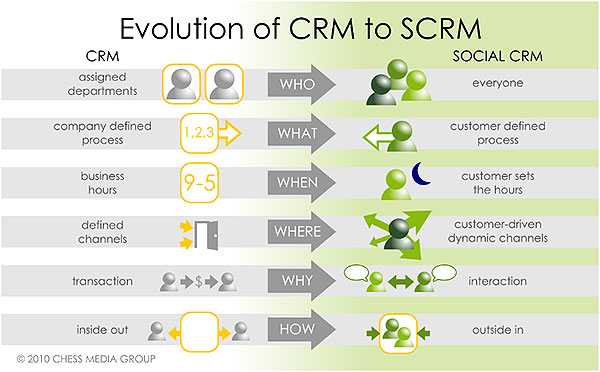
    While in many ways social media has become the new face of Customer Service(because traditional Customer Service is completely out of touch with customers ) the above case is a sure sign that the biggest brands in the country need to do a better job of their Social CRM. In a way Social CRM takes over where traditional CRM left off. Unfortunately traditional CRM still operates on a 9am to 5pm basis and they wouldn’t care a hoot what happens to customers once they leave their office. Social CRM on the other hand is 24×7. Because customers may need help at any time of day or night.


    What is Social CRM?

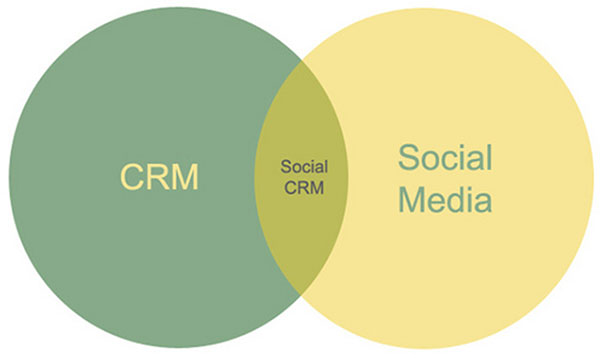
    But first of all let’s start by defining Social CRM. Social CRM (customer relationship management) is a phrase used to describe the addition of a social element in traditional CRM processes. Social CRM builds upon CRM by leveraging a social element that enables a business to connect customer conversations and relationships from social networking sites in to the CRM process. Social CRM may also be called CRM 2.0 or abbreviated as SCRM (social customer relationship management).


    Social CRM takes over where CRM left off

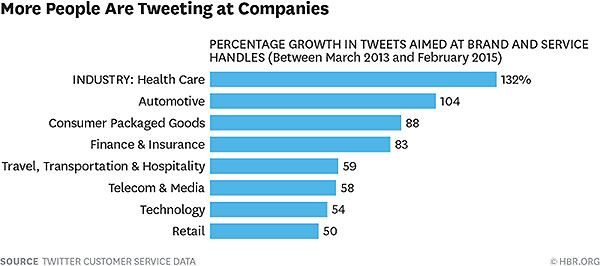
    People under 35 spend almost four hours on social media, and more of that time is being spent engaging with brands. One piece of research has shown that the volume of tweets targeted at brands and their Twitter service handles, for example, has grown 2.5x in the past two years. Similarly, the percentage of people who have used Twitter for customer service leapt nearly 70%, over a two year period. McKinsey’s analysis shows that 30% of social media users prefer social care to phoning customer service.


    The most successful social media interactions are personal, genuine, and relevant. To scale that connectivity requires integrating social media data into your CRM system.


    You could be forgiven for treating the idea of “social CRM” with a certain amount of scepticism. It just sounds like a buzz word. Also it is sometimes hard to distinguish the hype around social media from the genuine value it can bring. But social CRM isn’t a gimmick, and it doesn’t ask you to “forget everything you know” or “reinvent your business”.


    Social CRM simply adds a social dimension to the way you think about customers and your relationships with them.


    Given the current state of customer service, Social CRM would be an important weapon in the armoury of brands that have large number of customers. Its not enough to just have a twitter handle or a Facebook page. That doesn’t complete your Customer Service or your Social CRM.


    Why is Social CRM important?

    It’s a familiar story. Marketing departments are diligently creating and publishing tweets, Facebook posts, and YouTube videos, carefully crafted to make the most of each channel and designed to encourage sharing, retweeting and customer engagement. But the audience doesn’t come.


    Meanwhile, your customers are elsewhere on Facebook and Twitter, having conversations about your organisation – discussing you, recommending you, complaining about you and even trying desperately to talk to you. But they’re not getting the answers they want.


    Social CRM bridges the gap. No more forcing customers to use the channel you prefer. No more losing track of issues when they change channels. You can engage and respond to customers individually and in the way they choose.


    With Social CRM you can place your customer right at the heart of your organisation.


    Veteran adman Prabhakar Mundkur is currently Chief Mentor at HGS Interactive


  • Reliance Industries completes acquisition of Network18

    By A Correspondent


    HDFC chairman Deepak S Parekh and McKinsey senior adviser Adil Zainulbhai have been inducted as Independent Directors on the board of NW18. Meanwhile, RIL also informed that Raghav Bahl will continue to be on the Board of NW18 as a Non-executive Director


    Reliance Industries Limited (RIL) announced on Monday (July 7) that Independent Media Trust (IMT) of which RIL is the sole beneficiary, has completed the acquisition of control of Network 18 Media and Investments Limited (NW18) including its subsidiary TV18 Broadcast Limited (TV18).


    Apart from nominees of IMT, HDFC chairman Deepak S Parekh and McKinsey senior adviser Adil Zainulbhai have been inducted as Independent Directors on the board of NW18. Meanwhile, RIL also informed that Raghav Bahl will continue to be on the Board of NW18 as a Non-executive Director.


    With the completion of this transaction, IMT and RIL have become promoters of NW18 and TV18. The open offers to the public shareholders for acquisition of equity shares of NW18, TV18 and Infomedia Press Ltd. as announced on May 29, 2014 by IMT are in process and the Draft letter of offer has been filed with SEBI for its comments.